Hereditas(Beijing) ›› 2021, Vol. 43 ›› Issue (2): 169-181.doi: 10.16288/j.yczz.20-392
• Research article • Previous Articles Next Articles
Inflammatory bowel disease susceptible gene GPR35 promotes bowel inflammation in mice
Yansen Zheng1( ), Lingang Zhuo1, Dali Li1(), Mingyao Liu1()
- 1 Shanghai Key Laboratory of Regulatory Biology, Institute of Biomedical Sciences and School of Life Sciences, East China Normal University, Shanghai 200241, China
-
Received:2020-11-18Online:2021-02-16Published:2021-01-27 -
Supported by:National Key R&D Program of China(2019YFA0110802);the National Natural Science Foundation of China(81670470);the National Natural Science Foundation of China(81873685)

Cite this article
Yansen Zheng, Lingang Zhuo, Dali Li, Mingyao Liu.
share this article
Add to citation manager EndNote|Reference Manager|ProCite|BibTeX|RefWorks
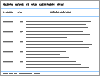
Table 1
Primers of construction GPR35 and GPR35 mutation sequence"
| 引物名称 | 引物序列(5?→3?) |
|---|---|
| GPR35-F | ATGGCACCTACAACACCT |
| GPR35-R | GGCGAGGGTCACGCACAG |
| GPR35mut1-R | CGATGGCCATGACCAGGCTG |
| GPR35mut1-F | CAGCCTGGTCATGGCCATCG |
| GPR35mut2-R | CTTAGCACGGGGAGCCAC |
| GPR35mut2-F | GTGGCTCCCCGTGCTAAG |
Table 2
List of primers for qPCR analysis"
| 引物名称 | 引物序列(5′→3′) |
|---|---|
| m-Gapdh-F | ATGGCACCTACAACACCT |
| m-Gapdh-R | GGCGAGGGTCACGCACAG |
| m-IL1β-F | TGCCACCTTTTGACAGTGATG |
| m- IL1β-R | AAGGTCCACGGGAAAGACAC |
| m-IL6-F | GGGACTGATGCTGGTGACAA |
| m-IL6-R | ACAGGTCTGTTGGGAGTGGT |
| m-TNFα-F | AGGCACTCCCCCAAAAGATG |
| m-TNFα-R | CCACTTGGTGGTTTGTGAGTG |
| m-IL10-F | GCTCTTACTGACTGGCATGAG |
| m-IL10-R | CGCAGCTCTAGGAGCATGTG |

Fig. 1
Analysis of the location of SNPs on GPR35 "


Fig. 2
Construction Gpr35 knock out mice via CRISPR/Cas9 system "


Fig. 3
HE and IHC analysis the integrity of epithelial and the number of Paneth cell or the goblet cells of Gpr35 -/- mice and WT mice "


Fig. 4
Gpr35 deficiency attenuates the development of DSS-induced colitis "


Fig. 5
Cytokines production, macrophage cell infiltration and cell proliferation in DSS induced IBD model"


Fig. 6
Effect of Gpr35 knock down on Erk1/2 signalling pathway activity in DSS induced IBD "


Fig. 7
Effect of rs3749171, rs3749172 mutation on GPR35 receptor activity"

Table 3
The results of GPR35, GPR35 T108M and GPR35 S294R receptor activity (normalized) to Zaprinast and significance test "
| Zaprinast | 载体 | 对照 | 1 μmol/L | 10 μmol/L | |||
|---|---|---|---|---|---|---|---|
| 活性(归一化) | 显著性(P value) | 活性(归一化) | 显著性(P value) | 活性(归一化) | 显著性(P value) | ||
| 钙流检测 | GPR35 | 1±0.24 | 1.04±0.24 | 1.1±0.14 | |||
| GPR35 T108M | 0.99±0.02 | ns | 1.67±0.27 | P<0.01 | 3.8±1.1 | P<0.001 | |
| GPR35 S294R | 1.19±0.26 | ns | 1.31±0.2 | ns | 3.0±0.38 | P<0.001 | |
| β-arrestin 招募检测 | GPR35 | 1±0.1 | 1.28±0.13 | 1.35±0.13 | |||
| GPR35 T108M | 1.2±0.38 | ns | 2.1±0.19 | P<0.001 | 2.03±0.11 | P<0.001 | |
| GPR35 S294R | 1.3±0.1 | P<0.05 | 2.28±0.09 | P<0.001 | 2.56±0.12 | P<0.001 | |
| CRE转录 活性分析 | GPR35 | 1±0.02 | 0.91±0.11 | 0.74±0.19 | |||
| GPR35 T108M | 1.03±0.08 | ns | 0.89±0.22 | ns | 0.47±0.05 | P<0.001 | |
| GPR35 S294R | 1.04±0.1 | ns | 817±0.03 | ns | 0.45±0.05 | P<0.001 | |
| [1] |
Xavier RJ, Podolsky DK. Unravelling the pathogenesis of inflammatory bowel disease. Nature, 2007, 448(7152): 427-34.
pmid: 17653185 |
| [2] | Lewis JD, Deren JJ, Lichtenstein GR. Cancer risk in patients with inflammatory bowel disease Gastroenterol Clin North Am. 1999, 28(2): 459-477. doi: 10.1016/s0889-8553(05)70065-0. |
| [3] |
Itzkowitz SH, Yio XY. Inflammation and cancer IV.Colorectal cancer in inflammatory bowel disease: the role of inflammation. Am J Physiol Gastrointest Liver Physiol, 2004, 287(1): G7-17.
pmid: 15194558 |
| [4] |
Konda A, Duffy MC. Surveillance of patients at increased risk of colon cancer: inflammatory bowel disease and other conditions. Gastroenterol Clin North Am, 2008, 37(1): 191-213.
doi: 10.1016/j.gtc.2007.12.013 pmid: 18313546 |
| [5] | Ananthakrishnan AN, D Iliopoulos, A Macpherson, MF Neurath, RAR Ali, SR Vavricka, C Fiocchi, CN Bernstein, Environmental triggers in IBD: a review of progress and evidence. Nat Rev Gastroenterol Hepatol , 2018. 15(1): 39-49. |
| [6] | Ananthakrishnan AN, Iliopoulos D, Macpherson A, Neurath MF, Ali RAR, Vavricka SR, Fiocchi C. Bernstein CN, Environmental triggers in IBD: a review of progress and evidence. Nat Rev Gastroenterol Hepatol, 2018, 15(1): 39-49. |
| [7] |
Liu TC, Stappenbeck TS. Genetics and pathogenesis of inflammatory bowel disease. Annu Rev Pathol, 2016, 11: 127-148.
doi: 10.1146/annurev-pathol-012615-044152 pmid: 26907531 |
| [8] | Rivas MA, Beaudoin M, Gardet A, Stevens C, Sharma Y, Zhang CK, Boucher G, Ripke S, Ellinghaus D, Burtt N, Fennell T, Kirby A, Latiano A, Goyette P, Green T, Halfvarson J, Haritunians T, Korn JM, Kuruvilla F, LagacéC, Neale B, Lo KS, Schumm P, Törkvist L, Dubinsky MC, Brant SR, Silverberg MS, Duerr RH, Altshuler D, Gabriel S, Lettre G, Franke A, D'Amato M, McGovern DP, Cho JH, Rioux JD, Xavier RJ, Daly MJ. Deep resequencing of GWAS loci identifies independent rare variants associated with inflammatory bowel disease . Nat Genet, 2011, 43(11): 1066-1073. |
| [9] |
Imielinski M, Baldassano RN, Griffiths A, Russell RK, Annese V, Dubinsky M, Kugathasan S, Bradfield JP, Walters TD, Sleiman P, Kim CE, Muise A, Wang K, Glessner JT, Saeed S, Zhang H, Frackelton EC, Hou C, Flory JH, Otieno G, Chiavacci RM, Grundmeier R, Castro M, Latiano A, Dallapiccola B, Stempak J, Abrams DJ, Taylor K, McGovern D, Silber G, Wrobel I, Quiros A, Barrett JC, Hansoul S, Nicolae DL, Cho JH, Duerr RH, Rioux JD, Brant SR, Silverberg MS, Taylor KD, Barmuda MM, Bitton A, Dassopoulos T, Datta LW, Green T, Griffiths AM, Kistner EO, Murtha MT, Regueiro MD, Rotter JI, Schumm LP, Steinhart AH, Targan SR, Xavier RJ, Libioulle C, Sandor C, Lathrop M, Belaiche J, Dewit O, Gut I, Heath S, Laukens D, Mni M, Rutgeerts P, Van Gossum A, Zelenika D, Franchimont D, Hugot JP, de Vos M, Vermeire S, Louis E, Cardon LR, Anderson CA, Drummond H, Nimmo E, Ahmad T, Prescott NJ, Onnie CM, Fisher SA, Marchini J, Ghori J, Bumpstead S, Gwillam R, Tremelling M, Delukas P, Mansfield J, Jewell D, Satsangi J, Mathew CG, Parkes M, Georges M, Daly MJ, Heyman MB, Ferry GD, Kirschner B, Lee J, Essers J, Grand R, Stephens M, Levine A, Piccoli D, Van Limbergen J, Cucchiara S, Monos DS, Guthery SL, Denson L, Wilson DC, Grant SF, Daly M, Silverberg MS, Satsangi J, Hakonarson H. Common variants at five new loci associated with early-onset inflammatory bowel disease . Nat Genet, 2009, 41(12): 1335-1340.
pmid: 19915574 |
| [10] | Ellinghaus D, Folseraas T, Holm K, Ellinghaus E, Melum E, Balschun T, Laerdahl JK, Shiryaev A, Gotthardt DN, Weismüller TJ, Schramm C, Wittig M, Bergquist A, Björnsson E, Marschall HU, Vatn M, Teufel A, Rust C, Gieger C, Wichmann HE, Runz H, Sterneck M, Rupp C, Braun F, Weersma RK, Wijmenga C, Ponsioen CY, Mathew CG, Rutgeerts P, Vermeire S, Schrumpf E, Hov JR, Manns MP, Boberg KM, Schreiber S, Franke A, Karlsen TH. Genome-wide association analysis in primary sclerosing cholangitis and ulcerative colitis identifies risk loci at GPR35 and TCF4. Hepatology, 2013, 58(3): 1074-1083. |
| [11] | Yang SK, Hong M, Oh H, Low HQ, Jung S, Ahn S, Kim Y, Baek J, Lee CH, Kim E, Kim KM, Ye BD, Kim KJ, Park SH, Lee HS, Lee I, Shin HD, Han B, McGovern DP, Liu J, Song K. Identification of loci at 1q21 and 16q23 that affect susceptibility to inflammatory bowel disease in koreans. Gastroenterology, 2016, 151(6): 1096-1099.e4. |
| [12] | Sherry ST, Ward MH, Kholodov M, Baker J, Phan L, Smigielski EM, Sirotkin K. dbSNP: the NCBI database of genetic variation . Nucleic Acids Res, 2001, 29(1): 308-311. |
| [13] | King N, Hittinger CT, Carroll SB. Evolution of key cell signaling and adhesion protein families predates animal origins . Science, 2003, 301(5631): 361-363. |
| [14] | Mackenzie AE, Lappin JE, Taylor DL, Nicklin SA, Milligan G. GPR35 as a novel therapeutic target. Front Endocrinol (Lausanne), 2011, 2: 68. |
| [15] |
Zheng X, Hu MM, Zang XJ, Fan QL, Liu YL, Che Y, Guan XJ, Hou YL, Wang GJ, Hao HP. Kynurenic acid/GPR35 axis restricts NLRP3 inflammasome activation and exacerbates colitis in mice with social stress. Brain Behav Immun, 2019, 79: 244-255.
doi: 10.1016/j.bbi.2019.02.009 pmid: 30790702 |
| [16] | Tsukahara T, Hamouda N, Utsumi D, Matsumoto K, Amagase K, Kato S. G protein-coupled receptor 35 contributes to mucosal repair in mice via migration of colonic epithelial cells. Pharmacol Res, 2017, 123: 27-39. |
| [17] |
Zeng Z, Mukherjee A, Varghese AP, Yang XL, Chen S, Zhang H. Roles of G protein-coupled receptors in inflammatory bowel disease . World J Gastroenterol, 2020, 26(12): 1242-1261.
doi: 10.3748/wjg.v26.i12.1242 pmid: 32256014 |
| [18] | Horii Y, Uchiyama K, Toyokawa Y, Hotta Y, Tanaka M, Yasukawa Z, Tokunaga M, Okubo T, Mizushima K, Higashimura Y, Dohi O, Okayama T, Yoshida N, Katada K, Kamada K, Handa O, Ishikawa T, Takagi T, Konishi H, Naito Y, Itoh Y. Partially hydrolyzed guar gum enhances colonic epithelial wound healing via activation of RhoA and ERK1/2 . Food Funct, 2016, 7(7): 3176-3183. |
| [19] | Hattori M, Tanaka M, Takakura H, Aoki K, Miura K, Anzai T, Ozawa T. Analysis of temporal patterns of GPCR-β-arrestin interactions using split luciferase-fragment complementation. Mol Biosyst, 2013, 9(5): 957-964. |
| [20] |
Carmona-Rosas G, Alcántara-Hernández R, Hernández-Espinosa DA. Dissecting the signaling features of the multi-protein complex GPCR/β-arrestin/ERK1/2. Eur J Cell Biol, 2018, 97(5): 349-358.
doi: 10.1016/j.ejcb.2018.04.001 pmid: 29665971 |
| [21] | Bennet JD, Brinkman M. Treatment of ulcerative colitis by implantation of normal colonic flora . Lancet, 1989, 1(8630): 164. |
| [22] | Khan KJ, Ullman TA, Ford AC, Abreu MT, Abadir A, Marshall JK, Talley NJ, Moayyedi P. Antibiotic therapy in inflammatory bowel disease: a systematic review and meta-analysis. Am J Gastroenterol, 2011, 106(4): 661-673. |
| [23] |
Feagan BG, Rochon J, Fedorak RN, Irvine EJ, Wild G, Sutherland L, Steinhart AH, Greenberg GR, Gillies R, Hopkins M. Methotrexate for the treatment of Crohn's disease The north american crohn's study group investigators . N Engl J Med , 1995, 332(5): 292-297. BACKGROUND: Although corticosteroids are highly effective in improving symptoms of Crohn's disease, they may have substantial toxicity. In some patients, attempts to discontinue corticosteroids are unsuccessful. METHODS: We conducted a double-blind, placebo-controlled multicenter study of weekly injections of methotrexate in patients who had chronically active Crohn's disease despite a minimum of three months of prednisone therapy. Patients were randomly assigned to treatment with intramuscular methotrexate (25 mg once weekly) or placebo for 16 weeks. The patients also received prednisone (20 mg once a day), which was tapered over 10 weeks unless their condition worsened. The primary outcome measure was clinical remission at the end of the 16-week trial. Remission was defined by the discontinuation of prednisone and a score of < or = 150 points on the Crohn's Disease Activity Index. RESULTS: A total of 141 patients were randomly assigned in a 2:1 ratio to methotrexate (94 patients) or placebo (47 patients). After 16 weeks, 37 patients (39.4 percent) were in clinical remission in the methotrexate group, as compared with 9 patients (19.1 percent) in the placebo group (P = 0.025; relative risk, 1.95; 95 percent confidence interval, 1.09 to 3.48). The patients in the methotrexate group received less prednisone overall than those in the placebo group (P = 0.026). The mean (+/- SE) score on the Crohn's Disease Activity Index after 16 weeks of treatment was significantly lower in the methotrexate group (162 +/- 12) than in the placebo group (204 +/- 17, P = 0.002). The changes in quality-of-life scores and serum orosomucoid concentrations were similar. In the methotrexate group, 16 patients (17 percent) withdrew from treatment because of adverse events (including asymptomatic elevation of serum aminotransferase in 7 and nausea in 6), as compared with 1 patient (2 percent) in the placebo group. CONCLUSIONS: In a group of patients with chronically active Crohn's disease, methotrexate was more effective than placebo in improving symptoms and reducing requirements for prednisone.
doi: 10.1056/NEJM199502023320503 pmid: 7816064 |
| [24] | Overington JP, Al-Lazikani B, Hopkins AL. How many drug targets are there? Nat Rev Drug Discov , 2006, 5(12): 993-996. |
| [25] |
Milligan G. Orthologue selectivity and ligand bias: translating the pharmacology of GPR35. Trends Pharmacol Sci, 2011, 32(5): 317-325.
doi: 10.1016/j.tips.2011.02.002 pmid: 21392828 |
| [26] | Quon T, Lin LC, Ganguly A, Tobin AB, Milligan G. Therapeutic opportunities and challenges in targeting the orphan G protein-coupled receptor GPR35. ACS Pharmacol Transl Sci, 2020, 3(5): 801-812. |
| [27] |
Maravillas-Montero JL, Burkhardt AM, Hevezi PA, Carnevale CD, Smit MJ, Zlotnik A. Cutting edge: GPR35/CXCR8 is the receptor of the mucosal chemokine CXCL17 . J Immunol, 2015, 194(1): 29-33.
doi: 10.4049/jimmunol.1401704 pmid: 25411203 |
| [28] | Chen M, Cecon E, Karamitri A, Gao W, Gerbier R, Ahmad R, Jockers R. Melatonin MT 1 and MT 2 receptor ERK signaling is differentially dependent on G i/o and G q/11 proteins. J Pineal Res, 2020, 68(4): e12641. |
| [29] |
Bonder DE, McCarthy KD. Astrocytic Gq-GPCR-linked IP3R-dependent Ca2+ signaling does not mediate neurovascular coupling in mouse visual cortexin vivo. J Neurosci, 2014, 34(39): 13139-13150.
pmid: 25253859 |
| [30] |
Schneditz G, Elias JE, Pagano E, Zaeem Cader M, Saveljeva S, Long K, Mukhopadhyay S, Arasteh M, Lawley TD, Dougan G, Bassett A, Karlsen TH, Kaser A, Kaneider NC. GPR35 promotes glycolysis, proliferation, and oncogenic signaling by engaging with the sodium potassium pump . Sci Signal, 2019, 12(562): eaau9048.
pmid: 30600262 |
| [31] | Zhao PW, Sharir H, Kapur A, Cowan A, Geller EB, Adler MW, Seltzman HH, Reggio PH, Heynen-Genel S, Sauer M, Chung TD, Bai Y, Chen W, Caron MG, Barak LS, Abood ME. Targeting of the orphan receptor GPR35 by pamoic acid: a potent activator of extracellular signal-regulated kinase and β-arrestin2 with antinociceptive activity. Mol Pharmacol, 2010, 78(4): 560-568. |
| [32] |
Parada Venegas D, De la Fuente MK, Landskron G, González MJ, Quera R, Dijkstra G, Harmsen HJM, Faber KN, Hermoso MA. Short chain fatty acids (SCFAs)-mediated gut epithelial and immune regulation and its relevance for inflammatory bowel diseases. Front Immunol, 2019, 10: 277.
pmid: 30915065 |
| [33] | Melhem H, Kaya B, Ayata CK, Hruz P, Niess JH. Metabolite-Sensing G protein-coupled receptors connect the diet-microbiota-metabolites axis to inflammatory bowel disease. Cells, 2019, 8(5): 450. |
| [34] |
Dejban P, Nikravangolsefid N, Chamanara M, Dehpour A, Rashidian A. The role of medicinal products in the treatment of inflammatory bowel diseases (IBD) through inhibition of TLR4/NF-kappaB pathway. Phytother Res, 2020.
pmid: 33474783 |
| [35] |
Alam MT, Amos GCA, Murphy ARJ, Murch S, Wellington EMH, Arasaradnam RP. S Microbial imbalance in inflammatory bowel disease patients at different taxonomic levels. Gut Pathog, 2020, 12: 1.
pmid: 31911822 |
| [36] |
Deng HY, Hu HB, Fang Y. Multiple tyrosine metabolites are GPR35 agonists. Sci Rep, 2012, 2: 373.
pmid: 22523636 |
| [37] | Wang JH, Simonavicius N, Wu XS, Swaminath G, Reagan J, Tian H, Ling L. Kynurenic acid as a ligand for orphan G protein-coupled receptor GPR35 . J Biol Chem, 2006, 281(31): 22021-22028. |
| [1] | Linyu Gao, Qi Xu, Yuxiao He, Haijiao Xi, Yifan Liu, Tao Zhang, Jinquan Li, Yanjun Zhang, Ruijun Wang, Qi Lü, Bujun Mei, Rui Su, Zhiying Wang. Comparison of genomic prediction methods for early growth traits of Inner Mongolia cashmere goats based on multi trait models [J]. Hereditas(Beijing), 2024, 46(5): 421-430. |
| [2] | Jiani Guo, Fan Liu, Lu Wang. Zebrafish blood disease models and applications [J]. Hereditas(Beijing), 2020, 42(8): 725-738. |
| [3] | Yujie Wang, Xiaokun Zhou, Dan Xu. Update on autosomal recessive primary microcephaly (MCPH)-associated proteins [J]. Hereditas(Beijing), 2019, 41(10): 905-918. |
| [4] | Jinwei Zhou, Qipin Xu, Jing Yao, Shumin Yu, Suizhong Cao. CRISPR/Cas9 genome editing technique and its application in site-directed genome modification of animals [J]. HEREDITAS(Beijing), 2015, 37(10): 1011-1020. |
| [5] | ZHANG Yong, CHEN Fang-Yuan, DENG Min. Research progress of zebrafish as a model system for hematological neoplasms [J]. HEREDITAS, 2009, 31(9): 889-895. |
| [6] | YANG Xiu-Lan, SU Yu-Hong, LI Wen-Long. Progress in animal models for inherited cataract [J]. HEREDITAS, 2007, 29(2): 137-137―144. |
| Viewed | ||||||
|
Full text |
|
|||||
|
Abstract |
|
|||||

