Hereditas(Beijing) ›› 2026, Vol. 48 ›› Issue (2): 142-157.doi: 10.16288/j.yczz.25-121
• Review • Previous Articles Next Articles
Progress on posttranslational modifications of ciliary tubulin and association with ciliopathies
Zitao Peng( ), Jiongchen Lin, Haibo Xie()
- Institute of Evolution & Marine Biodiversity, Ocean University of China, Qingdao 266003, China
-
Received:2025-05-04Revised:2025-07-10Online:2026-07-29Published:2025-07-29 -
Contact:Haibo Xie E-mail:zitaoPeng1006@163.com;xiehaibo@ouc.edu.cn -
Supported by:National Nature Science Foundation of China(32470856)

Cite this article
Zitao Peng, Jiongchen Lin, Haibo Xie. Progress on posttranslational modifications of ciliary tubulin and association with ciliopathies[J]. Hereditas(Beijing), 2026, 48(2): 142-157.
share this article
Add to citation manager EndNote|Reference Manager|ProCite|BibTeX|RefWorks
Fig. 1
Tubulin posttranslational modifications on cilia axoneme"
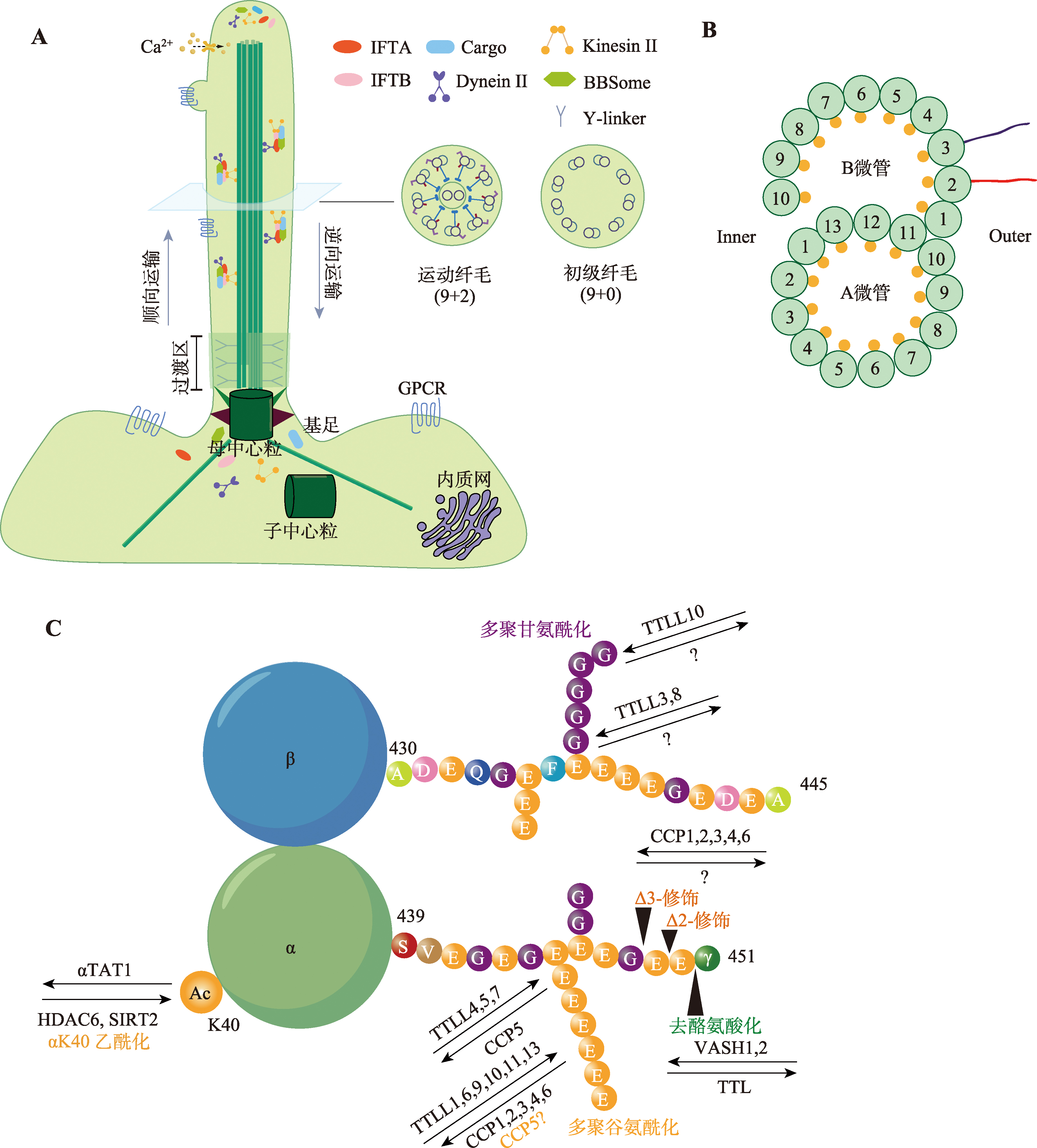
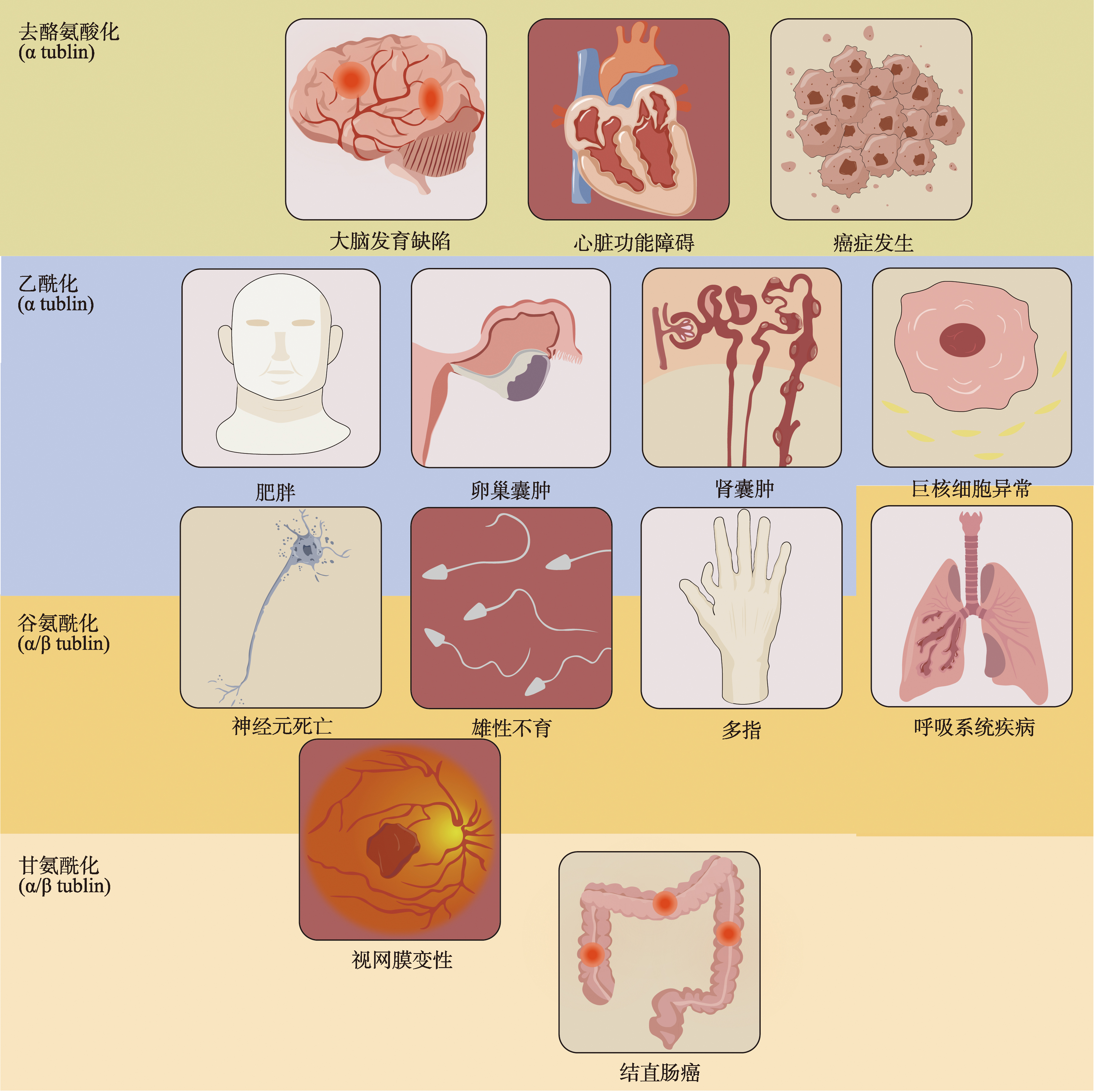
Fig. 2
Posttranslational modifications of ciliary tubulin and related human diseases"
| [1] |
Satir P, Christensen ST. Overview of structure and function of mammalian cilia. Annu Rev Physiol, 2007, 69: 377-400.
pmid: 17009929 |
| [2] |
Howards SS. Antoine van Leeuwenhoek and the discovery of sperm. Fertil Steril, 1997, 67(1): 16-17.
pmid: 8986676 |
| [3] |
Pazour GJ, Agrin N, Leszyk J, Witman GB. Proteomic analysis of a eukaryotic cilium. J Cell Biol, 2005, 170(1): 103-113.
pmid: 15998802 |
| [4] |
Klena N, Pigino G. Structural biology of cilia and intraflagellar transport. Annu Rev Cell Dev Biol, 2022, 38: 103-123.
pmid: 35767872 |
| [5] |
Berbari NF, O'Connor AK, Haycraft CJ, Yoder BK. The primary cilium as a complex signaling center. Curr Biol, 2009, 19(13): R526-R535.
pmid: 19602418 |
| [6] |
Goetz SC, Anderson KV. The primary cilium: a signalling centre during vertebrate development. Nat Rev Genet, 2010, 11(5): 331-344.
pmid: 20395968 |
| [7] |
Afzelius BA. The fine structure of the sea urchin spermatozoa as revealed by the electron microscope. Z Zellforsch Mikrosk Anat, 1955, 42(1-2): 134-148.
pmid: 13248087 |
| [8] |
Porter KR. The submicroscopic morphology of protoplasm. Harvey Lect, 1955, 51: 175-228.
pmid: 13405317 |
| [9] |
Aillaud C, Bosc C, Peris L, Bosson A, Heemeryck P, Van Dijk J, Le Friec J, Boulan B, Vossier F, Sanman LE, Syed S, Amara N, Couté Y, Lafanechère L, Denarier E, Delphin C, Pelletier L, Humbert S, Bogyo M, Andrieux A, Rogowski K, Moutin MJ. Vasohibins/SVBP are tubulin carboxypeptidases (TCPs) that regulate neuron differentiation. Science, 2017, 358(6369): 1448-1453.
pmid: 29146868 |
| [10] |
Ma MS, Stoyanova M, Rademacher G, Dutcher SK, Brown A, Zhang R. Structure of the decorated ciliary doublet microtubule. Cell, 2019, 179(4): 909-922.e12.
pmid: 31668805 |
| [11] |
Kramer-Zucker AG, Olale F, Haycraft CJ, Yoder BK, Schier AF, Drummond IA. Cilia-driven fluid flow in the zebrafish pronephros, brain and Kupffer's vesicle is required for normal organogenesis. Development, 2005, 132(8): 1907-1921.
pmid: 15790966 |
| [12] |
Ferrante MI, Romio L, Castro S, Collins JE, Goulding DA, Stemple DL, Woolf AS, Wilson SW. Convergent extension movements and ciliary function are mediated by ofd1, a zebrafish orthologue of the human oral-facial-digital type 1 syndrome gene. Hum Mol Genet, 2009, 18(2): 289-303.
pmid: 18971206 |
| [13] |
Stooke-Vaughan GA, Huang P, Hammond KL, Schier AF, Whitfield TT. The role of hair cells, cilia and ciliary motility in otolith formation in the zebrafish otic vesicle. Development, 2012, 139(10): 1777-1787.
pmid: 22461562 |
| [14] |
Hansen A, Zeiske E. The peripheral olfactory organ of the zebrafish, Danio rerio: an ultrastructural study. Chem Senses, 1998, 23(1): 39-48.
pmid: 9530968 |
| [15] |
Ishikawa T. Axoneme structure from motile cilia. Cold Spring Harb Perspect Biol, 2017, 9(1): a028076.
pmid: 27601632 |
| [16] |
Ishikawa T. Structure of motile cilia. Subcell Biochem, 2022, 99: 471-494.
pmid: 36151386 |
| [17] |
Kirschner M, Mitchison T. Beyond self-assembly: from microtubules to morphogenesis. Cell, 1986, 45(3): 329-342.
pmid: 3516413 |
| [18] |
Desai A, Mitchison TJ. Microtubule polymerization dynamics. Annu Rev Cell Dev Biol, 1997, 13: 83-117.
pmid: 9442869 |
| [19] |
Howard J, Hyman AA. Dynamics and mechanics of the microtubule plus end. Nature, 2003, 422(6933): 753-758.
pmid: 12700769 |
| [20] |
Hendel NL, Thomson M, Marshall WF. Diffusion as a ruler: modeling kinesin diffusion as a length sensor for intraflagellar transport. Biophys J, 2018, 114(3): 663-674.
pmid: 29414712 |
| [21] |
Orbach R, Howard J. The dynamic and structural properties of axonemal tubulins support the high length stability of cilia. Nat Commun, 2019, 10(1): 1838.
pmid: 31015426 |
| [22] |
Janke C. The tubulin code: molecular components, readout mechanisms, and functions. J Cell Biol, 2014, 206(4): 461-472.
pmid: 25135932 |
| [23] |
Verhey KJ, Gaertig J. The tubulin code. Cell Cycle, 2007, 6(17): 2152-2160.
pmid: 17786050 |
| [24] |
L'Hernault SW, Rosenbaum JL. Chlamydomonas alpha- tubulin is posttranslationally modified by acetylation on the epsilon-amino group of a lysine. Biochemistry, 1985, 24(2): 473-478.
pmid: 3919761 |
| [25] |
Soppina V, Herbstman JF, Skiniotis G, Verhey KJ. Luminal localization of α-tubulin K40 acetylation by cryo-EM analysis of fab-labeled microtubules. PLoS One, 2012, 7(10): e48204.
pmid: 23110214 |
| [26] |
Chu CW, Hou FJ, Zhang JM, Phu L, Loktev AV, Kirkpatrick DS, Jackson PK, Zhao YM, Zou H. A novel acetylation of β-tubulin by San modulates microtubule polymerization via down-regulating tubulin incorporation. Mol Biol Cell, 2011, 22(4): 448-456.
pmid: 21177827 |
| [27] |
Greenlee MA, Witt B, Sabo JA, Morris SC, Miller RK. The TOG protein Stu2 is regulated by acetylation. PLoS Genet, 2022, 18(9): e1010358.
pmid: 36084134 |
| [28] |
Lu YM, Yan S, Ti SC, Zheng CG. Editing of endogenous tubulins reveals varying effects of tubulin posttranslational modifications on axonal growth and regeneration. eLife, 2024, 13: RP94583.
pmid: 38949652 |
| [29] |
Matsuyama A, Shimazu T, Sumida Y, Saito A, Yoshimatsu Y, Seigneurin-Berny D, Osada H, Komatsu Y, Nishino N, Khochbin S, Horinouchi S, Yoshida M. In vivo destabilization of dynamic microtubules by HDAC6-mediated deacetylation. EMBO J, 2002, 21(24): 6820-6831.
pmid: 12486003 |
| [30] |
North BJ, Marshall BL, Borra MT, Denu JM, Verdin E. The human Sir2 ortholog, SIRT2, is an NAD+-dependent tubulin deacetylase. Mol Cell, 2003, 11(2): 437-444.
pmid: 12620231 |
| [31] |
Hubbert C, Guardiola A, Shao R, Kawaguchi Y, Ito A, Nixon A, Yoshida M, Wang XF, Yao TP. HDAC6 is a microtubule-associated deacetylase. Nature, 2002, 417(6887): 455-458.
pmid: 12024216 |
| [32] |
Akella JS, Wloga D, Kim J, Starostina NG, Lyons- Abbott S, Morrissette NS, Dougan ST, Kipreos ET, Gaertig J. MEC-17 is an alpha-tubulin acetyltransferase. Nature, 2010, 467(7312): 218-222.
pmid: 20829795 |
| [33] |
Shida T, Cueva JG, Xu ZJ, Goodman MB, Nachury MV. The major alpha-tubulin K40 acetyltransferase alphaTAT1 promotes rapid ciliogenesis and efficient mechanosensation. Proc Natl Acad Sci USA, 2010, 107(50): 21517-21522.
pmid: 21068373 |
| [34] |
Gaertig J, Cruz MA, Bowen J, Gu L, Pennock DG, Gorovsky MA. Acetylation of lysine 40 in alpha-tubulin is not essential in Tetrahymena thermophila. J Cell Biol, 1995, 129(5): 1301-1310.
pmid: 7775576 |
| [35] |
Kalebic N, Sorrentino S, Perlas E, Bolasco G, Martinez C, Heppenstall PA. αTAT1 is the major α-tubulin acetyltransferase in mice. Nat Commun, 2013, 4: 1962.
pmid: 23748901 |
| [36] |
Kim GW, Li L, Ghorbani M, You LY, Yang XJ. Mice lacking α-tubulin acetyltransferase 1 are viable but display α-tubulin acetylation deficiency and dentate gyrus distortion. J Biol Chem, 2013, 288(28): 20334-20350.
pmid: 23720746 |
| [37] |
Zhou X, Fan LX, Li KG, Ramchandran R, Calvet JP, Li X. SIRT2 regulates ciliogenesis and contributes to abnormal centrosome amplification caused by loss of polycystin-1. Hum Mol Genet, 2014, 23(6): 1644-1655.
pmid: 24203696 |
| [38] |
Sánchez de Diego A, Alonso Guerrero A, Martínez AC, van Wely KHM. Dido3-dependent HDAC6 targeting controls cilium size. Nat Commun, 2014, 5: 3500.
pmid: 24667272 |
| [39] |
Ran J, Yang YF, Li DW, Liu M, Zhou J. Deacetylation of α-tubulin and cortactin is required for HDAC6 to trigger ciliary disassembly. Sci Rep, 2015, 5: 12917.
pmid: 26246421 |
| [40] |
Tisler M, Ott T, Blum M, Schweickert A. Expression and cilia associated localization of Histone deacetylases 6 in Xenopus. MicroPubl Biol, 2023, 2023.
pmid: 37649557 |
| [41] |
Zhang Y, Kwon S, Yamaguchi T, Cubizolles F, Rousseaux S, Kneissel M, Cao C, Li N, Cheng HL, Chua K, Lombard D, Mizeracki A, Matthias G, Alt FW, Khochbin S, Matthias P. Mice lacking histone deacetylase 6 have hyperacetylated tubulin but are viable and develop normally. Mol Cell Biol, 2008, 28(5): 1688-1701.
pmid: 18180281 |
| [42] |
Łysyganicz PK, Pooranachandran N, Liu XM, Adamson KI, Zielonka K, Elworthy S, van Eeden FJ, Grierson AJ, Malicki JJ. Loss of deacetylation enzymes Hdac6 and Sirt2 promotes acetylation of cytoplasmic tubulin, but suppresses axonemal acetylation in zebrafish cilia. Front Cell Dev Biol, 2021, 9: 676214.
pmid: 34268305 |
| [43] |
Alper JD, Decker F, Agana B, Howard J. The motility of axonemal dynein is regulated by the tubulin code. Biophys J, 2014, 107(12): 2872-2880.
pmid: 25658008 |
| [44] |
Portran D, Schaedel L, Xu ZJ, Théry M, Nachury MV. Tubulin acetylation protects long-lived microtubules against mechanical ageing. Nat Cell Biol, 2017, 19(4): 391-398.
pmid: 28250419 |
| [45] |
Xu ZJ, Schaedel L, Portran D, Aguilar A, Gaillard J, Marinkovich MP, Théry M, Nachury MV. Microtubules acquire resistance from mechanical breakage through intralumenal acetylation. Science, 2017, 356(6335): 328-332.
pmid: 28428427 |
| [46] |
Reed NA, Cai DW, Blasius TL, Jih GT, Meyhofer E, Gaertig J, Verhey KJ. Microtubule acetylation promotes kinesin-1 binding and transport. Curr Biol, 2006, 16(21): 2166-2172.
pmid: 17084703 |
| [47] |
Walter WJ, Beránek V, Fischermeier E, Diez S. Tubulin acetylation alone does not affect kinesin-1 velocity and run length in vitro. PLoS One, 2012, 7(8): e42218.
pmid: 22870307 |
| [48] |
Kaul N, Soppina V, Verhey KJ. Effects of α-tubulin K40 acetylation and detyrosination on kinesin-1 motility in a purified system. Biophys J, 2014, 106(12): 2636-2643.
pmid: 24940781 |
| [49] |
Alexander JE, Hunt DF, Lee MK, Shabanowitz J, Michel H, Berlin SC, MacDonald TL, Sundberg RJ, Rebhun LI, Frankfurter A. Characterization of posttranslational modifications in neuron-specific class III beta-tubulin by mass spectrometry. Proc Natl Acad Sci USA, 1991, 88(11): 4685-4689.
pmid: 2052551 |
| [50] |
Eddé B, Rossier J, Le Caer JP, Desbruyères E, Gros F, Denoulet P. Posttranslational glutamylation of alpha- tubulin. Science, 1990, 247(4938): 83-85.
pmid: 1967194 |
| [51] |
Rüdiger M, Plessman U, Klöppel KD, Wehland J, Weber K. Class II tubulin, the major brain beta tubulin isotype is polyglutamylated on glutamic acid residue 435. FEBS Lett, 1992, 308(1): 101-105.
pmid: 1379548 |
| [52] |
Bré MH, de Néchaud B, Wolff A, Fleury A. Glutamylated tubulin probed in ciliates with the monoclonal antibody GT335. Cell Motil Cytoskeleton, 1994, 27(4): 337-349.
pmid: 7520839 |
| [53] |
Fouquet JP, Edde B, Kann ML, Wolff A, Desbruyeres E, Denoulet P. Differential distribution of glutamylated tubulin during spermatogenesis in mammalian testis. Cell Motil Cytoskeleton, 1994, 27(1): 49-58.
pmid: 7910783 |
| [54] |
Bobinnec Y, Khodjakov A, Mir LM, Rieder CL, Eddé B, Bornens M. Centriole disassembly in vivo and its effect on centrosome structure and function in vertebrate cells. J Cell Biol, 1998, 143(6): 1575-1589.
pmid: 9852152 |
| [55] |
Bobinnec Y, Moudjou M, Fouquet JP, Desbruyères E, Eddé B, Bornens M. Glutamylation of centriole and cytoplasmic tubulin in proliferating non-neuronal cells. Cell Motil Cytoskeleton, 1998, 39(3): 223-232.
pmid: 9519903 |
| [56] |
Kubo T, Yanagisawa HA, Yagi T, Hirono M, Kamiya R. Tubulin polyglutamylation regulates axonemal motility by modulating activities of inner-arm dyneins. Curr Biol, 2010, 20(5): 441-445.
pmid: 20188560 |
| [57] |
Wloga D, Joachimiak E, Louka P, Gaertig J. Posttranslational modifications of tubulin and cilia. Cold Spring Harb Perspect Biol, 2017, 9(6): a028159.
pmid: 28003186 |
| [58] |
Suryavanshi S, Eddé B, Fox LA, Guerrero S, Hard R, Hennessey T, Kabi A, Malison D, Pennock D, Sale WS, Wloga D, Gaertig J. Tubulin glutamylation regulates ciliary motility by altering inner dynein arm activity. Curr Biol, 2010, 20(5): 435-440.
pmid: 20189389 |
| [59] |
Mukai M, Ikegami K, Sugiura Y, Takeshita K, Nakagawa A, Setou M. Recombinant mammalian tubulin polyglutamylase TTLL7 performs both initiation and elongation of polyglutamylation on beta-tubulin through a random sequential pathway. Biochemistry, 2009, 48(5): 1084-1093.
pmid: 19152315 |
| [60] |
Zhang XY, Li XX, Chen W, Wang YJ, Diao L, Gao Y, Wang HY, Bao L, Liang X, Wu HY. The distinct initiation sites and processing activities of TTLL4 and TTLL7 in glutamylation of brain tubulin. J Biol Chem, 2023, 299(7): 104923.
pmid: 37321451 |
| [61] |
Wloga D, Rogowski K, Sharma N, Van Dijk J, Janke C, Eddé B, Bré MH, Levilliers N, Redeker V, Duan JM, Gorovsky MA, Jerka-Dziadosz M, Gaertig J. Glutamylation on alpha-tubulin is not essential but affects the assembly and functions of a subset of microtubules in Tetrahymena thermophila. Eukaryot Cell, 2008, 7(8): 1362-1372.
pmid: 18586949 |
| [62] |
Ikegami K, Horigome D, Mukai M, Livnat I, MacGregor GR, Setou M. TTLL10 is a protein polyglycylase that can modify nucleosome assembly protein 1. FEBS Lett, 2008, 582(7): 1129-1134.
pmid: 18331838 |
| [63] | Campbell J, Vosahlikova M, Ismail S, Volnikova M, Motlova L, Kudlacova J, Ustinova K, Snajdr I, Novakova Z, Basta M, Gutsche I, Moutin MJ, Desfosses A, Barinka C. Expanding the tubulin code: TTLL11 polyglutamylase drives elongation of primary tubulin chains. BioRxiv, 2025.02.24.639257. |
| [64] |
Mahalingan KK, Keith Keenan E, Strickland M, Li Y, Liu YJ, Ball HL, Tanner ME, Tjandra N, Roll-Mecak A. Structural basis for polyglutamate chain initiation and elongation by TTLL family enzymes. Nat Struct Mol Biol, 2020, 27(9): 802-813.
pmid: 32747782 |
| [65] |
Sébastien M, Paquette AL, Prowse ENP, Hendricks AG, Brouhard GJ. Doublecortin restricts neuronal branching by regulating tubulin polyglutamylation. Nat Commun, 2025, 16(1): 1749.
pmid: 39966472 |
| [66] |
Mahalingan KK, Grotjahn DA, Li Y, Lander GC, Zehr EA, Roll-Mecak A. Structural basis for α-tubulin- specific and modification state-dependent glutamylation. Nat Chem Biol, 2024, 20(11): 1493-1504.
pmid: 38658656 |
| [67] |
Bao M, Dörig RE, Vazquez-Pianzola PM, Beuchle D, Suter B. Differential modification of the C-terminal tails of different α-tubulins and their importance for microtubule function in vivo. eLife, 2023, 12: e87125.
pmid: 37345829 |
| [68] |
Bodakuntla S, Yuan XD, Genova M, Gadadhar S, Leboucher S, Birling MC, Klein D, Martini R, Janke C, Magiera MM. Distinct roles of α- and β-tubulin polyglutamylation in controlling axonal transport and in neurodegeneration. EMBO J, 2021, 40(17): e108498.
pmid: 34309047 |
| [69] |
Janke C, Rogowski K, Wloga D, Regnard C, Kajava AV, Strub JM, Temurak N, van Dijk J, Boucher D, van Dorsselaer A, Suryavanshi S, Gaertig J, Eddé B. Tubulin polyglutamylase enzymes are members of the TTL domain protein family. Science, 2005, 308(5729): 1758-1762.
pmid: 15890843 |
| [70] |
van Dijk J, Rogowski K, Miro J, Lacroix B, Eddé B, Janke C. A targeted multienzyme mechanism for selective microtubule polyglutamylation. Mol Cell, 2007, 26(3): 437-448.
pmid: 17499049 |
| [71] |
Kimura Y, Kurabe N, Ikegami K, Tsutsumi K, Konishi Y, Kaplan OI, Kunitomo H, Iino Y, Blacque OE, Setou M. Identification of tubulin deglutamylase among Caenorhabditis elegans and mammalian cytosolic carboxypeptidases (CCPs). J Biol Chem, 2010, 285(30): 22936-22941.
pmid: 20519502 |
| [72] |
Rogowski K, van Dijk J, Magiera MM, Bosc C, Deloulme JC, Bosson A, Peris L, Gold ND, Lacroix B, Bosch Grau M, Bec N, Larroque C, Desagher S, Holzer M, Andrieux A, Moutin MJ, Janke C. A family of protein-deglutamylating enzymes associated with neurodegeneration. Cell, 2010, 143(4): 564-578.
pmid: 21074048 |
| [73] |
Berezniuk I, Lyons PJ, Sironi JJ, Xiao H, Setou M, Angeletti RH, Ikegami K, Fricker LD. Cytosolic carboxypeptidase 5 removes α- and γ-linked glutamates from tubulin. J Biol Chem, 2013, 288(42): 30445-30453.
pmid: 24022482 |
| [74] |
He K, Ma XY, Xu T, Li Y, Hodge A, Zhang Q, Torline J, Huang Y, Zhao J, Ling K, Hu J. Axoneme polyglutamylation regulated by Joubert syndrome protein ARL13B controls ciliary targeting of signaling molecules. Nat Commun, 2018, 9(1): 3310.
pmid: 30120249 |
| [75] |
Lee JE, Silhavy JL, Zaki MS, Schroth J, Bielas SL, Marsh SE, Olvera J, Brancati F, Iannicelli M, Ikegami K, Schlossman AM, Merriman B, Attié-Bitach T, Logan CV, Glass IA, Cluckey A, Louie CM, Lee JH, Raynes HR, Rapin I, Castroviejo IP, Setou M, Barbot C, Boltshauser E, Nelson SF, Hildebrandt F, Johnson CA, Doherty DA, Valente EM, Gleeson JG. CEP41 is mutated in Joubert syndrome and is required for tubulin glutamylation at the cilium. Nat Genet, 2012, 44(2): 193-199.
pmid: 22246503 |
| [76] |
Pathak N, Austin-Tse CA, Liu Y, Vasilyev A, Drummond IA. Cytoplasmic carboxypeptidase 5 regulates tubulin glutamylation and zebrafish cilia formation and function. Mol Biol Cell, 2014, 25(12): 1836-1844.
pmid: 24743595 |
| [77] |
Mitchell DR. Polyglutamylation: the GLU that makes microtubules sticky. Curr Biol, 2010, 20(5): R234-R236.
pmid: 20219172 |
| [78] |
Dymek EE, Lefebvre PA, Smith EF. PF15p is the Chlamydomonas homologue of the Katanin p80 subunit and is required for assembly of flagellar central microtubules. Eukaryot Cell, 2004, 3(4): 870-879.
pmid: 15302820 |
| [79] |
Lacroix B, van Dijk J, Gold ND, Guizetti J, Aldrian- Herrada G, Rogowski K, Gerlich DW, Janke C. Tubulin polyglutamylation stimulates spastin-mediated microtubule severing. J Cell Biol, 2010, 189(6): 945-954.
pmid: 20530212 |
| [80] |
Valenstein ML, Roll-Mecak A. Graded control of microtubule severing by tubulin glutamylation. Cell, 2016, 164(5): 911-921.
pmid: 26875866 |
| [81] |
Kubo T, Hirono M, Aikawa T, Kamiya R, Witman GB. Reduced tubulin polyglutamylation suppresses flagellar shortness in Chlamydomonas. Mol Biol Cell, 2015, 26(15): 2810-2822.
pmid: 26085508 |
| [82] |
Wloga D, Dave D, Meagley J, Rogowski K, Jerka- Dziadosz M, Gaertig J. Hyperglutamylation of tubulin can either stabilize or destabilize microtubules in the same cell. Eukaryot Cell, 2010, 9(1): 184-193.
pmid: 19700636 |
| [83] |
Hong SR, Wang CL, Huang YS, Chang YC, Chang YC, Pusapati GV, Lin CY, Hsu N, Cheng HC, Chiang YC, Huang WE, Shaner NC, Rohatgi R, Inoue T, Lin YC. Spatiotemporal manipulation of ciliary glutamylation reveals its roles in intraciliary trafficking and Hedgehog signaling. Nat Commun, 2018, 9(1): 1732.
pmid: 29712905 |
| [84] | Bosch-Grau M, Rochas C, Meunier A, Spassky N, Janke C. Tubulin posttranslational modifications as regulators of microtubule-based functions in cells. Cilia, 2012, 1(1): 17. |
| [85] |
Bosch Grau M, Gonzalez Curto G, Rocha C, Magiera MM, Marques Sousa P, Giordano T, Spassky N, Janke C. Tubulin glycylases and glutamylases have distinct functions in stabilization and motility of ependymal cilia. J Cell Biol, 2013, 202(3): 441-451.
pmid: 23897886 |
| [86] |
Ikegami K, Setou M. TTLL10 can perform tubulin glycylation when co-expressed with TTLL8. FEBS Lett, 2009, 583(12): 1957-1963.
pmid: 19427864 |
| [87] |
Pathak N, Austin CA, Drummond IA. Tubulin tyrosine ligase-like genes ttll3 and ttll6 maintain zebrafish cilia structure and motility. J Biol Chem, 2011, 286(13): 11685-11695.
pmid: 21262966 |
| [88] |
Ikegami K, Sato S, Nakamura K, Ostrowski LE, Setou M. Tubulin polyglutamylation is essential for airway ciliary function through the regulation of beating asymmetry. Proc Natl Acad Sci USA, 2010, 107(23): 10490-10495.
pmid: 20498047 |
| [89] |
Vogel P, Hansen G, Fontenot G, Read R. Tubulin tyrosine ligase-like 1 deficiency results in chronic rhinosinusitis and abnormal development of spermatid flagella in mice. Vet Pathol, 2010, 47(4): 703-712.
pmid: 20442420 |
| [90] |
Wang YJ, Zhang Y, Guo XY, Zheng YQ, Zhang XJ, Feng SS, Wu HY. CCP5 and CCP6 retain CP110 and negatively regulate ciliogenesis. BMC Biol, 2023, 21(1): 124.
pmid: 37226238 |
| [91] |
Giordano T, Gadadhar S, Bodakuntla S, Straub J, Leboucher S, Martinez G, Chemlali W, Bosc C, Andrieux A, Bieche I, Arnoult C, Geimer S, Janke C. Loss of the deglutamylase CCP5 perturbs multiple steps of spermatogenesis and leads to male infertility. J Cell Sci, 2019, 132(3): jcs226951.
pmid: 30635446 |
| [92] |
Mercey O, Gadadhar S, Magiera MM, Lebrun L, Kostic C, Moulin A, Arsenijevic Y, Janke C, Guichard P, Hamel V. Glutamylation imbalance impairs the molecular architecture of the photoreceptor cilium. EMBO J, 2024, 43(24): 6679-6704.
pmid: 39528655 |
| [93] |
Bosch Grau M, Masson C, Gadadhar S, Rocha C, Tort O, Marques Sousa P, Vacher S, Bieche I, Janke C. Alterations in the balance of tubulin glycylation and glutamylation in photoreceptors leads to retinal degeneration. J Cell Sci, 2017, 130(5): 938-949.
pmid: 28104815 |
| [94] |
Redeker V, Levilliers N, Schmitter JM, Le Caer JP, Rossier J, Adoutte A, Bré MH. Polyglycylation of tubulin: a posttranslational modification in axonemal microtubules. Science, 1994, 266(5191): 1688-1691.
pmid: 7992051 |
| [95] |
Bré MH, Redeker V, Vinh J, Rossier J, Levilliers N. Tubulin polyglycylation: differential posttranslational modification of dynamic cytoplasmic and stable axonemal microtubules in Paramecium. Mol Biol Cell, 1998, 9(9): 2655-2665.
pmid: 9725918 |
| [96] |
Rogowski K, Juge F, van Dijk J, Wloga D, Strub JM, Levilliers N, Thomas D, Bré MH, Van Dorsselaer A, Gaertig J, Janke C. Evolutionary divergence of enzymatic mechanisms for posttranslational polyglycylation. Cell, 2009, 137(6): 1076-1087.
pmid: 19524510 |
| [97] |
Rocha C, Papon L, Cacheux W, Marques Sousa P, Lascano V, Tort O, Giordano T, Vacher S, Lemmers B, Mariani P, Meseure D, Medema JP, Bièche I, Hahne M, Janke C. Tubulin glycylases are required for primary cilia, control of cell proliferation and tumor development in colon. EMBO J, 2014, 33(19): 2247-2260.
pmid: 25180231 |
| [98] |
Wloga D, Webster DM, Rogowski K, Bré MH, Levilliers N, Jerka-Dziadosz M, Janke C, Dougan ST, Gaertig J. TTLL3 Is a tubulin glycine ligase that regulates the assembly of cilia. Dev Cell, 2009, 16(6): 867-876.
pmid: 19531357 |
| [99] |
Szczesna E, Zehr EA, Cummings SW, Szyk A, Mahalingan KK, Li Y, Roll-Mecak A. Combinatorial and antagonistic effects of tubulin glutamylation and glycylation on katanin microtubule severing. Dev Cell, 2022, 57(21): 2497-2513.e6.
pmid: 36347241 |
| [100] |
Kubo T, Sasaki R, Oda T. Tubulin glycylation controls ciliary motility through modulation of outer-arm dyneins. Mol Biol Cell, 2024, 35(7): ar90.
pmid: 38758663 |
| [101] |
Gadadhar S, Dadi H, Bodakuntla S, Schnitzler A, Bièche I, Rusconi F, Janke C. Tubulin glycylation controls primary cilia length. J Cell Biol, 2017, 216(9): 2701-2713.
pmid: 28687664 |
| [102] |
Redeker V, Levilliers N, Vinolo E, Rossier J, Jaillard D, Burnette D, Gaertig J, Bré MH. Mutations of tubulin glycylation sites reveal cross-talk between the C termini of alpha- and beta-tubulin and affect the ciliary matrix in Tetrahymena. J Biol Chem, 2005, 280(1): 596-606.
pmid: 15492004 |
| [103] |
Thazhath R, Jerka-Dziadosz M, Duan JM, Wloga D, Gorovsky MA, Frankel J, Gaertig J. Cell context-specific effects of the beta-tubulin glycylation domain on assembly and size of microtubular organelles. Mol Biol Cell, 2004, 15(9): 4136-4147.
pmid: 15254268 |
| [104] |
Kumar N, Flavin M. Preferential action of a brain detyrosinolating carboxypeptidase on polymerized tubulin. J Biol Chem, 1981, 256(14): 7678-7686.
pmid: 6114100 |
| [105] |
Arce CA, Barra HS. Association of tubulinyl-tyrosine carboxypeptidase with microtubules. FEBS Lett, 1983, 157(1): 75-78.
pmid: 6862022 |
| [106] |
Johnson KA. The axonemal microtubules of the Chlamydomonas flagellum differ in tubulin isoform content. J Cell Sci, 1998, 111(Pt 3): 313-320.
pmid: 9427680 |
| [107] |
Ersfeld K, Wehland J, Plessmann U, Dodemont H, Gerke V, Weber K. Characterization of the tubulin-tyrosine ligase. J Cell Biol, 1993, 120(3): 725-732.
pmid: 8093886 |
| [108] |
Murofushi H. Purification and characterization of tubulin-tyrosine ligase from porcine brain. J Biochem, 1980, 87(3): 979-984.
pmid: 7390974 |
| [109] |
Schröder HC, Wehland J, Weber K. Purification of brain tubulin-tyrosine ligase by biochemical and immunological methods. J Cell Biol, 1985, 100(1): 276-281.
pmid: 3965474 |
| [110] |
Nieuwenhuis J, Adamopoulos A, Bleijerveld OB, Mazouzi A, Stickel E, Celie P, Altelaar M, Knipscheer P, Perrakis A, Blomen VA, Brummelkamp TR. Vasohibins encode tubulin detyrosinating activity. Science, 2017, 358(6369): 1453-1456.
pmid: 29146869 |
| [111] |
Müller M, Gorek L, Kamm N, Jacob R. Manipulation of the tubulin code alters directional cell migration and ciliogenesis. Front Cell Dev Biol, 2022, 10: 901999.
pmid: 35903547 |
| [112] |
Kozminski KG, Beech PL, Rosenbaum JL. The Chlamydomonas kinesin-like protein FLA10 is involved in motility associated with the flagellar membrane. J Cell Biol, 1995, 131(6 Pt1): 1517-1527.
pmid: 8522608 |
| [113] |
Pigino G, Geimer S, Lanzavecchia S, Paccagnini E, Cantele F, Diener DR, Rosenbaum JL, Lupetti P. Electron-tomographic analysis of intraflagellar transport particle trains in situ. J Cell Biol, 2009, 187(1): 135-148.
pmid: 19805633 |
| [114] |
Sirajuddin M, Rice LM, Vale RD. Regulation of microtubule motors by tubulin isotypes and post- translational modifications. Nat Cell Biol, 2014, 16(4): 335-344.
pmid: 24633327 |
| [115] |
Chhatre A, Stepanek L, Nievergelt AP, Alvarez Viar G, Diez S, Pigino G. Tubulin tyrosination/detyrosination regulate the affinity and sorting of intraflagellar transport trains on axonemal microtubule doublets. Nat Commun, 2025, 16(1): 1055.
pmid: 39865093 |
| [116] |
Paturle-Lafanechère L, Eddé B, Denoulet P, Van Dorsselaer A, Mazarguil H, Le Caer JP, Wehland J, Job D. Characterization of a major brain tubulin variant which cannot be tyrosinated. Biochemistry, 1991, 30(43): 10523-10528.
pmid: 1931974 |
| [117] |
Kalinina E, Biswas R, Berezniuk I, Hermoso A, Aviles FX, Fricker LD. A novel subfamily of mouse cytosolic carboxypeptidases. FASEB J, 2007, 21(3): 836-850.
pmid: 17244818 |
| [118] |
Tort O, Tanco S, Rocha C, Bièche I, Seixas C, Bosc C, Andrieux A, Moutin MJ, Avilés FX, Lorenzo J, Janke C. The cytosolic carboxypeptidases CCP2 and CCP3 catalyze posttranslational removal of acidic amino acids. Mol Biol Cell, 2014, 25(19): 3017-3027.
pmid: 25103237 |
| [119] |
Hochstrasser M. Ubiquitin-dependent protein degradation. Annu Rev Genet, 1996, 30: 405-439.
pmid: 8982460 |
| [120] |
Huang K, Diener DR, Rosenbaum JL. The ubiquitin conjugation system is involved in the disassembly of cilia and flagella. J Cell Biol, 2009, 186(4): 601-613.
pmid: 19704024 |
| [121] |
Wang QY, Peng Z, Long H, Deng X, Huang KY. Polyubiquitylation of α-tubulin at K304 is required for flagellar disassembly in Chlamydomonas. J Cell Sci, 2019, 132(6): jcs229047.
pmid: 30765466 |
| [122] |
Shashi V, Magiera MM, Klein D, Zaki M, Schoch K, Rudnik-Schöneborn S, Norman A, Dusl M, Yuan XD, Bartesaghi L, De Marco P, Alfares AA, Marom R, Arold ST, Guzmán-Vega FJ, Pena LD, Smith EC, Steinlin M, Babiker MO, Mohassel P, Foley AR, Donkervoort S, Kaur R, Ghosh PS, Stanley V, Musaev D, Nava C, Mignot C, Keren B, Scala M, Tassano E, Picco P, Doneda P, Fiorillo C, Issa MY, Alassiri A, Alahmad A, Gerard A, Liu PF, Yang YP, Ertl-Wagner B, Kranz PG, Wentzensen IM, Stucka R, Stong N, Allen AS, Goldstein DB, Schoser B, Rösler KM, Alfadhel M, Capra V, Chrast R, Strom TM, Kamsteeg EJ, Bönnemann CG, Gleeson JG, Martini R, Janke C, Senderek J. Lopes Abath Neto O, Undiagnosed Diseases Network, Loss of tubulin deglutamylase CCP1 causes infantile-onset neurodegeneration. EMBO J, 2018, 37(23): e100540.
pmid: 30420557 |
| [123] |
Bodakuntla S, Schnitzler A, Villablanca C, Gonzalez- Billault C, Bieche I, Janke C, Magiera MM. Tubulin polyglutamylation is a general traffic-control mechanism in hippocampal neurons. J Cell Sci, 2020, 133(3): jcs241802.
pmid: 31932508 |
| [124] |
Power KM, Akella JS, Gu A, Walsh JD, Bellotti S, Morash M, Zhang WN, Ramadan YH, Ross N, Golden A, Smith HE, Barr MM, O'Hagan R. Mutation of NEKL-4/ NEK10 and TTLL genes suppress neuronal ciliary degeneration caused by loss of CCPP-1 deglutamylase function. PLoS Genet, 2020, 16(10): e1009052.
pmid: 33064774 |
| [125] |
Aljammal R, Saravanan T, Guan TJ, Rhodes S, Robichaux MA, Ramamurthy V. Excessive tubulin glutamylation leads to progressive cone-rod dystrophy and loss of outer segment integrity. Hum Mol Genet, 2024, 33(9): 802-817.
pmid: 38297980 |
| [126] |
Reiter JF, Leroux MR. Genes and molecular pathways underpinning ciliopathies. Nat Rev Mol Cell Biol, 2017, 18(9): 533-547.
pmid: 28698599 |
| [127] |
Wickström SA, Masoumi KC, Khochbin S, Fässler R, Massoumi R. CYLD negatively regulates cell-cycle progression by inactivating HDAC6 and increasing the levels of acetylated tubulin. EMBO J, 2010, 29(1): 131-144.
pmid: 19893491 |
| [128] |
Yang YF, Ran J, Liu M, Li DW, Li YY, Shi XJ, Meng D, Pan JM, Ou GS, Aneja R, Sun SC, Zhou J. CYLD mediates ciliogenesis in multiple organs by deubiquitinating Cep70 and inactivating HDAC6. Cell Res, 2014, 24(11): 1342-1353.
pmid: 25342559 |
| [129] |
Loktev AV, Zhang QH, Beck JS, Searby CC, Scheetz TE, Bazan JF, Slusarski DC, Sheffield VC, Jackson PK, Nachury MV. A BBSome subunit links ciliogenesis, microtubule stability, and acetylation. Dev Cell, 2008, 15(6): 854-865.
pmid: 19081074 |
| [130] |
Keryer G, Pineda JR, Liot G, Kim J, Dietrich P, Benstaali C, Smith K, Cordelières FP, Spassky N, Ferrante RJ, Dragatsis I, Saudou F. Ciliogenesis is regulated by a huntingtin-HAP1-PCM1 pathway and is altered in Huntington disease. J Clin Invest, 2011, 121(11): 4372-4382.
pmid: 21985783 |
| [131] | Latour BL, Van De Weghe JC, Rusterholz TDS, Letteboer SJF, Gomez A, Shaheen R, Gesemann M, Grout ME, van Reeuwijk J, Van Beersum SEC, Miller CV, Dempsey JC, Morsy H, Bamshad MJ, Nickerson DA, Neuhauss SCF, Boldt K, Ueffing M, Alkuraya FS, Bachmann-Gagescu R, Roepman R, Doherty D. ARMC9 and TOGARAM1 define a Joubert syndrome-associated protein module that regulates axonemal post- translational modifications and cilium stability. BioRxiv, 2019, 817213. |
| [132] |
Berbari NF, Sharma N, Malarkey EB, Pieczynski JN, Boddu R, Gaertig J, Guay-Woodford L, Yoder BK. Microtubule modifications and stability are altered by cilia perturbation and in cystic kidney disease. Cytoskeleton (Hoboken), 2013, 70(1): 24-31.
pmid: 23124988 |
| [133] |
Dafinger C, Liebau MC, Elsayed SM, Hellenbroich Y, Boltshauser E, Korenke GC, Fabretti F, Janecke AR, Ebermann I, Nürnberg G, Nürnberg P, Zentgraf H, Koerber F, Addicks K, Elsobky E, Benzing T, Schermer B, Bolz HJ. Mutations in KIF7 link Joubert syndrome with Sonic Hedgehog signaling and microtubule dynamics. J Clin Invest, 2011, 121(7): 2662-2667.
pmid: 21633164 |
| [134] |
Campbell PK, Waymire KG, Heier RL, Sharer C, Day DE, Reimann H, Jaje JM, Friedrich GA, Burmeister M, Bartness TJ, Russell LD, Young LJ, Zimmer M, Jenne DE, MacGregor GR. Mutation of a novel gene results in abnormal development of spermatid flagella, loss of intermale aggression and reduced body fat in mice. Genetics, 2002, 162(1): 307-320.
pmid: 12242242 |
| [135] |
Konno A, Ikegami K, Konishi Y, Yang HJ, Abe M, Yamazaki M, Sakimura K, Yao I, Shiba K, Inaba K, Setou M. Ttll9-/- mice sperm flagella show shortening of doublet 7, reduction of doublet 5 polyglutamylation and a stall in beating. J Cell Sci, 2016, 129(14): 2757-2766.
pmid: 27257088 |
| [136] |
Wu HY, Wei P, Morgan JI. Role of cytosolic carboxypeptidase 5 in neuronal survival and spermatogenesis. Sci Rep, 2017, 7: 41428.
pmid: 28128286 |
| [137] |
Pathak N, Obara T, Mangos S, Liu Y, Drummond IA. The zebrafish fleer gene encodes an essential regulator of cilia tubulin polyglutamylation. Mol Biol Cell, 2007, 18(11): 4353-4364.
pmid: 17761526 |
| [138] |
Astuti GD, Arno G, Hull S, Pierrache L, Venselaar H, Carss K, Raymond FL, Collin RWJ, Faradz SMH, van den Born LI, Webster AR, Cremers FPM. Mutations in AGBL5, encoding α-Tubulin deglutamylase, are associated with autosomal recessive retinitis pigmentosa. Invest Ophthalmol Vis Sci, 2016, 57(14): 6180-6187.
pmid: 27842159 |
| [139] |
Branham K, Matsui H, Biswas P, Guru AA, Hicks M, Suk JJ, Li H, Jakubosky D, Long T, Telenti A, Nariai N, Heckenlively JR, Frazer KA, Sieving PA, Ayyagari R. Establishing the involvement of the novel gene AGBL5 in retinitis pigmentosa by whole genome sequencing. Physiol Genomics, 2016, 48(12): 922-927.
pmid: 27764769 |
| [140] |
Mullen RJ, Eicher EM, Sidman RL. Purkinje cell degeneration, a new neurological mutation in the mouse. Proc Natl Acad Sci USA, 1976, 73(1): 208-212.
pmid: 1061118 |
| [141] |
Jian WC, Wei XB, Chen L, Wang ZY, Sun Y, Zhu SW, Lou HY, Yan SQ, Li XB, Zhou JL, Zhang B. Inhibition of HDAC6 increases acetylation of peroxiredoxin1/2 and ameliorates 6-OHDA induced dopaminergic injury. Neurosci Lett, 2017, 658: 114-120.
pmid: 28823893 |
| [142] |
Su Q, Li T, He PF, Lu XC, Yu Q, Gao QC, Wang ZJ, Wu MN, Yang D, Qi JS. Trichostatin A ameliorates Alzheimer's disease-related pathology and cognitive deficits by increasing albumin expression and Aβ clearance in APP/PS1 mice. Alzheimers Res Ther, 2021, 13(1): 7.
pmid: 33397436 |
| [143] |
Benoy V, Vanden Berghe P, Jarpe M, Van Damme P, Robberecht W, Van Den Bosch L. Development of improved HDAC6 inhibitors as pharmacological therapy for axonal Charcot-Marie-Tooth disease. Neurotherapeutics, 2017, 14(2): 417-428.
pmid: 27957719 |
| [144] |
Jochems J, Boulden J, Lee BG, Blendy JA, Jarpe M, Mazitschek R, Van Duzer JH, Jones S, Berton O. Antidepressant-like properties of novel HDAC6- selective inhibitors with improved brain bioavailability. Neuropsychopharmacology, 2014, 39(2): 389-400.
pmid: 23954848 |
| [145] |
Braz SO, Morgado MM, Pereira MI, Monteiro AC, Golonzhka O, Jarpe M, Brites P, Sousa MM, Nogueira-Rodrigues J. HDAC-6 inhibition ameliorates the early neuropathology in a mouse model of Krabbe disease. Front Mol Neurosci, 2023, 16: 1231659.
pmid: 37588057 |
| [1] | Ziyan Liu, Ai Gao. Progress on inflamm-aging in hematologic diseases [J]. Hereditas(Beijing), 2021, 43(12): 1132-1141. |
| [2] | Manli Zhang, Yanping Lu, Yali Li. Correlation between primary cilium and Wnt signaling pathway [J]. HEREDITAS(Beijing), 2015, 37(3): 233-239. |
| [3] | KONG Ling-Na, LI Qiao, WANG Hai-Yan, CAO Ai-Zhong, CHEN Pei-Du, WANG Xiu-E. Molecular marker analysis of wheat-Roegneria ciliaris additions lines [J]. HEREDITAS, 2008, 30(10): 1356-1362. |
| Viewed | ||||||
|
Full text |
|
|||||
|
Abstract |
|
|||||

