Hereditas(Beijing) ›› 2026, Vol. 48 ›› Issue (4): 377-392.doi: 10.16288/j.yczz.25-259
• Review • Previous Articles Next Articles
Applications and research advances of the ancient plant DNA technology
Yutian Yang1( ), Caihui Wang1, Zhikun Ma1, Qingqing Li2, Ming Zhang1()
- 1
Key Laboratory of Cultural Heritage Research and Conservation ,China-Central Asia “the Belt and Road” Joint Laboratory on Human and Environment Research, School of Cultural Heritage, Northwest University Xi’an 710127, China
2College of Life Sciences ,Northwest University Xi’an 710127, China
-
Received:2025-11-18Revised:2026-01-15Online:2026-01-21Published:2026-01-21 -
Contact:Ming Zhang E-mail:m18090587395@163.com;zhangming@nwu.edu.cn -
Supported by:Science and Technology Innovation Team of Shaanxi Province(2024RS-CXTD-74);National Key R&D Program of China(2022YFE0203800);Archaeological Talent Promotion Program of China(2025-187)

Cite this article
Yutian Yang, Caihui Wang, Zhikun Ma, Qingqing Li, Ming Zhang. Applications and research advances of the ancient plant DNA technology[J]. Hereditas(Beijing), 2026, 48(4): 377-392.
share this article
Add to citation manager EndNote|Reference Manager|ProCite|BibTeX|RefWorks
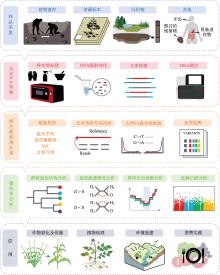
Fig. 1
Workflow of ancient plant DNA research"
Table 1
Comparison of the main sample sources of ancient plant DNA"
| 样本类型 | 优势 | 局限性 | 参考文献 | |
|---|---|---|---|---|
| 直接来源 | 植物遗存 | (1)能帮助解决物种层面的科学问题 (2)适合千年尺度研究 | (1)多数样本保存质量差 (2)容易污染 | [ |
| 馆藏标本 | (1)材料保存量大、种类丰富 (2)DNA质量较高 (3)可用于表型研究 | (1)可能存在采样偏差 (2)局限在近几个世纪 | [ | |
| 间接来源 | 沉积物 | (1)研究时间跨度最广,能重建过去生态系统 (2)可以提供更高分辨率的植物组成信息 (3)样品来源更丰富 | (1)目前无法重建植物的全基因组,较少用于单个物种的系统重建研究 (2)某些物种的丰度可能被过度代表 (3)参考数据库建设尚不完善 | [ |
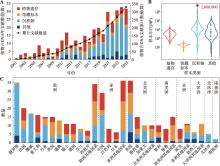
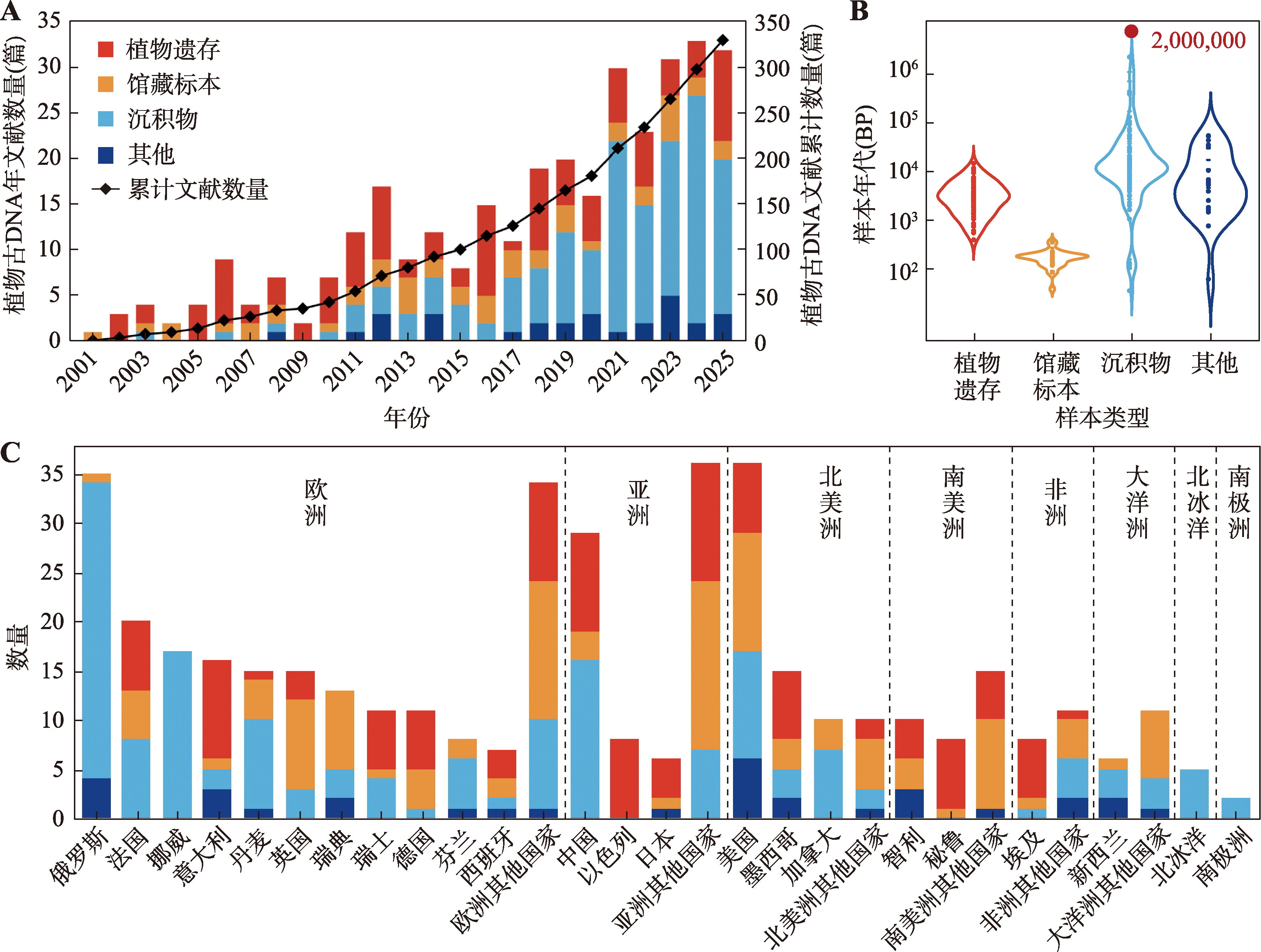
Fig. 2
Statistics on the research status of ancient plant DNA"
| [1] |
Day J. Botany meets archaeology: people and plants in the past. J Exp Bot, 2013, 64(18): 5805-5816.
pmid: 23669575 |
| [2] |
de Vareilles A, Pelling R, Woodbridge J, Fyfe R. Archaeology and agriculture: plants, people, and past land-use. Trends Ecol Evol, 2021, 36(10): 943-954.
pmid: 34210535 |
| [3] | Arranz-Otaegui A, Cubas M, Ibañez JJ, Rosenberg D. Plants meet artefacts: developing interdisciplinary approaches to identify plant processing, consumption and use in archaeology. J Archaeol Sci Rep, 2024, 57: 104617. |
| [4] | Jin GY, Zhao M, Liu CJ. Research methods for seeds and fruits unearthed from archaeological sites. Haidai Archaeol, 2010, 1: 415-437. |
| 靳桂云, 赵敏, 刘长江. 考古遗址出土种子和果实研究方法. 海岱考古, 2010, 1: 415-437. | |
| [5] | Zhao ZJ. Paleoethnobotany:Theories, Methods and Practice. Beijing: Science Press, 2010. |
| 赵志军. 植物考古学:理论、方法和实践. 北京: 科学出版社, 2010. | |
| [6] |
Bennett EA, Fu QM. Ancient genomes and the evolutionary path of modern humans. Cell, 2024, 187(5): 1042-1046.
pmid: 38428387 |
| [7] |
Librado P, Tressières G, Chauvey L, Fages A, Khan N, Schiavinato S, Calvière-Tonasso L, Kusliy MA, Gaunitz C, Liu XX, Wagner S, Der Sarkissian C, Seguin-Orlando A, Perdereau A, Aury JM, Southon J, Shapiro B, Bouchez O, Donnadieu C, Collin YRH, Gregersen KM, Jessen MD, Christensen K, Claudi-Hansen L, Pruvost M, Pucher E, Vulic H, Novak M, Rimpf A, Turk P, Reiter S, Brem G, Schwall C, Barrey É, Robert C, Degueurce C, Horwitz LK, Klassen L, Rasmussen U, Kveiborg J, Johannsen NN, Makowiecki D, Makarowicz P, Szeliga M, Ilchyshyn V, Rud V, Romaniszyn J, Mullin VE, Verdugo M, Bradley DG, Cardoso JL, Valente MJ, Telles Antunes M, Ameen C, Thomas R, Ludwig A, Marzullo M, Prato O, Bagnasco Gianni G, Tecchiati U, Granado J, Schlumbaum A, Deschler-Erb S, Mráz MS, Boulbes N, Gardeisen A, Mayer C, Döhle HJ, Vicze M, Kosintsev PA, Kyselý R, Peške L, O'Connor T, Ananyevskaya E, Shevnina I, Logvin A, Kovalev AA, Iderkhangai TO, Sablin MV, Dashkovskiy PK, Graphodatsky AS, Merts I, Merts V, Kasparov AK, Pitulko VV, Onar V, Öztan A, Arbuckle BS, McColl H, Renaud G, Khaskhanov R, Demidenko S, Kadieva A, Atabiev B, Sundqvist M, Lindgren G, López-Cachero FJ, Albizuri S, Trbojević Vukičević T, Rapan Papeša A, Burić M, Rajić Šikanjić P, Weinstock J, Asensio Vilaró D, Codina F, García Dalmau C, de Llorens JM, Pou J, de Prado G, Sanmartí J, Kallala N, Torres JR, Maraoui- Telmini B, Belarte Franco MC, Valenzuela-Lamas S, Zazzo A, Lepetz S, Duchesne S, Alexeev A, Bayarsaikhan J, Houle JL, Bayarkhuu N, Turbat T, Crubézy É, Shingiray I, Mashkour M, Berezina NY, Korobov DS, Belinskiy A, Kalmykov A, Demoule JP, Reinhold S, Hansen S, Wallner B, Roslyakova N, Kuznetsov PF, Tishkin AA, Wincker P, Kanne K, Outram A, Orlando L. Widespread horse-based mobility arose around 2200 BCE in Eurasia. Nature, 2024, 631(8022): 819-825.
pmid: 38843826 |
| [8] |
Ramos-Madrigal J, Fritz GJ, Schroeder B, Smith B, Sánchez-Barreiro F, Carøe C, Runge AKW, Boer S, McGrath K, Vieira FG, Liu SL, da Fonseca RR, Guo CX, Zhang GJ, Petersen B, Sicheritz-Pontén T, Gopalakrishnan S, Gilbert MTP, Wales N. The genomic origin of early maize in eastern North America. Cell, 2025, 188(1): 33-43. e16.
pmid: 39637852 |
| [9] |
Pont C, Wagner S, Kremer A, Orlando L, Plomion C, Salse J. Paleogenomics: reconstruction of plant evolutionary trajectories from modern and ancient DNA. Genome Biol, 2019, 20(1): 29.
pmid: 30744646 |
| [10] |
Estrada O, Breen J, Richards SM, Cooper A. Ancient plant DNA in the genomic era. Nat Plants, 2018, 4(7): 394-396.
pmid: 29915330 |
| [11] | Orlando L, Allaby R, Skoglund P, Sarkissian CD, Stockhammer PW, Ávila-Arcos MC, Fu QM, Krause J, Willerslev E, Stone AC, Warinner C. Ancient DNA analysis. Nat Rev Methods Primers, 2021, 1: 14. |
| [12] | Xu HT, LI Q, Zhao Y. Application of plant sedimentary ancient DNA in quaternary vegetation reconstruction. Adv Earth Sci, 2024, 39(8): 801-812. |
| 徐海涛, 李泉, 赵艳. 沉积植物古DNA在第四纪植被重建中的应用. 地球科学进展, 2024, 39(8): 801-812. | |
| [13] | Kistler L, Bieker VC, Martin MD, Pedersen MW, Ramos Madrigal J, Wales N. Ancient plant genomics in archaeology, herbaria, and the environment. Annu Rev Plant Biol, 2020, 71: 605-629. |
| [14] | Ma RF, Zhang W, Liu L, Yang CY. Application of sedimentary plant ancient DNA (aDNA) technology in paleovegetation reconstruction. Acta Sedimentol Sin, 2020, 38(6): 1179-1191. |
| 马瑞丰, 张威, 刘亮, 杨蝉玉. 沉积植物古DNA技术在古植被重建中的应用. 沉积学报, 2020, 38(6): 1179-1191. | |
| [15] |
Wales N, Andersen K, Cappellini E, Avila-Arcos MC, Gilbert MTP. Optimization of DNA recovery and amplification from non-carbonized archaeobotanical remains. PLoS One, 2014, 9(1): e86827.
pmid: 24475182 |
| [16] |
Schwörer C, Leunda M, Alvarez N, Gugerli F, Sperisen C. The untapped potential of macrofossils in ancient plant DNA research. New Phytol, 2022, 235(2): 391-401.
pmid: 35306671 |
| [17] | Wang TY, Zhao DY, Zhang M, Qiao SY, Yang F, Wan Y, Yang RW, Cao P, Liu F, Fu QM. Ancient DNA capture techniques and genetic study progress of early southern China populations. Acta Anthropol Sin, 2020, 39(4): 680-694. |
| 王恬怡, 赵东月, 张明, 乔诗雨, 杨帆, 万杨, 杨若薇, 曹鹏, 刘峰, 付巧妹. 古DNA捕获新技术与中国南方早期人群遗传研究新格局. 人类学学报, 2020, 39(4): 680-694. | |
| [18] | Qin L. Application and integration--frontiers and prospects of plant archaeological genetics. Archaeol Stud Collect, 2022, (1): 592-619. |
| 秦岭. 应用与融合——植物考古遗传学的前沿与展望. 考古学研究, 2022, (1): 592-619. | |
| [19] |
Zarrillo S, Gaikwad N, Lanaud C, Powis T, Viot C, Lesur I, Fouet O, Argout X, Guichoux E, Salin F, Solorzano RL, Bouchez O, Vignes H, Severts P, Hurtado J, Yepez A, Grivetti L, Blake M, Valdez F. The use and domestication of Theobroma cacao during the mid-Holocene in the upper Amazon. Nat Ecol Evol, 2018, 2(12): 1879-1888.
pmid: 30374172 |
| [20] |
Warinner C, Rodrigues JFM, Vyas R, Trachsel C, Shved N, Grossmann J, Radini A, Hancock Y, Tito RY, Fiddyment S, Speller C, Hendy J, Charlton S, Luder HU, Salazar-García DC, Eppler E, Seiler R, Hansen LH, Castruita JAS, Barkow-Oesterreicher S, Teoh KY, Kelstrup CD, Olsen JV, Nanni P, Kawai T, Willerslev E, von Mering C, Lewis CM, Collins MJ, Gilbert MTP, Rühli F, Cappellini E. Pathogens and host immunity in the ancient human oral cavity. Nat Genet, 2014, 46(4): 336-344.
pmid: 24562188 |
| [21] |
Burbano HA, Gutaker RM. Ancient DNA genomics and the renaissance of herbaria. Science, 2023, 382(6666): 59-63.
pmid: 37797028 |
| [22] |
Papalini S, Di Vittori V, Pieri A, Allegrezza M, Frascarelli G, Nanni L, Bitocchi E, Bellucci E, Gioia T, Pereira LG, Susek K, Tenaillon M, Neumann K, Papa R. Challenges and opportunities behind the use of herbaria in paleogenomics studies. Plants (Basel), 2023, 12(19): 3452.
pmid: 37836192 |
| [23] |
Pawlowski J, Apothéloz-Perret-Gentil L, Altermatt F. Environmental DNA: what’s behind the term? clarifying the terminology and recommendations for its future use in biomonitoring. Mol Ecol, 2020, 29(22): 4258-4264.
pmid: 32966665 |
| [24] | Jia WH, Anslan S, Chen FH, Cao XY, Dong HL, Dulias K, Gu ZQ, Heinecke L, Jiang HC, Kruse S, Kang WG, Li K, Liu SS, Liu XQ, Liu Y, Ni J, Schwalb A, Stoof-Leichsenring KR, Shen W, Tian F, Wang J, Wang YB, Wang YC, Xu H, Yang XY, Zhang DJ, Herzschuh U. Sedimentary ancient DNA reveals past ecosystem and biodiversity changes on the Tibetan Plateau: overview and prospects. Quat Sci Rev, 2022, 293: 107703. |
| [25] |
Kjær KH, Winther Pedersen M, De Sanctis B, De Cahsan B, Korneliussen TS, Michelsen CS, Sand KK, Jelavić S, Ruter AH, Schmidt AMA, Kjeldsen KK, Tesakov AS, Snowball I, Gosse JC, Alsos IG, Wang YC, Dockter C, Rasmussen M, Jørgensen ME, Skadhauge B, Prohaska A, Kristensen JÅ, Bjerager M, Allentoft ME, Coissac E; PhyloNorway Consortium, Rouillard A, Simakova A, Fernandez-Guerra A, Bowler C, Macias-Fauria M, Vinner L, Welch JJ, Hidy AJ, Sikora M, Collins MJ, Durbin R, Larsen NK, Willerslev E. A 2-million-year- old ecosystem in Greenland uncovered by environmental DNA. Nature, 2022, 612(7939): 283-291.
pmid: 36477129 |
| [26] |
Kim AS, Kreiner JM, Hernández F, Bock DG, Hodgins KA, Rieseberg LH. Temporal collections to study invasion biology. Mol Ecol, 2023, 32(24): 6729-6742.
pmid: 37873879 |
| [27] |
Alsos IG, Boussange V, Rijal DP, Beaulieu M, Brown AG, Herzschuh U, Svenning JC, Pellissier L. Using ancient sedimentary DNA to forecast ecosystem trajectories under climate change. Philos Trans R Soc Lond B Biol Sci, 2024, 379(1902): 20230017.
pmid: 38583481 |
| [28] |
Weiß CL, Schuenemann VJ, Devos J, Shirsekar G, Reiter E, Gould BA, Stinchcombe JR, Krause J, Burbano HA. Temporal patterns of damage and decay kinetics of DNA retrieved from plant herbarium specimens. R Soc Open Sci, 2016, 3(6): 160239.
pmid: 27429780 |
| [29] |
Lendvay B, Hartmann M, Brodbeck S, Nievergelt D, Reinig F, Zoller S, Parducci L, Gugerli F, Büntgen U, Sperisen C. Improved recovery of ancient DNA from subfossil wood--application to the world’s oldest Late Glacial pine forest. New Phytol, 2018, 217(4): 1737-1748.
pmid: 29243821 |
| [30] | Jiao LC, Lu Y, Guo Y, Yin YF. Molecular archaeology of wood: progress and prospect. Sci Silvae Sin, 2024, 60(2): 118-127. |
| 焦立超, 陆杨, 郭雨, 殷亚方. 木材分子考古研究进展. 林业科学, 2024, 60(2): 118-127. | |
| [31] |
Drábková LZ. DNA extraction from herbarium specimens. Methods Mol Biol, 2014, 1115: 69-84.
pmid: 24415470 |
| [32] |
Dalén L, Heintzman PD, Kapp JD, Shapiro B. Deep-time paleogenomics and the limits of DNA survival. Science, 2023, 382(6666): 48-53.
pmid: 37797036 |
| [33] |
Burbano HA, Hodges E, Green RE, Briggs AW, Krause J, Meyer M, Good JM, Maricic T, Johnson PLF, Xuan ZY, Rooks M, Bhattacharjee A, Brizuela L, Albert FW, de la Rasilla M, Fortea J, Rosas A, Lachmann M, Hannon GJ, Pääbo S. Targeted investigation of the Neandertal genome by array-based sequence capture. Science, 2010, 328(5979): 723-725.
pmid: 20448179 |
| [34] | Bennett EA, Massilani D, Lizzo G, Daligault J, Geigl EM, Grange T. Library construction for ancient genomics: single strand or double strand? BioTechniques, 2014, 56(6): 289-300. |
| [35] |
Wales N, Carøe C, Sandoval-Velasco M, Gamba C, Barnett R, Samaniego JA, Madrigal JR, Orlando L, Gilbert MTP. New insights on single-stranded versus double-stranded DNA library preparation for ancient DNA. Biotechniques, 2015, 59(6): 368-371.
pmid: 26651516 |
| [36] | Johnson E, Regnéll C, Heintzman PD, Linderholm A. The potential of lacustrine sedimentary ancient DNA for revealing human postglacial recolonization patterns in northern Sweden--a review. Boreas, 2024, 53(3): 347-359. |
| [37] | Chen ML, Luo J, Kuang WM, Yu L. Application and research advances of the hybridization capture sequencing technology. Sci Sin Vitae, 2025, 55(4): 773-789. |
| 陈明林, 骆佳, 匡卫民, 于黎. 杂交捕获测序技术应用与研究进展. 中国科学:生命科学, 2025, 55(4): 773-789. | |
| [38] |
Kersey PJ. Plant genome sequences: past, present, future. Curr Opin Plant Biol, 2019, 48: 1-8.
pmid: 30579050 |
| [39] |
Sun YQ, Shang LG, Zhu QH, Fan LJ, Guo LB. Twenty years of plant genome sequencing: achievements and challenges. Trends Plant Sci, 2022, 27(4): 391-401.
pmid: 34782248 |
| [40] | Zhang YX, Qi YY, Wang YH, Huang YM, Zhang JS, Tang HB. Advances in polyploid plant genomics research. Genom Appl Biol, 2024, 43(8): 1293-1302. |
| 张以星, 齐浥颖, 王宇浩, 黄育敏, 张积森, 唐海宝. 多倍体植物基因组学研究进展. 基因组学与应用生物学, 2024, 43(8): 1293-1302. | |
| [41] |
Heslop-Harrison JSP, Schwarzacher T, Liu Q. Polyploidy: its consequences and enabling role in plant diversification and evolution. Ann Bot, 2023, 131(1): 1-10.
pmid: 36282971 |
| [42] |
Blischak PD, Kubatko LS, Wolfe AD. Accounting for genotype uncertainty in the estimation of allele frequencies in autopolyploids. Mol Ecol Resour, 2016, 16(3): 742-754.
pmid: 26607217 |
| [43] |
Larson G, Piperno DR, Allaby RG, Purugganan MD, Andersson L, Arroyo-Kalin M, Barton L, Climer Vigueira C, Denham T, Dobney K, Doust AN, Gepts P, Gilbert MT, Gremillion KJ, Lucas L, Lukens L, Marshall FB, Olsen KM, Pires JC, Richerson PJ, de Casas RR, Sanjur OI, Thomas MG, Fuller DQ. Current perspectives and the future of domestication studies. Proc Natl Acad Sci USA, 2014, 111(17): 6139-6146.
pmid: 24757054 |
| [44] |
Gutaker RM, Purugganan MD. Adaptation and the geographic spread of crop species. Annu Rev Plant Biol, 2024, 75(1): 679-706.
pmid: 38012052 |
| [45] |
Fuller DQ, Denham T, Allaby R. Plant domestication and agricultural ecologies. Curr Biol, 2023, 33(11): R636-R649.
pmid: 37279694 |
| [46] | Zhao ZJ. Research on the introduction of wheat to China—plant archaeological materials. Cult Relics South China, 2015, (3): 44-52. |
| 赵志军. 小麦传入中国的研究——植物考古资料. 南方文物, 2015, (3): 44-52. | |
| [47] | Yu JJ, Wang YP, He JN, Feng Y, Li YL, Li WC. Xinjiang. Tongtian Dong site in Jeminay County, Archaeol, 2018, (7): 3-14+2. |
| 于建军, 王幼平, 何嘉宁, 冯玥, 李昱龙, 李文成. 新疆吉木乃县通天洞遗址. 考古, 2018, (7): 3-14+2. | |
| [48] | Brown TA. How ancient DNA may help in understanding the origin and spread of agriculture. Philos Trans R Soc Lond B Biol Sci, 1999, 354(1379): 89-98. |
| [49] | Li CX, Lister DL, Li HJ, Xu Y, Cui YQ, Bower MA, Jones MK, Zhou H. Ancient DNA analysis of desiccated wheat grains excavated from a Bronze Age cemetery in Xinjiang. J Archaeol Sci, 2011, 38(1): 115-119. |
| [50] |
Wu XY, Ding BX, Zhang BQ, Feng JJ, Wang YB, Ning C, Wu HD, Zhang F, Zhang Q, Li N, Zhang ZB, Sun XH, Zhang QC, Li WY, Liu B, Cui YQ, Gong L. Phylogenetic and population structural inference from genomic ancestry maintained in present-day common wheat Chinese landraces. Plant J, 2019, 99(2): 201-215.
pmid: 31134682 |
| [51] | Betts A, Jia PW, Dodson J. The origins of wheat in China and potential pathways for its introduction: a review. Quat Int, 2014, 348: 158-168. |
| [52] |
Mascher M, Schuenemann VJ, Davidovich U, Marom N, Himmelbach A, Hübner S, Korol A, David M, Reiter E, Riehl S, Schreiber M, Vohr SH, Green RE, Dawson IK, Russell J, Kilian B, Muehlbauer GJ, Waugh R, Fahima T, Krause J, Weiss E, Stein N. Genomic analysis of 6,000-year-old cultivated grain illuminates the domestication history of barley. Nat Genet, 2016, 48(9): 1089-1093.
pmid: 27428749 |
| [53] |
Guo Y, Jayakodi M, Himmelbach A, Ben-Yosef E, Davidovich U, David M, Hartmann-Shenkman A, Kislev M, Fahima T, Schuenemann VJ, Reiter E, Krause J, Steffenson BJ, Stein N, Weiss E, Mascher M. A haplotype-based evolutionary history of barley domestication. Nature, 2025, 647(8090): 680-688.
pmid: 40993384 |
| [54] | Zhao ZJ. The trajectory of rice from wild to domesticated: a new chapter in the study of origins of agriculture. Sci Sin Terrae, 2024, 54(9): 3063-3064. |
| 赵志军. 水稻从野生到驯化的轨迹——农业起源研究的新篇章. 中国科学:地球科学, 2024, 54(9): 3063-3064. | |
| [55] |
Zhang JP, Jiang LP, Yu LP, Huan XJ, Zhou LP, Wang CS, Jin JH, Zuo XX, Wu NQ, Zhao ZJ, Sun HL, Yu ZY, Zhang GP, Zhu JP, Wu ZL, Dong YJ, Fan BS, Shen CM, Lu HY. Rice’s trajectory from wild to domesticated in East Asia. Science, 2024, 384(6698): 901-906.
pmid: 38781358 |
| [56] |
Jing CY, Zhang FM, Wang XH, Wang MX, Zhou L, Cai Z, Han JD, Geng MF, Yu WH, Jiao ZH, Huang L, Liu R, Zheng XM, Meng QL, Ren NN, Zhang HX, Du YS, Wang X, Qiang CG, Zou XH, Gaut BS, Ge S. Multiple domestications of Asian rice. Nat Plants, 2023, 9(8): 1221-1235.
pmid: 37550371 |
| [57] |
Kumagai M, Kanehara M, Shoda S, Fujita S, Onuki S, Ueda S, Wang L. Rice varieties in archaic East Asia: reduction of its diversity from past to present times. Mol Biol Evol, 2016, 33(10): 2496-2505.
pmid: 27461246 |
| [58] | Fan LJ, Gui YJ, Zheng YF, Wang Y, Cai DG, You XL. Ancient DNA sequences of rice from the low Yangtze reveal significant genotypic divergence. Chin Sci Bull, 2011, 56: 3108. |
| [59] | Zhao ZJ. Origin of agriculture and archaeobotanical works in China. Agric Hist China, 2020, 39(3): 3-13. |
| 赵志军. 新石器时代植物考古与农业起源研究. 中国农史, 2020, 39(3): 3-13. [DOI] | |
| [60] | Deng ZH. The origin and early dispersal of foxtail millet and broomcorn mille. Archaeol Stud Collect, 2022, (1): 172-214. |
| 邓振华. 粟黍的起源与早期传播. 考古学研究, 2022, (1): 172-214. | |
| [61] | Li CX, Dong Y, Liu MX, Lu P, Li WY, Wang YN, Cui XY, Zhou H, Xu Y. Ancient DNA analysis of Panicum miliaceum (broomcorn millet) from a Bronze Age cemetery in Xinjiang, China. Veget Hist Archaeobot, 2016, 25: 469-477. |
| [62] | Sun XL, Wang YF, Lu YX, Xu YX, Liu BB, Yang YS, Chen GK, Wang HR, Huang ZH, Cai YY, Gu ZQ, Wang XX, Dong GH, Wang YC. Ancient genome of broomcorn millet from northwest China in seventh century CE: shedding new light to its origin and dispersal patterns. Agronomy, 2024, 14(9): 2004. |
| [63] |
Iltis HH. From teosinte to maize: the catastrophic sexual transmutation. Science, 1983, 222(4626): 886-894.
pmid: 17738466 |
| [64] |
Matsuoka Y, Vigouroux Y, Goodman MM, Sanchez G J, Buckler E, Doebley J. A single domestication for maize shown by multilocus microsatellite genotyping. Proc Natl Acad Sci USA, 2002, 99(9): 6080-6084.
pmid: 11983901 |
| [65] |
Ranere AJ, Piperno DR, Holst I, Dickau R, Iriarte J. The cultural and chronological context of early Holocene maize and squash domestication in the Central Balsas River Valley, Mexico. Proc Natl Acad Sci USA, 2009, 106(13): 5014-5018.
pmid: 19307573 |
| [66] | Freitas FO, Bendel G, Allaby RG, Brown TA. DNA from primitive maize landraces and archaeological remains: implications for the domestication of maize and its expansion into South America. J Archaeol Sci, 2003, 30(7): 901-908. |
| [67] |
Lia VV, Confalonieri VA, Ratto N, Hernández JAC, Alzogaray AMM, Poggio L, Brown TA. Microsatellite typing of ancient maize: insights into the history of agriculture in southern South America. Proc Biol Sci, 2007, 274(1609): 545-554.
pmid: 17476775 |
| [68] |
Vallebueno-Estrada M, Hernández-Robles GG, González- Orozco E, Lopez-Valdivia I, Rosales Tham T, Vásquez Sánchez V, Swarts K, Dillehay TD, Vielle-Calzada JP, Montiel R. Domestication and lowland adaptation of coastal preceramic maize from Paredones, Peru. eLife, 2023, 12: e83149.
pmid: 37070964 |
| [69] |
da Fonseca RR, Smith BD, Wales N, Cappellini E, Skoglund P, Fumagalli M, Samaniego JA, Carøe C, Ávila-Arcos MC, Hufnagel DE, Korneliussen TS, Vieira FG, Jakobsson M, Arriaza B, Willerslev E, Nielsen R, Hufford MB, Albrechtsen A, Ross-Ibarra J, Gilbert MTP. The origin and evolution of maize in the Southwestern United States. Nat Plants, 2015, 1: 14003.
pmid: 27246050 |
| [70] |
Alam O, Purugganan MD. Domestication and the evolution of crops: variable syndromes, complex genetic architectures, and ecological entanglements. Plant Cell, 2024, 36(5): 1227-1241.
pmid: 38243576 |
| [71] | Qi XT, Li YM, Xie CX. Genetic basis for sweet and waxy maize breeding. J Maize Sci, 2017, 25(2): 1-5. |
| 祁显涛, 李燕敏, 谢传晓. 玉米甜、糯性状育种的遗传学基础. 玉米科学, 2017, 25(2): 1-5. | |
| [72] | Przelomska NAS, Armstrong CG, Kistler L. Ancient plant DNA as a window into the cultural heritage and biodiversity of our food system. Front Ecol Evol, 2020, 8: 74. |
| [73] |
Kistler L, de Oliveira Freitas F, Gutaker RM, Maezumi SY, Ramos-Madrigal J, Simon MF, Mendoza F JM, Drovetski SV, Loiselle H, de Oliveira EJ, Vieira EA, Carvalho LJCB, Ellis Perez M, Lin AT, Liu HL, Miller R, Przelomska NAS, Ratan A, Wales N, Wann K, Zhang SY, García M, Valenzuela D, Rothhammer F, Santoro CM, Domic AI, Capriles JM, Allaby RG. Historic manioc genomes illuminate maintenance of diversity under long-lived clonal cultivation. Science, 2025, 387(6738): eadq0018.
pmid: 40048537 |
| [74] | Cohen P, Bacilieri R, Ramos-Madrigal J, Privman E, Boaretto E, Weber A, Fuks D, Weiss E, Erickson-Gini T, Bucking S, Tepper Y, Cvikel D, Schmidt J, Gilbert MTP, Wales N, Bar-Oz G, Meiri M. Ancient DNA from a lost Negev Highlands desert grape reveals a Late Antiquity wine lineage. Proc Natl Acad Sci USA, 2023, 120(17): e2213563120. |
| [75] |
Pérez-Escobar OA, Bellot S, Przelomska NAS, Flowers JM, Nesbitt M, Ryan P, Gutaker RM, Gros-Balthazard M, Wells T, Kuhnhäuser BG, Schley R, Bogarín D, Dodsworth S, Diaz R, Lehmann M, Petoe P, Eiserhardt WL, Preick M, Hofreiter M, Hajdas I, Purugganan M, Antonelli A, Gravendeel B, Leitch IJ, Jimenez MFT, Papadopulos AST, Chomicki G, Renner SS, Baker WJ. Molecular clocks and archeogenomics of a Late Period Egyptian date palm leaf reveal introgression from wild relatives and add timestamps on the domestication. Mol Biol Evol, 2021, 38(10): 4475-4492.
pmid: 34191029 |
| [76] |
Wales N, Akman M, Watson RHB, Sánchez Barreiro F, Smith BD, Gremillion KJ, Gilbert MTP, Blackman BK. Ancient DNA reveals the timing and persistence of organellar genetic bottlenecks over 3,000 years of sunflower domestication and improvement. Evol Appl, 2018, 12(1): 38-53.
pmid: 30622634 |
| [77] |
Pérez-Escobar OA, Tusso S, Przelomska NAS, Wu S, Ryan P, Nesbitt M, Silber MV, Preick M, Fei ZJ, Hofreiter M, Chomicki G, Renner SS. Genome sequencing of up to 6,000-year-old Citrullus seeds reveals use of a bitter-fleshed species prior to watermelon domestication. Mol Biol Evol, 2022, 39(8): msac168.
pmid: 35907246 |
| [78] |
Strange RN, Scott PR. Plant disease: a threat to global food security. Annu Rev Phytopathol, 2005, 43: 83-116.
pmid: 16078878 |
| [79] | Thind BS. Phytopathogenic Bacteria and Plant Diseases (1st ed.). Boca Raton: CRC Press, 2019. |
| [80] | Hawkes JG, Francisco-Ortega J. The early history of the potato in Europe. Euphytica, 1993, 70: 1-7. |
| [81] |
Hardigan MA, Laimbeer FPE, Newton L, Crisovan E, Hamilton JP, Vaillancourt B, Wiegert-Rininger K, Wood JC, Douches DS, Farré EM, Veilleux RE, Buell CR. Genome diversity of tuber-bearing Solanum uncovers complex evolutionary history and targets of domestication in the cultivated potato. Proc Natl Acad Sci USA, 2017, 114(46): E9999-E10008.
pmid: 29087343 |
| [82] | Blum M, Colvin CL, McLaughlin E. Scarring and selection in the Great Irish Famine. Econ Hist Rev, 2025, 1-32. |
| [83] |
Goodwin SB, Cohen BA, Fry WE. Panglobal distribution of a single clonal lineage of the Irish potato famine fungus. Proc Natl Acad Sci USA, 1994, 91(24): 11591-11595.
pmid: 7972108 |
| [84] |
Ristaino JB, Groves CT, Parra GR. PCR amplification of the Irish potato famine pathogen from historic specimens. Nature, 2001, 411(6838): 695-697.
pmid: 11395772 |
| [85] |
Ristaino JB. Tracking historic migrations of the Irish potato famine pathogen, Phytophthora infestans. Microbes Infect, 2002, 4(13): 1369-1377.
pmid: 12443902 |
| [86] |
May KJ, Ristaino JB. Identity of the mtDNA haplotype(s) of Phytophthora infestans in historical specimens from the Irish potato famine. Mycol Res, 2004, 108(Pt 5): 471-479.
pmid: 15229999 |
| [87] |
Martin MD, Cappellini E, Samaniego JA, Zepeda ML, Campos PF, Seguin-Orlando A, Wales N, Orlando L, Ho SYW, Dietrich FS, Mieczkowski PA, Heitman J, Willerslev E, Krogh A, Ristaino JB, Gilbert MTP. Reconstructing genome evolution in historic samples of the Irish potato famine pathogen. Nat Commun, 2013, 4: 2172.
pmid: 23863894 |
| [88] |
Yoshida K, Schuenemann VJ, Cano LM, Pais M, Mishra B, Sharma R, Lanz C, Martin FN, Kamoun S, Krause J, Thines M, Weigel D, Burbano HA. The rise and fall of the Phytophthora infestans lineage that triggered the Irish potato famine. eLife, 2013, 2: e00731.
pmid: 23741619 |
| [89] |
Martin MD, Ho SYW, Wales N, Ristaino JB, Gilbert MTP. Persistence of the mitochondrial lineage responsible for the Irish potato famine in extant new world Phytophthora infestans. Mol Biol Evol, 2014, 31(6): 1414-1420.
pmid: 24577840 |
| [90] |
Saville AC, Martin MD, Ristaino JB. Historic late blight outbreaks caused by a widespread dominant lineage of Phytophthora infestans (Mont.) de Bary. PLoS One, 2016, 11(12): e0168381.
pmid: 28030580 |
| [91] |
Saville AC, Ristaino JB. Global historic pandemics caused by the FAM-1 genotype of Phytophthora infestans on six continents. Sci Rep, 2021, 11(1): 12335.
pmid: 34117299 |
| [92] |
Campos PE, Pruvost O, Boyer K, Chiroleu F, Cao TT, Gaudeul M, Baider C, Utteridge TMA, Becker N, Rieux A, Gagnevin L. Herbarium specimen sequencing allows precise dating of Xanthomonas citri pv. citri diversification history. Nat Commun, 2023, 14(1): 4306.
pmid: 37474518 |
| [93] |
Donegan MA, Kahn AK, Becker N, Castillo Siri A, Campos PE, Boyer K, Colwell A, Briand M, Almeida RPP, Rieux A. Century-old herbarium specimen provides insights into Pierce’s disease of grapevines emergence in the Americas. Curr Biol, 2025, 35(1): 145-153.e4.
pmid: 39689706 |
| [94] |
Willerslev E, Hansen AJ, Binladen J, Brand TB, Gilbert MTP, Shapiro B, Bunce M, Wiuf C, Gilichinsky DA, Cooper A. Diverse plant and animal genetic records from Holocene and Pleistocene sediments. Science, 2003, 300(5620): 791-795.
pmid: 12702808 |
| [95] |
Willerslev E, Davison J, Moora M, Zobel M, Coissac E, Edwards ME, Lorenzen ED, Vestergård M, Gussarova G, Haile J, Craine J, Gielly L, Boessenkool S, Epp LS, Pearman PB, Cheddadi R, Murray D, Bråthen KA, Yoccoz N, Binney H, Cruaud C, Wincker P, Goslar T, Alsos IG, Bellemain E, Brysting AK, Elven R, Sønstebø JH, Murton J, Sher A, Rasmussen M, Rønn R, Mourier T, Cooper A, Austin J, Möller P, Froese D, Zazula G, Pompanon F, Rioux D, Niderkorn V, Tikhonov A, Savvinov G, Roberts RG, MacPhee RDE, Gilbert MTP, Kjær KH, Orlando L, Brochmann C, Taberlet P. Fifty thousand years of Arctic vegetation and megafaunal diet. Nature, 2014, 506(7486): 47-51.
pmid: 24499916 |
| [96] |
Wang YC, Pedersen MW, Alsos IG, De Sanctis B, Racimo F, Prohaska A, Coissac E, Owens HL, Merkel MKF, Fernandez-Guerra A, Rouillard A, Lammers Y, Alberti A, Denoeud F, Money D, Ruter AH, McColl H, Larsen NK, Cherezova AA, Edwards ME, Fedorov GB, Haile J, Orlando L, Vinner L, Korneliussen TS, Beilman DW, Bjørk AA, Cao JL, Dockter C, Esdale J, Gusarova G, Kjeldsen KK, Mangerud J, Rasic JT, Skadhauge B, Svendsen JI, Tikhonov A, Wincker P, Xing YC, Zhang YB, Froese DG, Rahbek C, Bravo DN, Holden PB, Edwards NR, Durbin R, Meltzer DJ, Kjær KH, Möller P, Willerslev E. Late Quaternary dynamics of Arctic biota from ancient environmental genomics. Nature, 2021, 600(7887): 86-92.
pmid: 34671161 |
| [97] | Clarke CL, Heintzman PD, Lammers Y, Monteath AJ, Bigelow NH, Reuther JD, Potter BA, Hughes PDM, Alsos IG, Edwards ME. Steppe-tundra composition and deglacial floristic turnover in interior Alaska revealed by sedimentary ancient DNA (sedaDNA). Quat Sci Rev, 2024, 334: 108672. |
| [98] |
Schulte L, Bernhardt N, Stoof-Leichsenring K, Zimmermann HH, Pestryakova LA, Epp LS, Herzschuh U. Hybridization capture of larch (Larix Mill.) chloroplast genomes from sedimentary ancient DNA reveals past changes of Siberian forest. Mol Ecol Resour, 2021, 21(3): 801-815.
pmid: 33319428 |
| [99] |
Murchie TJ, Monteath AJ, Mahony ME, Long GS, Cocker S, Sadoway T, Karpinski E, Zazula G, MacPhee RDE, Froese D, Poinar HN. Collapse of the mammoth-steppe in central Yukon as revealed by ancient environmental DNA. Nat Commun, 2021, 12(1): 7120.
pmid: 34880234 |
| [100] |
Liu Y, Lisovski S, Courtin J, Stoof-Leichsenring KR, Herzschuh U. Plant interactions associated with a directional shift in the richness range size relationship during the Glacial-Holocene transition in the Arctic. Nat Commun, 2025, 16(1): 1128.
pmid: 39809751 |
| [101] |
Courtin J, Stoof-Leichsenring KR, Lisovski S, Liu Y, Alsos IG, Biskaborn BK, Diekmann B, Melles M, Wagner B, Pestryakova L, Russell J, Huang YS, Herzschuh U. Potential plant extinctions with the loss of the Pleistocene mammoth steppe. Nat Commun, 2025, 16(1): 645.
pmid: 39809751 |
| [102] |
Crump SE, Miller GH, Power M, Sepúlveda J, Dildar N, Coghlan M, Bunce M. Arctic shrub colonization lagged peak postglacial warmth: molecular evidence in lake sediment from Arctic Canada. Glob Chang Biol, 2019, 25(12): 4244-4256.
pmid: 31603617 |
| [103] |
Crump SE, Fréchette B, Power M, Cutler S, de Wet G, Raynolds MK, Raberg JH, Briner JP, Thomas EK, Sepúlveda J, Shapiro B, Bunce M, Miller GH. Ancient plant DNA reveals High Arctic greening during the Last Interglacial. Proc Natl Acad Sci USA, 2021, 118(13): e2019069118.
pmid: 33723011 |
| [104] |
Liu SS, Kruse S, Scherler D, Ree RH, Zimmermann HH, Stoof-Leichsenring KR, Epp LS, Mischke S, Herzschuh U. Sedimentary ancient DNA reveals a threat of warming-induced alpine habitat loss to Tibetan Plateau plant diversity. Nat Commun, 2021, 12(1): 2995.
pmid: 34016962 |
| [105] |
Liu SS, Stoof-Leichsenring KR, Harms L, Schulte L, Mischke S, Kruse S, Zhang CJ, Herzschuh U. Tibetan terrestrial and aquatic ecosystems collapsed with cryosphere loss inferred from sedimentary ancient metagenomics. Sci Adv, 2024, 10(21): eadn8490.
pmid: 38781339 |
| [106] | Liu Y, Stoof-Leichsenring KR, Diekmann B, Herzschuh U. Holocene rangeland characteristics on the northeastern Tibetan Plateau in relation to climate and pastoralism from sedimentary ancient DNA. Quat Sci Rev, 2024, 339: 108850. |
| [107] | Han X, Feng LF, Zhang NM, Hu SH, Gu ZQ, Huang XZ, Yang XY, Chen FH. SedaDNA reveals mid-to late Holocene aquatic plant and algae changes in Luanhaizi Lake on the Tibetan Plateau. Palaeogeogr Palaeoclimatol Palaeoecol, 2024, 650: 112344. |
| [108] |
Giguet-Covex C, Pansu J, Arnaud F, Rey PJ, Griggo C, Gielly L, Domaizon I, Coissac E, David F, Choler P, Poulenard J, Taberlet P. Long livestock farming history and human landscape shaping revealed by lake sediment DNA. Nat Commun, 2014, 5: 3211.
pmid: 24487920 |
| [109] | Bajard M, Poulenard J, Sabatier P, Etienne D, Ficetola F, Chen WT, Gielly L, Taberlet P, Develle AL, Rey PJ, Moulin B, de Beaulieu JL, Arnaud F. Long-term changes in alpine pedogenetic processes: effect of millennial agro-pastoralism activities (French-Italian Alps). Geoderma, 2017, 306: 217-236. |
| [110] | Julián-Posada I, Gil-Romera G, Garcés-Pastor S, Heintzman PD, Gómez D, Fillat F, Moreno A, Lara-Recuero J, Bover P, Montes L, Sierra A, Valero-Garcés B, Alsos IG, González-Sampériz P. Neolithic pastoralism and plant community interactions at high altitudes of the Pyrenees, southern Europe. Commun Earth Environ, 2025, 6: 48. |
| [111] |
Pedersen MW, Ruter A, Schweger C, Friebe H, Staff RA, Kjeldsen KK, Mendoza MLZ, Beaudoin AB, Zutter C, Larsen NK, Potter BA, Nielsen R, Rainville RA, Orlando L, Meltzer DJ, Kjær KH, Willerslev E. Postglacial viability and colonization in North America’s ice-free corridor. Nature, 2016, 537(7618): 45-49.
pmid: 27509852 |
| [112] | Gu ZQ, Gao Y, Wang YR, Yang JS, Ran JK, Yang XY, Shargan W, Pedersen MW, Sheng GL, Wang YC, Chen FH. Food resources of the Khog Gzung site on the Tibetan Plateau revealed by sedimentary ancient DNA. Sci Sin Terrae, 2023, 53(4): 823-835. |
| 顾政权, 高玉, 王一如, 杨继帅, 冉景坤, 杨晓燕, 夏格旺堆, Pedersen MW, 盛桂莲, 王昱程, 陈发虎. 堆积物古DNA揭示西藏廓雄遗址的食物构成. 中国科学:地球科学, 2023, 53(4): 823-835. | |
| [113] |
Barrenechea Angeles I, Romero-Martínez ML, Cavaliere M, Varrella S, Francescangeli F, Piredda R, Mazzocchi MG, Montresor M, Schirone A, Delbono I, Margiotta F, Corinaldesi C, Chiavarini S, Montereali MR, Rimauro J, Parrella L, Musco L, Dell'Anno A, Tangherlini M, Pawlowski J, Frontalini F. Encapsulated in sediments: eDNA deciphers the ecosystem history of one of the most polluted European marine sites. Environ Int, 2023, 172: 107738.
pmid: 36641836 |
| [114] | Lin Q, Zhang K, Giguet-Covex C, Li K, Gielly L, Wang XQ, Huang SX, Han YY, Zhang N, Arnaud F, Shen J. Reconstructing Anthropocene dynamics of subtropical vegetation and plant diversity by combining sedimentary ancient DNA and pollen: a high-resolution comparative analysis from China’s Yangtze floodplain. Fundam Res, 2024, doi: 10.1016/j.fmre.2024.11.018. |
| [115] |
Jensen TZT, Niemann J, Iversen KH, Fotakis AK, Gopalakrishnan S, Vågene ÅJ, Pedersen MW, Sinding MHS, Ellegaard MR, Allentoft ME, Lanigan LT, Taurozzi AJ, Nielsen SH, Dee MW, Mortensen MN, Christensen MC, Sørensen SA, Collins MJ, Gilbert MTP, Sikora M, Rasmussen S, Schroeder H. A 5700 year-old human genome and oral microbiome from chewed birch pitch. Nat Commun, 2019, 10(1): 5520.
pmid: 31848342 |
| [116] |
Weyrich LS, Duchene S, Soubrier J, Arriola L, Llamas B, Breen J, Morris AG, Alt KW, Caramelli D, Dresely V, Farrell M, Farrer AG, Francken M, Gully N, Haak W, Hardy K, Harvati K, Held P, Holmes EC, Kaidonis J, Lalueza-Fox C, de la Rasilla M, Rosas A, Semal P, Soltysiak A, Townsend G, Usai D, Wahl J, Huson DH, Dobney K, Cooper A. Neanderthal behaviour, diet, and disease inferred from ancient DNA in dental calculus. Nature, 2017, 544(7650): 357-361.
pmid: 28273061 |
| [117] |
D’Agostino A, Di Marco G, Marvelli S, Marchesini M, Rizzoli E, Rolfo MF, Canini A, Gismondi A. Neolithic dental calculi provide evidence for environmental proxies and consumption of wild edible fruits and herbs in central Apennines. Commun Biol, 2022, 5(1): 1384.
pmid: 36536113 |
| [118] |
Rogers SO, Bendich AJ. Extraction of DNA from milligram amounts of fresh, herbarium and mummified plant tissues. Plant Mol Biol, 1985, 5(2): 69-76.
pmid: 24306565 |
| [119] |
Arbøll TP, Rasmussen SL, de Jonge N, Hansen AH, Pertoldi C, Nielsen JL. Revealing the secrets of a 2900-year-old clay brick, discovering a time capsule of ancient DNA. Sci Rep, 2023, 13(1): 13092.
pmid: 37608001 |
| [120] |
Liu YC, Bennett EA, Fu QM. Evolving ancient DNA techniques and the future of human history. Cell, 2022, 185(15): 2632-2635.
pmid: 35868268 |
| [1] | Liwen Zhang, Meihua Ruan, Jialan Liu, Caihong He, Jianrong Yu. Progress on research and development in diabetes mellitus [J]. Hereditas(Beijing), 2022, 44(10): 824-839. |
| [2] | Caihong He, Wanzi Jiang, Liwen Zhang, Meihua Ruan, Hongwen Zhou, Jianrong Yu. Current status and future perspectives of rare disease research [J]. Hereditas(Beijing), 2021, 43(6): 531-544. |
| [3] | Wanzi Jiang, Liwen Zhang, Caihong He, Meihua Ruan, Yong Ji, Jianrong Yu, Hongwen Zhou. Progress on familial hypercholesterolemia [J]. Hereditas(Beijing), 2021, 43(11): 1011-1022. |
| [4] | WANG Ao-Xue, CHEN Xiu-Ling. Current status and industrialization of transgenic tomatoes [J]. HEREDITAS, 2011, 33(9): 962-974. |
| Viewed | ||||||
|
Full text |
|
|||||
|
Abstract |
|
|||||

