Hereditas(Beijing) ›› 2026, Vol. 48 ›› Issue (3): 262-271.doi: 10.16288/j.yczz.25-132
• Review • Previous Articles Next Articles
Advances in the genetic history research of the Daur ethnic group
Chizao Wang1,2( ), Xueer Yu2(), Siyao Sang2, Haiyan Wang1, Meisen Shi3(), Hui Li2()
1. School of Forensic Medicine ,Wannan Medical College Wuhu 241000, China 2. Key Laboratory of Modern Anthropology of Ministry of Education ,School of Life Sciences, Fudan University Shanghai 200438, China 3. Institute of Criminal Investigation ,School of Criminal Justice, China University of Political Science and Law Beijing 100088, China
-
Received:2025-07-14Revised:2025-10-23Online:2026-03-20Published:2025-10-31 -
Contact:Meisen Shi, Hui Li E-mail:20230009@wnmc.edu.cn;yxefish@qq.com;shimeisen2000@163.com;lhca@fudan.edu.cn -
Supported by:Key Natural Science Project of Anhui Provincial Department of Education in Higher Education(2024AH051957);Anhui Provincial Key Project of Cultivating Outstanding Young Teachers(YQZD2025062);Talent Support Project of Wannan Medical College(WYRCQD2023010)

Cite this article
Chizao Wang, Xueer Yu, Siyao Sang, Haiyan Wang, Meisen Shi, Hui Li. Advances in the genetic history research of the Daur ethnic group[J]. Hereditas(Beijing), 2026, 48(3): 262-271.
share this article
Add to citation manager EndNote|Reference Manager|ProCite|BibTeX|RefWorks
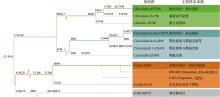
Fig. 1
Schematic diagram of Daur-related Y-chromosome haplogroups with sequence analysis performed"
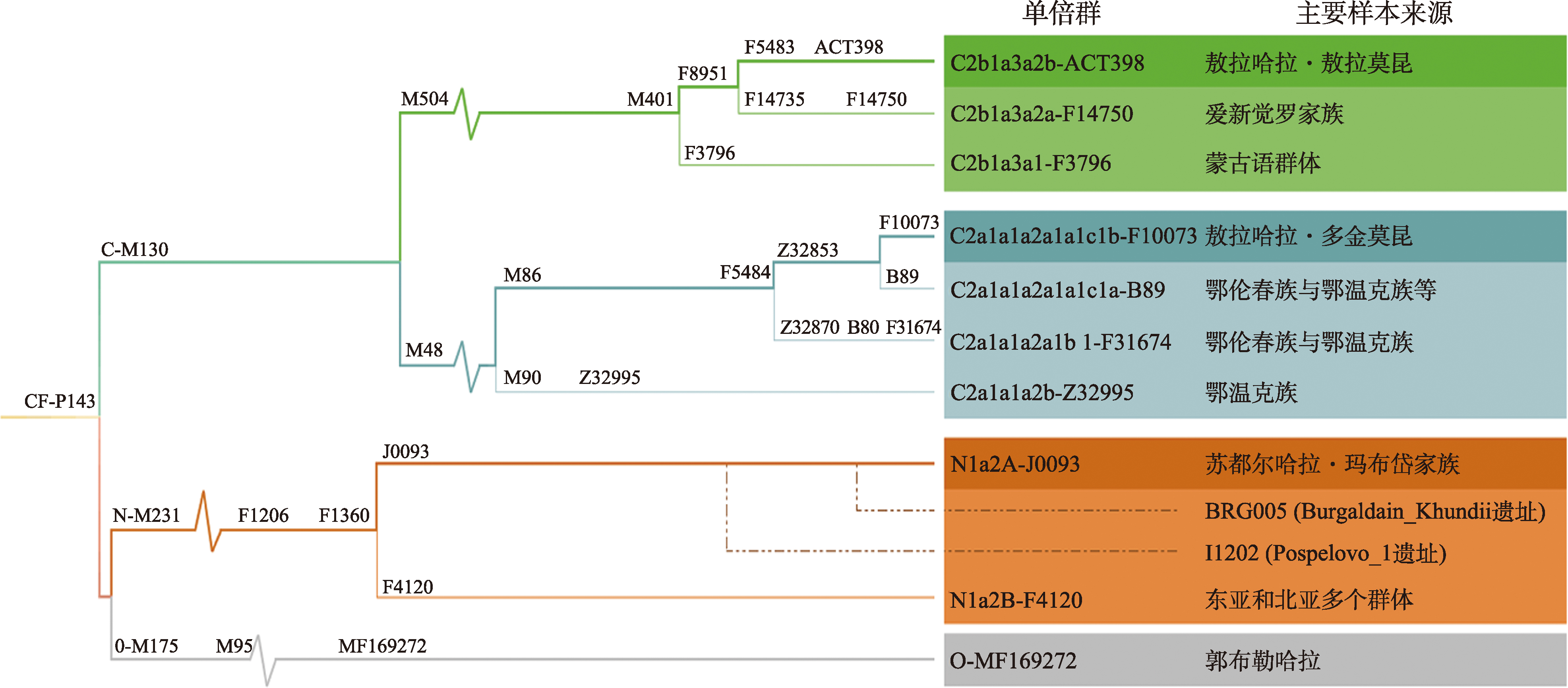
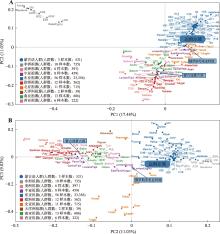
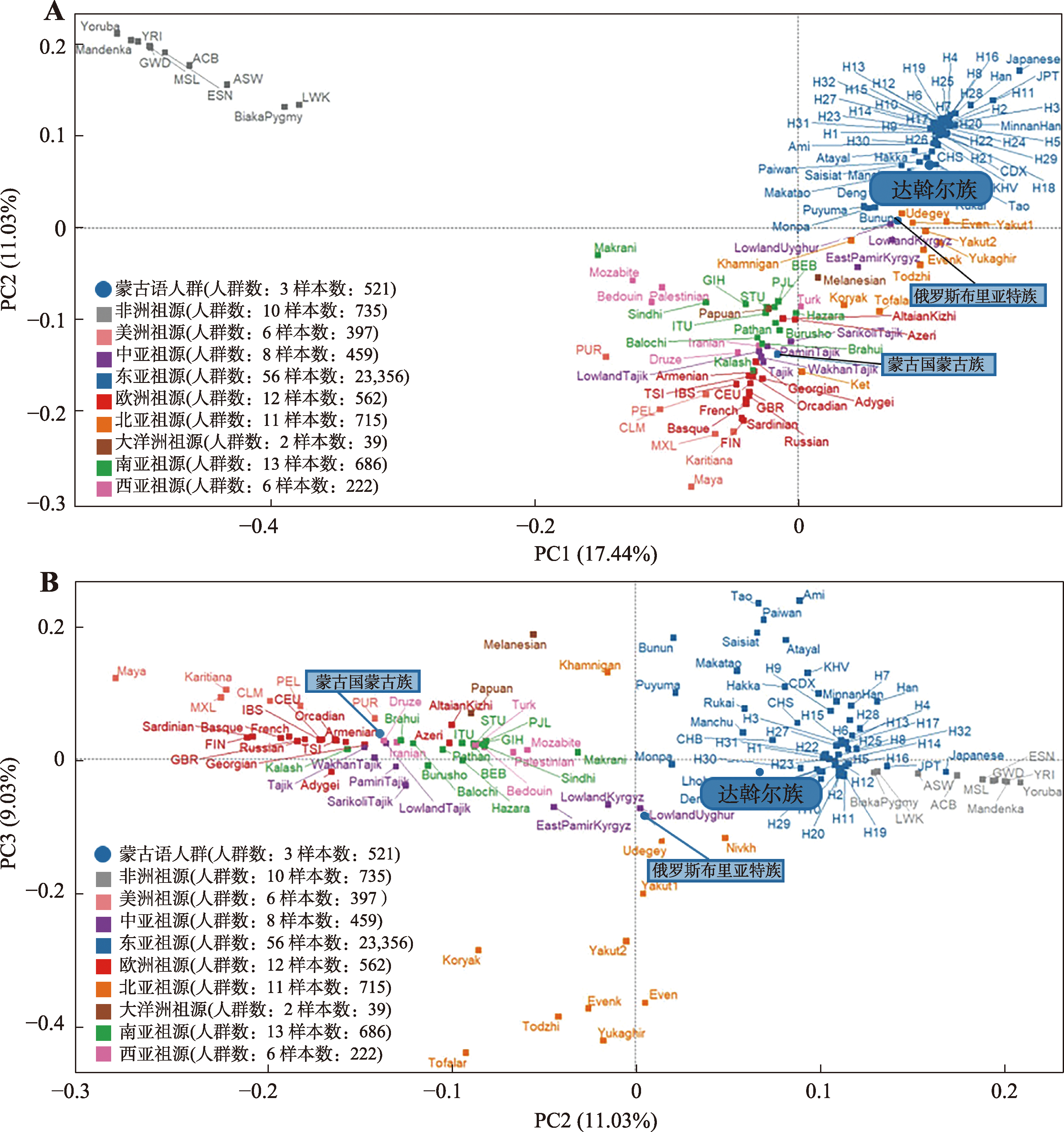
Fig. 2
Principal component (PC) analyses of 27,692 individuals with different ancestral origins based on complete mitochondrial genome sequences"
| [1] | 徐芳田, 孟淑卿. 鄂伦春族源流简述. 黑龙江民族丛刊, 1986, (4): 24-27. |
| [2] | 乌力吉图. 鄂温克族族源略议. 内蒙古社会科学, 1985, (4): 60-63. |
| [3] | Huang YZ. The origin of the evolution of the Sauron tribes in the Qing Dynasty. Guizhou Ethnic Studies, 2018, 39(4): 187-190. |
| 黄彦震. 清代索伦部族群演变溯源. 贵州民族研究, 2018, 39(4): 187-190. | |
| [4] | Lan YC. The study of Butha Eight Banners in Qing Dynasty[Dissertation]. Northeast Normal University, 2015. |
| 兰延超. 清代布特哈八旗研究[学位论文]. 东北师范大学, 2015. | |
| [5] | 吴东颖, 马素参, 刘春芸, 杨焕明. 契丹遗骸DNA序列分析及其与达斡尔、汉族等的遗传关系. 中国医学科学院学报, 1999, (3): 202. |
| [6] | Wu DY. Molecular archaeological study of Qidan remains[Dissertation]. Peking Union Medical College, 1999. |
| 吴东颖. 契丹古尸分子考古学研究[学位论文]. 中国协和医科大学, 1999. | |
| [7] |
Kong QP, Yao YG, Liu M, Shen SP, Chen C, Zhu CL, Palanichamy MG, Zhang YP. Mitochondrial DNA sequence polymorphisms of five ethnic populations from northern China. Hum Genet, 2003, 113(5): 391-405.
pmid: 12938036 |
| [8] | Xu Y, Zhang XL, Zhang QC, Cui YQ, Zhou H, Zhu H. Genetic relationship between ancient Khitan and modern Daur. Journal of Jilin University (Science Edition), 2006, 44(6): 997-1000. |
| 许月, 张小雷, 张全超, 崔银秋, 周慧, 朱泓. 古代契丹与现代达斡尔遗传关系分析. 吉林大学学报(理学版), 2006, 44(6): 997-1000. | |
| [9] | Xu Y. Molecular genetic analysis of Khitan Population in Liao Dynasty[Dissertation]. Jilin University, 2006. |
| 许月. 辽代契丹人群分子遗传学研究[学位论文]. 吉林大学, 2006. | |
| [10] |
Zeng XY, Rakha A, Li SB. Genetic polymorphisms of 10 X-chromosome STR loci in Chinese Daur ethnic minority group. Leg Med (Tokyo), 2009, 11(3): 152-154.
pmid: 19329347 |
| [11] |
Liu Y, Ye Y, Yi XQ, Zhang JH, Fan GY, Hao DY. Phylogeneticanalysesofthe19STRlociinXchromosomerevealeddiscriminantforensiccharacteristicsforChineseDaurandOroqenminorities. Int J Legal Med, 2022, 136(2), 551-553.
pmid: 34510269 |
| [12] | Wang CZ, Shi MS, Li H. The origin of Daur from the perspective of molecular anthropology. Journal of North Minzu University (Philosophy and Social Sciences Edition), 2018, (5): 110-117. |
| 王迟早, 石美森, 李辉. 分子人类学视野下的达斡尔族族源研究. 北方民族大学学报(哲学社会科学版), 2018, (5): 110-117. | |
| [13] | 丁石庆. 达斡尔族姓氏与满汉文化. 满族研究, 1997, (3): 91-96. |
| [14] |
Wang CZ, Wei LH, Wang LX, Wen SQ, Yu XE, Shi MS, Li H. Relating clans Ao and Aisin Gioro from northeast China by whole Y-chromosome sequencing. J Hum Genet, 2019, 64(8): 775-780.
pmid: 31148597 |
| [15] |
Wei LH, Yan S, Lu Y, Wen SQ, Huang YZ, Wang LX, Li SL, Yang YJ, Wang XF, Zhang C, Xu SH, Yao DL, Jin L, Li H. Whole-sequence analysis indicates that the Y chromosome C2*-Star cluster traces back to ordinary Mongols, rather than Genghis Khan. Eur J Hum Genet, 2018, 26(2): 230-237.
pmid: 29358612 |
| [16] | Sharen G, Cheng HZ, Wei LH. Early position of the Daur language branch in the Mongolian language group. Acta Anthropologica Sinica, 2022, 41(6): 1037-1046. |
| 沙仁高娃, 程慧珍, 韦兰海. 达斡尔语分支早期在蒙古语族中的地位. 人类学学报, 2022, 41(6): 1037-1046. | |
| [17] |
Zerjal T, Xue YL, Bertorelle G, Wells RS, Bao WD, Zhu SL, Qamar R, Ayub Q, Mohyuddin A, Fu SB, Li P, Yuldasheva N, Ruzibakiev R, Xu JJ, Shu QF, Du RF, Yang HM, Hurles ME, Robinson E, Gerelsaikhan T, Dashnyam B, Mehdi SQ, Tyler-Smith C. The genetic legacy of the Mongols. Am J Hum Genet, 2003, 72(3): 717-721.
pmid: 12592608 |
| [18] |
Liu BL, Ma PC, Wang CZ, Yan S, Yao HB, Li YL, Xie YM, Meng SL, Sun J, Cai YH, Sarengaowa S, Li H, Cheng HZ, Wei LH. Paternal origin of Tungusic-speaking populations: insights from the updated phylogenetic tree of Y-chromosome haplogroup C2a-M86. Am J Hum Biol, 2021, 33(2): e23462.
pmid: 32657006 |
| [19] | 苏福廷, 苏福荣, 苏靖媛. 玛布岱家族史. 呼伦贝尔: 内蒙古文化出版社, 2016. |
| [20] |
Ma PC, Yang X, Yan S, Li CX, Gao SZ, Han BH, Hou K, Robbeets M, Wei LH, Cui YQ. Ancient Y-DNA with reconstructed phylogeny provides insights into the demographic history of paternal haplogroup N1a2-F1360. J Genet Genomics, 2021, 48(12): 1130-1133.
pmid: 34425243 |
| [21] |
Wang CC, Yeh HY, Popov AN, Zhang HQ, Matsumura H, Sirak K, Cheronet O, Kovalev A, Rohland N, Kim AM, Mallick S, Bernardos R, Tumen D, Zhao J, Liu YC, Liu JY, Mah M, Wang K, Zhang Z, Adamski N, Broomandkhoshbacht N, Callan K, Candilio F, Carlson KSD, Culleton BJ, Eccles L, Freilich S, Keating D, Lawson AM, Mandl K, Michel M, Oppenheimer J, Özdoğan KT, Stewardson K, Wen SQ, Yan S, Zalzala F, Chuang R, Huang CJ, Looh H, Shiung CC, Nikitin YG, Tabarev AV, Tishkin AA, Lin S, Sun ZY, Wu XM, Yang TL, Hu X, Chen L, Du H, Bayarsaikhan J, Mijiddorj E, Erdenebaatar D, Iderkhangai TO, Myagmar E, Kanzawa- Kiriyama H, Nishino M, Shinoda KI, Shubina OA, Guo JX, Cai WW, Deng QY, Kang LL, Li DW, Li DN, Lin R, Nini, Shrestha R, Wang LX, Wei LH, Xie GM, Yao HB, Zhang MF, He GL, Yang XM, Hu R, Robbeets M, Schiffels S, Kennett DJ, Jin L, Li H, Krause J, Pinhasi R, Reich D. Genomic insights into the formation of human populations in East Asia. Nature, 2021, 591(7850): 413-419.
pmid: 33618348 |
| [22] |
Jeong C, Wang K, Wilkin S, Taylor WTT, Miller BK, Bemmann JH, Stahl R, Chiovelli C, Knolle F, Ulziibayar S, Khatanbaatar D, Erdenebaatar D, Erdenebat U, Ochir A, Ankhsanaa G, Vanchigdash C, Ochir B, Munkhbayar C, Tumen D, Kovalev A, Kradin N, Bazarov BA, Miyagashev DA, Konovalov PB, Zhambaltarova E, Miller AV, Haak W, Schiffels S, Krause J, Boivin N, Erdene M, Hendy J, Warinner C. A dynamic 6,000-year genetic history of Eurasia’s eastern steppe. Cell, 2020, 183(4): 890-904.
pmid: 33157037 |
| [23] |
Wang CZ, Yu XE, Shi MS, Li H, Ma SH. Whole mitochondrial genome analysis of the Daur ethnic minority from Hulunbuir in the Inner Mongolia Autonomous Region of China. BMC Ecol Evol, 2022, 22(1): 66.
pmid: 35585500 |
| [24] |
Derenko M, Malyarchuk B, Grzybowski T, Denisova G, Dambueva I, Perkova M, Dorzhu C, Luzina F, Lee HK, Vanecek T, Villems R, Zakharov I. Phylogeographic analysis of mitochondrial DNA in northern Asian populations. Am J Hum Genet, 2007, 81(5): 1025-1041.
pmid: 17924343 |
| [25] |
Derenko M, Malyarchuk B, Denisova G, Perkova M, Litvinov A, Grzybowski T, Dambueva I, Skonieczna K, Rogalla U, Tsybovsky I, Zakharov I. Western Eurasian ancestry in modern Siberians based on mitogenomic data. BMC Evol Biol, 2014, 14: 217.
pmid: 25301575 |
| [26] |
Derenko M, Denisova G, Malyarchuk B, Dambueva I, Bazarov B. Mitogenomic diversity and differentiation of the Buryats. J Hum Genet, 2018, 63(1): 71-81.
pmid: 29215085 |
| [27] |
Duggan AT, Whitten M, Wiebe V, Crawford M, Butthof A, Spitsyn V, Makarov S, Novgorodov I, Osakovsky V, Pakendorf B. Investigating the prehistory of Tungusic peoples of Siberia and the Amur-Ussuri region with complete mtDNA genome sequences and Y-chromosomal markers. PLoS One, 2013, 8(12): e83570.
pmid: 24349531 |
| [28] |
Cardinali I, Bodner M, Capodiferro MR, Amory C, Rambaldi Migliore N, Gomez EJ, Myagmar E, Dashzeveg T, Carano F, Woodward SR, Parson W, Perego UA, Lancioni H, Achilli A. Mitochondrial DNA footprints from western Eurasia in modern Mongolia. Front Genet, 2022, 12: 819337.
pmid: 35069708 |
| [29] |
Derenko M, Malyarchuk B, Denisova G, Perkova M, Rogalla U, Grzybowski T, Khusnutdinova E, Dambueva I, Zakharov I. Complete mitochondrial DNA analysis of eastern Eurasian haplogroups rarely found in populations of northern Asia and eastern Europe. PLoS One, 2012, 7(2): e32179.
pmid: 22363811 |
| [30] |
Palanichamy MG, Mitra B, Zhang CL, Debnath M, Li GM, Wang HW, Agrawal S, Chaudhuri TK, Zhang YP. West Eurasian mtDNA lineages in India: an insight into the spread of the Dravidian language and the origins of the caste system. Hum Genet, 2015, 134(6): 637-647.
pmid: 25832481 |
| [31] |
Roostalu U, Kutuev I, Loogväli EL, Metspalu E, Tambets K, Reidla M, Khusnutdinova EK, Usanga E, Kivisild T, Villems R. Origin and expansion of haplogroup H, the dominant human mitochondrial DNA lineage in west Eurasia: the near eastern and caucasian perspective. Mol Biol Evol, 2007, 24(2): 436-448.
pmid: 17099056 |
| [32] | Wang HJ, Liu WQ, Fu YQ, Zhang XL, Zhou H, Zhu H. Molecular biological analysis of remains from Jiangjungou Cemetery in Inner Mongolia. Prog Nat Sci, 2006, 16(7): 727-731. |
| [33] |
Wang HJ, Ge BW, Mair VH, Cai DW, Xie CZ, Zhang QC, Zhou H, Zhu H. Molecular genetic analysis of remains from Lamadong cemetery, Liaoning, China. Am J Phys Anthropol, 2007, 134(3): 404-411.
pmid: 17632796 |
| [34] |
Yu CC, Xie L, Zhang XL, Zhou H, Zhu H. Genetic analysis on Tuoba Xianbei remains excavated from Qilang Mountain Cemetery in Qahar Right Wing Middle Banner of Inner Mongolia. FEBS Lett, 2006, 580(26): 6242-6246.
pmid: 17070809 |
| [35] |
Mao XW, Zhang HC, Qiao SY, Liu YC, Chang FQ, Xie P, Zhang M, Wang TY, Li M, Cao P, Yang RW, Liu F, Dai QY, Feng XT, Ping WJ, Lei CZ, Olsen JW, Bennett EA, Fu QM. The deep population history of northern East Asia from the Late Pleistocene to the Holocene. Cell, 2021, 184(12): 3256-3266.
pmid: 34048699 |
| [36] |
Perego UA, Achilli A, Angerhofer N, Accetturo M, Pala M, Olivieri A, Hooshiar Kashani B, Ritchie KH, Scozzari R, Kong QP, Myres NM, Salas A, Semino O, Bandelt HJ, Woodward SR, Torroni A. Distinctive Paleo-Indian migration routes from Beringia marked by two rare mtDNA haplogroups. Curr Biol, 2009, 19(1): 1-8.
pmid: 19135370 |
| [37] |
Jia MS, Li QY, Zhang TT, Dong BN, Liang X, Fu SB, Yu JC. Genetic diversity analysis of the Chinese Daur ethnic group in Heilongjiang province by complete mitochondrial genome sequencing. Front Genet, 2022, 13: 919063.
pmid: 35801081 |
| [38] |
Cann HM, de Toma C, Cazes L, Legrand MF, Morel V, Piouffre L, Bodmer J, Bodmer WF, Bonne-Tamir B, Cambon-Thomsen A, Chen Z, Chu J, Carcassi C, Contu L, Du RF, Excoffier L, Ferrara GB, Friedlaender JS, Groot H, Gurwitz D, Jenkins T, Herrera RJ, Huang XY, Kidd J, Kidd KK, Langaney A, Lin AA, Mehdi SQ, Parham P, Piazza A, Pistillo MP, Qian YP, Shu QF, Xu JJ, Zhu S, Weber JL, Greely HT, Feldman MW, Thomas G, Dausset J, Cavalli-Sforza LL. A human genome diversity cell line panel. Science, 2002, 296(5566): 261-262.
pmid: 11954565 |
| [39] |
Patterson N, Moorjani P, Luo Y, Mallick S, Rohland N, Zhan Y, Genschoreck T, Webster T, Reich D. Ancient admixture in human history. Genetics, 2012, 192(3): 1065-1093.
pmid: 22960212 |
| [40] |
Mallick S, Li H, Lipson M, Mathieson I, Gymrek M, Racimo F, Zhao MY, Chennagiri N, Nordenfelt S, Tandon A, Skoglund P, Lazaridis I, Sankararaman S, Fu QM, Rohland N, Renaud G, Erlich Y, Willems T, Gallo C, Spence JP, Song YS, Poletti G, Balloux F, van Driem G, de Knijff P, Romero IG, Jha AR, Behar DM, Bravi CM, Capelli C, Hervig T, Moreno-Estrada A, Posukh OL, Balanovska E, Balanovsky O, Karachanak-Yankova S, Sahakyan H, Toncheva D, Yepiskoposyan L, Tyler-Smith C, Xue YL, Abdullah MS, Ruiz-Linares A, Beall CM, Di Rienzo A, Jeong C, Starikovskaya EB, Metspalu E, Parik J, Villems R, Henn BM, Hodoglugil U, Mahley R, Sajantila A, Stamatoyannopoulos G, Wee JTS, Khusainova R, Khusnutdinova E, Litvinov S, Ayodo G, Comas D, Hammer MF, Kivisild T, Klitz W, Winkler CA, Labuda D, Bamshad M, Jorde LB, Tishkoff SA, Watkins WS, Metspalu M, Dryomov S, Sukernik R, Singh L, Thangaraj K, Pääbo S, Kelso J, Patterson N, Reich D. The Simons Genome Diversity Project:300 genomes from 142 diverse populations. Nature, 2016, 538(7624): 201-206.
pmid: 27654912 |
| [41] |
1000 Genomes Project Consortium Abecasis GR, Altshuler D, Auton A, Brooks LD, Durbin RM, Gibbs RA, Hurles ME, McVean GA. A map of human genome variation from population-scale sequencing. Nature, 2010, 467(7319): 1061-1073.
pmid: 20981092 |
| [42] |
Ning C, Li TJ, Wang K, Zhang F, Li T, Wu XY, Gao SZ, Zhang QC, Zhang H, Hudson MJ, Dong GH, Wu SH, Fang YM, Liu C, Feng CY, Li W, Han T, Li R, Wei J, Zhu YG, Zhou YW, Wang CC, Fan SY, Xiong ZL, Sun ZY, Ye ML, Sun L, Wu XH, Liang FW, Cao YP, Wei XT, Zhu H, Zhou H, Krause J, Robbeets M, Jeong C, Cui YQ. Ancient genomes from northern China suggest links between subsistence changes and human migration. Nat Commun, 2020, 11(1): 2700.
pmid: 32483115 |
| [43] |
Siska V, Jones ER, Jeon S, Bhak Y, Kim HM, Cho YS, Kim H, Lee K, Veselovskaya E, Balueva T, Gallego- Llorente M, Hofreiter M, Bradley DG, Eriksson A, Pinhasi R, Bhak J, Manica A. Genome-wide data from two early Neolithic East Asian individuals dating to 7700 years ago. Sci Adv, 2017, 3(2): e1601877.
pmid: 28164156 |
| [44] | Qu XB. Analysis of cold concentration degree and concentration period in cold pole of China. Inner Mongolia Meteorology, 2020, (2): 31-33. |
| 曲学斌. 中国冷极的极寒集中度与集中期特征分析. 内蒙古气象, 2020, (2): 31-33. |
| [1] | ZHANG Xiang-Yu, HUANG Deng-Ping, XIE Xiao-Hong. Progress on breeding for best-hybridized crossing of meat rabbits [J]. HEREDITAS, 2012, 34(4): 401-406. |
| Viewed | ||||||
|
Full text |
|
|||||
|
Abstract |
|
|||||

