Hereditas(Beijing) ›› 2026, Vol. 48 ›› Issue (6): 648-656.doi: 10.16288/j.yczz.26-005
• Genetics Teaching • Previous Articles
Construction and implementation of an ICF-based integrated teaching model for genetic disease severity assessment
Qingli Quan( ), Meixing Yu(), Haiou Jiang()
School of Basic Medical Sciences ,Hunan University of Medicine Huaihua 418000, China
-
Received:2026-01-05Revised:2026-02-01Online:2026-06-20Published:2026-04-08 -
Contact:Haiou Jiang E-mail:bioquanqingli@163.com;yumeix509@163.com;hhjiangh@126.com -
Supported by:Teaching Reform Project of Hunan Provincial Regular Higher Education Institutions(202502001860)

Cite this article
Qingli Quan, Meixing Yu, Haiou Jiang. Construction and implementation of an ICF-based integrated teaching model for genetic disease severity assessment[J]. Hereditas(Beijing), 2026, 48(6): 648-656.
share this article
Add to citation manager EndNote|Reference Manager|ProCite|BibTeX|RefWorks
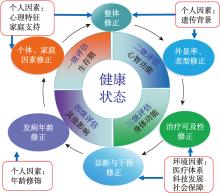
Fig. 1
Teaching model for genetic disease severity assessment based on the ICF framework"
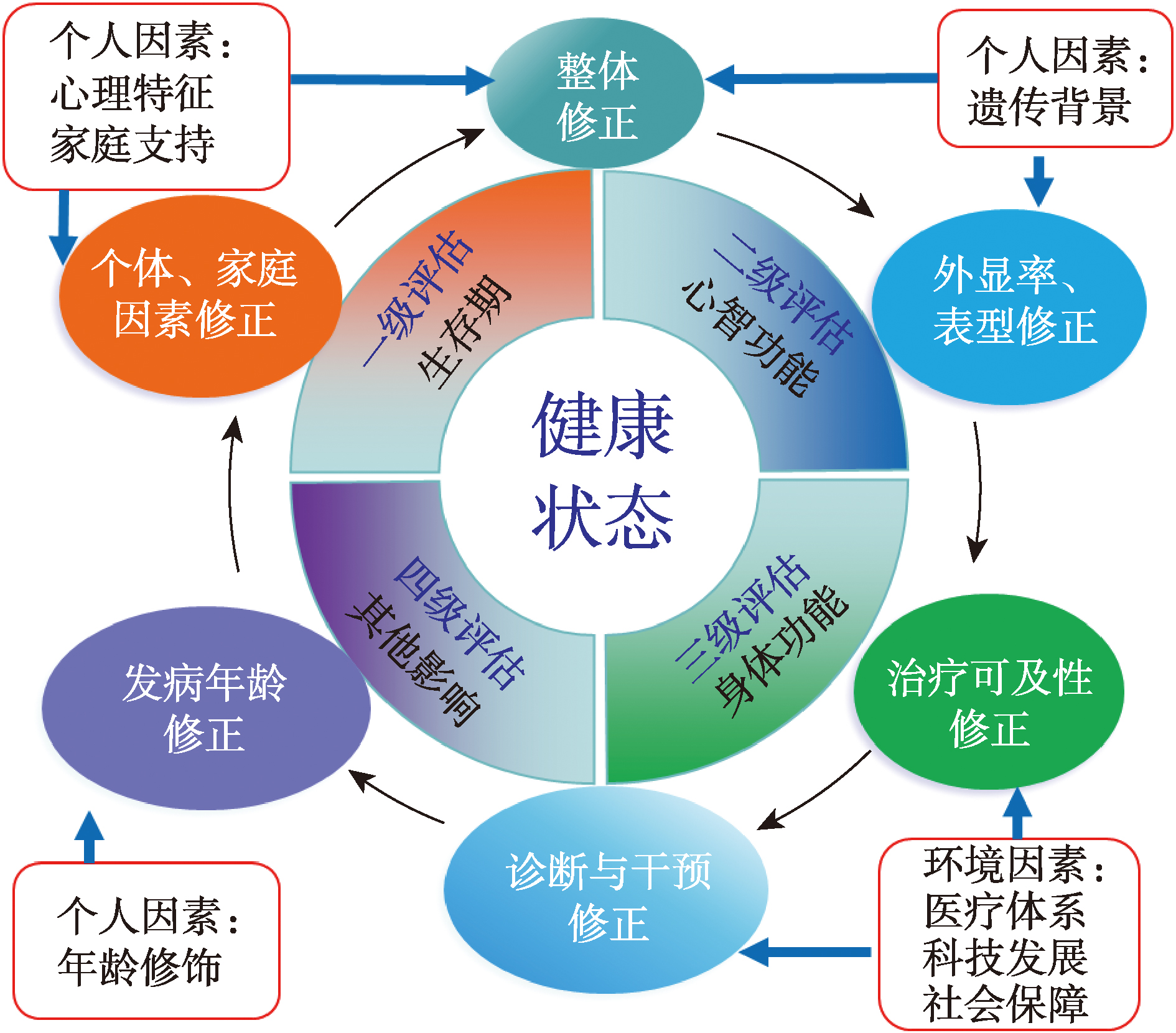
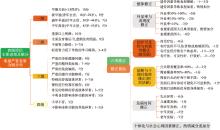
Fig. 2
Basic and adjusted assessment of genetic disease severity"
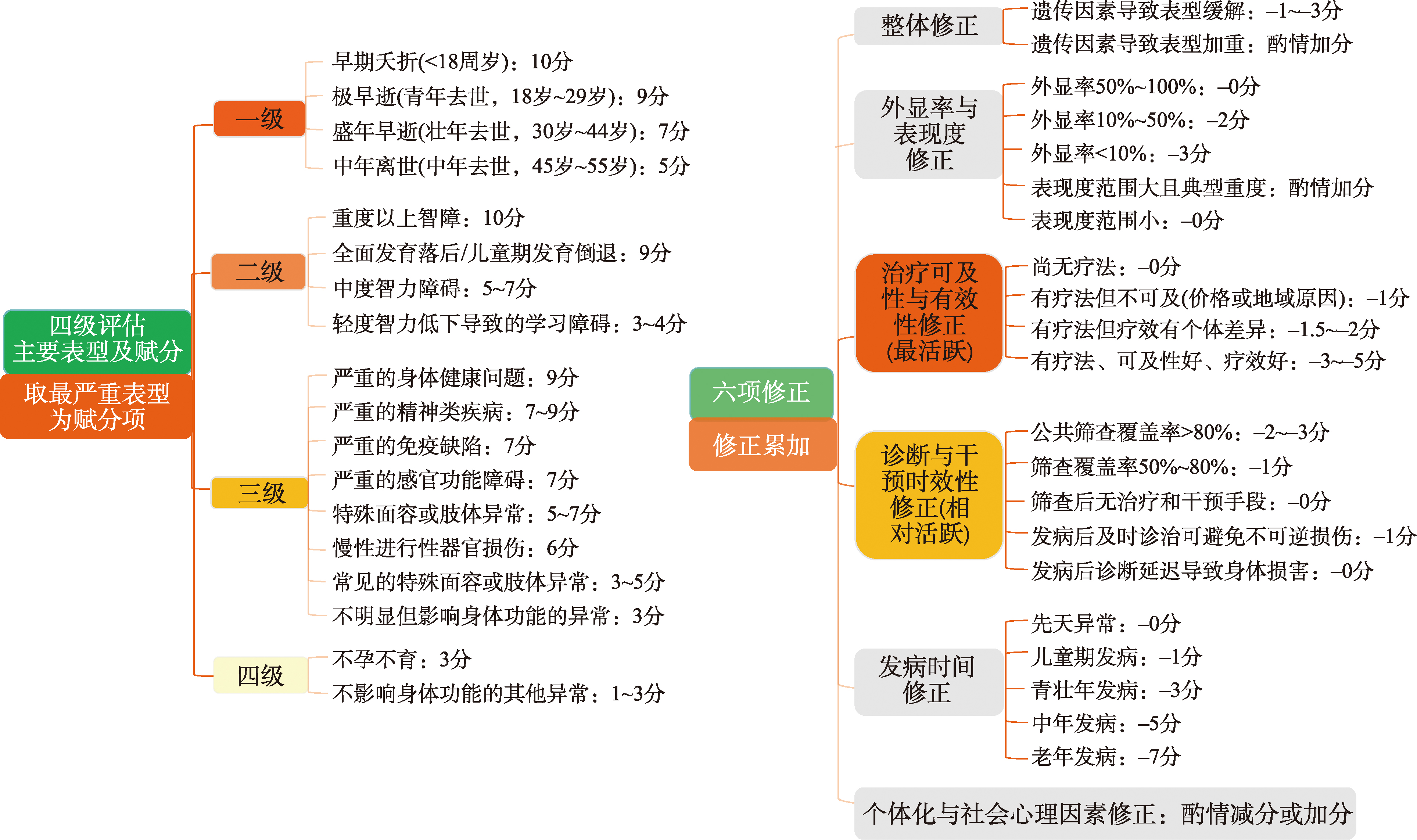
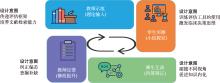
Fig. 3
Teaching implementation process for genetic disease severity assessment based on the ICF framework"
Supplementary Table 1
Key scoring points for the evaluation report"
| 评分维度 | 优秀(16~20分) | 合格(10~15分) | 不合格(0~5分) |
|---|---|---|---|
| 1. 身体功能与结构分析 | 能准确识别并区分原发损伤、继发并发症及相关的身体结构问题 | 能列出主要的身体功能问题,但分析较为笼统,未作区分 | 遗漏关键身体功能问题,或描述完全错误 |
| 2. 活动与参与分析 | 清晰区分“能力”(能做什么)与“表现”(实际做什么,状态如何),并详细描述了具体活动受限和参与障碍,与患者个人角色紧密关联 | 能描述活动受限和参与障碍,但未明确区分“能力”与“表现”,或与患者情境结合不够具体 | 混淆活动与参与概念,或仅列出症状,未转化为功能层面的分析 |
| 3. 环境与个人因素分析 | 系统识别了促进性与阻碍性的环境因素(物理、社会、态度、政策等),并分析了个人心理、态度对功能的影响 | 能识别部分明显的环境因素(如物理环境),但对社会、态度等因素分析不足,个人因素被忽略 | 几乎未分析环境或个人因素 |
| 4. 评估的系统性与整合性 | 报告结构清晰,逻辑连贯,能展示不同维度(身体-活动-参与-环境)间的相互作用和连锁效应 | 报告结构基本完整,但各维度分析较为孤立,未能有效整合 | 报告结构混乱,各部分之间缺乏逻辑联系 |
| 5. 结论与建议的针对性 | 基于上述分析,能提炼出个体化的核心问题清单,并提出具体、可行、与情境高度相关的干预建议 | 能总结一些问题,但结论较为泛泛,建议的针对性或可行性不足 | 结论与前述分析脱节,建议空洞或不切实际 |
Table 1
Comparison of assessment report scores between the two groups"
| 评分维度 | 实验组 | 对照组 | P值 | t值 |
|---|---|---|---|---|
| 身体功能与结构分析 | 15.24±1.86 | 15.08±1.79 | 0.364 | 0.91 |
| 活动与参与分析 | 14.73±1.95 | 13.18±1.76 | <0.001 | 8.66 |
| 环境与个人因素分析 | 14.59±2.14 | 12.20±1.98 | <0.001 | 12.09 |
| 评估的系统性与整合性 | 14.52±2.08 | 12.08±1.91 | <0.001 | 12.55 |
| 结论与建议的针对性 | 14.25±2.27 | 12.25±2.02 | <0.001 | 9.62 |
| 报告总成绩 | 73.33±7.16 | 64.79±5.45 | <0.001 | 13.87 |
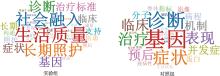
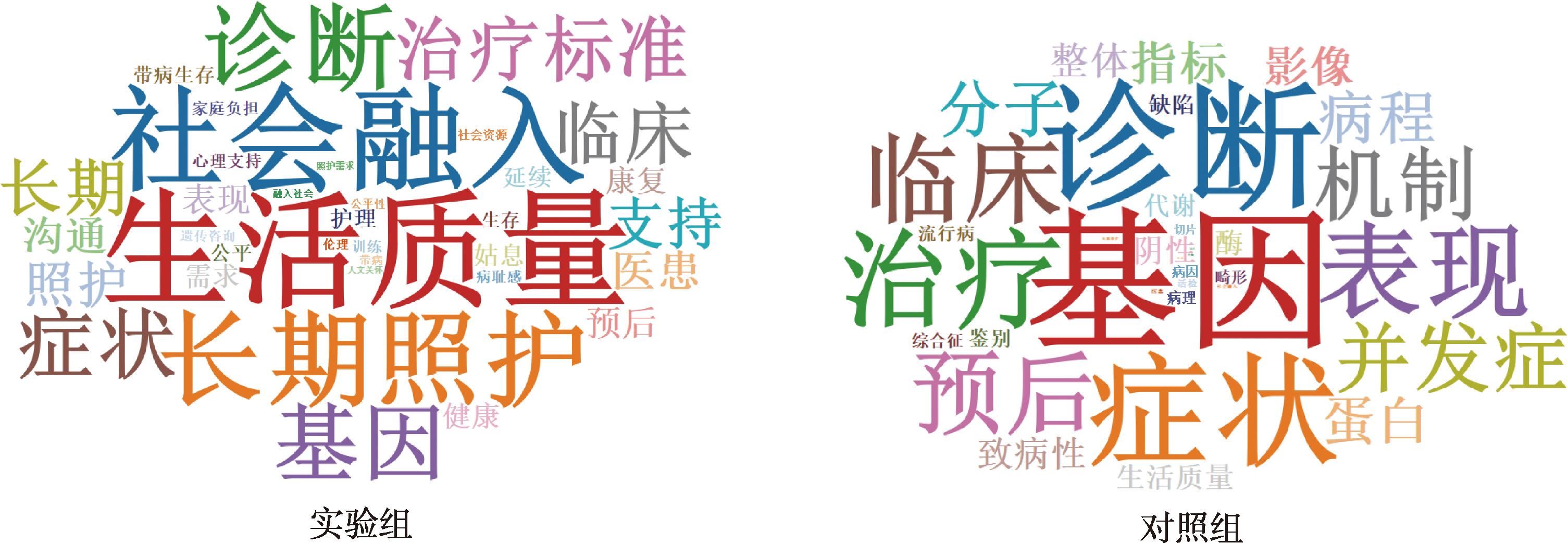
Fig. 4
Comparison of high-frequency word clouds between the experimental and control groups"
| [1] | 王诏, 汪雪雁. 先天性膈疝的遗传咨询和严重性评估简述. 中国计划生育和妇产科, 2022, 14(12): 61-64. |
| [2] | Harper PS. Practical Genetic Counselling. Translated by Zhi Xia. Beijing: Science Press, 2017. |
| P.S.哈珀. 实用遗传咨询. 夏志, 译. 北京: 科学出版社, 2017. | |
| [3] | Liu W, Yang L, Guo F, Zuo J. Curriculum design and teaching implementation of Blended Teaching Course “Rare Genetic Diseases”. Chin J Birth Health Hered, 2024, 32(8): 1752-1755. |
| 刘雯, 杨玲, 郭锋, 左伋. “罕见遗传病”混合式课程的设计与教学实施. 中国优生与遗传杂志, 2024, 32(8): 1752-1755. | |
| [4] |
Uhlenbusch N, Löwe B, Depping MK. Perceived burden in dealing with different rare diseases: a qualitative focus group study. BMJ Open, 2019, 9(12): e033353.
pmid: 31888936 |
| [5] | World Health Organization. International Classification of Functioning, Disability and Health (ICF). Geneva: WHO, 2001. |
| [6] |
Kattamis A, Kwiatkowski JL, Aydinok Y. Thalassaemia. Lancet, 2022, 399(10343): 2310-2324.
pmid: 35691301 |
| [7] | Chen MY. A case intervention study on alleviating caregiving stress among First-Degree relatives of individuals with mental disorders[Dissertation]. Sichuan International Studies University, 2025. |
| 陈明燕. 缓解精神障碍患者一级亲属照护压力的个案介入研究[学位论文]. 四川外国语大学, 2025. | |
| [8] | 冯淑娴, 岳小珍. 产前四维彩超诊断胎儿软骨发育不全合并鼻骨缺失1例. 中国优生与遗传杂志, 2021, 29(5): 694-695. |
| [9] | 俞晓敏. 遗传性肾脏疾病基因诊断策略. 肾脏病与透析肾移植杂志, 2023, 32(3): 247-248. |
| [10] | 潘锋. 多学科综合管理有助于延缓杜氏肌营养不良疾病进展. 妇儿健康导刊, 2025, 4(20): 4-8. |
| [11] |
Zhang YX, Xie HT, Liang GX, Qin YR, Wei XF, Ning SS, Liang Y, Liang XD, Xie YL, Lin ZZ, Zhu DN, Lin JQ, Xiong F, Xu XM, Shang X. A novel gain-of-function PIP4K2A mutation elevates the expression of β-globin and aggravates the severity of α-thalassemia. Br J Haematol, 2023, 202(5): 1018-1023.
pmid: 37423903 |
| [12] |
Ratna H. Heritable retinoblastoma and risk of developing second primary cancer. JAMA Netw Open, 2020, 3(10): e2022569.
pmid: 33090221 |
| [13] |
Pohjola P, de Leeuw N, Penttinen M, Kääriäinen H. Terminal 3p deletions in two families—correlation between molecular karyotype and phenotype. Am J Med Genet A, 2010, 152A(2): 441-446.
pmid: 20101686 |
| [14] | Zhou TT, Pan J. Study on affordability of orphan drugs under different health insurance levels: a case study of spinal muscular at-rophy. Chin Health Econ, 2022, 41(2): 33-38. |
| 周婷婷, 潘杰. 不同保障水平下罕见病用药可负担性研究:以脊髓性肌萎缩症为例. 中国卫生经济, 2022, 41(2): 33-38. | |
| [15] |
Li MJ, Li Q, Zhao MM, Kim H, Feng RQ, Guo MN, Heng JP, Yang JK, Liu C. Spectrum and epidemiology of rare diseases in a Chinese natural population of 14.31 million residents, 2012-2023. Orphanet J Rare Dis, 2025, 20(1): 410.
pmid: 40775651 |
| [16] |
Takahashi S, Iizuka R, Sawai T. Reevaluating ‘seriousness’ in genetic conditions: balancing clinical criteria and lived experiences. Eur J Hum Genet, 2025, 33(6): 699-700.
pmid: 40089638 |
| [17] | Berry GT. Classic Galactosemia and Clinical Variant Galactosemia[M/OL]. GeneReviews®. Seattle: University of Washington, 1993-2025[2021.03.11]. |
| [1] | Panhui Tian, Yue Xu, Yongqing Zhang, Tianyun Wang. Genetic diseases are not necessarily inherited: suggestion on its Chinese translation [J]. Hereditas(Beijing), 2024, 46(9): 673-676. |
| [2] | Mao Zhang, Yanyan Wang, Yun Bai, Xuedan Chen, Hong Guo. Investigation on the construction of teaching case base in medical genetics [J]. Hereditas(Beijing), 2024, 46(1): 78-87. |
| [3] | Jie Ma, Lujie Huang, Qiaoxia Zhang, Yan Zhu, Lu Qian. PBL teaching design of medical genetics with the case of brachydactyly type A2 [J]. Hereditas(Beijing), 2023, 45(2): 176-183. |
| [4] | Tao Wang, Liang Liang, Minhua Zheng. Application of formative evaluation and teaching feedback in PBL teaching of Medical Genetics [J]. Hereditas(Beijing), 2020, 42(8): 810-816. |
| [5] | Yuling Yang, Lan Luo, Yuan Qian, Fang Yang. Cultivation of undergraduates’ self-regulated learning ability in Medical Genetics based on PAD class [J]. Hereditas(Beijing), 2020, 42(11): 1133-1139. |
| [6] | Yuanfeng Li, Yubo Han, Pengbo Cao, Jinfeng Meng, Haibei Li, Geng Qin, Feng Zhang, Guangfu Jin, Yong Yang, Lingqian Wu, Jie Ping, Gangqiao Zhou. Research advances on medical genetics in China in 2015 [J]. HEREDITAS(Beijing), 2016, 38(5): 363-390. |
| [7] | Fengjuan Zhou, Wenmei Xie, Qiang Wang, Xiaorong Zhao. Exploration and implementation for the construction of the quaternary teaching system of medical genetics including teaching, practice, research and clinical application [J]. HEREDITAS(Beijing), 2015, 37(9): 945-950. |
| [8] | WU Yan-Hua, GUO Bin, LOU Hui-Ling, CUI Yu-Liang, GU Hui-Juan, QIAO Shou-Yi. From gene cloning to expressional analysis——Practice and experience from educational reform of experimental gene engineering [J]. HEREDITAS, 2012, 34(2): 248-252. |
| [9] | DU Shao-Ling, XU Sai-Bin, GONG Lei, SHU Xiao-Lei, HONG Ping, LIN Ai-Qin. Practice and research into multi-unit teaching of Medical Genetics [J]. HEREDITAS, 2010, 32(10): 1084-1088. |
| [10] | YANG Kang-Juan, JIN Ying-Zi, ZHANG Zi-Bo, JIN Yan-Hua, JIN Xiong-Ji, XIU Jing-Hui, SUN Lian-Ping, LIU Yang. The research of basic medical education with clinical practice and culturing of discovering and creative ability for students [J]. HEREDITAS, 2008, 30(5): 655-658. |
| [11] | CHEN Cao-Yi, ZHAO Xiang-Qiang, XIE Xiao-Ling, TAN Xiang-Ling. A preliminary exploration into medical genetics teaching to interna-tional students [J]. HEREDITAS, 2008, 30(12): 1647-1650. |
| [12] | ZHOU Feng-Juan. A study of three-combination teaching model in college medical ge-netics teaching [J]. HEREDITAS, 2008, 30(12): 1651-1654. |
| Viewed | ||||||
|
Full text |
|
|||||
|
Abstract |
|
|||||

