
Potential of SERINC2 as a biomarker in tumor prognosis and immunology: analysis from pan-cancer studies
Received date: 2025-06-26
Revised date: 2025-09-26
Online published: 2025-10-17
Supported by
Wenzhou Science and Technology Bureau Project(Y2023228);Zhejiang Provincial Basic Public Welfare Research Program(LGF21H160035)
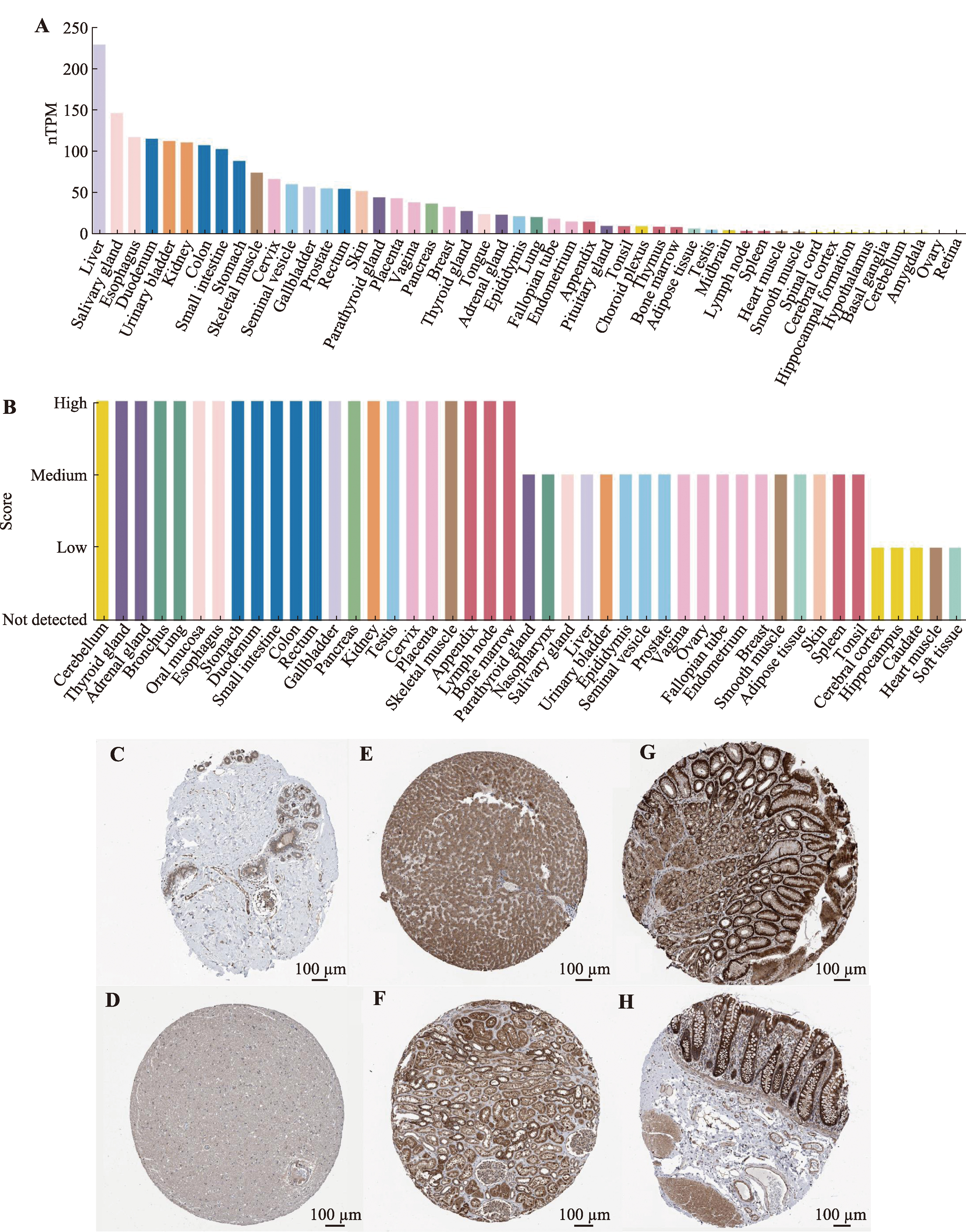
Serine incorporator (SERINC) is a family of transmembrane protein involved in lipid synthesis. Among its family members, SERINC2 has been implicated in tumor pathogenesis. Pancreatic carcinoma (PAAD), a highly malignant tumor characterized by an extremely poor prognosis, lacks effective biomarkers. To date, the association between SERINC2 and pan-cancer or tumor immunity remains unreported in the literature. Consequently, investigating the utility of SERINC2 for prognostic prediction in PAAD lays the groundwork for developing diagnostic biomarkers and SERINC2-targeted immunotherapy strategies. In this study, we used the transcriptional data in normal and tumor tissues from The Cancer Genome Atlas (TCGA), Genotype-Tissue Expression (GTEx) and Human Protein Atlas (HPA). Analysis of publicly available data (TCGA, GTEx, HPA) revealed significant SERINC2 overexpression in multiple cancers, which was associated with advanced clinicopathological stage (P<0.05). Analysis of the Genomic Stability Associated Cancer Analysis (GSCA) database revealed a significant positive correlation between copy number variation (CNV) and SERINC2 expression levels. Conversely, DNA methylation was inversely correlated with SERINC2 expression (P<0.05). Further investigation utilizing TCGA database demonstrated that SERINC2 expression was significantly associated with the expression of immune checkpoint molecules, response to immunotherapy, and the extent of immune cell infiltration. Notably, a negative correlation was observed between SERINC2 expression and the tumor microenvironment (TME) score in most cancer types analyzed (P<0.05). We constructed a prognostic model for PAAD based on 25 differentially expressed genes (DEGs) identified from the TCGA cohort using the “limma” package. This model effectively stratified patients into high- and low-risk groups with significantly distinct survival outcomes. Immunohistochemical (IHC) analysis of 54 PAAD patient samples validated that high SERINC2 expression was significantly associated with poorer prognosis; patients with high expression had a significantly shorter median overall survival (19.67 vs 50.52 months, P=0.029). Collectively, our findings provide a rationale for developing SERINC2-based diagnostic biomarkers and immunotherapeutic strategies.
Min Zhao, Huiqi Ying, Yilei Yang, Qinglv Chen, Wen Lin, Zhenzhai Cai, Limiao Lin, Yangyang Teng . Potential of SERINC2 as a biomarker in tumor prognosis and immunology: analysis from pan-cancer studies[J]. Hereditas(Beijing), 2026 , 48(3) : 287 -300 . DOI: 10.16288/j.yczz.25-090
| [1] | Donisi C, Pretta A, Pusceddu V, Ziranu P, Lai E, Puzzoni M, Mariani S, Massa E, Madeddu C, Scartozzi M. Immunotherapy and cancer: the multi-omics perspective. Int J Mol Sci, 2024, 25(6): 3563. |
| [2] | Xie JD, Luo XY, Deng XP, Tang YH, Tian WW, Cheng H, Zhang JS, Zou YT, Guo ZX, Xie XM. Advances in artificial intelligence to predict cancer immunotherapy efficacy. Front Immunol, 2023, (13): 1076883. |
| [3] | Zhao YH, Yang M, Feng JY, Wang XA, Liu YB. Advances in immunotherapy for biliary tract cancers. Chin Med J (Engl), 2024, 137(5): 524-532. |
| [4] | Xu Y, Su GH, Ma D, Xiao Y, Shao ZM, Jiang YZ. Technological advances in cancer immunity: from immunogenomics to single-cell analysis and artificial intelligence. Signal Transduct Target Ther, 2021, 6(1): 312. |
| [5] | Li E, Clarke J, Ashrafian H, Darzi A, Neves AL. The impact of electronic health record interoperability on safety and quality of care in high-income countries: systematic review. J Med Internet Res, 2022, 24(9): e38144. |
| [6] | Sharma S, Lewinski MK, Guatelli J. An N-Glycosylated form of SERINC5 is specifically incorporated into HIV-1 virions. J Virol, 2018, 92(22): e00753-18. |
| [7] | Zeng Y, Xiao DK, He HM, He JX, Pan H, Yang W, Chen YQ, He JX. SERINC2-knockdown inhibits proliferation, migration and invasion in lung adenocarcinoma. Oncol Lett, 2018, 16(5): 5916-5922. |
| [8] | Ying TX, Wang XM, Yao YJ, Yuan JM, Chen ST, Wen LP, Chen ZJ, Wang XF, Luo C, Sheng JH, Wang WB, Teng LS. Integrative methylome and transcriptome characterization identifies SERINC2 as a tumor-driven gene for papillary thyroid carcinoma. Cancers (Basel), 2022, 15(1): 243. |
| [9] | Xu SF, Zheng ZC, Pathak JL, Cheng HY, Zhou ZL, Chen YP, Wu QY, Wang LJ, Zeng MT, Wu LH. The emerging role of the Serine incorporator protein family in regulating viral infection. Front Cell Dev Biol, 2022, (10): 856468. |
| [10] | Mao S, Lv J, Chen M, Guo NN, Fang Y, Tong JJ, He XH, Wu G, Wang ZH. SERINC2 deficiency causes susceptibility to sepsis-associated acute lung injury. J Inflamm (Lond), 2022, 19(1): 9. |
| [11] | Digre A, Lindskog C. The human protein atlas-Integrated omics for single cell mapping of the human proteome. Protein Sci, 2023, 32(2): e4562. |
| [12] | Burns J, Brown JM, Jones KB, Huang PH. The Cancer Genome Atlas: impact and future directions in sarcoma. Surg Oncol Clin N Am, 2022, 31(3): 559-568. |
| [13] | GTEx Consortium. The Genotype-Tissue Expression (GTEx) project. Nat Genet, 2013, 45(6): 580-585. |
| [14] | Li TW, Fu JX, Zeng ZX, Cohen D, Li J, Chen QM, Li B, Liu XS. TIMER2.0 for analysis of tumor-infiltrating immune cells. Nucleic Acids Res, 2020, 48(W1): W509- W514. |
| [15] | Tang ZF, Li CW, Kang BX, Gao G, Li C, Zhang ZM. GEPIA: a web server for cancer and normal gene expression profiling and interactive analyses. Nucleic Acids Res, 2017, 45(W1): W98-W102. |
| [16] | Liu CJ, Hu FF, Xie GY, Miao YR, Li XW, Zeng Y, Guo AY. GSCA: an integrated platform for gene set cancer analysis at genomic, pharmacogenomic and immunogenomic levels. Brief Bioinform, 2023, 24(1): bbac558. |
| [17] | Wang J, Liao JX, Qiu Y, Jiang YN, Shi YX, Peng J. Construction of a prognostic model for pancreatic ductal adenocarcinoma based on m6A- and m5C-related lncRNAs and its relationship with the immune microenvironment. Chin J Gen Surg, 2025, 34(3): 475-484. |
| 王婕, 廖俊熙, 邱熠, 姜元娜, 史宇薪, 彭杰. 基于m6A和m5C相关lncRNA的胰腺导管腺癌预后模型及其与免疫微环境的关系. 中国普通外科杂志, 2025, 34(3): 475-484. | |
| [18] | Cheng FR, Song WY, Cao PB, Zhou GQ. Potential value of anoikis transcriptional signatures in predicting prognosis and immune microenvironment in hepatocellular carcinoma. Hereditas(Beijing), 2025, 47(7): 768-785. |
| 程芙蓉, 宋文煜, 曹鹏博, 周钢桥. 失巢凋亡相关转录特征预测肝癌预后和免疫微环境的潜在价值. 遗传, 2025, 47(7): 768-785. | |
| [19] | Ren WH, Yang CY, Yang XM, Yu L. SiRNA-mediated knockdown of hTDE2 retards cell cycle progression through transcriptional activation of p21. Oncol Rep, 2014, 31(3): 1314-1322. |
| [20] | Arroyo M, Larrosa R, Claros MG, Bautista R. Expression change correlations between transposons and their adjacent genes in lung cancers reveal a genomic location dependence and highlights cancer-significant genes. In: Bioinformatics and Biomedical Engineering:IWBBIO 2019. Lecture Notes in Computer Science, 2019, 11465: 84-92. |
| [21] | Pathania AS. Crosstalk between noncoding RNAs and the epigenetics machinery in pediatric tumors and their microenvironment. Cancers (Basel), 2023, 15(10): 2833. |
| [22] | Bellavia D, Caruccio S, Caradonna F, Costa V, Urzi O, Raimondi L, De Luca A, Pagani S, Naselli F, Giavaresi G. Enzymatic TET-1 inhibition highlights different epigenetic behaviours of IL-1β and TNFα in tumour progression of OS cell lines. Clin Epigenetics, 2024, 16(1): 136. |
| [23] | Ostrovnaya I, Nanjangud G, Olshen AB. A classification model for distinguishing copy number variants from cancer-related alterations. BMC Bioinformatics, 2010, (11): 297. |
| [24] | Yang YP. Cancer immunotherapy: harnessing the immune system to battle cancer. J Clin Invest, 2015, 125(9): 3335-3337. |
| [25] | Ye F, Dewanjee S, Li YH, Jha NK, Chen ZS, Kumar A, Vishakha, Behl T, Jha SK, Tang HL. Advancements in clinical aspects of targeted therapy and immunotherapy in breast cancer. Mol Cancer, 2023, 22(1): 105. |
| [26] | Chu XJ, Tian WT, Wang ZQ, Zhang J, Zhou RR. Co-inhibition of TIGIT and PD-1/PD-L1 in cancer immunotherapy: mechanisms and clinical trials. Mol Cancer, 2023, 22(1): 93. |
/
| 〈 |
|
〉 |

www.chinagene.cn
备案号:京ICP备09063187号
