
Construction and implementation of an ICF-based integrated teaching model for genetic disease severity assessment
Received date: 2026-01-05
Revised date: 2026-02-01
Online published: 2026-04-08
Supported by
Teaching Reform Project of Hunan Provincial Regular Higher Education Institutions(202502001860)
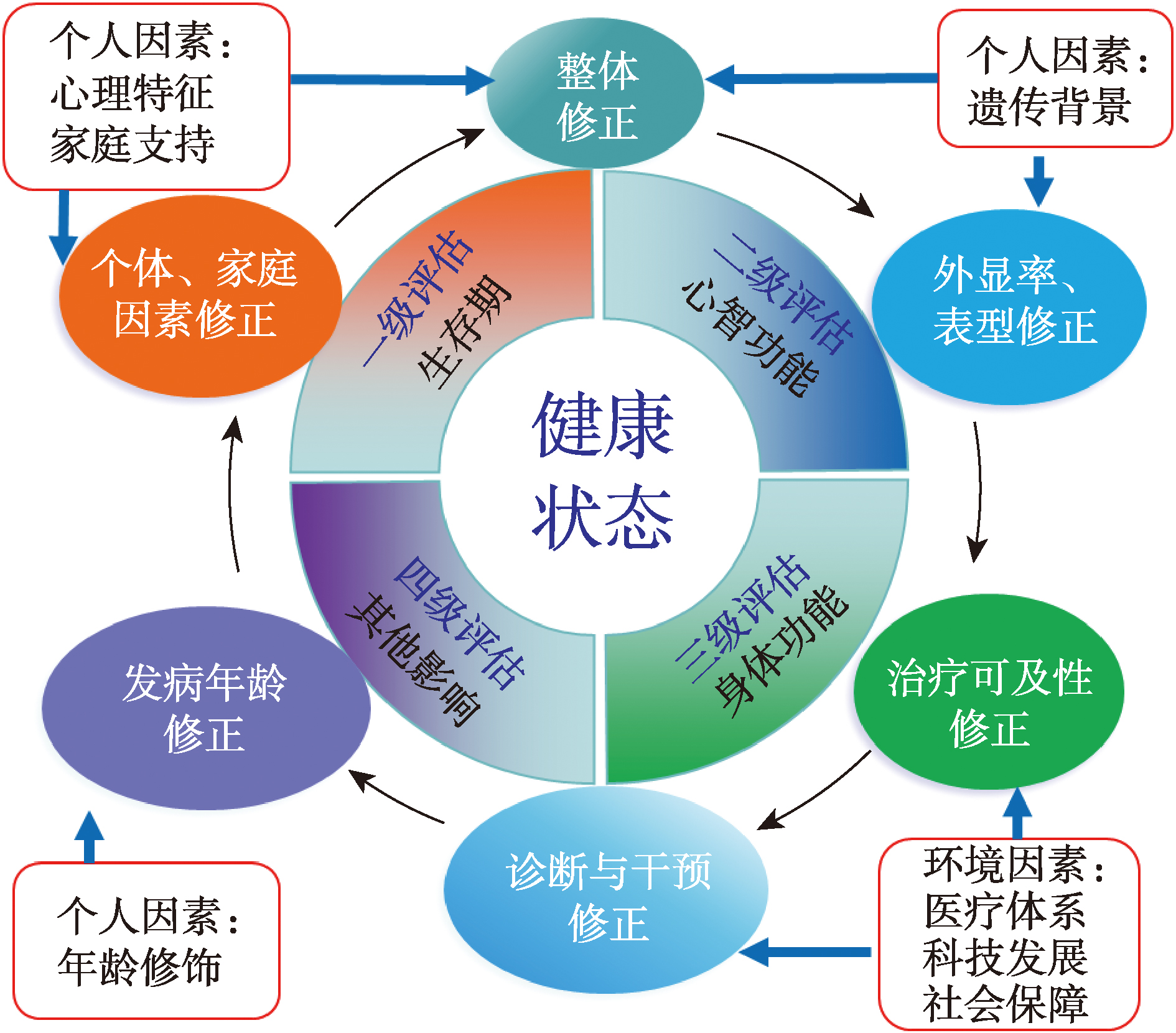
To enhance the competency of clinical medicine students in evaluating the severity of genetic disorders, this study first modularized an assessment of genetic diseases severity based on the World Health Organization's International Classification of Functioning, Disability and Health (ICF) framework. Then, this modular teaching framework was applied in teaching instruction. During the Medical Genetics course, the 2024 clinical medicine cohort at Hunan University of Medicine were clustered into a experimental group (6 classes, 203 students) and a control group (7 classes, 235 students) randomly. The experimental group engaged in the ICF-based module in the case analysis of genetic diseases, while students in the control group followed the traditional teaching methods. Learning outcomes were evaluated by analyzing the student-written genetic disease severity evaluation reports. Results demonstrated that students in the experimental group achieved significantly higher scores on their assessment reports (73.33±7.16) compared to the control group (64.79±5.45), with a statistically significant difference (t=13.87, P<0.001). Furthermore, textual analysis further revealed that reports from the experimental group contained a significantly higher frequency of keywords related to patient psychology, social functioning, and environmental factors, indicating a broader focus on the patients and more comprehensive and in-depth understanding of the patient’s situation. These findings suggest that the ICF-based modular teaching framework significantly improves medical students’ ability to conduct individualized assessments of genetic diseases and effectively fosters their humanistic care. This study provides an actionable and scalable teaching practice pathway for cultivating clinical genetic counseling professionals.
Qingli Quan, Meixing Yu, Haiou Jiang . Construction and implementation of an ICF-based integrated teaching model for genetic disease severity assessment[J]. Hereditas(Beijing), 2026 , 48(6) : 648 -656 . DOI: 10.16288/j.yczz.26-005
| [1] | 王诏, 汪雪雁. 先天性膈疝的遗传咨询和严重性评估简述. 中国计划生育和妇产科, 2022, 14(12): 61-64. |
| [2] | Harper PS. Practical Genetic Counselling. Translated by Zhi Xia. Beijing: Science Press, 2017. |
| P.S.哈珀. 实用遗传咨询. 夏志, 译. 北京: 科学出版社, 2017. | |
| [3] | Liu W, Yang L, Guo F, Zuo J. Curriculum design and teaching implementation of Blended Teaching Course “Rare Genetic Diseases”. Chin J Birth Health Hered, 2024, 32(8): 1752-1755. |
| 刘雯, 杨玲, 郭锋, 左伋. “罕见遗传病”混合式课程的设计与教学实施. 中国优生与遗传杂志, 2024, 32(8): 1752-1755. | |
| [4] | Uhlenbusch N, Löwe B, Depping MK. Perceived burden in dealing with different rare diseases: a qualitative focus group study. BMJ Open, 2019, 9(12): e033353. |
| [5] | World Health Organization. International Classification of Functioning, Disability and Health (ICF). Geneva: WHO, 2001. |
| [6] | Kattamis A, Kwiatkowski JL, Aydinok Y. Thalassaemia. Lancet, 2022, 399(10343): 2310-2324. |
| [7] | Chen MY. A case intervention study on alleviating caregiving stress among First-Degree relatives of individuals with mental disorders[Dissertation]. Sichuan International Studies University, 2025. |
| 陈明燕. 缓解精神障碍患者一级亲属照护压力的个案介入研究[学位论文]. 四川外国语大学, 2025. | |
| [8] | 冯淑娴, 岳小珍. 产前四维彩超诊断胎儿软骨发育不全合并鼻骨缺失1例. 中国优生与遗传杂志, 2021, 29(5): 694-695. |
| [9] | 俞晓敏. 遗传性肾脏疾病基因诊断策略. 肾脏病与透析肾移植杂志, 2023, 32(3): 247-248. |
| [10] | 潘锋. 多学科综合管理有助于延缓杜氏肌营养不良疾病进展. 妇儿健康导刊, 2025, 4(20): 4-8. |
| [11] | Zhang YX, Xie HT, Liang GX, Qin YR, Wei XF, Ning SS, Liang Y, Liang XD, Xie YL, Lin ZZ, Zhu DN, Lin JQ, Xiong F, Xu XM, Shang X. A novel gain-of-function PIP4K2A mutation elevates the expression of β-globin and aggravates the severity of α-thalassemia. Br J Haematol, 2023, 202(5): 1018-1023. |
| [12] | Ratna H. Heritable retinoblastoma and risk of developing second primary cancer. JAMA Netw Open, 2020, 3(10): e2022569. |
| [13] | Pohjola P, de Leeuw N, Penttinen M, Kääriäinen H. Terminal 3p deletions in two families—correlation between molecular karyotype and phenotype. Am J Med Genet A, 2010, 152A(2): 441-446. |
| [14] | Zhou TT, Pan J. Study on affordability of orphan drugs under different health insurance levels: a case study of spinal muscular at-rophy. Chin Health Econ, 2022, 41(2): 33-38. |
| 周婷婷, 潘杰. 不同保障水平下罕见病用药可负担性研究:以脊髓性肌萎缩症为例. 中国卫生经济, 2022, 41(2): 33-38. | |
| [15] | Li MJ, Li Q, Zhao MM, Kim H, Feng RQ, Guo MN, Heng JP, Yang JK, Liu C. Spectrum and epidemiology of rare diseases in a Chinese natural population of 14.31 million residents, 2012-2023. Orphanet J Rare Dis, 2025, 20(1): 410. |
| [16] | Takahashi S, Iizuka R, Sawai T. Reevaluating ‘seriousness’ in genetic conditions: balancing clinical criteria and lived experiences. Eur J Hum Genet, 2025, 33(6): 699-700. |
| [17] | Berry GT. Classic Galactosemia and Clinical Variant Galactosemia[M/OL]. GeneReviews®. Seattle: University of Washington, 1993-2025[2021.03.11]. |
/
| 〈 |
|
〉 |

www.chinagene.cn
备案号:京ICP备09063187号
