Hereditas(Beijing) ›› 2025, Vol. 47 ›› Issue (10): 1132-1145.doi: 10.16288/j.yczz.24-328
• Research Article • Previous Articles Next Articles
Transcriptome analysis of postnatal mouse cardiac tissue growth and development
Xiaocong Zhu1( ), Shengnan Wang2(), Lin Jiang2, Shuqin Liu1()
- 1. College of Animal Science and Technology, Qingdao Agricultural University, Qingdao 266109, China
2. Institute of Animal Science, Chinese Academy of Agricultural Sciences, Beijing 100193, China
-
Received:2024-11-13Revised:2025-02-15Online:2025-10-20Published:2025-04-21 -
Contact:Shuqin Liu E-mail:2975029339@qq.com;namowsn@hotmail.com;sqliu12@qau.edu.cn -
Supported by:Donkey Innovation Team of Shandong Modern Agricultural Industry Technology System(SDAIT-27)

Cite this article
Xiaocong Zhu, Shengnan Wang, Lin Jiang, Shuqin Liu. Transcriptome analysis of postnatal mouse cardiac tissue growth and development[J]. Hereditas(Beijing), 2025, 47(10): 1132-1145.
share this article
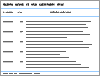
Table 1
qRT-PCR primer sequence used in this study"
| 基因名称 | 引物序列 (5′→3′) |
|---|---|
| β-actin | F:AACCGTGAAAAGATGACCCAGAT |
| R:CACAGCCTGGATGGCTACGT | |
| 18S rRNA | F:TTTCTCGATTCCGTGGGTGG |
| R:TCAATCTCGGGTGGCTGAAC | |
| Hey2 | F:GAACAATTACCCTGGGCACG |
| R:TTCGATCCCGACGCCTTTTT | |
| Foxm1 | F:CAGGAGAGCTATGCTGGTGGT |
| R:AGGGTGGCCTCTCAGACACA | |
| Igf1 | F:ATGACCGCACCTGCAATAAAG |
| R:GAATGCTGGAGCCATAGCCT | |
| Xirp2 | F:GCAGCTTCTCGGCTAATGTCA |
| R:AGGCGTTGCAGGTTGAAGTA | |
| Sfrp2 | F:ATGAGACCATCCAGCCGTG |
| R:CACACCTTGGGAGCTTCCTCT | |
| Egf | F:GAGGTCCGCTAGAGAAATGTCA |
| R:TGGGGCATGTGCAGTGATAG | |
| Fgfr2 | F:TGCCGAATGAAGACCACGAC |
| R:ACTCGGCCGAAACCTGTCT | |
| Tbx20 | F:GTCACAGCCTACCAGAACCAA |
| R:TTCTTCAAAGGTCCCCTCTCAAT | |
| Fgf1 | F:AAAGTGCGGGCGAAGTGTAT |
| R:CTCATTTGGTGTCTGCGAGC | |
| Igf2 | F:CGTGGCATCGTGGAAGAGT |
| R:ACACGTCCCTCTCGGACTTG |
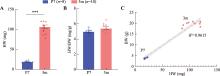
Fig. 1
Changes in heart weight of mice"
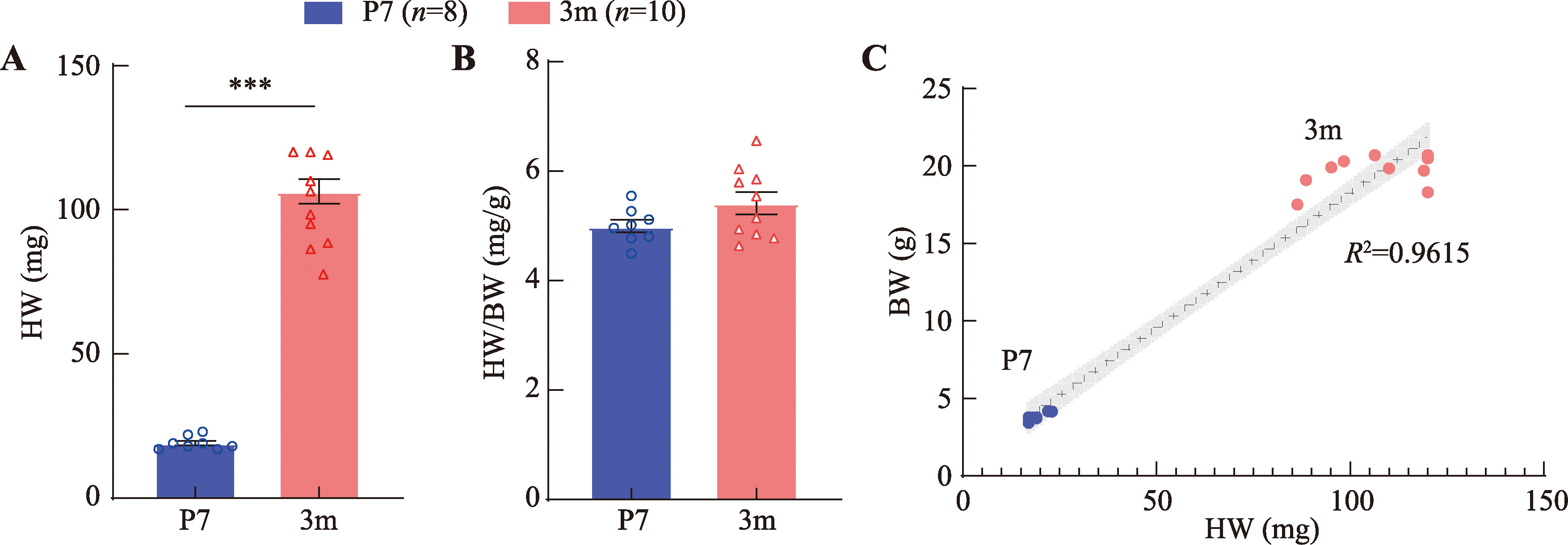
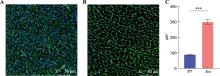
Fig. 2
WGA staining analysis of mouse cardiac tissue"
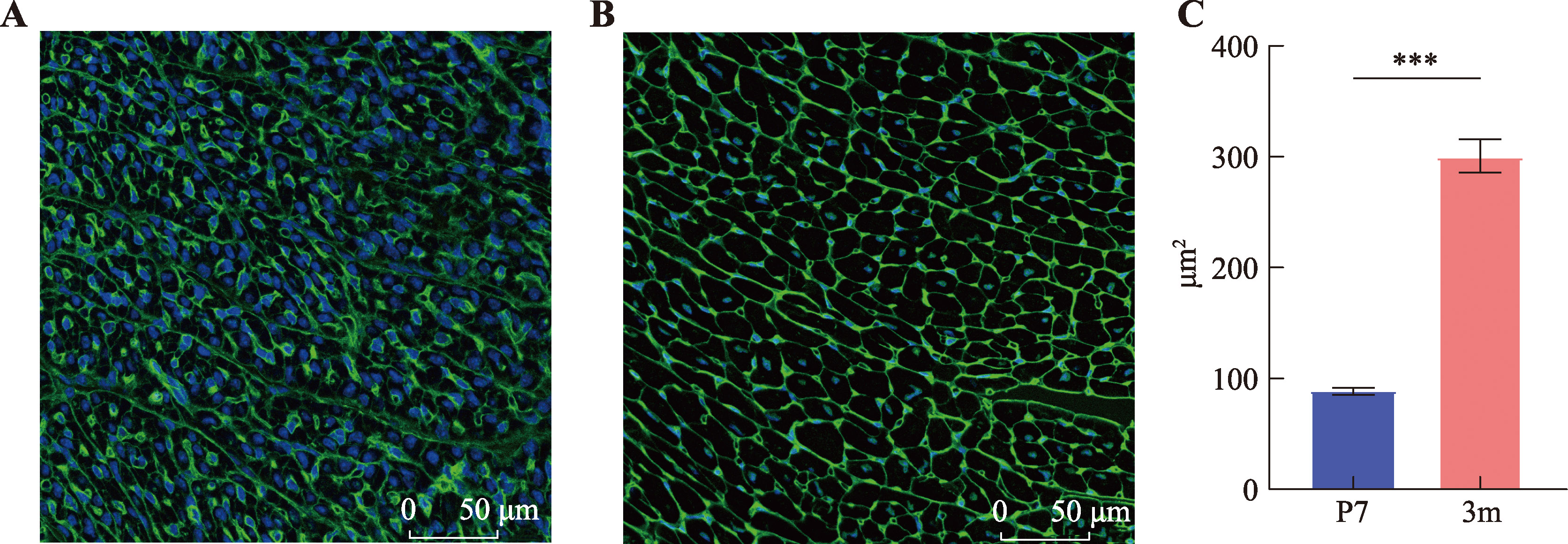
Table 2
The quality analysis of sequencing data of transcription group"
| 样本 | 原始读数 | 质控后读数 | 质控率 | Q30数据 |
|---|---|---|---|---|
| 9-2 | 74,869,328 | 71,669,772 | 95.72647961 | 94.88525 |
| 9-3 | 74,658,358 | 71,561,222 | 95.85158838 | 95.0681 |
| 9-5 | 78,257,522 | 74,637,762 | 95.37455326 | 94.8927 |
| 74 | 68,532,670 | 65,120,508 | 95.02111621 | 93.34445 |
| 48 | 79,189,892 | 76,434,652 | 96.52071757 | 94.78125 |
| C62 | 76,870,844 | 73,976,702 | 96.2350589 | 94.4907 |
| C63 | 81,374,030 | 76,251,440 | 93.70488349 | 94.839 |
Table 3
The genome mapping analysis of transcriptome sequencing"
| 样本 | 比对率(%) |
|---|---|
| 9-2 | 93.09 |
| 9-3 | 93.56 |
| 9-5 | 93.44 |
| 74 | 90.83 |
| 48 | 90.08 |
| C62 | 93.27 |
| C63 | 92.78 |
Fig. 3
Screening and cluster analysis of DEGs"
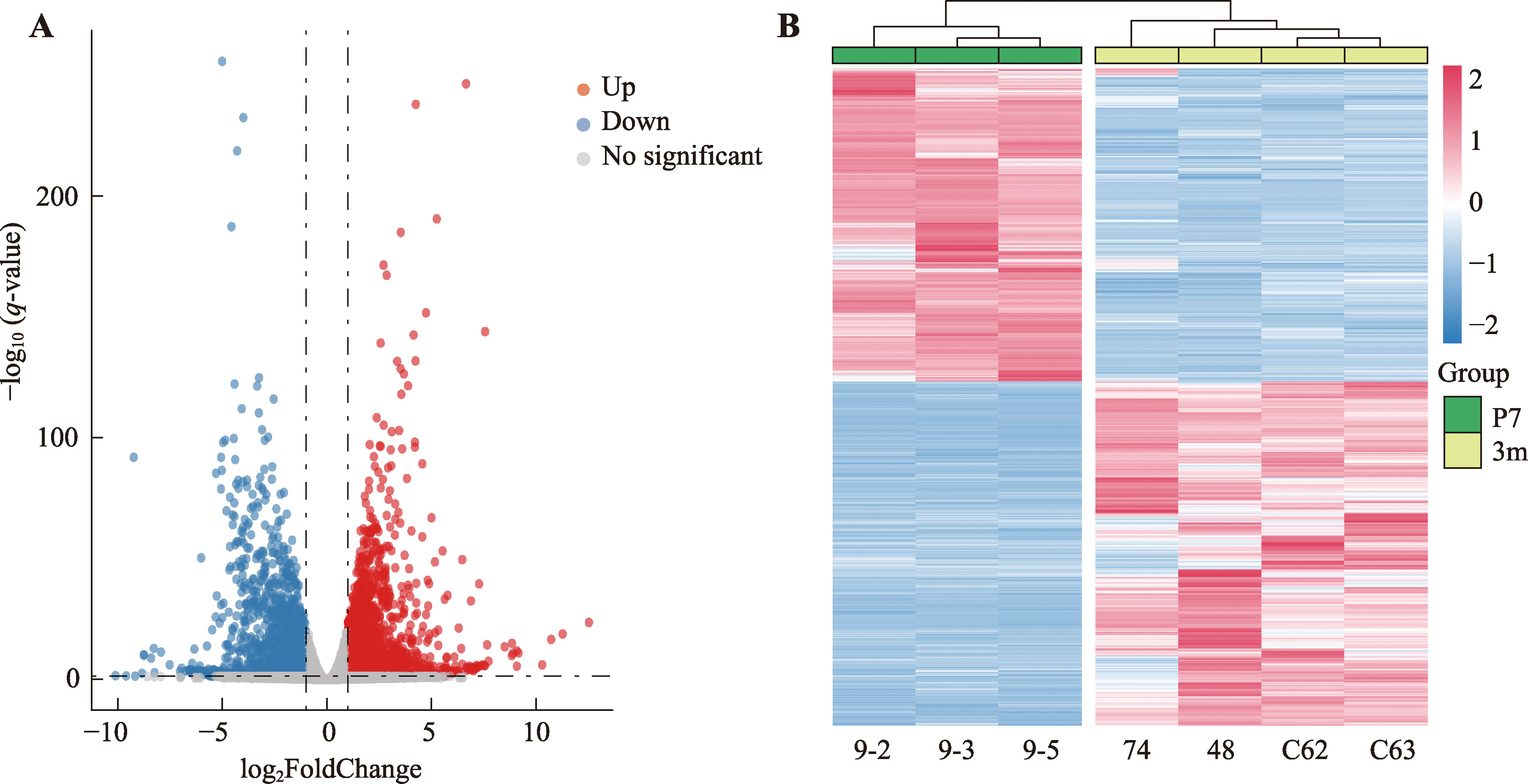
Fig. 4
Functional enrichment analysis of DEGs"
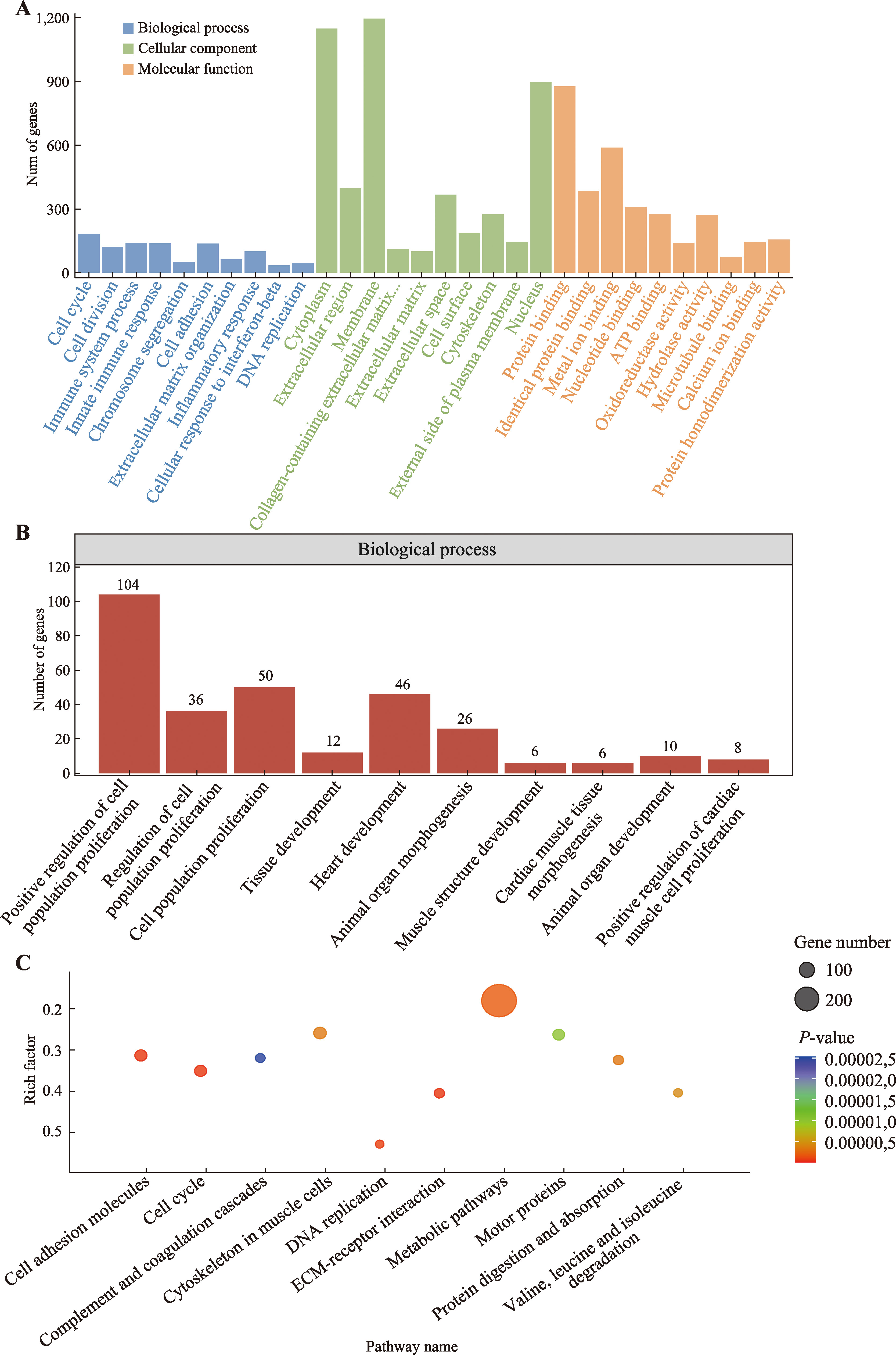
Supplementary Table 1
GO analysis of DEGs"
| 类别 | GO编号 | 条目 | 数量 | P值 |
|---|---|---|---|---|
| BP | GO:0007049 | cell cycle | 182 | 4.06083E-37 |
| BP | GO:0051301 | cell division | 122 | 6.85875E-28 |
| BP | GO:0002376 | immune system process | 141 | 2.25781E-24 |
| BP | GO:0045087 | innate immune response | 138 | 9.96141E-24 |
| BP | GO:0007059 | chromosome segregation | 51 | 1.28172E-20 |
| BP | GO:0007155 | cell adhesion | 137 | 2.13134E-18 |
| BP | GO:0030198 | extracellular matrix organization | 62 | 1.79199E-17 |
| BP | GO:0006954 | inflammatory response | 100 | 3.63941E-16 |
| BP | GO:0035458 | cellular response to interferon-beta | 35 | 1.72508E-15 |
| BP | GO:0006260 | DNA replication | 44 | 7.87367E-15 |
| CC | GO:0005737 | cytoplasm | 1148 | 1.94244E-56 |
| CC | GO:0005576 | extracellular region | 397 | 1.46384E-45 |
| CC | GO:0016020 | membrane | 1195 | 2.89258E-32 |
| CC | GO:0062023 | collagen-containing extracellular matrix | 111 | 5.69624E-28 |
| CC | GO:0031012 | extracellular matrix | 100 | 5.86897E-27 |
| CC | GO:0005615 | extracellular space | 367 | 6.9155E-27 |
| CC | GO:0009986 | cell surface | 186 | 3.62299E-25 |
| CC | GO:0005856 | cytoskeleton | 275 | 6.68013E-25 |
| CC | GO:0009897 | external side of plasma membrane | 145 | 1.86746E-23 |
| CC | GO:0005634 | nucleus | 897 | 3.78546E-20 |
| MF | GO:0005515 | protein binding | 876 | 8.00395E-46 |
| MF | GO:0042802 | identical protein binding | 384 | 5.92756E-32 |
| MF | GO:0046872 | metal ion binding | 588 | 3.67755E-26 |
| MF | GO:0000166 | nucleotide binding | 310 | 1.38173E-22 |
| MF | GO:0005524 | ATP binding | 278 | 6.55811E-21 |
| MF | GO:0016491 | oxidoreductase activity | 141 | 2.05444E-20 |
| MF | GO:0016787 | hydrolase activity | 272 | 1.38026E-15 |
| MF | GO:0008017 | microtubule binding | 74 | 4.33152E-14 |
| MF | GO:0005509 | calcium ion binding | 144 | 6.90979E-14 |
| MF | GO:0042803 | protein homodimerization activity | 156 | 8.56528E-13 |
Supplementary Table 2
GO terms related to heart development, organ development, and cell proliferation"
| 编号 | 条目 | 数量 | P值 | 基因 |
|---|---|---|---|---|
| GO:0008284 | positive regulation of cell population proliferation | 104 | 1.22E-06 | Cdc20,Slc25a33,Hmgcr,Tff2,Crlf1,Has2,Cdk2,Efemp1,Ptn,Nanog,Folr2,Itgax,Tgfb2,Prc1,Rtkn2,Nrg4,Ets1,Tipin,Optn,Igf1,Sapcd2,Edn3,Agtr2,Cdk4,Sinhcaf,Acta2,Reg3g,Ccn2,Sfrp2,Bmp2Cntfr,Kif14,Dot1l,Cldn5,Id4,Pdgfa,Adrb2,Thrb,Flt3l,Fgf1,Aldh1a2,S100a1,Acer2,Lgals3,Cck,Ptgfr,Sox4,Mzb1,Prdx3,Ar,Sox9,Ptgs2,Mapk15,Pitx2,Il7r,Clec7a,Prlr,Csf1r,Akr1cl,Il6st,Apln,Cav3,Bst1,Epcam,Il15,Chp2,Cxcr3,Kit,Fn1,Epha4,Egf,Aqp11,Fgf7,Lamc2,Clu,Foxm1,Hif1a,Ctsh,Prkcz,Tnc,Ccdc117,Cdca7l,Cnot6,Osmr,Rad51b,Enpp2,Fgfr2,Csf1,Cx3cl1,Hmga2,Mlxipl,Cdc7,Igf2,Kif20b,Crh,Tnfsf13,Aif1,Ezh2,Marcksl1,Hipk2,Il6ra,Fbxo5,Hpse2,Fgf2 |
| GO:0042127 | regulation of cell population proliferation | 36 | 3.93E-04 | Ccdc88a,Ptgs2,Prg4,Osgin1,Dnmt1,Pf4,Pitx2,Sfrp2,Cxcl9,Junb,Gli3,Bcl6,Nr3c2,Sparc,Ptgs1,Serpine1,Tgfb2,Chek1,Emilin2,Cebpa,Emilin1,Sqle,Igf1,Nr5a2,Mzb1,Ezh2,Nfkbia,Clu,Bex4,Foxm1,Fas,Stat2,Txnip,Sox9,Hif1a,Cdca7 |
| GO:0008283 | immune effecell population proliferationctor process | 50 | 0.001055872 | Gdf11,Fam83d,Tff2,Csf1r,Prok1,Gli3,H3f3b,Rasgrp4,Kit,Glul,Ddr1,Egf,Igf1,Brca2,Hoxa3,Edn3,Foxm1,Mycn,Tacc2,Map7,Mcm7,St8sia1,Bmp7,Mcm10,Pax3,H19,Tlx1,Id4,Ptges,Pdgfa,Fgfr2,Bcl6,Aldh1a2,Tacc3,Hmga2,Il18,Cebpa,Cdkn2c,Flt3,Marcksl1,Hipk2,Atad5,Zbtb16,Sox9,Melk,Hpse2,Tbx20,Fgf2,Drd2,Mki67 |
| GO:0009888 | tissue development | 12 | 0.013249089 | Postn,Lamb1,Dhcr24,Lncpint,Lamc1,Lamc3,Lama4,Nr5a2,Gaa,Pax3,Ntng2,Lamc2 |
| GO:0007507 | heart development | 46 | 0.015057548 | Tgfb1i1,Odad2,Casp7,Pitx2,Col3a1,Bmp2,Ppara,Dnai1,Pax3,Robo1,Ptk7,Mb,Adamts6,Acan,Vcan,Myh10,Gli3,Mical2,Lox,Dnaaf3,Wt1,Frem2,Aldh1a2,Pdlim3,Gjc1,Adap2,Stra6,Hey2,Tgfb2,Mmp13,Tfdp2,Pde2a,Fn1,Sox4,Gja6,Pcna,Osr1,Fbn1,Sh3pxd2b,Aplnr,Prickle4,Sox9,Casp3,Col6a1,Mmp9,Adam19 |
| GO:0009887 | animal organ morphogenesis | 26 | 0.018261344 | Gdf11,Pitx2,Bmp2,Lamc3,Bmp7,Palb2,Asxl3,Pdgfa,Thrb,Fgfr2,Fgf1,Foxf2,Lama4,Ntng2,Gpc3,Wnt11,Igf2,Lamc1,Wnt5b,Fgf7,Hoxa3,Nkx2-1,Lamc2,Lamb1,Tcf21,Fgf2 |
| GO:0061061 | muscle structure development | 6 | 0.024757703 | Tgfb1i1,Prickle4,Ark2c,Col6a1,Hoxa2,Pdlim3 |
| cardiac muscle tissue morphogenesis | 6 | 0.024757703 | Gm1322,Angpt1,Bmp2,Egln1,Tbx20,Tcap | |
| GO:0048513 | animal organ development | 10 | 0.028652571 | Kit,Fmr1,Nrg2,Dand5,Flt1,Rai2,Pax3,Spry2,Csf1r,Tlx1 |
| GO:0060045 | positive regulation of cardiac muscle cell proliferation | 8 | 0.029630822 | Ccnb1,Fgfr2,Ncam1,Pim1,Fgf2,Tbx20,Hey2,Cdk1 |
Supplementary Table 3
Myocardial development-related pathways of up-regulated DEGs"
| 编号 | 条目 | 数量 | P值 | 基因 |
|---|---|---|---|---|
| GO:0008016 | regulationofheartcontraction | 7 | 0.002745762 | Dmpk,Thrb,Kcnd2,S100a1,Hrc,Chrm2,Kcnd3 |
| GO:0060452 | positiveregulationofcardiacmusclecontraction | 4 | 0.014216607 | Adra1a,Ucn,Ace2,Ccn2 |
| mmu04260 | Cardiacmusclecontraction | 14 | 0.028156635 | Fxyd2,Atp1a2,COX3,Cacna2d1,Atp2a2,Cacna2d3,COX1,Cacna1s,CYTB,COX2,Hrc,Cox7a1,Atp2a1,Cox6a2 |
Supplementary Table 4
Myocardial development-related pathways of down-regulated DEGs"
| 编号 | 条目 | 数量 | P值 | 基因 |
|---|---|---|---|---|
| GO:0007507 | heart development | 33 | 1.03E-04 | Odad2,Casp7,Pitx2,Col3a1,Bmp2,Ptk7,Robo1,Adamts6,Vcan,Acan,Myh10,Gli3,Mical2,Lox,Wt1,Frem2,Aldh1a2,Pdlim3,Gjc1,Hey2,Tgfb2,Fn1,Sox4,Pcna,Osr1,Fbn1,Sh3pxd2b,Aplnr,Sox9,Casp3,Col6a1,Tbx20,Adam19 |
| GO:0060045 | positive regulation of cardiac muscle cell proliferation | 7 | 0.002951524 | Ccnb1,Fgfr2,Ncam1,Pim1,Tbx20,Hey2,Cdk1 |
| GO:0055015 | ventricular cardiac muscle cell development | 4 | 0.010869872 | Myh10,Pitx2,Hey2,Cdk1 |
| GO:0010659 | cardiac muscle cell apoptotic process | 5 | 0.01482361 | Dynlt1f,Sfrp2,Dynlt1b,Hey2,Dynlt1a |
| GO:0060038 | cardiac muscle cell proliferation | 6 | 0.02682176 | Fgfr2,Myh10,Tenm4,2810429I04Rik,Hey2,Tgfb2 |
Supplementary Table 5
KEGG pathway enrichment analysis of DEGs"
| 编号 | 条目 | 数量 | P值 | 基因 |
|---|---|---|---|---|
| mmu04110 | Cell cycle | 55 | 1.10728E-10 | Cdc20,E2f1,Cdc25b,Bub1,Orc1,Mcm2,Cdk2,Mad2l1,Mtbp,Ccnb1,Plk1,Skp2,Tgfb2,Cdk1,Chek1,Ccne2,Esco2,Rbl1,Mcm6,Ndc80,Smc1b,Mcm4,Knl1,Gadd45a,Aurkb,E2f2,Cdc45,Pttg1,Cdk4,Ticrr,Ttk,Rbl2,Cdc6,Mcm7,Ccna1,Mcm3,Dbf4,Espl1,Ccna2,Cdc25c,Bub1b,Orc6,Tfdp2,Cdt1,Cdc7,Cdca5,Pcna,Cdkn2c,Ccne1,Mcm5,Sgo1,Fbxo5,Trip13,Pkmyt1,Ccnb2 |
| mmu04512 | ECM-receptor interaction | 36 | 3.9968E-09 | Thbs2,Lamc2,Chad,Lamb1,Col6a1,Comp,Col4a2,Col4a1,Itga2 |
| mmu04514 | Cell adhesion molecules | 56 | 8.23526E-09 | H2-Aa,Cldn3,H2-Ab1,Lrrc4b,H2-T24,Icam1,Mag,Itgb7,Selp,Sele,H2-Ob,Cldn5,Cd34,Cd274,Vcan,Tigit,Cd86,Nrxn3,Ctla4,Cd28,Sdc1,H2-Eb1,Cadm3,Madcam1,Slitrk4,Cldn15,H2-T23,H2-DMb1,Cldn11 |
| mmu03030 | DNA replication | 19 | 3.47378E-07 | Mcm7,Rfc3,Prim1,Pcna,Mcm3,Rfc5,Prim2,Rfc4,Lig1,Mcm6,Mcm2,Mcm4,Mcm5,Fen1,Pola2,Pole2,Rnaseh2b,Dna2,Pole |
| mmu01100 | Metabolic pathways | 296 | 1.56801E-06 | Dnmt1,Inpp5a,Lpin3,Hmgcr,Chsy3,Hddc2,St3gal5,Mtr,Cyp2e1,Adk,Selenbp1,Fmo1,Hsd11b1,Plcb2,Hpse,Bcat2,Gdpd3,Ptgs1,Cth,Phgdh,P4ha1,Echs1,Chpt1,Lalba,Nampt,Aldh4a1,Nat1,Ftcd,Acsl6,Ogdh,Hk2,Fmo2,E030003E18Rik,Cyp1a1,Nt5e,Abat,Hmgcs2,Oxct1,Ptgds,Bckdha,Sephs1,Tk1,Aldoc,Gaa,Dot1l,Pla2g12a,ND4L,Cpox,Scp2,Aoc1,Mpst,Aox3,St3gal6,Pomgnt2,Entpd2,Aldh1a2,Pdxk,Mocos,Nsd2,Aoc3,Papss1,Gda,Dck,Dctd,Nos1,Pfkm,Scd3,Tbxas1,Tpo,Scd2,Cyp26b1,Ehhadh,Extl1,Mccc2,Tha1,Me1,Ak9,Gsta13,Pfkfb1,Ptgs2,Hadhb,Ivd,Acss1,B4galt2,Scd4,COX3,Xdh,ATP6,Agpat2,Pdxp,Aldob,B3gnt5,Entpd5,COX1,Cyp26a1,Aldh6a1,COX2,Pla2g5,Ldhd,Ogdhl,P4ha3,Dgat2,Bst1,Gcdh,Acadsb,Pde2a,Glul,Pycr1,Auh,Lct,Pde6g,ND5,Gpld1,Alox5,St3gal3,Gstk1,Amd2,Gpam,Acot3,ND3,Hacd1,Tecr,Galnt15,Rrm1,Pnmt,Gpt2,Acsm5,Gsta1,Gstm1,St8sia1,Rimklb,Car5b,Mogat2,Fmo5,Alpl,Chac1,Ak4,Pde11a,Enpp2,Dpys,Gpt,Dhtkd1,Carnmt1,CYTB,Gsta3,Ethe1,Gstt2,Pld4,Gadl1,Khk,Pla2g2c,Cda,Cyp3a13,Lpin1,Cbs,Inmt,Gpx4,Hpse2,Nmnat3,Aspdh,Adcy9,Ddc,Gstt1,Mgat5b,Gstt3,Hk3,Gck,Nmrk2,Nqo1,L2hgdh,Xylt2,Suv39h1,Adi1,Cox6a2,Gsto2,Nnmt,Sqle,Gsto1,Pcx,Dbt,Kyat3,Cmbl,Asrgl1,Suox,Nmnat2,Tyms,Pipox,Pnpla2,Gnmt,Atp6v0e2,Dhfr,Cox6b2,Got1,Ahcyl2,Aldh1l1,Bckdhb,Amd1,Amy1,Psat1,Dnmt3b,Galnt16,Pafah1b3,Pnpla3,Hibadh,Rimkla,A4galt,Ptges,Dcxr,Dgkk,Pcca,Impa2,Gstm2,Gbgt1,Galnt5,Acer2,Gale,ND2,Elovl2,Mthfd1l,Sord,Aldh3b3,Inpp4b,Gsta2,Pde4c,Pank1,Acsl3,Pygb,Chsy1,Sds,Cyp2s1,Ggct,Ndst3,Maob,Hsd17b1,Nudt12,Acp5,Dhdh,Prodh,Galm,Chac2,Gpx3,Acot1,Pygm,Nt5c1a,Adh1,Mgst1,Kmt5c,P4ha2,Dglucy,Pcbd1,Ezh1,Chpf2,Aox1,Aspa,Mmut,Ckmt2,Acox1,Bdh1,Synj2,B3galt2,Pde7a,Aass,Mmab,Aldh2,Lrat,Dhcr24,Cds1,Mgat3,Cox6a1,Gstm7,Hnmt,Scd1,Acsbg3,Galk1,Pla2g7,Sqor,Rrm2,Upp1,Car15,Cyp27a1,Sardh,Pde4a,Gpx7,Suclg2,Ezh2,Adcy8,Pla2g2d,Ak7,Mgam,Ugt1a7c,Mccc1,Gstp2,Aldh1b1,Cox7a1,Gcat,ENSMUSG00000101904 |
| mmu04974 | Protein digestion and absorption | 35 | 3.16384E-06 | Col9a3,Eln,Col25a1,Col4a5,Col5a2,Col3a1,Col6a6,Col9a1,Col6a2,Col26a1,Slc36a2,Col9a2,Col1a1,Cpa2,Col27a1,Col8a1,Ace2,Col20a1,Col1a2,Col24a1,Prcp,Col12a1,Fxyd2,Col14a1,Atp1a2,Col18a1,Col11a1,Slc1a1,Col5a1,Col6a1,Col16a1,Kcne3,Col4a2,Cpa1,Col4a1 |
| mmu04820 | Cytoskeleton in muscle cells | 60 | 3.34597E-06 | Col3a1,Csrp2,Col9a2,Col1a1,Des,Sgca,Col27a1,Myh10,Tmod4,Sdc4,Pdlim3,Col1a2,Fn1,Myh8,Atp1a2,Fbn1,Fbln1,Col11a1,Thbs2,Col5a1,Myh14,Col6a1,Col4a2,Col4a1,Itgb7,Ankrd2,Thbs3,Col6a6,Col9a1,Diaph3,Csrp1,Col6a2,Myoz1,Itgb3,Vcan,Trim54,Col24a1,Lmod2,Sntb1,Myl9,Myot,Lmnb1,Gm1322,Actg2,Myoz2,Itgb6,Sdc1,Tcap,Fbn2,Sgcd,Tnni1,Comp,Nid2,Itga2 |
| mmu00280 | Valine, leucine and isoleucine degradation | 23 | 4.45307E-06 | Hadhb,Aldh2,Ivd,Bckdhb,Abat,Oxct1,Hmgcs2,Echs1,Auh,Bckdha,Dbt,Hibadh,Aox1,Mmut,Ehhadh,Pcca,Aldh6a1,Aox3,Mccc2,Mccc1,Bcat2,Aldh1b1,Acadsb |
| mmu04814 | Motor proteins | 52 | 1.04222E-05 | Kif15,Dnai2,Tuba4a,Myo7b,Myo1f,Dnai1,Dynlt1a,Kifc5b,Kif1c,Dnah12,Myh10,Myh8,Tuba1b,Tubb6,Dynlt1f,Dnah10,Myh14,Kif20a,Kif18b,Acta2,Dnah6,Tuba8,Kif11,Dnah9,Myo7a,Kifc1,Kif26a,Kif27,Kif18a,Dynlt1b,Kif14,Tubb4a,Tubb2b,Tubb5,Kif21a,Myo3b,Tube1,Kif23,Myl9,Kif7,Kif26b,Kif2c,Kif20b,Actg2,Cenpe,Kif24,Myo5b,Tnni1,Dnai3,Tuba1a,Kif4,Kif22 |
| mmu04610 | Complement and coagulation cascades | 30 | 2.53205E-05 | Bdkrb2,C1qb,C3,C6,Itgb2,Cfh,Vsig4,C4b,Serpina1b,Serpina1d,Cfd,Plat,Itgax,C1s1,Serpina1e,Serpine1,Itgam,C1qa,F7,C5ar1,C7,C1ra,Vwf,Serping1,C3ar1,Clu,Cd59b,F2rl3,F13a1,C1qc |
Fig. 5
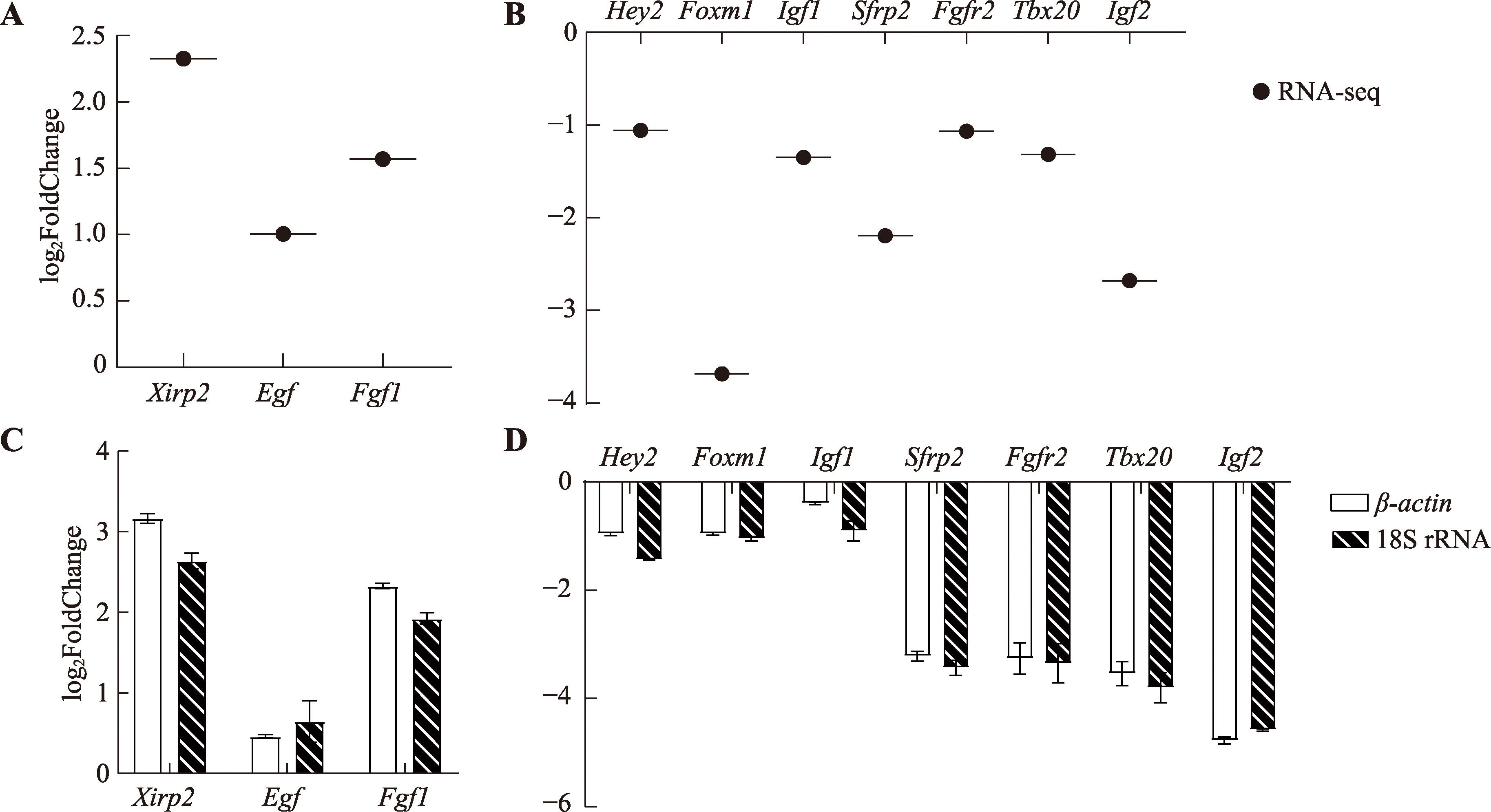
Validation of candidate genes by qRT-PCR"
| [1] |
Mouse Genome Sequencing Consortium, Waterston RH, Lindblad-Toh K, Birney E, Rogers J, Abril JF, Agarwal P, Agarwala R, Ainscough R, Alexandersson M, An P, Antonarakis SE, Attwood J, Baertsch R, Bailey J, Barlow K, Beck S, Berry E, Birren B, Bloom T, Bork P, Botcherby M, Bray N, Brent MR, Brown DG, Brown SD, Bult C, Burton J, Butler J, Campbell RD, Carninci P, Cawley S, Chiaromonte F, Chinwalla AT, Church DM, Clamp M, Clee C, Collins FS, Cook LL, Copley RR, Coulson A, Couronne O, Cuff J, Curwen V, Cutts T, Daly M, David R, Davies J, Delehaunty KD, Deri J, Dermitzakis ET, Dewey C, Dickens NJ, Diekhans M, Dodge S, Dubchak I, Dunn DM, Eddy SR, Elnitski L, Emes RD, Eswara P, Eyras E, Felsenfeld A, Fewell GA, Flicek P, Foley K, Frankel WN, Fulton LA, Fulton RS, Furey TS, Gage D, Gibbs RA, Glusman G, Gnerre S, Goldman N, Goodstadt L, Grafham D, Graves TA, Green ED, Gregory S, Guigó R, Guyer M, Hardison RC, Haussler D, Hayashizaki Y, Hillier LW, Hinrichs A, Hlavina W, Holzer T, Hsu F, Hua A, Hubbard T, Hunt A, Jackson I, Jaffe DB, Johnson LS, Jones M, Jones TA, Joy A, Kamal M, Karlsson EK, Karolchik D, Kasprzyk A, Kawai J, Keibler E, Kells C, Kent WJ, Kirby A, Kolbe DL, Korf I, Kucherlapati RS, Kulbokas EJ, Kulp D, Landers T, Leger JP, Leonard S, Letunic I, Levine R, Li J, Li M, Lloyd C, Lucas S, Ma B, Maglott DR, Mardis ER, Matthews L, Mauceli E, Mayer JH, Mccarthy M, Mccombie WR, Mclaren S, Mclay K, Mcpherson JD, Meldrim J, Meredith B, Mesirov JP, Miller W, Miner TL, Mongin E, Montgomery KT, Morgan M, Mott R, Mullikin JC, Muzny DM, Nash WE, Nelson JO, Nhan MN, Nicol R, Ning ZM, Nusbaum C, O'Connor MJ, Okazaki Y, Oliver K, Overton-Larty E, Pachter L, Parra G, Pepin KH, Peterson J, Pevzner P, Plumb R, Pohl CS, Poliakov A, Ponce TC, Ponting CP, Potter S, Quail M, Reymond A, Roe BA, Roskin KM, Rubin EM, Rust AG, Santos R, Sapojnikov V, Schultz B, Schultz J, Schwartz MS, Schwartz S, Scott C, Seaman S, Searle S, Sharpe T, Sheridan A, Shownkeen R, Sims S, Singer JB, Slater G, Smit A, Smith DR, Spencer B, Stabenau A, Stange-Thomann N, Sugnet C, Suyama M, Tesler G, Thompson J, Torrents D, Trevaskis E, Tromp J, Ucla C, Ureta-Vidal A, Vinson JP, Von Niederhausern AC, Wade CM, Wall M, Weber RJ, Weiss RB, Wendl MC, West AP, Wetterstrand K, Wheeler R, Whelan S, Wierzbowski J, Willey D, Williams S, Wilson RK, Winter E, Worley KC, Wyman D, Yang S, Yang SP, Zdobnov EM, Zody MC, Lander ES. Initial sequencing and comparative analysis of the mouse genome. Nature, 2002, 420(6915): 520-562.
pmid: 12466850 |
| [2] |
Church DM, Goodstadt L, Hillier LW, Zody MC, Goldstein S, She XW, Bult CJ, Agarwala R, Cherry JL, Dicuccio M, Hlavina W, Kapustin Y, Meric P, Maglott D, Birtle Z, Marques AC, Graves T, Zhou SG, Teague B, Potamousis K, Churas C, Place M, Herschleb J, Runnheim R, Forrest D, Amos-Landgraf J, Schwartz DC, Cheng Z, Lindblad-Toh K, Eichler EE, Ponting CP, Mouse Genome Sequencing Consortium. Lineage-specific biology revealed by a finished genome assembly of the mouse. PLoS Biol, 2009, 7(5): e1000112.
pmid: 19468303 |
| [3] |
Gates H, Mallon AM, Brown SDM, EUMODIC Consortium. High-throughput mouse phenotyping. Methods, 2011, 53(4): 394-404.
pmid: 21185382 |
| [4] |
Peters LL, Robledo RF, Bult CJ, Churchill GA, Paigen BJ, Svenson KL. The mouse as a model for human biology: a resource guide for complex trait analysis. Nat Rev Genet, 2007, 8(1): 58-69.
pmid: 17173058 |
| [5] |
Mollova M, Bersell K, Walsh S, Savla J, Das LT, Park SY, Silberstein LE, Dos RC, Graham D, Colan S, Kühn B. Cardiomyocyte proliferation contributes to heart growth in young humans. Proc Natl Acad Sci USA, 2013, 110(4): 1446-1451.
pmid: 23302686 |
| [6] |
Leu M, Ehler E, Perriard JC. Characterisation of postnatal growth of the murine heart. Anat Embryol (Berl), 2001, 204(3): 217-224.
pmid: 11681801 |
| [7] |
Brendler J, Winter K, Lochhead P, Schulz A, Ricken AM. Histological differences between lumbar and tail intervertebral discs in mice. J Anat, 2022, 240(1): 84-93.
pmid: 34427936 |
| [8] |
Wong KC, Cao SS, Dong XL, Law MC, Chan TH, Wong MS. (-)-epiafzelechin protects against ovariectomy- induced bone loss in adult mice and modulate osteoblastic and osteoclastic ounctions in vitro. Nutrients, 2017, 9(5): 530.
pmid: 28531166 |
| [9] |
Jonas AM. The mouse in biomedical research. Physiologist, 1984, 27(5): 330-346.
pmid: 6393160 |
| [10] |
Wang ZN, Cui M, Shah AM, Ye WD, Tan W, Min YL, Botten GA, Shelton JM, Liu N, Bassel-Duby R, Olson EN. Mechanistic basis of neonatal heart regeneration revealed by transcriptome and histone modification profiling. Proc Natl Acad Sci USA, 2019, 116(37): 18455-18465.
pmid: 31451669 |
| [11] |
Bei YH, Chen C, Hua XJ, Yin MM, Meng XM, Huang ZZ, Qi WT, Su ZH, Liu C, Lehmann HI, Li GP, Huang Y, Xiao JJ. A modified apical resection model with high accuracy and reproducibility in neonatal mouse and rat hearts. NPJ Regen Med, 2023, 8(1): 9.
pmid: 36806296 |
| [12] |
Naqvi N, Li M, Calvert JW, Tejada T, Lambert JP, Wu JX, Kesteven SH, Holman SR, Matsuda T, Lovelock JD, Howard WW, Iismaa SE, Chan AY, Crawford BH, Wagner MB, Martin DI, Lefer DJ, Graham RM, Husain A. A proliferative burst during preadolescence establishes the final cardiomyocyte number. Cell, 2014, 157(4): 795-807.
pmid: 24813607 |
| [13] |
Alkass K, Panula J, Westman M, Wu TD, Guerquin-Kern JL, Bergmann O. No evidence for cardiomyocyte number expansion in preadolescent mice. Cell, 2015, 163(4): 1026-1036.
pmid: 26544945 |
| [14] |
Burrell JH, Boyn AM, Kumarasamy V, Hsieh A, Head SI, Lumbers ER. Growth and maturation of cardiac myocytes in fetal sheep in the second half of gestation. Anat Rec A Discov Mol Cell Evol Biol, 2003, 274(2): 952-961.
pmid: 12973719 |
| [15] |
Botting KJ, Wang KCW, Padhee M, Mcmillen IC, Summers-Pearce B, Rattanatray L, Cutri N, Posterino GS, Brooks DA, Morrison JL. Early origins of heart disease: low birth weight and determinants of cardiomyocyte endowment. Clin Exp Pharmacol Physiol, 2012, 39(9): 814-823.
pmid: 22126336 |
| [16] |
Rigaud VOCR, Hoy RC, Kurian J, Zarka C, Behanan M, Brosious I, Pennise J, Patel T, Wang T, Johnson J, Kraus LM, Mohsin S, Houser SR, Khan M. RNA-binding protein LIN28a regulates new myocyte formation in the heart through long noncoding RNA-H19. Circulation, 2023, 147(4): 324-337.
pmid: 36314132 |
| [17] |
Zhang HJ, Pei LJ, Ouyang ZH, Wang HC, Chen X, Jiang K, Huang SQ, Jiang R, Xiang YZ, Wei K. AP-1 activation mediates post-natal cardiomyocyte maturation. Cardiovasc Res, 2023, 119(2): 536-550.
pmid: 35640820 |
| [18] |
Eulalio A, Mano M, Dal Ferro M, Zentilin L, Sinagra G, Zacchigna S, Giacca M. Functional screening identifies miRNAs inducing cardiac regeneration. Nature, 2012, 492(7429): 376-381.
pmid: 23222520 |
| [19] |
Gan JY, Sonntag HJ, Tang MK, Cai DQ, Lee KKH. Integrative analysis of the developing postnatal mouse heart transcriptome. PLoS One, 2015, 10(7): e133288.
pmid: 26200114 |
| [20] |
Li F, Wang X, Capasso JM, Gerdes AM. Rapid transition of cardiac myocytes from hyperplasia to hypertrophy during postnatal development. J Mol Cell Cardiol, 1996, 28(8): 1737-1746.
pmid: 8877783 |
| [21] |
Lessard-Beaudoin M, Laroche M, Demers MJ, Grenier G, Graham RK. Characterization of age-associated changes in peripheral organ and brain region weights in C57BL/6 mice. Exp Gerontol, 2015, 63: 27-34.
pmid: 25597278 |
| [22] | Nirogi R, Goyal VK, Jana S, Pandey SK, Gothi A. What suits best for organ weight analysis: review of relationship between organ weight and body /brain weight for rodent toxicity studies. International Journal of Pharmaceutical Sciences and Research, 2014, 5(4): 1525-1532. |
| [23] |
Lopaschuk GD, Collins-Nakai RL, Itoi T. Developmental changes in energy substrate use by the heart. Cardiovasc Res, 1992, 26(12): 1172-1180.
pmid: 1288863 |
| [24] |
Bae J, Paltzer WG, Mahmoud AI. The role of metabolism in heart failure and regeneration. Front Cardiovasc Med, 2021, 8: 702920.
pmid: 34336958 |
| [25] |
Li X, Wu F, Günther S, Looso M, Kuenne C, Zhang T, Wiesnet M, Klatt S, Zukunft S, Fleming I, Poschet G, Wietelmann A, Atzberger A, Potente M, Yuan XJ, Braun T. Inhibition of fatty acid oxidation enables heart regeneration in adult mice. Nature, 2023, 622(7983): 619-626.
pmid: 37758950 |
| [26] |
Gao F, Liang T, Lu YW, Pu LB, Fu XY, Dong XX, Hong TT, Zhang F, Liu N, Zhou YX, Wang HK, Liang P, Guo YX, Yu H, Zhu W, Hu XY, Chen H, Zhou B, Pu WT, Mably JD, Wang JA, Wang DZ, Chen JH. Reduced mitochondrial protein translation promotes cardiomyocyte proliferation and heart regeneration. Circulation, 2023, 148(23): 1887-1906.
pmid: 37905452 |
| [27] |
Beura LK, Hamilton SE, Bi K, Schenkel JM, Odumade OA, Casey KA, Thompson EA, Fraser KA, Rosato PC, Filali-Mouhim A, Sekaly RP, Jenkins MK, Vezys V, Haining WN, Jameson SC, Masopust D. Normalizing the environment recapitulates adult human immune traits in laboratory mice. Nature, 2016, 532(7600): 512-516.
pmid: 27096360 |
| [28] |
Luan J, Xu H, Jin Z, Guan H, Gao XC, Gou XC, Xu LX. Analysis of the dynamic changes in the proportion of immune cells and the proportion of cells with stem cell characteristics in the corresponding immune cell population of C57 mice during the natural aging process. Immunol Res, 2021, 69(6): 520-532.
pmid: 34415527 |
| [29] |
Song XY, Zhang HH, Zhang YB, Goh B, Bao B, Mello SS, Sun XM, Zheng W, Gazzaniga FS, Wu M, Qu FF, Yin QZ, Gilmore MS, Oh SF, Kasper DL. Gut microbial fatty acid isomerization modulates intraepithelial T cells. Nature, 2023, 619(7971): 837-843.
pmid: 37380774 |
| [30] |
Wierstra I, Alves J. FOXM1, a typical proliferation- associated transcription factor. Biol Chem, 2007, 388(12): 1257-1274.
pmid: 18020943 |
| [31] |
Wierstra I. The transcription factor FOXM1 (Forkhead box M1): proliferation-specific expression, transcription factor function, target genes, mouse models, and normal biological roles. Adv Cancer Res, 2013, 118: 97-398.
pmid: 23768511 |
| [32] |
Kalin TV, Ustiyan V, Kalinichenko VV. Multiple faces of FoxM1 transcription factor: lessons from transgenic mouse models. Cell Cycle, 2011, 10(3): 396-405.
pmid: 21270518 |
| [33] |
Ye H, Kelly TF, Samadani U, Lim L, Rubio S, Overdier DG, Roebuck KA, Costa RH. Hepatocyte nuclear factor 3/fork head homolog 11 is expressed in proliferating epithelial and mesenchymal cells of embryonic and adult tissues. Mol Cell Biol, 1997, 17(3): 1626-1641.
pmid: 9032290 |
| [34] |
Bolte C, Zhang YF, Wang IC, Kalin TV, Molkentin JD, Kalinichenko VV. Expression of Foxm1 transcription factor in cardiomyocytes is required for myocardial development. PLoS One, 2011, 6(7): e22217.
pmid: 21779394 |
| [35] |
Ramakrishna S, Kim IM, Petrovic V, Malin D, Wang IC, Kalin TV, Meliton L, Zhao YY, Ackerson T, Qin YM, Malik AB, Costa RH, Kalinichenko VV. Myocardium defects and ventricular hypoplasia in mice homozygous null for the Forkhead Box M1 transcription factor. Dev Dyn, 2007, 236(4): 1000-1013.
pmid: 17366632 |
| [36] |
Zuppo DA, Missinato MA, Santana-Santos L, Li G, Benos PV, Tsang M. Foxm1 regulates cardiomyocyte proliferation in adult zebrafish after cardiac injury. Development, 2023, 150(6): dev201163.
pmid: 36846912 |
| [37] |
Sengupta A, Kalinichenko VV, Yutzey KE. FoxO1 and FoxM1 transcription factors have antagonistic functions in neonatal cardiomyocyte cell-cycle withdrawal and IGF1 gene regulation. Circ Res, 2013, 112(2): 267-277.
pmid: 23152492 |
| [38] |
Doi H, Iso T, Yamazaki M, Akiyama H, Kanai H, Sato H, Kawai-Kowase K, Tanaka T, Maeno T, Okamoto E, Arai M, Kedes L, Kurabayashi M. HERP1 inhibits myocardin- induced vascular smooth muscle cell differentiation by interfering with SRF binding to CArG box. Arterioscler Thromb Vasc Biol, 2005, 25(11): 2328-2334.
pmid: 16151017 |
| [39] |
Iso T, Sartorelli V, Chung G, Shichinohe T, Kedes L, Hamamori Y. HERP, a new primary target of Notch regulated by ligand binding. Mol Cell Biol, 2001, 21(17): 6071-6079.
pmid: 11486044 |
| [40] |
Donovan J, Kordylewska A, Jan YN, Utset MF. Tetralogy of fallot and other congenital heart defects in Hey2 mutant mice. Curr Biol, 2002, 12(18): 1605-1610.
pmid: 12372254 |
| [41] |
Koibuchi N, Chin MT. CHF1/Hey2 plays a pivotal role in left ventricular maturation through suppression of ectopic atrial gene expression. Circ Res, 2007, 100(6): 850-855.
pmid: 17332425 |
| [42] |
Ornitz DM, Itoh N. The fibroblast growth factor signaling pathway. Wiley Interdiscip Rev Dev Biol, 2015, 4(3): 215-266.
pmid: 25772309 |
| [43] |
Xie YL, Su N, Yang J, Tan QY, Huang S, Jin M, Ni ZH, Zhang B, Zhang DL, Luo FT, Chen HG, Sun XD, Feng JQ, Qi HB, Chen L. FGF/FGFR signaling in health and disease. Signal Transduct Target Ther, 2020, 5(1): 181.
pmid: 32879300 |
| [44] |
Matsuyama D, Kawahara K. Proliferation of neonatal cardiomyocytes by connexin43 knockdown via synergistic inactivation of p38 MAPK and increased expression of FGF1. Basic Res Cardiol, 2009, 104(6): 631-642.
pmid: 19377854 |
| [45] |
Jonker JW, Suh JM, Atkins AR, Ahmadian M, Li PP, Whyte J, He MX, Juguilon H, Yin YQ, Phillips CT, Yu RT, Olefsky JM, Henry RR, Downes M, Evans RM. A PPARgamma-FGF1 axis is required for adaptive adipose remodelling and metabolic homeostasis. Nature, 2012, 485(7398): 391-394.
pmid: 22522926 |
| [46] |
Madiai F, Hackshaw K. Expression of the mouse FGF-1 and FGF-1.A mRNAs during embryonic development and in the aging heart. Res Commun Mol Pathol Pharmacol, 2002, 112(1-4): 139-144.
pmid: 15080504 |
| [47] |
Novoyatleva T, Sajjad A, Pogoryelov D, Patra C, Schermuly RT, Engel FB. FGF1-mediated cardiomyocyte cell cycle reentry depends on the interaction of FGFR-1 and Fn14. FASEB J, 2014, 28(6): 2492-2503.
pmid: 24571920 |
| [48] |
Engel FB, Hsieh PCH, Lee RT, Keating MT. FGF1/p38 MAP kinase inhibitor therapy induces cardiomyocyte mitosis, reduces scarring, and rescues function after myocardial infarction. Proc Natl Acad Sci USA, 2006, 103(42): 15546-15551.
pmid: 17032753 |
| [49] |
Raju R, Palapetta SM, Sandhya VK, Sahu A, Alipoor A, Balakrishnan L, Advani J, George B, Kini KR, Geetha NP, Prakash HS, Prasad TS, Chang YJ, Chen LY, Pandey A, Gowda H. A network map of FGF-1/FGFR signaling system. J Signal Transduct, 2014, 2014: 962962.
pmid: 24829797 |
| [50] |
Cao HJ, Zhao LN, Yuan Y, Liao CY, Zeng WD, Li AY, Huang QF, Zhao YY, Fan YB, Jiang L, Song DD, Li S, Zhang B. Lipoamide attenuates hypertensive myocardial hypertrophy through PI3K/Akt-mediated Nrf2 signaling pathway. J Cardiovasc Transl Res, 2024, 17(4): 910-922.
pmid: 38334841 |
| [51] |
Qian WC, Yu DS, Zhang J, Hu QY, Tang CF, Liu PY, Ye P, Wang XL, Lv Q, Chen ML, Sheng L. Wogonin attenuates isoprenaline-induced myocardial hypertrophy in mice by suppressing the PI3K/Akt pathway. Front Pharmacol, 2018, 9: 896.
pmid: 30150938 |
| [52] |
Cao SM, Wang XY, Xing LJ, Zhang WG. Effects of long-term administration of bovine bone gelatin peptides on myocardial hypertrophy in spontaneously hypertensive rats. Nutrients, 2023, 15(24): 5021.
pmid: 38140281 |
| [53] |
Shao MJ, Zhuo CJ, Jiang RH, Chen GD, Shan JM, Ping J, Tian HJ, Wang LN, Lin CG, Hu LR. Protective effect of hydrogen sulphide against myocardial hypertrophy in mice. Oncotarget, 2017, 8(14): 22344-22352.
pmid: 28423592 |
| [54] |
Greulich F, Rudat C, Kispert A. Mechanisms of T-box gene function in the developing heart. Cardiovasc Res, 2011, 91(2): 212-222.
pmid: 21498422 |
| [55] |
Lu F, Langenbacher A, Chen JN. Tbx20 drives cardiac progenitor formation and cardiomyocyte proliferation in zebrafish. Dev Biol, 2017, 421(2): 139-148.
pmid: 27940156 |
| [56] |
Fang YB, Lai KS, She PL, Sun JJ, Tao WF, Zhong TP. Tbx20 induction promotes zebrafish heart regeneration by inducing cardiomyocyte dedifferentiation and endocardial expansion. Front Cell Dev Biol, 2020, 8: 738.
pmid: 32850848 |
| [57] |
Xiang FL, Guo MZ, Yutzey KE. Overexpression of tbx 20 in adult cardiomyocytes promotes proliferation and improves cardiac function after myocardial infarction. Circulation, 2016, 133(11): 1081-1092.
pmid: 26841808 |
| [58] |
Bersell K, Arab S, Haring B, Kuhn B. Neuregulin1/ErbB4 signaling induces cardiomyocyte proliferation and repair of heart injury. Cell, 2009, 138(2): 257-270.
pmid: 19632177 |
| [59] |
Lin ZQ, Zhou PZ, von Gise A, Gu F, Ma Q, Chen JH, Guo HD, van Gorp PRR, Wang DZ, Pu WT. Pi3kcb links Hippo-YAP and PI3K-AKT signaling pathways to promote cardiomyocyte proliferation and survival. Circ Res, 2015, 116(1): 35-45.
pmid: 25249570 |
| [60] |
Xin M, Kim Y, Sutherland LB, Murakami M, Qi XX, Mcanally J, Porrello ER, Mahmoud AI, Tan W, Shelton JM, Richardson JA, Sadek HA, Bassel-Duby R, Olson EN. Hippo pathway effector Yap promotes cardiac regeneration. Proc Natl Acad Sci USA, 2013, 110(34): 13839-13844.
pmid: 23918388 |
| [61] |
Heallen T, Morikawa Y, Leach J, Tao G, Willerson JT, Johnson RL, Martin JF. Hippo signaling impedes adult heart regeneration. Development, 2013, 140(23): 4683-4690.
pmid: 24255096 |
| [62] |
Sun LJ, Yu J, Qi S, Hao YW, Liu Y, Li ZW. Bone morphogenetic protein-10 induces cardiomyocyte proliferation and improves cardiac function after myocardial infarction. J Cell Biochem, 2014, 115(11): 1868-1876.
pmid: 24906204 |
| [63] |
Nipkow M, Wirthgen E, Luft P, Rebl A, Hoeflich A, Goldammer T. Characterization of igf1 and igf2 genes during maraena whitefish (Coregonus maraena) ontogeny and the effect of temperature on embryogenesis and igf expression. Growth Horm IGF Res, 2018, 40: 32-43.
pmid: 29723762 |
| [64] |
Jang JY, Song G, Pettit SM, Li QS, Song XS, Cai CL, Kaushal S, Li DQ. Epicardial hdac3 promotes myocardial growth through a novel microRNA pathway. Circ Res, 2022, 131(2): 151-164.
pmid: 35722872 |
| [65] |
Li P, Cavallero S, Gu Y, Chen THP, Hughes J, Hassan AB, Brüning JC, Pashmforoush M, Sucov HM. IGF signaling directs ventricular cardiomyocyte proliferation during embryonic heart development. Development, 2011, 138(9): 1795-1805.
pmid: 21429986 |
| [66] |
Pollak M. Insulin and insulin-like growth factor signalling in neoplasia. Nat Rev Cancer, 2008, 8(12): 915-928.
pmid: 19029956 |
| [67] |
Jung HJ, Suh Y. Regulation of IGF-1 signaling by microRNAs. Front Genet, 2014, 5: 472.
pmid: 25628647 |
| [68] |
Troncoso R, Ibarra C, Vicencio JM, Jaimovich E, Lavandero S. New insights into IGF-1 signaling in the heart. Trends Endocrinol Metab, 2014, 25(3): 128-137.
pmid: 38713091 |
| [69] |
Díaz Del Moral S, Benaouicha M, Muñoz-Chápuli R, Carmona R. The insulin-like growth factor signalling pathway in cardiac development and regeneration. Int J Mol Sci, 2021, 23(1): 234.
pmid: 35008660 |
| [70] |
Shoba L, An MR, Frank SJ, Lowe WJ Jr. Developmental regulation of insulin-like growth factor-I and growth hormone receptor gene expression. Mol Cell Endocrinol, 1999, 152(1-2): 125-136.
pmid: 10432230 |
| [71] |
Liu Q, Yan H, Dawes NJ, Mottino GA, Frank JS, Zhu H. Insulin-like growth factor II induces DNA synthesis in fetal ventricular myocytes in vitro. Circ Res, 1996, 79(4): 716-726.
pmid: 8831495 |
| [72] |
Hertig CM, Kubalak SW, Wang Y, Chien KR. Synergistic roles of neuregulin-1 and insulin-like growth factor-I in activation of the phosphatidylinositol 3-kinase pathway and cardiac chamber morphogenesis. J Biol Chem, 1999, 274(52): 37362-37369.
pmid: 10601306 |
| [73] |
Bhavsar PK, Brand NJ, Felkin LE, Luther PK, Cullen ME, Yacoub MH, Barton PJR. Clenbuterol induces cardiac myocyte hypertrophy via paracrine signalling and fibroblast-derived IGF-1. J Cardiovasc Transl Res, 2010, 3(6): 688-695.
pmid: 20577844 |
| [74] |
Wahyuni T, Kobayashi A, Tanaka S, Miyake Y, Yamamoto A, Bahtiar A, Mori S, Kametani Y, Tomimatsu M, Matsumoto K, Maeda M, Obana M, Fujio Y. Maresin-1 induces cardiomyocyte hypertrophy through IGF-1 paracrine pathway. Am J Physiol Cell Physiol, 2021, 321(1): C82-C93.
pmid: 34038245 |
| [75] |
Carè A, Catalucci D, Felicetti F, Bonci D, Addario A, Gallo P, Bang ML, Segnalini P, Gu YS, Dalton ND, Elia L, Latronico MVG, Høydal M, Autore C, Russo MA, Dorn GW 2nd, Ellingsen O, Ruiz-Lozano P, Peterson KL, Croce CM, Peschle C, Condorelli G. MicroRNA-133 controls cardiac hypertrophy. Nat Med, 2007, 13(5): 613-618.
pmid: 17468766 |
| [76] |
Younis S, Schönke M, Massart J, Hjortebjerg R, Sundström E, Gustafson U, Björnholm M, Krook A, Frystyk J, Zierath JR, Andersson L. The ZBED6-IGF2 axis has a major effect on growth of skeletal muscle and internal organs in placental mammals. Proc Natl Acad Sci USA, 2018, 115(9): E2048-E2057.
pmid: 29440408 |
| [1] | Xiaopeng Xu, Xiaoying Fan. Research progress on single-cell expression quantitative trait loci [J]. Hereditas(Beijing), 2024, 46(10): 795-806. |
| [2] | Fang Wang, Yuebo Zhang, Qian Jiang, Yulong Yin, Bi’e Tan, Jiashun Chen. Analysis of transcriptome differences between subcutaneous and intramuscular adipose tissue of Ningxiang pigs [J]. Hereditas(Beijing), 2023, 45(12): 1147-1157. |
| [3] | Yuanyuan Hao, Xiangqian Zhao, Fudeng Huang, Chunshou Li. The role of PPR proteins in posttranscriptional regulation of organelle components in plants [J]. Hereditas(Beijing), 2021, 43(11): 1050-1065. |
| [4] | Kun Du, Chuyang Mao, Anyong Ren, Xuemei Wu, Qingling Li, Tingting Chen, Shiyi Chen, Songjia Lai. Analysis of gene expression profiles at different stages during preadipocyte differentiation in rabbits [J]. Hereditas(Beijing), 2020, 42(3): 309-320. |
| [5] | Ting Zheng, Mailin Gan, Linyuan Shen, Lili Niu, Zongyi Guo, Jinyong Wang, Shunhua Zhang, Li Zhu. circRNA on animal skeletal muscle development regulation [J]. Hereditas(Beijing), 2020, 42(12): 1178-1191. |
| [6] | Minting Lin, Lulu Lai, Miao Zhao, Biwei Lin, Xiangping Yao. Construction of a striatum-specific Slc20a2 gene knockout mice model by CRISPR/Cas9 AAV system [J]. Hereditas(Beijing), 2020, 42(10): 1017-1027. |
| [7] | Yue Zhang, Ying Feng, Fang Ma. Related genes and characteristic analysis of trophoblast cells during early embryo developmental cessation [J]. Hereditas(Beijing), 2020, 42(10): 1004-1016. |
| [8] | Qichao Yu,Bin Song,Xuanxuan Zou,Ling Wang,Dequan Liu,Bo Li,Kun Ma. Analysis of normal tissues adjacent to the tumour-specific expressed genes in breast cancer [J]. Hereditas(Beijing), 2019, 41(7): 625-633. |
| [9] | Tianpei Shi,Li Zhang. Application of whole transcriptomics in animal husbandry [J]. Hereditas(Beijing), 2019, 41(3): 193-205. |
| [10] | Haoqiang Yu,Fuai Sun,Wenqi Feng,Fengzhong Lu,Wanchen Li,Fengling Fu. The BES1/BZR1 transcription factors regulate growth, development and stress resistance in plants [J]. Hereditas(Beijing), 2019, 41(3): 206-214. |
| [11] | Jinchuan Wei,Tianyi Xu,Jing Wu,Xiaofeng Song. Molecular mechanisms of recursive splicing events in long introns of eukaryotes [J]. Hereditas(Beijing), 2019, 41(2): 89-97. |
| [12] | Hao Zhang, Zhipeng Zhang, Xiaodong Guo, Min Ma, Yue Ao, Xu Liu, Xiaoyan Ma, Hao Liang, Xudong Guo. The effect of cgVEGF164 on the growth of murine hair follicles [J]. Hereditas(Beijing), 2019, 41(1): 76-84. |
| [13] | Yu Zhang,Suying Bai,Yue Ma. Comparative analysis on the transcriptomes of the prostates of muskrats at breeding stage and non-breeding stage [J]. Hereditas(Beijing), 2018, 40(6): 488-495. |
| [14] | Xu Liu, Ping Zhang, Xiaofeng Zhang, Xing Li, Yu Bai, Kerong Jia, Xiaodong Guo, Hao Zhang, Xiaoyan Ma, Ming Cang, Dongjun Liu, Xudong Guo. Construction of FGF21 knockout mouse models by the CRISPR/Cas9 system [J]. Hereditas(Beijing), 2018, 40(1): 66-74. |
| [15] | Wanlong Huang,Xiuxiu Zhang,Ai Li,Xiangyang Miao. Identification of differentially expressed genes between subcutaneous and intramuscular adipose tissue of Large White pig using RNA-seq [J]. Hereditas(Beijing), 2017, 39(6): 501-511. |
| Viewed | ||||||
|
Full text |
|
|||||
|
Abstract |
|
|||||

