Hereditas(Beijing) ›› 2025, Vol. 47 ›› Issue (12): 1365-1376.doi: 10.16288/j.yczz.25-109
• Technique and Method • Previous Articles Next Articles
Changes of epigenetic modification and donor cell metabolic status can improve the developmental efficiency of canine-porcine interspecies somatic cell nuclear transfer embryos
Yanxia Yan1,2( ), Yuhan Zhang1,2, Zhenfang Wu1,2, Zicong Li1,2()
1. College of Animal Science ,South China Agricultural University Guangzhou 510642, China 2. National Engineering Research Center for Breeding Swine Industry Guangzhou 510642, China
-
Received:2025-04-17Revised:2025-05-27Online:2025-11-24Published:2025-06-26 -
Contact:Zicong Li E-mail:2393662931@qq.com;lizicong@scau.edu.cn -
Supported by:Seed Industry Revitalisation Project of the Guangdong Provincial Department of Agriculture and Rural Affairs(2024-XPY-00-004)

Cite this article
Yanxia Yan, Yuhan Zhang, Zhenfang Wu, Zicong Li. Changes of epigenetic modification and donor cell metabolic status can improve the developmental efficiency of canine-porcine interspecies somatic cell nuclear transfer embryos[J]. Hereditas(Beijing), 2025, 47(12): 1365-1376.
share this article
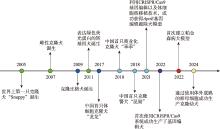
Fig. 1
Landmark events in canine cell nuclear transplantation"
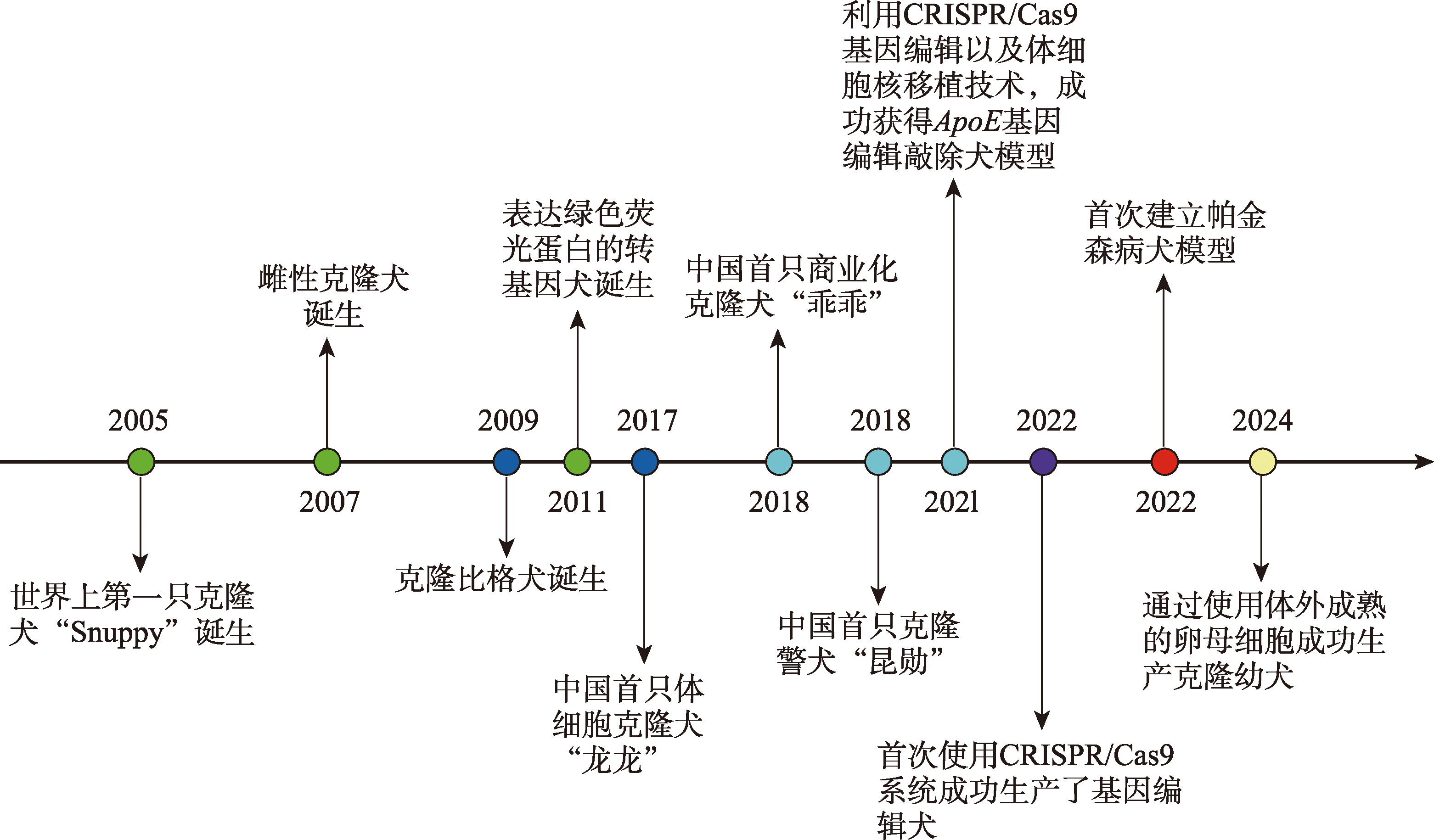
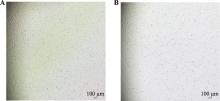
Fig. 2
Isolation and culture of cEFs and cAd-MSCs"
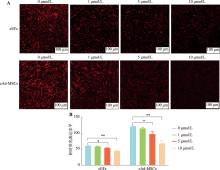
Fig. 3
Comparison of mitochondrial membrane potential between PS48-treated and control groups in cEFs and cAd-MSCs"
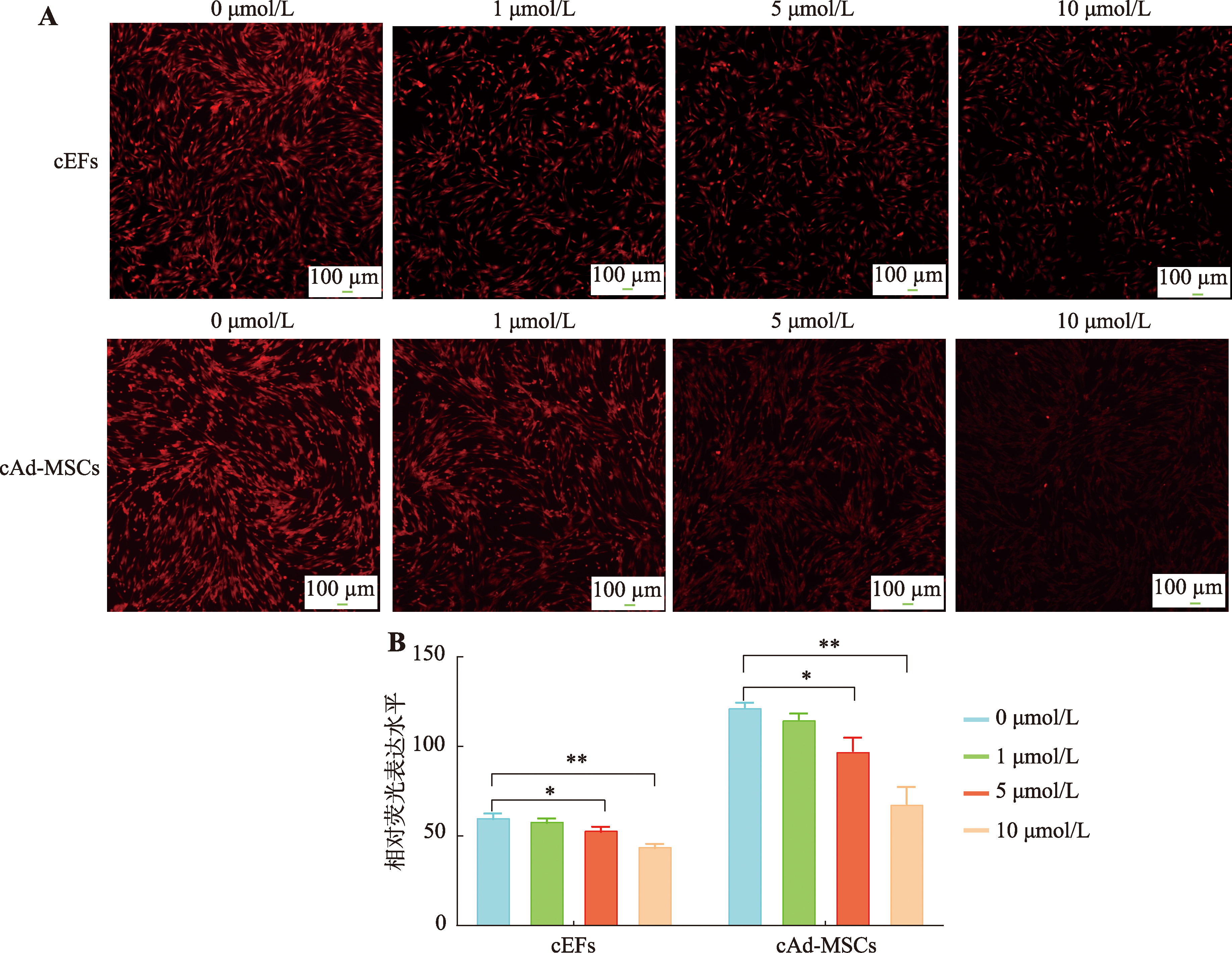
Table 1
Effect of PS48 treatment of cEFs on the developmental efficiency of subsequent canine-porcine iSCNT embryos"
| 组别 | 克隆胚胎数(n) | 卵裂率(%) | 4-细胞期率(%) | 8-细胞期率(%) | 16-细胞期率(%) |
|---|---|---|---|---|---|
| 对照组 | 218 | 13.30a±1.61 | 8.26a±0.88 | 5.50a±0.84 | 1.38a±0.93 |
| PS48处理组 | 226 | 46.90b±1.64 | 32.30b±1.55 | 10.62b±1.68 | 3.54a±0.52 |
Table 2
Effect of PS48 treatment of cAd-MSCs on the developmental efficiency of subsequent canine-porcine iSCNT embryos"
| 组别 | 克隆胚胎数(n) | 卵裂率(%) | 4-细胞期率(%) | 8-细胞期率(%) | 16-细胞期率(%) |
|---|---|---|---|---|---|
| 对照组 | 112 | 31.25a±2.73 | 15.18a±1.58 | 4.46a±0.52 | 2.68a±0.04 |
| PS48处理组 | 103 | 49.51b±3.00 | 26.21b±2.08 | 4.85a±0.46 | 4.85a±0.46 |
Table 3
Effect of RG108 treatment of cEFs on the developmental efficiency of subsequent canine-porcine iSCNT embryos"
| 组别 | 克隆胚胎数(n) | 卵裂率(%) | 4-细胞期率(%) | 8-细胞期率(%) | 16-细胞期率(%) |
|---|---|---|---|---|---|
| 对照组 | 81 | 17.28a±1.70 | 11.11a±0.99 | 6.17a±2.03 | 2.47a±2.38 |
| RG108处理组 | 76 | 7.89a±1.26 | 7.89a±1.36 | 6.58a±2.23 | 5.26a±1.89 |
Table 4
Effect of RG108 treatment of cAd-MSCs on the developmental efficiency of subsequent canine-porcine iSCNT embryos"
| 组别 | 克隆胚胎数(n) | 卵裂率(%) | 4-细胞期率(%) | 8-细胞期率(%) | 16-细胞期率(%) |
|---|---|---|---|---|---|
| 对照组 | 150 | 12.00a±1.33 | 8.00a±1.25 | 3.33a±0.42 | 2.67a±0.47 |
| RG108处理组 | 141 | 9.22a±0.28 | 3.55a±0.90 | 2.13a±1.00 | 1.42a±1.42 |
Table 5
Effect of Scriptaid treatment of cEFs on the developmental efficiency of subsequent canine-porcine iSCNT embryos"
| 处理浓度(nmol/L) | 克隆胚胎数(n) | 卵裂率(%) | 4-细胞期率(%) | 8-细胞期率(%) | 16-细胞期率(%) |
|---|---|---|---|---|---|
| 0 | 95 | 23.2a±1.95 | 12.6a±0.81 | 4.2a±1.64 | 0a±0 |
| 400 | 114 | 25.4a±4.22 | 12.3a±1.79 | 3.5a±0.52 | 1.8a±0.72 |
| 500 | 100 | 25.0a±2.82 | 12.0a±2.71 | 6.0a±2.09 | 3.0a±1.93 |
| 600 | 122 | 17.2a±1.03 | 8.2a±1.45 | 4.1a±2.84 | 2.5a±4.08 |
Table 6
Effect of Scriptaid treatment of cAd-MSCs on the developmental efficiency of subsequent canine-porcine iSCNT embryos"
| 处理浓度(nmol/L) | 克隆胚胎数(n) | 卵裂率(%) | 4-细胞期率(%) | 8-细胞期率(%) | 16-细胞期率(%) |
|---|---|---|---|---|---|
| 0 | 117 | 27.4a±0.39 | 17.9a±0.45 | 9.4ab±1.79 | 6.0a±1.37 |
| 400 | 82 | 26.8a±4.80 | 15.9a±3.77 | 2.4b±4.99 | 1.2a±1.51 |
| 500 | 119 | 31.9a±1.96 | 24.4a±1.58 | 8.4ab±1.69 | 5.0a±2.66 |
| 600 | 108 | 35.2a±1.89 | 21.3a±1.45 | 11.1a±1.39 | 6.5a±0.57 |
Table 7
Effect of RG108 treatment of canine-porcine iSCNT embryos derived from cEFs on their developmental efficiency"
| 组别 | 克隆胚胎数(n) | 卵裂率(%) | 4-细胞期率(%) | 8-细胞期率(%) | 16-细胞期率(%) |
|---|---|---|---|---|---|
| 对照组 | 76 | 14.47a±1.49 | 6.58a±1.70 | 1.32a±1.89 | 0a±0 |
| RG108处理组 | 74 | 31.08b±1.07 | 21.62b±1.01 | 12.16b±1.18 | 6.76b±0.88 |
Table 8
Effect of RG108 treatment on developmental efficiency of canine-porcine iSCNT embryos derived from cAd-MSCs"
| 组别 | 克隆胚胎数(n) | 卵裂率(%) | 4-细胞期率(%) | 8-细胞期率(%) | 16-细胞期率(%) |
|---|---|---|---|---|---|
| 对照组 | 121 | 10.74a±1.22 | 6.61a±1.52 | 3.31a±1.07 | 0.83a±1.18 |
| RG108处理组 | 125 | 21.60b±1.45 | 8.00a±1.34 | 3.20a±1.14 | 2.40a±1.18 |
Table 9
Effect of Scriptaid treatment of canine-porcine iSCNT embryos derived from cEFs on their developmental efficiency"
| 组别 | 克隆胚胎数(n) | 卵裂率(%) | 4-细胞期率(%) | 8-细胞期率(%) | 16-细胞期率(%) |
|---|---|---|---|---|---|
| 对照组 | 95 | 9.47a±1.70 | 6.32a±1.07 | 5.26a±0.85 | 1.05a±1.41 |
| Scriptaid处理组 | 91 | 23.08b±2.94 | 18.68b±3.25 | 9.89a±1.95 | 3.29a±3.59 |
Table 10
Effect of Scriptaid treatment of canine-porcine iSCNT embryos derived from cAd-MSCs on their developmental efficiency"
| 组别 | 克隆胚胎数(n) | 卵裂率(%) | 4-细胞期率(%) | 8-细胞期率(%) | 16-细胞期率(%) |
|---|---|---|---|---|---|
| 对照组 | 120 | 60.8a±3.31 | 32.5a±2.55 | 5.0a±1.44 | 5.0a±1.44 |
| Scriptaid处理组 | 116 | 24.1b±3.75 | 9.5b±2.1 | 4.3a±1.44 | 2.6a±1.27 |
| [1] |
Matoba S, Zhang Y. Somatic cell nuclear transfer reprogramming: mechanisms and applications. Cell Stem Cell, 2018, 23(4): 471-485.
pmid: 30033121 |
| [2] |
Lee BC, Kim MK, Jang G, Oh HJ, Yuda F, Kim HJ, Shamim MH, Kim JJ, Kang SK, Schatten G, Hwang WS. Dogs cloned from adult somatic cells. Nature, 2005, 436(7051): 641.
pmid: 16079832 |
| [3] |
Ji K, Park K, Kim D, Kim E, Kil T, Kim M. Accomplishment of canine cloning through in vitro matured oocytes: a pioneering milestone. J Anim Sci Biotechnol, 2024, 66(3): 577-586.
pmid: 38975582 |
| [4] |
Hossein MS, Jeong YW, Park SW, Kim JJ, Lee E, Ko KH, Hyuk P, Hoon SS, Kim YW, Hyun SH, Shin T, Hwang WS. Birth of beagle dogs by somatic cell nuclear transfer. Anim Reprod Sci, 2009, 114(4): 404-414.
pmid: 19059739 |
| [5] |
Jang G, Kim MK, Oh HJ, Hossein MS, Fibrianto YH, Hong SG, Park JE, Kim JJ, Kim HJ, Kang SK, Kim DY, Lee BC. Birth of viable female dogs produced by somatic cell nuclear transfer. Theriogenology, 2007, 67(5): 941-947.
pmid: 17169419 |
| [6] |
Zhao H, Zhao JP, Wu D, Sun ZL, Hua Y, Zheng M, Liu YM, Yang Q, Huang XH, Li Y, Piao YS, Wang YC, Lam SM, Xu HJ, Shui GH, Wang YJ, Yao HF, Lai LX, Du Z, Mi JD, Liu EQ, Ji XM, Zhang YQ. Dogs lacking apolipoprotein e show advanced atherosclerosis leading to apparent clinical complications. Sci China Life Sci, 2022, 65(7): 1342-1356.
pmid: 34705220 |
| [7] |
Feng C, Wang XM, Shi H, Yan QM, Zheng M, Li J, Zhang QJ, Qin YM, Zhong YG, Mi JD, Lai LX. Generation of ApoE deficient dogs via combination of embryo injection of CRISPR/Cas9 with somatic cell nuclear transfer. J Genet Genomics, 2018, 45(1): 47-50.
pmid: 29396142 |
| [8] |
Kim DE, Lee JH, Ji KB, Park KS, Kil TY, Koo O, Kim MK. Generation of genome-edited dogs by somatic cell nuclear transfer. BMC Biotechnol, 2022, 22(1): 19.
pmid: 35831828 |
| [9] |
Kim MJ, Oh HJ, Park JE, Kim GA, Hong SG, Jang G, Kwon MS, Koo BC, Kim T, Kang SK, Ra JC, Ko C, Lee BC. Generation of transgenic dogs that conditionally express green fluorescent protein. Genesis, 2011, 49(6): 472-478.
pmid: 21630415 |
| [10] |
Walker JC, Hall SB, Walker DB, Kendal-Reed MS, Hood AF, Niu XF. Human odor detectability: new methodology used to determine threshold and variation. Chem Senses, 2003, 28(9): 817-826.
pmid: 14654450 |
| [11] |
Walsh F. Human-animal bonds I: the relational significance of companion animals. Fam Process, 2009, 48(4): 462-480.
pmid: 19930433 |
| [12] | 韦云芳, 汪斌, 李飞翔, 李静. 犬体细胞克隆研究进展与应用. 见:2016全国工作犬技术研讨会(武汉)论文集. 2016, 107-116. |
| [13] |
Ryall JG, Cliff T, Dalton S, Sartorelli V. Metabolic reprogramming of stem cell epigenetics. Cell Stem Cell, 2015, 17(6): 651-662.
pmid: 26637942 |
| [14] |
Chandel NS. Glycolysis. Cold Spring Harbo Perspect Biol, 2021, 13(5): a040535.
pmid: 33941515 |
| [15] |
Perales-Clemente E, Folmes CDL, Terzic A. Metabolic regulation of redox status in stem cells. Antioxid Redox Signal, 2014, 21(11): 1648-1659.
pmid: 24949895 |
| [16] |
Zhu SY, Li WL, Zhou HY, Wei WG, Ambasudhan R, Lin TX, Kim J, Zhang K, Ding S. Reprogramming of human primary somatic cells by OCT4and chemical compounds. Cell Stem Cell, 2010, 7(6): 651-655.
pmid: 21112560 |
| [17] |
Banito A, Rashid ST, Acosta JC, Li SD, Pereira CF, Geti I, Pinho S, Silva JC, Azuara V, Walsh M, Vallier L, Gil J. Senescence impairs successful reprogramming to pluripotent stem cells. Genes Dev, 2009, 23(18): 2134-2139.
pmid: 19696146 |
| [18] |
Sato S, Fujita N, Tsuruo T. Interference with PDK1-Akt survival signaling pathway by UCN-01 (7-hydroxystaurosporine). Oncogene, 2002, 21(11): 1727-1738.
pmid: 11896604 |
| [19] |
Brueckuer B, Garcia BR, Siedlecki P, Musch T, Klism HC, Zielenkiewicz P, Suhai S, Wiessler M, Lyko F. Epigenetic reactivation of tumor suppressor genes by a novel small- molecule inhibitor of human DNA methyltransferases. Cancer Res, 2005, 65(14): 6305-6311.
pmid: 16024632 |
| [20] |
Su GH, Sohn TA, Ryu B, Kern SE. A novel histone deacetylase inhibitor identified by high-throughput transcriptional screening of a compound library. Cancer Res, 2000, 60(12): 3137-3142.
pmid: 10866300 |
| [21] |
No JG, Hur TY, Zhao MH, Lee S, Choi MK, Nam YS, Yeom DH, Im GS, Kim DH. Scriptaid improves the reprogramming of donor cells and enhances canine-porcine interspecies embryo development. Reprod Biol, 2018, 18(1): 18-26.
pmid: 29162325 |
| [22] |
Prigione A, Rohwer N, Hoffmann S, Mlody B, Drews K, Bukowiecki R, Blümlein K, Wanker EE, Ralser M, Cramer T, Adjaye J. HIF1α modulates cell fate reprogramming through early glycolytic shift and upregulation of PDK1-3 and PKM2. Stem Cells, 2014, 32(2): 364-376.
pmid: 24123565 |
| [23] |
Mathieu J, Zhou WY, Xing YL, Sperber H, Ferreccio A, Agoston Z, Kuppusamy KT, Moon RT, Ruohola-Baker H. Hypoxia-inducible factors have distinct and stage-specific roles during reprogramming of human cells to pluripotency. Cell Stem Cell, 2014, 14(5): 592-605.
pmid: 24656769 |
| [24] |
Shiratori R, Furuichi K, Yamaguchi M, Miyazaki N, Aoki H, Chibana H, Ito K, Aoki S. Glycolytic suppression dramatically changes the intracellular metabolic profile of multiple cancer cell lines in a mitochondrial metabolism- dependent manner. Sci Rep, 2019, 9(1): 18615-18699.
pmid: 31822748 |
| [25] |
Nishimura K, Fukuda A, Hisatake K. Mechanisms of the metabolic shift during somatic cell reprogramming. Int J Mol Sci, 2019, 20(9): 2254.
pmid: 31067778 |
| [26] |
Mordhorst BR, Kerns KC, Schauflinger M, Zigo M, Murphy SL, Ross RM, Wells KD, Green JA, Sutovsky P, Prather RS. Pharmacologic treatment with CPI-613 and PS48 decreases mitochondrial membrane potential and increases quantity of autolysosomes in porcine fibroblasts. Sci Rep, 2019, 9(1): 9417.
pmid: 31263141 |
| [27] |
Luo C, Wang ZQ, Wang JL, Yun F, Lu FH, Fu JY, Liu QY, Shi DS. Individual variation in buffalo somatic cell cloning efficiency is related to glycolytic metabolism. Sci China Life Sci, 2022, 65(10): 2076-2092.
pmid: 35366153 |
| [28] |
Son YB, Jeong YI, Hwang KC, Jeong YW, Hwang WS. Mitochondrial metabolism assessment of lycaon-dog fetuses in interspecies somatic cell nuclear transfer. Theriogenology, 2021, 165: 18-27.
pmid: 33611171 |
| [29] | Do L TK, Wittayarat M, Sato Y, Chatdarong K, Tharasanit T, Techakumphu M, Hirata M, Tanihara F, Taniguchi M, Otoi T. Comparison of blastocyst development between cat-cow and cat-pig interspecies somatic cell nuclear transfer embryos treated with trichostatin A. Biol Bull Russ Acad Sci, 2021, 48(2): 107-117. |
| [30] |
Carvalho BP, Cunha ATM, Silva BDM, Sousa RV, Leme LO, Dode MAN, Melo EO. Production of transgenic cattle by somatic cell nuclear transfer (SCNT) with the human granulocyte colony-stimulation factor (hG-CSF). J Anim Sci Biotechnol, 2019, 61(2): 61-68.
pmid: 31333863 |
| [31] |
Gouveia C, Huyser C, Egli D, Pepper MS. Lessons learned from somatic cell nuclear transfer. Int J Mol Sci, 2020, 21(7): 2314.
pmid: 32230814 |
| [32] |
Alsalim H, Jafarpour F, Tanhaei Vash N, Nasr-Esfahani MH, Niasari-Naslaji A. Effect of DNA and histone methyl transferase inhibitors on outcomes of buffalo-bovine interspecies somatic cell nuclear transfer. Cell Reprogram, 2018, 20(4): 256-267.
pmid: 29989428 |
| [33] |
Kim MJ, Oh HJ, Choi YB, Lee S, Setyawan EMN, Lee SH, Lee SH, Hur TY, Lee BC. Suberoylanilide hydroxamic acid during in vitro culture improves development of dog-pig interspecies cloned embryos but not dog cloned embryos. J Reprod Dev, 2018, 64(3): 277-282.
pmid: 29695650 |
| [34] |
Wu CF, Zhang DF, Zhang SS, Sun LW, Liu Y, Dai JJ. Optimizing treatment of DNA methyltransferase inhibitor RG108 on porcine fibroblasts for somatic cell nuclear transfer. Reprod Domest Anim, 2019, 54(12): 1604-1611.
pmid: 31549747 |
| [35] |
Zhai YH, Zhang ZR, Yu H, Su L, Yao G, Ma XL, Li Q, An XL, Zhang S, Li ZY. Dynamic methylation changes of DNA and H3K4 by RG108 improve epigenetic reprogramming of somatic cell nuclear transfer embryos in pigs. Cell Physiol Biochem, 2018, 50(4): 1376-1397.
pmid: 30355946 |
| [36] |
Xu WH, Li ZC, Yu B, He XY, Shi JS, Zhou R, Liu DW, Wu ZF. Effects of DNMT1 and HDAC inhibitors on gene-specific methylation reprogramming during porcine somatic cell nuclear transfer. PLoS One, 2013, 8(5): e64705.
pmid: 23741375 |
| [37] |
Zarei M, Shamaghdari B, Vahabi Z, Dalman A, Eftekhari Yazdi P. Epigenetic reprogramming in cloned mouse embryos following treatment with DNA methyltransferase and histone deacetylase inhibitors. Syst Biol Reprod Med, 2022, 68(3): 227-238.
pmid: 35382652 |
| [38] |
Wang LJ, Zhang H, Wang YS, Xu WB, Xiong XR, Li YY, Su JM, Hua S, Zhang Y. Scriptaid improves in vitro development and nuclear reprogramming of somatic cell nuclear transfer bovine embryos. Cell Reprogram, 2011, 13(5): 431-439.
pmid: 21774687 |
| [39] |
Li WD, Xu HN, Yin YB, Shen W, Sun QY, Zhao MH. In vitro production of canine blastocysts. Theriogenology, 2019, 135: 164-168.
pmid: 31216507 |
| [40] |
Ma H, Marti Gutierrez N, Morey R, Van Dyken C, Kang E, Hayama T, Lee Y, Li Y, Tippner-Hedges R, Wolf DP, Laurent LC, Mitalipov S. Incompatibility between nuclear and mitochondrial genomes contributes to an interspecies reproductive barrier. Cell Metabo, 2016, 24(2): 283-294.
pmid: 27425585 |
| [41] |
Mrowiec P, Bugno-Poniewierska M, Mlodawska W. The perspective of the incompatible of nucleus and mitochondria in interspecies somatic cell nuclear transfer for endangered species. Reprod Domest Anim, 2021, 56(2): 199-207.
pmid: 33190359 |
| [1] | Yangjinghui Zhang, Peiyao Chang, Zishu Yang, Yuhang Xue, Xueqi Li, Yang Zhang. Advances in epigenetic modification affecting anthocyanin synthesis [J]. Hereditas(Beijing), 2022, 44(12): 1117-1127. |
| [2] | Qingwen Zhao, Dongning Pan. Progress on the epigenetic regulation of adipose tissue thermogenesis [J]. Hereditas(Beijing), 2022, 44(10): 867-880. |
| [3] | Wang Ya'nan, Tao Xu, Wanpeng Wang, Qingzhu Zhang, Xie Li'nan. Role of epigenetic modifications in the development of crops essential traits [J]. Hereditas(Beijing), 2021, 43(9): 858-879. |
| [4] | Xuqiong Yang, Zhenfang Wu, Zicong Li. Advances in epigenetic reprogramming of somatic cells nuclear transfer in mammals [J]. Hereditas(Beijing), 2019, 41(12): 1099-1109. |
| [5] | Shaoqin Ge, Zhenghui Zhao, Xueqian Zhang, Yuan Hao. Epigenetic modifications in human spermatozoon and its potential role in embryonic development [J]. HEREDITAS(Beijing), 2014, 36(5): 439-446. |
| [6] | CAO Geng-Sheng, ZHONG Hong, ZHOU Wen-Ping, LI Ning. Immunofluorescence patterns of histone H3 lysine 4 dimethylation on X chromosomes of different cloned cattle [J]. HEREDITAS, 2009, 31(6): 611-614. |
| Viewed | ||||||
|
Full text |
|
|||||
|
Abstract |
|
|||||

