Hereditas(Beijing) ›› 2026, Vol. 48 ›› Issue (1): 46-60.doi: 10.16288/j.yczz.25-157
• Review • Previous Articles Next Articles
Advances in base editing technology and the construction of precise zebrafish disease models
Shaohui Zheng1( ), Yang Liu2(), Xinxin Xia2(), Yanmei Liu1()
- 1. School of Life Sciences, South China Normal University, Guangzhou 510631, China
2. Key Laboratory of Brain, Cognition and Education Sciences, Institute for Brain Research and Rehabilitation, and Guangdong Key Laboratory of Mental Health and Cognitive Science, South China Normal University, Guangzhou 510631, China
-
Received:2025-05-30Revised:2025-07-20Online:2026-01-20Published:2025-08-28 -
Contact:Yanmei Liu E-mail:1171750007@qq.com;157635271@qq.com;xxx13896212091@163.com;yanmeiliu@m.scnu.edu.cn -
Supported by:National Natural Science Foundation of China(32070819)

Cite this article
Shaohui Zheng, Yang Liu, Xinxin Xia, Yanmei Liu. Advances in base editing technology and the construction of precise zebrafish disease models[J]. Hereditas(Beijing), 2026, 48(1): 46-60.
share this article
Add to citation manager EndNote|Reference Manager|ProCite|BibTeX|RefWorks
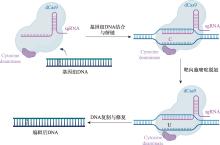
Fig. 1
The working principle of BE1"
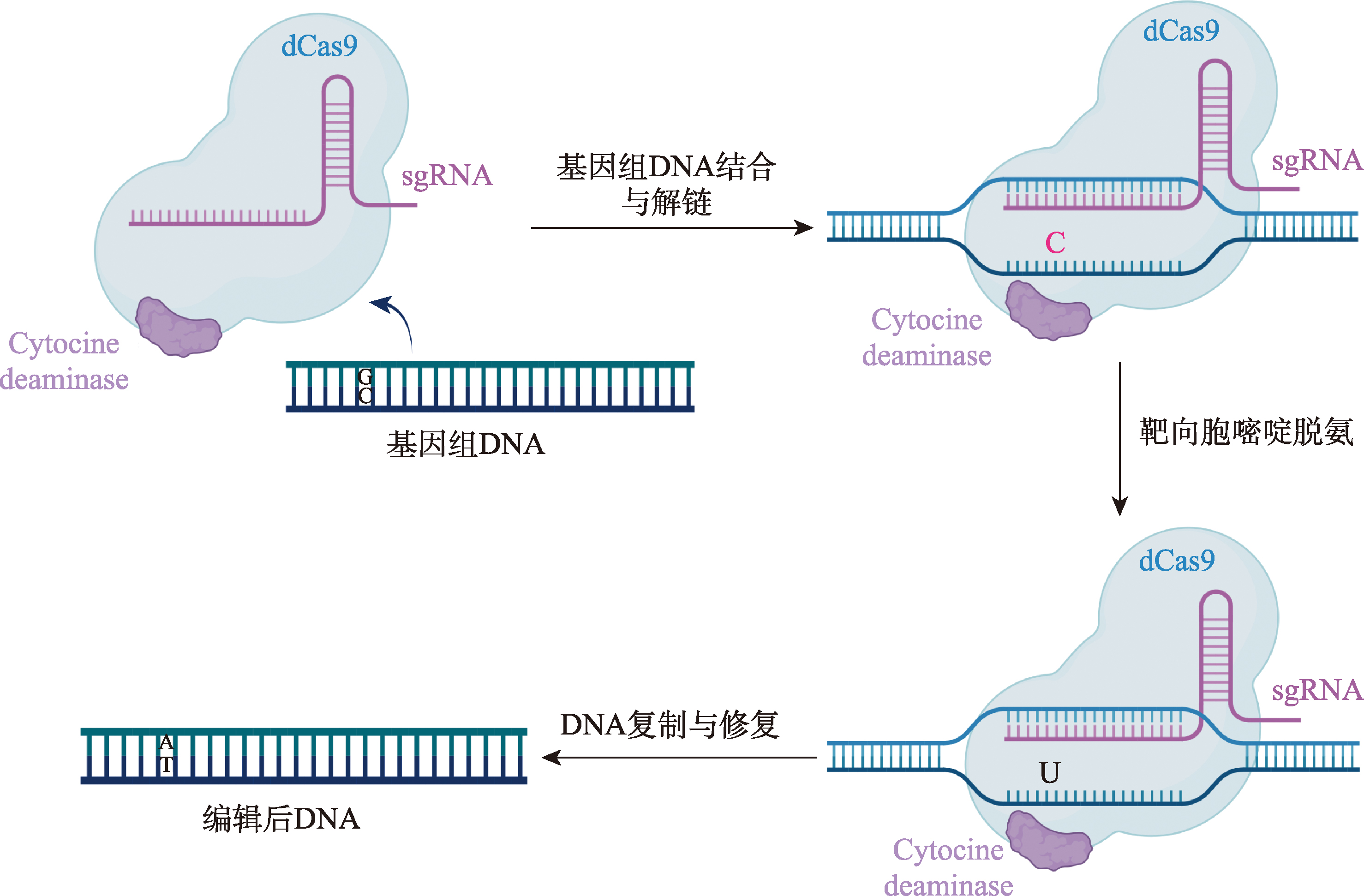
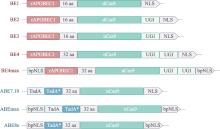
Fig. 2
Schematic representation of BE architecture and evolution"
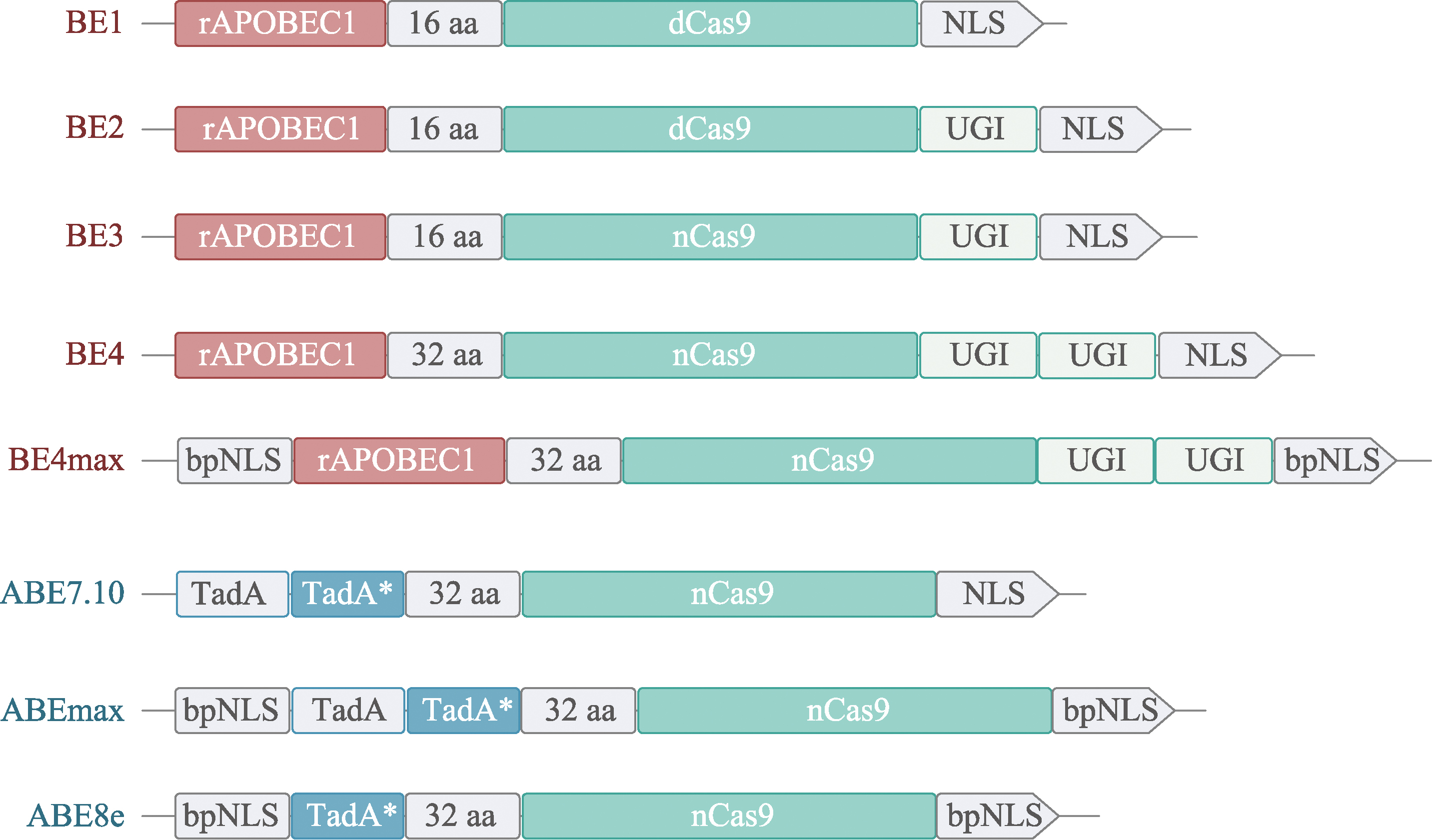
Table 1
Summary of the development of transversion base editor"
| 时间 | 编辑器名称 | 碱基颠换类型 | 应用对象 | 参考文献 |
|---|---|---|---|---|
| 2020年 | GBE(AID-nCas9-Ung) | C>A | 大肠杆菌 | [ |
| GBE(APOBEC-nCas9-Ung) | C>G | 人源细胞系 | ||
| 2020年 | CGBE1/miniCGBE1 | C>G | 人源细胞系 | [ |
| 2023年 | ACBEs | A>C | 人源细胞系及小鼠胚胎模型 | [ |
| 2023年 | gGBE | G>C/T | 人源细胞系及小鼠胚胎模型 | [ |
| 2023年 | AYBE | A>C/T | 人源细胞系 | [ |
| 2024年 | gCBE/gTBE | C>G,T>C/G | 人源细胞系 | [ |
| 2024年 | TSBE | T>G/C | 人源细胞系及小鼠胚胎模型 | [ |
| 2024年 | DAF-CB/DAF-TBE | C>G,T>G | 人源细胞系 | [ |
Table 2
Summary of the dual base editor"
| 双碱基 编辑器名称 | 编辑器结构 | 双碱基 编辑结果 | 参考文献 |
|---|---|---|---|
| ACBE,Target-ACBE4max |  | A>G,C>T | [ |
| A&C-BEmax |  | A>G,C>T | [ |
| SPACE |  | A>G,C>T | [ |
| STEME-1 |  | A>G,C>T | [ |
| miniAGBE-4 |  | A>G,C>N | [ |
| TaADE,CABE-Ts |  | A>G,C>T | [ |
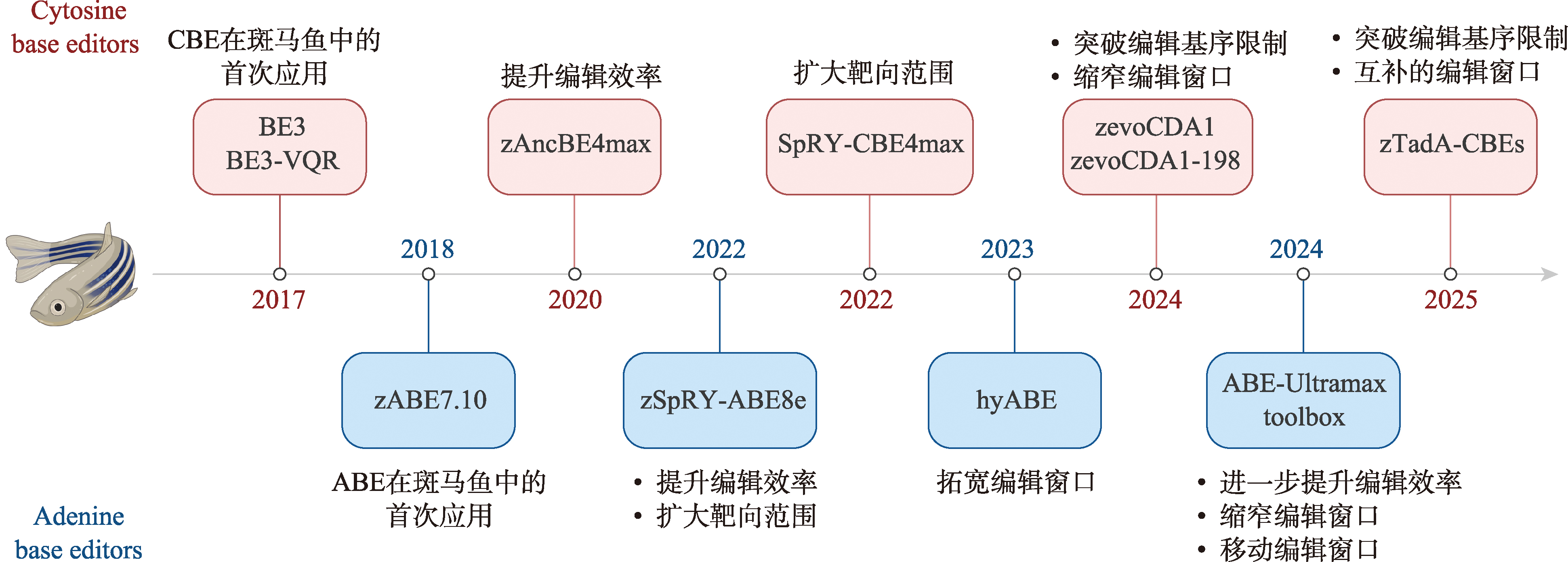
Fig. 3
Development of zebrafish base editors"
| [1] |
Human Genome Structural Variation Working Group, Eichler EE, Nickerson DA, Altshuler D, Bowcock AM, Brooks LD, Carter NP, Church DM, Felsenfeld A, Guyer M, Lee C, Lupski JR, Mullikin JC, Pritchard JK, Sebat J, Sherry ST, Smith D, Valle D, Waterston RH. Completing the map of human genetic variation. Nature, 2007, 447(7141): 161-165.
pmid: 17495918 |
| [2] |
Jinek M, Chylinski K, Fonfara I, Hauer M, Doudna JA, Charpentier E. A programmable dual-RNA-guided DNA endonuclease in adaptive bacterial immunity. Science, 2012, 337(6096): 816-821.
pmid: 22745249 |
| [3] |
Pavletich NP, Pabo CO. Crystal structure of a five-finger GLI-DNA complex: new perspectives on zinc fingers. Science, 1993, 261(5129): 1701-1707.
pmid: 8378770 |
| [4] |
Boch J, Scholze H, Schornack S, Landgraf A, Hahn S, Kay S, Lahaye T, Nickstadt A, Bonas U. Breaking the code of DNA binding specificity of TAL-type III effectors. Science, 2009, 326(5959): 1509-1512.
pmid: 19933107 |
| [5] |
Gasiunas G, Barrangou R, Horvath P, Siksnys V. Cas9-crRNA ribonucleoprotein complex mediates specific DNA cleavage for adaptive immunity in bacteria. Proc Natl Acad Sci USA, 2012, 109(39): 2579-2586.
pmid: 22949671 |
| [6] |
Komor AC, Kim YB, Packer MS, Zuris JA, Liu DR. Programmable editing of a target base in genomic DNA without double-stranded DNA cleavage. Nature, 2016, 533(7603): 420-424.
pmid: 27096365 |
| [7] |
Makarova KS, Haft DH, Barrangou R, Brouns SJJ, Charpentier E, Horvath P, Moineau S, Mojica FJM, Wolf YI, Yakunin AF, van der Oost J, Koonin EV. Evolution and classification of the CRISPR-Cas systems. Nat Rev Microbiol, 2011, 9(6): 467-477.
pmid: 21552286 |
| [8] |
West SC. Molecular views of recombination proteins and their control. Nat Rev Mol Cell Biol, 2003, 4(6): 435-445.
pmid: 12778123 |
| [9] |
van Gent DC, Hoeijmakers JH, Kanaar R. Chromosomal stability and the DNA double-stranded break connection. Nat Rev Genet, 2001, 2(3): 196-206.
pmid: 11256071 |
| [10] |
Ishino Y, Krupovic M, Forterre P. History of CRISPR-Cas from encounter with a mysterious repeated sequence to genome editing technology. J Bacteriol, 2018, 200(7): e00580-17.
pmid: 29358495 |
| [11] |
Shalem O, Sanjana NE, Zhang F. High-throughput functional genomics using CRISPR-Cas9. Nat Rev Genet, 2015, 16(5): 299-311.
pmid: 25854182 |
| [12] |
Ma HH, Tu LC, Naseri A, Huisman M, Zhang SJ, Grunwald D, Pederson T. Multiplexed labeling of genomic loci with dCas9 and engineered sgRNAs using CRISPRainbow. Nat Biotechnol, 2016, 34(5): 528-530.
pmid: 27088723 |
| [13] |
Humbert O, Radtke S, Samuelson C, Carrillo RR, Perez AM, Reddy SS, Lux C, Pattabhi S, Schefter LE, Negre O, Lee CM, Bao G, Adair JE, Peterson CW, Rawlings DJ, Scharenberg AM, Kiem HP. Therapeutically relevant engraftment of a CRISPR-Cas9-edited HSC-enriched population with HbF reactivation in nonhuman primates. Sci Transl Med, 2019, 11(503): eaaw3768.
pmid: 31366580 |
| [14] |
Porto EM, Komor AC. In the business of base editors: evolution from bench to bedside. PLoS Biol, 2023, 21(4): e3002071.
pmid: 37043430 |
| [15] |
Xie JK, Huang XY, Wang X, Gou SX, Liang YH, Chen FB, Li N, Ouyang Z, Zhang QJ, Ge WK, Jin Q, Shi H, Zhuang ZP, Zhao XZ, Lian M, Wang JW, Ye YH, Quan LQ, Wu H, Wang KP, Lai LX. ACBE, a new base editor for simultaneous C-to-T and A-to-G substitutions in mammalian systems. BMC Biol, 2020, 18(1): 131.
pmid: 32967664 |
| [16] |
Koblan LW, Arbab M, Shen MW, Hussmann JA, Anzalone AV, Doman JL, Newby GA, Yang D, Mok B, Replogle JM, Xu A, Sisley TA, Weissman JS, Adamson B, Liu DR. Efficient C•G-to-G•C base editors developed using CRISPRi screens, target-library analysis, and machine learning. Nat Biotechnol, 2021, 39(11): 1414-1425.
pmid: 34183861 |
| [17] |
Liang YH, Xie JK, Zhang QJ, Wang XM, Gou SX, Lin LH, Chen T, Ge WK, Zhuang ZP, Lian M, Chen FB, Li N, Ouyang Z, Lai CD, Liu XY, Li L, Ye YH, Wu H, Wang KP, Lai LX. AGBE: a dual deaminase-mediated base editor by fusing CGBE with ABE for creating a saturated mutant population with multiple editing patterns. Nucleic Acids Res, 2022, 50(9): 5384-5399.
pmid: 35544322 |
| [18] |
Kunz C, Saito Y, Schär P. DNA repair in mammalian cells: mismatched repair: variations on a theme. Cell Mol Life Sci, 2009, 66(6): 1021-1038.
pmid: 19153655 |
| [19] |
Komor AC, Zhao KT, Packer MS, Gaudelli NM, Waterbury AL, Koblan LW, Kim YB, Badran AH, Liu DR. Improved base excision repair inhibition and bacteriophage Mu Gam protein yields C:G-to-T:A base editors with higher efficiency and product purity. Sci Adv, 2017, 3(8): eaao4774.
pmid: 28875174 |
| [20] |
Koblan LW, Doman JL, Wilson C, Levy JM, Tay T, Newby GA, Maianti JP, Raguram A, Liu DR. Improving cytidine and adenine base editors by expression optimization and ancestral reconstruction. Nat Biotechnol, 2018, 36(9): 843-846.
pmid: 29813047 |
| [21] |
Landrum MJ, Lee JM, Benson M, Brown G, Chao C, Chitipiralla S, Gu BS, Hart J, Hoffman D, Hoover J, Jang W, Katz K, Ovetsky M, Riley G, Sethi A, Tully R, Villamarin-Salomon R, Rubinstein W, Maglott DR. ClinVar: public archive of interpretations of clinically relevant variants. Nucleic Acids Res, 2016, 44(D1): D862-D868.
pmid: 26582918 |
| [22] |
Gaudelli NM, Komor AC, Rees HA, Packer MS, Badran AH, Bryson DI, Liu DR. Programmable base editing of A•T to G•C in genomic DNA without DNA cleavage. Nature, 2017, 551(7681): 464-471.
pmid: 29160308 |
| [23] |
Losey HC, Ruthenburg AJ, Verdine GL. Crystal structure of Staphylococcus aureus tRNA adenosine deaminase TadA in complex with RNA. Nat Struct Mol Biol, 2006, 13(2): 153-159.
pmid: 16415880 |
| [24] |
Richter MF, Zhao KT, Eton E, Lapinaite A, Newby GA, Thuronyi BW, Wilson C, Koblan LW, Zeng J, Bauer DE, Doudna JA, Liu DR. Phage-assisted evolution of an adenine base editor with improved Cas domain compatibility and activity. Nat Biotechnol, 2020, 38(7): 883-891.
pmid: 32433547 |
| [25] |
Zhao DD, Li J, Li SW, Xin XQ, Hu MZ, Price MA, Rosser SJ, Bi CH, Zhang XL. Glycosylase base editors enable C-to-A and C-to-G base changes. Nat Biotechnol, 2021, 39(1): 35-40.
pmid: 32690970 |
| [26] |
Kurt IC, Zhou RH, Iyer S, Garcia SP, Miller BR, Langner LM, Grünewald J, Joung JK. CRISPR C-to-G base editors for inducing targeted DNA transversions in human cells. Nat Biotechnol, 2021, 39(1): 41-46.
pmid: 32690971 |
| [27] |
Ma YQ, Zhang JY, Yin WJ, Zhang ZC, Song Y, Chang X. Targeted AID-mediated mutagenesis (TAM) enables efficient genomic diversification in mammalian cells. Nat Methods, 2016, 13(12): 1029-1035.
pmid: 27723754 |
| [28] |
Kim K, Ryu SM, Kim ST, Baek G, Kim D, Lim K, Chung E, Kim S, Kim JS. Highly efficient RNA-guided base editing in mouse embryos. Nat Biotechnol, 2017, 35(5): 435-437.
pmid: 28244995 |
| [29] |
Kim HS, Jeong YK, Hur JK, Kim JS, Bae S. Adenine base editors catalyze cytosine conversions in human cells. Nat Biotechnol, 2019, 37(10): 1145-1148.
pmid: 31548727 |
| [30] |
Grünewald J, Zhou RH, Iyer S, Lareau CA, Garcia SP, Aryee MJ, Joung JK. CRISPR DNA base editors with reduced RNA off-target and self-editing activities. Nat Biotechnol, 2019, 37(9): 1041-1048.
pmid: 31477922 |
| [31] |
Chen L, Hong MJ, Luan CM, Gao HY, Ru GM, Guo XY, Zhang DJ, Zhang S, Li CW, Wu J, Randolph PB, Sousa AA, Qu C, Zhu YF, Guan YT, Wang LR, Liu MY, Feng B, Song GJ, Liu DR, Li DL. Adenine transversion editors enable precise, efficient A•T-to-C•G base editing in mammalian cells and embryos. Nat Biotechnol, 2024, 42(4): 638-650.
pmid: 37322276 |
| [32] |
Tong HW, Liu NN, Wei YH, Zhou YS, Li Y, Wu DN, Jin M, Cui SN, Li HB, Li GL, Zhou JX, Yuan Y, Zhang HN, Shi LY, Yao X, Yang H. Programmable deaminase- free base editors for G-to-Y conversion by engineered glycosylase. Natl Sci Rev, 2023, 10(8): nwad143.
pmid: 37404457 |
| [33] |
Tong HW, Wang XC, Liu YH, Liu NN, Li Y, Luo JM, Ma Q, Wu DN, Li JY, Xu CL, Yang H. Programmable A-to-Y base editing by fusing an adenine base editor with an N-methylpurine DNA glycosylase. Nat Biotechnol, 2023, 41(8): 1080-1084.
pmid: 36624150 |
| [34] |
Tong HW, Wang HQ, Wang XC, Liu NN, Li GL, Wu DN, Li Y, Jin M, Li HB, Wei YH, Li T, Yuan Y, Shi LY, Yao X, Zhou YS, Yang H. Development of deaminase-free T-to-S base editor and C-to-G base editor by engineered human uracil DNA glycosylase. Nat Commun, 2024, 15(1): 4897.
pmid: 38851742 |
| [35] |
He Y, Zhou XB, Chang C, Chen G, Liu WK, Li G, Fan XQ, Sun MS, Miao CS, Huang QY, Ma YQ, Yuan FJ, Chang X. Protein language models-assisted optimization of a uracil- N-glycosylase variant enables programmable T-to-G and T-to-C base editing. Mol Cell, 2024, 84(7): 1257-1270.e6.
pmid: 38377993 |
| [36] |
Ye LJ, Zhao DD, Li J, Wang YR, Li B, Yang YZ, Hou XT, Wang HB, Wei ZD, Liu XQ, Li YQ, Li SW, Liu YJ, Zhang XL, Bi CH. Glycosylase-based base editors for efficient T-to-G and C-to-G editing in mammalian cells. Nat Biotechnol, 2024, 42(10): 1538-1547.
pmid: 38168994 |
| [37] |
Jiang G, Wang J, Zhao DD, Chen XX, Pu SM, Zhang CZ, Li J, Li YQ, Yang J, Li SW, Liao XP, Ma HW, Ma YH, Zhou ZP, Bi CH, Zhang XL. Molecular mechanism of the cytosine CRISPR base editing process and the roles of translesion DNA polymerases. ACS Synth Biol, 2021, 10(12): 3353-3358.
pmid: 34851089 |
| [38] |
Wang Y, Zhao DD, Sun LT, Wang J, Fan LW, Cheng GM, Zhang ZH, Ni XM, Feng JH, Wang M, Zheng P, Bi CH, Zhang XL, Sun JB. Engineering of the translesion DNA synthesis pathway enables controllable C-to-G and C-to-A base editing in corynebacterium glutamicum. ACS Synth Biol, 2022, 11(10): 3368-3378.
pmid: 36099191 |
| [39] |
Sakata RC, Ishiguro S, Mori H, Tanaka M, Tatsuno K, Ueda H, Yamamoto S, Seki M, Masuyama N, Nishida K, Nishimasu H, Arakawa K, Kondo A, Nureki O, Tomita M, Aburatani H, Yachie N. Base editors for simultaneous introduction of C-to-T and A-to-G mutations. Nat Biotechnol, 2020, 38(7): 865-869.
pmid: 32483365 |
| [40] |
Zhang XH, Zhu BY, Chen L, Xie L, Yu WS, Wang Y, Li LX, Yin SM, Yang L, Hu HD, Han HH, Li YM, Wang LR, Chen G, Ma XY, Geng HQ, Huang WF, Pang XF, Yang ZZ, Wu YX, Siwko S, Kurita R, Nakamura Y, Yang L, Liu MY, Li DL. Dual base editor catalyzes both cytosine and adenine base conversions in human cells. Nat Biotechnol, 2020, 38(7): 856-860.
pmid: 32483363 |
| [41] |
Grünewald J, Zhou RH, Lareau CA, Garcia SP, Iyer S, Miller BR, Langner LM, Hsu JY, Aryee MJ, Joung JK. A dual-deaminase CRISPR base editor enables concurrent adenine and cytosine editing. Nat Biotechnol, 2020, 38(7): 861-864.
pmid: 32483364 |
| [42] |
Li C, Zhang R, Meng XB, Chen S, Zong Y, Lu CJ, Qiu JL, Chen YH, Li JY, Gao CX. Targeted, random mutagenesis of plant genes with dual cytosine and adenine base editors. Nat Biotechnol, 2020, 38(7): 875-882.
pmid: 31932727 |
| [43] |
Chen L, Zhu BY, Ru GM, Meng HW, Yan YC, Hong MJ, Zhang D, Luan CM, Zhang S, Wu H, Gao HY, Bai SJ, Li CQ, Ding RY, Xue NN, Lei ZX, Chen YT, Guan YT, Siwko S, Cheng YY, Song GJ, Wang LR, Yi CQ, Liu MY, Li DL. Re-engineering the adenine deaminase TadA-8e for efficient and specific CRISPR-based cytosine base editing. Nat Biotechnol, 2023, 41(5): 663-672.
pmid: 36357717 |
| [44] |
Neugebauer ME, Hsu A, Arbab M, Krasnow NA, McElroy AN, Pandey S, Doman JL, Huang TP, Raguram A, Banskota S, Newby GA, Tolar J, Osborn MJ, Liu DR. Evolution of an adenine base editor into a small, efficient cytosine base editor with low off-target activity. Nat Biotechnol, 2023, 41(5): 673-685.
pmid: 36357719 |
| [45] |
Lam DK, Feliciano PR, Arif A, Bohnuud T, Fernandez TP, Gehrke JM, Grayson P, Lee KD, Ortega MA, Sawyer C, Schwaegerle ND, Peraro L, Young L, Lee SJ, Ciaramella G, Gaudelli NM. Improved cytosine base editors generated from TadA variants. Nat Biotechnol, 2023, 41(5): 686-697.
pmid: 36624149 |
| [46] |
Gaudelli NM, Lam DK, Rees HA, Solá-Esteves NM, Barrera LA, Born DA, Edwards A, Gehrke JM, Lee SJ, Liquori AJ, Murray R, Packer MS, Rinaldi C, Slaymaker IM, Yen J, Young LE, Ciaramella G. Directed evolution of adenine base editors with increased activity and therapeutic application. Nat Biotechnol, 2020, 38(7): 892-900.
pmid: 32284586 |
| [47] |
Yan DQ, Ren B, Liu L, Yan F, Li SF, Wang GR, Sun WX, Zhou XP, Zhou HB. High-efficiency and multiplex adenine base editing in plants using new TadA variants. Mol Plant, 2021, 14(5): 722-731.
pmid: 33631420 |
| [48] |
Hendel A, Bak RO, Clark JT, Kennedy AB, Ryan DE, Roy S, Steinfeld I, Lunstad BD, Kaiser RJ, Wilkens AB, Bacchetta R, Tsalenko A, Dellinger D, Bruhn L, Porteus MH. Chemically modified guide RNAs enhance CRISPR- Cas genome editing in human primary cells. Nat Biotechnol, 2015, 33(9): 985-989.
pmid: 26121415 |
| [49] |
Gehrke JM, Cervantes O, Clement MK, Wu YX, Zeng J, Bauer DE, Pinello L, Joung JK. An APOBEC3A-Cas9 base editor with minimized bystander and off-target activities. Nat Biotechnol, 2018, 36(10): 977-982.
pmid: 30059493 |
| [50] |
Wang Q, Yang J, Zhong ZC, Vanegas JA, Gao X, Kolomeisky AB. A general theoretical framework to design base editors with reduced bystander effects. Nat Commun, 2021, 12(1): 6529.
pmid: 34764246 |
| [51] |
Holden LG, Prochnow C, Chang YP, Bransteitter R, Chelico L, Sen U, Stevens RC, Goodman MF, Chen XS. Crystal structure of the anti-viral APOBEC3G catalytic domain and functional implications. Nature, 2008, 456(7218): 121-124.
pmid: 18849968 |
| [52] |
Chen KM, Harjes E, Gross PJ, Fahmy A, Lu YJ, Shindo K, Harris RS, Matsuo H. Structure of the DNA deaminase domain of the HIV-1 restriction factor APOBEC3G. Nature, 2008, 452(7183): 116-119.
pmid: 18288108 |
| [53] |
Kim YB, Komor AC, Levy JM, Packer MS, Zhao KT, Liu DR. Increasing the genome-targeting scope and precision of base editing with engineered Cas9-cytidine deaminase fusions. Nat Biotechnol, 2017, 35(4): 371-376.
pmid: 28191901 |
| [54] |
Chen L, Zhang S, Xue NN, Hong MJ, Zhang XH, Zhang D, Yang J, Bai SJ, Huang YF, Meng HW, Wu H, Luan CM, Zhu BY, Ru GM, Gao HY, Zhong LP, Liu MZ, Liu MY, Cheng YY, Yi CQ, Wang LR, Zhao YX, Song GJ, Li DL. Engineering a precise adenine base editor with minimal bystander editing. Nat Chem Biol, 2023, 19(1): 101-110.
pmid: 36229683 |
| [55] |
Yang L, Huo YN, Wang M, Zhang D, Zhang TN, Wu H, Rao XC, Meng HW, Yin SM, Mei JL, Zhang DX, Chen X, Lv J, Liu MZ, Cheng YY, Guan YT, Feng B, Song GJ, Yi CQ, Liu MY, Zeng FY, Wang LR, Li DL. Engineering APOBEC3A deaminase for highly accurate and efficient base editing. Nat Chem Biol, 2024, 20(9): 1176-1187.
pmid: 38553609 |
| [56] |
Tan JJ, Zhang F, Karcher D, Bock R. Engineering of high-precision base editors for site-specific single nucleotide replacement. Nat Commun, 2019, 10(1): 439.
pmid: 30683865 |
| [57] |
Tan JJ, Zhang F, Karcher D, Bock R. Expanding the genome-targeting scope and the site selectivity of high-precision base editors. Nat Commun, 2020, 11(1): 629.
pmid: 32005820 |
| [58] |
Thuronyi BW, Koblan LW, Levy JM, Yeh WH, Zheng C, Newby GA, Wilson C, Bhaumik M, Shubina-Oleinik O, Holt JR, Liu DR. Continuous evolution of base editors with expanded target compatibility and improved activity. Nat Biotechnol, 2019, 37(9): 1070-1079.
pmid: 31332326 |
| [59] |
Xiao YL, Wu Y, Tang WX. An adenine base editor variant expands context compatibility. Nat Biotechnol, 2024, 42(9): 1442-1453.
pmid: 38168987 |
| [60] |
Huang JY, Lin QP, Fei HY, He ZX, Xu H, Li YJ, Qu KL, Han P, Gao Q, Li BS, Liu GW, Zhang LX, Hu JC, Zhang R, Zuo EW, Luo YL, Ran YD, Qiu JL, Zhao KT, Gao CX. Discovery of deaminase functions by structure-based protein clustering. Cell, 2023, 186(15): 3182-3195.e14.
pmid: 37379837 |
| [61] |
Xu K, Feng H, Zhang HH, He CF, Kang HF, Yuan TL, Shi L, Zhou CK, Hua GY, Cao YQ, Zuo ZR, Zuo EW. Structure-guided discovery of highly efficient cytidine deaminases with sequence-context independence. Nat Biomed Eng, 2025, 9(1): 93-108.
pmid: 38831042 |
| [62] |
Zuo EW, Sun YD, Wei W, Yuan TL, Ying WQ, Sun H, Yuan LY, Steinmetz LM, Li YX, Yang H. Cytosine base editor generates substantial off-target single-nucleotide variants in mouse embryos. Science, 2019, 364(6437): 289-292.
pmid: 30819928 |
| [63] |
Jin S, Zong Y, Gao Q, Zhu ZX, Wang YP, Qin P, Liang CZ, Wang DW, Qiu JL, Zhang F, Gao CX. Cytosine, but not adenine, base editors induce genome-wide off-target mutations in rice. Science, 2019, 364(6437): 292-295.
pmid: 30819931 |
| [64] |
Grünewald J, Zhou RH, Garcia SP, Iyer S, Lareau CA, Aryee MJ, Joung JK. Transcriptome-wide off-target RNA editing induced by CRISPR-guided DNA base editors. Nature, 2019, 569(7756): 433-437.
pmid: 30995674 |
| [65] |
Zhou CY, Sun YD, Yan R, Liu YJ, Zuo EW, Gu C, Han LX, Wei Y, Hu XD, Zeng R, Li YX, Zhou HB, Guo F, Yang H. Off-target RNA mutation induced by DNA base editing and its elimination by mutagenesis. Nature, 2019, 571(7764): 275-278.
pmid: 31181567 |
| [66] |
Doman JL, Raguram A, Newby GA, Liu DR. Evaluation and minimization of Cas9-independent off-target DNA editing by cytosine base editors. Nat Biotechnol, 2020, 38(5): 620-628.
pmid: 32042165 |
| [67] |
Zuo EW, Sun YD, Yuan TL, He BB, Zhou CY, Ying WQ, Liu J, Wei W, Zeng R, Li YX, Yang H. A rationally engineered cytosine base editor retains high on-target activity while reducing both DNA and RNA off-target effects. Nat Methods, 2020, 17(6): 600-604.
pmid: 32424272 |
| [68] |
Xiong XY, Liu KH, Li ZX, Xia FN, Ruan XM, He XL, Li JF. Split complementation of base editors to minimize off-target edits. Nat Plants, 2023, 9(11): 1832-1847.
pmid: 37845337 |
| [69] |
Kleinstiver BP, Prew MS, Tsai SQ, Topkar VV, Nguyen NT, Zheng ZL, Gonzales APW, Li ZY, Peterson RT, Yeh JRJ, Aryee MJ, Joung JK. Engineered CRISPR-Cas9 nucleases with altered PAM specificities. Nature, 2015, 523(7561): 481-485.
pmid: 26098369 |
| [70] |
Hu JH, Miller SM, Geurts MH, Tang WX, Chen LW, Sun N, Zeina CM, Gao X, Rees HA, Lin Z, Liu DR. Evolved Cas9 variants with broad PAM compatibility and high DNA specificity. Nature, 2018, 556(7699): 57-63.
pmid: 29512652 |
| [71] |
Walton RT, Christie KA, Whittaker MN, Kleinstiver BP. Unconstrained genome targeting with near-PAMless engineered CRISPR-Cas9 variants. Science, 2020, 368(6488): 290-296.
pmid: 32217751 |
| [72] |
Geurts MH, de Poel E, Amatngalim GD, Oka R, Meijers FM, Kruisselbrink E, van Mourik P, Berkers G, de Winter-de Groot KM, Michel S, Muilwijk D, Aalbers BL, Mullenders J, Boj SF, Suen SWF, Brunsveld JE, Janssens HM, Mall MA, Graeber SY, van Boxtel R, van der Ent CK, Beekman JM, Clevers H. CRISPR-Based adenine editors correct nonsense mutations in a cystic fibrosis organoid biobank. Cell Stem Cell, 2020, 26(4): 503-510.e7.
pmid: 32084388 |
| [73] |
Ni XY, Zhou ZD, Huang J, Qiao XM. Targeted gene disruption by CRISPR/xCas9 system in Drosophila melanogaster. Arch Insect Biochem Physiol, 2020, 104(1): e21662.
pmid: 32027059 |
| [74] |
Liang F, Zhang Y, Li L, Yang YX, Fei JF, Liu YM, Qin W. SpG and SpRY variants expand the CRISPR toolbox for genome editing in zebrafish. Nat Commun, 2022, 13(1): 3421.
pmid: 35701400 |
| [75] |
Hu XX, Meng XB, Liu Q, Li JY, Wang KJ. Increasing the efficiency of CRISPR-Cas9-VQR precise genome editing in rice. Plant Biotechnol J, 2018, 16(1): 292-297.
pmid: 28605576 |
| [76] |
MacRae CA, Peterson RT. Zebrafish as tools for drug discovery. Nat Rev Drug Discov, 2015, 14(10): 721-731.
pmid: 26361349 |
| [77] |
Zhang YH, Qin W, Lu XC, Xu J, Huang HG, Bai HP, Li S, Lin S. Programmable base editing of zebrafish genome using a modified CRISPR-Cas9 system. Nat Commun, 2017, 8(1): 118.
pmid: 28740134 |
| [78] |
Zhao Y, Shang DT, Ying RH, Cheng HH, Zhou RJ. An optimized base editor with efficient C-to-T base editing in zebrafish. BMC Biol, 2020, 18(1): 190.
pmid: 33272268 |
| [79] |
Rosello M, Serafini M, Mignani L, Finazzi D, Giovannangeli C, Mione MC, Concordet JP, Del Bene F. Disease modeling by efficient genome editing using a near PAM-less base editor in vivo. Nat Commun, 2022, 13(1): 3435.
pmid: 35701478 |
| [80] |
Zhong ZL, Hu XL, Zhang RJ, Liu X, Chen WQ, Zhang SB, Sun JJ, Zhong TP. Improving precision base editing of the zebrafish genome by Rad51DBD-incorporated single-base editors. J Genet Genomics, 2025, 52(1): 105-115.
pmid: 39428086 |
| [81] |
Cornean A, Gierten J, Welz B, Mateo JL, Thumberger T, Wittbrodt J. Precise in vivo functional analysis of DNA variants with base editing using ACEofBASEs target prediction. eLife, 2022, 11: e72124.
pmid: 35373735 |
| [82] |
Zhang Y, Liu Y, Qin W, Zheng SH, Xiao JW, Xia XX, Yuan XY, Zeng JJ, Shi Y, Zhang Y, Ma H, Varshney GK, Fei JF, Liu YM. Cytosine base editors with increased PAM and deaminase motif flexibility for gene editing in zebrafish. Nat Commun, 2024, 15(1): 9526.
pmid: 39496611 |
| [83] |
Zheng SH, Liu Y, Xia XX, Xiao JW, Ma H, Yuan XY, Zhang Y, Chen ZX, Peng GC, Li WY, Fei JF, Liu YM. Sequence context-agnostic TadA-derived cytosine base editors for genome-wide editing in zebrafish. Adv Sci (Weinh), 2025, 12(14): e2411478.
pmid: 39960330 |
| [84] |
Qin W, Lu XC, Liu YX, Bai HP, Li S, Lin S. Precise A•T to G•C base editing in the zebrafish genome. BMC Biol, 2018, 16(1): 139.
pmid: 30458760 |
| [85] |
Qin W, Liang F, Lin SJ, Petree C, Huang K, Zhang Y, Li L, Varshney P, Mourrain P, Liu YM, Varshney GK. ABE-ultramax for high-efficiency biallelic adenine base editing in zebrafish. Nat Commun, 2024, 15(1): 5613.
pmid: 38965236 |
| [86] |
Xue NN, Liu X, Zhang D, Wu YM, Zhong Y, Wang JX, Fan WJ, Jiang HX, Zhu BY, Ge XY, Gonzalez RVL, Chen L, Zhang S, She PL, Zhong ZL, Sun JJ, Chen X, Wang LR, Gu ZM, Zhu P, Liu MY, Li DL, Zhong TP, Zhang XH. Improving adenine and dual base editors through introduction of TadA-8e and Rad51DBD. Nat Commun, 2023, 14(1): 1224.
pmid: 36869044 |
| [87] |
Kaufman CK, Mosimann C, Fan ZP, Yang S, Thomas AJ, Ablain J, Tan JL, Fogley RD, van Rooijen E, Hagedorn EJ, Ciarlo C, White RM, Matos DA, Puller AC, Santoriello C, Liao EC, Young RA, Zon LI. A zebrafish melanoma model reveals emergence of neural crest identity during melanoma initiation. Science, 2016, 351(6272): aad2197.
pmid: 26823433 |
| [88] |
Patton EE, Widlund HR, Kutok JL, Kopani KR, Amatruda JF, Murphey RD, Berghmans S, Mayhall EA, Traver D, Fletcher CDM, Aster JC, Granter SR, Look AT, Lee C, Fisher DE, Zon LI. BRAF mutations are sufficient to promote nevi formation and cooperate with p53 in the genesis of melanoma. Curr Biol, 2005, 15(3): 249-254.
pmid: 15694309 |
| [89] |
Adar-Levor S, Nachmias D, Gal-Oz ST, Jahn YM, Peyrieras N, Zaritsky A, Birnbaum RY, Elia N. Cytokinetic abscission is part of the midblastula transition in early zebrafish embryogenesis. Proc Natl Acad Sci USA, 2021, 118(15): e2021210118.
pmid: 33837152 |
| [90] |
Kojima ML, Hoppe C, Giraldez AJ. The maternal-to- zygotic transition: reprogramming of the cytoplasm and nucleus. Nat Rev Genet, 2025, 26(4): 245-267.
pmid: 39587307 |
| [91] |
Senior AW, Evans R, Jumper J, Kirkpatrick J, Sifre L, Green T, Qin CL, Žídek A, Nelson AWR, Bridgland A, Penedones H, Petersen S, Simonyan K, Crossan S, Kohli P, Jones DT, Silver D, Kavukcuoglu K, Hassabis D. Improved protein structure prediction using potentials from deep learning. Nature, 2020, 577(7792): 706-710.
pmid: 31942072 |
| [92] |
Jumper J, Evans R, Pritzel A, Green T, Figurnov M, Ronneberger O, Tunyasuvunakool K, Bates R, Žídek A, Potapenko A, Bridgland A, Meyer C, Kohl SAA, Ballard AJ, Cowie A, Romera-Paredes B, Nikolov S, Jain R, Adler J, Back T, Petersen S, Reiman D, Clancy E, Zielinski M, Steinegger M, Pacholska M, Berghammer T, Bodenstein S, Silver D, Vinyals O, Senior AW, Kavukcuoglu K, Kohli P, Hassabis D. Highly accurate protein structure prediction with AlphaFold. Nature, 2021, 596(7873): 583-589.
pmid: 34265844 |
| [93] |
Abramson J, Adler J, Dunger J, Evans R, Green T, Pritzel A, Ronneberger O, Willmore L, Ballard AJ, Bambrick J, Bodenstein SW, Evans DA, Hung CC, O’Neill M, Reiman D, Tunyasuvunakool K, Wu Z, Žemgulytė A, Arvaniti E, Beattie C, Bertolli O, Bridgland A, Cherepanov A, Congreve M, Cowen-Rivers AI, Cowie A, Figurnov M, Fuchs FB, Gladman H, Jain R, Khan YA, Low CMR, Perlin K, Potapenko A, Savy P, Singh S, Stecula A, Thillaisundaram A, Tong C, Yakneen S, Zhong ED, Zielinski M, Žídek A, Bapst V, Kohli P, Jaderberg M, Hassabis D, Jumper JM. Accurate structure prediction of biomolecular interactions with AlphaFold 3. Nature, 2024, 630(8016): 493-500.
pmid: 38718835 |
| [94] |
Doman JL, Pandey S, Neugebauer ME, An MR, Davis JR, Randolph PB, McElroy A, Gao XD, Raguram A, Richter MF, Everette KA, Banskota S, Tian K, Tao YA, Tolar J, Osborn MJ, Liu DR. Phage-assisted evolution and protein engineering yield compact, efficient prime editors. Cell, 2023, 186(18): 3983-4002.e26.
pmid: 37657419 |
| [95] | Kishimoto K, Washio Y, Yoshiura Y, Toyoda A, Ueno T, Fukuyama H, Kato K, Kinoshita M. Production of a breed of red sea bream Pagrus major with an increase of skeletal muscle mass and reduced body length by genome editing with CRISPR/Cas9. Aquaculture, 2018, 495: 415-427. |
| [1] | Yunhai Gao, Jiajie Deng, Xiao Xiao, Luyuan Pan, Mudan He, Yunbin Zhang. Role of ppp6r3 in zebrafish gonadal differentiation and gametogenesis [J]. Hereditas(Beijing), 2025, 47(9): 1023-1031. |
| [2] | Jiehao Lin, Tongshu Yang, Wenqing Zhang, Wei Liu. Role of different Lyl1 transcripts in zebrafish primitive hematopoiesis [J]. Hereditas(Beijing), 2025, 47(5): 573-588. |
| [3] | Hanjing Kou, Zhibin Huang, Wenqing Zhang, Qi Chen. Effect of V-ATPase a3 subunit on microglial phagosome maturation in zebrafish [J]. Hereditas(Beijing), 2025, 47(11): 1256-1268. |
| [4] | Chenying Wang, Huiyin Xiao, Zhipeng Zhu, Suya Zheng, Liang Xu, Ye Chen. Molecular genetics and research progress of uterine leiomyosarcoma [J]. Hereditas(Beijing), 2024, 46(8): 603-626. |
| [5] | Ma Baoxia, Yang Sen, Lyu Ming, Wang Yuren, Chang Liye, Han Yifan, Wang Jiangang, Guo Yang, Xu Kun. Comparison and optimization of different CRISPR/Cas9 donor-adapting systems for gene editing [J]. Hereditas(Beijing), 2024, 46(6): 466-477. |
| [6] | Liu Jixiang, Lai Siting, Bai Jing, Xu Jin. Il34 rescues metronidazole-induced impairment of spinal cord regeneration in zebrafish central nervous system [J]. Hereditas(Beijing), 2024, 46(6): 478-489. |
| [7] | Jiaxin Hong, Song’en Xu, Wenqing Zhang, Wei Liu. The interaction of Pu.1 and cMyb in zebrafish neutrophil development [J]. Hereditas(Beijing), 2024, 46(4): 319-332. |
| [8] | Piao Sun, Ying Li, Fan Liu, Lu Wang. Generation and analysis of TPI deficiency zebrafish model [J]. Hereditas(Beijing), 2024, 46(3): 232-241. |
| [9] | Yanchun Bao, Lingli Dai, Zaixia Liu, Fengying Ma, Yu Wang, Yongbin Liu, Mingjuan Gu, Risu Na, Wenguang Zhang. Progress on CRISPR/Cas9 system in the genetic improvement of livestock and poultry [J]. Hereditas(Beijing), 2024, 46(3): 219-231. |
| [10] | Xiaojun Yang, Zhenhan Huang, Wei Liu, Wenqing Zhang, Zhibin Huang. Identification and functional characterization of CD209 homologous genes in zebrafish [J]. Hereditas(Beijing), 2024, 46(11): 947-957. |
| [11] | Xiaoping Lian, Guangfu Huang, Yujiao Zhang, Jing Zhang, Fengyi Hu, Shilai Zhang. The discovery and utilization of favorable genes in Oryza longistaminata [J]. Hereditas(Beijing), 2023, 45(9): 765-780. |
| [12] | Ruijia Song, Lu Han, Haifeng Sun, Bin Shen. Advances in mitochondrial DNA base editing technology [J]. Hereditas(Beijing), 2023, 45(8): 632-642. |
| [13] | Bingzheng Wang, Chao Zhang, Jiali Zhang, Jin Sun. Conditional editing of the Drosophila melanogaster genome using single transcripts expressing Cas9 and sgRNA [J]. Hereditas(Beijing), 2023, 45(7): 593-601. |
| [14] | Kailun Li, Jingao Lu, Xiaohui Chen, Wenqing Zhang, Wei Liu. The role of the allantoin in promoting fracture healing in osteoclast-deficient zebrafish [J]. Hereditas(Beijing), 2023, 45(4): 341-353. |
| [15] | Zhongsheng Wu, Yu Gao, Yongtao Du, Song Dang, Kangmin He. The protocol of tagging endogenous proteins with fluorescent tags using CRISPR-Cas9 genome editing [J]. Hereditas(Beijing), 2023, 45(2): 165-175. |
| Viewed | ||||||
|
Full text |
|
|||||
|
Abstract |
|
|||||

