Hereditas(Beijing) ›› 2026, Vol. 48 ›› Issue (1): 102-115.doi: 10.16288/j.yczz.25-173
• Research Article • Previous Articles
GPX8 inhibits myogenic differentiation and promotes slow myofiber formation of porcine skeletal muscle satellite cells
Tengfei Zheng( ), Xinyue Liang, Yingying Meng, Yalong An, Yuhe Wang, Xin’e Shi, Xiao Li()
- Shaanxi Provincial Key Laboratory of Animal Genetics, Breeding and Reproduction, College of Animal Science and Technology, Northwest A&F University, Yangling 712000, China
-
Received:2025-06-11Revised:2025-09-18Online:2026-01-20Published:2025-10-14 -
Contact:Xiao Li E-mail:ztf455224189@outlook.com;nicelixiao@nwafu.edu.cn -
Supported by:Biological Breeding-National Science and Technology Major Project(2023ZD0404702);Program for Shaanxi Science & Technology(2023-CX-TD-57);Earmarked Fund for(CARS-35-PIG)

Cite this article
Tengfei Zheng, Xinyue Liang, Yingying Meng, Yalong An, Yuhe Wang, Xin’e Shi, Xiao Li. GPX8 inhibits myogenic differentiation and promotes slow myofiber formation of porcine skeletal muscle satellite cells[J]. Hereditas(Beijing), 2026, 48(1): 102-115.
share this article
Add to citation manager EndNote|Reference Manager|ProCite|BibTeX|RefWorks
Table 1
Amino acid sequence of wild and mutant vectors"
| 野生型 | 突变型 |
|---|---|
| MEPLTAYPLR CSGPKAKVFA VLLSMVLCTV MLFLLQLKFL KPKINSFYNF EVKDAKGRTV SLEKFKGKVA LVVNVASDCQ LTDRNYLALQ ELHKEFGPFH FSVLAFPCNQ FGESEPRPSK EVLSFARNNY GVTFPIFHKI KILGSEAEPA FRFLVDSSKK EPRWNFWKYL VNPEGQVVKY WRPEEPIEVI RPEIAALIRP MIIKKKEDL | MEPLTAYPLR CSGPKAKVFA VLLSMVLATV MLFLLQLKFL KPKINSFYNF EVKDAKGRTV SLEKFKGKVA LVVNVASDSQ LTDRNYLALQ ELHKEFGPFH FSVLAFPCNQ FGESEPRPSK EVLSFARNNY GVTFPIFHKI KILGSEAEPA FRFLVDSSKK EPRWNFWKYL VNPEGQVVKY WRPEEPIEVI RPEIAALIRP MIIKKKEDL |
Table 2
The primer sequences used for qRT-PCR"
| 基因 | 引物序列(5'→3') |
|---|---|
| MyoD | F:CGGCTCTCTCTGCTCCTTTG R:GTCGAAACACGGGTCATCA |
| MyoG | F:GACCCTACAGACGCCCACAA R:CCGTGATGCTGTCCACGAT |
| MyHC | F:CGCAAGAATGTTCTCAGGCT R:GCCAGGTTGACATTGGATTG |
| MYH7 | F:AAGGGCTTGAACGAGGAGTAGA R:TTATTCTGCTTCCTCCAAAGGG |
| MYH2 | F:AAGTGACTGTGAAAACAGAAGCA R:GCAGCCATTTGTAAGGGTTGAC |
| MYH4 | F:AAACCACCTCAGAGTTGTGGA R:GTTCCGAAGGTTCCTGATTGC |
| MYH1 | F:ACAACCCCTACGATTATGCGT R:TTTATGGTCCGTGTGGGTCC |
| MT-ND1 | F:AATCGCCCTTCTCCTTCCCCTAC R:TGGGTTCATTCGTATGCTAGGCTTG |
| MT-ND2 | F:CCTTCACCGCCACCGAACTAATC R:TCTGTTTGGTTTCCTCAGCGTGTG |
| MT-COX1 | F:ACAAAGACATCGGCACCCT R:GATCATCGCCAAGTAGGGTT |
| MT-COX2 | F:TCCCAGGACGACTAAACCAAACAAC R:AGTACAATGGGCATGAAGCTGTGG |
| MT-COX3 | F:CATTCTGAGGAGCTACGGTCATCAC R:GGCAGGATAAAGTGGAAGGCGAAG |
| GPX8 | F:AAGCAAAGCACTGCAGGAAC R:CCCTCAGGGTTGACCAGATAC |
| β-actin | F:TGCTGAGTATGTCGTGGAGTCT R:ATGCATTGCTGACAATCTTGAG |
Table 3
Antibodies used in Western blotting"
| 抗体名称 | 宿主 | 浓度 |
|---|---|---|
| MyHC | 兔 | 1∶500 |
| MyoD | 小鼠 | 1∶500 |
| MyoG | 小鼠 | 1∶1,000 |
| fast-MyHC | 小鼠 | 1∶500 |
| slow-MyHC | 小鼠 | 1∶500 |
| ATP5A | 兔 | 1∶1,000 |
| MTCO1 | 兔 | 1∶1,000 |
| UQCRC2 | 兔 | 1∶1,000 |
| SDHB | 兔 | 1∶1,000 |
| NDUFB8 | 兔 | 1∶500 |
| GPX8 | 兔 | 1∶500 |
| Flag | 兔 | 1∶20,000 |
| actin | 兔 | 1∶1,500 |
| Anti-rabbit-HRP | / | 1∶5,000 |
| Anti-mouse-HRP | / | 1∶5,000 |
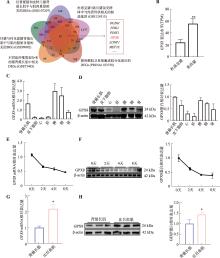
Fig. 1
GPX8 expression patterns in different tissues and porcine myogenic satellite cell differentiation"
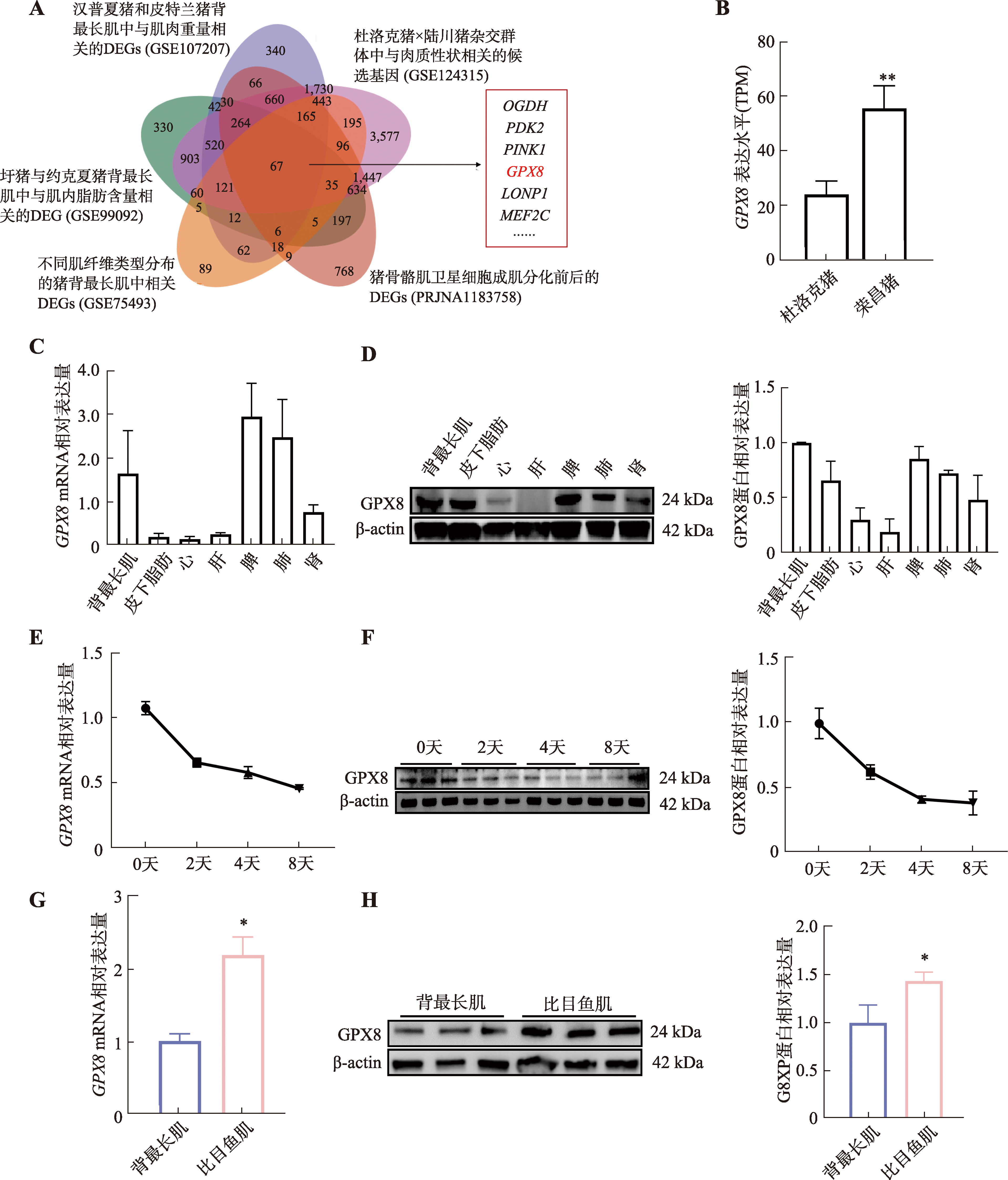
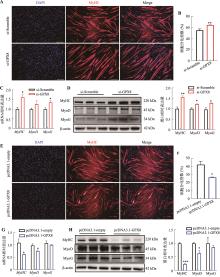
Fig. 2
GPX8 inhibits differentiation of porcine skeletal muscle satellite cells"

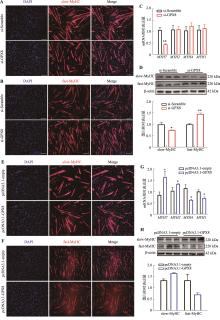
Fig. 3
GPX8 promotes slow myofiber formation"

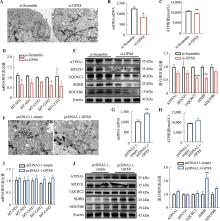
Fig. 4
GPX8 enhances mitochondrial oxidative metabolism"

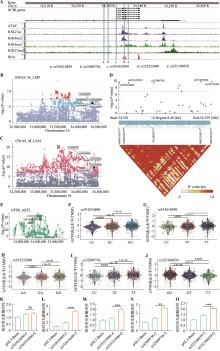
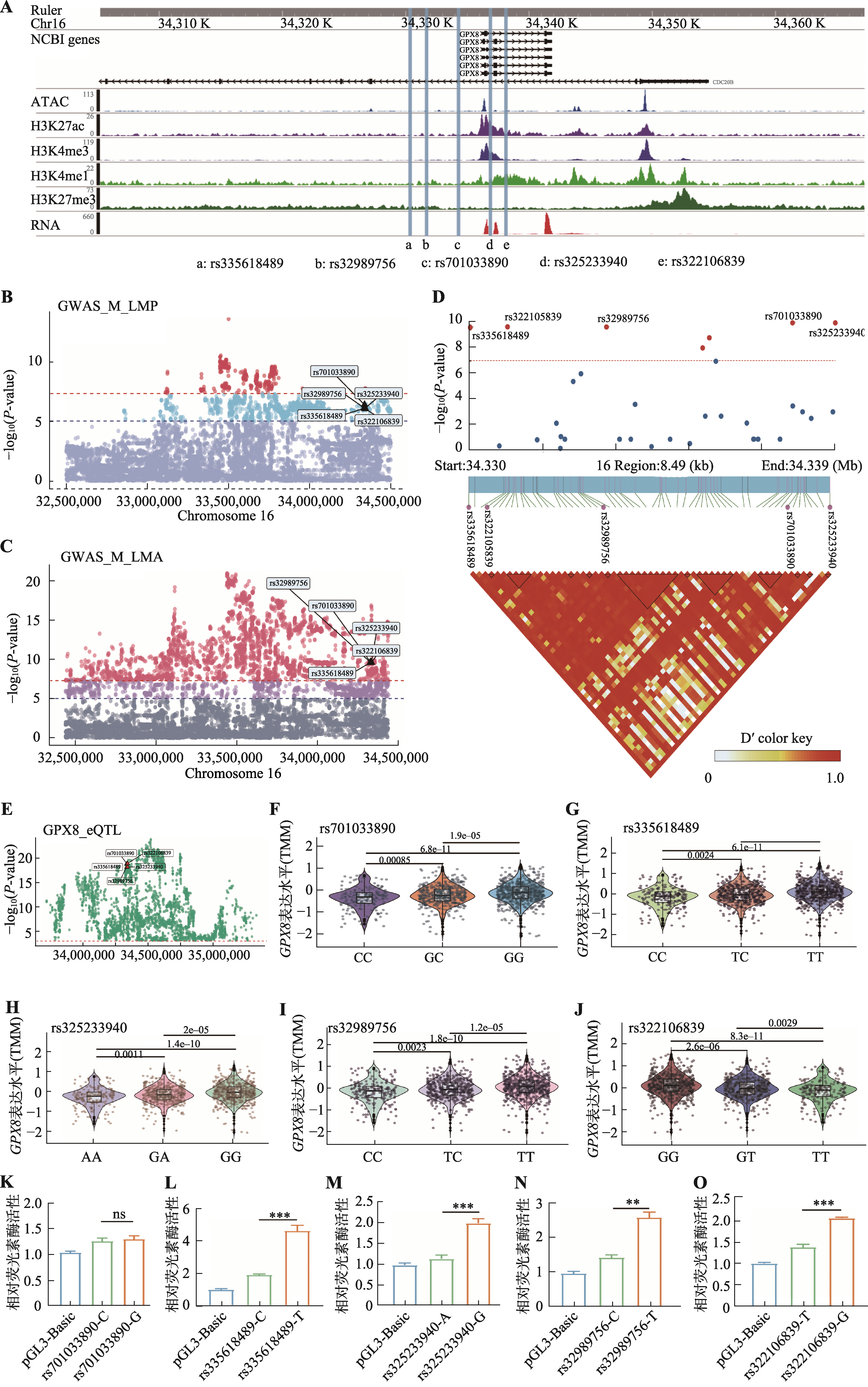
Fig. 5
The GPX8-eQTL variant modulates GPX8 expression by altering promoter activity"
| [1] |
Matarneh SK, Silva SL, Gerrard DE. New insights in muscle biology that alter meat quality. Annu Rev Anim Biosci, 2021, 9: 355-377.
pmid: 33338390 |
| [2] |
Schiaffino S, Reggiani C. Fiber types in mammalian skeletal muscles. Physiol Rev, 2011, 91(4): 1447-1531.
pmid: 22013216 |
| [3] |
Wigmore PM, Stickland NC. Muscle development in large and small pig fetuses. J Anat, 1983, 137(Pt 2): 235-245.
pmid: 6630038 |
| [4] |
Schiaffino S, Dyar KA, Ciciliot S, Blaauw B, Sandri M. Mechanisms regulating skeletal muscle growth and atrophy. FEBS J, 2013, 280(17): 4294-4314.
pmid: 23517348 |
| [5] |
Yang YL, Yan JY, Fan XH, Chen JX, Wang ZS, Liu XQ, Yi GQ, Liu YW, Niu YC, Zhang LC, Wang LX, Li SC, Li K, Tang ZL. The genome variation and developmental transcriptome maps reveal genetic differentiation of skeletal muscle in pigs. PLoS Genet, 2021, 17(11): e1009910.
pmid: 34780471 |
| [6] |
Wang M, Yu H, Kim YS, Bidwell CA, Kuang S. Myostatin facilitates slow and inhibits fast myosin heavy chain expression during myogenic differentiation. BBRC, 2012, 426(1): 83-88.
pmid: 22910409 |
| [7] |
Reisman EG, Caruana NJ, Bishop DJ. Exercise training and changes in skeletal muscle mitochondrial proteins: from blots to “omics”. Crit Rev Biochem Mol Biol, 2024, 59(3-4): 221-243.
pmid: 39288086 |
| [8] |
Sousa-Victor P, García-Prat L, Muñoz-Cánoves P. Control of satellite cell function in muscle regeneration and its disruption in ageing. Nat Rev Mol Cell Biol, 2022, 23(3): 204-226.
pmid: 34663964 |
| [9] |
Choi S, Ferrari G, Tedesco FS. Cellular dynamics of myogenic cell migration: molecular mechanisms and implications for skeletal muscle cell therapies. EMBO Mol Med, 2020, 12(12): e12357.
pmid: 33210465 |
| [10] |
Hernández-Hernández JM, García-González EG, Brun CE, Rudnicki MA. The myogenic regulatory factors, determinants of muscle development, cell identity and regeneration. Semin Cell Dev Biol, 2017, 72: 10-18.
pmid: 29127045 |
| [11] |
Yartseva V, Goldstein LD, Rodman J, Kates L, Chen MZ, Chen YJJ, Foreman O, Siebel CW, Modrusan Z, Peterson AS, Jovičić A. Heterogeneity of satellite cells implicates DELTA1/NOTCH2 signaling in self-renewal. Cell Rep, 2020, 30(5): 1491-1503.e6.
pmid: 32023464 |
| [12] |
Scarpulla RC. Metabolic control of mitochondrial biogenesis through the PGC-1 family regulatory network. Biochim Biophys Acta, 2011, 1813(7): 1269-1278.
pmid: 20933024 |
| [13] |
Zhuang ZW, Li SY, Ding RR, Yang M, Zheng EQ, Yang HQ, Gu T, Xu Z, Cai GY, Wu ZF, Yang J. Meta-analysis of genome-wide association studies for loin muscle area and loin muscle depth in two Duroc pig populations. PLoS One, 2019, 14(6): e0218263.
pmid: 31188900 |
| [14] |
Pei J, Pan XY, Wei GH, Hua Y. Research progress of glutathione peroxidase family(GPX) in redoxidation. Front Pharmacol, 2023, 14: 1147414.
pmid: 36937839 |
| [15] |
Kanemura S, Sofia EF, Hirai N, Okumura M, Kadokura H, Inaba K. Characterization of the endoplasmic reticulum- resident peroxidases GPx7 and GPx8 shows the higher oxidative activity of GPx7 and its linkage to oxidative protein folding. J Biol Chem, 2020, 295(36): 12772-12785.
pmid: 32719007 |
| [16] |
Yoboue ED, Rimessi A, Anelli T, Pinton P, Sitia R. Regulation of calcium fluxes by GPX8, a Type-II transmembrane peroxidase enriched at the mitochondria- associated endoplasmic reticulum membrane. Antioxid Redox Signal, 2017, 27(9): 583-595.
pmid: 28129698 |
| [17] |
Yin X, Zhang P, Xia N, Wu SQ, Liu BY, Weng L, Shang MY. GPx8 regulates apoptosis and autophagy in esophageal squamous cell carcinoma through the IRE1/JNK pathway. Cell Signal, 2022, 93: 110307.
pmid: 35288240 |
| [18] |
Zhang J, Liu Y, Guo Y, Zhao Q. GPX8 promotes migration and invasion by regulating epithelial characteristics in non-small cell lung cancer. Thorac Cancer, 2020, 11(11): 3299-3308.
pmid: 32975378 |
| [19] |
Nguyen TTM, Nguyen TH, Kim HS, Dao TTP, Moon Y, Seo M, Kang SM, Mai VH, An YJ, Jung CR, Kim JM, Park S. GPX8 regulates clear cell renal cell carcinoma tumorigenesis through promoting lipogenesis by NNMT. J Exp Clin Cancer Res, 2023, 42(1): 42.
pmid: 36750850 |
| [20] |
Chen H, Xu L, Shan ZL, Chen S, Hu H. GPX8 is transcriptionally regulated by FOXC1 and promotes the growth of gastric cancer cells through activating the Wnt signaling pathway. Cancer Cell Int, 2020, 20(1): 596.
pmid: 33317536 |
| [21] |
Steibel JP, Bates RO, Rosa GJM, Tempelman RJ, Rilington VD, Ragavendran A, Raney NE, Ramos AM, Cardoso FF, Edwards DB, Ernst CW. Genome-wide linkage analysis of global gene expression in loin muscle tissue identifies candidate genes in pigs. PLoS One, 2011, 6(2): e16766.
pmid: 21346809 |
| [22] |
Wang ZZ, Ma HR, Xu L, Zhu B, Liu Y, Bordbar F, Chen Y, Zhang LP, Gao X, Gao HJ, Zhang SL, Xu LY, Li JY. Genome-wide scan identifies selection signatures in Chinese Wagyu cattle using a high-density SNP array. Animals (Basel), 2019, 9(6): 296.
pmid: 31151238 |
| [23] |
Dou ML, Yao Y, Ma L, Wang XY, Shi XE, Yang GS, Li X. The long noncoding RNA MyHC IIA/X-AS contributes to skeletal muscle myogenesis and maintains the fast fiber phenotype. J Biol Chem, 2020, 295(15): 4937-4949.
pmid: 32152230 |
| [24] |
Xu JG, Wang CL, Jin EH, Gu YF, Li SH, Li QG. Identification of differentially expressed genes in longissimus dorsi muscle between Wei and Yorkshire pigs using RNA sequencing. Genes Genomics, 2018, 40(4): 413-421.
pmid: 29892843 |
| [25] |
Ropka-Molik K, Pawlina-Tyszko K, Żukowski K, Piórkowska K, Żak G, Gurgul A, Derebecka N, Wesoły J. Examining the genetic background of porcine muscle growth and development based on transcriptome and mirnaome data. Int J Mol Sci, 2018, 19(4): 1208.
pmid: 29659518 |
| [26] |
Liu Y, Liu XL, Zheng ZW, Ma TT, Liu Y, Long H, Cheng HJ, Fang M, Gong J, Li XY, Zhao SH, Xu XW. Genome- wide analysis of expression QTL (eQTL) and allele- specific expression (ASE) in pig muscle identifies candidate genes for meat quality traits. Genet Sel Evol, 2020, 52(1): 59.
pmid: 33036552 |
| [27] |
Ropka-Molik K, Bereta A, Żukowski K, Piórkowska K, Gurgul A, Żak G. Transcriptomic gene profiling of porcine muscle tissue depending on histological properties. Anim Sci J, 2017, 88(8): 1178-1188.
pmid: 28026080 |
| [28] | An YL, Zhang C, Ge ZH, Li Y, Wen CL, Ding RR, Han PY, Yue YQ, Wu JW, Jin JJ, Li X. The atlas of promoter- enhancer interactions during myogenic differentiation offers novel insights into genetic variants related to meat traits in pigs. J Integr Agric, 2025, doi: 10.1016/j.jia.2025.05.009. |
| [29] |
Fu YH, Liu H, Dou JW, Wang Y, Liao Y, Huang X, Tang ZS, Xu JY, Yin D, Zhu SL, Liu YF, Shen X, Liu HY, Liu JQ, Yang X, Zhang Y, Xiang Y, Li JJ, Zheng ZQ, Zhao YX, Ma YL, Wang HY, Du XY, Xie SS, Xu XW, Zhang HH, Yin LL, Zhu MJ, Yu M, Li XY, Liu XL, Zhao SH. IAnimal: a cross-species omics knowledgebase for animals. Nucleic Acids Res, 2023, 51(D1): D1312-D1324.
pmid: 36300629 |
| [30] |
Dong SS, He WM, Ji JJ, Zhang C, Guo Y, Yang TL. LDBlockShow: a fast and convenient tool for visualizing linkage disequilibrium and haplotype blocks based on variant call format files. Brief Bioinform, 2021, 22(4): bbaa227.
pmid: 33126247 |
| [31] |
Pan ZY, Yao YL, Yin HW, Cai ZX, Wang Y, Bai LJ, Kern C, Halstead M, Chanthavixay G, Trakooljul N, Wimmers K, Sahana G, Su GS, Lund MS, Fredholm M, Karlskov- Mortensen P, Ernst CW, Ross P, Tuggle CK, Fang LZ, Zhou HJ. Pig genome functional annotation enhances the biological interpretation of complex traits and human disease. Nat Commun, 2021, 12(1): 5848.
pmid: 34615879 |
| [32] |
González Morales N, Marescal O, Szikora S, Katzemich A, Correia-Mesquita T, Bíró P, Erdelyi M, Mihály J, Schöck F. The oxoglutarate dehydrogenase complex is involved in myofibril growth and Z-disc assembly in Drosophila. J Cell Sci, 2023, 136(13): jcs260717.
pmid: 37272588 |
| [33] |
Rahimi Y, Camporez JPG, Petersen MC, Pesta D, Perry RJ, Jurczak MJ, Cline GW, Shulman GI. Genetic activation of pyruvate dehydrogenase alters oxidative substrate selection to induce skeletal muscle insulin resistance. Proc Natl Acad Sci USA, 2014, 111(46): 16508-16513.
pmid: 25368185 |
| [34] |
Cairns G, Thumiah-Mootoo M, Abbasi MR, Gourlay M, Racine J, Larionov N, Prola A, Khacho M, Burelle Y. PINK1 deficiency alters muscle stem cell fate decision and muscle regenerative capacity. Stem Cell Reports, 2024, 19(5): 673-688.
pmid: 38579709 |
| [35] |
Li HZ, Yang WW, Cao WY, Yu ZK, Zhang GY, Long LZ, Guo H, Qu H, Fu CG, Chen KJ. Effects and mechanism of Kedaling tablets for atherosclerosis treatment based on network pharmacology, molecular docking and experimental study. J Ethnopharmacol, 2024, 319(Pt 1): 117108.
pmid: 37657772 |
| [36] | Huang Y. Genome-wide association analysis and genetic parameter estimation of carcass traits in Large White pigs[Dissertation]. Guangxi University, 2020. |
| 黄叶. 大白猪胴体性状全基因组关联分析及遗传参数估计[学位论文]. 广西大学, 2020. | |
| [37] |
Essén-Gustavsson B, Karlström K, Lundström K. Muscle fibre characteristics and metabolic response at slaughter in pigs of different halothane genotypes and their relation to meat quality. Meat Sci, 1992, 31(1): 1-11.
pmid: 22059505 |
| [38] |
Park J, Moon SS, Song SM, Cheng HL, Im C, Du LX, Kim GD. Comparative review of muscle fiber characteristics between porcine skeletal muscles. J Anim Sci Technol, 2024, 66(2): 251-265.
pmid: 38628685 |
| [39] |
Guo L, Han MM, Xu JF, Zhou WY, Shi HJ, Chen SS, Pang WJ, Zhang X, Duan YH, Yin YL, Li FN. snRNA-seq and spatial transcriptome reveal cell-cell crosstalk mediated metabolic regulation in porcine skeletal muscle. J Cachexia Sarcopenia Muscle, 2025, 16(2): e13752.
pmid: 40079370 |
| [40] |
Lee SH, Joo ST, Ryu YC. Skeletal muscle fiber type and myofibrillar proteins in relation to meat quality. Meat Sci, 2010, 86(1): 166-170.
pmid: 20605337 |
| [41] |
Li CC, Wang YN, Sun XH, Yang JJ, Ren YC, Jia JR, Yang GS, Liao MZ, Jin JJ, Shi XE. Identification of different myofiber types in pigs muscles and construction of regulatory networks. BMC Genomics, 2024, 25(1): 400.
pmid: 38658807 |
| [1] | Ziying Huang, Long Li, Qianqian Li, Xiangdong Liu, Changchun Li. The effect of lncRNA TCONS_00815878 on differentiation of porcine skeletal muscle satellite cells [J]. Hereditas(Beijing), 2019, 41(12): 1119-1128. |
| Viewed | ||||||
|
Full text |
|
|||||
|
Abstract |
|
|||||

