Hereditas(Beijing) ›› 2026, Vol. 48 ›› Issue (6): 589-600.doi: 10.16288/j.yczz.25-222
• Research Article • Previous Articles Next Articles
The p53 R267W mutation intervenes p21-mediated cell cycle arrest and promotes proliferation and migration of lung cancer cells
Jianing Zhao1( ), Jinzheng Wu2(), Shubing Zhang1()
- 1
Department of Cell Biology ,School of Life Sciences, Central South University Changsha 410013, China
2The Second Xiangya Hospital ,Central South University Changsha 410013, China
-
Received:2025-10-15Revised:2025-12-22Online:2025-12-29Published:2025-12-29 -
Contact:Jinzheng Wu, Shubing Zhang E-mail:jianingzhao1225@163.com;wujinzheng@csu.edu.cn;shubingzhang@csu.edu.cn -
Supported by:National Natural Science Foundation of China(81972312);Hunan Provincial Natural Science Foundation of China(2025JJ80166);Central South University Graduate Educational Reform Research Program(2025JGB159)

Cite this article
Jianing Zhao, Jinzheng Wu, Shubing Zhang. The p53 R267W mutation intervenes p21-mediated cell cycle arrest and promotes proliferation and migration of lung cancer cells[J]. Hereditas(Beijing), 2026, 48(6): 589-600.
share this article
Add to citation manager EndNote|Reference Manager|ProCite|BibTeX|RefWorks
Table 1
Primer sequences used in this study"
| 基因名称 | 引物序列(5′→3′) | 产物大小(bp) |
|---|---|---|
| TP53 | F:CAGCACATGACGGAGGTTGT | 125 |
| R:TCATCCAAATACTCCACACGC | ||
| CDKN1A | F:CGATGGAACTTCGACTTTGTCA | 220 |
| R:GCACAAGGGTACAAGACAGTG | ||
| GAPDH | F:ATGTTCGTCATGGGTGTGAA | 160 |
| R:CAGTGATGGCATGGACTGT |
Table 2
Germline p53 R267W variant status and cancer phenotypes in the family"
| 个体编号 | 与先证者关系 | 基因突变状态 | 癌症类型 | 发病年龄 | 备注 |
|---|---|---|---|---|---|
| I-2 | 奶奶 | 未知 | 肺腺癌 | 64 | 已故,未检测 |
| II-2 | 父亲 | 未知 | 肺腺癌 | 55 | 已故,未检测 |
| II-3 | 叔叔 | 未知 | 肺腺癌 | 52 | 已故,未检测 |
| III-1 | 先证者 | R267W | 肾细胞癌 | 46 | 全外显子测序 |
| III-2 | 妹妹 | R267W | 胶质瘤、肺腺癌 | 31 | 全外显子测序 |
| III-3 | 弟弟 | R267W | 尚未发病 | − | 全外显子测序 |
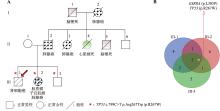
Fig. 1
Familial TP53 mutation spectrum and shared and unique mutations in siblings"
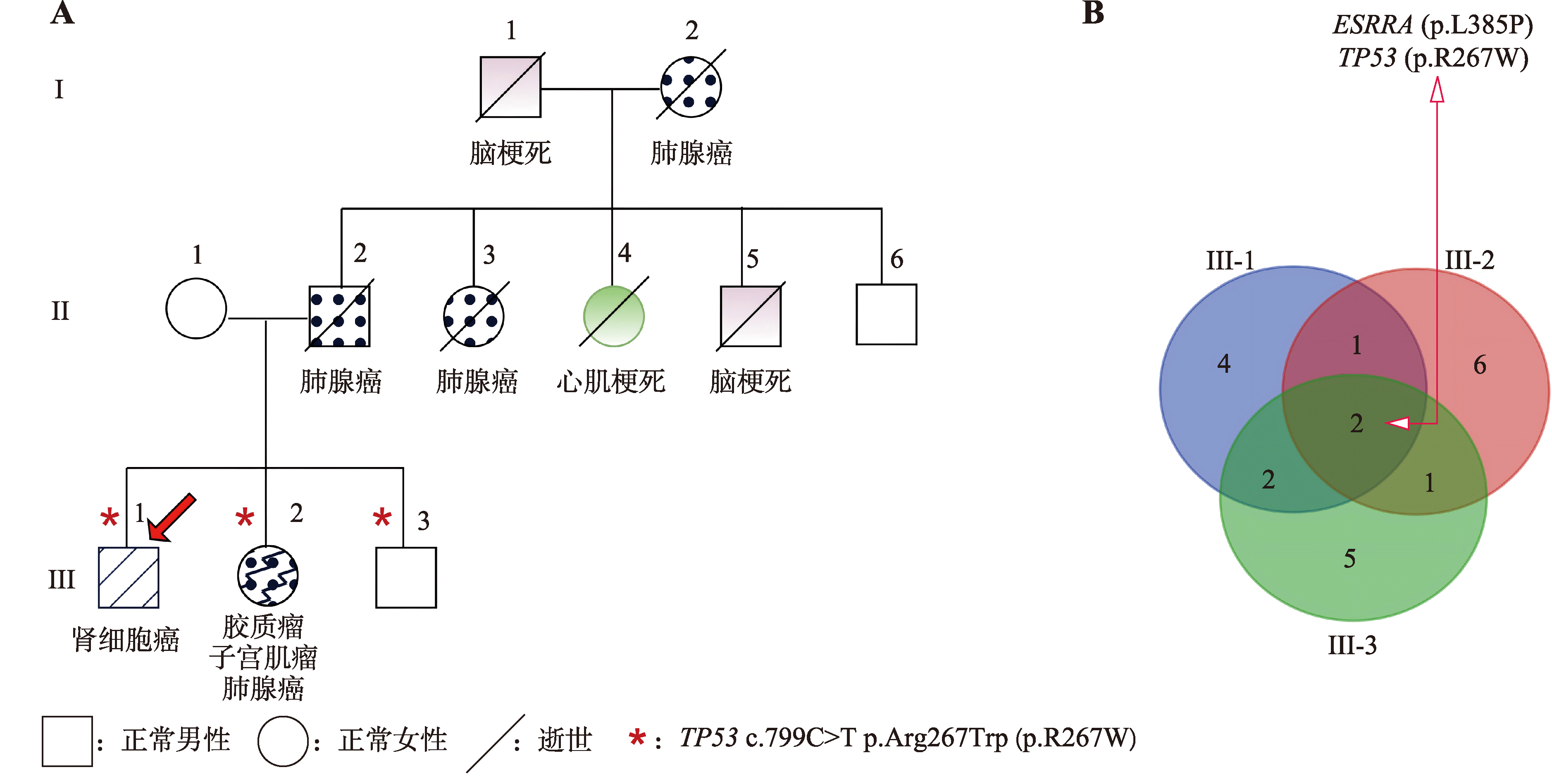
Fig. 2
Conservation, pathogenicity, and structural perturbation analysis of the p53 R267W mutation"
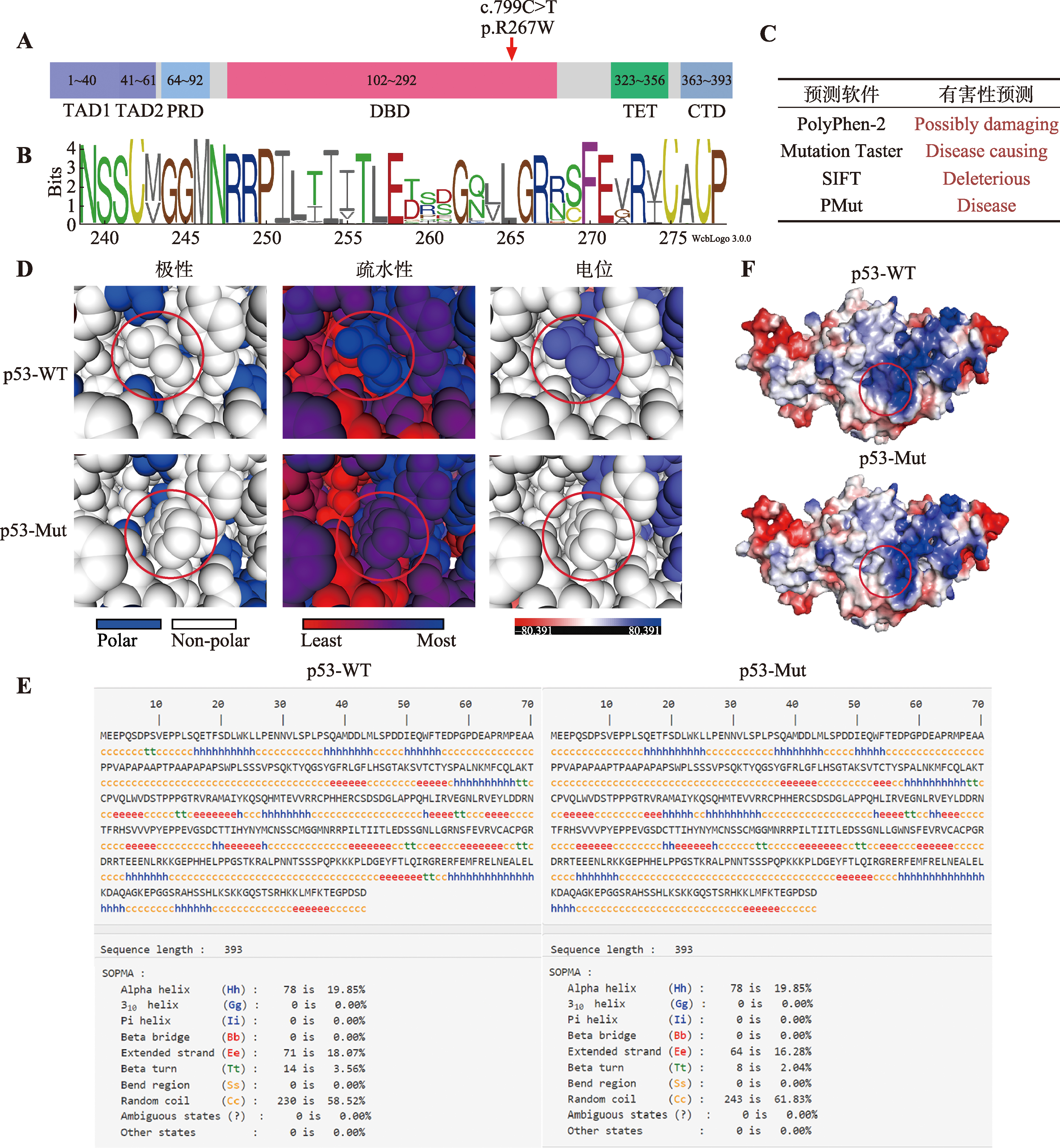
Fig. 3
Impact of p53 R267W on the proliferation-suppressive function in non-small cell lung cancer cell"
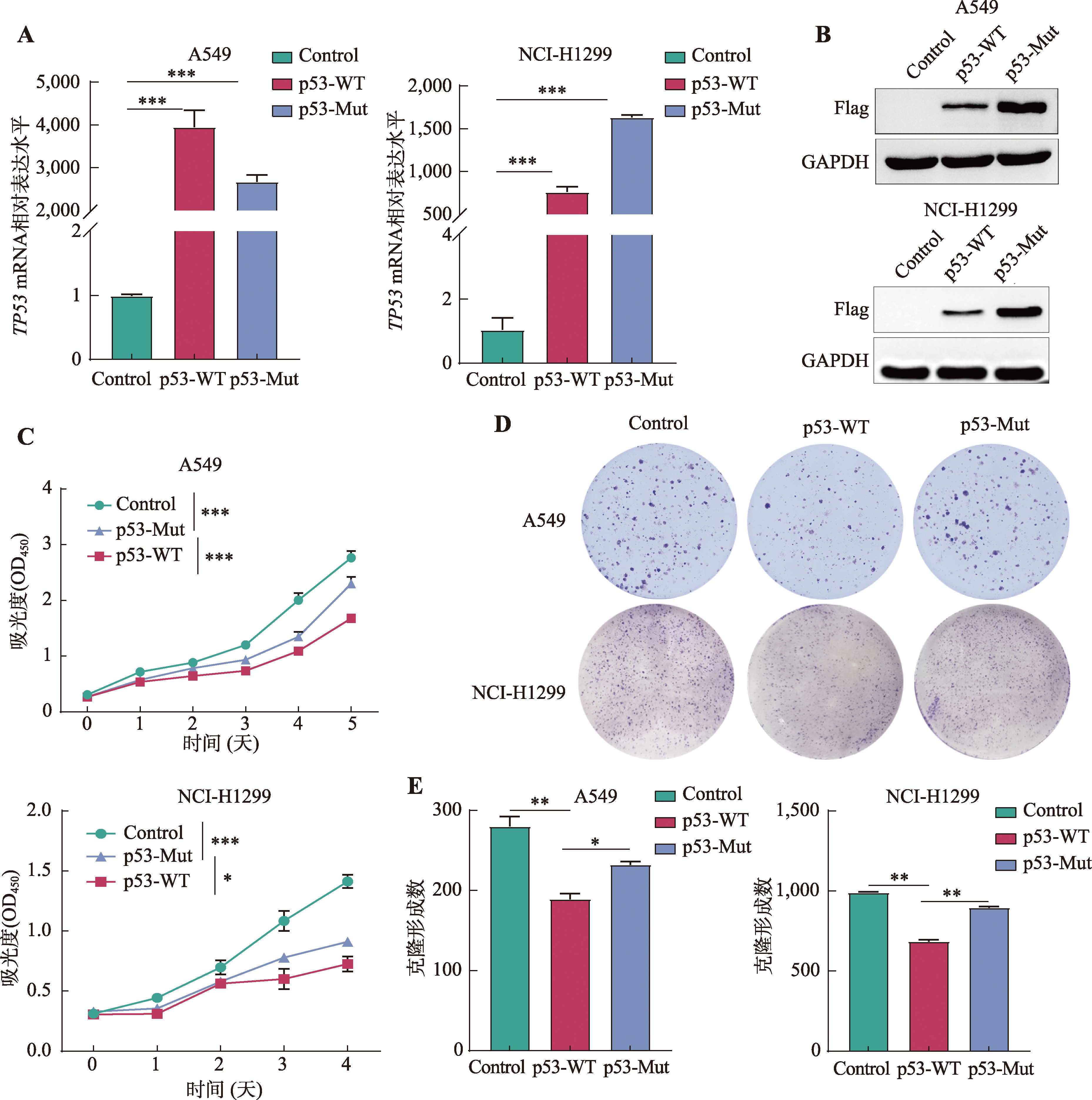
Fig. 4
Impact of p53 R267W on the migration-suppressive function in non-small cell lung cancer cell"

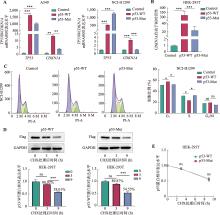
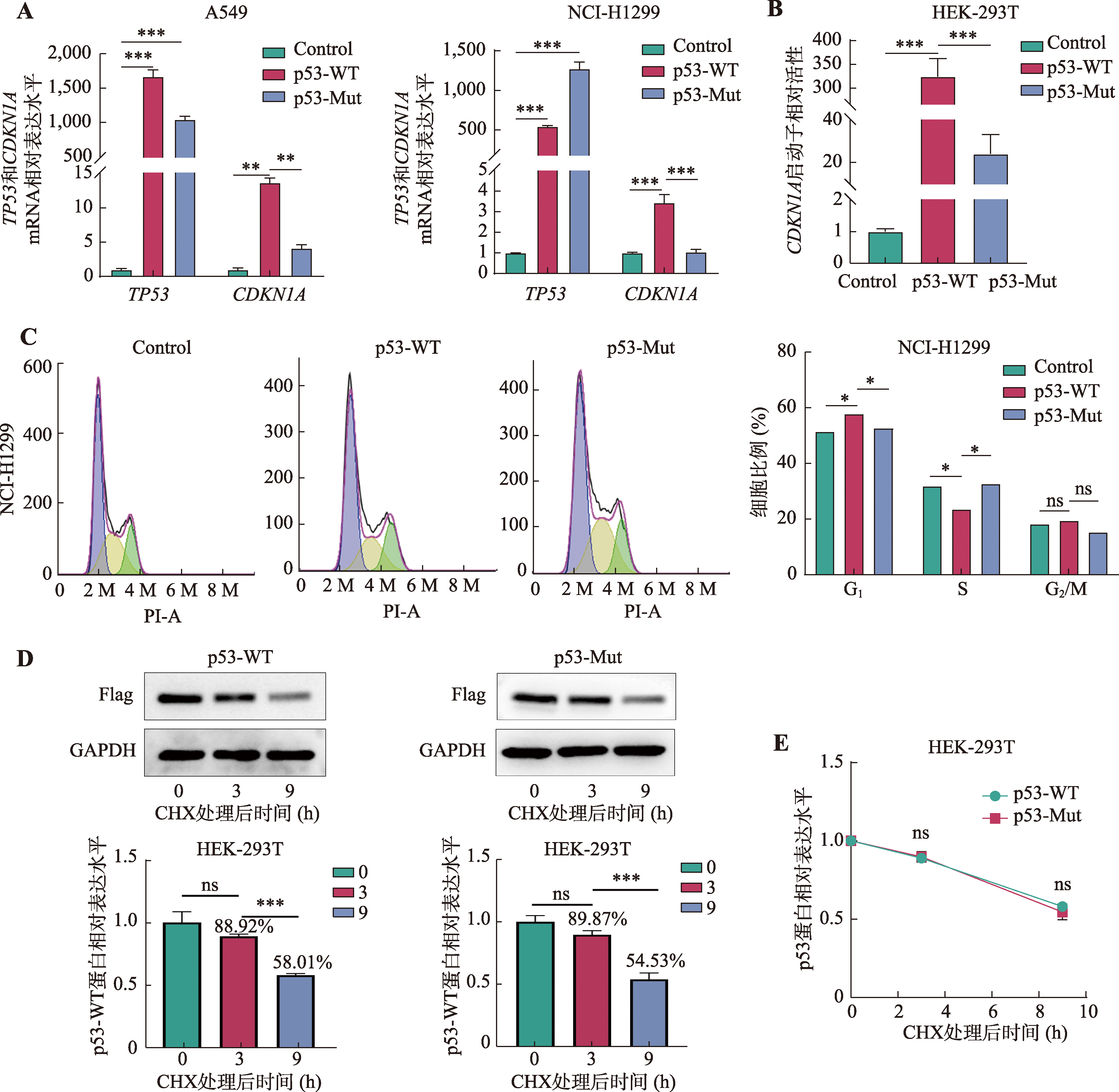
Fig. 5
The p53 R267W mutation attenuates transcriptional activation without affecting protein stability"
| [1] |
Mckay GE, Zakas AL, Osman F, Parkes A. Factors affecting genetic consultation in adolescent and young adult patients with sarcoma. J Natl Compr Canc Netw, 2021, 1-8.
pmid: 34666309 |
| [2] |
Bieging KT, Mello SS, Attardi LD. Unravelling mechanisms of p53-mediated tumour suppression. Nat Rev Cancer, 2014, 14(5): 359-370.
pmid: 24739573 |
| [3] | Lu SQ, Jia ST, Luo Y. Recent advances in mutant p53 and novel personalized strategies for cancer therapy. Hereditas (Beijing), 2011, 33(6): 539-548. |
| 陆思千, 贾舒婷, 罗瑛. 突变p53功能研究新进展与个性化的肿瘤治疗新策略. 遗传, 2011, 33(6): 539-548. | |
| [4] |
Marvalim C, Datta A, Lee SC. Role of p53 in breast cancer progression: an insight into p53 targeted therapy. Theranostics, 2023, 13(4): 1421-1442.
pmid: 36923534 |
| [5] |
Hassin O, Oren M. Drugging p53 in cancer: one protein, many targets. Nat Rev Drug Discov, 2023, 22(2): 127-144.
pmid: 36216888 |
| [6] |
Wang HL, Guo M, Wei HD, Chen YH. Targeting p53 pathways: mechanisms, structures, and advances in therapy. Signal Transduct Target Ther, 2023, 8(1): 92.
pmid: 36859359 |
| [7] |
Nian ZG, Dou YC, Shen YQ, Liu JT, Du XH, Jiang Y, Zhou YG, Fu BQ, Sun R, Zheng XH, Tian ZG, Wei HM. Interleukin-34-orchestrated tumor-associated macrophage reprogramming is required for tumor immune escape driven by p53 inactivation. Immunity, 2024, 57(10): 2344-2361.e2347.
pmid: 39321806 |
| [8] | Malkin D, Li FP, Strong LC, Fraumeni JF Jr, Nelson CE, Kim DH, Kassel J, Gryka MA, Bischoff FZ, Tainsky MA. Germ line p53 mutations in a familial syndrome of breast cancer, sarcomas, and other neoplasms. Science, 1990, 250(4985): 1233-1238. |
| [9] |
Zhao S, Wen HY, Wang BQ, Xiong QL, Li LX, Cheng AL. p53: a player in the tumor microenvironment. Oncol Res, 2025, 33(4): 795-810.
pmid: 40191727 |
| [10] |
Stein Y, Rotter V, Aloni-Grinstein R. Gain-of-Function Mutant p53: all the roads lead to tumorigenesis. Int J Mol Sci, 2019, 20(24): 6197.
pmid: 31817996 |
| [11] |
Joerger AC, Stiewe T, Soussi T. TP53: the unluckiest of genes? Cell Death Differ, 2025, 32(2): 219-224.
pmid: 39443700 |
| [12] |
Funk JS, Klimovich M, Drangenstein D, Pielhoop O, Hunold P, Borowek A, Noeparast M, Pavlakis E, Neumann M, Balourdas DI, Kochhan K, Merle N, Bullwinkel I, Wanzel M, Elmshäuser S, Teply-Szymanski J, Nist A, Procida T, Bartkuhn M, Humpert K, Mernberger M, Savai R, Soussi T, Joerger AC, Stiewe T. Deep CRISPR mutagenesis characterizes the functional diversity of TP53 mutations. Nat Genet, 2025, 57(1): 140-153.
pmid: 39774325 |
| [13] | Li DH, Zhang LQ, He FC. Advances on mutant p53 research. Hereditas (Beijing), 2008, 30(6): 697-703. |
| 李大虎, 张令强, 贺福初. 突变体p53研究进展. 遗传, 2008, 30(6): 697-703. | |
| [14] |
Kennedy MC, Lowe SW. Mutant p53: it's not all one and the same. Cell Death Differ, 2022, 29(5): 983-987.
pmid: 35361963 |
| [15] |
Chen XH, Zhang TT, Su W, Dou ZH, Zhao DP, Jin XD, Lei HW, Wang J, Xie XD, Cheng B, Li Q, Zhang H, Di CX. Mutant p53 in cancer: from molecular mechanism to therapeutic modulation. Cell Death Dis, 2022, 13(11): 974.
pmid: 36400749 |
| [16] |
Leroy B, Fournier JL, Ishioka C, Monti P, Inga A, Fronza G, Soussi T. The TP53 website: an integrative resource centre for the TP53 mutation database and TP53 mutant analysis. Nucleic Acids Res, 2013, 41(Database issue): D962-D969.
pmid: 23161690 |
| [17] |
Muller PAJ, Vousden KH. p53 mutations in cancer. Nat Cell Biol, 2013, 15(1): 2-8.
pmid: 23263379 |
| [18] |
Shah MV, Arber DA, Hiwase DK. TP53-Mutated Myeloid Neoplasms: 2024 update on diagnosis, risk-stratification, and management. Am J Hematol, 2025, 100 Suppl 4(Suppl 4): 88-115.
pmid: 40066944 |
| [19] |
Kotler E, Shani O, Goldfeld G, Lotan-Pompan M, Tarcic O, Gershoni A, Hopf TA, Marks DS, Oren M, Segal E. A systematic p53 mutation library links differential functional impact to cancer mutation pattern and evolutionary conservation. Mol Cell, 2018, 71(5): 873.
pmid: 30193102 |
| [20] |
Zhang C, Liu J, Xu DD, Zhang TL, Hu WW, Feng ZH. Gain-of-function mutant p53 in cancer progression and therapy. J Mol Cell Biol, 2020, 12(9): 674-687.
pmid: 32722796 |
| [21] |
Liu YQ, Su ZY, Tavana O, Gu W. Understanding the complexity of p 53 in a new era of tumor suppression. Cancer Cell, 2024, 42(6): 946-967.
pmid: 38729160 |
| [22] |
Riley T, Sontag E, Chen P, Levine A. Transcriptional control of human p53-regulated genes. Nat Rev Mol Cell Biol, 2008, 9(5): 402-412.
pmid: 18431400 |
| [23] |
Cho Y, Gorina S, Jeffrey PD, Pavletich NP. Crystal structure of a p 53 tumor suppressor-DNA complex: understanding tumorigenic mutations. Science, 1994, 265(5170): 346-355.
pmid: 8023157 |
| [24] |
Su ZY, Kon N, Yi JJ, Zhao HQ, Zhang WW, Tang QS, Li H, Kobayashi H, Li ZM, Duan SF, Liu YQ, Olive KP, Zhang ZG, Honig B, Manfredi JJ, Rustgi AK, Gu W. Specific regulation of BACH1 by the hotspot mutant p53R175H reveals a distinct gain-of-function mechanism. Nat Cancer, 2023, 4(4): 564-581.
pmid: 36973430 |
| [25] |
Klemm N, Schimmer RR, Konrad NK, Thelen F, Fullin J, Topçu E, Koch C, Treacy M, Leventhal MJ, Bühler MM, Lysenko V, Theocharides APA, Kurppa KJ, Balabanov S, Baubec T, Krivtsov AV, Miller PG, Armstrong SA, Ebert BL, Manz MG, Nombela-Arrieta C, Boettcher S. The prolonged half-life of the p53 missense variant R248Q promotes accumulation and heterotetramer formation with wild-type p53 to exert the dominant-negative effect. Cancer Res, 2025, 85(11): 1978-1996.
pmid: 40163352 |
| [26] |
Olivier M, Hollstein M, Hainaut P. TP53 mutations in human cancers: origins, consequences, and clinical use. Cold Spring Harb Perspect Biol, 2010, 2(1): a001008.
pmid: 20182602 |
| [27] |
Pan ZZ, Wang K, Wang XN, Jia ZR, Yang YQ, Duan YL, Huang LZ, Wu ZX, Zhang JY, Ding XS. Cholesterol promotes EGFR-TKIs resistance in NSCLC by inducing EGFR/Src/Erk/SP1 signaling-mediated ERRα re-expression. Mol Cancer, 2022, 21(1): 77.
pmid: 35303882 |
| [28] |
Feng C, Kong DM, Tong BH, Liang YH, Xu FY, Yang YY, Wu YY, Chi XD, Wei PF, Yang Y, Zhang GL, Tian G, Xu ZW. Hypoxia-triggered ERRα acetylation enhanced its oncogenic role and promoted progression of renal cell carcinoma by coordinating autophagosome-lysosome fusion. Cell Death Dis, 2025, 16(1): 23.
pmid: 39820331 |
| [29] |
Xu-Monette ZY, Wu L, Visco C, Tai YC, Tzankov A, Liu WM, Montes-Moreno S, Dybkaer K, Chiu A, Orazi A, Zu YL, Bhagat G, Richards KL, Hsi ED, Zhao XF, Choi WWL, Zhao XY, Van Krieken JH, Huang Q, Huh J, Ai WY, Ponzoni M, Ferreri AJM, Zhou F, Kahl BS, Winter JN, Xu W, Li JY, Go RS, Li Y, Piris MA, Møller MB, Miranda RN, Abruzzo LV, Medeiros LJ, Young KH. Mutational profile and prognostic significance of TP53 in diffuse large B-cell lymphoma patients treated with R-CHOP:report from an International DLBCL Rituximab-CHOP Consortium Program Study. Blood, 2012, 120(19): 3986-3996.
pmid: 22955915 |
| [30] |
Fang Y, Zhang MC, He Y, Li C, Fang H, Xu PP, Cheng S, Zhao Y, Feng Y, Liu Q, Wang L, Zhao WL. Human endogenous retroviruses as epigenetic therapeutic targets in TP53-mutated diffuse large B-cell lymphoma. Signal Transduct Target Ther, 2023, 8(1): 381.
pmid: 37798292 |
| [31] |
Abduljaleel Z. Molecular insights into TP53 mutation (p. Arg267Trp) and its connection to choroid plexus carcinomas and Li-Fraumeni syndrome. Genes Genomics, 2024, 46(8): 941-953.
pmid: 38896352 |
| [32] |
Ma FY, Laster K, Dong ZG. The comparison of cancer gene mutation frequencies in Chinese and U.S. patient populations. Nat Commun, 2022, 13(1): 5651.
pmid: 36163440 |
| [33] |
Bray F, Laversanne M, Sung H, Ferlay J, Siegel RL, Soerjomataram I, Jemal A. Global cancer statistics 2022: GLOBOCAN estimates of incidence and mortality worldwide for 36 cancers in 185 countries. CA Cancer J Clin, 2024, 74(3): 229-263.
pmid: 38572751 |
| [34] | Levine AJ. The p53 tumor-suppressor gene. N Engl J Med, 1992, 326(20): 1350-1352. |
| [35] |
Engeland K. Cell cycle regulation: p53-p21-RB signaling. Cell Death Differ, 2022, 29(5): 946-960.
pmid: 35361964 |
| [36] |
Klimovich B, Merle N, Neumann M, Elmshäuser S, Nist A, Mernberger M, Kazdal D, Stenzinger A, Timofeev O, Stiewe T. p53 partial loss-of-function mutations sensitize to chemotherapy. Oncogene, 2022, 41(7): 1011-1023.
pmid: 34907344 |
| [37] |
Fulci G, Ishii N, Maurici D, Gernert KM, Hainaut P, Kaur B, Van Meir EG. Initiation of human astrocytoma by clonal evolution of cells with progressive loss of p 53 functions in a patient with a 283H TP53 germ-line mutation: evidence for a precursor lesion. Cancer Res, 2002, 62(10): 2897-2905.
pmid: 12019170 |
| [1] | Qingyu Sun, Yang Zhou, Lijuan Du, Mengke Zhang, Jiale Wang, Yuanyuan Ren, Fang Liu. Analysis between macrophage-related genes with prognosis and tumor microenvironment in non-small cell lung cancer [J]. Hereditas(Beijing), 2023, 45(8): 684-699. |
| [2] | Qingqing Song, Susu Zhang, Zhen Zhang, Jia Sun, Rui Yang, Jitong Li , Hong Chen. Diagnosis, treatment and genetic analysis of 11β -hydroxylase deficiency caused by CYP11B gene mutation [J]. Hereditas(Beijing), 2022, 44(12): 1175-1182. |
| [3] | Yajie Wang, Shuangshuang Wu, Jiang Chu, Xiangyang Kong. Lung microbiome mediates the progression from chronic obstructive pulmonary disease to lung cancer through inflammation [J]. Hereditas(Beijing), 2021, 43(1): 30-39. |
| [4] | Xiaowei Sun,Hongyang Li,Jian Wang,Bo Cheng. Controlling the spatiotemporal expression of germ line specific genes by PRC1.6 complex [J]. Hereditas(Beijing), 2019, 41(4): 271-284. |
| [5] | Baojun Wu,Zhuo Wang,Yu Dong,Yuliang Deng,Qihui Shi. Identification and single-cell sequencing analysis of rare tumor cells in malignant pleural effusion of lung cancer patients [J]. Hereditas(Beijing), 2019, 41(2): 175-184. |
| [6] | Yue Shi,Zhengzheng Xu,Huan Lu,Weimin Ci. Correlation studies of distinct mutational signatures with common cancer pathological subtyping [J]. Hereditas(Beijing), 2018, 40(11): 1033-1038. |
| [7] | Siling Fu,Wanying Zhao,Wenjing Zhang,Hai Song,Hongbin Ji,Nan Tang. Hippo signaling pathway in lung development, regeneration, and diseases [J]. Hereditas(Beijing), 2017, 39(7): 597-606. |
| [8] | Wang Shiming, Song Xiao, Zhao Xueying, Chen Hongyan, Wang Jiucun, Wu Junjie, Gao Zhiqiang, Qian Ji, Bai Chunxue, Li Qiang, Han Baohui, Lu Daru. Association between polymorphisms of autophagy pathway and responses in non-small cell lung cancer patients treated with platinum-based chemotherapy [J]. Hereditas(Beijing), 2017, 39(3): 250-262. |
| [9] | YANG Li-Hua, DONG Zhuo, GONG Zhao-Hui. Extracellular miRNA: a novel molecular biomarker for lung cancer [J]. HEREDITAS, 2012, 34(6): 651-658. |
| [10] | LI Hai-Jing, LIU Yan, HAO Hai-Sheng, DU Wei-Hua, ZHAO Xue-Ming, WANG Dong, QIN Tong, MA You-Ji, ZHU Hua-Bin. Relationship of epidermal growth factor receptor in lung development [J]. HEREDITAS, 2012, 34(1): 27-32. |
| [11] | ZHANG Xiao-Bo, DIAO Zhen-Hong, CHEN Gong-Yan, WANG Jiu-Cun, JIAN Ji, YANG E-Jun, WEI Qiang-Xi, HUANG Jian, LEI Da-Ru. Human chromosome 8p11 (CHRNB3-CHRNA6) region gene polymorphisms and susceptibility to lung cancer in Chinese Han population [J]. HEREDITAS, 2011, 33(8): 886-894. |
| [12] | MA Ke-Xue, XI Xing-Zi. Polycomb group protein complexes [J]. HEREDITAS, 2009, 31(10): 977-981. |
| [13] | TIAN Chun-Yan, ZHANG Ling-Qiang, HE Fu-Chu. Progress in the Study of KRAB Zinc Finger Protein [J]. HEREDITAS, 2006, 28(11): 1451-1456. |
| [14] | HUANG Yun, YANG Huan-Jie, JIN Yan, LI Hui-Min, FU Song-Bin. 13q14 Aberration is related to the Metastatic Potential of Human NSCLC [J]. HEREDITAS, 2005, 27(4): 531-534. |
| Viewed | ||||||
|
Full text |
|
|||||
|
Abstract |
|
|||||

