Hereditas(Beijing) ›› 2026, Vol. 48 ›› Issue (9): 931-945.doi: 10.16288/j.yczz.25-275
• Technique and Method • Previous Articles Next Articles
A nonlinear multi-omics data integration and classification model based on pathway self-attention and graph convolutional networks
Qiaosheng Zhang1( ), Junjie Xu1, Zhenyu Sun1, Zhaoman Zhong1, Jie Liu1, Yanli Wu2, Wanqin Li1, Mengjie Hu1, Hongpeng Li3()
- 1
School of Computer Engineering ,Jiangsu Ocean University Lianyungang 222005, China
2Heze Institute for Food and Drug Control ,Shandong Province Heze 274000, China
3School of Science ,Jiangsu Ocean University Lianyungang 222005, China
-
Received:2025-12-17Revised:2026-02-21Online:2026-04-17Published:2026-04-17 -
Contact:Hongpeng Li E-mail:zqs@jou.edu.cn;2019000027@jou.edu.cn -
Supported by:National Natural Science Foundation of China(72174079);Lianyungang Science and Technology Planning Project(CG2323);Lianyungang Postdoctoral Research Funding Program(LYG20210010)

Cite this article
Qiaosheng Zhang, Junjie Xu, Zhenyu Sun, Zhaoman Zhong, Jie Liu, Yanli Wu, Wanqin Li, Mengjie Hu, Hongpeng Li. A nonlinear multi-omics data integration and classification model based on pathway self-attention and graph convolutional networks[J]. Hereditas(Beijing), 2026, 48(9): 931-945.
share this article
Add to citation manager EndNote|Reference Manager|ProCite|BibTeX|RefWorks
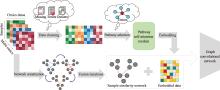
Fig. 1
Schematic diagram of the overall framework of PathTransGCN"

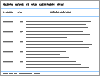
Table 1
Summary of the sample datasets"
| BRCA样本 | 数量 | NSCLC样本 | 数量 | LGG样本 | 数量 |
|---|---|---|---|---|---|
| 基底样型 | 168 | 肺腺癌 | 230 | 星形细胞瘤 | 197 |
| Her2富集型 | 75 | 肺腺癌 | 485 | 少突胶质瘤 | 198 |
| Luminal A型 | 500 | - | - | 少突星形细胞瘤 | 134 |
| Luminal B型 | 199 | - | - | - | - |
| 正常样型 | 32 | - | - | - | - |
| 总计 | 779 | 总计 | 715 | 总计 | 529 |
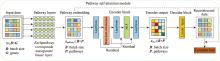
Fig. 2
PSAM structural diagram"
Fig. 3
Variation of model evaluation metrics with n_head on the BRCA dataset"
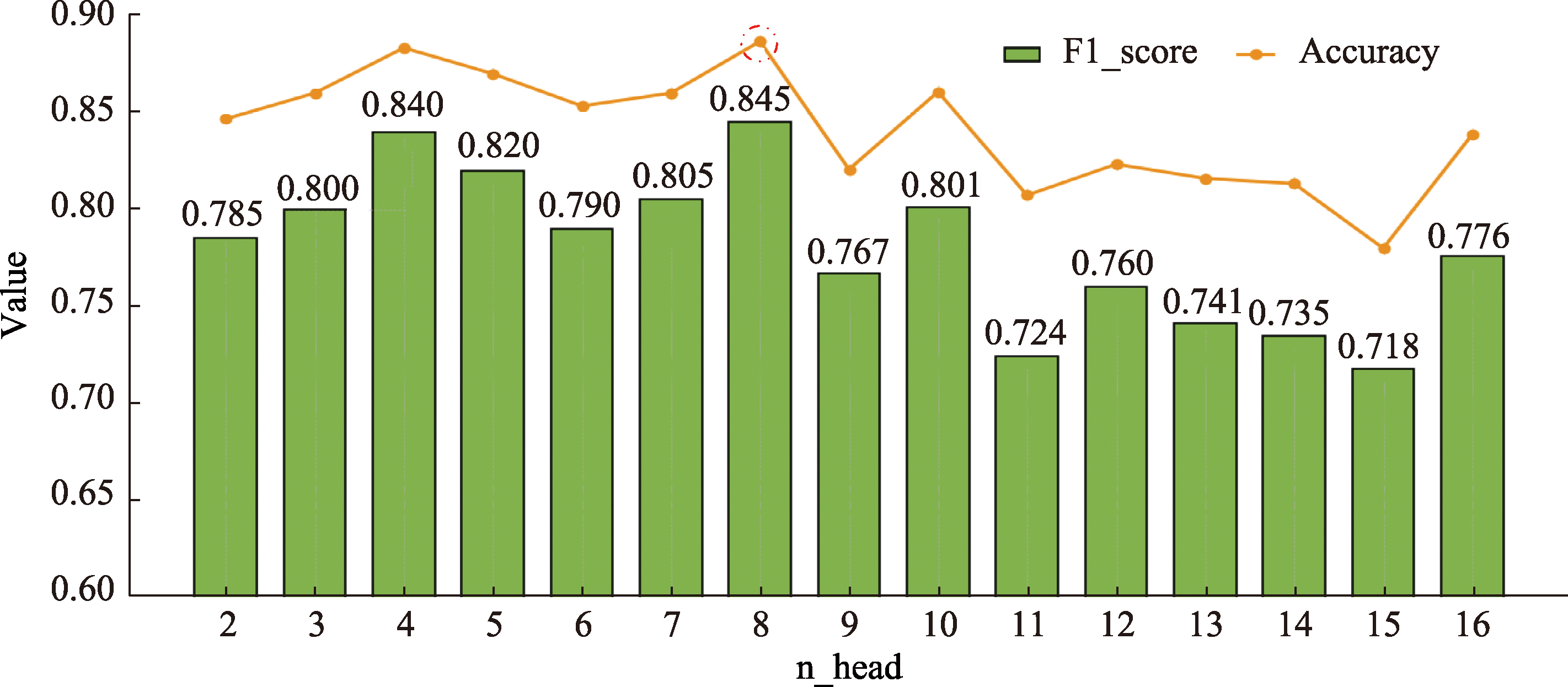
Fig. 4
Accuracy and F1 score of different dimensionality reduction algorithms"
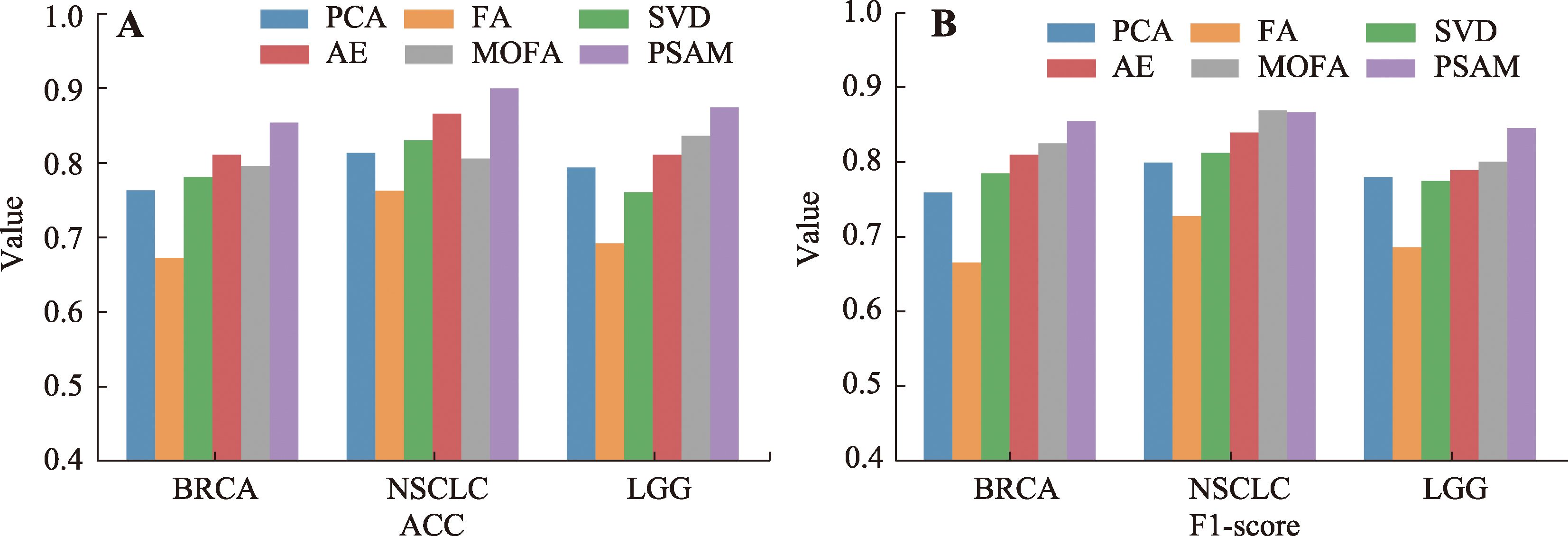
Table 2
Classification results on the BRCA dataset"
| 方法 | 准确率 | 加权F1 | 宏F1 | 精度 | 召回率 |
|---|---|---|---|---|---|
| RF | 0.768±0.032 | 0.756±0.031 | 0.697±0.029 | 0.731±0.028 | 0.675±0.033 |
| KNN | 0.783±0.027 | 0.777±0.026 | 0.732±0.025 | 0.801±0.024 | 0.692±0.031 |
| LR | 0.772±0.030 | 0.752±0.032 | 0.709±0.030 | 0.792±0.027 | 0.672±0.034 |
| XGBoost | 0.791±0.025 | 0.786±0.024 | 0.730±0.026 | 0.775±0.029 | 0.700±0.028 |
| SVM | 0.788±0.032 | 0.783±0.027 | 0.728±0.027 | 0.779±0.026 | 0.739±0.025 |
| DeePathNet | 0.855±0.018 | 0.841±0.047 | 0.811±0.039 | 0.833±0.018 | 0.807±0.027 |
| MoGCN | 0.837±0.031 | 0.834±0.030 | 0.798±0.022 | 0.842±0.029 | 0.770±0.033 |
| PathTransGCN | 0.876±0.029 | 0.864±0.021 | 0.832±0.027 | 0.858±0.018 | 0.796±0.021 |
Table 3
Classification results on the NSCLC dataset"
| 方法 | 准确率 | 曲线下面积 | F1分数 | 精度 | 召回率 |
|---|---|---|---|---|---|
| RF | 0.813±0.031 | 0.830±0.021 | 0.812±0.023 | 0.881±0.024 | 0.802±0.033 |
| KNN | 0.695±0.022 | 0.717±0.023 | 0.709±0.022 | 0.696±0.021 | 0.763±0.024 |
| LR | 0.805±0.036 | 0.812±0.031 | 0.795±0.034 | 0.812±0.032 | 0.867±0.025 |
| XGBoost | 0.857±0.031 | 0.861±0.022 | 0.849±0.021 | 0.903±0.020 | 0.835±0.021 |
| SVM | 0.836±0.025 | 0.842±0.020 | 0.828±0.023 | 0.887±0.024 | 0.817±0.022 |
| DeePathNet | 0.885±0.043 | 0.889±0.028 | 0.884±0.020 | 0.926±0.023 | 0.832±0.020 |
| MoGCN | 0.873±0.023 | 0.877±0.031 | 0.864±0.023 | 0.915±0.022 | 0.849±0.021 |
| PathTransGCN | 0.923±0.027 | 0.928±0.021 | 0.924±0.022 | 0.953±0.014 | 0.861±0.022 |
Table 4
Classification results on the LGG dataset"
| 方法 | 准确率 | 加权F1 | 宏F1 | 精度 | 召回率 |
|---|---|---|---|---|---|
| RF | 0.792±0.028 | 0.785±0.026 | 0.741±0.024 | 0.773±0.025 | 0.752±0.029 |
| KNN | 0.768±0.031 | 0.761±0.029 | 0.712±0.030 | 0.754±0.028 | 0.731±0.032 |
| LR | 0.785±0.029 | 0.776±0.030 | 0.735±0.027 | 0.782±0.026 | 0.740±0.031 |
| XGBoost | 0.815±0.024 | 0.809±0.022 | 0.768±0.023 | 0.803±0.025 | 0.775±0.026 |
| SVM | 0.807±0.027 | 0.801±0.025 | 0.762±0.026 | 0.798±0.024 | 0.782±0.023 |
| DeePathNet | 0.862±0.020 | 0.853±0.022 | 0.821±0.019 | 0.847±0.018 | 0.815±0.021 |
| MoGCN | 0.848±0.025 | 0.842±0.023 | 0.809±0.021 | 0.851±0.022 | 0.798±0.024 |
| PathTransGCN | 0.894±0.022 | 0.887±0.019 | 0.856±0.020 | 0.882±0.017 | 0.843±0.020 |
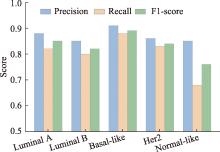
Fig. 5
Performance metrics for breast cancer subtype classification"
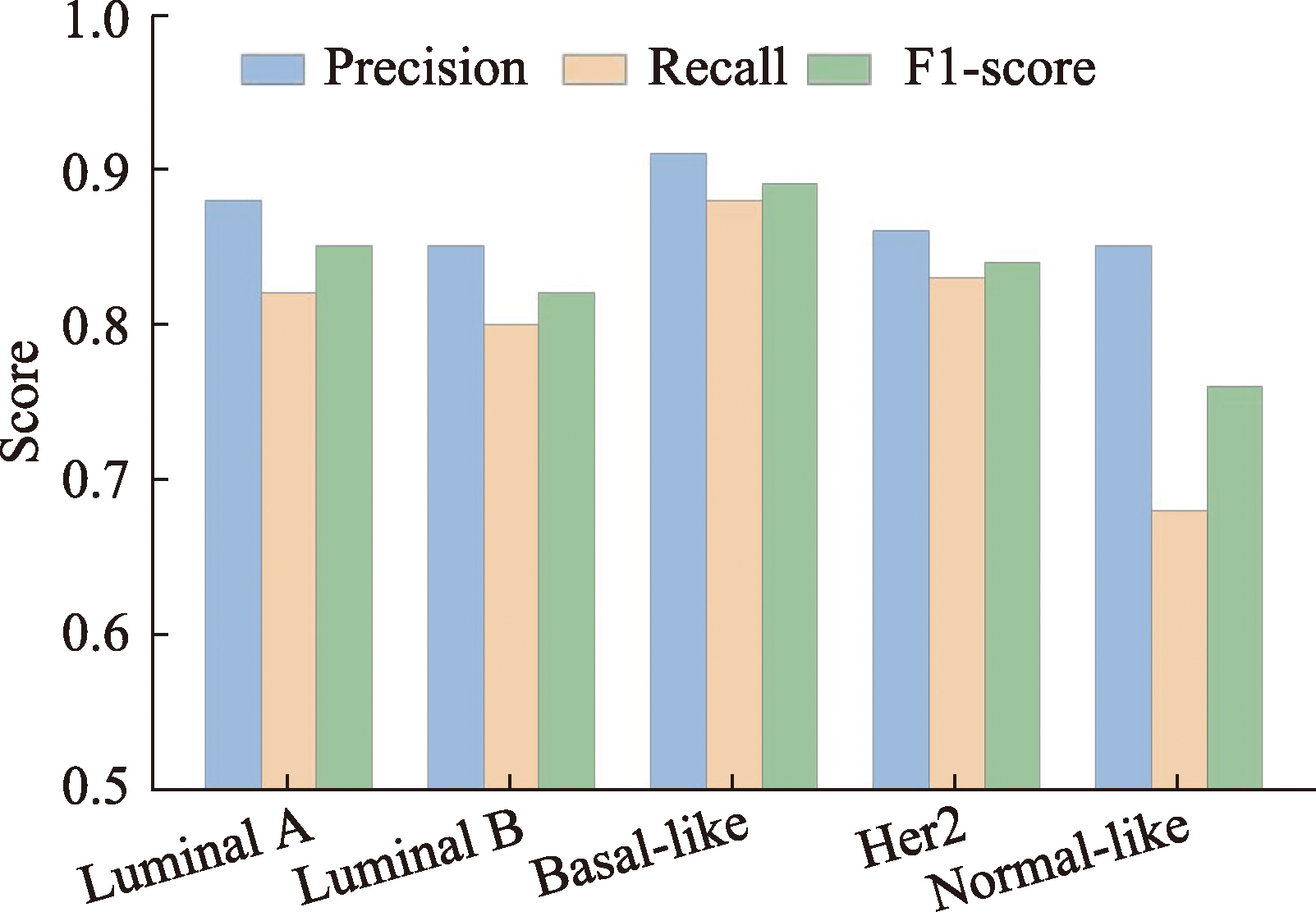
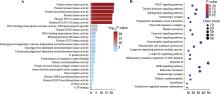
Fig. 6
Molecular function annotation and pathway enrichment analysis of high-frequency contributing genes in breast cancer"

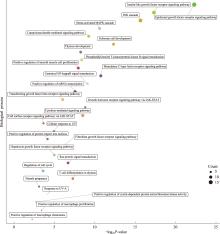
Fig. 7
Biological process annotation of high-frequency contributing genes in breast cancer"

| [1] |
Chen CY, Wang J, Pan DH, Wang XY, Xu YP, Yan JJ, Wang LZ, Yang XF, Yang M, Liu GP. Applications of multi-omics analysis in human diseases. MedComm (2020), 2023, 4(4): e315.
pmid: 37533767 |
| [2] |
Hayes CN, Nakahara H, Ono A, Tsuge M, Oka S. From omics to multi-omics: a review of advantages and tradeoffs. Genes (Basel), 2024, 15(12): 1551.
pmid: 39766818 |
| [3] | Li ZH, Chen MQ, Yuan XJ, Huang HJ, Huang WT, Zhou PY, Zeng C, Feng XN, Yang LY, Huang SQ, Tan CY, Chen CR, Yan QX. Identification of biomarkers for non- obstructive azoospermia based on microRNA and bioinformatics screening. Hereditas(Beijing), 2026, 48(3): 301-312. |
| 李志宏, 陈淼琪, 袁晓珺, 黄华君, 黄琬婷, 周飘雁, 曾晨, 冯许诺, 杨洛瑶, 黄树强, 谭翠钰, 陈彩蓉. 基于microRNA与生物信息学筛选非梗阻性无精子症的生物标志物. 遗传, 2026, 48(3): 301-312. | |
| [4] | Ismaeel AG, Mikhail DY. Effective data mining technique for classification cancers via mutations in gene using neural network. arXiv, 2016, doi: 10.48550/arXiv.1608.02888. |
| [5] |
Jiang Q, Jin M. Feature selection for breast cancer classification by integrating somatic mutation and gene expression. Front Genet, 2021, 12: 629946.
pmid: 33719339 |
| [6] |
Sallis BF, Erkert L, Moñino-Romero S, Acar U, Wu RN, Konnikova L, Lexmond WS, Hamilton MJ, Dunn WA, Szepfalusi Z, Vanderhoof JA, Snapper SB, Turner JR, Goldsmith JD, Spencer LA, Nurko S, Fiebiger E. An algorithm for the classification of mRNA patterns in eosinophilic esophagitis: integration of machine learning. J Allergy Clin Immunol, 2018, 141(4): 1354-1364.e9.
pmid: 29273402 |
| [7] | Xie BB, Yang YD, Ding N, Fang XD. Identification of disease targets for precision medicine by integrative analysis of multi-omics data. Hereditas(Beijing), 2015, 37(7): 655-663. |
| 谢兵兵, 杨亚东, 丁楠, 方向东. 整合分析多组学数据筛选疾病靶点的精准医学策略. 遗传, 2015, 37(7): 655-663. | |
| [8] |
Huang SJ, Chaudhary K, Garmire LX. More is better: recent progress in multi-omics data integration methods. Front Genet, 2017, 8: 84.
pmid: 28670325 |
| [9] |
Fiocchi C. Omics and multi-omics in IBD: no integration, no breakthroughs. Int J Mol Sci, 2023, 24(19): 14912.
pmid: 37834360 |
| [10] | Abdi H, Williams LJ. Principal component analysis. Wires Comput Stat, 2010, 2(4): 433-459. |
| [11] | McInnes L, Healy J, Melville J. Umap: uniform manifold approximation and projection for dimension reduction. arXiv, 2018, doi: 10.48550/arXiv.1802.03426. |
| [12] | Ng A. Sparse autoencoder. CS294A Lecture Notes, 2011, 72(2011): 1-19. |
| [13] |
Makrodimitris S, Pronk B, Abdelaal T, Reinders M. An in-depth comparison of linear and non-linear joint embedding methods for bulk and single-cell multi-omics. Brief Bioinform, 2024, 25(1): bbad416.
pmid: 38018908 |
| [14] |
Park M, Kim D, Moon K, Park T. Integrative analysis of multi-omics data based on blockwise sparse principal components. Int J Mol Sci, 2020, 21(21): 8202.
pmid: 33147797 |
| [15] |
Picard M, Scott-Boyer MP, Bodein A, Périn O, Droit A. Integration strategies of multi-omics data for machine learning analysis. Comput Struct Biotechnol J, 2021, 19: 3735-3746.
pmid: 34285775 |
| [16] |
Chaudhary K, Poirion OB, Lu LQ, Garmire LX. Deep learning-based multi-omics integration robustly predicts survival in liver cancer. Clin Cancer Res, 2018, 24(6): 1248-1259.
pmid: 28982688 |
| [17] |
Li X, Ma J, Leng L, Han MF, Li MS, He FC, Zhu YP. MoGCN: a multi-omics integration method based on graph convolutional network for cancer subtype analysis. Front Genet, 2022, 13: 806842.
pmid: 35186034 |
| [18] |
Tan KW, Huang WX, Hu JL, Dong SB. A multi-omics supervised autoencoder for pan-cancer clinical outcome endpoints prediction. BMC Med Inform Decis Mak, 2020, 20(Suppl 3): 129.
pmid: 32646413 |
| [19] | Zhang ZY, Wang QL, Zhang JY, Duan YY, Liu JX, Liu ZS, Li CY. Machine learning applications in breast cancer survival and therapeutic outcome prediction based on multi-omic analysis. Hereditas(Beijing), 2024, 46(10): 820-832. |
| 章子怡, 王棨临, 张俊有, 段迎迎, 刘家欣, 刘赵硕, 李春燕. 多组学数据驱动的机器学习模型在乳腺癌生存及治疗响应预测中的应用. 遗传, 2024, 46(10): 820-832. | |
| [20] |
Yu TW. AIME: autoencoder-based integrative multi-omics data embedding that allows for confounder adjustments. PLoS Comput Biol, 2022, 18(1): e1009826.
pmid: 35081109 |
| [21] |
Tan CY, Ong HF, Lim CH, Tan MS, Ooi EH, Wong K. Amogel: a multi-omics classification framework using associative graph neural networks with prior knowledge for biomarker identification. BMC Bioinformatics, 2025, 26(1): 94.
pmid: 40155814 |
| [22] |
Yan HX, Weng DW, Li DG, Gu Y, Ma WJ, Liu QJ. Prior knowledge-guided multilevel graph neural network for tumor risk prediction and interpretation via multi-omics data integration. Brief Bioinform, 2024, 25(3): bbae184.
pmid: 38670157 |
| [23] |
Lan W, Liao HB, Chen QF, Zhu LZ, Pan Y, Chen YPP. DeepKEGG: a multi-omics data integration framework with biological insights for cancer recurrence prediction and biomarker discovery. Brief Bioinform, 2024, 25(3): bbae185.
pmid: 38678587 |
| [24] |
Wang B, Mezlini AM, Demir F, Fiume M, Tu ZW, Brudno M, Haibe-Kains B, Goldenberg A. Similarity network fusion for aggregating data types on a genomic scale. Nat Methods, 2014, 11(3): 333-337.
pmid: 24464287 |
| [25] | He KM, Chen XL, Xie SN, Li YH, Dollár P, Girshick R. Masked autoencoders are scalable vision learners. In: 2022 IEEE/CVF Conference on Computer Vision and Pattern Recognition (CVPR). New Orleans, LA, USA, 2022, 15979-15988. |
| [26] |
Wei L, Jin ZL, Yang SJ, Xu YX, Zhu YT, Ji Y. TCGA- assembler 2: software pipeline for retrieval and processing of TCGA/CPTAC data. Bioinformatics, 2018, 34(9): 1615-1617.
pmid: 29272348 |
| [27] |
Orrantia-Borunda E, Anchondo-Nuñez P, Acuña-Aguilar LE, Gómez-Valles FO, Ramírez-Valdespino CA. Subtypes of breast cancer. Breast Cancer-tokyo, 2022, doi: 10.36255/exon-publications-breast-cancer-subtypes.
pmid: 36122153 |
| [28] |
Herbst RS, Morgensztern D, Boshoff C. The biology and management of non-small cell lung cancer. Nature, 2018, 553(7689): 446-454.
pmid: 29364287 |
| [29] |
Kuenzi BM, Ideker T. A census of pathway maps in cancer systems biology. Nat Rev Cancer, 2020, 20(4): 233-246.
pmid: 32066900 |
| [30] | Naidu G, Zuva T, Sibanda EM. A review of evaluation metrics in machine learning algorithms. Computer Science On-line Conference, 2023, 15-25. |
| [31] | Bradley AP. The use of the area under the ROC curve in the evaluation of machine learning algorithms. Pattern Recogn, 1997, 30(7): 1145-1159. |
| [32] | Liao LZ, Li H, Shang WY, Ma L. An empirical study of the impact of hyperparameter tuning and model optimization on the performance properties of deep neural networks. Acm T Softw Eng Meth, 2022, 31(3): 1-40. |
| [33] | Loshchilov I, Hutter F. Decoupled weight decay regularization. arXiv, 2017, doi: 10.48550/arXiv.1711.05101. |
| [34] |
Zhou P, Xie XY, Lin ZC, Yan SC. Towards understanding convergence and generalization of AdamW. IEEE Trans Pattern Anal Mach Intell, 2024, 46(9): 6486-6493.
pmid: 38536692 |
| [35] | Vaswani A, Shazeer N, Parmar N, Uszkoreit J, Jones L, Gomez AN, Kaiser L, Polosukhin I. Attention is all you need. arXiv, 2017, doi: 10.48550/arXiv.1706.03762. |
| [36] |
Bao JX, Chang C, Zhang QYW, Saykin AJ, Shen L, Long Q, Alzheimer’s Disease Neuroimaging Initiative. Integrative analysis of multi-omics and imaging data with incorporation of biological information via structural Bayesian factor analysis. Brief Bioinform, 2023, 24(2): bbad073.
pmid: 36882008 |
| [37] |
Cantini L, Zakeri P, Hernandez C, Naldi A, Thieffry D, Remy E, Baudot A. Benchmarking joint multi-omics dimensionality reduction approaches for the study of cancer. Nat Commun, 2021, 12(1): 124.
pmid: 33402734 |
| [38] |
Dennis G Jr, Sherman BT, Hosack DA, Yang J, Gao W, Lane HC, Lempicki RA. DAVID: database for annotation, visualization, and integrated discovery. Genome Biol, 2003, 4(5): P3.
pmid: 12734009 |
| [39] |
Lu B, Qiu R, Wei JT, Wang L, Zhang QK, Li MS, Zhan XD, Chen J, Hsieh IY, Yang CQ, Zhang J, Sun ZC, Zhu YF, Jiang T, Zhu H, Li J, Zhao W. Phase separation of phospho-HDAC6 drives aberrant chromatin architecture in triple-negative breast cancer. Nat Cancer, 2024, 5(11): 1622-1640.
pmid: 39198689 |
| [40] |
Hammer A, Diakonova M. Tyrosyl phosphorylated serine- threonine kinase PAK1 is a novel regulator of prolactin- dependent breast cancer cell motility and invasion. Adv Exp Med Biol, 2015, 846: 97-137.
pmid: 25472536 |
| [41] |
Pan LH, Li JL, Xu Q, Gao ZL, Yang M, Wu XP, Li XS. HER2/PI3K/AKT pathway in HER2-positive breast cancer: a review. Medicine (Baltimore), 2024, 103(24): e38508.
pmid: 38875362 |
| [42] |
Dawson MA, Bannister AJ, Göttgens B, Foster SD, Bartke T, Green AR, Kouzarides T. JAK2 phosphorylates histone H3Y41 and excludes HP1α from chromatin. Nature, 2009, 461(7265): 819-822.
pmid: 19783980 |
| [43] |
Lin NU, Winer EP. New targets for therapy in breast cancer: small molecule tyrosine kinase inhibitors. Breast Cancer Res, 2004, 6(5): 204-210.
pmid: 15318926 |
| [44] |
Adhikari VP, Lu LJ, Kong LQ. Does hepatitis B virus infection cause breast cancer? Chin Clin Oncol, 2016, 5(6): 81.
pmid: 27701872 |
| [45] |
Lee JS, Tocheny CE, Shaw LM. The insulin-like growth factor signaling pathway in breast cancer: an elusive therapeutic target. Life (Basel), 2022, 12(12): 1992.
pmid: 36556357 |
| [1] | Jihua Feng, Zhongxing Chen, Qilin Kang, Longfei Li, Jiahui Yang, Yuting Zhang. Prediction method for transcription factor binding sites integrating channel and spatial attention mechanisms [J]. Hereditas(Beijing), 2026, 48(5): 522-534. |
| [2] | Wenxuan Zhou, Zhenjian Zhao, Dong Chen, Shengdi Cui, Junge Wang, Ziyang Chen, Shixin Yu, Jiamiao Chen, Yaoxi Zhou, Runjie Huang, Guoqing Tang. Genomic prediction of growth trait phenotypes in Large White pigs using a chromosome-encoded multi-head self-attention model [J]. Hereditas(Beijing), 2026, 48(3): 331-340. |
| [3] | Bingxi Gao, Huaxuan Wu, Zhiqiang Du. Enhancing single-cell classification accuracy using image conversion and deep learning [J]. Hereditas(Beijing), 2025, 47(3): 382-392. |
| [4] | Yanchun Bao, Caixia Shi, Chuanqiang Zhang, Mingjuan Gu, Lin Zhu, Zaixia Liu, Le Zhou, Fengying Ma, Risu Na, Wenguang Zhang. Progress on deep learning in genomics [J]. Hereditas(Beijing), 2024, 46(9): 701-715. |
| [5] | Fan Yang, Qiaoling Han, Wendi Zhao, Yue Zhao. EC number prediction of protein sequences based on combination of hierarchical and global features [J]. Hereditas(Beijing), 2024, 46(8): 661-669. |
| [6] | Huiyi Zheng, Huaxuan Wu, Zhiqiang Du. Gut metagenome-derived image augmentation and deep learning improve prediction accuracy of metabolic disease classification [J]. Hereditas(Beijing), 2024, 46(10): 886-896. |
| [7] | Weipeng Hu, Youping Li, Xiuqing Zhang. MHC-I epitope presentation prediction based on transfer learning [J]. Hereditas(Beijing), 2019, 41(11): 1041-1049. |
| [8] | GUO Hao, ZHU Yun-Ping, LI Dong, HE Fu-Chu. Identification, modeling and simulation of key pathways underlying certain cancers [J]. HEREDITAS, 2011, 33(8): 809-819. |
| Viewed | ||||||
|
Full text |
|
|||||
|
Abstract |
|
|||||

