Hereditas(Beijing) ›› 2026, Vol. 48 ›› Issue (9): 904-920.doi: 10.16288/j.yczz.26-113
• Research Article • Previous Articles Next Articles
Genome-wide identification and cold-stress-responsive expression analysis of the NOX gene family in Cucumis melo
Xudong Qian( ), Yulu Zhong, Shuhui Zheng, Jianing Lü, Sushuang Liu()
Department of Bioengineering ,School of Life and Health, Huzhou University Huzhou 313000, China
-
Received:2026-04-27Revised:2026-06-11Online:2026-07-28Published:2026-07-28 -
Contact:Sushuang Liu E-mail:ctq790305@qq.com;liu@zjhzu.edu.cn -
Supported by:National College Students Innovation and Entrepreneurship Training Program(202513287028);Provincial College Students Innovation and Entrepreneurship Training Program(202513287026);Huzhou University College Students Innovation and Entrepreneurship Training Program(202513287025)

Cite this article
Xudong Qian, Yulu Zhong, Shuhui Zheng, Jianing Lü, Sushuang Liu. Genome-wide identification and cold-stress-responsive expression analysis of the NOX gene family in Cucumis melo[J]. Hereditas(Beijing), 2026, 48(9): 904-920.
share this article
Add to citation manager EndNote|Reference Manager|ProCite|BibTeX|RefWorks
Table 1
RT-qPCR primers used in this study"
| 基因 | 引物名称 | 序列(5′→3′) | 扩增片段长度(bp) |
|---|---|---|---|
| CmNOX1 | MELO3C015312.1-F | GCGAACATACCGCTCACTCC | 471 |
| MELO3C015312.1-R | CCTTCCGTCCCCTTCACAA | ||
| CmNOX2 | MELO3C029753.1-F3 | GAGCTTTGTTGGATTTGTGCC | 209 |
| MELO3C029753.1-R3 | AATAGAGTTGTTGTTGCGTTGGA | ||
| CmNOX3 | MELO3C026754.1-F3 | CTGAAGCCAACAAACGAAA | 255 |
| MELO3C026754.1-R3 | ACGACAAACAGGGAGTAAAAT | ||
| CmNOX4 | MELO3C016333.1-F | ACGCCGACCTTAACTTCCC | 238 |
| MELO3C016333.1-R | GCTCTGCTCCAACACCACC | ||
| CmNOX5 | MELO3C005719.1-F | GCCCAAGCCGTTTGATAGAC | 381 |
| MELO3C005719.1-R | TCATCCCCTGGAGCAGAAGTA | ||
| CmNOX6 | MELO3C025712.1-F | GATGGGTTATTGTGTTAGTGTTGC | 129 |
| MELO3C025712.1-R | AAAATGGAGTTGAGAAATGTGGAT | ||
| CmNOX7 | MELO3C025713.1-F3 | AGGAGATTGGACAGGGGAG | 200 |
| MELO3C025713.1-R3 | CAAAGCCTATGAGCAAGAGAA | ||
| CmNOX8 | MELO3C020689.1-F5 | GTTCACTATAACTTCTGCCCC | 112 |
| MELO3C020689.1-R5 | CTCCATTTCACATACCTTTGC | ||
| CmEFIa | EFIa-F | ACTGTGCTGTCCTCATTATTG | 98 |
| EFIa-R | AGGGTGAAAGCAAGAAGAGC |
Table 2
Physicochemical properties and subcellular localization of CmNOX proteins"
| 名称 | ID | 氨基酸长度 (aa) | 分子质量 (kDa) | 等电点 (pI) | 不稳定系数 | 平均亲水指数 (GRAVY) | 亚细胞定位 |
|---|---|---|---|---|---|---|---|
| CmNOX1 | MEL03C015312.1 | 889 | 101,305.30 | 9.28 | 38.83 | -0.244 | 质膜 |
| CmNOX2 | MEL03C029753.1 | 777 | 90,002.70 | 9.18 | 50.79 | -0.175 | 质膜 |
| CmNOX3 | MEL03C026754.1 | 912 | 102,714.68 | 9.25 | 37.92 | -0.298 | 质膜 |
| CmNOX4 | MEL03C016333.1 | 988 | 112,693.86 | 9.02 | 50.28 | -0.149 | 质膜 |
| CmNOX5 | MEL03C005719.1 | 1,032 | 117,892.23 | 9.26 | 53.31 | -0.239 | 质膜 |
| CmNOX6 | MEL03C025712.1 | 832 | 95,835.22 | 8.71 | 50.07 | -0.207 | 细胞核 |
| CmNOX7 | MEL03C025713.1 | 711 | 82,255.32 | 7.86 | 35.83 | -0.177 | 质膜 |
| CmNOX8 | MEL03C020689.1 | 840 | 96,914.99 | 9.02 | 37.83 | -0.181 | 质膜 |
Fig. 1
Chromosomal distribution of the melon NOX gene family"
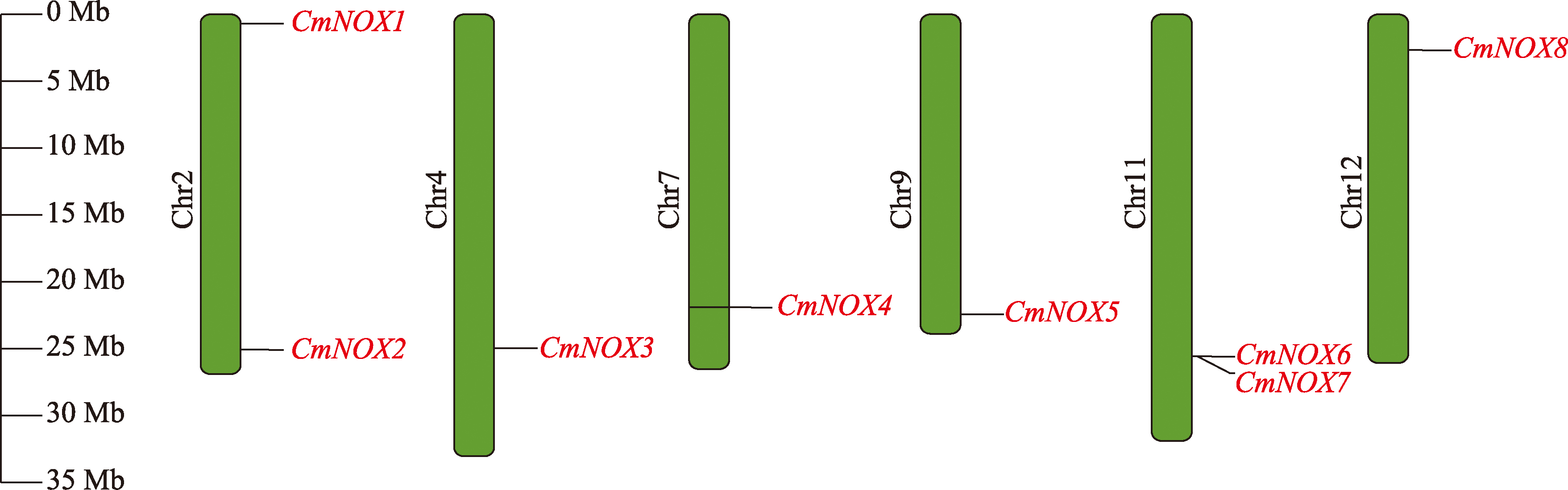
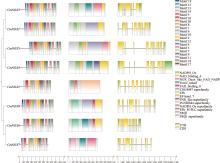
Fig. 2
Conserved domain architecture of melon NOX genes"

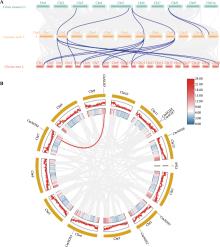
Fig. 3
Interspecific and intraspecific synteny analysis of CmNOXs"

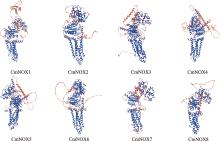
Fig. 4
Predicted tertiary structures of melon NOX family proteins"

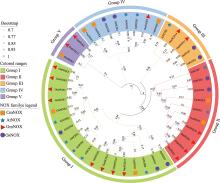
Fig. 5
Phylogenetic analysis of NOX family members in Cucumis melo, Arabidopsis thaliana, Glycine max, and Oryza sativa"

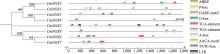
Fig. 6
Distribution of cis-regulatory elements in the promoters of melon NOX genes"
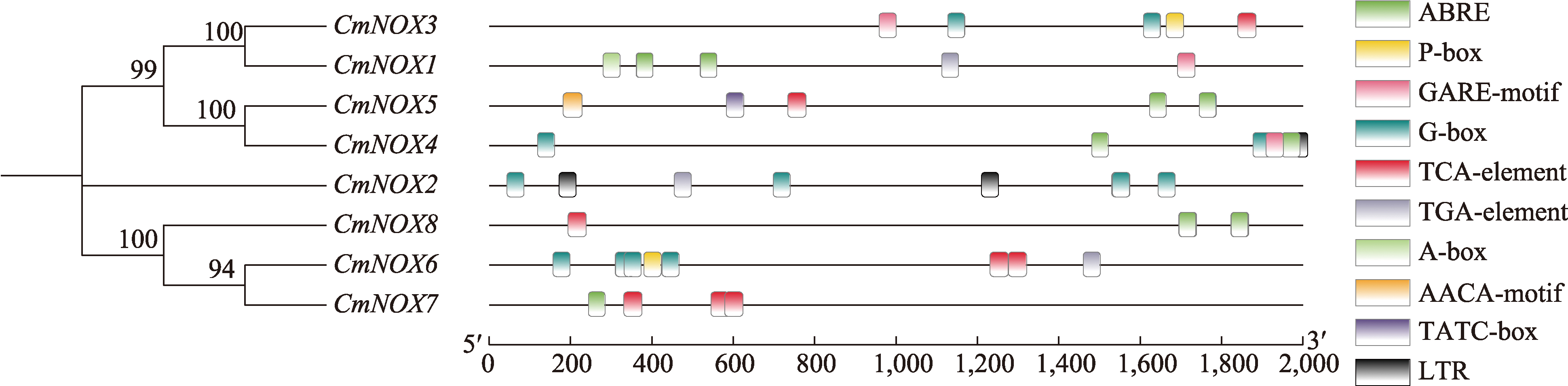
Table 3
Cis-regulatory elements and functional annotation in the promoters of melon NOX genes"
| 元件 | 序列 | 功能 |
|---|---|---|
| TCA-element | CCATCTTTTT | 参与水杨酸响应的顺式作用元件 |
| ABRE | ACGTG | 参与脱落酸响应的顺式作用元件 |
| AACA-motif | TAACAAACTCCA | 参与胚乳特异性负调控表达 |
| TATC-box | TATCCCA | 参与赤霉素响应的顺式作用元件 |
| GARE-motif | TCTGTTG | 赤霉素响应元件 |
| TGA-element | AACGAC | 生长素响应元件 |
| LTR | CCGAAA | 参与低温响应的顺式作用元件 |
| G-box P-box | TACGTG CCTTTTG | 参与光响应的顺式作用调控元件 赤霉素响应元件 |
| A-box | CCGTCC | 顺式作用调控元件 |
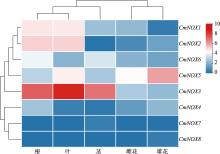
Fig. 7
Tissue-specific expression analysis of the NOX gene family"
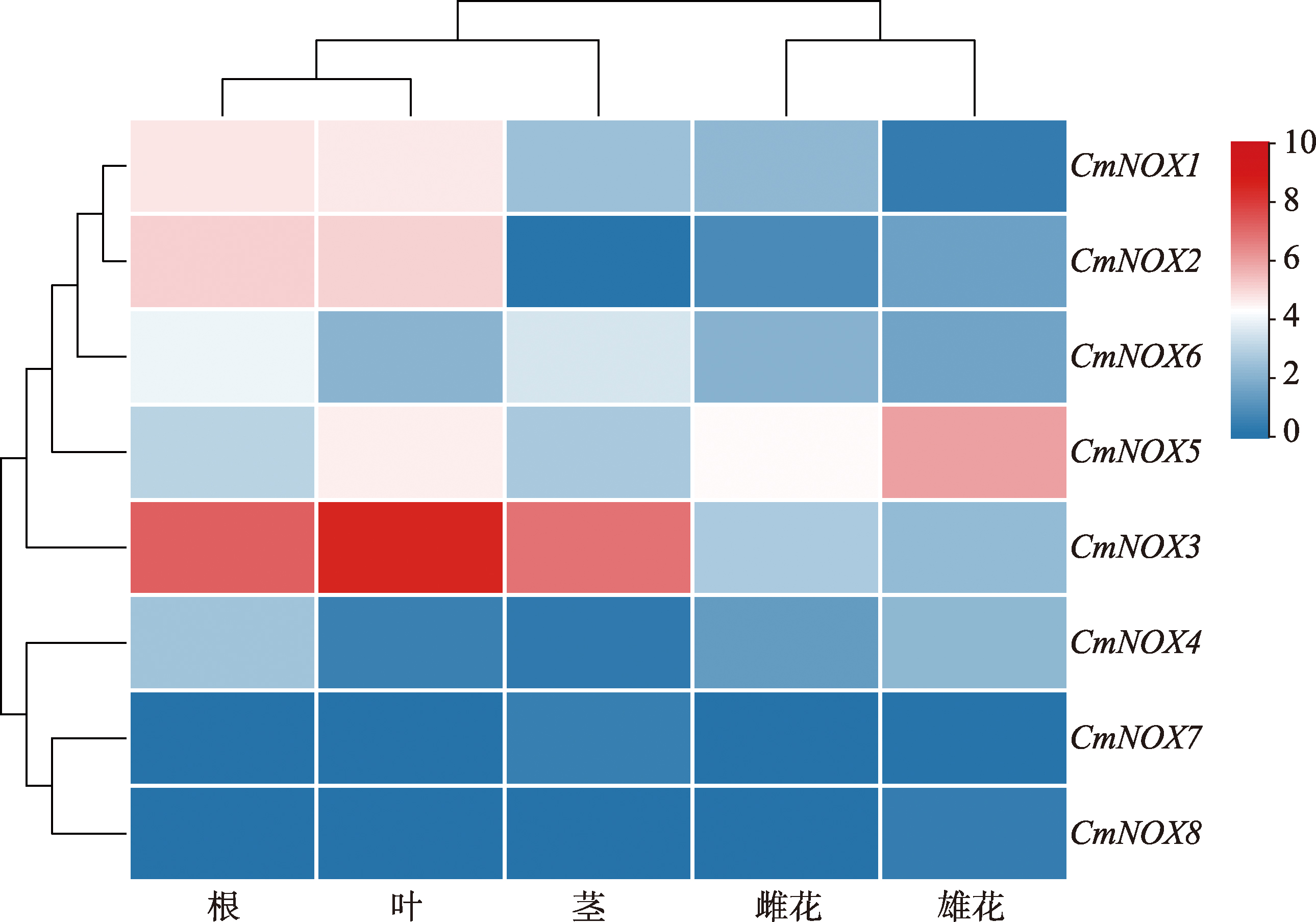
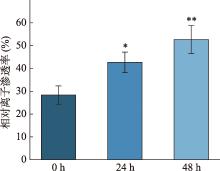
Fig. 8
Changes in relative ion permeability of melon leaves under low-temperature stress"
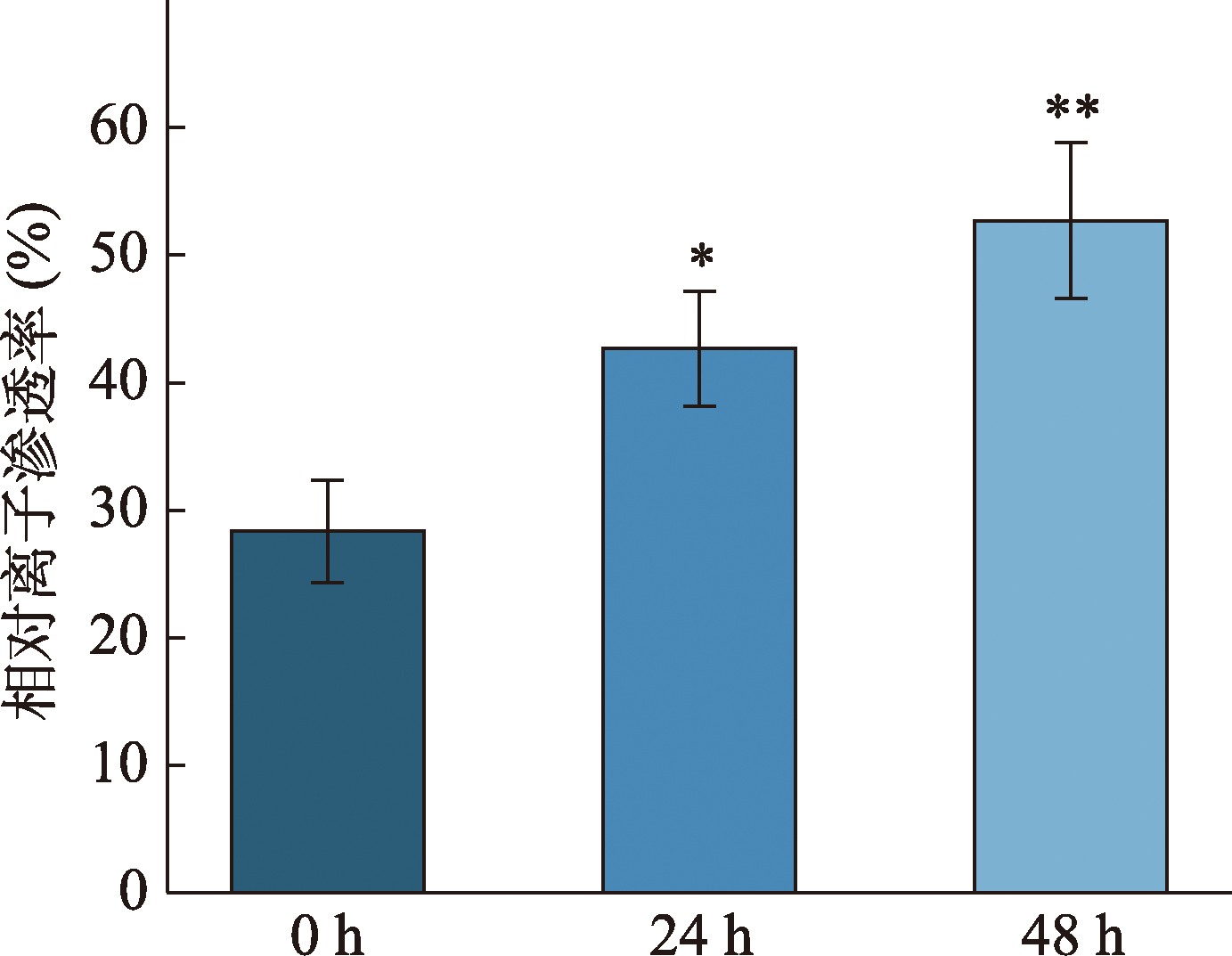
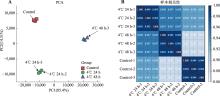
Fig. 9
Transcriptome quality assessment of melon leaf samples under cold stress"

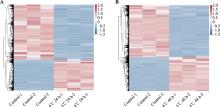
Fig. 10
Hierarchical clustering heatmap of differentially expressed genes"

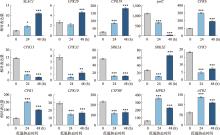
Fig. 11
Expression validation of key downstream genes in the cold signaling pathway under low-temperature stress"

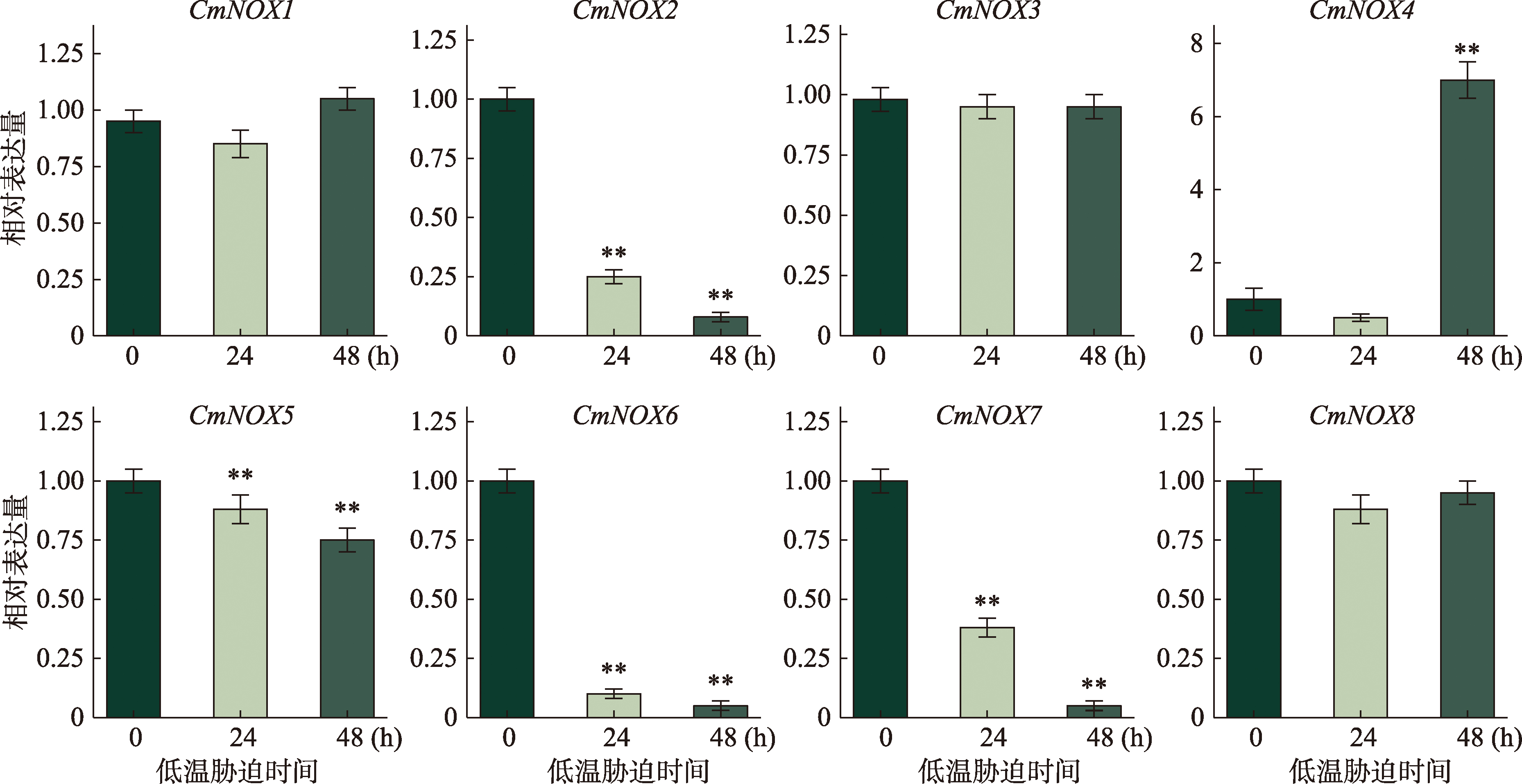
Fig. 12
Expression patterns of CmNOX genes in melon leaves under cold stress"
| [1] |
Marino D, Dunand C, Puppo A, Pauly N. A burst of plant NADPH oxidases. Trends Plant Sci, 2012, 17(1): 9-15.
pmid: 22037416 |
| [2] |
Chapman JM, Muhlemann JK, Gayomba SR, Muday GK. RBOH-dependent ROS synthesis and ROS scavenging by plant specialized metabolites to modulate plant development and stress responses. Chem Res Toxicol, 2019, 32(3): 370-396.
pmid: 30781949 |
| [3] |
Kaya H, Takeda S, Kobayashi MJ, Kimura S, Iizuka A, Imai A, Hishinuma H, Kawarazaki T, Mori K, Yamamoto Y, Murakami Y, Nakauchi A, Abe M, Kuchitsu K. Comparative analysis of the reactive oxygen species- producing enzymatic activity of Arabidopsis NADPH oxidases. Plant J, 2019, 98(2): 291-300.
pmid: 30570803 |
| [4] | Chen QH, Yang GW. Signal function studies of ROS, especially RBOH-dependent ROS, in plant growth, development and environmental stress. J Plant Growth Regul, 2020, 39(1): 157-171. |
| [5] |
Mittler R, Vanderauwera S, Gollery M, Van Breusegem F. Reactive oxygen gene network of plants. Trends Plant Sci, 2004, 9(10): 490-498.
pmid: 15465684 |
| [6] |
Baxter A, Mittler R, Suzuki N. ROS as key players in plant stress signalling. J Exp Bot, 2014, 65(5): 1229-1240.
pmid: 24253197 |
| [7] |
Chu-Puga Á, González-Gordo S, Rodríguez-Ruiz M, Palma JM, Corpas FJ. NADPH oxidase (Rboh) activity is up regulated during sweet pepper (Capsicum annuum L.) fruit ripening. Antioxidants (Basel), 2019, 8(1): 9.
pmid: 30609654 |
| [8] | Wang SS, Zhu XN, Lin JX, Zheng WJ, Zhang BT, Zhou JQ, Ni J, Pan ZC, Zhu SH, Ding WN. OsNOX3, encoding a NADPH oxidase, regulates root hair initiation and elongation in rice. Biol Plant, 2018, 62(4): 732-740. |
| [9] |
Yang L, Ye CF, Zhao YT, Cheng XL, Wang YQ, Jiang YQ, Yang B. An oilseed rape WRKY-type transcription factor regulates ROS accumulation and leaf senescence in Nicotiana benthamiana and Arabidopsis through modulating transcription of RbohD and RbohF. Planta, 2018, 247(6): 1323-1338.
pmid: 29511814 |
| [10] | Khafi AS, Iranbakhsh A, Safipour Afshar A, Khavari Nejad RA. RBOH expression and ROS metabolism in Citrullus colocynthis under cadmium stress. Braz J Bot, 2020, 43(1): 35-43. |
| [11] | Piotrovskii MS, Shevyreva TA, Zhestkova IM, Trofimova MS. Activation of plasmalemmal NADPH oxidase in etiolated maize seedlings exposed to chilling temperatures. Russ J Plant Physiol, 2011, 58(2): 290-298. |
| [12] |
Zhang YL, Zhang YW, Luo L, Lu CY, Kong WW, Cheng LB, Xu XY, Liu JH. Genome wide identification of respiratory burst oxidase homolog (Rboh) genes in Citrus sinensis and functional analysis of CsRbohD in cold tolerance. Int J Mol Sci, 2022, 23(2): 648.
pmid: 35054832 |
| [13] |
Kabała K, Reda M, Wdowikowska A, Janicka M. Role of plasma membrane NADPH oxidase in response to salt stress in cucumber seedlings. Antioxidants (Basel), 2022, 11(8): 1534.
pmid: 36009253 |
| [14] |
Chang YL, Li WY, Miao H, Yang SQ, Li R, Wang X, Li WQ, Chen KM. Comprehensive genomic analysis and expression profiling of the NOX gene families under abiotic stresses and hormones in plants. Genome Biol Evol, 2016, 8(3): 791-810.
pmid: 26907500 |
| [15] |
Zhang ZB, Zhao YL, Feng XB, Luo ZY, Kong SW, Zhang C, Gong AD, Yuan HY, Cheng L, Wang XN. Genomic, molecular evolution, and expression analysis of NOX genes in soybean (Glycine max). Genomics, 2019, 111(4): 619-628.
pmid: 29621573 |
| [16] |
Du LH, Jiang Z, Zhou YD, Shen L, He J, Xia X, Zhang LH, Yang X. Genome-wide identification and expression analysis of respiratory burst oxidase homolog (RBOH) gene family in eggplant (Solanum melongena L.) under abiotic and biotic stress. Genes (Basel), 2023, 14(9): 1665.
pmid: 37761805 |
| [17] |
Di QH, Li YS, Li SZ, Shi AK, Zhou MD, Ren HZ, Yan Y, He CX, Wang J, Sun MT, Yu XC. Photosynthesis mediated by RBOH-dependent signaling is essential for cold stress memory. Antioxidants (Basel), 2022, 11(5): 969.
pmid: 35624833 |
| [18] |
Wang GF, Li WQ, Li WY, Wu GL, Zhou CY, Chen KM. Characterization of rice NADPH oxidase genes and their expression under various environmental conditions. Int J Mol Sci, 2013, 14(5): 9440-9458.
pmid: 23629674 |
| [19] |
Song ZQ, Chen C, Duan H, Yu T, Zhang YQ, Wei YN, Xu DC, Liu D. Identification of VcRBOH genes in blueberry and functional characterization of VcRBOHF in plant defense. BMC Genomics, 2025, 26(1): 153.
pmid: 39962409 |
| [20] |
Hu CH, Wei XY, Yuan B, Yao LB, Ma TT, Zhang PP, Wang X, Wang PQ, Liu WT, Li WQ, Meng LS, Chen KM. Genome-wide identification and functional analysis of NADPH oxidase family genes in wheat during development and environmental stress responses. Front Plant Sci, 2018, 9: 906.
pmid: 30083172 |
| [21] | Cepauskas D, Miliute I, Staniene G, Gelvonauskiene D, Stanys V, Jesaitis AJ, Baniulis D. Characterization of apple NADPH oxidase genes and their expression associated with oxidative stress in shoot culture in vitro. Plant Cell Tiss Organ Cult, 2016, 124(3): 621-633. |
| [22] |
Wang J, Liu XJ, Kang YD, Liu AZ, Li P. Functional analysis and interaction networks of Rboh in poplar under abiotic stress. Front Plant Sci, 2025, 16: 1553057.
pmid: 40078632 |
| [23] |
Li DH, Wu D, Li SZ, Dai Y, Cao YP. Evolutionary and functional analysis of the plant-specific NADPH oxidase gene family in Brassica rapa L. R Soc Open Sci, 2019, 6(2): 181727.
pmid: 30891283 |
| [24] | Ye H, Liu HZ, Han M, Zhang NY, Feng XL, Gao T, Lei DF, Li HC, Gao ZM, Su Y, Chai M, Zhou HJ, Wang YL. The genome-wide identification, characterization, and expression profiles of the NADPH oxidase (NOX) gene family under drought and salt stress in Opisthopappus taihangensis (Asteraceae). Agronomy, 2024, 14(4): 653. |
| [25] |
Yano R, Ariizumi T, Nonaka S, Kawazu Y, Zhong SL, Mueller L, Giovannoni JJ, Rose JKC, Ezura H. Comparative genomics of muskmelon reveals a potential role for retrotransposons in the modification of gene expression. Commun Biol, 2020, 3(1): 432.
pmid: 32792560 |
| [26] | Liu T, Shi JL, Li M, Ye XL, Qi HY. Trehalose triggers hydrogen peroxide and nitric oxide to participate in melon seedlings oxidative stress tolerance under cold stress. Environ Exp Bot, 2021, 184: 104379. |
| [27] | Korkmaz A, Dufault RJ. Developmental consequences of cold temperature stress at transplanting on seedling and field growth and yield. II. Muskmelon. J Am Soc Hortic Sci, 2001, 126(4): 410-413. |
| [28] | Korkmaz A, Dufault RJ. Influence of short-term cyclic cold temperature stress on muskmelon and honeydew yield. HortTechnology, 2003, 13(1): 67-70. |
| [29] |
Nabwire S, Wakholi C, Faqeerzada MA, Arief MAA, Kim MS, Baek I, Cho BK. Estimation of cold stress, plant age, and number of leaves in watermelon plants using image analysis. Front Plant Sci, 2022, 13: 847225.
pmid: 35251113 |
| [30] |
Yu JY, Wu S, Sun HH, Wang X, Tang XM, Guo SG, Zhang ZH, Huang SW, Xu Y, Weng YQ, Mazourek M, McGregor C, Renner SS, Branham S, Kousik C, Wechter WP, Levi A, Grumet R, Zheng Y, Fei ZJ. CuGenDBv2:an updated database for cucurbit genomics. Nucleic Acids Res, 2023, 51(D1): D1457-D1464.
pmid: 36271794 |
| [31] | Livak KJ, Schmittgen TD. Analysis of relative gene expression data using real-time quantitative PCR and the 2-ΔΔCT method. Methods, 2001, 25(4): 402-408. |
| [32] | Sheng Y, Wang XY, Wang CY, Xu XY, Jiang LJ. Genome-wide identification and cold stress response analysis of the Rboh gene family in pomegranate (Punica granatum L.). Agric, 2025, 15(17): 1883. |
| [33] |
Wang YH, Liu ZS, Li L, Pan XJ, Yao KD, Wei WY, Liao WB, Wang CL. The characteristics and expression analysis of the tomato SlRBOH gene family under exogenous phytohormone treatments and abiotic stresses. Int J Mol Sci, 2024, 25(11): 5780.
pmid: 38891968 |
| [34] |
Zhang HY, Wang X, Yan A, Deng J, Xie YP, Liu SY, Liu DB, He L, Weng JF, Xu JY. Evolutionary analysis of respiratory burst oxidase homolog (RBOH) genes in plants and characterization of ZmRBOHs. Int J Mol Sci, 2023, 24(4): 3858.
pmid: 36835269 |
| [35] | Zhang JW, Xie YD, Ali B, Ahmed W, Tang Y, Li HX. Genome-wide identification, classification, evolutionary expansion and expression of Rboh family genes in pepper (Capsicum annuum L.). Trop Plant Biol, 2021, 14(3): 251-266. |
| [36] | Hu G, Liang DC. Bioinformatics of cassava NOX gene family and its expression analysis. J Southern Agric, 2019, 50(10): 2178-2187. |
| 胡广, 梁大成. 木薯NOX基因家族成员的生物信息学及其表达分析. 南方农业学报, 2019, 50(10): 2178-2187. | |
| [37] |
Zhang YT, Li YL, He YW, Hu WJ, Zhang Y, Wang XR, Tang HR. Identification of NADPH oxidase family members associated with cold stress in strawberry. FEBS Open Bio, 2018, 8(4): 593-605.
pmid: 29632812 |
| [1] | Xuefeng Xu, Xingkun Jin, Yan Shi, Zhe Zhao. Comprehensive analysis of the composition and distribution of anti-phage defense systems in Vibrio genomes [J]. Hereditas(Beijing), 2025, 47(9): 1057-1068. |
| [2] | Zhi Zhang, Jing Zhang, Jin Zhang, Agula Hasi, Jinfeng Hao. Identification and characterization analysis of the HDM gene family in melon (Cucumis melo L.) [J]. Hereditas(Beijing), 2024, 46(2): 168-180. |
| [3] | Feifei Li, Yanmin Hao, Minlong Cui, Chunlan Piao. Cloning and functional analysis of RADIALIS-like 1 gene from Antirrhinum majus [J]. Hereditas(Beijing), 2023, 45(6): 526-535. |
| [4] | Shanshan Wang, Wanyi Zhao, Huixiao Wu, Meng Shu, Jiaxin Yuan, Li Fang, Chao Xu. Research on the variants of FGFR1 and CEP290 genes in idiopathic hypogonadotropin hypogonadism [J]. Hereditas(Beijing), 2022, 44(10): 937-949. |
| [5] | Qingqian Ding,Xiaoting Wang,Liqin Hu,Xin Qi,Linhao Ge,Weiya XU,Zhaoshi Xu,Yongbin Zhou,Guanqing Jia,Xianmin Diao,Donghong Min,Youzhi Ma,Ming Chen. MYB-like transcription factor SiMYB42 from foxtail millet (Setaria italica L.) enhances Arabidopsis tolerance to low-nitrogen stress [J]. Hereditas(Beijing), 2018, 40(4): 327-338. |
| [6] | Citao Liu, Wei Wang, Bigang Mao, Chengcai Chu. Cold stress tolerance in rice: physiological changes, molecular mechanism, and future prospects [J]. Hereditas(Beijing), 2018, 40(3): 171-185. |
| [7] |
Lizhen Zhang, Yong Zhang, Jinghua Hu, Zilong Wang, Zhijiang Zeng.
Molecular cloning and expression analysis of the tyramine receptor genes in Apis cerana cerana [J]. Hereditas(Beijing), 2018, 40(2): 155-161. |
| [8] | Jianzhong Chang, Fengxia Yan, Linyi Qiao, Jun Zheng, Fuyao Zhang, Qingshan Liu. Genome-wide identification and expression analysis of SBP-box gene family in Sorghum bicolor L. [J]. HEREDITAS(Beijing), 2016, 38(6): 569-580. |
| [9] | Xiaoxu Li, Cheng Liu, Wei Li, Zenglin Zhang, Xiaoming Gao, Hui Zhou, Yongfeng Guo. Genome-wide identification, phylogenetic analysis and expression profiling of the WOX family genes in Solanum lycopersicum [J]. HEREDITAS(Beijing), 2016, 38(5): 444-460. |
| [10] | Yanbing Gu, Zhirui Ji, Fumei Chi, Zhuang Qiao, Chengnan Xu, Junxiang Zhang, Zongshan Zhou, Qinglong Dong. Genome-wide identification and expression analysis of the WRKY gene family in peach [J]. HEREDITAS(Beijing), 2016, 38(3): 254-270. |
| [11] | Jun Wu, Junhong Zhang, Menghui Huang, Minhui Zhu, Zaikang Tong. Expression analysis of miR164 and its target gene NAC1 in response to low nitrate availability in Betula luminifera [J]. HEREDITAS(Beijing), 2016, 38(2): 155-162. |
| [12] | Jianjiang Ma, Nuohan Wang, Man Wu, Wenfeng Pei, Wenkui Wang, Xingli Li, Jinfa Zhang, Shuxun Yu, Jiwen Yu. Genome-wide analysis of the LPAAT gene family in Gossypium raimondii and G. arboreum, and expression analysis of its orthologs in G. hirsutum [J]. HEREDITAS(Beijing), 2015, 37(7): 692-701. |
| [13] | Yunfei Liu, Hongjian Wan, Yuejian Yang, Yanping Wei, Zhimiao Li, Qingjing Ye, Rongqing Wang, Meiying Ruan, Zhuping Yao, Guozhi Zhou. Genome-wide identification and analysis of heat shock protein 90 in tomato [J]. HEREDITAS(Beijing), 2014, 36(10): 1043-1052. |
| [14] | HUANG Guo-Wen HAN Yu-Zhen FU Yong-Fu. Expression and functional analysis of SUA41gene in Arabidopsis thaliana [J]. HEREDITAS, 2013, 35(1): 93-100. |
| [15] | YANG Li-Wei, SHI Ji-Sen. Cloning and expression analysis of differentially expressed genes in Chinese fir stems treated by different concentrations of exogenous IAA [J]. HEREDITAS, 2012, 34(4): 472-484. |
| Viewed | ||||||
|
Full text |
|
|||||
|
Abstract |
|
|||||

