Hereditas(Beijing) ›› 2026, Vol. 48 ›› Issue (11): 1085-1097.doi: 10.16288/j.yczz.26-145
• Research Article • Previous Articles Next Articles
Mechanistic study on the role of lamprey NATTERIN in ameliorating hyperlipidemia by regulating cardiac lipid transport and metabolism
Zeyu Du1,2( ), Shixi Sun1,2, Yujie Qiu1,2, Yue Pang1,2()
- 1 College of Life Science, Liaoning Normal University, Dalian 116081, China
2 Lamprey Research Center, Liaoning Normal University, Dalian 116081, China
-
Received:2026-06-16Revised:2026-10-13Online:2026-11-20Published:2026-10-23 -
Contact:Yue Pang E-mail:duzeyu@lnnu.edu.cn;pangyue01@163.com -
Supported by:National Natural Science Foundation of China(32070518);National Natural Science Foundation of China(32470558);Applied Basic Research Project of the Science and Technology Department of Liaoning Province(XLYC2002093);Project of the Educational Department of Liaoning Province(JTYQN2023268);Project of the Educational Department of Liaoning Province(JYTMS20231060);Dalian Youth Science and Technology Star Fund Project(2022RQ041)

Cite this article
Zeyu Du, Shixi Sun, Yujie Qiu, Yue Pang. Mechanistic study on the role of lamprey NATTERIN in ameliorating hyperlipidemia by regulating cardiac lipid transport and metabolism[J]. Hereditas(Beijing), 2026, 48(11): 1085-1097.
share this article
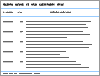
Table 1
The primer sequences used in this study"
| 基因名称 | 引物序列(5′→3′) | 物种 | 用途 | |
|---|---|---|---|---|
| NATTERIN | F: R: | TGAAGTACCCGACCATGCAC CGTGTACGGAAGGTCGATGT | 雷氏七鳃鳗(Lethenteron reissneri) | RT-qPCR |
| PPARα | F: R: | CATGTCCCACAACGCTATC TGTCTGAGGTAGGCTTCAT | 雷氏七鳃鳗(Lethenteron reissneri) | |
| PPARγ | F: R: | CCTCGCCCATGGCAGAGACAGA GCAGGAAGATGTCGGCCAGGA | 雷氏七鳃鳗(Lethenteron reissneri) | |
| PGC1α | F: R: | CCAGACAGAGATGCCGTTCA AGAGTGTTGTTGGGCCAAGA | 雷氏七鳃鳗(Lethenteron reissneri) | |
| CPT1A | F: R: | TCGATTTTCAAGGGTCTTCG CACAACGATCAGCAAACTGG | 雷氏七鳃鳗(Lethenteron reissneri) | |
| PNPLA2 | F: R: | GAGATGTGCAAGCAGGGATAC CTGCGAGTAATCCTCCGCT | 雷氏七鳃鳗(Lethenteron reissneri) | |
| FABP3 | F: R: | GCTTGGTGTGGGATTTGCT AACCTTCCTGTCATCGGCG | 雷氏七鳃鳗(Lethenteron reissneri) | |
| GAPDH | F: R: | AACCAACTGCCTGGCTCCT GTCTTCTGCGTTGCCGTG | 雷氏七鳃鳗(Lethenteron reissneri) | |
| PPARα | F: R: | CGCAGGAAAGACTAGCAACAATC ACCTCTGCTCCTTGTTTTTCA | 斑马鱼(Danio rerio) | |
| PPARγ | F: R: | AGGGCGATCTTGACAGGAAAG TGCAGGGGGGTGATATGTTTGA | 斑马鱼(Danio rerio) | |
| PGC1α | F: R: | GAAAGGGCCAAACAGAGAGA GTAAATCACACGGCGCTCTT | 斑马鱼(Danio rerio) | |
| CPT1A | F: R: | CGAGTCCCGATGCTCTCA CAGTCTCTGTCCTCCCTTCT | 斑马鱼(Danio rerio) | |
| PNPLA2 | F: R: | GAGTGCAGTGTCTTCACCA ATCAGGCAGCCACTCCAAC | 斑马鱼(Danio rerio) | |
| FABP3 | F: R: | GGTCAACGACAAGAGCCTCA GCCTTTTCATAATGGCGCGT | 斑马鱼(Danio rerio) | |
| siRNA_NC | F: R: | UUCUCCGAACGUGUCACGUTT ACGUGACACGUUCGGAGAATT | 雷氏七鳃鳗(Lethenteron reissneri) | siRNA |
| NATTERIN | F: R: | CCGCAACCGUGAGUUCUUUTT AAAGAACUCACGGUUGCGGTT | 雷氏七鳃鳗(Lethenteron reissneri) | |
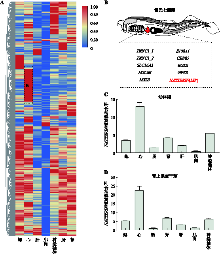
Fig. 1
Identification of cardiac tissue-specific expressed genes in Lethenteron reissneri"
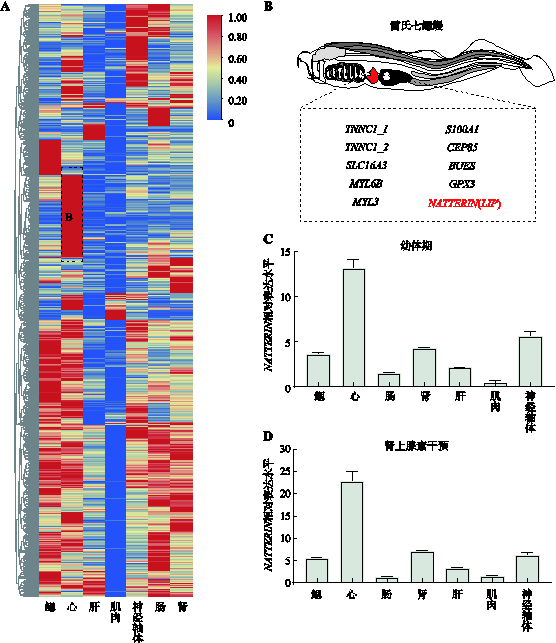
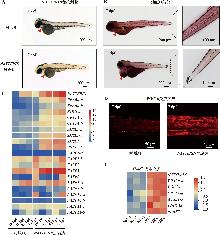
Fig. 2
Analysis of lipid metabolism in NATTERIN-overexpressing zebrafish"

Fig. 3
Transcriptomic analysis reveals changes in lipid metabolism-related genes following NATTERIN silencing in Lethenteron reissneri"
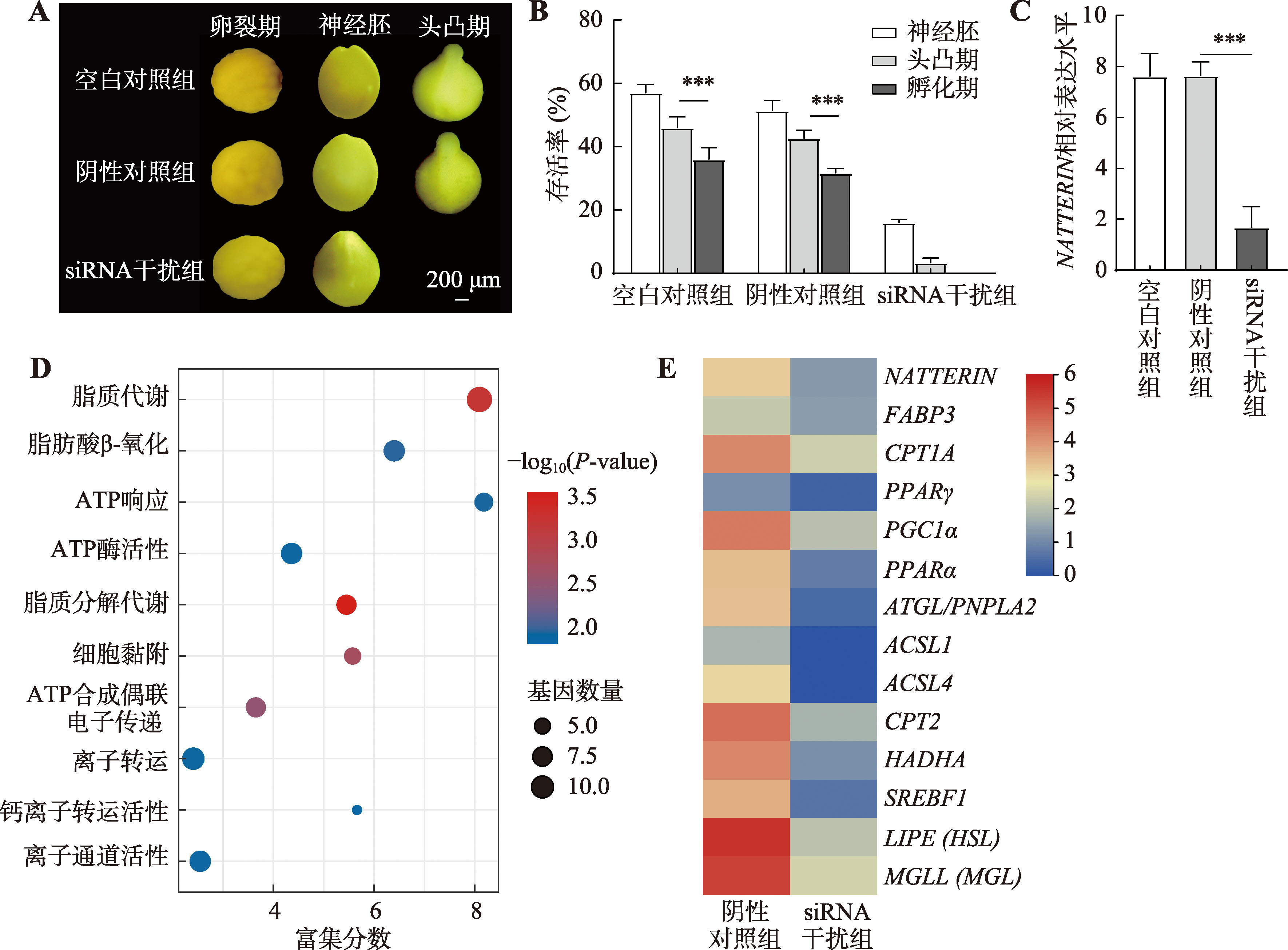
Fig. 4
In vivo injection of recombinant NATTERIN protein ameliorates hyperlipidemia in Lethenteron reissneri"
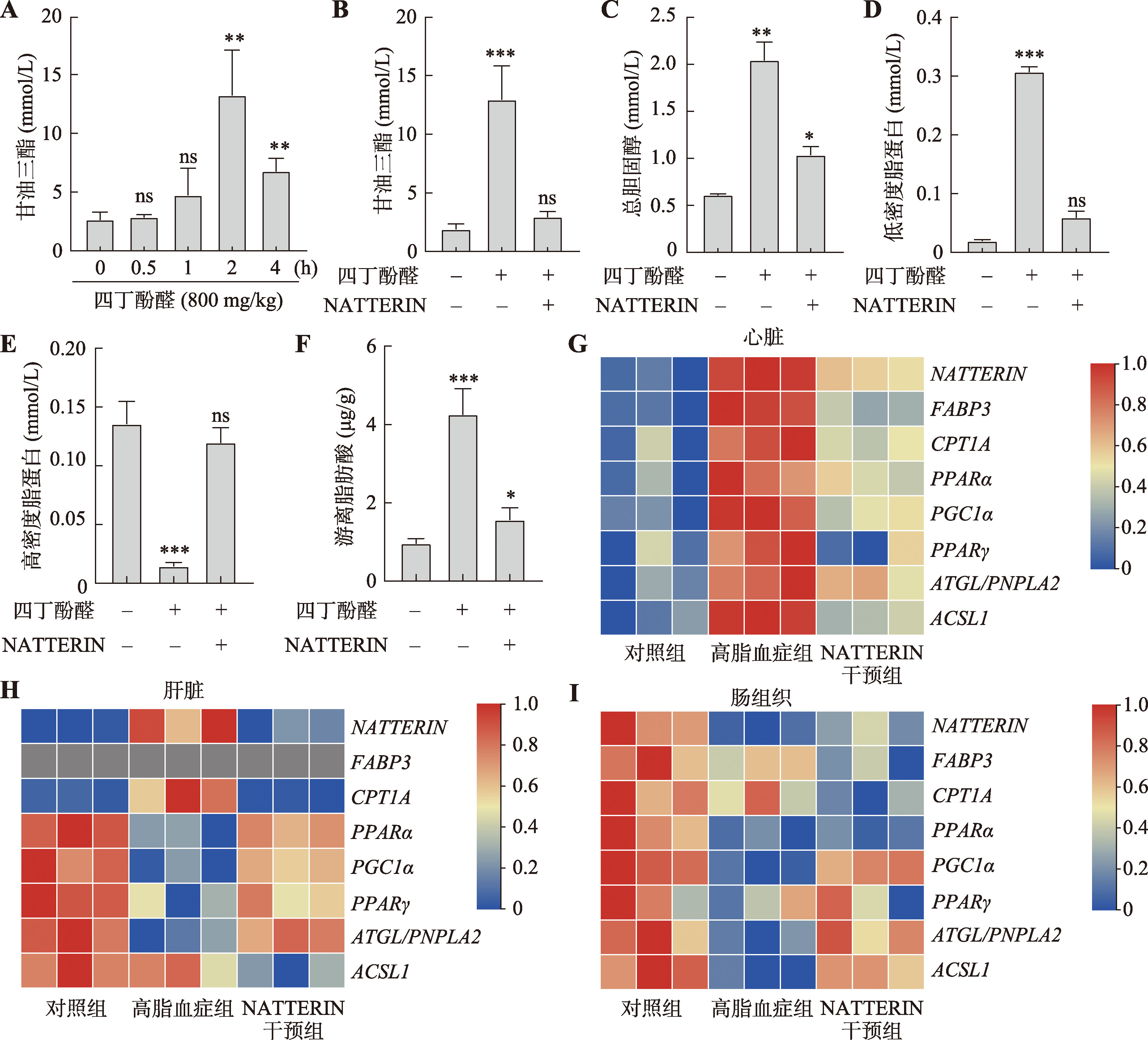
Table 2
Key quality attributes of recombinant NATTERIN protein across purification batches"
| 纯化时间 | 浓度(μg/μL) | 总量 (mg) | 内毒素(EU/mL) | HCP (ppm) |
|---|---|---|---|---|
| 2026.1.8 | 0.65 | 3.58 | 1.24 | 88.28 |
| 2026.1.12 | 0.75 | 4.50 | 1.03 | 71.28 |
| 2026.1.20 | 0.64 | 7.68 | 0.49 | 88.41 |
| 2026.1.24 | 0.80 | 4.00 | 1.21 | 59.61 |
| [1] | Zhu YG, Li J, Pang Y, Li QW. Lamprey: an important animal model of evolution and disease research. Hereditas(Beijing), 2020, 42(9): 847-857. |
| 朱医高, 李军, 逄越, 李庆伟. 七鳃鳗:生物进化和疾病研究的重要模式动物. 遗传, 2020, 42(9): 847-857. | |
| [2] |
Chang MM, Zhang JY, Miao DS. A lamprey from the Cretaceous Jehol biota of China. Nature, 2006, 441(7096): 972-974.
pmid: 16791193 |
| [3] |
Xu XL, Ma AQ, Li TS, Cui WX, Wang XF, Li J, Li QW, Pang Y. Genetic and functional characterization of novel brown-like adipocytes around the lamprey brain. Front Cell Dev Biol, 2021, 9: 674939.
pmid: 34277616 |
| [4] |
Pang Y, Qin YT, Du ZY, Liu Q, Zhang J, Han K, Lu JL, Yuan ZB, Li J, Pan SS, Dong XR, Xu MY, Wang DT, Li S, Li Z, Chen YD, Zhao ZS, Zhang Z, Chuan SQ, Song Y, Sun MJ, Jia XD, Xia ZY, Zhan LP, Yue Z, Cui W, Wang J, Gu Y, Ni M, Yang HM, Xu X, Liu X, Li QW, Fan GY. Single-cell transcriptome atlas of lamprey exploring Natterin- induced white adipose tissue browning. Nat Commun, 2025, 16(1): 752.
pmid: 39820434 |
| [5] | 杜泽宇, 卢佳丽, 李庆伟, 逄越. 七鳃鳗全组织单细胞转录组图谱揭示原始脊椎动物细胞功能演化及脂肪代谢调控. 遗传, 2025, 47(4): 395-398. |
| [6] | Yang H, Pang Y, Li QW. Research progress of bile acids tolerance mechanism in lamprey biliary atresia. Hereditas(Beijing), 2022, 44(1): 59-67. |
| 杨恒, 逄越, 李庆伟. 七鳃鳗胆道闭锁过程中胆汁酸耐受机制研究进展. 遗传, 2022, 44(1): 59-67. | |
| [7] |
Chi XY, Su P, Bi D, Tai Z, Li YY, Pang Y, Li QW. Lamprey immune protein-1 (LIP-1) from Lampetra japonica induces cell cycle arrest and cell death in HeLa cells. Fish Shellfish Immunol, 2018, 75: 295-300.
pmid: 29410138 |
| [8] |
Teng HM, Li QW, Gou M, Liu G, Cao X, Lu JL, Han YL, Yu Y, Gao ZF, Song XP, Dong WJ, Pang Y. Lamprey immunity protein enables early detection and recurrence monitoring for bladder cancer through recognizing Neu5Gc-modified uromodulin glycoprotein in urine. Biochim Biophys Acta Mol Basis Dis, 2022, 1868(12): 166493.
pmid: 35853560 |
| [9] |
Song XP, Xu XT, Lu JL, Chi XY, Pang Y, Li QW. Lamprey immune protein mediates apoptosis of lung cancer cells via the endoplasmic reticulum stress signaling pathway. Front Oncol, 2021, 11: 663600.
pmid: 34307136 |
| [10] |
Pang Y, Li CZ, Wang SY, Ba W, Yu T, Pei GY, Bi D, Liang HF, Pan X, Zhu T, Gou M, Han YL, Li QW. A novel protein derived from lamprey supraneural body tissue with efficient cytocidal actions against tumor cells. Cell Commun Signal, 2017, 15(1): 42.
pmid: 29037260 |
| [11] |
Du ZY, Zhang D, Li J, Li QW, Pang Y. Lamprey immune protein triggers the ferroptosis pathway during zebrafish embryonic development. Cell Commun Signal, 2022, 20(1): 124.
pmid: 35978430 |
| [12] |
Lan PX, Lan TW. Association of triglyceride-glucose index and obesity metrics with cardiovascular disease among U.S. adults with hyperlipidemia: findings from the NHANES 2007-2016. Metab Syndr Relat Disord, 2026, 24(4): 139-147.
pmid: 41973543 |
| [13] |
Chen J, Wei ZX, Song ZX, Meng ST, An JQ, Zhang ZQ, Biao YN, Zhang MQ, Zhang YX. Atractylodin ameliorates obesity-associated hepatic steatosis by regulating the PLIN2-ATGL/CPT1A axis-mediated lipid droplet-mitochondria interactions. Phytomedicine, 2026, 155: 158134.
pmid: 41936174 |
| [14] |
Haemmerle G, Moustafa T, Woelkart G, Büttner S, Schmidt A, van de Weijer T, Hesselink M, Jaeger D, Kienesberger PC, Zierler K, Schreiber R, Eichmann T, Kolb D, Kotzbeck P, Schweiger M, Kumari M, Eder S, Schoiswohl G, Wongsiriroj N, Pollak NM, Radner FPW, Preiss-Landl K, Kolbe T, Rülicke T, Pieske B, Trauner M, Lass A, Zimmermann R, Hoefler G, Cinti S, Kershaw EE, Schrauwen P, Madeo F, Mayer B, Zechner R. ATGL- mediated fat catabolism regulates cardiac mitochondrial function via PPAR-α and PGC-1. Nat Med, 2011, 17(9): 1076-1085.
pmid: 21857651 |
| [15] |
Hirota T, Fujita Y, Ieiri I. An updated review of pharmacokinetic drug interactions and pharmacogenetics of statins. Expert Opin Drug Metab Toxicol, 2020, 16(9): 809-822.
pmid: 32729746 |
| [16] |
Couldwell M, Tidwell AJ, Taylor AE. Effect of GLP 1 agonists on reproduction. J Clin Endocrinol Metab, 2025, 110(11): 3009-3024.
pmid: 40658801 |
| [17] |
Da Dalt L, Cabodevilla AG, Goldberg IJ, Norata GD. Cardiac lipid metabolism, mitochondrial function, and heart failure. Cardiovasc Res, 2023, 119(10): 1905-1914.
pmid: 37392421 |
| [18] |
Ma L, Gou M, Du ZY, Zhu T, Li J, Li QW, Pang Y. MicroRNA expression profile in Lampetra morii upon Vibrio anguillarum infection and miR-4561 characterization targeting lip. Commun Biol, 2021, 4(1): 995.
pmid: 34417547 |
| [19] |
Zhu T, Li YX, Pang Y, Han YL, Li J, Wang ZK, Liu X, Li HR, Hua YS, Jiang H, Teng HM, Quan J, Liu Y, Geng M, Li MA, Hui F, Liu JZ, Qiu Q, Li QW, Ren YD. Chromosome-level genome assembly of Lethenteron reissneri provides insights into lamprey evolution. Mol Ecol Resour, 2021, 21(2): 448-463.
pmid: 33053263 |
| [20] |
Huang DL, de Mello PLH, Liu T, Liu Y, Kapadia EH, Liang YP, Lu JG, Corbo JC, Parichy DM. Graded BMP signals modulate yellow and red color in fishes, impacting adult pigment patterns and conspecific shoaling behavior. Curr Biol, 2026, 36(8): 2127-2136.e5.
pmid: 41903524 |
| [21] |
Arshad U, Santos JEP. Characterization of a model to induce hyperlipidemia in feed-restricted dairy cows. JDS Commun, 2023, 5(1): 77-82.
pmid: 38223375 |
| [22] |
Feng Y, Peng YB, Hou JC, Wang ZH, Lai JL, Xiong TXS, Shi JW, Wang YX, Yim WY, Chen YQ, Dong NG. FABP3 and FABP4 promote lipid peroxidation injury during static cold storage of donor heart:Insights from multi-omics and therapeutic targeting. J Mol Cell Cardiol Plus, 2025, 14: 100497.
pmid: 41328282 |
| [23] |
Montaigne D, Butruille L, Staels B. PPAR control of metabolism and cardiovascular functions. Nat Rev Cardiol, 2021, 18(12): 809-823.
pmid: 34127848 |
| [24] |
Yang Y, Qiu W, Xiao JY, Sun J, Ren X, Jiang LX. Dihydromyricetin ameliorates hepatic steatosis and insulin resistance via AMPK/PGC-1α and PPARα-mediated autophagy pathway. J Transl Med, 2024, 22(1): 309.
pmid: 38532480 |
| [25] |
Jiang HY, Fang TT, Cheng ZY. Mechanism of heart failure after myocardial infarction. J Int Med Res, 2023, 51(10): 3000605231202573.
pmid: 37818767 |
| [26] |
Guo A, Li K, Tian HC, Fan Z, Chen QN, Yang YF, Yu J, Wu YX, Xiao Q. FGF19 protects skeletal muscle against obesity-induced muscle atrophy, metabolic derangement and abnormal irisin levels via the AMPK/SIRT-1/PGC-α pathway. J Cell Mol Med, 2021, 25(7): 3585-3600.
pmid: 33751819 |
| [27] |
Liu Y, Wang F, Xu HY, Wang HX, Lu ML, Cheng L. Ginkgolide B attenuates hyperlipidemia by restoring sphingolipid homeostasis and activating PPARα and Nrf2 pathways. Sci Rep, 2025, 15(1): 28774.
pmid: 40770408 |
| [28] |
Liu YK, Chen BJ, Li HQ, Zhang WH, Lian B, Huang Z, Qin QH, Tan QX, Wei CY. CPT1A exacerbates trastuzumab- induced cardiotoxicity via promotion of mitochondrial dysfunction. Int J Biol Macromol, 2026, 338(Pt 1): 149581.
pmid: 41386618 |
| [29] |
Hammoud R, Drucker DJ. Beyond the pancreas: contrasting cardiometabolic actions of GIP and GLP1. Nat Rev Endocrinol, 2023, 19(4): 201-216.
pmid: 36509857 |
| [30] |
Bachmann CM, Janitschke D, Lauer AA, Erhardt T, Hartmann T, Grimm MOW, Grimm HS. Gemfibrozil- induced intracellular triglyceride increase in SH-SY5Y, HEK and Calu-3 Cells. Int J Mol Sci, 2023, 24(3): 2972.
pmid: 36769295 |
| [31] |
Hernandez-Anzaldo S, Berry E, Brglez V, Leung D, Yun TJ, Lee JS, Filep JG, Kassiri Z, Cheong C, Lambeau G, Lehner R, Fernandez-Patron C. Identification of a novel heart-liver axis: matrix metalloproteinase-2 negatively regulates cardiac secreted phospholipase A 2 to modulate lipid metabolism and inflammation in the liver. J Am Heart Assoc, 2015, 4(11): e002553.
pmid: 26567374 |
| [1] | Mingjie Sun, Jiali Lu, Yue Pang. Lamprey——an excellent model for iron metabolism [J]. Hereditas(Beijing), 2024, 46(5): 387-397. |
| [2] | Heng Yang, Yue Pang, Qingwei Li. Research progress of bile acids tolerance mechanism in lamprey biliary atresia [J]. Hereditas(Beijing), 2022, 44(1): 59-67. |
| [3] | Yigao Zhu, Jun Li, Yue Pang, Qingwei Li. Lamprey: an important animal model of evolution and disease research [J]. Hereditas(Beijing), 2020, 42(9): 847-857. |
| [4] | Zhongying Liu,Xia Huang,Ziyi Li,Zihao Yang,Baiyin Yuan. The role of actin cytoskeleton in regulating the deployment process of mouse cardiac second heart field progenitor cells [J]. Hereditas(Beijing), 2019, 41(2): 125-136. |
| [5] | Yongyu Wang,Wei Yu,Bin Zhou. Hippo signaling pathway in cardiovascular development and diseases [J]. Hereditas(Beijing), 2017, 39(7): 576-587. |
| [6] | Ping Ouyang,Yuanhang Liu,Zhigang Huang,Xiaojuan Qi,Qian Ni,Yaping Liu,Rensheng Song,Tao Li,Zhuguo Wu. Readthrough on transcription factor NKX2.5 premature stop codon by tRNA suppressors [J]. HEREDITAS(Beijing), 2015, 37(4): 367-373. |
| [7] | YAN Li-Feng GU Ai-Hua. Progress and application of zebrafish in regenerative medicine [J]. HEREDITAS, 2013, 35(7): 856-866. |
| [8] | LIU Xin-Xing, ZHANG Yu-Tian, ZHANG Bo. A surgery protocol to construct zebrafish heart damage and regeneration model [J]. HEREDITAS, 2013, 35(4): 529-532. |
| [9] | PENG Xi-Yang, CHEN Ting-Fang, HUANG Ting, JIANG Zhi-Gang, WU Xiu-Shan, DENG Yun. Construction and assessment of heart-speci?c green ?uorescence zebrafish line [J]. HEREDITAS, 2013, 35(4): 511-518. |
| [10] | JIANG Ting-Ting, CHEN Xing, LI Ting-Ting, ZHANG Feng-Guo, XIE Yi, ZHANG Jian-Ning, PENG Jie, LIU Tian-Jiao, CHEN Gang, GUO Yuan. Genetic scanning on chromosome 8 loci for coronary heart disease [J]. HEREDITAS, 2012, 34(8): 1043-1049. |
| [11] | YIN Yan-Hui, SUN Min, CHEN Ting-Feng, ZHANG Ya-Ni, ZHU Cai-Ye, LI Wei, LI Bi-Chun. Generation of goat H-FABP overexpression transgenic mice by testicular injection [J]. HEREDITAS, 2012, 34(6): 727-735. |
| [12] | WU Fen-Fang, MA Ning, CHEN Li-Yong, SU Peng, LI Qing-Wei. Cloning and expression of VLRB of Lampetra japonica and generation of the corresponding monoclonal antibodies [J]. HEREDITAS, 2012, 34(4): 465-471. |
| [13] | WU Zhi-Jun, JIN Wei, ZHANG Feng-Ru, LIU Yan. Recent advances in natriuretic peptide family genes and cardiovas-cular diseases [J]. HEREDITAS, 2012, 34(2): 127-133. |
| [14] | CHEN Min-Zhi, CHENG An-Hui, MA Long, WANG Hui, QIU Rong-Fang, XUE Fu-Zhong, LIU Ai-Ji. Association study between TNFSF4 and coronary heart disease [J]. HEREDITAS, 2011, 33(3): 239-245. |
| [15] | ZHEN Yi-Song, HUI Ru-Tai, XIONG Jing-Wei. Recent progress in heart regeneration [J]. HEREDITAS, 2011, 33(11): 1159-1163. |
| Viewed | ||||||
|
Full text |
|
|||||
|
Abstract |
|
|||||