Hereditas(Beijing) ›› 2022, Vol. 44 ›› Issue (3): 230-244.doi: 10.16288/j.yczz.21-426
• Research Article • Previous Articles Next Articles
MCM2 promotes the proliferation, migration and invasion of cholangiocarcinoma cells by reducing the p53 signaling pathway
Cuiling Wang1( ), Xinyi Liu1, Yahui Wang2, Zheng Zhang1, Zhidong Wang3, Gangqiao Zhou1,3()
- 1. National Center for Protein Sciences, the State Key Lab of Proteomics, Beijing Institute of Radiation Medicine, Academy of Military Medical Sciences, Academy of Military Sciences, Beijing 102206, China
2. National Center for Protein Sciences, the State Key Lab of Proteomics, Beijing Institute of Life Omics, Academy of Military Medical Sciences, Academy of Military Sciences, Beijing 102206, China
3. Beijing Institute of Radiation Medicine, Academy of Military Medical Sciences, Academy of Military Sciences, Beijing 100850, China
-
Received:2021-12-20Revised:2022-01-18Online:2022-03-20Published:2022-01-29 -
Contact:Zhou Gangqiao E-mail:1376544094@qq.com;zhougq114@126.com -
Supported by:Supported by the National Natural Science Foundation of China(31771397)

Cite this article
Cuiling Wang, Xinyi Liu, Yahui Wang, Zheng Zhang, Zhidong Wang, Gangqiao Zhou. MCM2 promotes the proliferation, migration and invasion of cholangiocarcinoma cells by reducing the p53 signaling pathway[J]. Hereditas(Beijing), 2022, 44(3): 230-244.
share this article
Add to citation manager EndNote|Reference Manager|ProCite|BibTeX|RefWorks
Table 1
Primers for the real-time quantitative PCR assays"
| 基因名称 | 引物序列(5ʹ→3ʹ) |
|---|---|
| MCM2 | F: ATGGCGGAATCATCGGAATCC |
| R: GGTGAGGGCATCAGTACGC | |
| p53 | F: CCTCAGCATCTTATCCGAGTGG |
| R: TGGATGGTGGTACAGTCAGAGC | |
| BAX | F: TCAGGATGCGTCCACCAAGAAG |
| R: TGTGTCCACGGCGGCAATCATC | |
| BCL2 | F: ATCGCCCTGTGGATGACTGAGT |
| R: GCCAGGAGAAATCAAACAGAGGC | |
| CCND1 | F: TCTACACCGACAACTCCATCCG |
| R: TCTGGCATTTTGGAGAGGAAGTG | |
| ACTB | F: AGAGCCTCGCCTTTGCCGAT |
| R: CCATCACGCCCTGGTGCCT |
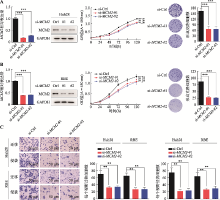
Fig. 1
Effects of MCM2 knockdown on proliferation, migration and invasion of cholangiocarcinoma cells"
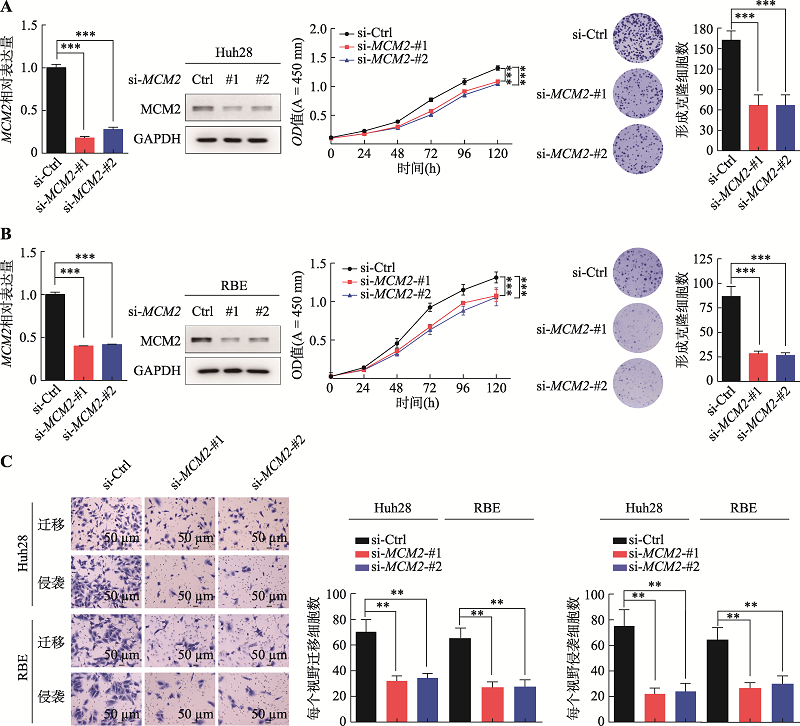

Fig. 2
Effects of MCM2 overexpression on proliferation, migration and invasion of cholangiocarcinoma cells"
Fig. 3
Effect of MCM2 on the cell cycle of cholangiocarcinoma cells"
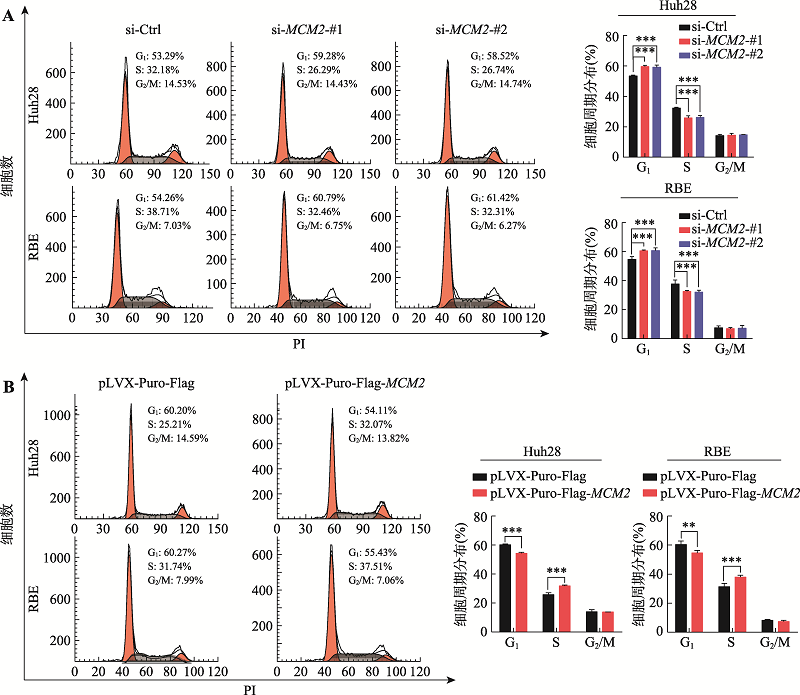
Fig. 4
Effect of MCM2 on apoptosis of cholangiocarcinoma cells"
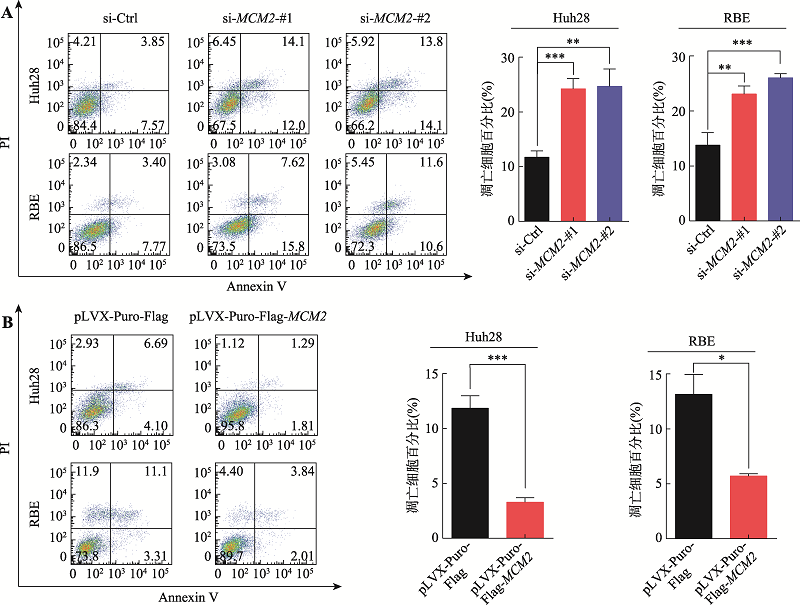
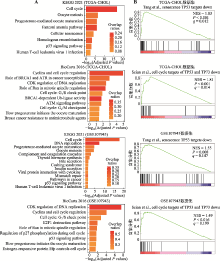
Fig. 5
MCM2 significantly reduces the p53 signaling pathway"
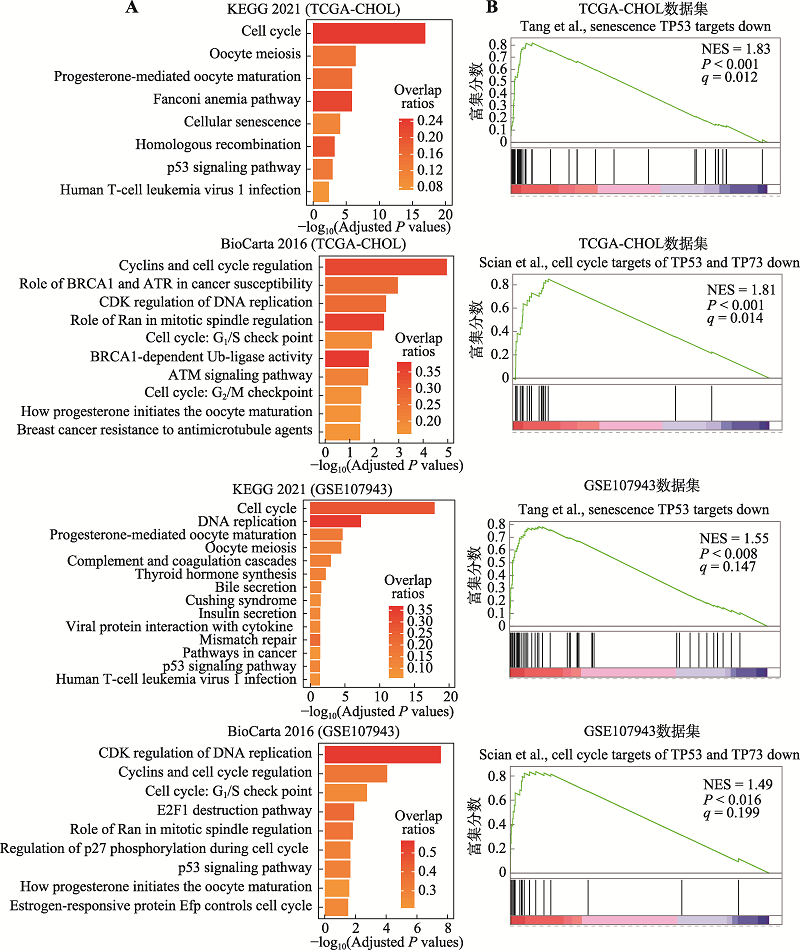
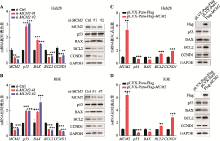
Fig. 6
Effects of MCM2 on mRNA and protein expression levels of p53 and its several target genes"
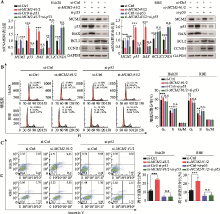
Fig. 7
MCM2 influences the cell cycle and apoptosis of cholangiocarcinoma cells through p53"
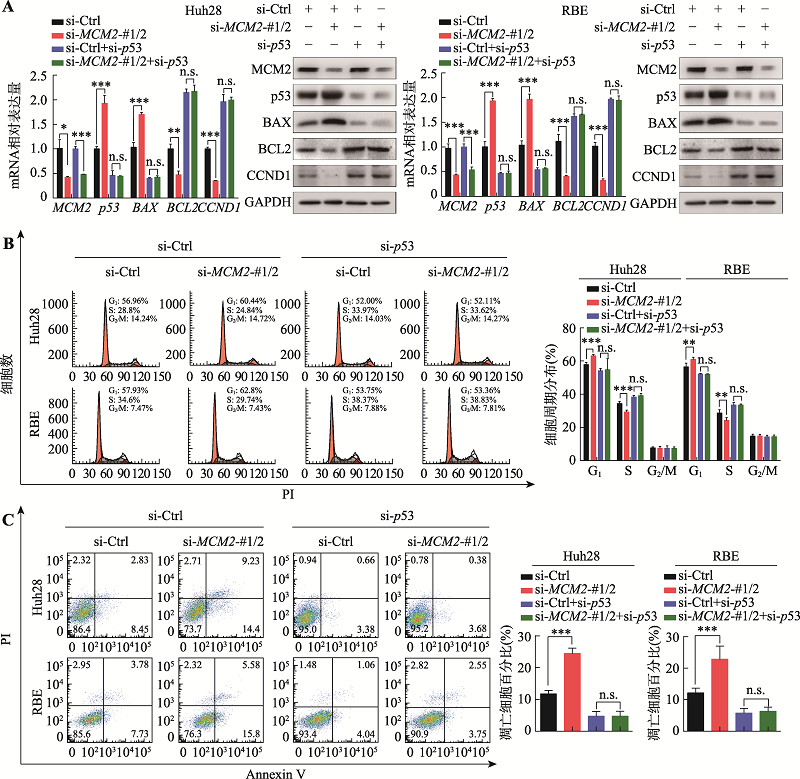
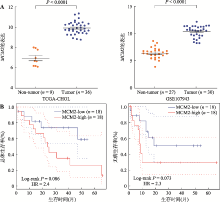
Fig. 8
The expression of MCM2 and its correlation with the overall survival rate and disease free survival rate"
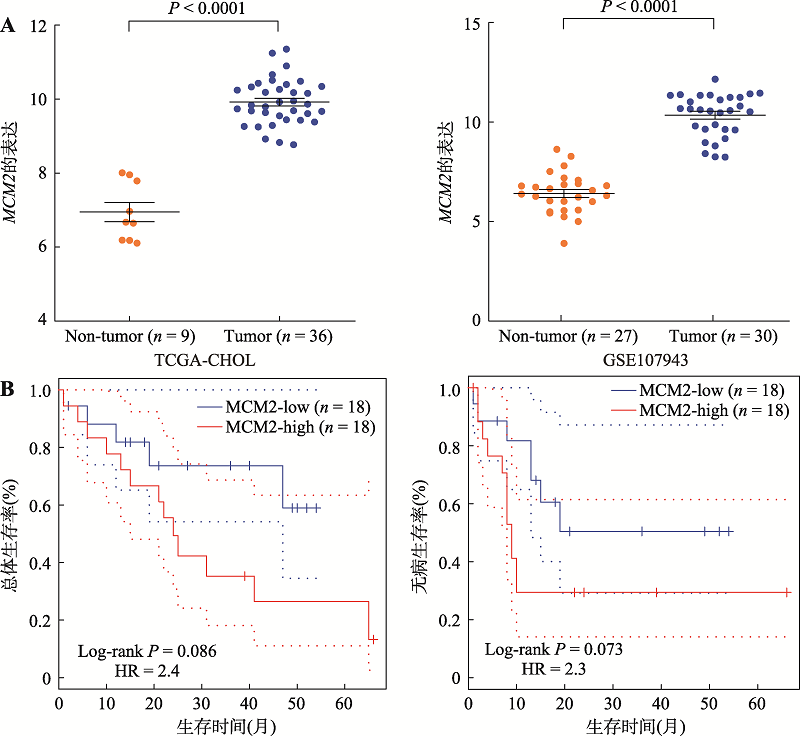
Table 2
Correlation analysis of MCM2 gene mRNA expression level with clinical characteristics and sociodemographic factors in cholangiocarcinoma tissues"
| 特征 | TCGA-CHOL | P值 | GEO(GSE107943) | P值 | ||
|---|---|---|---|---|---|---|
| 高表达(n = 18) | 低表达(n = 18) | 高表达(n = 15) | 低表达(n = 15) | |||
| 年龄,n(%) | ||||||
| ≤60 | 8(57.1) | 6(42.9) | 0.73 | 6(66.7) | 3(33.3) | 0.43 |
| >60 | 10(45.5) | 12(54.5) | 9(42.9) | 12(57.1) | ||
| 性别,n(%) | ||||||
| 男 | 7(43.8) | 9(56.2) | 0.74 | 14(58.3) | 10(41.7) | 0.17 |
| 女 | 11(55.0) | 9(45.0) | 1(16.7) | 5(83.8) | ||
| TNM病理分期,n(%) | ||||||
| III+IV | 3(37.5) | 5(62.5) | 0.69 | 7(77.8) | 2(22.2) | 0.11 |
| I+II | 15(53.6) | 13(46.4) | 8(38.1) | 13(61.9) | ||
| [1] | Razumilava N, Gores GJ. Cholangiocarcinoma. Lancet, 2014,383(9935):2168-2179. |
| [2] | Khan SA, Genus T, Morement H, Murphy A, Rous B, Tataru D. Global trends in mortality from intrahepatic and extrahepatic cholangiocarcinoma. J Hepatol, 2019,71(6):1261-1262. |
| [3] | Khan SA, Taylor-Robinson SD, Toledano MB, Beck A, Elliott P, Thomas HC. Changing international trends in mortality rates for liver, biliary and pancreatic tumours. J Hepatol, 2002,37(6):806-813. |
| [4] | Guglielmi A, Ruzzenente A, Valdegamberi A, Bagante F, Conci S, Pinna AD, Ercolani G, Giuliante F, Capussotti L, Aldrighetti L, Iacono C. Hepatolithiasis-associated cholangiocarcinoma: results from a multi-institutional national database on a case series of 23 patients. Eur J Surg Oncol, 2014,40(5):567-575. |
| [5] | Zhang H, Yang T, Wu MC, Shen F. Intrahepatic cholangiocarcinoma: epidemiology, risk factors, diagnosis and surgical management. Cancer Lett, 2016,379(2):198-205. |
| [6] | Banales JM, Marin JJG, Lamarca A, Rodrigues PM, Khan SA, Roberts LR, Cardinale V, Carpino G, Andersen JB, Braconi C, Calvisi DF, Perugorria MJ, Fabris L, Boulter L, Macias RIR, Gaudio E, Alvaro D, Gradilone SA, Strazzabosco M, Marzioni M, Coulouarn C, Fouassier L, Raggi C, Invernizzi P, Mertens JC, Moncsek A, Rizvi S, Heimbach J, Koerkamp BG, Bruix J, Forner A, Bridgewater J, Valle JW, Gores GJ. Cholangiocarcinoma 2020: the next horizon in mechanisms and management. Nat Rev Gastroenterol Hepatol, 2020,17(9):557-588. |
| [7] | Weber SM, Ribero D, O'reilly EM, Kokudo N, Miyazaki M, Pawlik TM. Intrahepatic cholangiocarcinoma: expert consensus statement. HPB (Oxford), 2015,17(8):669-680. |
| [8] | Parker MW, Botchan MR, Berger JM. Mechanisms and regulation of DNA replication initiation in eukaryotes. Crit Rev Biochem Mol Biol, 2017,52(2):107-144. |
| [9] | Dudderidge TJ, Stoeber K, Loddo M, Atkinson G, Fanshawe T, Griffiths DF, Williams GH. Mcm2, Geminin, and KI67 define proliferative state and are prognostic markers in renal cell carcinoma. Clin Cancer Res, 2005,11(7):2510-2517. |
| [10] | Guzinska-Ustymowicz K, Pryczynicz A, Kemona A, Czyzewska J. Correlation between proliferation markers: PCNA, KI-67, MCM-2 and antiapoptotic protein Bcl-2 in colorectal cancer. Anticancer Res, 2009,29(8):3049-3052. |
| [11] | Deng MJ, Sun JJ, Xie SH, Zhen H, Wang YC, Zhong AL, Zhang HQ, Lu RQ, Guo L. Inhibition of MCM2 enhances the sensitivity of ovarian cancer cell to carboplatin. Mol Med Rep, 2019,20(3):2258-2266. |
| [12] | Seo J, Seong D, Lee SR, Oh DB, Song J. Post-translational regulation of ARF: perspective in cancer. Biomolecules, 2020,10(8):1143. |
| [13] | Mercadante A A, Kasi A. Genetics, cancer cell cycle phases. In: Statpearls, Treasure Island (FL): StatPearls Publishing, 2021. |
| [14] | Lee EW, Seong D, Song J. Cytoplasmic myc is an anti- necroptotic protein. Mol Cell Oncol, 2020,7(6):1817697. |
| [15] | Yang WX, Pan YY, You CG. CDK1, CCNB1, CDC20, BUB1, MAD2L1, MCM3, BUB1B, MCM2, and RFC4 may be potential therapeutic targets for hepatocellular carcinoma using integrated bioinformatic analysis. Biomed Res Int, 2019,2019:1245072. |
| [16] | Zhou GY, Soufan O, Ewald J, Hancock REW, Basu N, Xia JG. Networkanalyst 3.0: a visual analytics platform for comprehensive gene expression profiling and meta-analysis. Nucleic Acids Res, 2019,47(W1):W234-W241. |
| [17] | Kuleshov MV, Jones MR, Rouillard AD, Fernandez NF, Duan QN, Wang ZC, Koplev S, Jenkins SL, Jagodnik KM, Lachmann A, Mcdermott MG, Monteiro CD, Gundersen GW, Ma'ayan A. Enrichr: a comprehensive gene set enrichment analysis web server 2016 update. Nucleic Acids Res, 2016,44(W1):W90-W97. |
| [18] | Joerger AC, Fersht AR. The p53 pathway: origins, inactivation in cancer, and emerging therapeutic approaches. Annu Rev Biochem, 2016,85:375-404. |
| [19] | El-Diwany R, Pawlik TM, Ejaz A. Intrahepatic cholangiocarcinoma. Surg Oncol Clin N Am, 2019,28(4):587-599. |
| [20] | Stoeber K, Tlsty TD, Happerfield L, Thomas GA, Romanov S, Bobrow L, Williams ED, Williams GH. DNA replication licensing and human cell proliferation. J Cell Sci, 2001,114(Pt 11):2027-2041. |
| [21] | Kristensen TP, Maria Cherian R, Gray FC, Macneill SA. The haloarchaeal MCM proteins: bioinformatic analysis and targeted mutagenesis of the β7-β8 and β9-β10 hairpin loops and conserved zinc binding domain cysteines. Front Microbiol, 2014,5:123. |
| [22] | Semple JW, Duncker BP. ORC-associated replication factors as biomarkers for cancer. Biotechnol Adv, 2004,22(8):621-631. |
| [23] | Cheung CHY, Hsu CL, Chen KP, Chong ST, Wu CH, Huang HC, Juan HF. MCM2-regulated functional networks in lung cancer by multi-dimensional proteomic approach. Sci Rep, 2017,7(1):13302. |
| [24] | Yang J, Xie Q, Zhou H, Chang L, Wei W, Wang Y, Li H, Deng ZX, Xiao YL, Wu JZ, Xu P, Hong XC. Proteomic analysis and NIR-II imaging of MCM2 protein in hepatocellular carcinoma. J Proteome Res, 2018,17(7):2428-2439. |
| [25] | Forsburg SL. Eukaryotic MCM proteins: beyond replication initiation. Microbiol Mol Biol Rev, 2004,68(1):109-131. |
| [26] | Snyder M, Huang XY, Zhang JJ. The minichromosome maintenance proteins 2-7 (mcm2-7) are necessary for RNA polymerase II (pol II)-mediated transcription. J Biol Chem, 2009,284(20):13466-13472. |
| [27] | Holland L, Gauthier L, Bell-Rogers P, Yankulov K. Distinct parts of minichromosome maintenance protein 2 associate with histone H3/H4 and RNA polymerase II holoenzyme. Eur J Biochem, 2002,269(21):5192-5202. |
| [28] | Yankulov K, Todorov I, Romanowski P, Licatalosi D, Cilli K, Mccracken S, Laskey R, Bentley DL. MCM proteins are associated with RNA polymerase II holoenzyme. Mol Cell Biol, 1999,19(9):6154-6163. |
| [29] | Hubbi ME, Luo WB, Baek JH, Semenza GL. MCM proteins are negative regulators of hypoxia-inducible factor 1. Mol Cell, 2011,42(5):700-712. |
| [30] | Liu LM, Zhang P, Bai M, He LJ, Zhang L, Liu T, Yang Z, Duan ML, Liu MN, Liu BJ, Du R, Qian Q, Sun SR. p53 upregulated by HIF-1α promotes hypoxia-induced G2/M arrest and renal fibrosis in vitro and in vivo. J Mol Cell Biol, 2019,11(5):371-382. |
| [1] | Jiadan Chen, Tao Lin, Wan Wang, Cheng Jin, Jianru Zuo, Jinqiang Nian. Identification and gene mapping of hry1 mutant in rice [J]. Hereditas(Beijing), 2025, 47(7): 797-812. |
| [2] | Rui He, Xiujuan Zheng, Ningning Wang, Xuying Li, Mingqi Li, Shijing Nian, Kewei Wang. Identification of PANoptosis-related lncRNAs in hepatocellular carcinoma based on bioinformatics and construction of a prognostic model [J]. Hereditas(Beijing), 2025, 47(4): 456-475. |
| [3] | Gulimire·Abudureyimu , Ying Chen, Shuhong Tang, Hong Dong, Liqin Wang, Yangsheng Wu, Juncheng Huang, Jiapeng Lin. Molecular mechanism of Mfn2 alleviating endoplasmic reticulum stress and inhibiting apoptosis of sheep follicular granulosa cells [J]. Hereditas(Beijing), 2025, 47(3): 342-350. |
| [4] | Run Li, Hong Shi. Function of Bcl-2 gene and its mechanism on body size adaptive evolution in primates [J]. Hereditas(Beijing), 2025, 47(11): 1231-1243. |
| [5] | Daxuan Zhang, Shenru Dai, Yinqiu Cui. The migration and evolutionary mechanisms of northern Asian populations from the perspective of ancient genomics [J]. Hereditas(Beijing), 2025, 47(1): 34-45. |
| [6] | Yang Jian, Shi Guojuan, Peng Anghui, Xu Qingbo, Wang Ruiqi, Xue Lei, Yu Xinyang, Sun Yihao. Tip60-FOXO regulates JNK signaling mediated apoptosis in Drosophila [J]. Hereditas(Beijing), 2024, 46(6): 490-501. |
| [7] | Lingling Wu, Xiaoyu Zhang, Xiao Li, Jianjun Jin, Gongshe Yang, Xin’e Shi. miR-196b-5p promotes myoblast proliferation and differentiation [J]. Hereditas(Beijing), 2023, 45(5): 435-446. |
| [8] | Jinyi Zhang, Yumo He, Jingyu Zhou, Shufeng Weng, Huixia Ma, Taiyue Lin, Ying Xu. Hsa_circ_0007460 affects the survival of intracellular Mycobacterium tuberculosis by regulating autophagy and apoptosis of macrophages [J]. Hereditas(Beijing), 2023, 45(11): 1039-1051. |
| [9] | Jing’ao Lu, Chunyan Huang, Zhiyin Lin, Zheng Tang, Ning Ma, Zhibin Huang. The role of the cd99l2 gene on leukocyte interstitial migration in zebrafish [J]. Hereditas(Beijing), 2022, 44(9): 798-809. |
| [10] | Huan Zhao, Bin Zhou. Pancreatic beta cells regeneration [J]. Hereditas(Beijing), 2022, 44(5): 370-382. |
| [11] | Zhilu Fan, Liyan Yang, Na Zhang, Dan Feng, Jing Guo, Chen Chang, Qing Yuan, Yan Cai, Yu Zhang, Wenqiang Wei, Mingrong Wang, Jiajie Hao. NEFL promotes invasion and migration of esophageal squamous carcinoma cells via the EGFR/AKT/S6 pathway [J]. Hereditas(Beijing), 2022, 44(4): 322-334. |
| [12] | Xiangwei Tang, Dan Chu, Saina Yan, Yanfei Yin, Qiao Bian, Bo Weng, Bin Chen, Maoliang Ran. MiR-191 promotes the porcine immature Sertoli cell proliferation by targeting the BDNF gene through activating the PI3K/AKT signaling pathway [J]. Hereditas(Beijing), 2021, 43(7): 680-693. |
| [13] | Shumin Chen, Ling Ma, Shan Cen. Progress of SLFN family proteins in tumor and virus infection [J]. Hereditas(Beijing), 2020, 42(5): 444-451. |
| [14] | Di Wang, Liyan Yang, Zou Liu, Jing Yu, Minjie Zhang, Yu Zhang, Yan Cai, Xin Xu, Jiajie Hao, Mingrong Wang. PAI-1 overexpression promotes invasion and migration of esophageal squamous carcinoma cells [J]. Hereditas(Beijing), 2020, 42(3): 287-295. |
| [15] | Wanyin Chen, Yidan Yan, Xiaojin Luan, Min Wang, Jie Fang. Functional analysis of CG8005 gene in Drosophila testis [J]. Hereditas(Beijing), 2020, 42(11): 1122-1132. |
| Viewed | ||||||
|
Full text |
|
|||||
|
Abstract |
|
|||||

