Hereditas(Beijing) ›› 2025, Vol. 47 ›› Issue (12): 1340-1350.doi: 10.16288/j.yczz.25-069
• Research Article • Previous Articles Next Articles
Typological and ancient DNA evidences reveal the influence of Ming dynasty migration on the Shengjizui population in Bishan, Chongqing
Boxuan Zhao1( ), Lei Gao2, Ziqing Lin3, Yuanyuan Shen1, Jianxue Xiong1, Wei Huang2, Dadi Li2, Panxin Du1, Shaoqing Wen1()
1. Fudan Institute of Archaeological Science ,Fudan University Shanghai 200433, China 2. Chongqing Institute of Cultural Relics and Archaeology Chongqin 400013 . China 3. Department of Cultural Heritage and Museology ,Fudan University Shanghai 200433, China
-
Received:2025-04-30Revised:2025-08-17Online:2025-12-20Published:2025-09-05 -
Contact:Shaoqing Wen E-mail:1624480072@qq.com;wenshaoqing@fudan.edu.cn -
Supported by:Lantai Young Scholars Program of Chinese Academy of History(2022LTQN602);Research Project of Chongqing Municipal Science and Technology Bureau(cstc2022jxjl0130)

Cite this article
Boxuan Zhao, Lei Gao, Ziqing Lin, Yuanyuan Shen, Jianxue Xiong, Wei Huang, Dadi Li, Panxin Du, Shaoqing Wen. Typological and ancient DNA evidences reveal the influence of Ming dynasty migration on the Shengjizui population in Bishan, Chongqing[J]. Hereditas(Beijing), 2025, 47(12): 1340-1350.
share this article
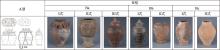
Fig. 1
Classification of barn jars from the Shengjizui Tomb Cluster"
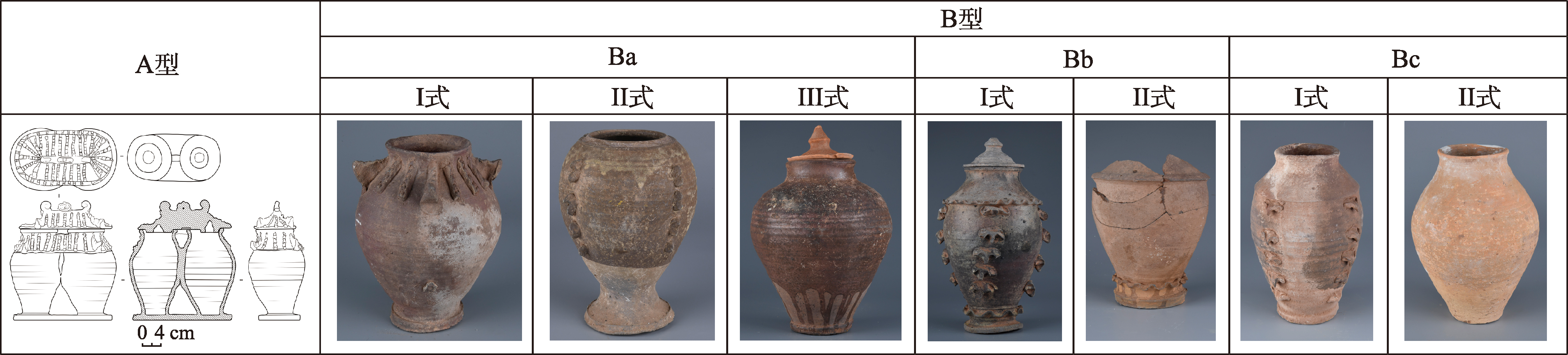
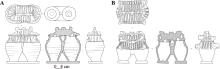
Fig. 2
The double barn jars"
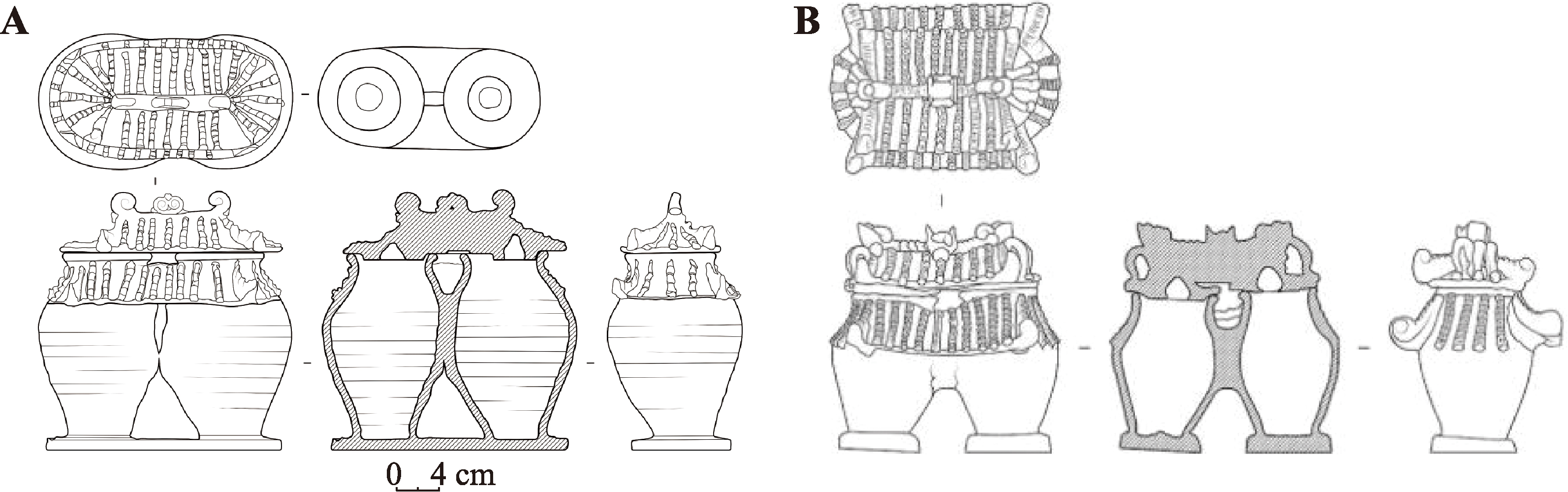
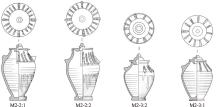
Fig. 3
The barn jars unearthed from the baijiayuan Tomb Cluster"
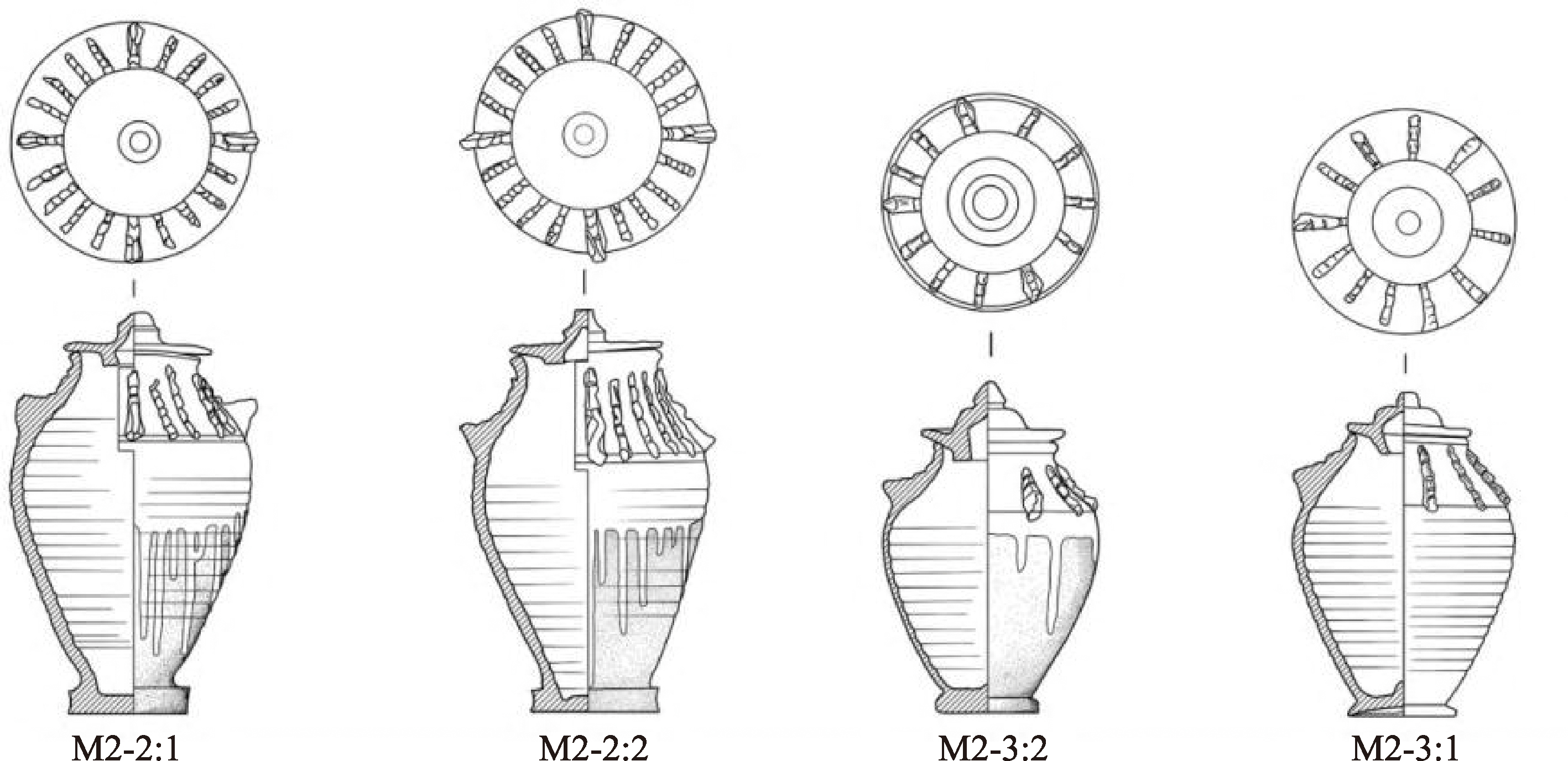
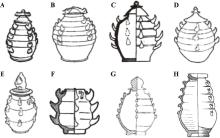
Fig. 4
The barn jars unearthed from Tang and Song tombs in the Hu-Guang region"

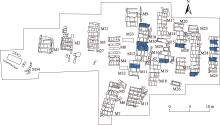
Fig. 5
Aerial view of the Shengjizui tomb cluster (the marked-colored ones are sampling tombs)"
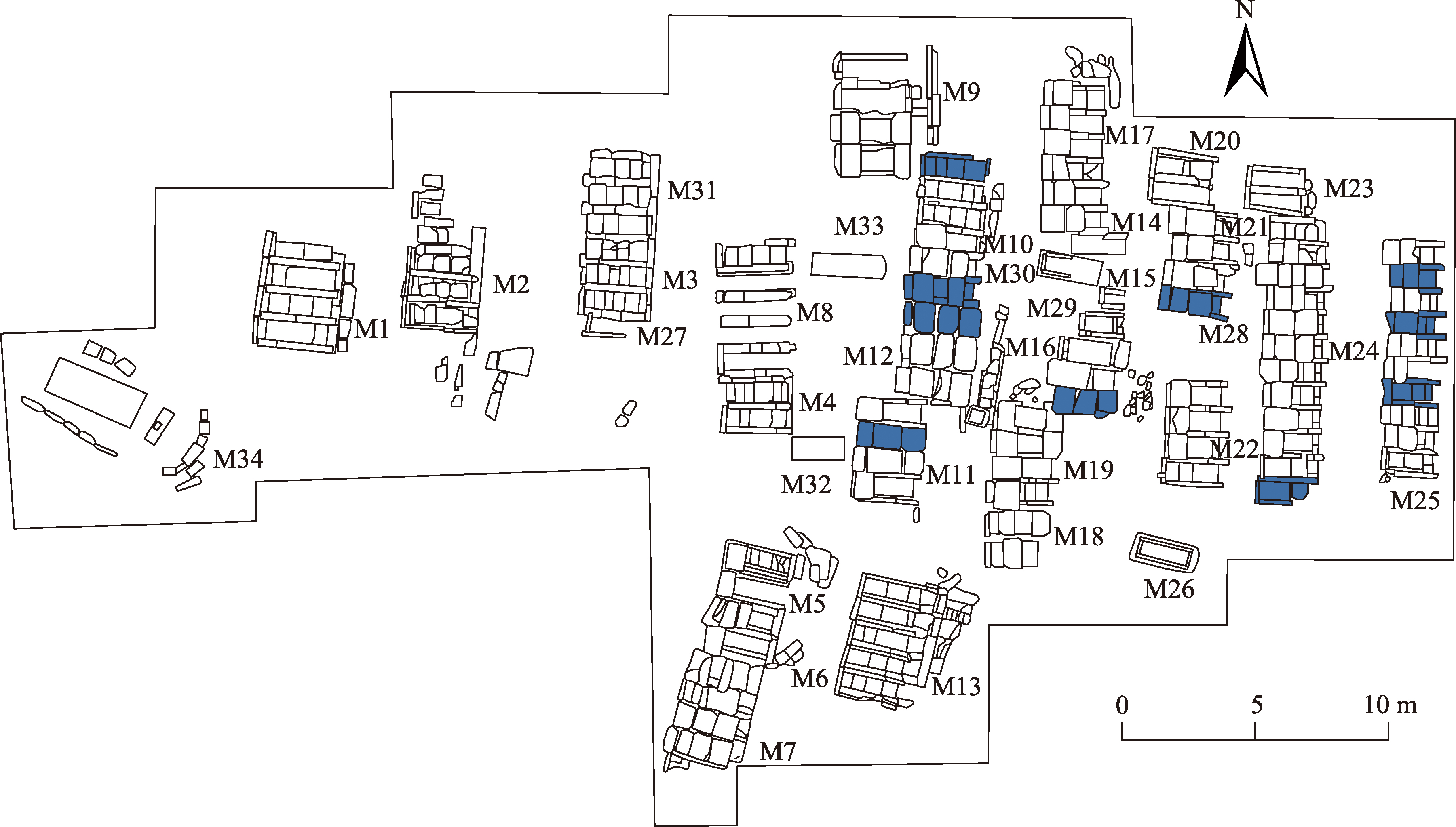
Table 1
Human bone test results from the Shengjizui tomb cluster"
| 遗址 | 样本编号 | 内源性(%) | 线粒体DNA单倍群 | Y染色体单倍群 |
|---|---|---|---|---|
| 生基嘴M25-2 | J41608 | 11.35 | F3a1 | / |
| 生基嘴M25-7 | J22118 | 19.65 | M7c1c | / |
| 生基嘴M25-4 | J41607 | 5.50 | F2c | D1ala1a1b-Z31616/etc*(xZ31625,Z31584) |
| 生基嘴M11-2 | J40207 | 12.36 | B5b1 | D1ala1a1b-Z31611 |
| 生基嘴M16-3 | J50208 | 1.63 | B4b1a2 | D1ala1a1b-Z31599*(xZ31625) |
| 生基嘴M12-1 | J50704 | 5.25 | D4 | D1ala1a1b-Z31601/etc*(xZ31584) |
| 生基嘴M24-11 | J51405 | 17.55 | B5a1c1a1 | / |
| 生基嘴M10-1 | J52804 | 3.31 | G2a4 | D1ala1a1a-Z31601/etc*(xZ31584) |
| 生基嘴M10-6 | J52805 | 1.99 | A14 | / |
| 生基嘴M28-2 | J61811 | 7.65 | G1a | D1ala1a1b-Z31623 |
Fig. 6
PCA plot of mtDNA from human bones excavated at the Shengjizui tomb cluster"
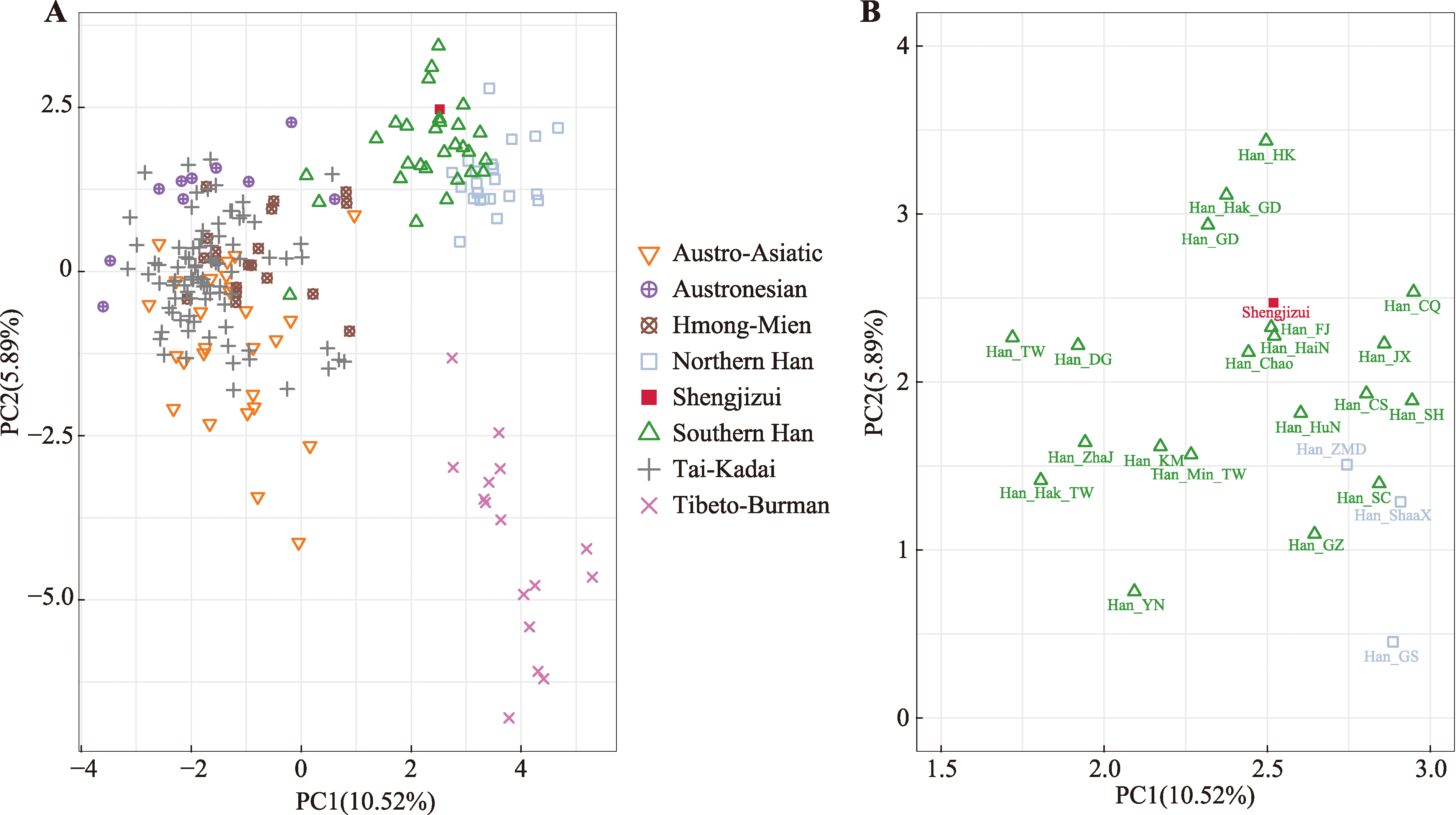
Table 2
D1a1a1a1a1a distribution frequency rank"
| 采样点 | 总采样量 | D1a1a1a1a数量 | D1a1a1a1a频率(%) |
|---|---|---|---|
| 西藏 | 85 | 3 | 3.5294 |
| 四川 | 1,238 | 31 | 2.5040 |
| 甘肃 | 65 | 2 | 1.6878 |
| 内蒙古 | 624 | 9 | 1.4423 |
| 宁夏 | 148 | 2 | 1.3514 |
| 重庆 | 99 | 1 | 1.0101 |
| 北京 | 302 | 3 | 0.9934 |
| 陕西 | 316 | 2 | 0.6329 |
| 江苏 | 498 | 3 | 0.6024 |
| 辽宁 | 343 | 2 | 0.5831 |
| 河南 | 518 | 3 | 0.5792 |
| 河北 | 230 | 1 | 0.4348 |
| 安徽 | 235 | 1 | 0.4255 |
| 新疆 | 264 | 1 | 0.3788 |
| 江西 | 307 | 1 | 0.3257 |
| 山东 | 736 | 2 | 0.2717 |
| 广西 | 403 | 1 | 0.2481 |
Table 3
D1a1a1a1a1b distribution frequency rank"
| 采样点 | 总采样量 | D1a1a1a1b数量 | D1a1a1a1b频率(%) |
|---|---|---|---|
| 西藏 | 85 | 8 | 9.4118 |
| 四川 | 1,238 | 90 | 7.2698 |
| 北京 | 302 | 2 | 0.6623 |
| 福建 | 274 | 1 | 0.3650 |
| 广西 | 403 | 1 | 0.2481 |
| 内蒙古 | 624 | 1 | 0.1603 |
| [1] | Xiong JX, Tao YC, Ben MX, Yang YS, Du PX, Allen E, Wang H, Xu YR, Yu Y, Meng HL, Bao HQ, Zhou BY, Chen GK, Li H, Wen SQ. Uniparental genetic analyses reveal multi-ethnic background of Dunhuang Foyemiaowan population (220-907 CE) with typical Han Chinese archaological culture. Front Ecol Evol, 2022, 10: 901295. |
| [2] |
Wang K, Tobias B, Pany-Kucera D, Berner M, Eggers S, Gnecchi-Ruscone AG, Zlámalová D, Gretzinger J, Ingrová P, Rohrlach AB, Tuke J, Traverso L, Klostermann P, Koger R, Friedrich R, Wiltschke-Schrotta K, Kirchengast S, Liccardo S, Wabnitz S, Vida T, Geary PJ, Daim F, Pohl W, Krause J, Hofmanová Z. Ancient DNA reveals reproductive barrier despite shared Avar-period culture. Nature, 2025, 638(8052): 1007-1014.
pmid: 39814885 |
| [3] |
Sun XF, Wen SQ, Lu CQ, Zhou BY, Curnoe D, Lu HY, Li HC, Wang W, Cheng H, Yi SW, Jia X, Du PX, Xu XH, Lu YM, Lu Y, Zheng HX, Zhang H, Sun C, Wei LH, Han F, Huang J, Edwards RL, Jin L, Li H, Li H. Ancient DNA and multimethod dating confirm the late arrival of anatomically modern humans in southern China. Proc Natl Acad Sci USA, 2021, 118(8): e2019158118.
pmid: 33558418 |
| [4] |
Knapp M, Clarke AC, Horsburgh KA, Matisoo-Smith EA. Setting the stage-building and working in an ancient DNA laboratory. Ann Anat, 2012, 194(1): 3-6.
pmid: 21514120 |
| [5] |
Meyer M, Kircher M. Illumina sequencing library preparation for highly multiplexed target capture and sequencing. Cold Spring Harb Protoc, 2010, 2010(6): pdb.prot5448.
pmid: 20516186 |
| [6] |
Dabney J, Knapp M, Glocke I, Gansauge MT, Weihmann A, Nickel B, Valdiosera C, García N, Pääbo S, Arsuaga JL, Meyer M. Complete mitochondrial genome sequence of a Middle Pleistocene cave bear reconstructed from ultrashort DNA fragments. Proc Natl Acad Sci USA, 2013, 110(39): 15758-15763.
pmid: 24019490 |
| [7] |
Renaud G, Slon V, Duggan AT, Kelso J. Schmutzi: estimation of contamination and endogenous mitochondrial consensus calling for ancient DNA. Genome Biol, 2015, 16: 224.
pmid: 26458810 |
| [8] |
Thorvaldsdóttir H, Robinson JT, Mesirov JP. Integrative Genomics Viewer (IGV): high-performance genomics data visualization and exploration. Brief Bioinform, 2013, 14(2): 178-192.
pmid: 22517427 |
| [9] |
Weissensteiner H, Pacher D, Kloss-Brandstätter A, Fprer L, Specht G, Bandelt HJ, Kronenberg F, Salas A, Schönherr S. HaploGrep 2: mitochondrial haplogroup classification in the era of high-throughput sequencing. Nucleic Acids Res, 2016, 44(W1): W58-W63.
pmid: 27084951 |
| [10] |
Ralf A, Montiel González D, Zhong KY, Kayser M. Yleaf: software for human Y-chromosomal haplogroup inference from next-generation sequencing data. Mol Biol Evol, 2018, 35(5): 1291-1294.
pmid: 29518227 |
| [11] |
Xiong JX, Du PX, Chen GK, Tao YC, Zhou BY, Yang YS, Wang H, Yu Y, Chang X, Allen E, Sun C, Zhou JJ, Zou YT, Xu YR, Meng HL, Tan JZ, Li H, Wen SQ. Sex-biased population admixture mediated subsistence strategy transition of Heishuiguo people in Han Dynasty Hexi Corridor. Front Genet, 2022, 13: 827277.
pmid: 35356424 |
| [12] |
Yan YQ, Du PX, Zhang JH, Li RL, Bao HQ, Fang QL, Gao Y, Meng HL, Xu YR, Shi HC, Yan HL, Chang X, Ren XY, Wang L, Ru K, Allen E, Li JH, Wen SQ, Zhang NP. Mitogenome analysis reveals predominantly ancient Yellow River origin of population inhabiting Datong agro-pastoral ecotone along Great Wall. Mol Genet Genomics, 2023, 298(6): 1321-1330.
pmid: 37498358 |
| [13] |
Kutanan W, Shoocongdej R, Srikummool M, Hübner A, Thanatip S, Srithawong S, Kampuansai J, Stoneking M. Cultural variation impacts paternal and maternal genetic lineages of the Hmong-Mien and Sino-Tibetan groups from Thailand. Eur J Hum Genet, 2020, 28(11): 1563-1579.
pmid: 32690935 |
| [14] |
Duong NT, Macholdt E, Ton ND, Arias L, Schröder R, Phong NV, Thuy VTB, Ha NH, Hue HTT, Xuan NT, Oahn KTP, Hien LTT, Hoang NH, Pakendorf B, Stoneking M, Hai NV. Complete human mtDNA genome sequences from Vietnam and the phylogeography of Mainland Southeast Asia. Sci Rep, 2018, 8(1): 11651.
pmid: 30076323 |
| [15] |
Kutanan W, Kampuansai J, Srikummool M, Brunelli A, Ghirotto S, Arias L, Macholdt E, Schröder R, Stoneking M. Contrasting paternal and maternal genetic histories of Thai and Lao populations. Mol Biol Evol, 2019, 36(7): 1490-1506.
pmid: 30980085 |
| [16] |
Macholdt E, Arias L, Duong NT, Duong ND, Ton ND, Phong NV, Schröder R, Pakendorf B, Hai NV, Stoneking M. The paternal and maternal genetic history of Vietnamese populations. Eur J Hum Genet, 2020, 28(5): 636-645.
pmid: 31827276 |
| [17] | 重庆市文物考古研究院, 璧山区文物管理所. 璧山区白家院墓地考古发掘简报. 长江文明, 2024, (1): 20-29. |
| [18] | 黄伟. 重庆地区明代墓葬概述. 长江文明, 2020, (4): 35-39. |
| [19] | 黄义军. 南方宋墓出土盘口瓶和多角坛的分区研究. 考古与文物, 2008, (4): 92-104. |
| [20] | 周世荣. 湖南古墓与古窑址. 长沙: 岳麓书社, 2004. |
| [21] | 重庆市文物考古所, 潼南县文物管理所. 潼南县崇龛梁家嘴墓群考古发掘简报. 重庆: 科学出版社, 2010. |
| [22] | 周静. 川渝地区明墓出土谷仓罐研究. 考古, 2019, (12): 92-105. |
| [23] |
Derenko M, Malyarchuk B, Grzybowski T, Denisova G, Rogalla U, Perkova M, Dambueva I, Zakharov I. Origin and post-glacial dispersal of mitochondrial DNA haplogroups C and D in northern Asia. PloS One, 2010, 5(12): e15214.
pmid: 21203537 |
| [24] |
Kong QP, Sun C, Wang HW, Wang WZ, Zhong L, Hao XD, Pan H, Wang SY, Cheng YT, Zhu CL, Wu SF, Liu LN, Jin JQ, Yao YG, Zhang YP. Large-scale mtDNA screening reveals a surprising matrilineal complexity in east Asia and its implications to the peopling of the region. Mol Biol Evol, 2011, 28(1): 513-522.
pmid: 20713468 |
| [25] |
Kutanan W, Kampuansai J, Srikummool M, Kangwanpong D, Ghirotto S, Brunelli A, Stoneking M. Complete mitochondrial genomes of Thai and Lao populations indicate an ancient origin of Austroasiatic groups and demic diffusion in the spread of Tai-Kadai languages. Hum Genet, 2017, 136(1): 85-98.
pmid: 27837350 |
| [26] |
Wen B, Li H, Gao S, Mao XY, Gao Y, Li F, Zhang F, He YG, Dong YL, Zhang YJ, Huang WJ, Jin JZ, Xiao CJ, Lu DR, Chakraborty R, Su B, Deka R, Jin L. Genetic structure of Hmong-Mien speaking populations in East Asia as revealed by mtDNA lineages. Mol Biol Evol, 2005, 22(3): 725-734.
pmid: 15548747 |
| [27] | Ko AMS, Chen CY, Fu QM, Delfin F, Li MK, Chiu HL, Stoneking M, Ko YC. Early Austronesians: into and out of Taiwan. Am J Hum Genet, 2014, 94(3): 426-436. [DOI]https://pubmed.ncbi.nlm.nih.gov/24607387/ |
| [28] | Wang XJ, Qian EF, Li Y, Song ZY, Zhao H, Xie HX, Li CX, Huang J, Jiang L. A genetic sub-structure study of the Tibetan population in Southwest China. Hereditas(Beijing), 2020, 42(6): 565-576. |
|
王小娟, 钱恩芳, 李悦, 宋正阳, 赵慧, 谢何鑫, 李彩霞, 黄江, 江丽. 中国西南地区藏族人群遗传亚结构研究. 遗传, 2020, 42(6): 565-576.
pmid: 17668442 |
|
| [29] | Li H, Cai XY, Winograd-Cort ER, Wen B, Cheng X, Qin ZD, Liu WH, Liu YF, Pan SL, Qian J, Tan CC, Jin L. Mitochondrial DNA diversity and population differentiation in southern East Asia. Am J Phys Anthropol, 2007, 134(4): 481-488. |
| [30] |
Wang MG, Huang YG, Liu KJ, Wang ZY, Zhang MH, Yuan HB, Duan SH, Wei LH, Yao HB, Sun QX, Zhong J, Tang RK, Chen J, Sun YT, Li XP, Su HR, Yang QX, Hu LP, Yun LB, Yang JB, Nie SJ, Cai Y, Yan JW, Zhou K, Wang CC, 10K_CPGDP Consortium, Zhu BF, Liu C, He GL. Multiple human population movements and cultural dispersal events shaped the landscape of Chinese paternal heritage. Mol Biol Evol, 2024, 41(7): msae122.
pmid: 38885310 |
| [31] |
Tao L, Yuan HB, Zhu KY, Liu XY, Guo JX, Min R, He HF, Cao DD, Yang XM, Zhou ZQ, Wang R, Zhao DY, Ma H, Chen J, Zhao J, Liu YF, He YL, Suo DH, Zhang RJ, Li S, Li L, Yang F, Li HC, Zhang L, Jin L, Wang CC. Ancient genomes reveal millet farming-related demic diffusion from the Yellow River into southwest China. Curr Biol, 2023, 33(22): 4995-5002.e7
pmid: 37852263 |
| [32] | 王煜, 李孟雅. 古礼今义:北宋蓝田吕氏家族墓地墓葬排列及相关问题补论. 考古与文物, 2024, (7): 110-116. |
| [33] | 李映发. 元末至明末湖广入川移民考察. 长江文明, 2017, (4): 20-35. |
| [34] | 赵君丽. 人口迁移的性别选择性与女性移民问题. 南京人口管理干部学院学报, 2002, 18(2): 29-32. |
| No related articles found! |
| Viewed | ||||||
|
Full text |
|
|||||
|
Abstract |
|
|||||

