Hereditas(Beijing) ›› 2026, Vol. 48 ›› Issue (1): 61-75.doi: 10.16288/j.yczz.25-181
• Review • Previous Articles Next Articles
Progress on miRNAs involved in regulating plant responses to drought and salt stresses
Haodong Li1,2( ), Jiaxin Meng2, Hua Wang1, Ningguang Dong2()
- 1. National Key Laboratory for Germplasm Innovation and Utilization of Horticultural Crops, College of Horticulture and Forestry Sciences, Huazhong Agricultural University, Wuhan 430070, China
2. Beijing Engineering Research Center for Deciduous Fruit Trees, Key Laboratory of Biology and Genetic Improvement of Horticultural Crops (North China), Ministry of Agriculture and Rural Affairs, Institute of Forestry and Pomology, Beijing Academy of Agriculture and Forestry Sciences, Beijing 100093, China
-
Received:2025-06-23Revised:2025-10-31Online:2026-01-20Published:2025-11-18 -
Contact:Ningguang Dong E-mail:2240898591@qq.com;dongningguang@baafs.net.cn -
Supported by:National Natural Science Foundation of China(32401631);Beijing Academy of Agriculture and Forestry Science Innovation Capability Construction Special Project(KJCX20251401)

Cite this article
Haodong Li, Jiaxin Meng, Hua Wang, Ningguang Dong. Progress on miRNAs involved in regulating plant responses to drought and salt stresses[J]. Hereditas(Beijing), 2026, 48(1): 61-75.
share this article
Add to citation manager EndNote|Reference Manager|ProCite|BibTeX|RefWorks
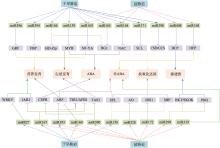
Fig. 1
Partially conserved miRNA regulatory pathways involved in plant drought and salt stress responses GRF: growth-regulating factor; FBP: fructose-1,6-bisphosphatase; HD-Zip: homeodomain-leucine zipper; MYB: myeloblastosis; NF-YA: nuclear transcription factor Y subunit A; BG1: big grain 1; SCL: scarecrow-like; CSD: copper-zinc superoxide dismutase; CCS: copper chaperone for superoxide dismutase; BCP: blue copper protein; OFP: ovate family protein; IAR3: IAA-ala resistant 3; CEPR: cep receptor; ARF: auxin response factor; TIR1/AFB2: transport inhibitor 1/auxin-signaling F-box 2; TAS3: trans acting short interfering RNA 3; SPL: squamosa promoter binding-like protein; AO: ascorbate oxidase; IDS1: indeterminate spikelet 1; SBP: SQUAMOSA promoter binding protein; HKT: high-affinity K+ transporter; SKOR: STELAR K+ outward rectifier; PHO: phosphate。"
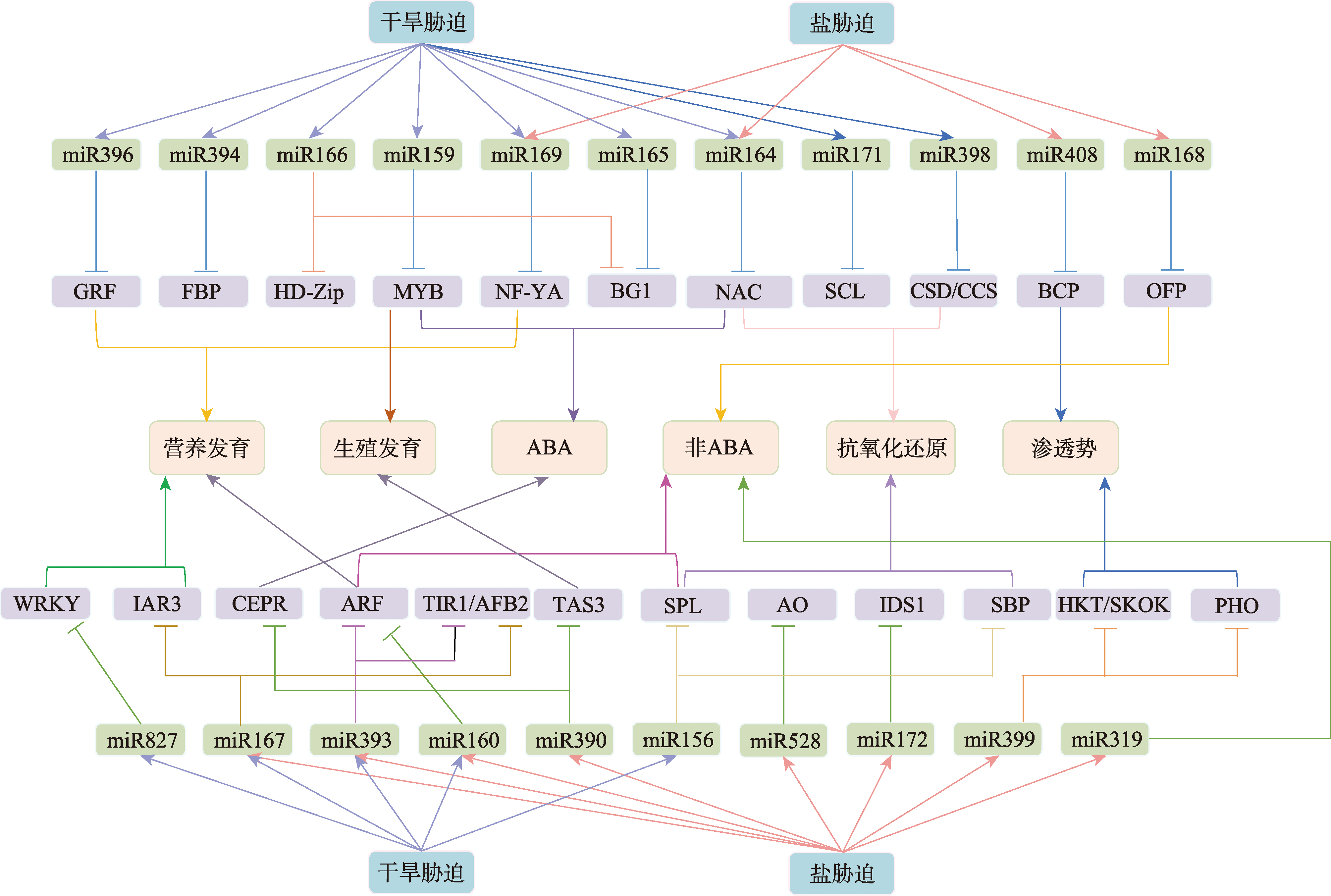
Table 1
The function of miRNAs in plants’ response to drought and salt stress"
| 物种 | miRNA | 胁迫类型 | 生物学功能 | 参考文献 |
|---|---|---|---|---|
| 谷子(Setaria italica) | miR396 | 干旱 | 促进根系发育 | [ |
| 马铃薯(Solanum tuberosum) | miR394 | 干旱 | 促进根系发育 | [ |
| miR169a | 干旱 | 根系纵深扩展 | [ | |
| miR827 | 干旱 | 调节气孔密度 | [ | |
| miR398 | 干旱 | 调节SOD活性,促进ROS清除 | [ | |
| miR156 | 干旱 | 调节花青素合成,减轻氧化损伤 | [ | |
| 玉米(Zea mays) | miR394 | 干旱 | 促进侧根发育 | [ |
| miR166 | 干旱 | 促进维管系统发育 | [ | |
| miR408 | 盐 | 调节木质素合成 | [ | |
| 菊花(Chrysanthemum morifolium) | miR396a | 干旱 | 调节节间生长 | [ |
| 大麦(Hordeum vulgare) | miR393 | 干旱 | 调节气孔密度和保卫细胞长度 | [ |
| miR827 | 干旱 | 影响花期 | [ | |
| 杨树(Populus spp.) | miR159a | 干旱 | 调节气孔开度 | [ |
| miR6445 | 干旱 | 促进ROS清除 | [ | |
| miR319 | 盐 | 调节Na+和K+积累 | [ | |
| miR169 | 盐 | 调节ABA合成 | [ | |
| miR408 | 干旱 | 调控木质素合成 | [ | |
| 竹叶花椒(Zanthoxylum armatum) | miR156 | 干旱 | 影响种子萌发和幼苗生长 | [ |
| 拟南芥(Arabidopsis thaliana) | miR159 | 干旱 | 影响种子萌发 | [ |
| miR160 | 干旱 | 介导生长素信号调控叶片发育 | [ | |
| miR167 | 干旱 | 调节生长素合成 | [ | |
| miR159 | 干旱 | 调节ABA合成 | [ | |
| miR165/166 | 干旱 | 调节ABA合成 | [ | |
| miR399 | 盐 | 调控磷酸盐转运 | [ | |
| miR393 | 盐 | 调节IAA合成 | [ | |
| miR390 | 盐 | 调节APX活性 | [ | |
| 苹果(Malus domestica) | miR156 | 干旱 | 调控生长素信号 | [ |
| miR156 | 干旱 | 调节生长素合成 | [ | |
| miR164 | 干旱 | 调节POD活性,促进ROS清除 | [ | |
| miR156 | 干旱 | 调节类黄酮合成,减轻氧化损伤 | [ | |
| miR171 | 干旱 | 调控抗坏血酸合成,促进ROS清除 | [ | |
| 水稻(Oryza sativa) | miR2105 | 干旱 | 调控ABA合成 | [ |
| miR166 | 干旱 | 调节茎木质部发育 | [ | |
| miR164 | 干旱 | 调节ABA合成 | [ | |
| miR171 | 干旱 | 调节类黄酮合成,减轻氧化损伤 | [ | |
| miR171 | 盐 | 调节脯氨酸含量 | [ | |
| miR820 | 盐 | 调节脯氨酸含量 | [ | |
| miR1848 | 盐 | 调节植物甾醇和BR合成 | [ | |
| miR168 | 盐 | 调节BR合成 | [ | |
| miR528 | 盐 | 调节抗坏血酸合成 | [ | |
| miR172 | 盐 | 调控ROS平衡 | [ | |
| 大豆(Glycine max) | miR398 | 干旱 | 调节POD活性,促进ROS清除 | [ |
| miR4359 | 盐 | 调节抗氧化酶活性,减轻氧化损伤 | [ | |
| miR164 | 盐 | 调控ROS平衡 | [ | |
| 小麦(Triticum aestivum) | miR1119 | 干旱 | 调节抗氧化酶活性,促进ROS清除 | [ |
| 紫花苜蓿(Medicago sativa) | miR156 | 干旱 | 促进花青素合成,减轻氧化损伤 | [ |
| 葡萄(Vitis vinifera) | miR156 | 干旱 | 促进花青素合成,减轻氧化损伤 | [ |
| 白桦(Betula platyphylla) | miR408 | 干旱 | 调节Na+积累 | [ |
| 匍匐剪股颖(Agrostis stolonifera) | miR396 | 盐 | 调节Na+和H+转运 | [ |
| 花生(Arachis hypogaea) | miR160 | 盐 | 介导生长素信号传导 | [ |
| 柽柳(Tamarix chinensis) | miR167 | 盐 | 调节生长素合成 | [ |
| 棉花(Gossypium hirsutum) | miR390 | 盐 | 调节ABA合成 | [ |
| 柳枝稷(Panicum virgatum) | miR319 | 盐 | 调节乙烯合成 | [ |
| 红豆(Abrus precatorius) | miR408 | 干旱 | 调节木质素合成 | [ |
| 油菜(Brassica napus) | miR169n | 干旱 | 调节根系生长 | [ |
| 海竹(Yushania qiaojiaensis) | miR169b | 盐、干旱 | 调节根系生长 | [ |
| 旋花科植物(Jacquemontia pentantha) | miR396 | 干旱 | ‒ | [ |
| 芍药(Paeonia lactiflora) | miR396 | 干旱 | ‒ | [ |
| 蒺藜状苜蓿(Medicago truncatula) | miR156 | 盐 | ‒ | [ |
| 鹰嘴豆(Cicer arietinum) | miR396 | 干旱 | 靶向87种代谢物 | [ |
| 萱草(Hemerocallis fulva) | miR156 | 盐 | 调节根叶生长 | [ |
| 向日葵(Helianthus annuus) | miR390 | 盐 | 调节IAA合成 | [ |
| [1] |
Xiao F, Zhou HP. Plant salt response: perception, signaling, and tolerance. Front Plant Sci, 2023, 13: 1053699.
pmid: 36684765 |
| [2] |
Perincherry L, Stępień Ł, Vasudevan SE. Cross-tolerance and autoimmunity as missing links in abiotic and biotic stress responses in plants: a perspective toward secondary metabolic engineering. Int J Mol Sci, 2021, 22(21): 11945.
pmid: 34769374 |
| [3] | Cataldo E, Puccioni S, Eichmeier A, Mattii GB. Zeolite in vineyard: innovative agriculture management against drought stress. Horticulturae, 2025, 11(8): 897. |
| [4] |
Gottlieb J, Ochman D, Huang CW, Domec JC, Schwartz N, Hartzell S. Translating soil salinity to agricultural salt stress: key salt-tolerance mechanisms for agrohydrologic models. iScience, 2025, 28(8): 113139.
pmid: 40792042 |
| [5] |
Chen XX, Ding YL, Yang YQ, Song CP, Wang BS, Yang SH, Guo Y, Gong ZZ. Protein kinases in plant responses to drought, salt, and cold stress. J Integr Plant Biol, 2021, 63(1): 53-78.
pmid: 33399265 |
| [6] | Yang HH, Zheng BL. Biogenesis, action, function of plant small RNAs and their potential application in agriculture. Hereditas(Beijing), 2025, 47(8): 928-943. |
| 杨怀昊, 郑丙莲. 植物小RNA的产生、作用方式、功能及在农业中的应用前景. 遗传, 2025, 47(8): 928-943. | |
| [7] |
Khraiwesh B, Zhu JK, Zhu JH. Role of miRNAs and siRNAs in biotic and abiotic stress responses of plants. Biochim Biophys Acta, 2012, 1819(2): 137-148.
pmid: 21605713 |
| [8] |
Singh A, Gautam V, Singh S, Sarkar Das S, Verma S, Mishra V, Mukherjee S, Sarkar AK. Plant small RNAs: advancement in the understanding of biogenesis and role in plant development. Planta, 2018, 248(3): 545-558.
pmid: 29968061 |
| [9] |
Xie ZX, Allen E, Fahlgren N, Calamar A, Givan SA, Carrington JC. Expression of Arabidopsis MIRNA genes. Plant Physiol, 2005, 138(4): 2145-2154.
pmid: 16040653 |
| [10] |
Jodder J. Regulation of pri-MIRNA processing: mechanistic insights into the miRNA homeostasis in plant. Plant Cell Rep, 2021, 40(5): 783-798.
pmid: 33454802 |
| [11] |
Gao S, Wang JY, Jiang N, Zhang ST, Wang Y, Zhang J, Li N, Fang YX, Yang L, Chen SS, Yan BB, Huang T, Kuai BK, Wang YX, Chang F, Ren GD. Hyponastic leaves 1 protects pri-miRNAs from nuclear exosome attack. Proc Natl Acad Sci USA, 2020, 117(29): 17429-17437.
pmid: 32636270 |
| [12] |
Dong ZC, Han MH, Fedoroff N. The RNA-binding proteins HYL1 and SE promote accurate in vitro processing of pri-miRNA by DCL1. Proc Natl Acad Sci USA, 2008, 105(29): 9970-9975.
pmid: 18632569 |
| [13] |
Machida S, Chen HY, Adam Yuan Y. Molecular insights into miRNA processing by Arabidopsis thaliana SERRATE. Nucleic Acids Res, 2011, 39(17): 7828-7836.
pmid: 21685453 |
| [14] |
Sun D, Zhang XR. HASTY moves to chromatin for miRNA production. Mol Plant, 2021, 14(3): 364-365.
pmid: 33493678 |
| [15] |
Medley JC, Panzade G, Zinovyeva AY. microRNA strand selection: unwinding the rules. Wiley Interdiscip Rev RNA, 2021, 12(3): e1627.
pmid: 32954644 |
| [16] |
Xu L, Hu YG, Cao Y, Li JR, Ma LG, Li Y, Qi YJ. An expression atlas of miRNAs in Arabidopsis thaliana. Sci China Life Sci, 2018, 61(2): 178-189.
pmid: 29197026 |
| [17] |
Agathokleous E, Sonne C, Benelli G, Calabrese EJ, Guedes RNC. Low-dose chemical stimulation and pest resistance threaten global crop production. Sci Total Environ, 2023, 878: 162989.
pmid: 36948307 |
| [18] |
Iwakawa HO, Tomari Y. Molecular insights into microRNA-mediated translational repression in plants. Mol Cell, 2013, 52(4): 591-601.
pmid: 24267452 |
| [19] |
Huntzinger E, Izaurralde E. Gene silencing by microRNAs: contributions of translational repression and mRNA decay. Nat Rev Genet, 2011, 12(2): 99-110.
pmid: 21245828 |
| [20] |
Baumberger N, Baulcombe DC. Arabidopsis ARGONAUTE1 is an RNA slicer that selectively recruits microRNAs and short interfering RNAs. Proc Natl Acad Sci USA, 2005, 102(33): 11928-11933.
pmid: 16081530 |
| [21] |
Qi YJ, Denli AM, Hannon GJ. Biochemical specialization within Arabidopsis RNA silencing pathways. Mol Cell, 2005, 19(3): 421-428.
pmid: 16061187 |
| [22] |
Gao Z, Ma C, Zheng CC, Yao YX, Du YP. Advances in the regulation of plant salt-stress tolerance by miRNA. Mol Biol Rep, 2022, 49(6): 5041-5055.
pmid: 35381964 |
| [23] |
Sun X, Lin L, Sui N. Regulation mechanism of microRNA in plant response to abiotic stress and breeding. Mol Biol Rep, 2019, 46(1): 1447-1457.
pmid: 30465132 |
| [24] |
Park W, Li JJ, Song RT, Messing J, Chen XM. CARPEL FACTORY, a Dicer homolog, and HEN1, a novel protein, act in microRNA metabolism in Arabidopsis thaliana. Curr Biol, 2002, 12(17): 1484-1495.
pmid: 12225663 |
| [25] |
Le Gall H, Philippe F, Domon JM, Gillet F, Pelloux J, Rayon C. Cell wall metabolism in response to abiotic stress. Plants (Basel), 2015, 4(1): 112-166.
pmid: 27135320 |
| [26] | Anjum SA, Xie XY, Wang LC, Saleem MF, Man C, Lei W. Morphological, physiological and biochemical responses of plants to drought stress. Afr J Agric Res, 2011, 6(9): 2026-2032. |
| [27] |
Basu S, Ramegowda V, Kumar A, Pereira A. Plant adaptation to drought stress. F1000Res, 2016, 5: F1000 Faculty Rev-1554.
pmid: 27441087 |
| [28] |
Poza-Viejo L, Redondo-Nieto M, Matías J, Granado-Rodríguez S, Maestro-Gaitán I, Cruz V, Olmos E, Bolaños L, Reguera M. Shotgun proteomics of quinoa seeds reveals chitinases enrichment under rainfed conditions. Sci Rep, 2023, 13(1): 4951.
pmid: 36973333 |
| [29] |
Zhang HM, Zhu JH, Gong ZZ, Zhu JK. Abiotic stress responses in plants. Nat Rev Genet, 2022, 23(2): 104-119.
pmid: 34561623 |
| [30] |
Rao S, Armstrong R, Silva-Perez V, Tefera AT, Rosewarne GM. Pulse root ideotype for water stress in temperate cropping system. Plants (Basel), 2021, 10(4): 692.
pmid: 33916833 |
| [31] |
Zhang YF, Xiao T, Yi F, Yu JJ. SimiR396d targets SiGRF1 to regulate drought tolerance and root growth in foxtail millet. Plant Sci, 2023, 326: 111492.
pmid: 36243168 |
| [32] | Geng Z, Liu JG, Li D, Zhao GY, Liu X, Dou HK, Lv LX, Zhang HS, Wang YQ. A conserved miR394-targeted f-box gene positively regulates drought resistance in foxtail millet. J Plant Biol, 2021, 64: 243-252. |
| [33] |
Lei ZQ, Zhang XY, Wang M, Mao J, Hu XX, Lin Y, Xiong XY, Qin YZ. Silencing of miR169a improves drought stress by enhancing vascular architecture, ROS scavenging, and photosynthesis of Solanum tuberosum L. Front Plant Sci, 2025, 16: 1553135.
pmid: 40182552 |
| [34] |
Miskevish F, Lodeyro A, Ponso MA, Bouzo C, Meeley R, Timmermans MC, Dotto M. Maize mutants in miR394-regulated genes show improved drought tolerance. Physiol Plant, 2025, 177(2): e70155.
pmid: 40102048 |
| [35] |
Wei XT, Wang CL, Wang YM, Zhao Y, Ma YY, Liu SY, Guan SY, Jiao P. miR166e/ZmATHB14 module contributes to drought tolerance in maize root. Int J Biol Macromol, 2025, 297: 139707.
pmid: 39793806 |
| [36] |
Zhang JS, Zhang H, Srivastava AK, Pan YJ, Bai JJ, Fang JJ, Shi HZ, Zhu JK. Knockdown of rice microRNA166 confers drought resistance by causing leaf rolling and altering stem xylem development. Plant Physiol, 2018, 176(3): 2082-2094.
pmid: 29367235 |
| [37] |
Liu XW, Xia B, Purente N, Chen B, Zhou YW, He M. Transgenic chrysanthemum indicum overexpressing cin-miR396a exhibits altered plant development and reduced salt and drought tolerance. Plant Physiol Biochem, 2021, 168: 17-26.
pmid: 34619595 |
| [38] | Cochard H, Pimont F, Ruffault J, Martin-StPaul N. SurEau: a mechanistic model of plant water relations under extreme drought. Ann For Sci, 2021, 78: 55. |
| [39] |
Geiger D, Maierhofer T, Al-Rasheid KAS, Scherzer S, Mumm P, Liese A, Ache P, Wellmann C, Marten I, Grill E, Romeis T, Hedrich R. Stomatal closure by fast abscisic acid signaling is mediated by the guard cell anion channel SLAH3 and the receptor RCAR1. Sci Signal, 2011, 4(173): ra32.
pmid: 21586729 |
| [40] | Hedrich R, Geiger D. Biology of SLAC1-type anion channels—from nutrient uptake to stomatal closure. New Phytol, 2017, 216(1): 46-61. |
| [41] |
Yuan WY, Suo JQ, Shi B, Zhou CL, Bai B, Bian HW, Zhu MY, Han N. The barley miR393 has multiple roles in regulation of seedling growth, stomatal density, and drought stress tolerance. Plant Physiol Biochem, 2019, 142: 303-311.
pmid: 31351321 |
| [42] |
Fu TT, Wang C, Yang YZ, Yang XQ, Wang J, Zhang LC, Wang ZQ, Wang YW. Function identification of miR159a, a positive regulator during poplar resistance to drought stress. Hortic Res, 2023, 10(12): uhad221.
pmid: 38077498 |
| [43] |
Yang JW, Zhang N, Bai JP, Duan XQ, Zhang LH, Liu SY, Tang X, Jin X, Li SG, Si HJ. Stu-miR827-targeted StWRKY48 transcription factor negatively regulates drought tolerance of potato by increasing leaf stomatal density. Int J Mol Sci, 2022, 23(23): 14805.
pmid: 36499135 |
| [44] | Rasool S, Ahmad A, Siddiqi TO, Ahmad P. Changes in growth, lipid peroxidation and some key antioxidant enzymes in chickpea genotypes under salt stress. Acta Physiol Plant, 2013, 35: 1039-1050. |
| [45] |
Li JR, Zeng XF, Jin ZY, Zhou T, Lang CT, Qin J, Zhang QQ, Lan HB, Li Y, An HM, Zhao DG. Genome-wide analysis of the SPL family in Zanthoxylum armatum and ZaSPL21 promotes flowering and improves salt tolerance in transgenic Nicotiana benthamiana. Plant Mol Biol, 2025, 115(1): 23.
pmid: 39832014 |
| [46] |
Ferdous J, Whitford R, Nguyen M, Brien C, Langridge P, Tricker PJ. Drought-inducible expression of Hv-miR827 enhances drought tolerance in transgenic barley. Funct Integr Genomics, 2017, 17(2-3): 279-292.
pmid: 27730426 |
| [47] |
Jiang YQ, Wu X, Shi M, Yu J, Guo CK. The miR159- MYB33-ABI5 module regulates seed germination in Arabidopsis. Physiol Plant, 2022, 174(2): e13659.
pmid: 35244224 |
| [48] |
Rong FX, Lv YS, Deng PC, Wu X, Zhang YQ, Yue EK, Shen YX, Muhammad S, Ni FR, Bian HW, Wei XJ, Zhou WJ, Hu PS, Wu L. Switching action modes of miR408-5p mediates auxin signaling in rice. Nat Commun, 2024, 15(1): 2525.
pmid: 38514635 |
| [49] |
Casanova-Sáez R, Mateo-Bonmatí E, Ljung K. Auxin metabolism in plants. Cold Spring Harb Perspect Biol, 2021, 13(3): a039867.
pmid: 33431579 |
| [50] |
Israeli A, Reed JW, Ori N. Genetic dissection of the auxin response network. Nat Plants, 2020, 6(9): 1082-1090.
pmid: 32807951 |
| [51] |
Shen XX, He JQ, Ping YK, Guo JX, Hou N, Cao FG, Li XW, Geng DL, Wang SC, Chen PX, Qin GG, Ma FW, Guan QM. The positive feedback regulatory loop of miR160-Auxin Response Factor 17-HYPONASTIC LEAVES 1 mediates drought tolerance in apple trees. Plant Physiol, 2022, 188(3): 1686-1708.
pmid: 34893896 |
| [52] |
Yang TX, Wang YY, Teotia S, Wang ZH, Shi CN, Sun HW, Gu YY, Zhang ZH, Tang GL. The interaction between miR160 and miR165/166 in the control of leaf development and drought tolerance in Arabidopsis. Sci Rep, 2019, 9(1): 2832.
pmid: 30808969 |
| [53] |
Kinoshita N, Wang H, Kasahara H, Liu J, Macpherson C, Machida Y, Kamiya Y, Hannah MA, Chua NH. IAA-ala resistant3, an evolutionarily conserved target of miR167, mediates Arabidopsis root architecture changes during high osmotic stress. Plant Cell, 2012, 24(9): 3590-3602.
pmid: 22960911 |
| [54] |
Feng C, Zhang X, Du BY, Xiao YQ, Wang YY, Sun YT, Zhou X, Wang C, Liu Y, Li TH. MicroRNA156ab regulates apple plant growth and drought tolerance by targeting transcription factor MsSPL13. Plant Physiol, 2023, 192(3): 1836-1857.
pmid: 36805285 |
| [55] |
Schroeder JI, Allen GJ, Hugouvieux V, Kwak JM, Waner D. Guard cell signal transduction. Annu Rev Plant Physiol Plant Mol Biol, 2001, 52: 627-658.
pmid: 11337411 |
| [56] |
Lv XC, Li YH, Chen RJ, Rui MM, Wang YZ. Stomatal responses of two drought-tolerant barley varieties with different ROS regulation strategies under drought conditions. Antioxidants (Basel), 2023, 12(4): 790.
pmid: 37107165 |
| [57] |
Yan J, Zhao CZ, Zhou JP, Yang Y, Wang PC, Zhu XH, Tang GL, Bressan RA, Zhu JK. The miR165/166 mediated regulatory module plays critical roles in ABA homeostasis and response in Arabidopsis thaliana. PLoS Genet, 2016, 12(11): e1006416.
pmid: 27812104 |
| [58] |
Gao WW, Li MK, Yang SG, Gao CZ, Su Y, Zeng X, Jiao ZL, Xu WJ, Zhang MY, Xia KF. miR2105 and the kinase OsSAPK10 co-regulate OsbZIP86 to mediate drought- induced ABA biosynthesis in rice. Plant Physiol, 2022, 189(2): 889-905.
pmid: 35188194 |
| [59] |
Jiang DG, Zhou LY, Chen WT, Ye NH, Xia JX, Zhuang CX. Overexpression of a microRNA-targeted NAC transcription factor improves drought and salt tolerance in rice via ABA-mediated pathways. Rice (N Y), 2019, 12(1): 76.
pmid: 31637532 |
| [60] |
Baxter A, Mittler R, Suzuki N. ROS as key players in plant stress signalling. J Exp Bot, 2014, 65(5): 1229-1240.
pmid: 24253197 |
| [61] |
Møller IM, Jensen PE, Hansson A. Oxidative modifications to cellular components in plants. Annu Rev Plant Biol, 2007, 58: 459-481.
pmid: 17288534 |
| [62] |
Ahmad Z, Anjum S, Skalicky M, Waraich EA, Muhammad Sabir Tariq R, Ayub MA, Hossain A, Hassan MM, Brestic M, Sohidul Islam M, Habib-Ur-Rahman M, Wasaya A, Aamir Iqbal M, El Sabagh A. Selenium alleviates the adverse effect of drought in oilseed crops Camelina (Camelina sativa L.) and canola (Brassica napus L.). Molecules, 2021, 26(6): 1699.
pmid: 33803724 |
| [63] |
Peng X, Feng C, Wang YT, Zhang X, Wang YY, Sun YT, Xiao YQ, Zhai ZF, Zhou X, Du BY, Wang C, Liu Y, Li TH. miR164g-MsNAC022 acts as a novel module mediating drought response by transcriptional regulation of reactive oxygen species scavenging systems in apple. Hortic Res, 2022, 9: uhac192.
pmid: 36338839 |
| [64] |
Zheng ZY, Yang JW, Wang XF, Zhang N, Si HJ. Potato Stu-miR398b-3p negatively regulates Cu/Zn-SOD response to drought tolerance. Int J Mol Sci, 2023, 24(3): 2525.
pmid: 36768844 |
| [65] |
Zhou YG, Liu WC, Li XW, Sun DQ, Xu KH, Feng C, Kue Foka IC, Ketehouli T, Gao HT, Wang N, Dong YY, Wang FW, Li HY. Integration of sRNA, degradome, transcriptome analysis and functional investigation reveals gma-miR398c negatively regulates drought tolerance via GmCSDs and GmCCS in transgenic Arabidopsis and soybean. BMC Plant Biol, 2020, 20(1): 190.
pmid: 32370790 |
| [66] |
Niu MX, Feng CH, He F, Zhang H, Bao Y, Liu SJ, Liu X, Su YY, Liu C, Wang HL, Yin WL, Xia XL. The miR6445-NAC029 module regulates drought tolerance by regulating the expression of glutathione S-transferase U23 and reactive oxygen species scavenging in Populus. New Phytol, 2024, 242(5): 2043-2058.
pmid: 38515251 |
| [67] | Shi GQ, Fu JY, Rong LJ, Zhang PY, Guo CJ, Xiao K. TaMIR1119, a miRNA family member of wheat (Triticum aestivum), is essential in the regulation of plant drought tolerance. J Integr Agric, 2018, 17(11): 2369-2378. |
| [68] |
Um T, Choi J, Park T, Chung PJ, Jung SE, Shim JS, Kim YS, Choi IY, Park SC, Oh SJ, Seo JS, Kim JK. Rice microRNA171f/SCL6 module enhances drought tolerance by regulation of flavonoid biosynthesis genes. Plant Direct, 2022, 6(1): e374.
pmid: 35028494 |
| [69] |
Chen G, Wang YP, Liu XL, Duan SY, Jiang SH, Zhu J, Zhang YG, Hou HM. The MdmiR156n regulates drought tolerance and flavonoid synthesis in apple calli and Arabidopsis. Int J Mol Sci, 2023, 24(7): 6049.
pmid: 37047020 |
| [70] |
Pescador-Dionisio S, Robles-Fort A, Parisi B, García- Robles I, Bassolino L, Mandolino G, Real MD, Rausell C. Contribution of the regulatory miR156-SPL9 module to the drought stress response in pigmented potato (Solanum tuberosum L.). Plant Physiol Biochem, 2024, 217: 109195.
pmid: 39442420 |
| [71] |
Feyissa BA, Arshad M, Gruber MY, Kohalmi SE, Hannoufa A. The interplay between miR156/SPL13 and DFR/WD40-1 regulate drought tolerance in alfalfa. BMC Plant Biol, 2019, 19(1): 434.
pmid: 31638916 |
| [72] |
Guo SH, Zhang M, Feng MX, Liu GP, Torregrosa L, Tao XQ, Ren RH, Fang YL, Zhang ZW, Meng JF, Xu TF. miR156b-targeted VvSBP8/13 functions downstream of the abscisic acid signal to regulate anthocyanins biosynthesis in grapevine fruit under drought. Hortic Res, 2024, 11(2): uhad293.
pmid: 38371638 |
| [73] |
Guo HY, Bi XY, Wang ZP, Jiang D, Cai M, An MN, Xia ZH, Wu YH. Reactive oxygen species-related genes participate in resistance to cucumber green mottle mosaic virus infection regulated by boron in Nicotiana benthamiana and watermelon. Front Plant Sci, 2022, 13: 1027404.
pmid: 36438146 |
| [74] |
Wang YT, Feng C, Zhai ZF, Peng X, Wang YY, Sun YT, Li J, Shen XS, Xiao YQ, Zhu SJ, Huang XW, Li TH. The apple microR171i-SCARECROW-LIKE PROTEINS26.1 module enhances drought stress tolerance by integrating ascorbic acid metabolism. Plant Physiol, 2020, 184(1): 194-211.
pmid: 32680976 |
| [75] |
Riemann M, Dhakarey R, Hazman M, Miro B, Kohli A, Nick P. Exploring jasmonates in the hormonal network of drought and salinity responses. Front Plant Sci, 2015, 6: 1077.
pmid: 26648959 |
| [76] | Reddy INBL, Kim BK, Yoon IS, Kim KH, Kwon TR. Salt tolerance in rice: focus on mechanisms and approaches. Rice Sci, 2017, 24(3): 123-144. |
| [77] |
İbrahimova U, Kumari P, Yadav S, Rastogi A, Antala M, Suleymanova Z, Zivcak M, Tahjib-Ul-Arif M, Hussain S, Abdelhamid M, Hajihashemi S, Yang XH, Brestic M. Progress in understanding salt stress response in plants using biotechnological tools. J Biotechnol, 2021, 329: 180-191.
pmid: 33610656 |
| [78] |
Sun ZX, Su C, Yun JX, Jiang Q, Wang LX, Wang YN, Cao D, Zhao F, Zhao QS, Zhang MC, Zhou B, Zhang L, Kong FJ, Liu BH, Tong YP, Li X. Genetic improvement of the shoot architecture and yield in soya bean plants via the manipulation of GmmiR156b. Plant Biotechnol J, 2019, 17(1): 50-62.
pmid: 29729214 |
| [79] | Yan K, Shao HB, Shao CY, Chen P, Zhao SJ, Brestic M, Chen XB. Physiological adaptive mechanisms of plants grown in saline soil and implications for sustainable saline agriculture in coastal zone. Acta Physiol Plant, 2013, 35: 2867-2878. |
| [80] |
Liu L, Wang JB, Zhang Q, Sun TT, Wang PW. Cloning of the soybean GmNHL1 gene and functional analysis under salt stress. Plants (Basel), 2023, 12(22): 3869.
pmid: 38005766 |
| [81] |
Pegler JL, Oultram JMJ, Grof CPL, Eamens AL. Molecular manipulation of the miR399/PHO2 expression module alters the salt stress response of Arabidopsis thaliana. Plants (Basel), 2020, 10(1): 73.
pmid: 33396498 |
| [82] |
Liu ZY, Xu RT, Fan YB, Dong WF, Han YT, Xie QJ, Li JH, Liu BC, Wang C, Wang YC, Fu YJ, Gao CQ. Bp-miR408a participates in osmotic and salt stress responses by regulating BpBCP1 in Betula platyphylla. Tree Physiol, 2024, 44(1): tpad159.
pmid: 38145489 |
| [83] |
Cheng YX, Wang Q, Yang LX, Li QZ, Yan XJ. MiR319a-mediated salt stress response in poplar. Hortic Res, 2024, 11(8): uhae157.
pmid: 39108574 |
| [84] |
Yuan SR, Zhao JM, Li ZG, Hu Q, Yuan N, Zhou M, Xia XX, Noorai R, Saski C, Li SG, Luo H. MicroRNA396- mediated alteration in plant development and salinity stress response in creeping bentgrass. Hortic Res, 2019, 6: 48.
pmid: 31069081 |
| [85] | Yang W, Fan T, Hu XY, Cheng TH, Zhang MY. Overexpressing osa-miR171c decreases salt stress tolerance in rice. J Plant Biol, 2017, 60: 485-492. |
| [86] | Sharma N, Kumar S, Sanan-Mishra N. Osa-miR820 regulatory node primes rice plants to tolerate salt stress in an agronomically advantageous manner. bioRxiv, 2021, https://doi.org/10.1101/2021.01.20.427536. |
| [87] |
Zhang XY, Sun RJ, Zhan F, Yang GB, Wang Y, Yu YH, Ni ZY. The Gma-miR4359b/GmFBX193 module is involved in the response of soybean to salt stress. Plant Sci, 2025, 359: 112679.
pmid: 40706876 |
| [88] |
Waqas M, Yaning C, Iqbal H, Shareef M, ur Rehman H, Bilal HM. Synergistic consequences of salinity and potassium deficiency in quinoa: linking with stomatal patterning, ionic relations and oxidative metabolism. Plant Physiol Biochem, 2021, 159: 17-27.
pmid: 33310530 |
| [89] |
Ma ZM, Wu T, Huang K, Jin YM, Li Z, Chen MJ, Yun S, Zhang HJ, Yang X, Chen HY, Bai HJ, Du L, Ju SS, Guo LP, Bian MD, Hu LJ, Du XL, Jiang WZ. A novel AP2/ERF transcription factor, OsRPH1, negatively regulates plant height in rice. Front Plant Sci, 2020, 11: 709.
pmid: 32528516 |
| [90] |
Yu ZP, Duan XB, Luo L, Dai SJ, Ding ZJ, Xia GM. How plant hormones mediate salt stress responses. Trends Plant Sci, 2020, 25(11): 1117-1130.
pmid: 32675014 |
| [91] |
Denver JB, Ullah H. miR393s regulate salt stress response pathway in Arabidopsis thaliana through scaffold protein RACK1A mediated ABA signaling pathways. Plant Signal Behav, 2019, 14(6): 1600394.
pmid: 31021701 |
| [92] |
Tang YY, Du GN, Xiang J, Hu CL, Li XT, Wang WH, Zhu H, Qiao LX, Zhao CM, Wang JS, Yu SL, Sui JM. Genome-wide identification of auxin response factor (ARF) gene family and the miR160-ARF18-mediated response to salt stress in peanut (Arachis hypogaea L.). Genomics, 2022, 114(1): 171-184.
pmid: 34933069 |
| [93] |
Ye YJ, Wang JW, Wang W, Xu LA. ARF family identification in Tamarix chinensis reveals the salt responsive expression of TcARF6 targeted by miR167. Peer J, 2020, 8: e8829.
pmid: 32219037 |
| [94] |
Waadt R, Seller CA, Hsu PK, Takahashi Y, Munemasa S, Schroeder JI. Plant hormone regulation of abiotic stress responses. Nat Rev Mol Cell Biol, 2022, 23(10): 680-694.
pmid: 35513717 |
| [95] | Wang RQ, Wang YT, Gu YM, Yan PY, Zhao WN, Jiang TB. Genome-wide identification of miR169 family in response to ABA and salt stress in poplar. Forests, 2023, 14(5): 961. |
| [96] | Chu Y, Bai WL, Wang P, Li FG, Zhan JJ, Ge XY. The miR390-GhCEPR2 module confers salt tolerance in cotton and Arabidopsis. Ind Crops Prod, 2022, 190: 115865. |
| [97] |
Liu YR, Li DY, Yan JP, Wang KX, Luo H, Zhang WJ. MiR319 mediated salt tolerance by ethylene. Plant Biotechnol J, 2019, 17(12): 2370-2383.
pmid: 31094071 |
| [98] |
Xia KF, Ou XJ, Tang HD, Wang R, Wu P, Jia YX, Wei XY, Xu XL, Kang SH, Kim SK, Zhang MY. Rice microRNA osa-miR1848 targets the obtusifoliol 14α- demethylase gene OsCYP51G3 and mediates the biosynthesis of phytosterols and brassinosteroids during development and in response to stress. New Phytol, 2015, 208(3): 790-802.
pmid: 26083975 |
| [99] |
Xia KF, Pan XQ, Chen HP, Xu XL, Zhang MY. Rice miR168a-5p regulates seed length, nitrogen allocation and salt tolerance by targeting OsOFP3, OsNPF2.4 and OsAGO1a, respectively. J Plant Physiol, 2023, 280: 153905.
pmid: 36580705 |
| [100] |
Hasanuzzaman M, Raihan MRH, Masud AAC, Rahman K, Nowroz F, Rahman M, Nahar K, Fujita M. Regulation of reactive oxygen species and antioxidant defense in plants under salinity. Int J Mol Sci, 2021, 22(17): 9326.
pmid: 34502233 |
| [101] |
Wan HN, Ni ZY, Wang Y, Yu YH. The gma-miR164a/ GmNAC115 module participates in the adaptation of soybean to drought and salt stress by influencing reactive oxygen species scavenging. Plant Physiol Biochem, 2025, 227: 110191.
pmid: 40602335 |
| [102] |
Wang M, Guo WP, Li J, Pan XJ, Pan LH, Zhao J, Zhang YW, Cai ST, Huang X, Wang A, Liu QP. The miR528-AO module confers enhanced salt tolerance in rice by modulating the ascorbic acid and abscisic acid metabolism and ROS scavenging. J Agric Food Chem, 2021, 69(31): 8634-8648.
pmid: 34339211 |
| [103] |
Cheng XL, He Q, Tang S, Wang HR, Zhang XX, Lv MJ, Liu HF, Gao Q, Zhou Y, Wang Q, Man XY, Liu J, Huang RF, Wang H, Chen T, Liu J. The miR172/IDS1 signaling module confers salt tolerance through maintaining ROS homeostasis in cereal crops. New Phytol, 2021, 230(3): 1017-1033.
pmid: 33462818 |
| [104] |
Iglesias MJ, Terrile MC, Windels D, Lombardo MC, Bartoli CG, Vazquez F, Estelle M, Casalongué CA. MiR393 regulation of auxin signaling and redox- related components during acclimation to salinity in Arabidopsis. PLoS One, 2014, 9(9): e107678.
pmid: 25222737 |
| [105] |
Mishra S, Sahu G, Shaw BP. Integrative small RNA and transcriptome analysis provides insight into key role of miR408 towards drought tolerance response in cowpea. Plant Cell Rep, 2022, 41(1): 75-94.
pmid: 34570259 |
| [106] |
Liu Q, Zhang Q, Yang JW, Zhang N, Si HJ. MicroRNA408 negatively regulates drought tolerance by controlling lignin synthesis in potato. Plant Physiol Biochem, 2025, 222: 109782.
pmid: 40101466 |
| [107] |
Qin RD, Hu YM, Chen H, Du QG, Yang J, Li WX. MicroRNA408 negatively regulates salt tolerance by affecting secondary cell wall development in maize. Plant Physiol, 2023, 192(2): 1569-1583.
pmid: 36864608 |
| [108] |
Yu Y, Jia TR, Chen XM. The ‘how’ and ‘where’ of plant microRNAs. New Phytol, 2017, 216(4): 1002-1017.
pmid: 29048752 |
| [109] |
Jones-Rhoades MW. Conservation and divergence in plant microRNAs. Plant Mol Biol, 2012, 80(1): 3-16.
pmid: 21996939 |
| [110] |
Gao ZX, Su YN, Jiao GZ, Lou ZY, Chang L, Yu RB, Xu C, Han X, Wang ZJ, Li J, Deng XW, He H. Cell-type specific miRNA regulatory network responses to ABA stress revealed by time series transcriptional atlases in Arabidopsis. Adv Sci (Weinh), 2025, 12(9): e2415083.
pmid: 39792694 |
| [111] | Zhang HY, Jin YN, Sun YX, Li ZW, Guo XH, Xu ZC. Research progress of plant microRNAs in drought stress response. J Agric Sci Technol, 2021, 23(4): 27-36. |
| 张豪洋, 金伊楠, 孙燕鑫, 李子玮, 郭笑恒, 许自成. 植物microRNAs在干旱胁迫响应中的研究进展. 中国农业科技导报, 2021, 23(4): 27-36. | |
| [112] |
Zhao BT, Liang RQ, Ge LF, Li W, Xiao HS, Lin HX, Ruan KC, Jin YX. Identification of drought-induced microRNAs in rice. Biochem Biophys Res Commun, 2007, 354(2): 585-590.
pmid: 17254555 |
| [113] | Wang J, Zhou ZS, Tao Q, Chen XP, Shui C, Ren XY, Liang MX. Brassica napus miR169 regulates BnaNF-YA in salinity, drought and ABA responses. Environmental and Experimental Botany, 2022, 199: 104882. |
| [114] | Li J, Duan YJ, Sun NL, Wang L, Feng SS, Fang YJ, Wang YP. The miR169n-NF-YA8 regulation module involved in drought resistance in Brassica napus L. Plant Sci, 2021, 313: 111062. |
| [115] |
Ghorecha V, Zheng Y, Liu L, Sunkar R, Krishnayya NSR. MicroRNA dynamics in a wild and cultivated species of convolvulaceae exposed to drought stress. Physiol Mol Biol Plants, 2017, 23(2): 291-300.
pmid: 35799773 |
| [116] |
Guo LL, Shen JJ, Zhang CJ, Guo Q, Liang HY, Hou XG. Characterization and bioinformatics analysis of ptc-miR396g-5p in response to drought stress of Paeonia ostii. Noncoding RNA Res, 2022, 7(3): 150-158.
pmid: 37714028 |
| [117] |
Juneja S, Saini R, Mukit A, Kumar S. Drought priming modulates ABF, GRFs, related microRNAs and induce metabolic adjustment during heat stress in chickpea. Plant Physiol Biochem, 2023, 203: 108007.
pmid: 37714028 |
| [118] |
Aycan M, Nahar L, Baslam M, Mitsui T. B-type response regulator HST1 controls salinity tolerance in rice by regulating transcription factors and antioxidant mechanisms. Plant Physiol Biochem, 2023, 196: 542-555.
pmid: 36774910 |
| [119] |
Cao CY, Long RC, Zhang TJ, Kang JM, Wang Z, Wang PQ, Sun H, Yu J, Yang QC. Genome-wide identification of microRNAs in response to salt/alkali stress in Medicago truncatula through high-throughput sequencing. Int J Mol Sci, 2018, 19(12): 4076.
pmid: 30562933 |
| [120] |
Zeeshan M, Qiu CW, Naz S, Cao FB, Wu FB. Genome- wide discovery of miRNAs with differential expression patterns in responses to salinity in the two contrasting wheat cultivars. Int J Mol Sci, 2021, 22(22): 12556.
pmid: 34830438 |
| [121] |
Wang M, Wang QL, Zhang BH. Response of miRNAs and their targets to salt and drought stresses in cotton (Gossypium hirsutum L.). Gene, 2013, 530(1): 26-32.
pmid: 23948080 |
| [122] |
Gao P, Bai X, Yang L, Lv DK, Li Y, Cai H, Ji W, Guo DJ, Zhu YM. Over-expression of osa-MIR396c decreases salt and alkali stress tolerance. Planta, 2010, 231(5): 991-1001.
pmid: 20135324 |
| [123] |
Wei BC, Wang YZ, Ruan Q, Zhu XL, Wang X, Wang TJ, Zhao Y, Wei XH. Mechanism of action of microRNA166 on nitric oxide in alfalfa (Medicago sativa L.) under drought stress. BMC Genomics, 2024, 25(1): 316.
pmid: 38549050 |
| [124] |
Zhou B, Gao X, Zhao F. Integration of mRNA and miRNA analysis reveals the post-transcriptional regulation of salt stress response in Hemerocallis fulva. Int J Mol Sci, 2023, 24(8): 7290.
pmid: 37108448 |
| [125] |
Wen FL, Yue Y, He TF, Gao XM, Zhou ZS, Long XH. Identification of miR390-TAS3-ARF pathway in response to salt stress in Helianthus tuberosus L. Gene, 2020, 738: 144460.
pmid: 32045659 |
| [126] | 汪阳明, 陈雪梅, 陈玲玲, 戚益军, 伊成器. 人工智能时代的大健康革命:RNA研究赋能农业与医疗新纪元. 遗传, 2025, 47(8): 821-822. |
| [1] | Taizeng Zhou, Qiuyang Chen, Yiting Yang, Mailin Gan, Li Zhu, Linyuan Shen. Progress on the regulation of muscle regeneration by microRNA [J]. Hereditas(Beijing), 2025, 47(5): 513-532. |
| [2] | Fengyu Sun, Qianghua Xu. Research progress of microRNAs involved in hematopoiesis [J]. Hereditas(Beijing), 2022, 44(9): 756-771. |
| [3] | Qianbin Zhu, Zhicheng Gan, Xiaocui Li, Yingjie Zhang, Heming Zhao, Xianzhong Huang. Genome-wide identification, phylogenetic and expression of MAPKKK gene family in Arabidopsis pumila [J]. Hereditas(Beijing), 2022, 44(11): 1044-1055. |
| [4] | Enquan Zhang, Weicong Cai, Guiling Li, Jian Li, Jingwen Liu. Analysis of microRNA expression profile in Emiliania huxleyi in response to virus infection [J]. Hereditas(Beijing), 2021, 43(11): 1088-1100. |
| [5] | Xiaocui Li, Kaicheng Kang, Xianzhong Huang, Yongbin Fan, Miaomiao Song, Yunjie Huang, Jiajia Ding. Genome-wide identification, phylogenetic analysis and expression profiling of the MKK gene family in Arabidopsis pumila [J]. Hereditas(Beijing), 2020, 42(4): 403-421. |
| [6] | Xiaoqi Zhao, Ying Ao, Haiyun Chen, Hui Wang. The role of miRNA in kidney development [J]. Hereditas(Beijing), 2020, 42(11): 1062-1072. |
| [7] | Lingqian Yin,Jinshan Ran,Jingjing Li,Peng Ren,Xianxian Zhang,Yiping Liu. Genetic regulation of broodiness in poultry [J]. Hereditas(Beijing), 2019, 41(5): 391-403. |
| [8] | Weijuan Hu, Hong-Qing Ling, Xiangdong Fu. Development and application of the plant phenomics analysis platform [J]. Hereditas(Beijing), 2019, 41(11): 1060-1066. |
| [9] | Jia Li,Yunhua Liu,Yu Zhang,Chen Chen,Xia Yu,Shunwu Yu. Drought stress modulates diurnal oscillations of circadian clock and drought-responsive genes in Oryza sativa L. [J]. Hereditas(Beijing), 2017, 39(9): 837-846. |
| [10] | Liyun Li, Jianan Shi, Shuo Yang, Caiqiang Sun, Guozhen Liu. Functional annotation of rice WRKY transcription factors based on their transcriptional features [J]. HEREDITAS(Beijing), 2016, 38(2): 126-136. |
| [11] | Xingliang Ma, Yaoguang Liu. CRISPR/Cas9-based genome editing systems and the analysis of targeted genome mutations in plants [J]. HEREDITAS(Beijing), 2016, 38(2): 118-125. |
| [12] | Nan Wang, Shizhen Zhao, Menghua Lv, Fengning Xiang, Shuo Li. Research progress on identification of QTLs and functional genes involved in salt tolerance in soybean [J]. Hereditas(Beijing), 2016, 38(11): 992-1003. |
| [13] | Xue Zhou, Yilan Du, Ping Jin, Fei Ma. Bioinformatic analysis of cancer-related microRNAs and their target genes [J]. HEREDITAS(Beijing), 2015, 37(9): 855-864. |
| [14] | Jingqiu Li, Jie Yang, Ping Zhou, Yanping Le, Zhaohui Gong. The biological functions and regulations of competing endogenous RNA [J]. HEREDITAS(Beijing), 2015, 37(8): 756-764. |
| [15] | Yuntao Guo, Xiangyang Miao. MicroRNAs in the regulation of brown adipocyte differentiation [J]. HEREDITAS(Beijing), 2015, 37(3): 240-249. |
| Viewed | ||||||
|
Full text |
|
|||||
|
Abstract |
|
|||||

