Hereditas(Beijing) ›› 2026, Vol. 48 ›› Issue (11): 1122-1131.doi: 10.16288/j.yczz.26-030
• Genetic Resource • Previous Articles Next Articles
Diagnosis and genetic analysis of a case of glycosylphosphatidylinositol biosynthesis deficiency 15 caused by compound heterozygous mutations of GPAA1
Weijun Zhong1( ), Yajun Chen2, Jianan Liu1, Fu Xiong1(), Rui Zhong2()
- 1 Department of Medical Genetics, School of Basic Medical Sciences, Southern Medical University, Guangzhou 510515, China
2 Prenatal Diagnosis Center of Shaoguan Maternal and Child Health Hospital, Guangdong Province, Shaoguan 512000, China
-
Received:2026-03-15Revised:2026-05-07Online:2026-11-20Published:2026-05-21 -
Contact:Fu Xiong, Rui Zhong E-mail:2807903058@qq.com;xiongfu@smu.edu.cn;496977446@qq.com -
Supported by:National Natural Science Foundation of China(32570722);National Natural Science Foundation of China(32370649)

Cite this article
Weijun Zhong, Yajun Chen, Jianan Liu, Fu Xiong, Rui Zhong. Diagnosis and genetic analysis of a case of glycosylphosphatidylinositol biosynthesis deficiency 15 caused by compound heterozygous mutations of GPAA1[J]. Hereditas(Beijing), 2026, 48(11): 1122-1131.
share this article
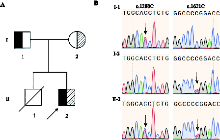
Fig. 1
Pedigree chart and mutation validation of GPIBD15 patients"
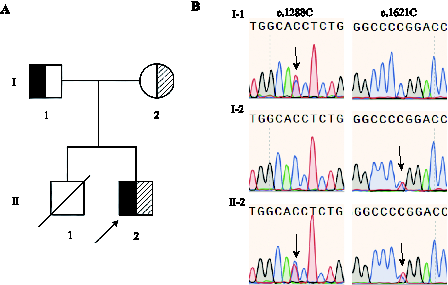
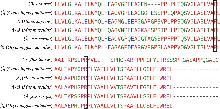
Fig. 2
The conservation analysis of the amino acid mutant sites in GPAA1 protein"
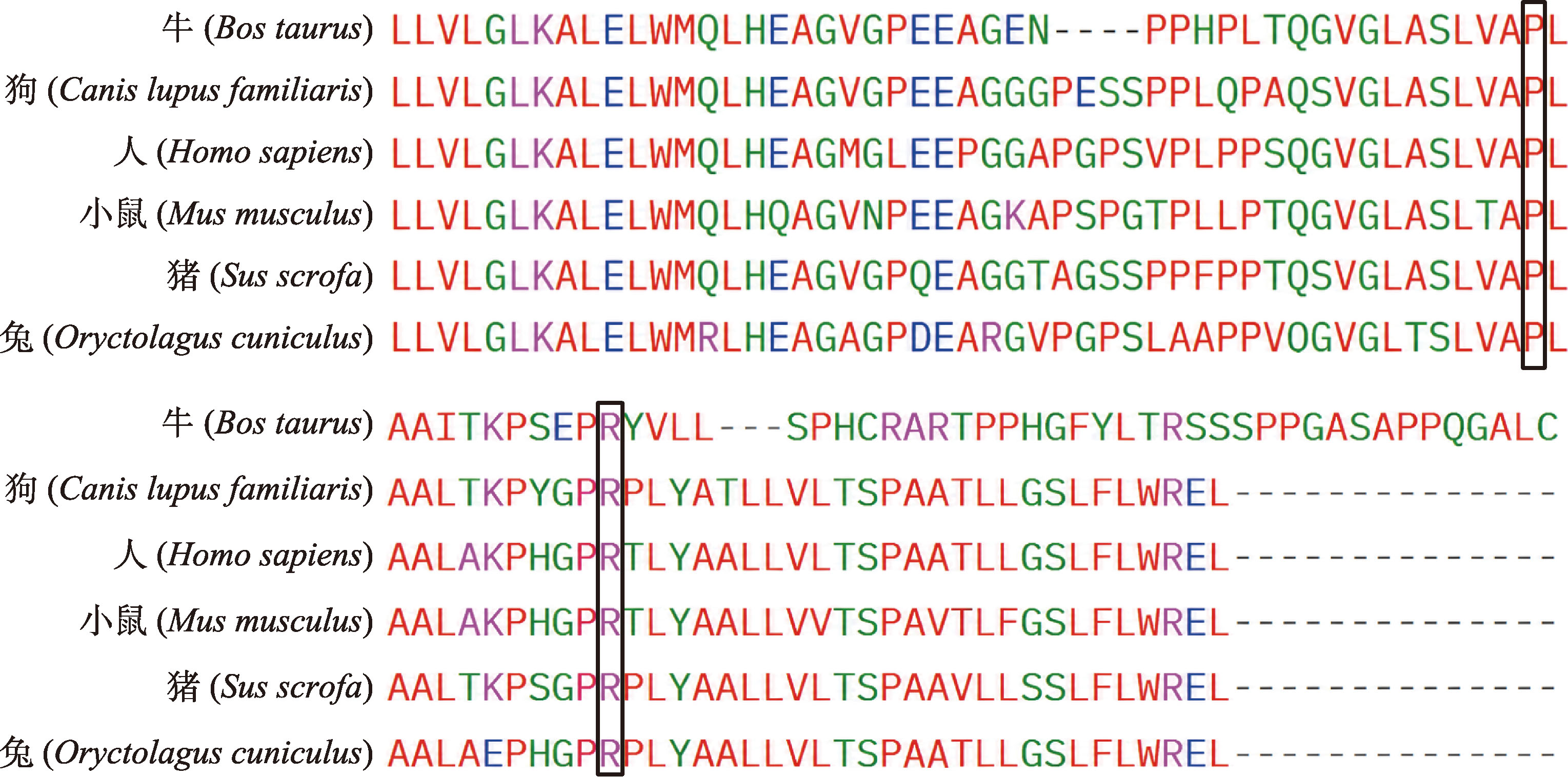
Fig. 3
3D structural analysis of GPAA1 protein"
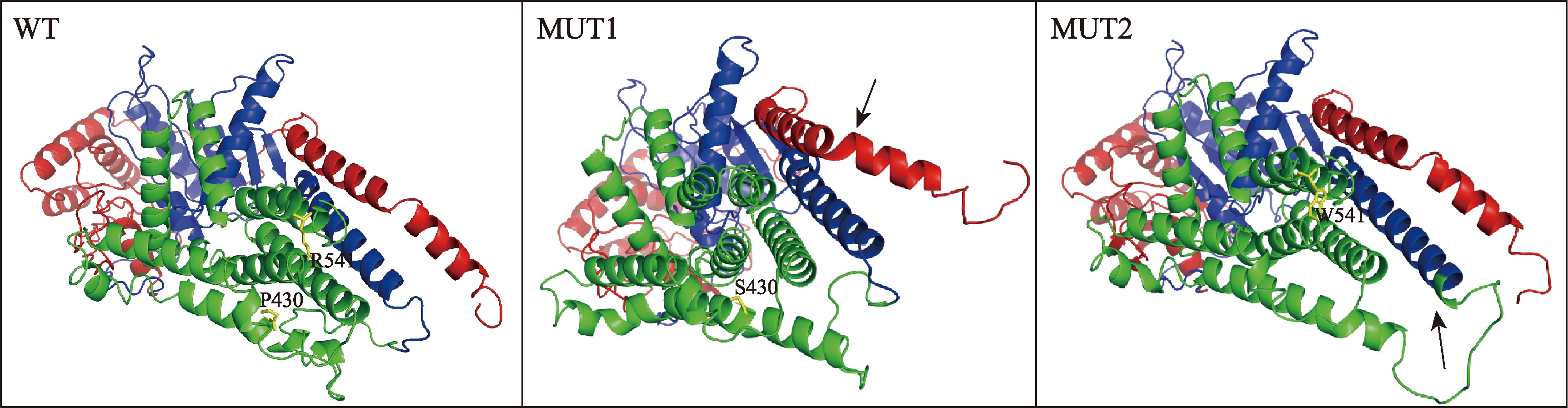
Fig. 4
Analysis of GPAA1 gene expression"
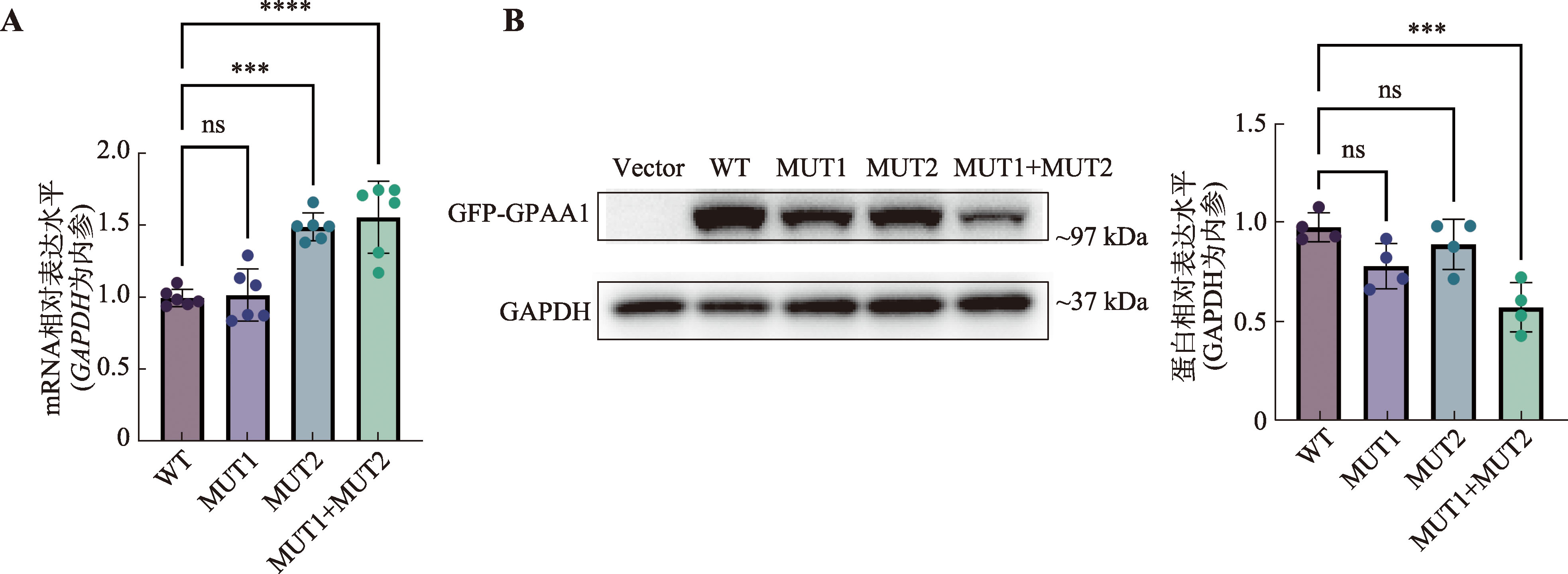
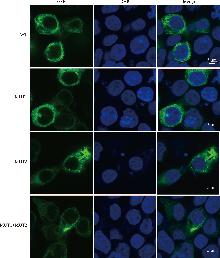
Fig. 5
Subcellular localization analysis of GFP-GPAA1 protein"

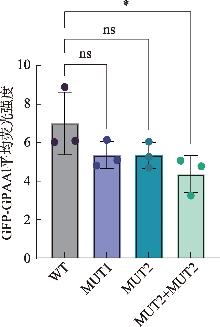
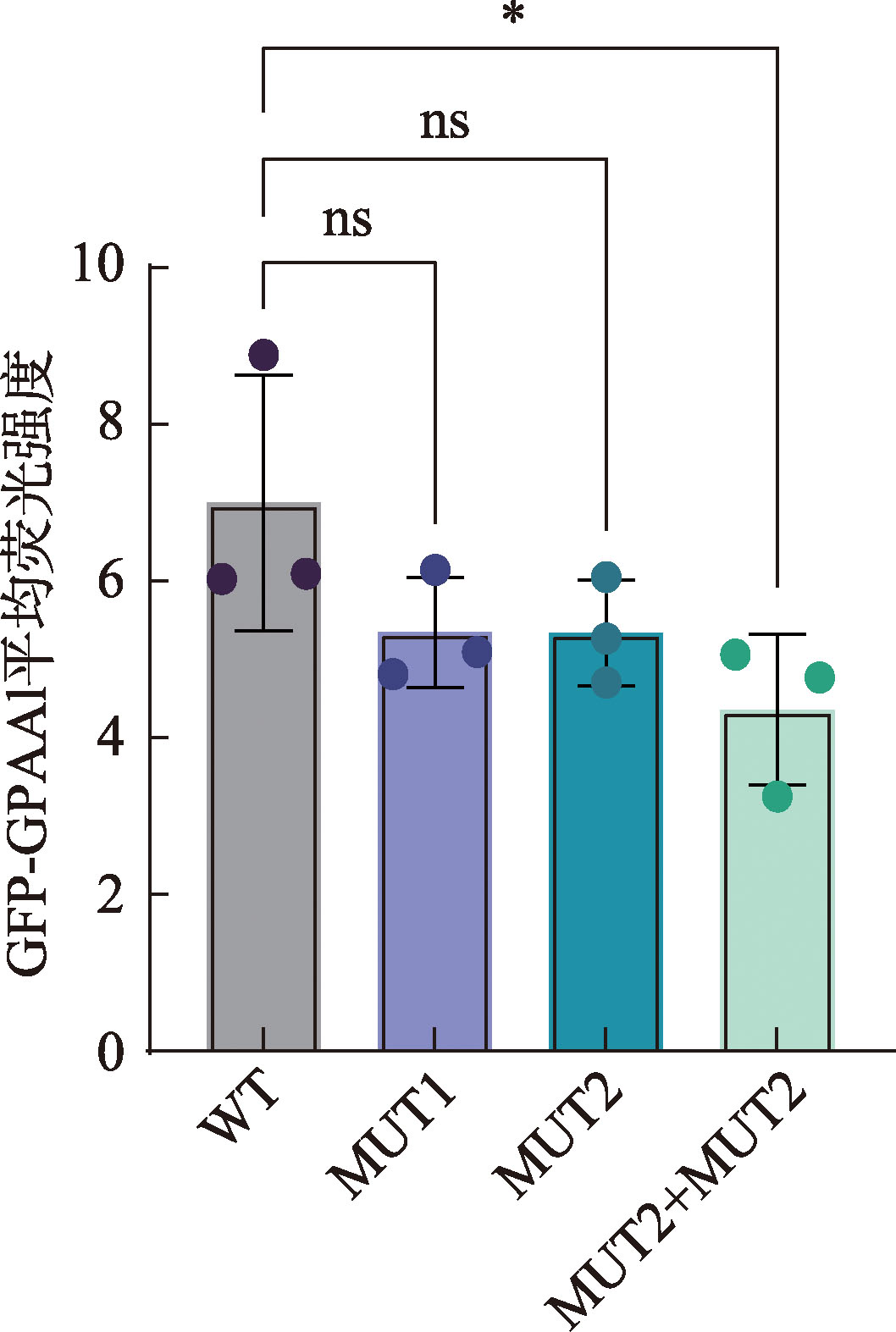
Fig. 6
Mean fluorescence intensity of GFP-GPAA1 fusion proteins"
| [1] |
Nguyen TTM, Murakami Y, Sheridan E, Ehresmann S, Rousseau J, St-Denis A, Chai GL, Ajeawung NF, Fairbrother L, Reimschisel T, Bateman A, Berry-Kravis E, Xia F, Tardif J, Parry DA, Logan CV, Diggle C, Bennett CP, Hattingh L, Rosenfeld JA, Perry MS, Parker MJ, Le Deist F, Zaki MS, Ignatius E, Isohanni P, Lönnqvist T, Carroll CJ, Johnson CA, Gleeson JG, Kinoshita T, Campeau PM. Mutations in GPAA1, encoding a GPI transamidase complex protein, cause developmental delay, epilepsy, cerebellar atrophy, and osteopenia. Am J Hum Genet, 2017, 101(5): 856-865.
pmid: 29100095 |
| [2] |
Castle AMR, Salian S, Bassan H, Sofrin-Drucker E, Cusmai R, Herman KC, Heron D, Keren B, Johnstone DL, Mears W, Morlot S, Nguyen TTM, Rock R, Stolerman E, Russo J, Burns WB, Jones JR, Serpieri V, Wallaschek H, Zanni G, Dyment DA, Campeau PM. Expanding the phenotypic spectrum of GPI anchoring deficiency due to biallelic variants in GPAA1. Neurol Genet, 2021, 7(6): e631.
pmid: 34703884 |
| [3] |
Eisenhaber B, Eisenhaber S, Kwang TY, Grüber G, Eisenhaber F. Transamidase subunit GAA1/GPAA1 is a M28 family metallo-peptide-synthetase that catalyzes the peptide bond formation between the substrate protein's omega-site and the GPI lipid anchor's phosphoethanolamine. Cell Cycle, 2014, 13(12): 1912-1917.
pmid: 24743167 |
| [4] |
Kinoshita T. Biosynthesis and biology of mammalian GPI-anchored proteins. Open Biol, 2020, 10(3): 190290.
pmid: 32156170 |
| [5] |
McKenna A, Hanna M, Banks E, Sivachenko A, Cibulskis K, Kernytsky A, Garimella K, Altshuler D, Gabriel S, Daly M, DePristo MA. The Genome Analysis Toolkit: a MapReduce framework for analyzing next-generation DNA sequencing data. Genome Res, 2010, 20(9): 1297-1303.
pmid: 20644199 |
| [6] |
Richards S, Aziz N, Bale S, Bick D, Das S, Gastier-Foster J, Grody WW, Hegde M, Lyon E, Spector E, Voelkerding K, Rehm HL, ACMG Laboratory Quality Assurance Committee. Standards and guidelines for the interpretation of sequence variants: a joint consensus recommendation of the American College of Medical Genetics and Genomics and the Association for Molecular Pathology. Genet Med, 2015, 17(5): 405-424.
pmid: 25741868 |
| [7] |
Zheng W, Wuyun QQG, Li Y, Liu QC, Zhou XG, Peng CX, Zhu YH, Freddolino L, Zhang Y. Deep-learning-based single- domain and multidomain protein structure prediction with D-I-TASSER. Nat Biotechnol, 2026, 44(4): 641-653.
pmid: 40410405 |
| [8] |
Zhou XG, Zheng W, Li Y, Pearce R, Zhang CX, Bell EW, Zhang GJ, Zhang Y. I-TASSER-MTD: a deep-learning- based platform for multi-domain protein structure and function prediction. Nat Protoc, 2022, 17(10): 2326-2353.
pmid: 35931779 |
| [9] |
Zheng W, Zhang CX, Li Y, Pearce R, Bell EW, Zhang Y. Folding non-homologous proteins by coupling deep- learning contact maps with I-TASSER assembly simulations. Cell Rep Methods, 2021, 1(3): 100014.
pmid: 34355210 |
| [10] |
UniProt Consortium. UniProt: the universal protein knowledgebase in 2025. Nucleic Acids Res, 2025, 53(D1): D609-D617.
pmid: 39552041 |
| [11] |
Ohishi K, Inoue N, Kinoshita T. PIG-S and PIG-T, essential for GPI anchor attachment to proteins, form a complex with GAA1 and GPI8. EMBO J, 2001, 20(15): 4088-4098.
pmid: 11483512 |
| [12] |
Liu SS, Jin F, Liu YS, Murakami Y, Sugita Y, Kato T, Gao XD, Kinoshita T, Hattori M, Fujita M. Functional analysis of the GPI transamidase complex by screening for amino acid mutations in each subunit. Molecules, 2021, 26(18): 5462.
pmid: 34576938 |
| [13] |
Zhang HW, Su JW, Li B, Gao YW, Liu MR, He LL, Xu H, Dong YL, Zhang XJC, Zhao Y. Structure of human glycosylphosphatidylinositol transamidase. Nat Struct Mol Biol, 2022, 29(3): 203-209.
pmid: 35165458 |
| [14] |
Xu YD, Jia GW, Li TT, Zhou ZX, Luo YT, Chao YL, Bao J, Su ZM, Qu QH, Li DF. Molecular insights into biogenesis of glycosylphosphatidylinositol anchor proteins. Nat Commun, 2022, 13(1): 2617.
pmid: 35551457 |
| [15] |
Xu YD, Li TT, Zhou ZX, Hong JJ, Chao YL, Zhu ZN, Zhang Y, Qu QH, Li DF. Structures of liganded glycosylphosphatidylinositol transamidase illuminate GPI-AP biogenesis. Nat Commun, 2023, 14(1): 5520.
pmid: 37684232 |
| [16] |
Hiroi Y, Komuro I, Chen R, Hosoda T, Mizuno T, Kudoh S, Georgescu SP, Medof ME, Yazaki Y. Molecular cloning of human homolog of yeast GAA 1 which is required for attachment of glycosylphosphatidylinositols to proteins. FEBS Lett, 1998, 421(3): 252-258.
pmid: 9468317 |
| [17] |
Kinoshita T. Biosynthesis and deficiencies of glycosylphosphatidylinositol. Proc Jpn Acad Ser B Phys Biol Sci, 2014, 90(4): 130-143.
pmid: 24727937 |
| [18] |
Murakami Y, Kanzawa N, Saito K, Krawitz PM, Mundlos S, Robinson PN, Karadimitris A, Maeda Y, Kinoshita T. Mechanism for release of alkaline phosphatase caused by glycosylphosphatidylinositol deficiency in patients with hyperphosphatasia mental retardation syndrome. J Biol Chem, 2012, 287(9): 6318-6325.
pmid: 22228761 |
| [19] |
Um JW, Ko J. Neural glycosylphosphatidylinositol- anchored proteins in synaptic specification. Trends Cell Biol, 2017, 27(12): 931-945.
pmid: 28743494 |
| [20] |
Nagpal JK, Dasgupta S, Jadallah S, Chae YK, Ratovitski EA, Toubaji A, Netto GJ, Eagle T, Nissan A, Sidransky D, Trink B. Profiling the expression pattern of GPI transamidase complex subunits in human cancer. Mod Pathol, 2008, 21(8): 979-991.
pmid: 18487995 |
| [21] |
Zhao P, Nairn AV, Hester S, Moremen KW, O'Regan RM, Oprea G, Wells L, Pierce M, Abbott KL. Proteomic identification of glycosylphosphatidylinositol anchor- dependent membrane proteins elevated in breast carcinoma. J Biol Chem, 2012, 287(30): 25230-25240.
pmid: 22654114 |
| [22] |
Wu GJ, Guo ZM, Chatterjee A, Huang X, Rubin E, Wu F, Mambo E, Chang XF, Osada M, Sook Kim M, Moon C, Califano JA, Ratovitski EA, Gollin SM, Sukumar S, Sidransky D, Trink B. Overexpression of glycosylphosphatidylinositol (GPI) transamidase subunits phosphatidylinositol glycan class T and/or GPI anchor attachment 1 induces tumorigenesis and contributes to invasion in human breast cancer. Cancer Res, 2006, 66(20): 9829-9836.
pmid: 17047043 |
| [23] |
Smith HW, Marshall CJ. Regulation of cell signalling by uPAR. Nat Rev Mol Cell Biol, 2010, 11(1): 23-36.
pmid: 20027185 |
| [24] |
Chen SY, You JL, Zhou XW, Li Y, Liu F, Teng YL, Teng H, Li YL, Liang DS, Li Z, Wu LQ. PIGK defects induce apoptosis in Purkinje cells and acceleration of neuroectodermal differentiation. Cell Death Dis, 2024, 15(11): 808.
pmid: 41252368 |
| [25] |
Guo SR, Li XY, Xun M, He YL, Tai AW, Wang HL. Disrupted glycosylphosphatidylinositol anchoring induces ER stress and restricts enterovirus infection. PLoS Pathog, 2025, 21(11): e1013685.
pmid: 25768907 |
| [26] |
Presnyak V, Alhusaini N, Chen YH, Martin S, Morris N, Kline N, Olson S, Weinberg D, Baker KE, Graveley BR, Coller J. Codon optimality is a major determinant of mRNA stability. Cell, 2015, 160(6): 1111-1124.
pmid: 34193731 |
| [27] |
Kawaguchi K, Yamamoto-Hino M, Murakami Y, Kinoshita T, Goto S. Hrd1-dependent degradation of the unassembled PIGK subunit of the GPI transamidase complex. Cell Struct Funct, 2021, 46(2): 65-71.
pmid: 16545551 |
| [28] |
Leandro J, Nascimento C, de Almeida IT, Leandro P. Co-expression of different subunits of human phenylalanine hydroxylase: evidence of negative interallelic complementation. Biochim Biophys Acta, 2006, 1762(5): 544-550.
pmid: 39521780 |
| [1] | Binghuan Weng, Songbin Fu, Yulin Jiang, He Wang, Kwongwai Choy, Baosheng Zhu, Na Hao, Hefeng Huang, Lin He. Expert consensus on the morphological characteristics diagnostic criteria and genetic counseling of human chromosomal polymorphisms [J]. Hereditas(Beijing), 2026, 48(1): 3-25. |
| [2] | Jing Guan, XiaonanWu , Jin Li, Guohui Chen, Hongyang Wang, Qiuju Wang. Interpretation of de novo mutations (DNM) and genetic counseling for sporadic hearing loss based on family trio-based sequencing [J]. Hereditas(Beijing), 2025, 47(3): 329-341. |
| [3] | Xiuquan Zhang,Jian Wang,Fu Xiong,Weibiao Lv,Yuanqing Zhou,Shaomin Yang,Yuting Zhang,Xiaoyan Tian,Wei Lian,Xiangmin Xu. Congenital ectrodactyly caused by chromosome 10q24.31 duplication and its pathogenetic analysis [J]. Hereditas(Beijing), 2019, 41(8): 716-724. |
| [4] |
Liya Sun, Qinghe Xing, Lin He.
Retrospect and prospect of the genetic research on birth defects in China [J]. Hereditas(Beijing), 2018, 40(10): 800-813. |
| [5] | Yaping Liao,Chunjing Wang,Meng Liang,Xiaomei Hu,Qi Wu. Analysis of genetic characteristics and reproductive risks of balanced complex chromosome rearrangement carriers in China [J]. Hereditas(Beijing), 2017, 39(5): 396-412. |
| [6] | HE Min, LI Wei. China genetic counseling network (CGCN): a website on genetic counseling and genetic education [J]. HEREDITAS, 2007, 29(3): 381-381―384. |
| [7] | ZHANG Yuan-Zhi, Nanbert ZHONG. The Emphases and Basic Procedures of Genetic Counseling in Psychotherapeutic Model [J]. HEREDITAS, 2006, 28(11): 1440-1444. |
| Viewed | ||||||
|
Full text |
|
|||||
|
Abstract |
|
|||||