Hereditas(Beijing) ›› 2026, Vol. 48 ›› Issue (2): 119-127.doi: 10.16288/j.yczz.25-306
• Spotlight • Previous Articles Next Articles
Ancient genomes reveal the genetic origins and social structure of the Shimao population
Jiayang Xue1,2( ), Zehui Chen1,2,3(), Wanjing Ping1(), Qiaomei Fu1,2,3()
- 1. Key Laboratory of Vertebrate Evolution and Human Origins, Institute of Vertebrate Paleontology and Paleoanthropology, Chinese Academy of Sciences, Beijing 100044, China
2. University of Chinese Academy of Sciences, Beijing 100049, China
3. Key Scientific Research Base on Paleolithic Human Evolution and Paleogenetics (IVPP), SACH, Beijing 100044, China
-
Received:2025-11-25Online:2026-02-20Published:2025-11-27 -
Contact:Qiaomei Fu E-mail:xuejiayang20@mails.ucas.ac.cn;chenzehui@ivpp.ac.cn;pingwanjing@ivpp.ac.cn;fuqiaomei@ivpp.ac.cn -
Supported by:Stable Support Program for Young Teams in Basic Research of the Chinese Academy of Sciences(YSBR-019);Archaeological Talent Promotion Program of China(2024-278)

Cite this article
Jiayang Xue, Zehui Chen, Wanjing Ping, Qiaomei Fu. Ancient genomes reveal the genetic origins and social structure of the Shimao population[J]. Hereditas(Beijing), 2026, 48(2): 119-127.
share this article
Add to citation manager EndNote|Reference Manager|ProCite|BibTeX|RefWorks
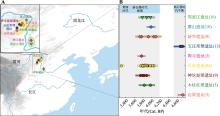
Fig. 1
Geographical locations and ages of samples[20]"
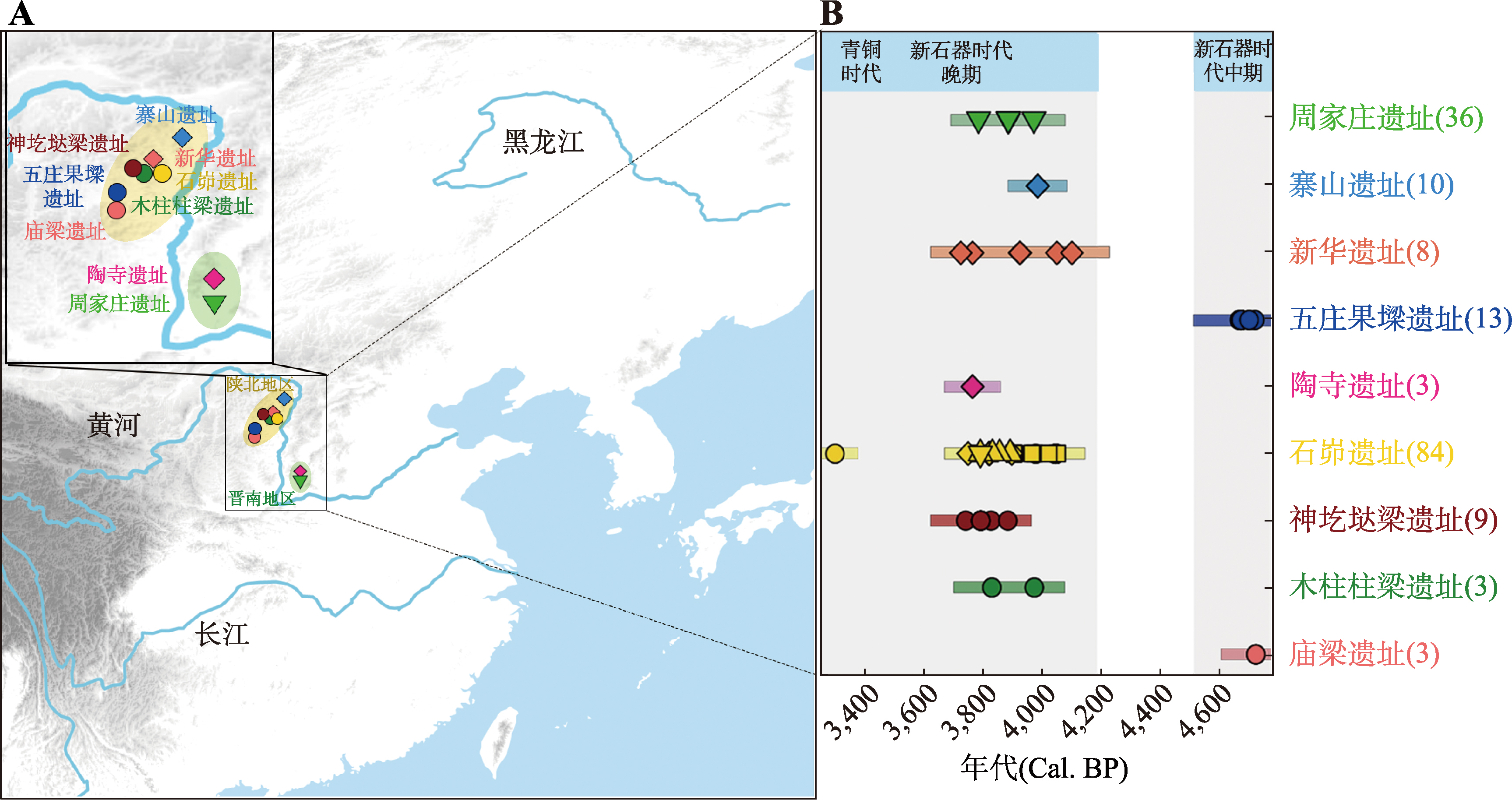
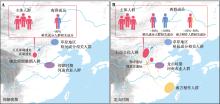
Fig. 2
Overview of the genetic structure of Shimao-related populations and outliers"
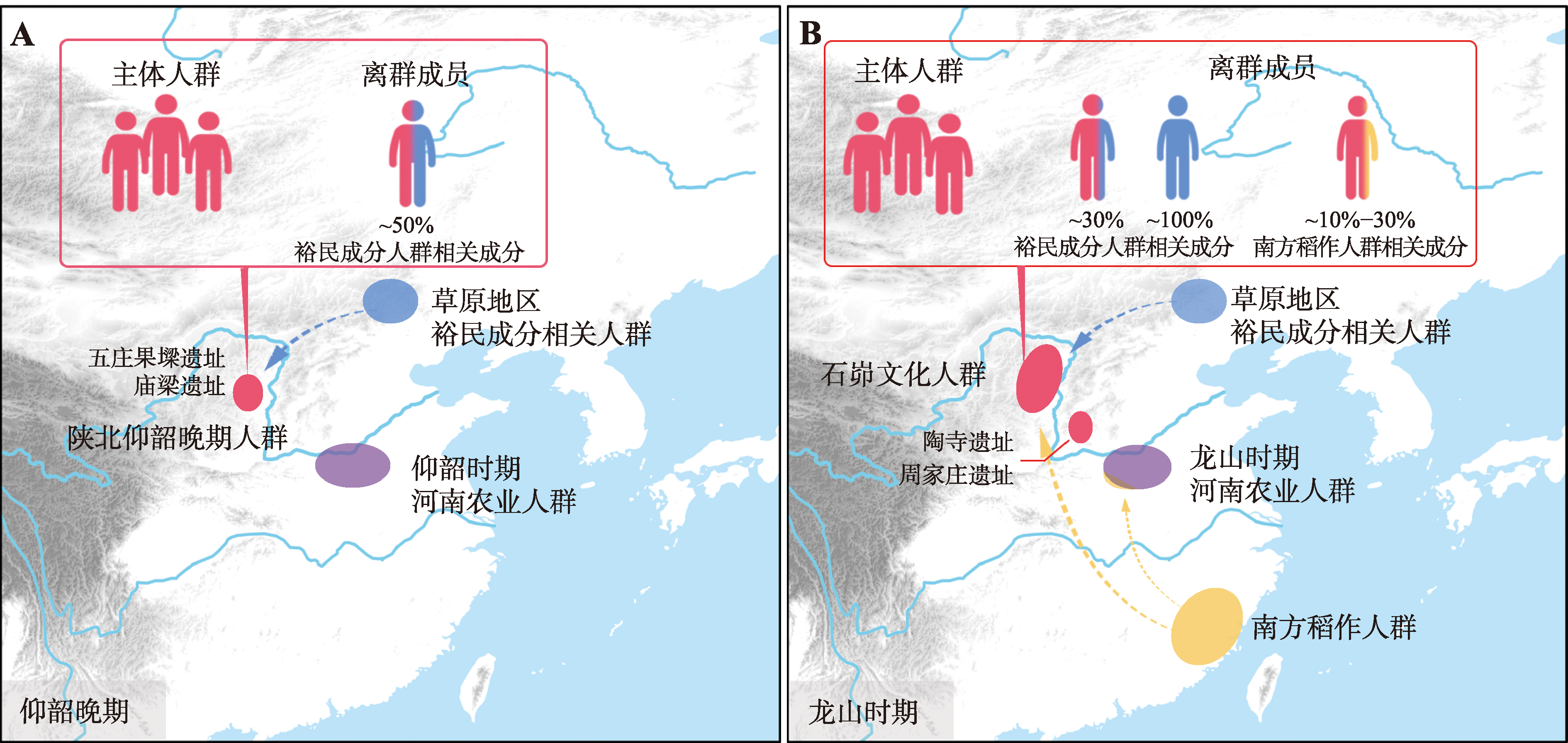
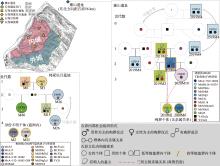
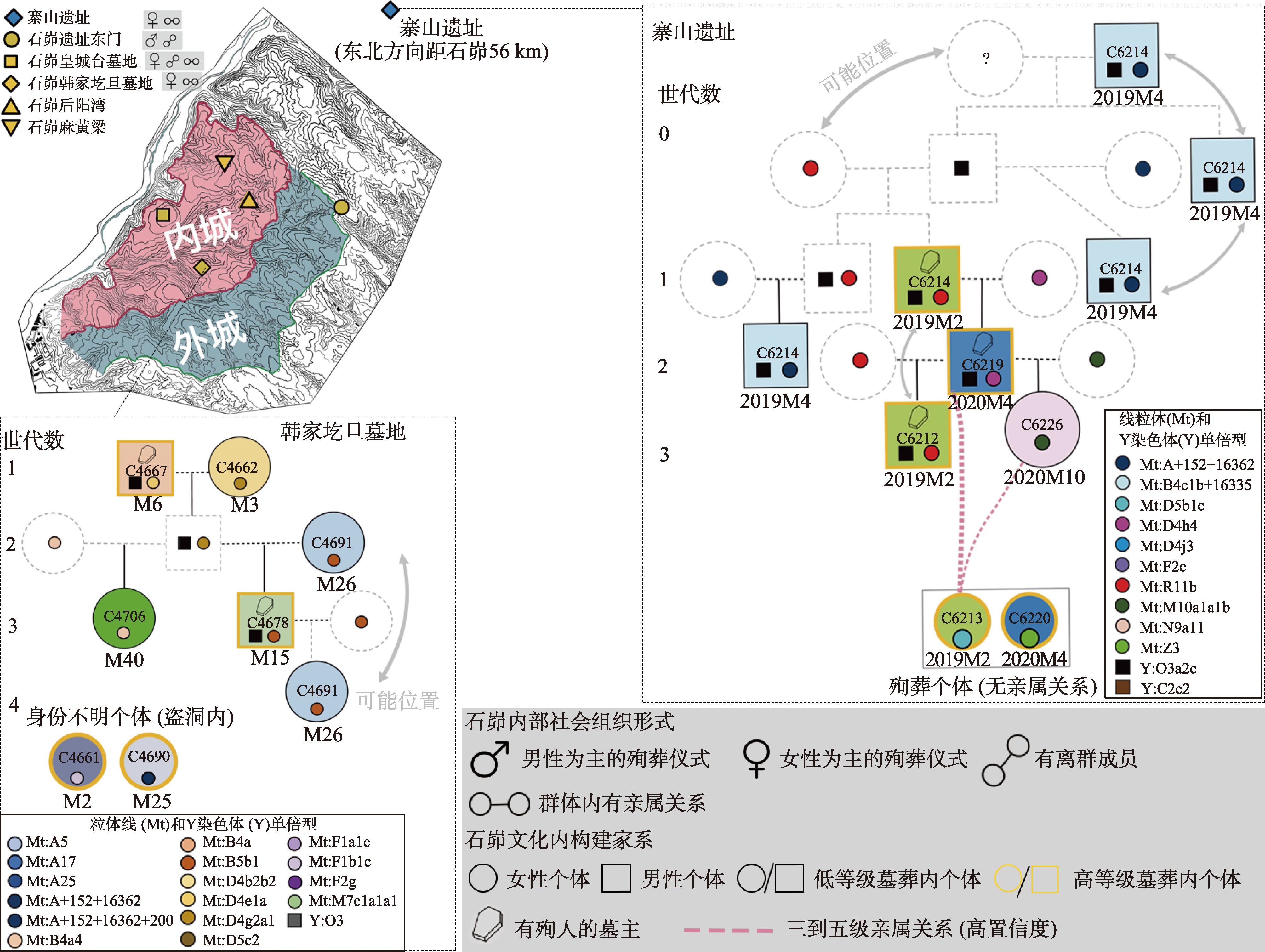
Fig. 3
The figure of reconstructed pedigrees structure in Shimao Hanjiagedan cemetery and Zhaishan site[20]"
| [1] | Sun ZY, Shao J, Shao AD, Kang NW, Qu FM, Liu XM. The Shimao site in Shenmu county, Shaanxi. Archaeology, 2013, (7): 15-26. |
| 孙周勇, 邵晶, 邵安定, 康宁武, 屈凤鸣, 刘小明. 陕西神木县石峁遗址. 考古, 2013, (7): 15-24. | |
| [2] | Li J, Sun ZY, Shao J, Li M. When peripheries were centres: a preliminary study of the Shimao-centred polity in the loess highland, China. Antiquity, 2018, 92(364): 1008-1022. |
| [3] | Rawson J. Shimao and Erlitou: new perspectives on the origins of the bronze industry in Central China. Antiquity, 2017, 92(362): e5. |
| [4] | Sun ZY, Shao J, Liu L, Cui JX, Bonomo MF, Guo QH, Wu XH, Wang JJ. The first Neolithic urban center on China's north Loess Plateau: The rise and fall of Shimao. Archaeol Res Asia, 2018, 14: 33-45. |
| [5] | Guo QH, Sun ZY. The East Gate of Shimao: an architectural interpretation. Archaeol Res Asia, 2018, 14: 61-70. |
| [6] | Owlett TE, Hu S, Sun Z, Shao J. Food between the country and the city: the politics of food production at Shimao and Zhaimaoliang in the Ordos region, northern China. Archaeol Res Asia, 2018, 14: 46-60. |
| [7] | Sun ZY. Investigation of the process of social complexity in northern China during the third millennium B.C. Archaeol Cult Relics, 2016, (4): 70-79. |
| 孙周勇. 公元前第三千纪北方地区社会复杂化过程考察——以榆林地区考古资料为中心. 考古与文物, 2016, (4): 70-79. | |
| [8] |
Xue JY, Wang WJ, Shao J, Dai XM, Sun ZY, Gardner JD, Chen L, Guo XN, Di N, Pei XS, Wu XH, Zhang GY, Cui C, Cao P, Liu F, Dai QY, Feng XT, Yang RW, Ping WJ, Zhang LZ, He N, Fu QM. Ancient mitogenomes reveal the origins and genetic structure of the Neolithic Shimao population in northern China. Front Genet, 2022, 13: 909267.
pmid: 35692842 |
| [9] |
Zou YT, Tan JZ, Zhou JJ, Huang ZS, Yu XE, Han KX, Jin L, Li H, Wang K. Ancient genomes from the Yellow River Bend reveal long-distance population interactions between the Central Plains, Steppe, and southern China. Cell Reports, 2025, 44(8): 116034.
pmid: 40705603 |
| [10] | Sun ZY, Shao J, Di N, Shao AD, Xia N, Liu HL, Kang NW. The grand platform foundation in the Huangchengtai area at Shimao site in Shenmu city, Shaanxi. Archaeology, 2020, (7): 34-47. |
| 孙周勇, 邵晶, 邸楠, 邵安定, 夏楠, 刘海利, 康宁武. 陕西神木市石峁遗址皇城台大台基遗迹. 考古, 2020, (7): 34-47. | |
| [11] | Han Q. Issues related to the Huangchengtai Cemetery at the Shimao site. Archaeol Cult Relics, 2024, (11): 69-77. |
| 韩倩. 关于石峁遗址皇城台墓地的几个问题. 考古与文物, 2024, (11): 69-77. | |
| [12] | Sun ZY, Shao J, Shao AD, Zhao XH, Yang GQ, Kang NW, Zhou J, Li JJ, Qu FM, Liu XM, Wei X, Xu G, Gao S. Preliminary report on the excavation of the Hanjiagedan locus at the Shimao site in Shenmu, Shaanxi. Archaeol Cult Relics, 2016, (4): 14-24. |
| 孙周勇, 邵晶, 邵安定, 赵向辉, 杨国旗, 康宁武, 周健, 李建军, 屈凤鸣, 刘小明, 卫雪, 徐舸, 高升. 陕西神木县石峁遗址韩家圪旦地点发掘简报. 考古与文物, 2016, (4): 14-24. | |
| [13] | Chen L, Xiong JX, Shao J, Sun ZY. Research on skulls from the sacrificial pits at the Shimao stone-walled town in Shenmu, Shaanxi. Archaeol Cult Relics, 2016, (4): 134-142. |
| 陈靓, 熊建雪, 邵晶, 孙周勇. 陕西神木石峁城址祭祀坑出土头骨研究. 考古与文物, 2016, (4): 134-142. | |
| [14] | Zhao Y. Liangzhu: A model of early Chinese civilization. Cult Relics South China, 2018, (1): 69-76. |
| 赵晔. 良渚: 中国早期文明的典范. 南方文物, 2018, (1): 69-76. | |
| [15] | Zhang H. The Secularized power of early state in Earlitou. J Natl Mus Chin Hist, 2023, (11): 15-28. |
| 张海. 试论二里头早期国家的世俗王权. 中国国家博物馆馆刊, 2023, (11): 15-28. | |
| [16] | He N. Taosi: an archaeological example of urbanization as a political center in prehistoric China. Archaeol Res Asia, 2018, 14: 20-32. |
| [17] |
Kennett DJ, Plog S, George RJ, Culleton BJ, Watson AS, Skoglund P, Rohland N, Mallick S, Stewardson K, Kistler L, Leblanc SA, Whiteley PM, Reich D, Perry GH. Archaeogenomic evidence reveals prehistoric matrilineal dynasty. Nat Commun, 2017, 8: 14115.
pmid: 28221340 |
| [18] |
Villalba-Mouco V, Oliart C, Rihuete-Herrada C, Rohrlach AB, Fregeiro MI, Childebayeva A, Ringbauer H, Olalde I, Beltrán EC, Puello-Mora C, Valério M, Krause J, Lull V, Micó R, Risch R, Haak W. Kinship practices in the early state El Argar society from Bronze Age Iberia. Sci Rep, 2022, 12(1): 22415.
pmid: 36575206 |
| [19] |
Gnecchi-Ruscone GA, Rácz Z, Samu L, Szeniczey T, Faragó N, Knipper C, Friedrich R, Zlámalová D, Traverso L, Liccardo S, Wabnitz S, Popli D, Wang K, Radzeviciute R, Gulyás B, Koncz I, Balogh C, Lezsák GM, Mácsai V, Bunbury MME, Spekker O, Le Roux P, Szécsényi-Nagy A, Mende BG, Colleran H, Hajdu T, Geary P, Pohl W, Vida T, Krause J, Hofmanová Z. Network of large pedigrees reveals social practices of Avar communities. Nature, 2024, 629(8011): 376-383.
pmid: 38658749 |
| [20] |
Chen ZH, Gardner JD, Sun ZY, Bennett EA, Han Q, Pei XS, Shao J, Shi H, Wang WJ, Xue JY, Bai F, Dai XM, He N, Guo XN, Di N, Mao XW, Liu TX, Cao P, Liu F, Dai QY, Feng XT, Ping WJ, Wu XH, Zhang LZ, Chen L, Fu QM. Ancient DNA from Shimao city records kinship practices in Neolithic China. Nature, 2025. doi: 10.1038/s41586- 025-09799-x.
pmid: 41299168 |
| [21] |
Ning C, Li TJ, Wang K, Zhang F, Li T, Wu XY, Gao SZ, Zhang QC, Zhang H, Hudson MJ, Dong GH, Wu SH, Fang YM, Liu C, Feng CY, Li W, Han T, Li R, Wei J, Zhu YG, Zhou YW, Wang CC, Fan SY, Xiong ZL, Sun ZY, Ye ML, Sun L, Wu XH, Liang FW, Cao YP, Wei XT, Zhu H, Zhou H, Krause J, Robbeets M, Jeong C, Cui YQ. Ancient genomes from northern China suggest links between subsistence changes and human migration. Nat Commun, 2020, 11(1): 2700.
pmid: 32483115 |
| [22] |
Mao XW, Zhang HC, Qiao SY, Liu YC, Chang FQ, Xie P, Zhang M, Wang TY, Li MA, Cao P, Yang RW, Liu F, Dai QY, Feng XT, Ping WJ, Lei CZ, Olsen JW, Bennett EA, Fu QM. The deep population history of northern East Asia from the Late Pleistocene to the Holocene. Cell, 2021, 184(12): 3256-3266.
pmid: 34048699 |
| [23] |
Jeong C, Wang K, Wilkin S, Taylor WTT, Miller BK, Bemmann JH, Stahl R, Chiovelli C, Knolle F, Ulziibayar S, Khatanbaatar D, Erdenebaatar D, Erdenebat U, Ochir A, Ankhsanaa G, Vanchigdash C, Ochir B, Munkhbayar C, Tumen D, Kovalev A, Kradin N, Bazarov BA, Miyagashev DA, Konovalov PB, Zhambaltarova E, Miller AV, Haak W, Schiffels S, Krause J, Boivin N, Erdene M, Hendy J, Warinner C. A dynamic 6,000-Year genetic history of Eurasia’s Eastern Steppe. Cell, 2020, 183(4): 890-904.e29.
pmid: 33157037 |
| [24] |
Mathieson I, Lazaridis I, Rohland N, Mallick S, Patterson N, Roodenberg SA, Harney E, Stewardson K, Fernandes D, Novak M, Sirak K, Gamba C, Jones ER, Llamas B, Dryomov S, Pickrell J, Arsuaga JL, De Castro JMB, Carbonell E, Gerritsen F, Khokhlov A, Kuznetsov P, Lozano M, Meller H, Mochalov O, Moiseyev V, Guerra MAR, Roodenberg J, Vergès JM, Krause J, Cooper A, Alt KW, Brown D, Anthony D, Lalueza-Fox C, Haak W, Pinhasi R, Reich D. Genome-wide patterns of selection in 230 ancient Eurasians. Nature, 2015, 528(7583): 499-503.
pmid: 26595274 |
| [25] |
de Barros Damgaard P, Martiniano R, Kamm J, Moreno- Mayar JV, Kroonen G, Peyrot M, Barjamovic G, Rasmussen S, Zacho C, Baimukhanov N, Zaibert V, Merz V, Biddanda A, Merz I, Loman V, Evdokimov V, Usmanova E, Hemphill B, Seguin-Orlando A, Yediay FE, Ullah I, Sjögren KG, Iversen KH, Choin J, de La Fuente C, Ilardo M, Schroeder H, Moiseyev V, Gromov A, Polyakov A, Omura S, Senyurt SY, Ahmad H, Mckenzie C, Margaryan A, Hameed A, Samad A, Gul N, Khokhar MH, Goriunova OI, Bazaliiskii VI, Novembre J, Weber AW, Orlando L, Allentoft ME, Nielsen R, Kristiansen K, Sikora M, Outram AK, Durbin R, Willerslev E. The first horse herders and the impact of early Bronze Age steppe expansions into Asia. Science, 2018, 360(6396): eaar7711.
pmid: 29743352 |
| [26] |
Wang HR, Yang MA, Wangdue S, Lu HL, Chen HH, Li LH, Dong GH, Tsring T, Yuan HB, He W, Ding MY, Wu XH, Li S, Tashi N, Yang T, Yang F, Tong Y, Chen ZJ, He YH, Cao P, Dai QY, Liu F, Feng XT, Wang TY, Yang RW, Ping WJ, Zhang ZX, Gao Y, Zhang M, Wang XJ, Zhang C, Yuan K, Ko AMS, Aldenderfer M, Gao X, Xu SH, Fu QM. Human genetic history on the Tibetan Plateau in the past 5100 years. Sci Adv, 2023, 9(11): eadd5582.
pmid: 36930720 |
| [27] |
Bai F, Liu YC, Wangdue S, Wang TY, He W, Xi L, Tsho Y, Tsering T, Cao P, Dai QY, Liu F, Feng XT, Zhang M, Ran JK, Ping WJ, Payon D, Mao XW, Tong Y, Tsring T, Chen ZH, Fu QM. Ancient genomes revealed the complex human interactions of the ancient western Tibetans. Curr Biol, 2024, 34(12): 2594-2605.
pmid: 38781957 |
| [28] |
Yang MA, Fan XC, Sun B, Chen CY, Lang JF, Ko YC, Tsang CH, Chiu HL, Wang TY, Bao QC, Wu XH, Hajdinjak M, Ko AMS, Ding MY, Cao P, Yang RW, Liu F, Nickel B, Dai QY, Feng XT, Zhang LZ, Sun CK, Ning C, Zeng W, Zhao YS, Zhang M, Gao X, Cui YQ, Reich D, Stoneking M, Fu QM. Ancient DNA indicates human population shifts and admixture in northern and southern China. Science, 2020, 369(6501): 282-288.
pmid: 32409524 |
| [29] | 徐峰. 石峁与陶寺考古发现的初步比较. 文博, 2014, (1): 18-22. |
| [30] | Shao J. Comparative study of the Shimao Site and the Taosi Site. Archaeology, 2020, (5): 65-77. |
| 邵晶. 石峁遗址与陶寺遗址的比较研究. 考古, 2020, (5): 65-77. | |
| [31] | 郭物. 从石峁遗址的石人看龙山时代中国北方同欧亚草原的交流. 中国考古, 2013-04-18. |
| [32] | Sun ZY, Shao J, Di N. A synthesis of the archaeological discovery and research of the Shimao site. Cultural Relics of Central China, 2020, (1): 39-62. |
| 孙周勇, 邵晶, 邸楠. 石峁遗址的考古发现与研究综述. 中原文物, 2020, (1): 39-62. | |
| [33] |
Wang CC, Yeh HY, Popov AN, Zhang HQ, Matsumura H, Sirak K, Cheronet O, Kovalev A, Rohland N, Kim AM, Mallick S, Bernardos R, Tumen D, Zhao J, Liu YC, Liu JY, Mah M, Wang K, Zhang Z, Adamski N, Broomandkhoshbacht N, Callan K, Candilio F, Carlson KSD, Culleton BJ, Eccles L, Freilich S, Keating D, Lawson AM, Mandl K, Michel M, Oppenheimer J, Özdogan KT, Stewardson K, Wen SQ, Yan S, Zalzala F, Chuang R, Huang CJ, Looh H, Shiung CC, Nikitin YG, Tabarev AV, Tishkin AA, Lin S, Sun ZY, Wu XM, Yang TL, Hu X, Chen L, Du H, Bayarsaikhan J, Mijiddorj E, Erdenebaatar D, Iderkhangai TO, Myagmar E, Kanzawa- Kiriyama H, Nishino M, Shinoda KI, Shubina OA, Guo JX, Cai WW, Deng QY, Kang LL, Li DW, Li DN, Lin R, Nini, Shrestha R, Wang LX, Wei LH, Xie GM, Yao HB, Zhang MF, He GL, Yang XM, Hu R, Robbeets M, Schiffels S, Kennett DJ, Jin L, Li H, Krause J, Pinhasi R, Reich D. Genomic insights into the formation of human populations in East Asia. Nature, 2021, 591(7850): 413-419.
pmid: 33618348 |
| Viewed | ||||||
|
Full text |
|
|||||
|
Abstract |
|
|||||

