Hereditas(Beijing) ›› 2026, Vol. 48 ›› Issue (5): 544-554.doi: 10.16288/j.yczz.25-347
• Genetics Teaching • Previous Articles
Exploration and practice of artificial intelligence-assisted genetics experiment teaching
Xueying Zhao1,2( ), Yiming Guan1,2, Guangqi A1,2, Daru Lu2, Yan Pi1,2()
- 1
National Demonstration Center for Experimental Biology Education ,Fudan University Shanghai 200433, China
2School of Life Sciences ,Fudan University Shanghai 200433, China
-
Received:2025-12-29Revised:2026-03-10Online:2026-05-20Published:2026-03-27 -
Contact:Yan Pi E-mail:xueying_zhao@fudan.edu.cn;yanpi@fudan.edu.cn -
Supported by:2022 Shanghai Municipal-level Key Courses Construction Project for Higher Education Institutions(19);2023 Fudan University Curriculum Ideological and Political Education Teaching Reform Research Project—Genetics Experiment(IAH6222054/096)

Cite this article
Xueying Zhao, Yiming Guan, Guangqi A, Daru Lu, Yan Pi. Exploration and practice of artificial intelligence-assisted genetics experiment teaching[J]. Hereditas(Beijing), 2026, 48(5): 544-554.
share this article
Add to citation manager EndNote|Reference Manager|ProCite|BibTeX|RefWorks
Table 1
Scoring criteria for AI-assisted “genetic counseling”"
| 评分维度 | 分数 | 权重设定依据 | 维度描述 |
|---|---|---|---|
| 医学知识准确性 | 30 | 该维度权重最高,强调遗传咨询的核心是提供准确的医学信息(如病因、遗传模式、检测方法) | 评估学生对特定遗传病的病因、遗传模式、检测方法及治疗方案等医学知识的掌握程度与表述准确性 |
| 医患沟通有效性 | 25 | 权重次高,突出沟通在咨询中的关键作用。有效沟通能提升患者理解度和依从性,减少误解 | 评估学生作为患者能否清晰表达症状、合理提问并有效理解医生解释,体现医患间信息传递的顺畅度 |
| 治疗方案决策参与度 | 20 | 中等权重,反映患者参与决策的重要性。鼓励患者结合自身情况选择治疗方案,提升治疗依从性,优化个性化护理 | 评估学生作为患者在了解不同治疗选项后,结合自身情况参与决策过程的积极性与合理性判断能力 |
| 心理与社会因素考量 | 15 | 较低权重,但不可或缺。考虑疾病对患者心理、家庭和社会的影响,体现整体关怀。权重设定规避技术层面的过度偏重,保障遗传咨询的人性化导向 | 评估学生是否考虑疾病对心理状态、家庭关系及社会生活的影响,以及在对话中体现的应对态度 |
| 信息获取与追问能力 | 10 | 最低权重,聚焦患者的主动学习能力,为沟通、决策等其他维度提供支撑,但该能力属于辅助技能,而非核心输出能力 | 评估学生作为患者针对检测流程、治疗风险、预后效果等关键信息的主动获取意识与深度追问技巧 |
Table 2
Example 1: AI-based verification of dominant-recessive relationships in Drosophila"
| 检索方式 | 采纳的来自AI的建议 | 拒绝的来自AI的建议(及原因) |
|---|---|---|
| AI助教 | (1)采纳完整的经典实验流程:采纳了其“正交/反交→F₁自交/测交”的经典设计,该流程逻辑清晰、步骤完整,符合科学规范; (2)采纳关键操作指导:采纳了关于“挑选处女蝇”“移除亲本”等关键操作的提醒; (3)采纳实用性建议:采纳了“常见问题与解决方案”相关表述,这对于实际操作中处理意外结果非常有价值。 | 需补充其他遗传模型的相关表述。 原因:该回答的内容逻辑仅局限于标准的完全显性(3∶1分离比),没有包含显性纯合致死(导致2∶1分离比)或不完全显性等常见生物学现象 |
| AI助教结合“教材知识库” | (1)采纳对关键细节的强调:采纳了其对“处女蝇”“温度控制”“亲本移除时间”等核心操作细节的反复强调,这有助于提高实验成功率; (2)采纳统计学检验的建议:明确提出使用“卡方检验”来验证数据,这是严谨科学研究中必不可少的一环,应予采纳 | 拒绝表述中对教材的引用。 原因:通过提问发现,该模型下对于知识库的引用出现大量错误 |
| ChatGPT5 Thinking | (1)采纳其全面且广义的遗传分析逻辑:涵盖常染色体/性染色体、显性/隐性、完全/不完全显性及致死现象的全套分析逻辑; (2)采纳其更准确的显隐性基因型表示方法(如A/a),使得表述内容更易理解 | 拒绝引入“平衡子”相关的复杂内容。 原因:对于仅仅是为了“验证显隐性关系”的基础杂交实验而言,引入平衡子染色体遗传学内容增加了不必要的复杂性,超出了基础验证实验的内容范畴 |
Table 3
Example 2: AI simulation of Drosophila dominant-recessive verification in multiple scenarios"
| 检索方式 | 使用的提示词 | 采纳的来自AI的建议 | 拒绝的来自AI的建议(及原因) |
|---|---|---|---|
| AI助教模拟“引导式学习助手” | 我是一名遗传学新手,对孟德尔定律只有模糊的了解。请通过逐步提问的方式,引导我自己设计出验证果蝇翅形(长翅vs残翅)显隐性关系的杂交实验。你的第一个问题可以是:“我们首先需要确定什么样的亲本?” | (1)使用苏格拉底式提问法,通过问题链(如“选择什么亲本?”“如何交配?”“预测F1代?”)引导思考; (2)强调逻辑推导,让学习者自己从分离定律推出F2代的3∶1比例; (3)最后总结,将散落的答案整合成完整实验步骤 | 拒绝任何直接给出完整实验方案的建议。 原因:本角色的核心是“引导”而非“告知”,任何跳过引导过程直接给出答案的行为都违背了设计初衷 |
| AI助教结合教材知识库模拟“严谨的课程助教” | 请严格依据经典遗传学教材中关于“杂交实验”的标准范式进行回答,以果蝇的刚毛性状(直刚毛vs卷刚毛)为例,要求: (1)必须包含正反交实验设计并阐明其意义; (2)必须明确亲本为纯合子这一关键前提; (3)必须详细描述从P代、F1代到F2代的完整流程及观察与统计方法 | (1)强调实验的规范性:明确亲本为纯合子,并设置正反交; (2)步骤完整清晰:严格按照“选择亲本→正反交→观察F1→F2自交→观察统计F2”的逻辑展开; (3)阐明设计原理:解释了为何要做正反交(排除性连锁与母性影响)及为何要统计大量样本(符合统计学规律) | 拒绝任何简化或跳跃式的步骤描述(如忽略正反交或未强调亲本纯度)。 原因:教材知识库要求答案必须具备严谨性和完整性,服务于标准化考试与理解 |
| 其他AI网站模拟“生动的虚拟导师” | 请摆脱教科书式的语言,扮演一个在果蝇实验室里充满热情的学长/学姐。用生动、口语化、带比喻的语言,向刚进实验室的学弟学妹解释如何通过一个“家族繁衍”游戏(即杂交实验)来找出谁是显性“大佬”,谁是隐性“小弟”。请以果蝇的体色(黑檀体vs灰体)为例,让讲解变得有趣且容易记忆 | (1)使用生活化比喻:将显性基因比作“大佬”,能掩盖“小弟”(隐性基因)的表现; (2)创设场景感:用“组建家族”“观察宝宝”“宝宝近亲结婚”等说法描述实验步骤; (3)聚焦核心逻辑:牢牢抓住“F1代像谁谁就是显性”“F2代冒出隐藏性状”这两个关键点,用夸张的方式强化记忆 | 拒绝使用过于学术或枯燥的术语(如“表型”“基因型”等)。 原因:本回答的目的是降低认知负荷、激发兴趣,因此任何可能增加距离感的表达都被替换 |
Table 4
Example 3: comparative analysis of AI-based and manual approaches for diagnosis and treatment of phenylketonuria"
| 比较项目 | AI助教方案 | ChatGPT方案 | 人工方案 |
|---|---|---|---|
| 设计出发点 | 为了让学生学会。内容服务于教学和记忆 | 为了生成一个“最优方案”。内容服务于信息整合与前沿覆盖 | 为了在临床上安全执行。内容服务于标准化和风险规避 |
| 检测方案 | 列举式、对比式。用表格清晰列出不同检测阶段的技术、流程、优缺点 | 流程式、步骤式。详细描述从取样到分析的完整实验流程和判断标准 | 阶梯式、条件式。明确每一步的适用条件、阳性判断标准和下一步操作,强调鉴别判断 |
| 治疗方案 | 分层与量化。直接给出各年龄段的苯丙氨酸摄入量、药物剂量,非常具体 | 决策与前景展望。强调根据疾病分型选择治疗路径,并详细介绍基因治疗等前沿方向 | 原则性与保守性。强调“终身治疗”原则,给出控制目标范围,对新型疗法持谨慎态度 |
| 特色与侧重 | 价格与产品:提及具体检测成本和推荐使用的商品名。 社会资源:列出具体基金会和组织名称 | 前沿动态:提及具体临床试验编号和新药名 国际化:参照美国食品药品监督管理局(FDA)标准和Nature Medicine等国际期刊相关研究 | 伦理与规范:强调产前诊断的知情同意原则,规范遗传咨询的流程 国情化:参考中华医学会指南,更贴近国内临床实际 |
| 患者沟通 | 直接给建议。如“饮食误区是什么”“心理如何调适”,非常实用 | 隐含在流程中。建议体现在“遗传咨询”和“患者教育”环节,风格更正式 | 强调依从性。反复强调“终身坚持”和“治疗依从性是关键”,并警示中断后果 |
| 总体优点 | (1)极佳的可读性和易学性:通过表格和要点罗列,非常适合学生快速抓住重点,用于备考或复习; (2)实用性强:提供具体数据、商品名和求助渠道,对患者和家属有直接帮助; (3)内容精准:知识点浓缩,没有冗余信息 | (1)全面性和前瞻性:覆盖范围最广,从经典方法到最前沿的基因治疗、新药都有涉及,信息更新及时; (2)强于综述与设计:能够像一名研究员一样,构建一个完整的方案框架,并论证其合理性; (3)逻辑清晰:“总体流程与设计要点”部分很好地勾勒出了全貌 | (1)权威性和可靠性最高:基于成熟的临床指南,是经过实践检验的“金标准”,风险最低; (2)临床实操性强:每一步都明确、规范,直接指导医生如何进行诊断和治疗; (3)强调伦理和安全性:对产前诊断、遗传咨询等环节有严格的流程和伦理考量 |
| 总体不足 | (1)深度和广度有限:为了简洁,会省略一些背后的原理和复杂的临床考量; (2)缺乏前瞻性:较少涉及仍在临床试验阶段的最新疗法; (3)灵活性差:呈现的是“标准答案”,不利于培养批判性思维 | (1)细节可能不精确:生成的内容可能混合不同国家的指南,具体剂量、流程可能需要二次核实; (2)临床直接落地性稍弱:过于侧重“未来可能性”,可能分散对当前主流、必须的治疗方案的注意力; (3)缺乏“人情味”:虽然内容全面,但在患者心理支持和沟通方面的建议不如AI助教方案直接 | (1)保守和滞后:对新疗法、新技术的纳入较慢,可能跟不上前沿发展的步伐; (2)形式较为刻板:语言严谨但显得枯燥,不利于快速检索关键信息; (3)创新性不足:主要目的是“正确执行”,而非“探索创新” |
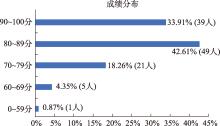
Fig. 1
Score statistics of students in AI-assisted “genetic counseling”"
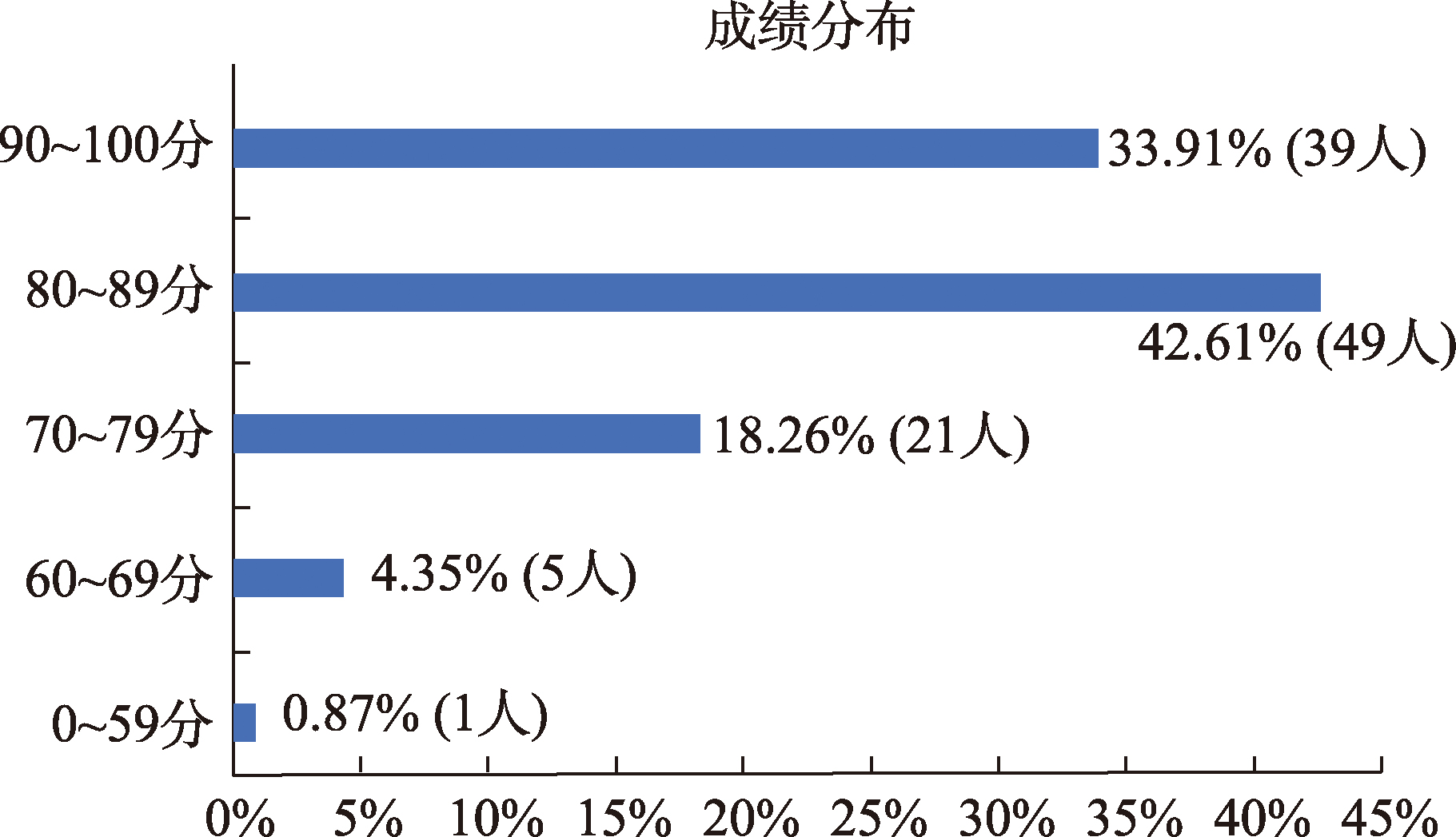
Table 5
Example 4: genetic counseling scoring comments for osteogenesis imperfecta"
| 评分维度 | 分数 | 评分依据 |
|---|---|---|
| 医学知识准确性 | 28分 | 学生对成骨不全症的典型症状、遗传模式、检测方法及治疗方案等知识有较好掌握,表述准确,能结合孩子具体情况提问,仅在个别罕见亚型的遗传机制上未深入涉及,整体准确性高 |
| 医患沟通有效性 | 24分 | 学生作为患者家长能清晰、有条理地描述孩子症状(骨折史、巩膜颜色、牙齿情况、家族史),提问聚焦核心问题,对医生的解释能有效理解并及时反馈后续计划,沟通顺畅,仅在初期未主动提及骨密度等检查结果,整体沟通效果良好 |
| 治疗方案决策参与度 | 19分 | 学生积极了解检测与治疗方案选择,能结合孩子情况与医生建议制定下一步计划,参与决策意识强,判断合理,仅在对双膦酸盐长期疗效与青春期调整细节的主动探讨稍显不足 |
| 心理与社会因素考量 | 14分 | 学生表现出对孩子健康的担忧(担心错过最佳干预时间)及对治疗时机的关注,体现了对疾病影响的重视,但未明确提及疾病对孩子心理状态(如活动受限可能导致的情绪问题)及家庭生活(如未来生育计划)的影响,考量维度略有欠缺 |
| 信息获取与追问能力 | 9分 | 学生能针对关键信息主动追问,问题具体且有深度,体现较强的信息获取意识,但对检测机构选择标准及康复训练细节未进一步追问,追问广度可提升 |
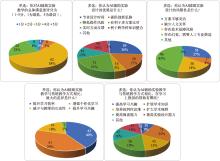
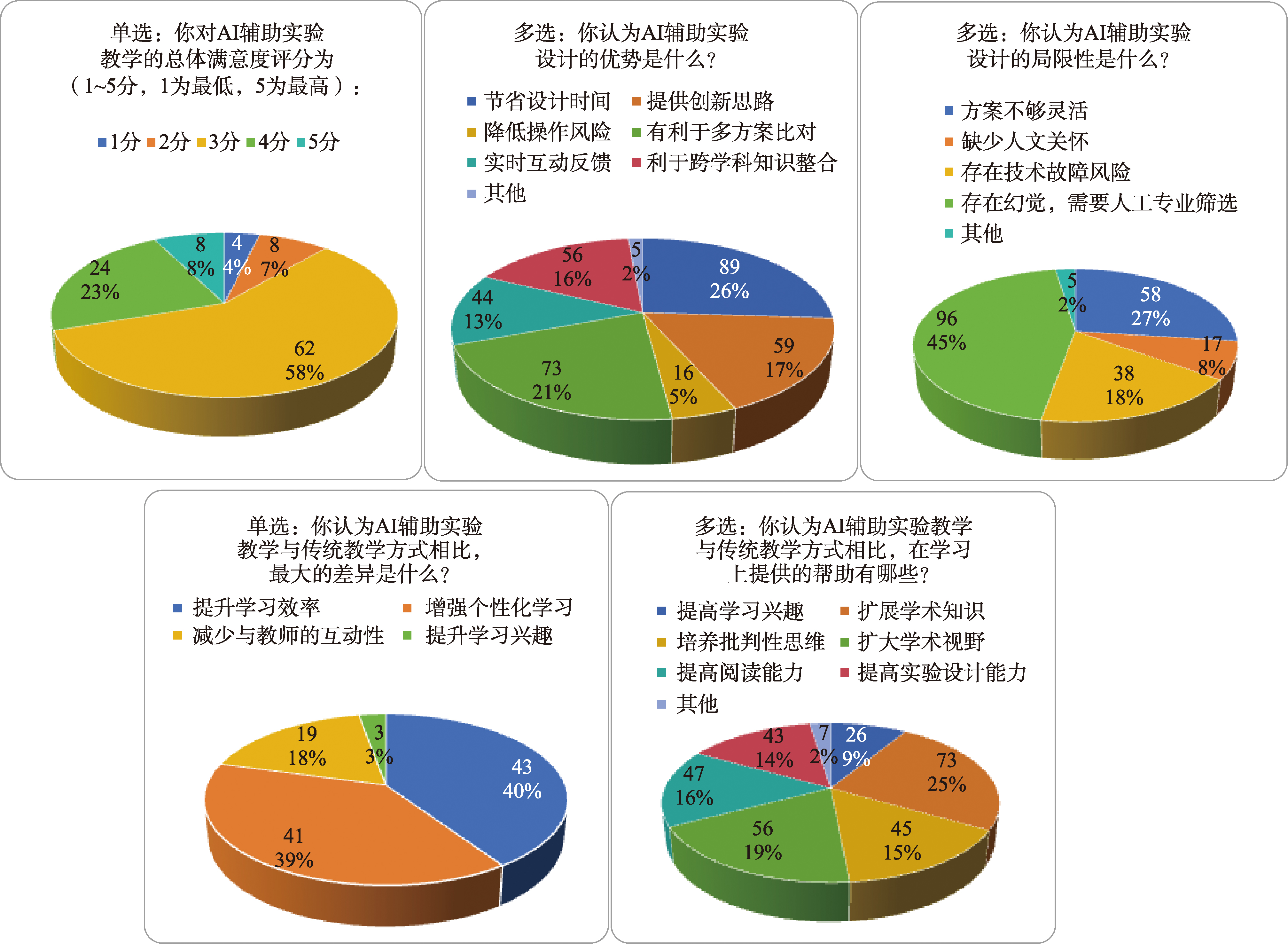
Fig. 2
Statistical results of student questionnaire survey"
| [1] | Wu D, Feng QY. Educational transformation in the era of artificial intelligence: development trends and practical pathways. J Cent China Norm Univ (Humanit Soc Sci), 2025, 64(6): 136-145. |
| 吴砥, 冯倩怡. 人工智能时代的教育变革: 发展形势与现实路径. 华中师范大学学报(人文社会科学版), 2025, 64(6): 136-145. | |
| [2] | 吴伟. 社会建构主义视角下人工智能技术在高等教育应用中的赋能与异化. 现代职业教育, 2025(30): 133-136. |
| [3] | Lai BX, Chen HJ. Artificial intelligence empowering higher education: features, practical cases and risk mitigation. Future Dev, 2025, 49(11): 15-20+35. |
| 赖博轩, 陈宏钧. 人工智能赋能高等教育:发展特点、实践案例与风险应对. 未来与发展, 2025, 49(11): 15-20+35. | |
| [4] | 潘越. 人工智能在高校个性化教育中的应用与挑战. 中国新通信, 2025, 27(20): 31-33. |
| [5] |
Duong D, Solomon BD. Artificial intelligence in clinical genetics. Eur J Hum Genet, 2025, 33(3): 281-288.
pmid: 39806188 |
| [6] |
Kundaje A, Pollard KS, Ma J, Chang X, Chen MJ, Rohs R. Artificial intelligence in molecular biology. Mol Cell, 2025, 85(2): 193-198.
pmid: 39824161 |
| [7] |
Kamble P, Dubey K, Mukherjee A, Jain R, Roy I, Puri V, Garg P. Decoding cervical cancer biomarkers: an integrated framework of bioinformatics, machine learning, and experimental confirmation. Cancer Invest, 2025, 43(10): 882-902.
pmid: 41123057 |
| [8] |
Novakovsky G, Dexter N, Libbrecht MW, Wasserman WW, Mostafavi S. Obtaining genetics insights from deep learning via explainable artificial intelligence. Nat Rev Genet, 2023, 24(2): 125-137.
pmid: 36192604 |
| [9] | Liu Y, Tang KL, Lv AP, Wang HY. Experimental design for protein structure prediction using AI models. Res Explor Lab, 2025, 44(6): 32-35+81. |
| 刘艳, 唐凯临, 吕爱平, 王海芸. 基于AI模型的蛋白质结构预测的实验设计. 实验室研究与探索, 2025, 44(6): 32-35+81. | |
| [10] | Zhang LT, Liu MY, Yuan HJ, Wang H. AI-driven new materials development and data standardization. Chin Sci Bull, 2025, 70(24): 4066-4080. |
| 张澜庭, 刘明洋, 袁宏建, 汪洪. AI驱动的新材料智能研发与数据标准化. 科学通报, 2025, 70(24): 4066-4080. | |
| [11] | Wang YJ, Chen Y, Yang DJ, Lei XG. Research on personalized treatment of tumors based on artificial intelligence analysis of tumor genes. Chin Bull Life Sci, 2025, 37(12): 1624-1633. |
| 王亚军, 陈瑛, 杨得军, 雷新刚. 基于人工智能分析肿瘤基因的个性化治疗研究. 生命科学, 2025, 37(12): 1624-1633. | |
| [12] | Gibson D, Kovanovic V, Ifenthaler D, Dexter S, Feng SH. Learning theories for artificial intelligence promoting learning processes. Br J Educ Technol, 2023, 54(5): 1125-1146. |
| [13] | Koć-Januchta MM, Schönborn KJ, Tibell LAE, Chaudhri VK, Heller HC. Engaging with biology by asking questions: investigating students' interaction and learning with an artificial intelligence-enriched textbook. J Educ Comput Res, 2020, 58(6): 1190-1224. |
| [14] | He BY, Wang LL, Xie ZW, Lu G, Li QS. Artificial intelligence-assisted teaching of comprehensive design- oriented experiments: a case study of the microbial detection project in Environmental Microbiology Experiment. Microbiol China, 2025, 52(11): 5406-5414. |
| 何宝燕, 王立立, 谢志旺, 陆钢, 李取生. 人工智能辅助综合设计性实验教学: 以“环境微生物检测实验项目”为例. 微生物学通报, 2025, 52(11): 5406-5414. | |
| [15] | Qin Y, Xie HM, Li YJ, Tan BY, Sun SH. Design and practice of project-based comprehensive experimental teaching platform for artificial intelligence. Res Explor Lab, 2024, 43(9): 135-141. |
| 覃阳, 谢慧明, 李玉洁, 谭本英, 孙邵华. 人工智能项目式综合实验教学平台设计与实践. 实验室研究与探索, 2024, 43(9): 135-141. | |
| [16] | Yu H, Xia WL, Cheng Y, Wang JY. Design and practice of classroom teaching experiment based on artificial intelligence generated content. Res Explor Lab, 2025, 44(11): 121-125+221. |
| 余辉, 夏文蕾, 程钰, 王骏阳. 基于生成式人工智能的课堂教学实验设计与实践. 实验室研究与探索, 2025, 44(11): 121-125+221. |
| [1] | Dingwei Lei, Ruichu Gu, Xiaoxue Xie, Shizhi Ding, Han Wen. Application and prospects of current computational methods in m6A research: a comprehensive review [J]. Hereditas(Beijing), 2025, 47(8): 903-927. |
| [2] | Linyao Tang, Jingrouzi Wu, Ge Lin. Application of ultrasound and artificial intelligence in the prediction of fetal chromosomal numerical abnormalities [J]. Hereditas(Beijing), 2025, 47(12): 1326-1339. |
| [3] | Guangyong Zheng, Tao Zeng, Yixue Li. Application and prospect of cutting-edge information technology in biomedical big data [J]. Hereditas(Beijing), 2021, 43(10): 924-929. |
| [4] | Xinyue Wang, Hongzhu Qu, Xiangdong Fang. Omics big data and medical artificial intelligence [J]. Hereditas(Beijing), 2021, 43(10): 930-937. |
| [5] | Zhao Xuetong, Yang Yadong, Qu Hongzhu, Fang Xiangdong. Applications of machine learning in clinical decision support in the omic era [J]. Hereditas(Beijing), 2018, 40(9): 693-703. |
| Viewed | ||||||
|
Full text |
|
|||||
|
Abstract |
|
|||||

