Hereditas(Beijing) ›› 2026, Vol. 48 ›› Issue (9): 855-868.doi: 10.16288/j.yczz.26-079
• Review • Previous Articles Next Articles
Progress on cholesteryl ester transfer protein-related genes and CETP inhibitor therapy
Zijun Yi( ), Yingyun Gong, Hongwen Zhou()
Department of Endocrinology ,The First Affiliated Hospital with Nanjing Medical University Nanjing 210029, China
-
Received:2026-04-20Revised:2026-05-26Online:2026-07-24Published:2026-07-24 -
Contact:Hongwen Zhou E-mail:yizijunyvette@163.com;drhongwenzhou@njmu.edu.cn -
Supported by:Developmental Programming and Metabolic Regulation Program of the National Key Research and Development Program of China(2024YFA1802803);Jiangsu Provincial Excellent Young Scholars Fund Project(BK20230075)

Cite this article
Zijun Yi, Yingyun Gong, Hongwen Zhou. Progress on cholesteryl ester transfer protein-related genes and CETP inhibitor therapy[J]. Hereditas(Beijing), 2026, 48(9): 855-868.
share this article
Add to citation manager EndNote|Reference Manager|ProCite|BibTeX|RefWorks
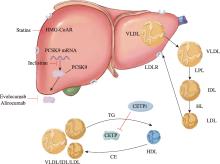
Fig. 1
CETP-mediated lipoprotein metabolism and mechanisms of related lipid-lowering drugs"

Table 1
Developmental history and clinical outcomes of CETP inhibitors"
| 药物名称 | 心血管结局试验 | 受试者 | 随访月数 | 主要结果 | 结局 | 劣势 | 参考 文献 | |
|---|---|---|---|---|---|---|---|---|
| HDL-C | LDL-C | |||||||
| Torcetrapib | ILLUMINATE | 15,067例稳定性ASCVD患者 | 18 | 升高约72.1% | 降低约24.9% | MACE风险升高约25% (HR=1.25,95% CI=1.09~ 1.44,P=0.001); 全因死亡风险升高约58% (HR=1.58,95% CI=1.14~ 2.19,P=0.006) | 脱靶效应明显,收缩压升高,电解质紊乱,醛固酮水平升高等,试验提前终止 | [ |
| Dalcetrapib | Dal-OUTCOMES | 15,871例ACS患者 | 31 | 升高约30% | 无显著变化 | MACE风险无显著变化(HR=1.04,95% CI=0.93~ 1.16,P=0.52) | 对心血管事件风险无明显影响,试验提前终止 | [ |
| Evacetrapib | ACCELERATE | 12,092例稳定性ASCVD患者及ACS患者 | 26 | 升高约132% | 降低约37% | MACE风险无显著变化(HR=1.01,95% CI=0.91~ 1.11,P=0.91) | 对心血管事件风险无明显影响,试验提前终止 | [ |
| Anacetrapib | REVEAL | 30,449例稳定性ASCVD | 49 | 升高约104% | 降低约41% | MACE风险降低9% (RR= 0.91,95% CI=0.85~0.97,P=0.004) | 高度亲脂性,药物在脂肪组织中蓄积,清除缓慢 | [ |
Table 2
Clinical trial results of Obicetrapib"
| III期试验名称 | 受试者 | 随访周数 | 药物剂量 | 主要结果 | 结局 | 参考文献 |
|---|---|---|---|---|---|---|
| BROOKLYN | 354人HeFH患者,LDL-C≥ 2.6 mmol/L | 52 | 每日口服10 mg Obicetrapib或安慰剂 | 12周时,升高HDL-C 138.7%,降低LDL-C 36.3%、LP(a) 45.9%和Apo(B) 24.4% | 显著提升HDL-C,降低LDL-C和LP(a) | [ |
| BROADWAY | 2,530人ASCVD或HeFH患者,LDL-C≥1.8 mmol/L | 52 | 每日口服10 mg Obicetrapib或安慰剂 | 12周时,升高HDL-C 136.3%,降低LDL-C 32.6%,MACE探索性发生率4.2% vs 安慰剂组5.2% (HR=0.79, CI 0.54~1.15) | 显著提升HDL-C,降低LDL-C,并且有心血管获益可能 | [ |
| TANDEM | 407人ASCVD或HeFH患者,LDL-C≥1.8 mmol/L,74%服用高强度他汀 | 12 | 每日口服10 mg Obicetrapib+10 mg Ezetimibe或单药治疗或安慰剂 | 12周时,降低LDL-C 48.6%,Obicetrapib单药使LDL-C降低31.9% | 复方制剂组合Obicetrapib+Ezetimibe可进一步降低LDL-C | [ |
| PREVAIL | 超过9,500名已确诊ASCVD或ASCVD高危一级预防患者;且接受最大耐受剂量的他汀类药物治疗而LDL-C≥1.4 mmol/L | 等待结果 | [ | |||
| [1] |
GBD 2023 Causes of Death Collaborators. Global burden of 292 causes of death in 204 countries and territories and 660 subnational locations, 1990-2023: a systematic analysis for the global burden of disease study 2023. Lancet, 2025, 406(10513): 1811-1872.
pmid: 41092928 |
| [2] |
Brunham LR, Lonn E, Mehta SR. Dyslipidemia and the current state of cardiovascular disease: epidemiology, risk factors, and effect of lipid lowering. Can J Cardiol, 2024, 40(8S): S4-S12.
pmid: 39111899 |
| [3] | Xu YJ, Wang LY. Research progress on the association between genetic variations in lipid metabolism and premature coronary artery disease. Hereditas(Beijing), 2008, 30(6): 671-676. |
| 许瑛杰, 王绿娅. 脂质代谢相关基因变异在早发冠心病中作用的研究进展. 遗传, 2008, 30(6): 671-676. | |
| [4] |
Silverman MG, Ference BA, Im K, Wiviott SD, Giugliano RP, Grundy SM, Braunwald E, Sabatine MS. Association between lowering LDL-C and cardiovascular risk reduction among different therapeutic interventions: a systematic review and meta-analysis. JAMA, 2016, 316(12): 1289-1297.
pmid: 27673306 |
| [5] |
Chirovsky DR, Fedirko V, Cui YD, Sazonov V, Barter P. Prospective studies on the relationship between high-density lipoprotein cholesterol and cardiovascular risk: a systematic review. Eur J Cardiovasc Prev Rehabil, 2009, 16(4): 404-423.
pmid: 19465856 |
| [6] |
Jomard A, Osto E. High density lipoproteins: metabolism, function, and therapeutic potential. Front Cardiovasc Med, 2020, 7: 39.
pmid: 32296714 |
| [7] |
Kastelein JJP, Hsieh A, Dicklin MR, Ditmarsch M, Davidson MH. Obicetrapib: reversing the tide of CETP inhibitor disappointments. Curr Atheroscler Rep, 2024, 26(2): 35-44.
pmid: 38133847 |
| [8] |
Barter PJ, Brewer HB Jr, Chapman MJ, Hennekens CH, Rader DJ, Tall AR. Cholesteryl ester transfer protein: a novel target for raising HDL and inhibiting atherosclerosis. Arterioscler Thromb Vasc Biol, 2003, 23(2): 160-167.
pmid: 12588754 |
| [9] |
Xue H, Zhang M, Liu JF, Wang JJ, Ren G. Structure-based mechanism and inhibition of cholesteryl ester transfer protein. Curr Atheroscler Rep, 2023, 25(4): 155-166.
pmid: 36881278 |
| [10] |
Inazu A, Brown ML, Hesler CB, Agellon LB, Koizumi J, Takata K, Maruhama Y, Mabuchi H, Tall AR. Increased high-density lipoprotein levels caused by a common cholesteryl-ester transfer protein gene mutation. N Engl J Med, 1990, 323(18): 1234-1238.
pmid: 2215607 |
| [11] | Inazu A, Jiang XC, Haraki T, Yagi K, Kamon N, Koizumi J, Mabuchi H, Takeda R, Takata K, Moriyama Y. Genetic cholesteryl ester transfer protein deficiency caused by two prevalent mutations as a major determinant of increased levels of high density lipoprotein cholesterol. J Clin Invest, 1994, 94(5): 1872-1882. |
| [12] |
Nagano M, Yamashita S, Hirano KI, Takano M, Maruyama T, Ishihara M, Sagehashi Y, Kujiraoka T, Tanaka K, Hattori H, Sakai N, Nakajima N, Egashira T, Matsuzawa Y. Molecular mechanisms of cholesteryl ester transfer protein deficiency in Japanese. J Atheroscler Thromb, 2004, 11(3): 110-121.
pmid: 15256762 |
| [13] |
Tall AR. Plasma cholesteryl ester transfer protein. J Lipid Res, 1993, 34(8): 1255-1274.
pmid: 8409761 |
| [14] |
Koivuniemi A, Vuorela T, Kovanen PT, Vattulainen I, Hyvönen MT. Lipid exchange mechanism of the cholesteryl ester transfer protein clarified by atomistic and coarse-grained simulations. PLoS Comput Biol, 2012, 8(1): e1002299.
pmid: 22253581 |
| [15] |
Barter PJ, Hopkins GJ, Calvert GD. Transfers and exchanges of esterified cholesterol between plasma lipoproteins. Biochem J, 1982, 208(1): 1-7.
pmid: 6760853 |
| [16] |
Rader DJ. Molecular regulation of HDL metabolism and function: implications for novel therapies. J Clin Invest, 2006, 116(12): 3090-3100.
pmid: 17143322 |
| [17] |
Shrestha S, Wu BJ, Guiney L, Barter PJ, Rye KA. Cholesteryl ester transfer protein and its inhibitors. J Lipid Res, 2018, 59(5): 772-783.
pmid: 29487091 |
| [18] |
Moriyama Y, Okamura T, Inazu A, Doi M, Iso H, Mouri Y, Ishikawa Y, Suzuki H, Iida M, Koizumi J, Mabuchi H, Komachi Y. A low prevalence of coronary heart disease among subjects with increased high-density lipoprotein cholesterol levels, including those with plasma cholesteryl ester transfer protein deficiency. Prev Med, 1998, 27(5 Pt1): 659-667.
pmid: 9808796 |
| [19] |
Endo Y, Fujita M, Ikewaki K. HDL functions-current status and future perspectives. Biomolecules, 2023, 13(1): 105.
pmid: 36671490 |
| [20] |
Ouimet M, Barrett TJ, Fisher EA. HDL and reverse cholesterol transport. Circ Res, 2019, 124(10): 1505-1518.
pmid: 31071007 |
| [21] |
Chantepie S, Bochem AE, Chapman MJ, Hovingh GK, Kontush A. High-density lipoprotein (HDL) particle subpopulations in heterozygous cholesteryl ester transfer protein (CETP) deficiency: maintenance of antioxidative activity. PLoS One, 2012, 7(11): e49336.
pmid: 23189141 |
| [22] |
Nicholls SJ, Ruotolo G, Brewer HB, Kane JP, Wang MD, Krueger KA, Adelman SJ, Nissen SE, Rader DJ. Cholesterol efflux capacity and pre-beta-1 HDL concentrations are increased in dyslipidemic patients treated with evacetrapib. J Am Coll Cardiol, 2015, 66(20): 2201-2210.
pmid: 26564598 |
| [23] |
Barter PJ, Caulfield M, Eriksson M, Grundy SM, Kastelein JJP, Komajda M, Lopez-Sendon J, Mosca L, Tardif JC, Waters DD, Shear CL, Revkin JH, Buhr KA, Fisher MR, Tall AR, Brewer B, ILLUMINATE Investigators. Effects of torcetrapib in patients at high risk for coronary events. N Engl J Med, 2007, 357(21): 2109-2122.
pmid: 17984165 |
| [24] |
Johns DG, Duffy J, Fisher T, Hubbard BK, Forrest MJ. On- and off-target pharmacology of torcetrapib: current understanding and implications for the structure activity relationships (SAR), discovery and development of cholesteryl ester-transfer protein (CETP) inhibitors. Drugs, 2012, 72(4): 491-507.
pmid: 22356288 |
| [25] |
Hu X, Dietz JD, Xia CS, Knight DR, Loging WT, Smith AH, Yuan HD, Perry DA, Keiser J. Torcetrapib induces aldosterone and cortisol production by an intracellular calcium-mediated mechanism independently of cholesteryl ester transfer protein inhibition. Endocrinology, 2009, 150(5): 2211-2219.
pmid: 19164467 |
| [26] |
Simic B, Hermann M, Shaw SG, Bigler L, Stalder U, Dörries C, Besler C, Lüscher TF, Ruschitzka F. Torcetrapib impairs endothelial function in hypertension. Eur Heart J, 2012, 33(13): 1615-1624.
pmid: 21920972 |
| [27] |
Stein EA, Stroes ESG, Steiner G, Buckley BM, Capponi AM, Burgess T, Niesor EJ, Kallend D, Kastelein JJP. Safety and tolerability of dalcetrapib. Am J Cardiol, 2009, 104(1): 82-91.
pmid: 19576325 |
| [28] |
Lüscher TF, Taddei S, Kaski JC, Jukema JW, Kallend D, Münzel T, Kastelein JJP, Deanfield JE, dal-VESSEL Investigators. Vascular effects and safety of dalcetrapib in patients with or at risk of coronary heart disease: the dal-VESSEL randomized clinical trial. Eur Heart J, 2012, 33(7): 857-865.
pmid: 22345126 |
| [29] |
Kosmas CE, DeJesus E, Rosario D, Vittorio TJ. CETP inhibition: past failures and future hopes. Clin Med Insights Cardiol, 2016, 10: 37-42.
pmid: 26997876 |
| [30] |
Schwartz GG, Olsson AG, Abt M, Ballantyne CM, Barter PJ, Brumm J, Chaitman BR, Holme IM, Kallend D, Leiter LA, Leitersdorf E, McMurray JJV, Mundl H, Nicholls SJ, Shah PK, Tardif JC, Wright RS, dal-OUTCOMES Investigators. Effects of dalcetrapib in patients with a recent acute coronary syndrome. N Engl J Med, 2012, 367(22): 2089-2099.
pmid: 23126252 |
| [31] |
Nicholls SJ, Brewer HB, Kastelein JJP, Krueger KA, Wang MD, Shao MY, Hu B, McErlean E, Nissen SE. Effects of the CETP inhibitor evacetrapib administered as monotherapy or in combination with statins on HDL and LDL cholesterol: a randomized controlled trial. JAMA, 2011, 306(19): 2099-2109.
pmid: 22089718 |
| [32] |
Tall AR, Rader DJ. Trials and tribulations of CETP inhibitors. Circ Res, 2018, 122(1): 106-112.
pmid: 29018035 |
| [33] |
Cao GQ, Beyer TP, Zhang YY, Schmidt RJ, Chen YQ, Cockerham SL, Zimmerman KM, Karathanasis SK, Cannady EA, Fields T, Mantlo NB. Evacetrapib is a novel, potent, and selective inhibitor of cholesteryl ester transfer protein that elevates HDL cholesterol without inducing aldosterone or increasing blood pressure. J Lipid Res, 2011, 52(12): 2169-2176.
pmid: 21957197 |
| [34] |
Lincoff AM, Nicholls SJ, Riesmeyer JS, Barter PJ, Brewer HB, Fox KAA, Gibson CM, Granger C, Menon V, Montalescot G, Rader D, Tall AR, McErlean E, Wolski K, Ruotolo G, Vangerow B, Weerakkody G, Goodman SG, Conde D, McGuire DK, Nicolau JC, Leiva-Pons JL, Pesant Y, Li WM, Kandath D, Kouz S, Tahirkheli N, Mason D, Nissen SE, ACCELERATE Investigators. Evacetrapib and cardiovascular outcomes in high-risk vascular disease. N Engl J Med, 2017, 376(20): 1933-1942.
pmid: 28514624 |
| [35] |
Holmes MV, Smith GD. Dyslipidaemia: revealing the effect of CETP inhibition in cardiovascular disease. Nat Rev Cardiol, 2017, 14(11): 635-636.
pmid: 28980665 |
| [36] |
Nelson AJ, Sniderman AD, Ditmarsch M, Dicklin MR, Nicholls SJ, Davidson MH, Kastelein JJP. Cholesteryl ester transfer protein inhibition reduces major adverse cardiovascular events by lowering apolipoprotein b levels. Int J Mol Sci, 2022, 23(16): 9417.
pmid: 36012684 |
| [37] |
Aronow WS. Effect of evacetrapib on cardiovascular outcomes in patients with high-risk cardiovascular disease. J Thorac Dis, 2017, 9(7): 1822-1825.
pmid: 28839974 |
| [38] |
Rohatgi A, Khera A, Berry JD, Givens EG, Ayers CR, Wedin KE, Neeland IJ, Yuhanna IS, Rader DR, de Lemos JA, Shaul PW. HDL cholesterol efflux capacity and incident cardiovascular events. N Engl J Med, 2014, 371(25): 2383-2393.
pmid: 25404125 |
| [39] |
Cannon CP, Shah S, Dansky HM, Davidson M, Brinton EA, Gotto AM, Stepanavage M, Liu SX, Gibbons P, Ashraf TB, Zafarino J, Mitchel Y, Barter P, Determining the efficacy and tolerability investigators. Safety of anacetrapib in patients with or at high risk for coronary heart disease. N Engl J Med, 2010, 363(25): 2406-2415.
pmid: 21082868 |
| [40] |
Millar JS, Reyes-Soffer G, Jumes P, Dunbar RL, deGoma EM, Baer AL, Karmally W, Donovan DS, Rafeek H, Pollan L, Tohyama J, Johnson-Levonas AO, Wagner JA, Holleran S, Obunike J, Liu Y, Ramakrishnan R, Lassman ME, Gutstein DE, Ginsberg HN, Rader DJ. Anacetrapib lowers LDL by increasing ApoB clearance in mildly hypercholesterolemic subjects. J Clin Invest, 2015, 125(6): 2510-2522.
pmid: 25961461 |
| [41] |
HPS3/TIMI55-REVEAL Collaborative Group, Bowman L, Hopewell JC, Chen F, Wallendszus K, Stevens W, Collins R, Wiviott SD, Cannon CP, Braunwald E, Sammons E, Landray MJ. Effects of anacetrapib in patients with atherosclerotic vascular disease. N Engl J Med, 2017, 377(13): 1217-1227.
pmid: 28847206 |
| [42] |
REVEAL Collaborative Group, Bowman L, Chen F, Sammons E, Hopewell JC, Wallendszus K, Stevens W, Valdes- Marquez E, Wiviott S, Cannon CP, Braunwald E, Collins R, Landray MJ. Randomized evaluation of the effects of anacetrapib through lipid-modification (REVEAL)-a large-scale, randomized, placebo-controlled trial of the clinical effects of anacetrapib among people with established vascular disease: trial design, recruitment, and baseline characteristics. Am Heart J, 2017, 187: 182-190.
pmid: 28454801 |
| [43] |
Krishna R, Gheyas F, Liu Y, Hagen DR, Walker B, Chawla A, Cote J, Blaustein RO, Gutstein DE. Chronic administration of anacetrapib is associated with accumulation in adipose and slow elimination. Clin Pharmacol Ther, 2017, 102(5): 832-840.
pmid: 28380664 |
| [44] |
Gotto AM Jr, Kher U, Chatterjee MS, Liu Y, Li XS, Vaidya S, Cannon CP, Brinton EA, Moon JE, Shah S, Dansky HM, Mitchel Y, Barter P, DEFINE Investigators. Lipids, safety parameters, and drug concentrations after an additional 2 years of treatment with anacetrapib in the DEFINE study. J Cardiovasc Pharmacol Ther, 2014, 19(6): 543-549.
pmid: 24737712 |
| [45] |
Ballantyne CM, Ditmarsch M, Kastelein JJ, Nelson AJ, Kling D, Hsieh A, Curcio DL, Maki KC, Davidson MH, Nicholls SJ. Obicetrapib plus ezetimibe as an adjunct to high-intensity statin therapy: a randomized phase 2 trial. J Clin Lipidol, 2023, 17(4): 491-503.
pmid: 37277261 |
| [46] |
Ford J, Lawson M, Fowler D, Maruyama N, Mito S, Tomiyasu K, Kinoshita S, Suzuki C, Kawaguchi A, Round P, Boyce M, Warrington S, Weber W, van Deventer S, Kastelein JJP. Tolerability, pharmacokinetics and pharmacodynamics of TA-8995, a selective cholesteryl ester transfer protein (CETP) inhibitor, in healthy subjects. Br J Clin Pharmacol, 2014, 78(3): 498-508.
pmid: 24628035 |
| [47] |
Hovingh GK, Kastelein JJP, van Deventer SJH, Round P, Ford J, Saleheen D, Rader DJ, Brewer HB, Barter PJ. Cholesterol ester transfer protein inhibition by TA-8995 in patients with mild dyslipidaemia (TULIP): a randomised, double-blind, placebo-controlled phase 2 trial. Lancet, 2015, 386(9992): 452-460.
pmid: 26047975 |
| [48] |
Nicholls SJ, Ditmarsch M, Kastelein JJ, Rigby SP, Kling D, Curcio DL, Alp NJ, Davidson MH. Lipid lowering effects of the CETP inhibitor obicetrapib in combination with high-intensity statins: a randomized phase 2 trial. Nat Med, 2022, 28(8): 1672-1678.
pmid: 35953719 |
| [49] |
Nicholls SJ, Nelson AJ, Kastelein JJP, Ditmarsch M, Hsieh A, Johnson J, Curcio D, Kling D, Kirkpatrick CF, Davidson MH. Obicetrapib exhibits favorable physiochemical and pharmacokinetic properties compared to previous cholesteryl ester transfer protein inhibitors: an integrated summary of results from non-human primate studies and clinical trials. Pharmacol Res Perspect, 2024, 12(6): e70010.
pmid: 39425271 |
| [50] |
Liu SP, Mistry A, Reynolds JM, Lloyd DB, Griffor MC, Perry DA, Ruggeri RB, Clark RW, Qiu XY. Crystal structures of cholesteryl ester transfer protein in complex with inhibitors. J Biol Chem, 2012, 287(44): 37321-37329.
pmid: 22961980 |
| [51] |
Sarraju A, Brennan D, Hayden K, Stronczek A, Goldberg AC, Michos ED, McGuire DK, Mason D, Tercek G, Nicholls SJ, Kling D, Neild AL, Kastelein J, Davidson M, Ditmarsch M, Nissen SE. Fixed-dose combination of obicetrapib and ezetimibe for LDL cholesterol reduction (TANDEM): a phase 3, randomised, double-blind, placebo-controlled trial. Lancet, 2025, 405(10491): 1757-1768.
pmid: 40347969 |
| [52] |
Nicholls SJ, Nelson AJ, Ditmarsch M, Kastelein JJP, Ballantyne CM, Ray KK, Navar AM, Nissen SE, Harada-Shiba M, Curcio DL, Neild A, Kling D, Hsieh A, Butters J, Ference BA, Laufs U, Banach M, Mehran R, Catapano AL, Huo Y, Szarek M, Balinskaite V, Davidson MH, BROADWAY Investigators. Safety and efficacy of obicetrapib in patients at high cardiovascular risk. N Engl J Med, 2025, 393(1): 51-61.
pmid: 40337982 |
| [53] | Randomized study to evaluate the effect of obicetrapib on top of maximum tolerated lipid-modifying therapies (BROADWAY). ClinicalTrials.gov identifier: NCT05142722. ClinicalTrials.gov. [2026-01-22]. https://clinicaltrials.gov/study/NCT05142722 |
| [54] |
Nicholls SJ, Nelson AJ, Ditmarsch M, Kastelein JJP, Ballantyne CM, Ray KK, Navar AM, Nissen SE, Goldberg AC, Brunham LR, Curcio D, Wuerdeman E, Neild A, Kling D, Hsieh A, Dicklin MR, Ference BA, Laufs U, Banach M, Mehran R, Catapano AL, Davidson MH. Obicetrapib on top of maximally tolerated lipid-modifying therapies in participants with or at high risk for atherosclerotic cardiovascular disease: rationale and designs of BROADWAY and BROOKLYN. Am Heart J, 2024, 274: 32-45.
pmid: 38705341 |
| [55] | Cardiovascular outcome study to evaluate the effect of obicetrapib in patients with cardiovascular disease (PREVAIL). ClinicalTrials.gov identifier: NCT05202509. ClinicalTrials.gov. [2026-01-22]. https://clinicaltrials.gov/study/NCT05202509 |
| [56] |
Grundy SM, Stone NJ, Bailey AL, Beam C, Birtcher KK, Blumenthal RS, Braun LT, de Ferranti S, Faiella- Tommasino J, Forman DE, Goldberg R, Heidenreich PA, Hlatky MA, Jones DW, Lloyd-Jones D, Lopez-Pajares N, Ndumele CE, Orringer CE, Peralta CA, Saseen JJ, Smith SC Jr, Sperling L, Virani SS, Yeboah J. 2018 AHA/ACC/AACVPR/AAPA/ABC/ACPM/ADA/AGS/APhA/ASPC/NLA/PCNA guideline on the management of blood cholesterol: a report of the american college of Cardiology/American heart association task force on clinical practice guidelines. Circulation, 2019, 139(25): e1082-e1143.
pmid: 30586774 |
| [57] | Wu YX, Wang Y. Progress on the molecular mechanisms of PCSK9-mediated degradation of low density lipoprotein recepto. Hereditas (Beijing), 2020, 42(10): 965-978. |
| 吴玉娴, 王琰. PCSK9降解低密度脂蛋白受体分子机制研究进展. 遗传, 2020, 42(10): 965-978. | |
| [58] |
Safarova M, Bimal T, Soffer DE, Hirsh B, Shapiro MD, Mintz G, Cha A, Gianos E. Advances in targeting LDL cholesterol: PCSK9 inhibitors and beyond. Am J Prev Cardiol, 2024, 19: 100701.
pmid: 39070027 |
| [59] |
Nurmohamed NS, Ditmarsch M, Kastelein JJP. Cholesteryl ester transfer protein inhibitors: from high-density lipoprotein cholesterol to low-density lipoprotein cholesterol lowering agents? Cardiovasc Res, 2022, 118(14): 2919-2931.
pmid: 34849601 |
| [60] |
Nurmohamed NS, Kraaijenhof JM, Stroes ESG. Lp(a): a new pathway to target? Curr Atheroscler Rep, 2022, 24(11): 831-838.
pmid: 36066785 |
| [61] |
Preiss D, Mafham M. PCSK9 inhibition: the dawn of a new age in cholesterol lowering? Diabetologia, 2017, 60(3): 381-389.
pmid: 28025677 |
| [62] |
Krähenbühl S, Pavik-Mezzour I, von Eckardstein A. Unmet needs in LDL-C lowering: when statins won’t do! Drugs, 2016, 76(12): 1175-1190.
pmid: 27456066 |
| [63] |
Mansfield BS, Mohamed F, Larouche M, Raal FJ. The hurdle of access to emerging therapies and potential solutions in the management of dyslipidemias. J Clin Med, 2024, 13(14): 4160.
pmid: 39064199 |
| [64] |
Cannon CP, Blazing MA, Giugliano RP, McCagg A, White JA, Theroux P, Darius H, Lewis BS, Ophuis TO, Jukema JW, De Ferrari GM, Ruzyllo W, De Lucca P, Im K, Bohula EA, Reist C, Wiviott SD, Tershakovec AM, Musliner TA, Braunwald E, Califf RM, IMPROVE-IT Investigators. Ezetimibe added to statin therapy after acute coronary syndromes. N Engl J Med, 2015, 372(25): 2387-2397.
pmid: 26039521 |
| [65] |
Cupido AJ, Reeskamp LF, Hingorani AD, Finan C, Asselbergs FW, Hovingh GK, Schmidt AF. Joint genetic inhibition of PCSK9 and CETP and the association with coronary artery disease: a factorial mendelian randomization study. JAMA Cardiol, 2022, 7(9): 955-964.
pmid: 35921096 |
| [66] |
Ference BA, Kastelein JJP, Ginsberg HN, Chapman MJ, Nicholls SJ, Ray KK, Packard CJ, Laufs U, Brook RD, Oliver-Williams C, Butterworth AS, Danesh J, Smith GD, Catapano AL, Sabatine MS. Association of genetic variants related to CETP inhibitors and statins with lipoprotein levels and cardiovascular risk. JAMA, 2017, 318(10): 947-956.
pmid: 28846118 |
| [67] |
Casula M, Colpani O, Xie SN, Catapano AL, Baragetti A. HDL in atherosclerotic cardiovascular disease: in search of a role. Cells, 2021, 10(8): 1869.
pmid: 34440638 |
| [68] |
Ganjali S, Watts GF, Banach M, Reiner Ž, Nachtigal P, Sahebkar A. The yin and yang of high-density lipoprotein and atherosclerotic cardiovascular disease: focusing on functionality and cholesterol efflux to reframe the HDL hypothesis. Curr Med Chem, 2021, 28(29): 6066-6081.
pmid: 33563147 |
| [69] |
Bhatti MI, Safiullah M, Farhan K, Ali A, Abdullah S, Ali A, Ahmed R. Obicetrapib and its impact on lipid parameters: a comprehensive meta-analysis of the latest evidence. J Clin Lipidol, 2025, 19(6): 1536-1549.
pmid: 40803897 |
| [70] |
Zhang JW, Navar AM, Tokgozoglu L. Lipoprotein(a)- lowering therapies: a promising future. Eur Heart J, 2026, ehag092.
pmid: 41684258 |
| [71] |
Feitosa MF, Wojczynski MK, Straka R, Kammerer CM, Lee JH, Kraja AT, Christensen K, Newman AB, Province MA, Borecki IB. Genetic analysis of long-lived families reveals novel variants influencing high density- lipoprotein cholesterol. Front Genet, 2014, 5: 159.
pmid: 24917880 |
| [72] |
Pikó P, Fiatal S, Kósa Z, Sándor J, Ádány R. Generalizability and applicability of results obtained from populations of European descent regarding the effect direction and size of HDL-C level-associated genetic variants to the Hungarian general and Roma populations. Gene, 2019, 686: 187-193.
pmid: 30468910 |
| [73] |
Pikó P, Fiatal S, Kósa Z, Sándor J, Ádány R. Genetic factors exist behind the high prevalence of reduced high-density lipoprotein cholesterol levels in the Roma population. Atherosclerosis, 2017, 263: 119-126.
pmid: 28624686 |
| [74] |
Zhang RZ, Xie QY, Xiao PX. Association of the polymorphisms of the cholesteryl ester transfer protein gene with coronary artery disease: a meta-analysis. Front Cardiovasc Med, 2023, 10: 1260679.
pmid: 38146445 |
| [75] |
Piko P, Jenei T, Kosa Z, Sandor J, Kovacs N, Seres I, Paragh G, Adany R. Association of CETP gene polymorphisms and haplotypes with cardiovascular risk. Int J Mol Sci, 2023, 24(12): 10281.
pmid: 37373432 |
| [76] |
Kashani Farid MA, Azizi F, Hedayati M, Daneshpour MS, Shamshiri AR, Siassi F. Association between CETP Taq1B and LIPC-514C/T polymorphisms with the serum lipid levels in a group of Tehran’s population: a cross sectional study. Lipids Health Dis, 2010, 9: 96.
pmid: 20822508 |
| [77] |
Wang J, Wang LJ, Zhong Y, Gu P, Shao JQ, Jiang SS, Gong JB. CETP gene polymorphisms and risk of coronary atherosclerosis in a Chinese population. Lipids Health Dis, 2013, 12: 176.
pmid: 24283500 |
| [78] |
Brousseau ME, Diffenderfer MR, Millar JS, Nartsupha C, Asztalos BF, Welty FK, Wolfe ML, Rudling M, Björkhem I, Angelin B, Mancuso JP, Digenio AG, Rader DJ, Schaefer EJ. Effects of cholesteryl ester transfer protein inhibition on high-density lipoprotein subspecies, apolipoprotein A-I metabolism, and fecal sterol excretion. Arterioscler Thromb Vasc Biol, 2005, 25(5): 1057-1064.
pmid: 15761191 |
| [79] |
Teslovich TM, Musunuru K, Smith AV, Edmondson AC, Stylianou IM, Koseki M, Pirruccello JP, Ripatti S, Chasman DI, Willer CJ, Johansen CT, Fouchier SW, Isaacs A, Peloso GM, Barbalic M, Ricketts SL, Bis JC, Aulchenko YS, Thorleifsson G, Feitosa MF, Chambers J, Orho-Melander M, Melander O, Johnson T, Li XH, Guo XQ, Li MY, Shin Cho Y, Jin Go M, Jin Kim Y, Lee JY, Park T, Kim K, Sim X, Twee-Hee Ong R, Croteau-Chonka DC, Lange LA, Smith JD, Song K, Hua Zhao J, Yuan X, Luan JA, Lamina C, Ziegler A, Zhang WH, Zee RYL, Wright AF, Witteman JCM, Wilson JF, Willemsen G, Wichmann HE, Whitfield JB, Waterworth DM, Wareham NJ, Waeber G, Vollenweider P, Voight BF, Vitart V, Uitterlinden AG, Uda M, Tuomilehto J, Thompson JR, Tanaka T, Surakka I, Stringham HM, Spector TD, Soranzo N, Smit JH, Sinisalo J, Silander K, Sijbrands EJG, Scuteri A, Scott J, Schlessinger D, Sanna S, Salomaa V, Saharinen J, Sabatti C, Ruokonen A, Rudan I, Rose LM, Roberts R, Rieder M, Psaty BM, Pramstaller PP, Pichler I, Perola M, Penninx BWJH, Pedersen NL, Pattaro C, Parker AN, Pare G, Oostra BA, O'Donnell CJ, Nieminen MS, Nickerson DA, Montgomery GW, Meitinger T, McPherson R, McCarthy MI, McArdle W, Masson D, Martin NG, Marroni F, Mangino M, Magnusson PKE, Lucas G, Luben R, Loos RJF, Lokki ML, Lettre G, Langenberg C, Launer LJ, Lakatta EG, Laaksonen R, Kyvik KO, Kronenberg F, König IR, Khaw KT, Kaprio J, Kaplan LM, Johansson A, Jarvelin MR, Janssens ACJW, Ingelsson E, Igl W, Kees Hovingh G, Hottenga JJ, Hofman A, Hicks AA, Hengstenberg C, Heid IM, Hayward C, Havulinna AS, Hastie ND, Harris TB, Haritunians T, Hall AS, Gyllensten U, Guiducci C, Groop LC, Gonzalez E, Gieger C, Freimer NB, Ferrucci L, Erdmann J, Elliott P, Ejebe KG, Döring A, Dominiczak AF, Demissie S, Deloukas P, de Geus EJC, de Faire U, Crawford G, Collins FS, Chen YDI, Caulfield MJ, Campbell H, Burtt NP, Bonnycastle LL, Boomsma DI, Boekholdt SM, Bergman RN, Barroso I, Bandinelli S, Ballantyne CM, Assimes TL, Quertermous T, Altshuler D, Seielstad M, Wong TY, Tai ES, Feranil AB, Kuzawa CW, Adair LS, Taylor HA Jr, Borecki IB, Gabriel SB, Wilson JG, Holm H, Thorsteinsdottir U, Gudnason V, Krauss RM, Mohlke KL, Ordovas JM, Munroe PB, Kooner JS, Tall AR, Hegele RA, Kastelein JJP, Schadt EE, Rotter JI, Boerwinkle E, Strachan DP, Mooser V, Stefansson K, Reilly MP, Samani NJ, Schunkert H, Cupples LA, Sandhu MS, Ridker PM, Rader DJ, van Duijn CM, Peltonen L, Abecasis GR, Boehnke M, Kathiresan S. Biological, clinical and population relevance of 95 loci for blood lipids. Nature, 2010, 466(7307): 707-713.
pmid: 20686565 |
| [80] |
Dullaart RP, Sluiter WJ. Common variation in the CETP gene and the implications for cardiovascular disease and its treatment: an updated analysis. Pharmacogenomics, 2008, 9(6): 747-763.
pmid: 18518852 |
| [81] |
Li WP, Liu X, Huang CY, Liu LS, Tan XR, Wang XY. The loss-of-function mutation of CETP affects HDLc levels but not ApoA 1 in patients with acute myocardial infarction. Nutr Metab Cardiovasc Dis, 2021, 31(2): 602-607.
pmid: 33358712 |
| [82] |
Inazu A. Cholesteryl ester transfer protein deficiency and hyperalphalipoproteinemia. J Atheroscler Thromb, 2025, 32(8): 911-923.
pmid: 40436797 |
| [83] |
Tardif JC, Rhéaume E, Lemieux Perreault LP, Grégoire JC, Feroz Zada Y, Asselin G, Provost S, Barhdadi A, Rhainds D, L'Allier PL, Ibrahim R, Upmanyu R, Niesor EJ, Benghozi R, Suchankova G, Laghrissi-Thode F, Guertin MC, Olsson AG, Mongrain I, Schwartz GG, Dubé MP. Pharmacogenomic determinants of the cardiovascular effects of dalcetrapib. Circ Cardiovasc Genet, 2015, 8(2): 372-82.
pmid: 25583994 |
| [84] |
Tardif JC, Pfeffer MA, Kouz S, Koenig W, Maggioni AP, McMurray JJV, Mooser V, Waters DD, Grégoire JC, L'Allier PL, Wouter Jukema J, White HD, Heinonen T, Black DM, Laghrissi-Thode F, Levesque S, Guertin MC, Dubé MP, dal-GenE Investigators. Pharmacogenetics- guided dalcetrapib therapy after an acute coronary syndrome: the dal-GenE trial. Eur Heart J, 2022, 43(39): 3947-3956.
pmid: 35856777 |
| [85] |
Ko DT, Alter DA, Guo H, Koh M, Lau G, Austin PC, Booth GL, Hogg W, Jackevicius CA, Lee DS, Wijeysundera HC, Wilkins JT, Tu JV. High-density lipoprotein cholesterol and cause-specific mortality in individuals without previous cardiovascular conditions: the CANHEART study. J Am Coll Cardiol, 2016, 68(19): 2073-2083.
pmid: 27810046 |
| [86] |
Kontush A, Chapman MJ. Why is HDL functionally deficient in type 2 diabetes? Curr Diab Rep, 2008, 8(1): 51-59.
pmid: 18366999 |
| [87] |
Besler C, Lüscher TF, Landmesser U. Molecular mechanisms of vascular effects of high-density lipoprotein: alterations in cardiovascular disease. EMBO Mol Med, 2012, 4(4): 251-268.
pmid: 22431312 |
| [88] |
Nissen SE, Tsunoda T, Tuzcu EM, Schoenhagen P, Cooper CJ, Yasin M, Eaton GM, Lauer MA, Sheldon WS, Grines CL, Halpern S, Crowe T, Blankenship JC, Kerensky R. Effect of recombinant ApoA-I Milano on coronary atherosclerosis in patients with acute coronary syndromes: a randomized controlled trial. JAMA, 2003, 290(17): 2292-2300.
pmid: 14600188 |
| [89] |
Michael Gibson C, Korjian S, Tricoci P, Daaboul Y, Yee M, Jain P, Alexander JH, Steg PG, Lincoff AM, Kastelein JJP, Mehran R, D’Andrea DM, Deckelbaum LI, Merkely B, Zarebinski M, Ophuis TO, Harrington RA. Safety and tolerability of CSL112, a reconstituted, infusible, plasma-derived apolipoprotein A-I, after acute myocardial infarction: the AEGIS-I trial (ApoA-I event reducing in ischemic syndromes I). Circulation, 2016, 134(24): 1918-1930.
pmid: 27881559 |
| [90] |
Dangas K, Navar AM, Kastelein JJP. The effect of CETP inhibitors on new-onset diabetes: a systematic review and meta-analysis. Eur Heart J Cardiovasc Pharmacother, 2022, 8(6): 622-632.
pmid: 35441656 |
| [91] |
Zhou HW, Li ZQ, Hojjati MR, Jang D, Beyer TP, Cao GQ, Tall AR, Jiang XC. Adipose tissue-specific CETP expression in mice: impact on plasma lipoprotein metabolism. J Lipid Res, 2006, 47(9): 2011-2019.
pmid: 16751623 |
| [92] |
Borràs C, Mercer A, Sirisi S, Alcolea D, Escolà-Gil JC, Blanco-Vaca F, Tondo M. HDL-like-mediated cell cholesterol trafficking in the central nervous system and Alzheimer’s disease pathogenesis. Int J Mol Sci, 2022, 23(16): 9356.
pmid: 36012637 |
| [93] |
Button EB, Robert J, Caffrey TM, Fan JJ, Zhao WC, Wellington CL. HDL from an Alzheimer’s disease perspective. Curr Opin Lipidol, 2019, 30(3): 224-234.
pmid: 30946049 |
| [94] |
Sanders AE, Wang CL, Katz M, Derby CA, Barzilai N, Ozelius L, Lipton RB. Association of a functional polymorphism in the cholesteryl ester transfer protein (CETP) gene with memory decline and incidence of dementia. JAMA, 2010, 303(2): 150-158.
pmid: 20068209 |
| [95] |
Davidson MH, Szarek M, Scheltens P, Vijverberg E, Hsieh A, Ditmarsch M, Kling D, Curcio D, Nicholls SJ, Ray KK, Cummings JL, Kastelein JJ. Effect of obicetrapib, a potent cholesteryl ester transfer protein inhibitor, on p-tau 217 levels in patients with cardiovascular disease. J Prev Alzheimers Dis, 2026, 13(1): 100394.
pmid: 41109840 |
| [96] |
Davidson MH, Hsieh A, de Kleer M, Szarek MS, Scheltens P, Vijverberg E, Johnson A, Ditmarsch M, Kastelein JJP. The emerging role of CETP inhibition in the prevention of Alzheimer’s disease. Am J Prev Cardiol, 2026, 26: 101442.
pmid: 42006409 |
| [97] |
Schmidt AF, Davidson MH, Ditmarsch M, Kastelein JJ, Finan C. Lower activity of cholesteryl ester transfer protein (CETP) and the risk of dementia: a mendelian randomization analysis. Alzheimers Res Ther, 2024, 16(1): 228.
pmid: 39415269 |
| [98] |
Bell TA 3rd, Graham MJ, Lee RG, Mullick AE, Fu WX, Norris D, Crooke RM. Antisense oligonucleotide inhibition of cholesteryl ester transfer protein enhances RCT in hyperlipidemic, CETP transgenic, LDLr-/- mice. J Lipid Res, 2013, 54(10): 2647-2657.
pmid: 23801661 |
| [99] |
Gareri C, Polimeni A, Giordano S, Tammè L, Curcio A, Indolfi C. Antisense oligonucleotides and small interfering RNA for the treatment of dyslipidemias. J Clin Med, 2022, 11(13): 3884.
pmid: 35807171 |
| [100] |
Moreno-Gonzalez MA, Ortega-Rivera OA, Steinmetz NF. Two decades of vaccine development against atherosclerosis. Nano Today, 2023, 50: 101822.
pmid: 37860053 |
| [101] |
Aghebati T, Arabsalmani M, Mohammadpour AH, Afshar M, Jaafari MR, Abnous K, Nazemi S, Badiee A. Development of an effective liposomal cholesterol ester transfer protein (CETP) vaccine for protecting against atherosclerosis in rabbit model. Pharm Dev Technol, 2020, 25(4): 432-439.
pmid: 31852350 |
| [1] | Yuxian Wu, Yan Wang. Progress on the molecular mechanisms of PCSK9-mediated degradation of low density lipoprotein receptor [J]. Hereditas(Beijing), 2020, 42(10): 965-978. |
| Viewed | ||||||
|
Full text |
|
|||||
|
Abstract |
|
|||||

