Hereditas(Beijing) ›› 2026, Vol. 48 ›› Issue (5): 506-521.doi: 10.16288/j.yczz.25-335
• Research Article • Previous Articles Next Articles
Genotype imputation improves SNP density and genetic analysis accuracy in slash pine
Yuxuan Jiang1( ), Liming Bian1(), Shiliang Zhou1, Charles Chen4, Yousry A. El-Kassaby2, Zhiqiang Chen1(), Harry X. Wu1,3
- 1
State Key Laboratory of Tree Genetics and Breeding ,Co-Innovation Center for Sustainable Forestry in Southern China, College of Forestry and Grassland, Nanjing Forestry University Nanjing 210037, China
2Faculty of Forestry ,University of British Columbia, Vancouver V6T 1Z4, Canada
3College of Forestry ,Umeå Plant Science Centre, Swedish University of Agricultural Sciences Umeå 90183, Sweden
4Institute for Biosecurity & Microbial Forensics ,Department of Biochemistry and Molecular Biology, Oklahoma State University Stillwater OK 74075, USA
-
Received:2025-12-19Revised:2026-01-14Online:2026-03-11Published:2026-03-11 -
Contact:Liming Bian, Zhiqiang Chen E-mail:806939913@qq.com;Lmbian@njfu.edu.cn;zhiqiang_chen@njfu.edu.cn -
Supported by:Scientific and Technological Innovation 2030 “Major Project in Agricultural Biotechnology Breeding” of Ministry of Science and Technology of the People’s Republic of China(2023ZD0405805)

Cite this article
Yuxuan Jiang, Liming Bian, Shiliang Zhou, Charles Chen, Yousry A. El-Kassaby, Zhiqiang Chen, Harry X. Wu. Genotype imputation improves SNP density and genetic analysis accuracy in slash pine[J]. Hereditas(Beijing), 2026, 48(5): 506-521.
share this article
Add to citation manager EndNote|Reference Manager|ProCite|BibTeX|RefWorks
Table 1
Quality control criteria and post-filter counts of reference panel SNPs"
| 筛选步骤 | 筛选条件 | 筛选后SNP的数量 |
|---|---|---|
| 原始数据 | — | 1,945,526,716 |
| 步骤1 | 过滤掉多等位位点及位于Ctg的标记,最终仅保留双等位SNP | 1,680,088,854 |
| 步骤2 | 将样本层面测序深度(DP)≤4的基因型统一置为缺失,随后按位点缺失率筛选,保留缺失率<0.40的SNP | 676,768,116 |
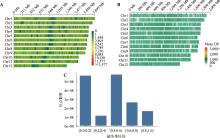
Fig. 1
Sequencing depth, SNP density and missing-rate distributions of the reference panel"
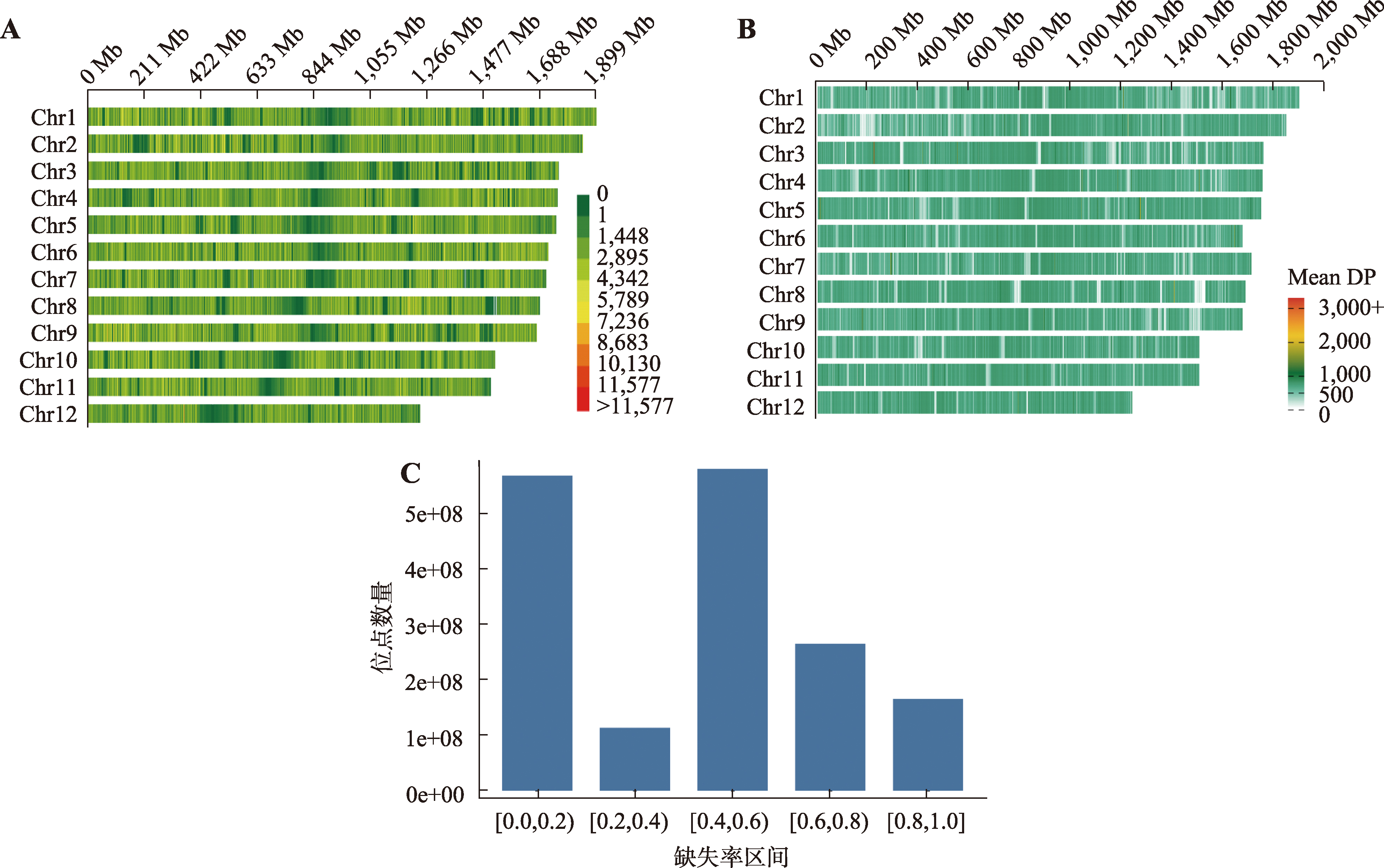
Table 2
Number of SNPs retained after filtering to biallelic sites in array data"
| 染色体 | 仅保留双等位位点的SNP数量 |
|---|---|
| Chr1 | 55,828 |
| Chr2 | 70,182 |
| Chr3 | 56,901 |
| Chr4 | 52,183 |
| Chr5 | 52,745 |
| Chr6 | 56,679 |
| Chr7 | 56,554 |
| Chr8 | 53,633 |
| Chr9 | 49,066 |
| Chr10 | 47,400 |
| Chr11 | 49,690 |
| Chr12 | 37,987 |
| 合计 | 638,848 |
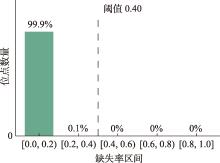
Supplementary Fig. 1
SNP missing rate in the array data"
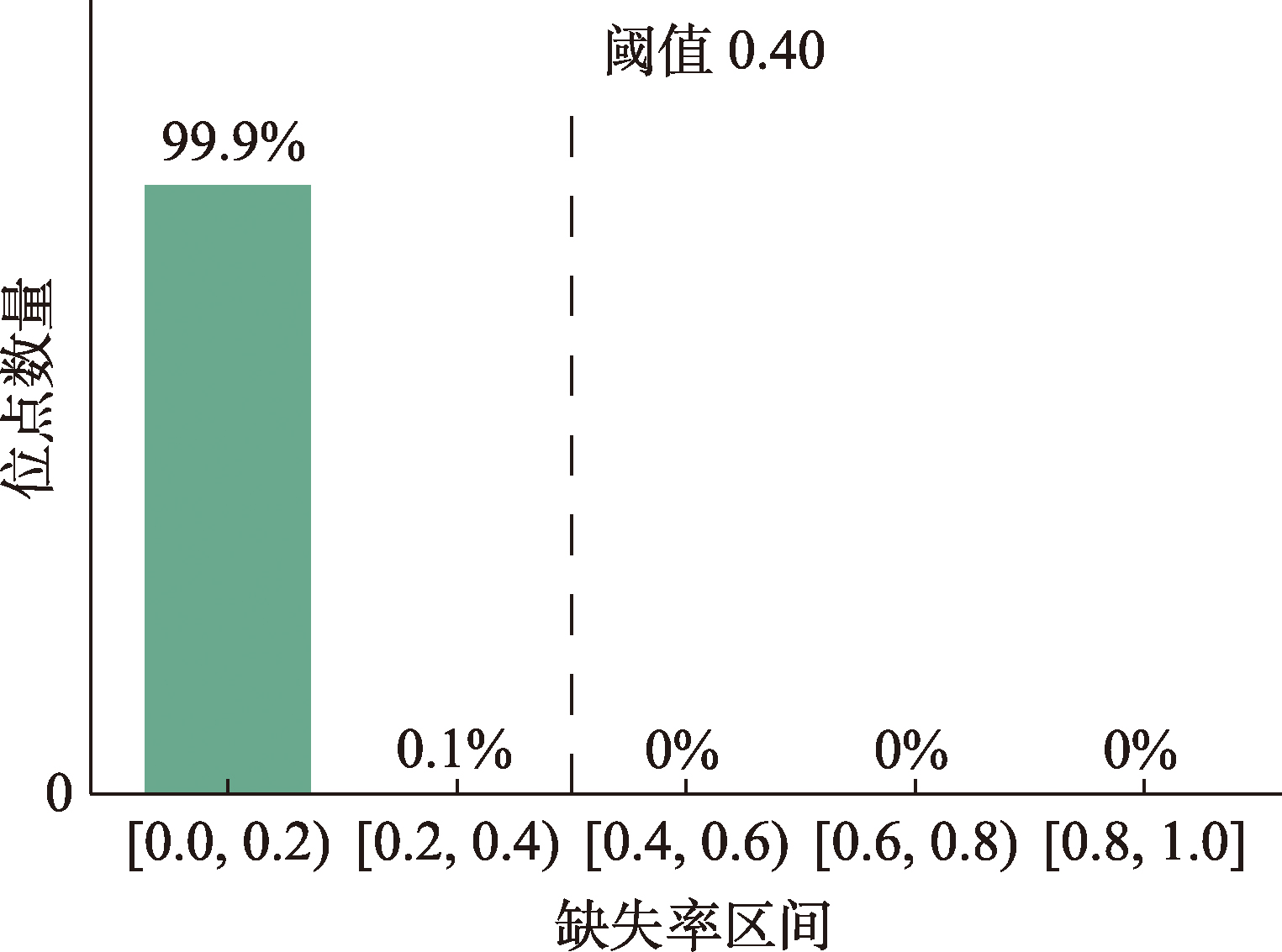
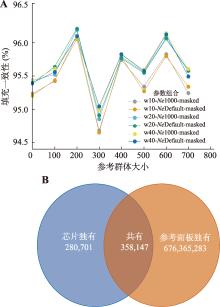
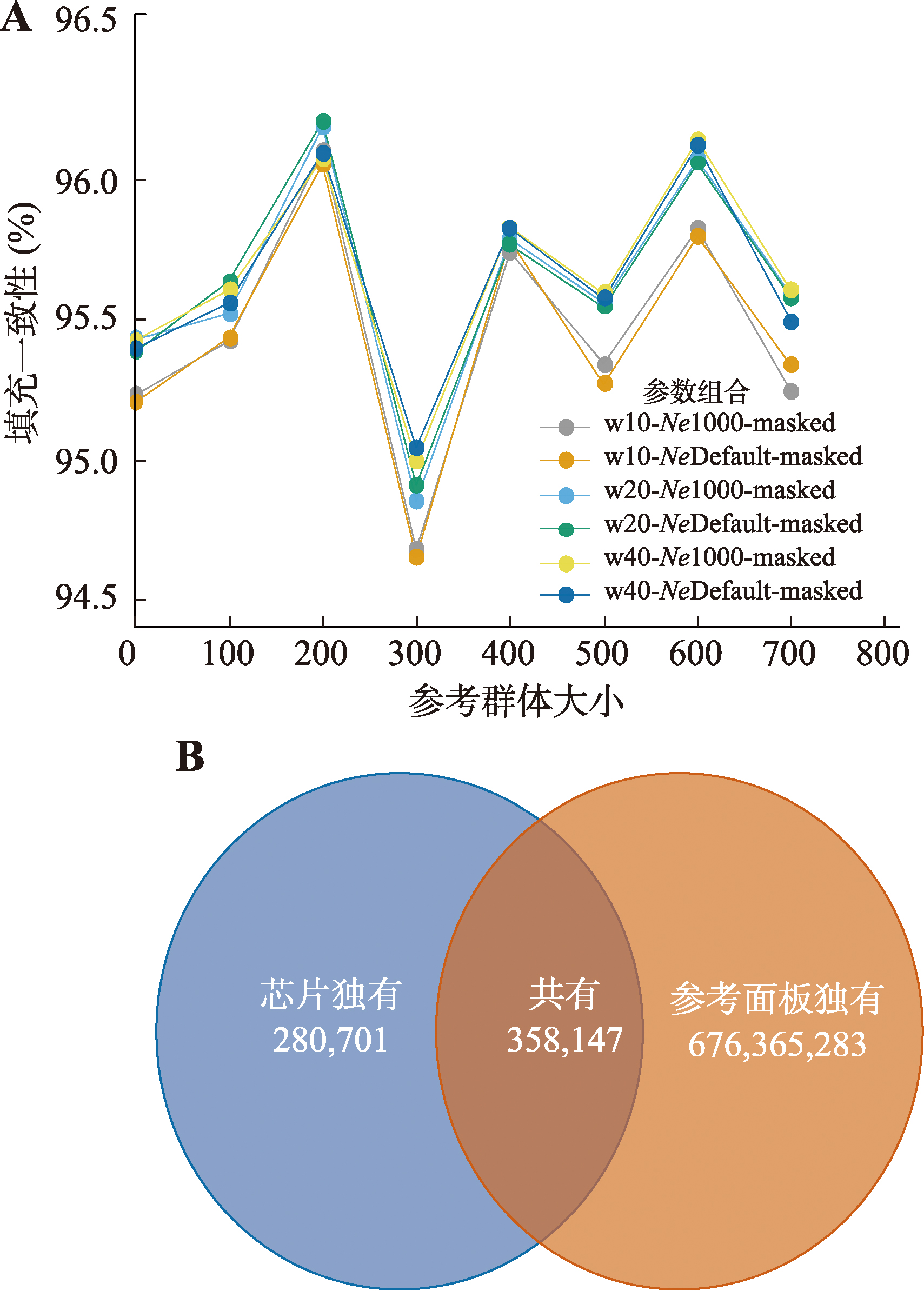
Fig. 2
Genotype imputation concordance and SNP composition of the reference panel"
Supplementary Table 1
Number of SNPs expanded by the imputation panel across chromosomes"
| 染色体 | 因填充面板而扩增的SNP数量 |
|---|---|
| Chr1 | 63,211,769 |
| Chr2 | 62,970,612 |
| Chr3 | 56,919,379 |
| Chr4 | 59,027,611 |
| Chr5 | 56,699,604 |
| Chr6 | 61,581,730 |
| Chr7 | 58,097,792 |
| Chr8 | 56,115,830 |
| Chr9 | 59,082,719 |
| Chr10 | 51,899,457 |
| Chr11 | 51,832,653 |
| Chr12 | 38,926,127 |
| 合计 | 676,365,283 |
Supplementary Table 2
Number of shared SNPs between the SNP array and the imputation reference panel per chromosome"
| 染色体 | 芯片与填充参考面板共有的SNP |
|---|---|
| Chr1 | 31,394 |
| Chr2 | 40,086 |
| Chr3 | 31,177 |
| Chr4 | 29,385 |
| Chr5 | 29,013 |
| Chr6 | 31,824 |
| Chr7 | 31,464 |
| Chr8 | 30,029 |
| Chr9 | 28,536 |
| Chr10 | 26,980 |
| Chr11 | 27,569 |
| Chr12 | 20,690 |
| 合计 | 358,147 |
Supplementary Table 3
Number of array-only SNPs per chromosome relative to the imputation reference panel"
| 染色体 | 芯片仅有的SNP数量 |
|---|---|
| Chr1 | 24,434 |
| Chr2 | 30,096 |
| Chr3 | 25,724 |
| Chr4 | 22,798 |
| Chr5 | 23,732 |
| Chr6 | 24,855 |
| Chr7 | 25,090 |
| Chr8 | 23,604 |
| Chr9 | 20,530 |
| Chr10 | 20,420 |
| Chr11 | 22,121 |
| Chr12 | 17,297 |
| 合计 | 280,701 |
Table 3
Number of SNPs shared between resequencing and the imputed expansion panel for accuracy evaluation"
| 染色体 | 扩增位点与重测序共有SNP 数量 |
|---|---|
| Chr1 | 40,653,291 |
| Chr2 | 40,578,014 |
| Chr3 | 37,457,443 |
| Chr4 | 39,199,138 |
| Chr5 | 37,655,767 |
| Chr6 | 40,779,077 |
| Chr7 | 38,431,645 |
| Chr8 | 36,618,202 |
| Chr9 | 38,801,777 |
| Chr10 | 33,749,449 |
| Chr11 | 33,904,415 |
| Chr12 | 25,607,723 |
| 合计 | 443,435,941 |
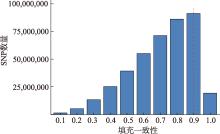
Fig. 3
Distribution of imputation accuracy for expanded SNPs"
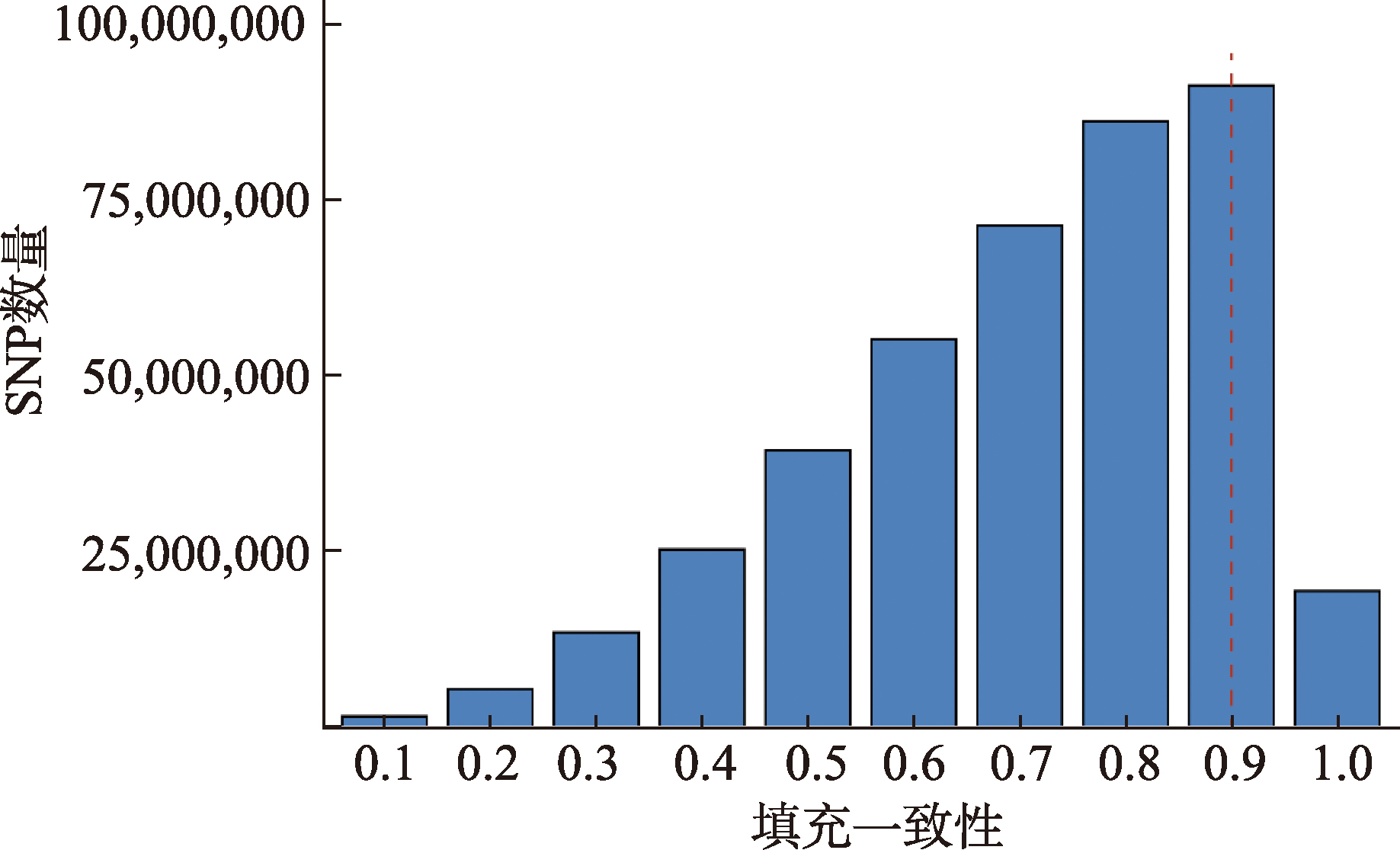
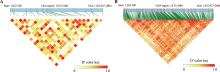
Fig. 4
Comparison of local linkage disequilibrium (LD) structure before and after genotype imputation"
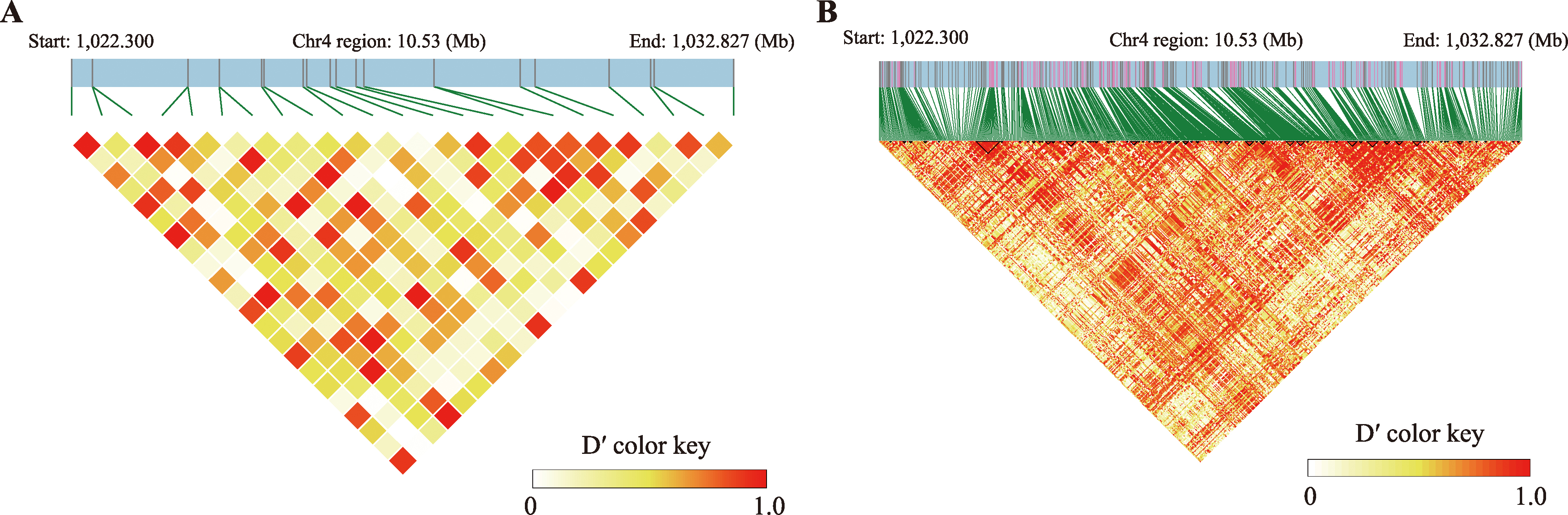
Table 4
Summary of SNP counts for imputed-only, shared retained, and array-specific sites removed by filtering"
| 染色体 | 3类 SNP 数量汇总 | |
|---|---|---|
| Chr1 | 10,882,327 | |
| Chr2 | 10,722,277 | |
| Chr3 | 10,314,349 | |
| Chr4 | 11,071,999 | |
| Chr5 | 10,212,229 | |
| Chr6 | 11,016,514 | |
| Chr7 | 10,452,761 | |
| Chr8 | 9,974,964 | |
| Chr9 | 10,603,347 | |
| Chr10 | 9,382,111 | |
| Chr11 | 9,282,621 | |
| Chr12 | 6,734,909 | |
| 合计 | 120,650,408 | |
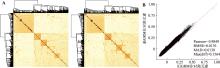
Fig. 5
Concordance between genomic relationship matrices (GRMs) before and after genotype imputation"
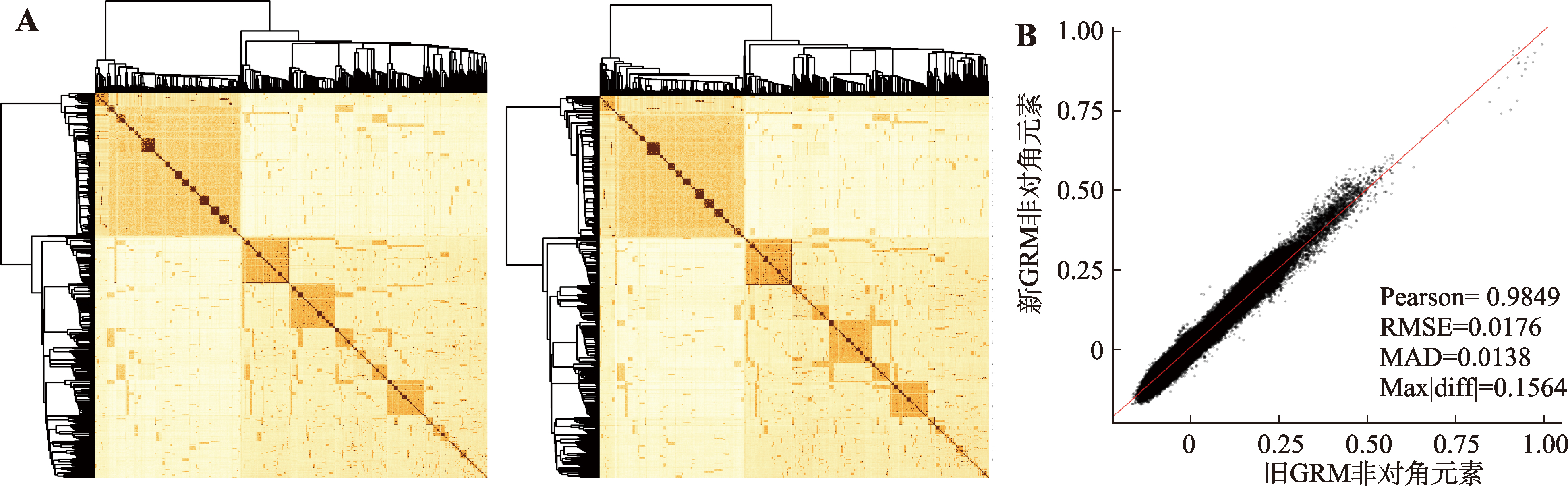
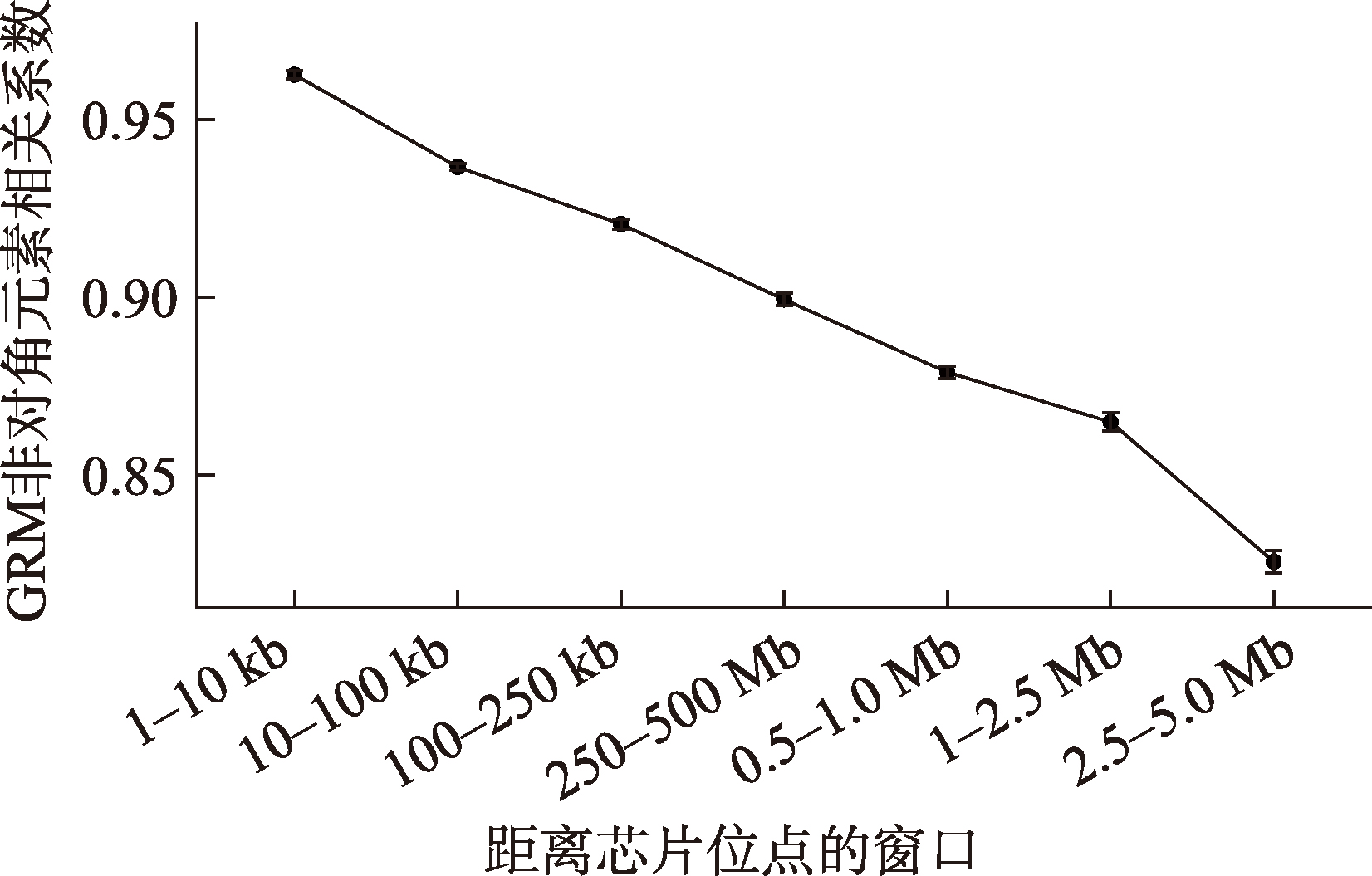
Fig. 6
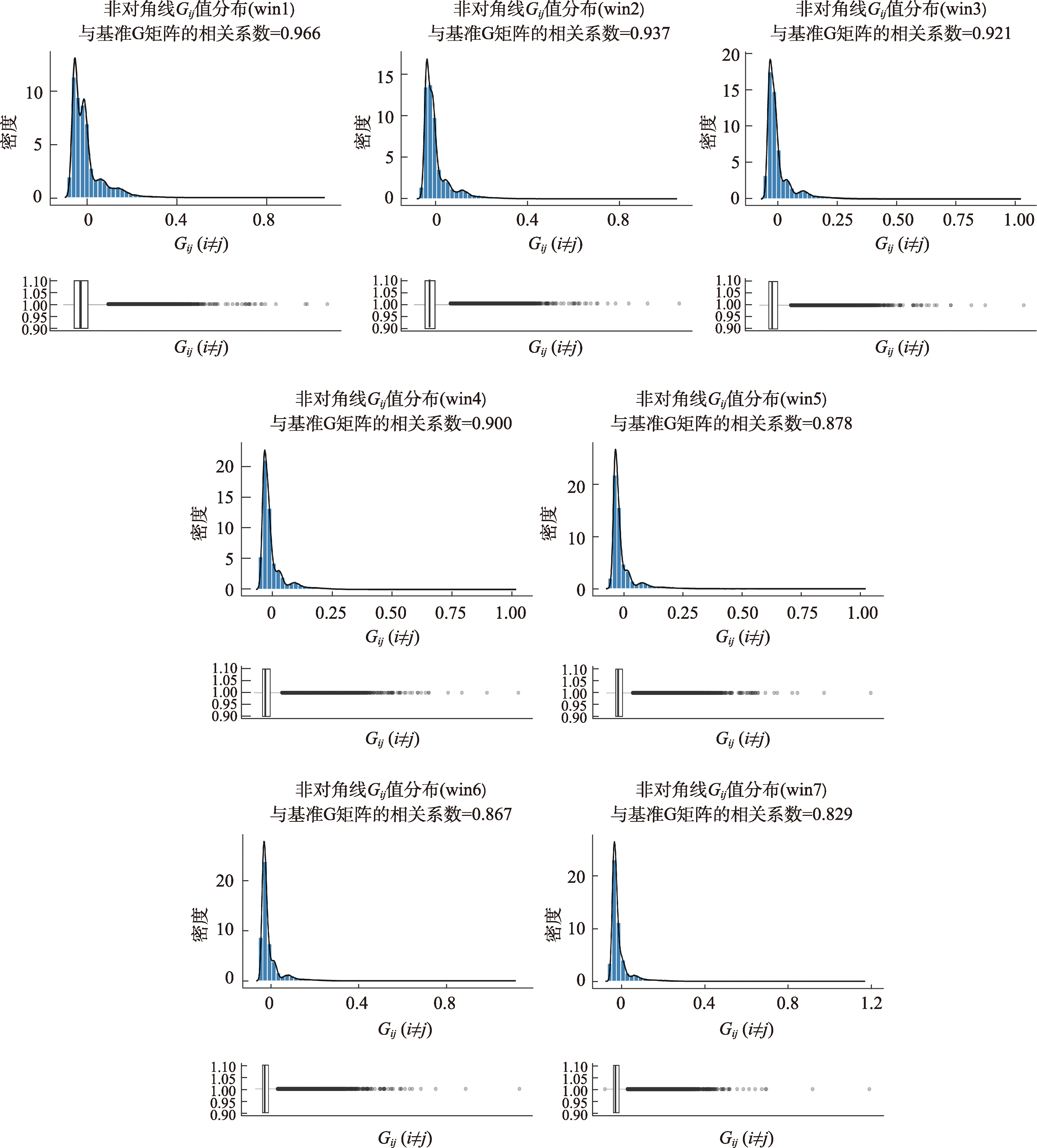
Distribution of off-diagonal elements Gij of the genomic relationship matrix (GRM) across distance-stratified imputed SNP bins"
Supplementary Fig. 2
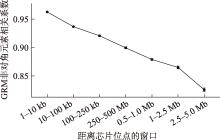
Reproducibility of GRM off- diagonal correlations across different distance windows"
| [1] |
Ding XY, Diao S, Luan QF, Wu HX, Zhang YN, Jiang JM. A transcriptome-based association study of growth, wood quality, and oleoresin traits in a slash pine breeding population. PLoS Genet, 2022, 18(2): e1010017.
pmid: 35108269 |
| [2] |
Bernhardsson C, Zan YJ, Chen ZQ, Ingvarsson PK, Wu HX. Development of a highly efficient 50K single nucleotide polymorphism genotyping array for the large and complex genome of Norway spruce (Picea abies L. Karst.) by whole genome resequencing and its transferability to other spruce species. Mol Ecol Resour, 2021, 21(3): 880-896.
pmid: 33179386 |
| [3] |
Estravis Barcala M, van der Valk T, Chen ZQ, Funda T, Chaudhary R, Klingberg A, Fundova I, Suontama M, Hallingbäck H, Bernhardsson C, Nystedt B, Ingvarsson PK, Sherwood E, Street N, Gyllensten U, Nilsson O, Wu HX. Whole-genome resequencing facilitates the development of a 50K single nucleotide polymorphism genotyping array for Scots pine (Pinus sylvestris L.) and its transferability to other pine species. Plant J, 2024, 117(3): 944-955.
pmid: 37947292 |
| [4] |
Caballero M, Lauer E, Bennett J, Zaman S, McEvoy S, Acosta J, Jackson C, Townsend L, Eckert A, Whetten RW, Loopstra C, Holliday J, Mandal M, Wegrzyn JL, Isik F. Toward genomic selection in Pinus taeda: integrating resources to support array design in a complex conifer genome. Appl Plant Sci, 2021, 9(6): e11439.
pmid: 34268018 |
| [5] | Diao S, Ding XY, Luan QF, Chen ZQ, Wu HX, Li XC, Zhang YN, Sun JM, Wu YD, Zou LH, Jiang JM. Development of 51K liquid-phased probe array for loblolly and slash pines and its application to GWAS of slash pine breeding population. Ind Crops Prod, 2024, 216: 118777. |
| [6] |
Zhang TY, Sun XM, Li J, Cui K. Application and development prospect of genomic selection breeding in coniferous trees. Planta, 2025, 262(6): 133.
pmid: 41144003 |
| [7] |
Li JH, Mazur CA, Berisa T, Pickrell JK. Low-pass sequencing increases the power of GWAS and decreases measurement error of polygenic risk scores compared to genotyping arrays. Genome Res, 2021, 31(4): 529-537.
pmid: 33536225 |
| [8] | Ros-Freixedes R. The contribution of whole-genome sequence data to genome-wide association studies in livestock: outcomes and perspectives. Livest Sci, 2024, 281: 105430. |
| [9] |
Rubinacci S, Ribeiro DM, Hofmeister RJ, Delaneau O. Efficient phasing and imputation of low-coverage sequencing data using large reference panels. Nat Genet, 2021, 53(1): 120-126.
pmid: 33414550 |
| [10] |
McCarthy S, Das S, Kretzschmar W, Delaneau O, Wood AR, Teumer A, Kang HM, Fuchsberger C, Danecek P, Sharp K, Luo Y, Sidore C, Kwong A, Timpson N, Koskinen S, Vrieze S, Scott LJ, Zhang H, Mahajan A, Veldink J, Peters U, Pato C, van Duijn CM, Gillies CE, Gandin I, Mezzavilla M, Gilly A, Cocca M, Traglia M, Angius A, Barrett JC, Boomsma D, Branham K, Breen G, Brummett CM, Busonero F, Campbell H, Chan A, Chen S, Chew E, Collins FS, Corbin LJ, Smith GD, Dedoussis G, Dorr M, Farmaki AE, Ferrucci L, Forer L, Fraser RM, Gabriel S, Levy S, Groop L, Harrison T, Hattersley A, Holmen OL, Hveem K, Kretzler M, Lee JC, McGue M, Meitinger T, Melzer D, Min JL, Mohlke KL, Vincent JB, Nauck M, Nickerson D, Palotie A, Pato M, Pirastu N, McInnis M, Richards JB, Sala C, Salomaa V, Schlessinger D, Schoenherr S, Slagboom PE, Small K, Spector T, Stambolian D, Tuke M, Tuomilehto J, Van den Berg LH, Van Rheenen W, Volker U, Wijmenga C, Toniolo D, Zeggini E, Gasparini P, Sampson MG, Wilson JF, Frayling T, de Bakker PIW, Swertz MA, McCarroll S, Kooperberg C, Dekker A, Altshuler D, Willer C, Iacono W, Ripatti S, Soranzo N, Walter K, Swaroop A, Cucca F, Anderson CA, Myers RM, Boehnke M, McCarthy MI, Durbin R, Haplotype Reference Consortium. A reference panel of 64,976 haplotypes for genotype imputation. Nat Genet, 2016, 48(10): 1279-1283.
pmid: 27548312 |
| [11] |
Das S, Forer L, Schönherr S, Sidore C, Locke AE, Kwong A, Vrieze SI, Chew EY, Levy S, McGue M, Schlessinger D, Stambolian D, Loh PR, Iacono WG, Swaroop A, Scott LJ, Cucca F, Kronenberg F, Boehnke M, Abecasis GR, Fuchsberger C. Next-generation genotype imputation service and methods. Nat Genet, 2016, 48(10): 1284-1287.
pmid: 27571263 |
| [12] |
Minamikawa MF, Kunihisa M, Moriya S, Shimizu T, Inamori M, Iwata H. Genomic prediction and genome-wide association study using combined genotypic data from different genotyping systems: application to apple fruit quality traits. Hortic Res, 2024, 11(7): uhae131.
pmid: 38979105 |
| [13] |
Chen LF, Yang SP, Araya S, Quigley C, Taliercio E, Mian R, Specht JE, Diers BW, Song QJ. Genotype imputation for soybean nested association mapping population to improve precision of QTL detection. Theor Appl Genet, 2022, 135(5): 1797-1810.
pmid: 35275252 |
| [14] |
Tan HZ, Stuart KC, Vi T, Whibley A, Bailey S, Brekke P, Santure AW. High imputation accuracy can be achieved using a small reference panel in a natural population with low genetic diversity. Mol Ecol Resour, 2025, 25(8): e70024.
pmid: 40797301 |
| [15] |
Zheng WG, Ma WL, Chen ZL, Wang C, Sun T, Dong WJ, Zhang WJ, Zhang S, Tang ZL, Li K, Zhao YX, Liu YW. DPImpute: a genotype imputation framework for ultra- low coverage whole-genome sequencing and its application in genomic selection. Adv Sci (Weinh), 2025, 12(16): e2412482.
pmid: 40013759 |
| [16] |
Gao YJ, Yang ZQ, Yang WQ, Yang YB, Gong J, Yang QY, Niu XH. Plant-ImputeDB: an integrated multiple plant reference panel database for genotype imputation. Nucleic Acids Res, 2021, 49(D1): D1480-D1488.
pmid: 33137192 |
| [17] |
Jensen SE, Charles JR, Muleta K, Bradbury PJ, Casstevens T, Deshpande SP, Gore MA, Gupta R, Ilut DC, Johnson L, Lozano R, Miller Z, Ramu P, Rathore A, Romay MC, Upadhyaya HD, Varshney RK, Morris GP, Pressoir G, Buckler ES, Ramstein GP. A sorghum practical haplotype graph facilitates genome-wide imputation and cost-effective genomic prediction. Plant Genome, 2020, 13(1): e20009.
pmid: 33016627 |
| [18] |
Mora-Márquez F, Nuño JC, Soto Á, de Heredia UL. Missing genotype imputation in non-model species using self-organizing maps. Mol Ecol Resour, 2025, 25(3): e13992.
pmid: 38970328 |
| [19] |
Naito T, Okada Y. Genotype imputation methods for whole and complex genomic regions utilizing deep learning technology. J Hum Genet, 2024, 69(10): 481-486.
pmid: 38225263 |
| [20] |
Browning BL, Zhou Y, Browning SR. A one-penny imputed genome from next-generation reference panels. Am J Hum Genet, 2018, 103(3): 338-348.
pmid: 30100085 |
| [21] |
Zhang RF, Zhang Y, Liu TN, Jiang B, Li ZY, Qu YP, Chen YS, Li ZC. Utilizing variants identified with multiple genome-wide association study methods optimizes genomic selection for growth traits in pigs. Animals (Basel), 2023, 13(4): 722.
pmid: 36830509 |
| [22] |
Marchini J, Howie B. Genotype imputation for genome- wide association studies. Nat Rev Genet, 2010, 11(7): 499-511.
pmid: 20517342 |
| [23] |
Nguyen TV, Bolormaa S, Reich CM, Chamberlain AJ, Vander Jagt CJ, Daetwyler HD, MacLeod IM. Empirical versus estimated accuracy of imputation: optimising filtering thresholds for sequence imputation. Genet Sel Evol, 2024, 56(1): 72.
pmid: 39548370 |
| [24] |
Delaneau O, Zagury JF, Robinson MR, Marchini JL, Dermitzakis ET. Accurate, scalable and integrative haplotype estimation. Nat Commun, 2019, 10(1): 5436.
pmid: 31780650 |
| [25] |
Cahoon JL, Rui XY, Tang E, Simons C, Langie J, Chen MH, Lo YC, Chiang CWK. Imputation accuracy across global human populations. Am J Hum Genet, 2024, 111(5): 979-989.
pmid: 38604166 |
| [26] | Hao CL, Yu XF, Qu MH, Lai EH, Guo SM, Gao L. Current status and prospects of pan-genome studies in plants. Plant Sci J, 2022, 40(1): 124-132. |
| 郝晨路, 於晓芬, 曲明昊, 赖恩惠, 郭素敏, 高磊. 植物泛基因组研究进展与展望. 植物科学学报, 2022, 40(1): 124-132. | |
| [27] |
Zimin AV, Stevens KA, Crepeau MW, Puiu D, Wegrzyn JL, Yorke JA, Langley CH, Neale DB, Salzberg SL. An improved assembly of the loblolly pine mega-genome using long-read single-molecule sequencing. Gigascience, 2017, 6(1): 1-4.
pmid: 28369353 |
| [28] | Chen Y, Qiu A, Zhang ZP, Du HH, Bai JY, Wang GJ, Luo WX, Ni JQ, Li K, Ding XD. Study on the genotype imputation effect of 10K-50K genotype of pig SNP liquid chip. Acta Vet Zootech Sin, 2022, 53(10): 3368-3376. |
| 陈宇, 邱奥, 张梓鹏, 都鹤鹤, 白俊艳, 王贵江, 罗文学, 倪俊卿, 李凯, 丁向东. 猪SNP液相芯片10K-50K基因型填充效果研究. 畜牧兽医学报, 2022, 53(10): 3368-3376. | |
| [29] |
Watowich MM, Chiou KL, Graves B, Montague MJ, Brent LJN, Higham JP, Horvath JE, Lu A, Martinez MI, Platt ML, Schneider-Crease IA, Lea AJ, Snyder-Mackler N. Best practices for genotype imputation from low-coverage sequencing data in natural populations. Mol Ecol Resour, 2025, 25(5): e13854.
pmid: 37602981 |
| [30] |
Wragg D, Zhang WG, Peterson S, Yerramilli M, Mellanby R, Schoenebeck JJ, Clements DN. A cautionary tale of low-pass sequencing and imputation with respect to haplotype accuracy. Genet Sel Evol, 2024, 56(1): 6.
pmid: 38216889 |
| [31] |
Taliun D, Harris DN, Kessler MD, Carlson J, Szpiech ZA, Torres R, Gagliano Taliun SA, Corvelo A, Gogarten SM, Kang HM, Pitsillides AN, LeFaive J, Lee SB, Tian XW, Browning BL, Das S, Emde AK, Clarke WE, Loesch DP, Shetty AC, Blackwell TW, Smith AV, Wong Q, Liu XM, Conomos MP, Bobo DM, Aguet F, Albert C, Alonso A, Ardlie KG, Arking DE, Aslibekyan S, Auer PL, Barnard J, Barr RG, Barwick L, Becker LC, Beer RL, Benjamin EJ, Bielak LF, Blangero J, Boehnke M, Bowden DW, Brody JA, Burchard EG, Cade BE, Casella JF, Chalazan B, Chasman DI, Chen YDI, Cho MH, Choi SH, Chung MK, Clish CB, Correa A, Curran JE, Custer B, Darbar D, Daya M, de Andrade M, DeMeo DL, Dutcher SK, Ellinor PT, Emery LS, Eng C, Fatkin D, Fingerlin T, Forer L, Fornage M, Franceschini N, Fuchsberger C, Fullerton SM, Germer S, Gladwin MT, Gottlieb DJ, Guo XQ, Hall ME, He J, Heard-Costa NL, Heckbert SR, Irvin MR, Johnsen JM, Johnson AD, Kaplan R, Kardia SLR, Kelly T, Kelly S, Kenny EE, Kiel DP, Klemmer R, Konkle BA, Kooperberg C, Köttgen A, Lange LA, Lasky-Su J, Levy D, Lin XH, Lin KH, Liu CY, Loos RJF, Garman L, Gerszten R, Lubitz SA, Lunetta KL, Mak ACY, Manichaikul A, Manning AK, Mathias RA, McManus DD, McGarvey ST, Meigs JB, Meyers DA, Mikulla JL, Minear MA, Mitchell BD, Mohanty S, Montasser ME, Montgomery C, Morrison AC, Murabito JM, Natale A, Natarajan P, Nelson SC, North KE, O'Connell JR, Palmer ND, Pankratz N, Peloso GM, Peyser PA, Pleiness J, Post WS, Psaty BM, Rao DC, Redline S, Reiner AP, Roden D, Rotter JI, Ruczinski I, Sarnowski C, Schoenherr S, Schwartz DA, Seo JS, Seshadri S, Sheehan VA, Sheu WH, Shoemaker MB, Smith NL, Smith JA, Sotoodehnia N, Stilp AM, Tang WH, Taylor KD, Telen M, Thornton TA, Tracy RP, Van Den Berg DJ, Vasan RS, Viaud-Martinez KA, Vrieze S, Weeks DE, Weir BS, Weiss ST, Weng LC, Willer CJ, Zhang YZ, Zhao XT, Arnett DK, Ashley-Koch AE, Barnes KC, Boerwinkle E, Gabriel S, Gibbs R, Rice KM, Rich SS, Silverman EK, Qasba P, Gan WN, NHLBI Trans-Omics for Precision Medicine (TOPMed) Consortium, Papanicolaou GJ, Nickerson DA, Browning SR, Zody MC, Zöllner S, Wilson JG, Cupples LA, Laurie CC, Jaquish CE, Hernandez RD, O'Connor TD, Abecasis GR. Sequencing of 53,831 diverse genomes from the NHLBI TOPMed program. Nature, 2021, 590(7845): 290-299.
pmid: 33568819 |
| [32] |
Shi SN, Rubinacci S, Hu SL, Moutsianas L, Stuckey A, Need AC, Palamara PF, Caulfield M, Marchini J, Myers S. A Genomics England haplotype reference panel and imputation of UK Biobank. Nat Genet, 2024, 56(9): 1800-1803.
pmid: 39134668 |
| [33] |
Zhao HH, MacLeod IM, Keeble-Gagnere G, Barbulescu DM, Tibbits JF, Kaur S, Hayden M. Using genotype imputation to integrate Canola populations for genome- wide association and genomic prediction of blackleg resistance. BMC Genomics, 2025, 26(1): 215.
pmid: 40038585 |
| [34] |
Flanagan J, Liu XX, Ortega-Reyes D, Tomizuka K, Matoba N, Akiyama M, Koido M, Ishigaki K, Ashikawa K, Takata S, Shi MY, Aoi T, Momozawa Y, Ito K, Murakami Y, Matsuda K, Biobank Japan Project, Kamatani Y, Morris AP, Horikoshi M, Terao C. Population-specific reference panel improves imputation quality for genome-wide association studies conducted on the Japanese population. Commun Biol, 2024, 7(1): 1665.
pmid: 39702642 |
| [35] |
Liu SK, Shi CY, Chen CG, Tan Y, Tian Y, Macqueen DJ, Li Q. Haplotype-resolved genomes provide insights into the origins and functional significance of genome diversity in bivalves. Cell Rep, 2025, 44(5): 115697.
pmid: 40349337 |
| [36] |
Sun Q, Li Y. Advances in haplotype phasing and genotype imputation. Nat Rev Genet, 2026, 27(2): 155-169.
pmid: 40993437 |
| [37] |
Sengupta D, Botha G, Meintjes A, Mbiyavanga M, AWI-Gen Study, H3Africa Consortium, Hazelhurst S, Mulder N, Ramsay M, Choudhury A. Performance and accuracy evaluation of reference panels for genotype imputation in sub-Saharan African populations. Cell Genom, 2023, 3(6): 100332.
pmid: 37388906 |
| [38] |
Ros-Freixedes R, Johnsson M, Whalen A, Chen CY, Valente BD, Herring WO, Gorjanc G, Hickey JM. Genomic prediction with whole-genome sequence data in intensely selected pig lines. Genet Sel Evol, 2022, 54(1): 65.
pmid: 36153511 |
| [39] |
Ebert P, Audano PA, Zhu QH, Rodriguez-Martin B, Porubsky D, Jan Bonder M, Sulovari A, Ebler J, Zhou WC, Serra Mari R, Yilmaz F, Zhao XF, Hsieh P, Lee J, Kumar S, Lin JD, Rausch T, Chen Y, Ren JW, Santamarina M, Höps W, Ashraf H, Chuang NT, Yang XF, Munson KM, Lewis AP, Fairley S, Tallon LJ, Clarke WE, Basile AO, Byrska-Bishop M, Corvelo A, Evani US, Lu TY, Chaisson MJP, Chen JJ, Li C, Brand H, Wenger AM, Ghareghani M, Harvey WT, Raeder B, Hasenfeld P, Regier AA, Abel HJ, Hall IM, Flicek P, Stegle O, Gerstein MB, Tubio JMC, Mu ZP, Li YI, Shi XH, Hastie AR, Ye K, Chong ZC, Sanders AD, Zody MC, Talkowski ME, Mills RE, Devine SE, Lee C, Korbel JO, Marschall T, Eichler EE. Haplotype- resolved diverse human genomes and integrated analysis of structural variation. Science, 2021, 372(6537): eabf7117.
pmid: 33632895 |
| [40] |
Lu MM, Krutovsky KV, Nelson CD, Koralewski TE, Byram TD, Loopstra CA. Exome genotyping, linkage disequilibrium and population structure in loblolly pine (Pinus taeda L.). BMC Genomics, 2016, 17(1): 730.
pmid: 27624183 |
| [41] |
Thistlethwaite FR, Ratcliffe B, Klápště J, Porth I, Chen C, Stoehr MU, El-Kassaby YA. Genomic prediction accuracies in space and time for height and wood density of Douglas-fir using exome capture as the genotyping platform. BMC Genomics, 2017, 18(1): 930.
pmid: 29197325 |
| [1] | Wenqi Wei, Dawei Cai. Application and potential value of genotype imputation techniques in ancient DNA research [J]. Hereditas(Beijing), 2026, 48(5): 471-482. |
| Viewed | ||||||
|
Full text |
|
|||||
|
Abstract |
|
|||||

