Hereditas(Beijing) ›› 2026, Vol. 48 ›› Issue (7): 659-670.doi: 10.16288/j.yczz.26-040
• Research Trends • Previous Articles Next Articles
Operational model of the French livestock and poultry genetic resources management system and its implications
Xiaojing Zhang( ), Ailing Wang(), Jingjuan Zhao, Limin Chuan, Hui Zhang, Zhihui Yan()
Institute of Data Science and Agricultural Economics ,Beijing Academy of Agriculture and Forestry Sciences Beijing 100097, China
-
Received:2026-02-27Revised:2026-04-13Online:2026-05-12Published:2026-05-12 -
Contact:Zhihui Yan E-mail:jaynesl@163.com;ailw2000@126.com;yanzhihui@baafs.net.cn -
Supported by:Beijing Academy of Agriculture and Forestry Sciences Special Project for Scientific and Technological Innovation Capacity Building(KJCX20230504);Beijing Academy of Agriculture and Forestry Sciences Special Project for Scientific and Technological Innovation Capacity Building(KJCX20261201)

Cite this article
Xiaojing Zhang, Ailing Wang, Jingjuan Zhao, Limin Chuan, Hui Zhang, Zhihui Yan. Operational model of the French livestock and poultry genetic resources management system and its implications[J]. Hereditas(Beijing), 2026, 48(7): 659-670.
share this article
Add to citation manager EndNote|Reference Manager|ProCite|BibTeX|RefWorks
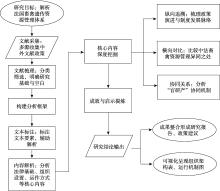
Fig. 1
Research approach"
Table 1
Evolution of core legal frameworks for animal genetic resources management in France"
| 法律/政策名称 | 颁布时间 | 核心内容与影响 | |
|---|---|---|---|
| 《农村法典》 | 1955年 | 早期法国农业与渔业事务管理的综合性法典 | |
| 《畜牧法》 | 1966年 | 确立了国家引导、集体协作的组织原则,构建了国家动物遗传资源管理体系的雏形 | |
| 《农业指导法》 | 2006年 | 废止人工授精与性能测定的垄断条款,推动规则与欧盟竞争政策接轨,政府角色由直接参与转向提供支持和履行监管职责 | |
| 《农村与海洋渔业法典》 | 2010年 | 整合多部法典并取代《农村法典》,成为规范农村发展与海洋渔业的综合法典,同时对接欧盟CAP确保国内法规与欧盟政策协调一致 | |
| 欧盟第2016/1012号《动物育种条例》 | 2016年 | 对牛、猪、绵羊、山羊和马等纯种种畜及其遗传物质的育种操作、跨境贸易设定了统一技术要求;简化法规框架,便利成员国之间的育种合作,保障欧盟内部市场顺畅运行 | |
| 《农村与海洋渔业法典》修订 | 2021年 | 为落实欧盟《动物育种条例》,全面修订法典,纳入欧盟技术标准与谱系管理规定,明确认证选育机构的法律地位,设立国家遗传信息系统并配套建设国家冷冻库 | |
| 《国家生物多样性战略(SNB 2030)》 | 2023年 | 法国将畜禽遗传资源保护纳入农业政策重点,明确通过2023~2027年CAP战略计划安排专项资金,用于濒危畜禽品种抢救性保护与地方品种商业化开发 | |
| 法国2023~2027年CAP战略计划 | 2023年 | 计划实施保护受威胁品种措施,给予经品种认证的濒危品种纯种繁育的农场主直接补贴 | |
Table 2
Main institutions and functions of the French animal genetic resource management system"
| 机构类型 | 机构名称 | 主要职能 |
|---|---|---|
| 国家监管机构 | 法国农业与粮食主权部 | 农业政策与粮食战略制定,遗传选育机构与计划审批监管,主导全国畜牧信息网络,资助国家家畜基因库及科研合作 |
| 农业部食品总局 | 食品安全、动物健康及遗传资源管理法规执行与监督,覆盖动物卫生、个体识别、系谱管理和亲子鉴定控制 | |
| 法国农业与渔业管理局(FranceAgriMer) | 实施欧盟及国家农业政策,管理农业补贴,监测农产品市场,支持农产品国际化 | |
| 公共科研与技术支持机构 | 国家农业食品与环境研究院 | 基础科研,基因组学与遗传变异研究,维护SNIG,推动技术转化 |
| 法国畜牧研究院(IDELE) | 技术研发与应用,国家动物鉴定与遗传改良技术方案制定,统一性能测定和数据传播,发布遗传评估结果 | |
| 法国养猪研究院(IFIP) | 对本土品种进行活体保种和集体化管理 | |
| 跨行业协商咨询与战略机构 | 法国跨行业动物遗传资源专题委员会(CTI-RZ) | 向公共部门和行业通报遗传领域动态,就选育机构认定、项目审批及援助措施提供咨询 |
| 法国遗传育种协会 | 协调全国反刍动物遗传改良体系,建立质量管理系统,运营SNIG,参与国际合作 | |
| 育种执行与服务机构 | 选育机构 | 制定并实施遗传改良或保种计划,管理经认证的动物系谱档案 |
| 选育企业 | 负责种畜选育、精液生产、性能测定及市场推广等具体执行环节 | |
| 人工授精中心(IA Center) | 遗传改良商业化的终端载体,通过优质种公畜并提供全国性人工授精服务 | |
| 法国品种联盟(Races de France) | OS联合会,代表行业利益,协调政府与行业沟通,协助执行育种计划与系谱管理 | |
| Eliance | 全国反刍动物养殖咨询与服务企业联合会,代表ES、IA企业等私营服务提供方 | |
| 法国农业商会(APCA) | 承担公益性技术服务的公共网络,负责全国动物个体识别与流动管理、亲子鉴定控制、生产性能测定及地方遗传技术推广 |
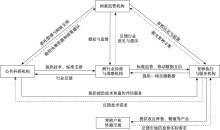
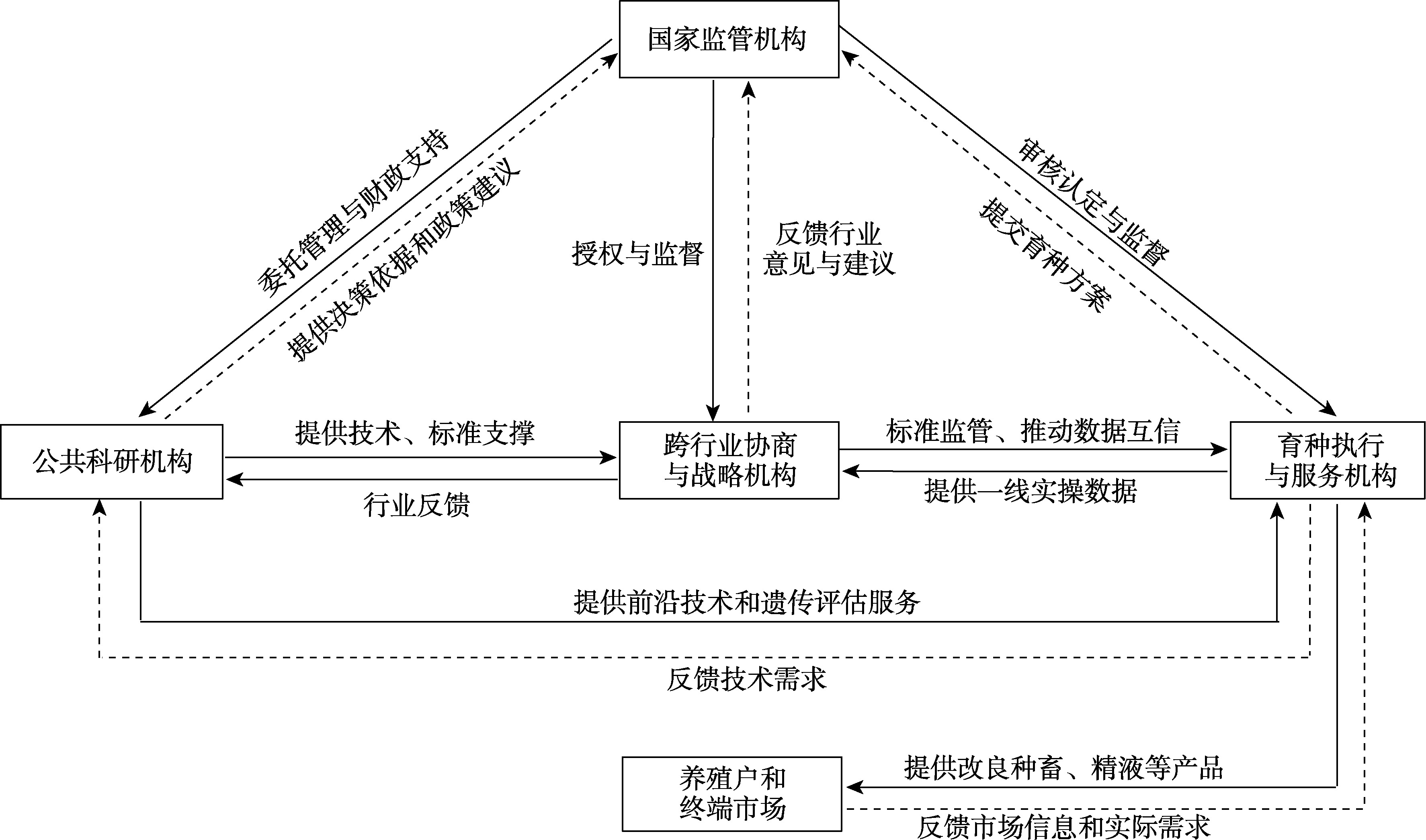
Fig. 2
Organizational operation chart of the French animal genetic resource management system"
| [1] | 陈瑶生, 刘小红, 于福清, 辛翔飞, 张海峰. 我国畜禽种业创新发展现状、存在问题与挑战剖析. 中国畜牧杂志, 2025, 61(11): 422-428. |
| [2] | Li YF, Su YF, Wang J, Wei XH, Zhao WX, Yu DW, Sun YY, Jia YX, Ma YH, Hou SS, Jiang L. Livestock germplasm resource conservation in China: current status and prospect. Strategic Study CAE, 2025, 27(5): 165-179. |
| 李业芳, 苏艳芳, 王晶, 魏新华, 赵文轩, 余大为, 孙研研, 贾亚雄, 马月辉, 侯水生, 蒋琳. 我国畜禽种质资源保护现状与展望. 中国工程科学, 2025, 27(5): 165-179. | |
| [3] | Wang YZ, Xin XF, Lin QN, Song JB. Development situation and countermeasures of the livestock and poultry seed industry in China. Issues Agric Econ, 2022, (7): 52-63. |
| 王以中, 辛翔飞, 林青宁, 宋金波. 我国畜禽种业发展形势及对策. 农业经济问题, 2022, (7): 52-63. | |
| [4] | Verrier E, Badeau F, Basso B, Bertrand C, Boudry P, Bouffartigue B, Charvolin-Lemaire E, Danvy SS, Decourtye A, Duclos D, Ducos A, Gourdine JL, Haffray P, Hazard D, Journaux L, Laloë D, Lauvie A, Lenoir H, Naves M, Rouger R, Vandeputte M. Les races locales menacées d’abandon en France: actualisation des listes et extension de la démarche à de nouvelles espèces. Ethnozootechnie, 2023, (112): 93. |
| [5] | Jacques A, Duclos D, Tixier-Boichard M, Restoux G. Les ressources génétiques cryoconservées pour restaurer et conserver la diversité des animaux d’élevage. INRAE Prod Anim, 2025, 38(3): 9302. |
| [6] | Robu A. Biotechnology and Other New Production Technologies Annual: France, FR2025-00 11. Washington, DC: USDA Foreign Agricultural Service (FAS), 2025. |
| [7] | Xia X, Liu WH, Hu JY, Zhou Q. Comparison and enlightenment of Chinese and foreign legal systems of breeding livestock management. Chin J Anim Infect Dis, 2022, 30(3): 227-236. |
| 夏欣, 刘望宏, 胡军勇, 周全. 中外种畜禽管理法律体系比较与启示. 中国动物传染病学报, 2022, 30(3): 227-236. | |
| [8] | Zhang DF, Feng JS, Wu CF, Zhang SS, Dai JJ, Sun LW. The current status and application prospect of livestock genebank conservation at home and abroad. Shanghai Anim Husb Vet Med, 2021, (4): 1-4. |
| 张德福, 冯景松, 吴彩凤, 张树山, 戴建军, 孙玲伟. 国内外畜禽基因库保种现状及其应用前景. 上海畜牧兽医通讯, 2021, (4): 1-4. | |
| [9] | Chen X, Lu J, Yu FQ. Conservation of animal genetic resources in the world and its enlightenment to China. Hereditas(Beijing), 2023, 45(7): 545-552. |
| 陈晓, 陆健, 于福清. 国外畜禽遗传资源保护及对我国的启示. 遗传, 2023, 45(7): 545-552. | |
| [10] | Wu XF, Yang H. Research on high-quality development path of livestock and poultry breeding industry in perspective of Chinese-style modernization. Feed Res, 2024, 47(2): 193-196. |
| 吴晓芳, 杨慧. 中国式现代化视域下畜禽种业高质量发展路径研究. 饲料研究, 2024, 47(2): 193-196. | |
| [11] | 王娟. 我国畜禽种业发展取得成效、面临瓶颈及相关建议. 中国畜牧杂志, 2023, 59(7): 335-338. |
| [12] | Auricoste J, Martrenchar A. Mission d’Appui a la filiere de la selection animale des ruminants, CGAAER n 24087. Paris: CGAAER, 2025. |
| [13] | CTI-RZ. Panorama de la biodiversité domestique animale en France[EB/OL]. (2025-10-02)[2025-12-01]. (https://www.franceagrimer.fr/chiffre-et-analyses-economiques/panorama-de-la-biodiversite-domestique-animale-en-france) |
| [14] | The European Regional Focal Point for Animal Genetic Resources (ERFP). Animal genetic resources in France. National Coordination of Animal Genetic Resources in France Paris: SGAE-MASA, 2023. |
| [15] | Ministère de l'Agriculture et de la Souveraineté alimentaire. Rapport national d'aide à la préparation du Deuxième Rapport sur l'État des Ressources Zoogénétiques pour l'Alimentation et l'Agriculture dans le Monde, incluant des données spécifiques au secteur servant pour L'État de la Biodiversité pour l'Alimentation et l'Agriculture dans le Monde. Rome, Italy: FAO, 2013. |
| [16] | United Nations. UN Comtrade Database[EB/OL]. [ 2025-12-09] (https://comtradeplus.un.org/). |
| [17] | Ministère de l'Agriculture et de la Souveraineté alimentaire. Le règlement zootechnique européen: un nouveau cadre réglementaire européen pour la génétique animale française[EB/OL]. (2019-07) [2025-11-20] (https://agriculture.gouv.fr/le-reglement-zootechnique-europeen-un-nouveau-cadre-reglementaire-europeen-pour-la-genetique-animale). |
| [18] | Ministère de l'Agriculture et de la Souverainetéalimentaire. Décret n° 2025-441 du 20 mai 2025 relatif à la reproduction, à l'amélioration et à la préservation du patrimoine génétique des animaux d'élevage. Journal Officiel De La République Française, 2025, 37: 121(AGRT2126574D). |
| [19] | Resources, European Regional Focal Point. European Strategy for Animal Genetic Resources. Brussels: ERFP, 2021. |
| [20] | Office Français de la Biodiversité. La Stratégie Nationale Biodiversité 2030. (2023-11) [2026-04-08] (https://biodiversite.gouv.fr/la-strategie-nationale-biodiversite-2030). |
| [21] | Ministère de l'Agriculture et de la Souveraineté alimentaire. PAC 2023-2027 - Le Plan Stratégique National. (2024-1-8) [2026-04-08] (https://agriculture.gouv.fr/telecharger/131861). |
| [22] | Audiot A, Bertrand C, Chapuis H, Charvolin E, Danchin-Burge C, Danvy S, Gourdine JL, Gaultier P, Guemene D, Laloë D, Lenoir H, Leroy G, Naves M, Patin S, Sabbagh M, Verrier E. Races animales françaises menacées d’abandon pour l’agriculture: rapport méthodologique. Paris: INRA, 2014. |
| [23] | FGE. Rapport d'activité 2024. Paris, France: France Génétique Élevage, 2024. |
| [24] | Boes J, Boettcher P, Honkatukia M. Innovations in cryoconservation of animal genetic resources—Practical guide. Rome, Italy: FAO, 2023. |
| [25] | Leclerc H, Croué I, Vallée R, Baur A, Barbat A, Fritz S, Philippe M, Brochard M, Guillaume F, Thomas G, Manciaux L, Davière JB, Voidey L, Gaudillière N. French regional genetic collaborative projects to improve welfare and resilience of dairy cows. ICAR Tech Ser, 2019, 24: 373-381. |
| [26] | Danchin-Burge C, Allain D, Clément V, Martin P, Piacère A, Palhiere I. Pedigree analysis of French goat breeds:a panorama from dairy to fiber selection. In:Book of Abstracts of the 62nd Annual Meeting of the European Federation of Animal Science. Stavanger, Norway: EAAP, 2011, 238. |
| [27] | Larroque H, Astruc JM, Barbat A, Barillet F, Boichard D, Bonaiti B, Clément V, David I, Lagriffoul G, Palhiere I, Piacere A, Robert-Granié C, Rupp R. National genetic evaluations in dairy sheep and goats in France. Book of Abstracts of the 62nd Annual Meeting of the European Federation of Animal Science. Stavanger, Norway: EAAP, 2011, 344. |
| [28] | Tiphine L, David I, Raoul J, Guerrier J, Praud JP, Bodin LL, Francois D, Jullien E, Poivey JP. Estimation of breeding values for meat sheep in France. Book of Abstracts of the 62nd Annual Meeting of the European Federation of Animal Science. Stavanger, Norway: EAAP, 2011, 344. |
| [29] | Sellier P. Etat des lieux de l’amélioration génétique des animaux domestiques. INRAE Prod Anim, 2000, 13: 7-11. |
| [30] | Hassenfratz C, Banville M. Fiche Génétique Porcine 2024—Pyramide du Dispositif Porcin Français 2023. Paris: FranceAgrimer, 2025. |
| [31] | Reverchon M. Overview of poultry industry and selection criteria adopted: PPILOW autumn school 2023, Assisi, Italy, 2023. EAAP; University of Perugia. |
| [32] | FGE. Système de gestion de la qualité[EB/OL]. [ 2025-12-01] (https://france-genetique-elevage.fr/fge/fge-systeme-gestion-qualite). |
| [33] | Sellier P, Boichard D, Verrier E. La génétique animale à l‘INRAAnimal genetics at INRA: sixty years of a scientific story anchored in the animal breeding sector and full of technological twists and turns: soixante ans d’une histoire scientifique en prise avec le monde de la sélection et riche en rebondissements technologiques. Hist Rech Contemp, 2019, VIII( 1): 86-97. |
| [34] | Bidanel JP, Loucif M, Billon Y, Ingrand S. LIPH4SAS: The French Nationnally Distributed Research Infrastructure for Livestock Phenotyping:EU-LI-PHE Midterm Stakeholder Meeting, Leuven, Belgium, 2025. |
| No related articles found! |
| Viewed | ||||||
|
Full text |
|
|||||
|
Abstract |
|
|||||

