Hereditas(Beijing) ›› 2026, Vol. 48 ›› Issue (7): 671-689.doi: 10.16288/j.yczz.25-289
• Review • Previous Articles Next Articles
The retrotransposon LINE-1: a double-edged sword in tumorigenesis
Lu Tian( ), Qian Liu(), Shan Cen(), Xiaoyu Li()
Department of Immunology ,Institute of Medicinal Biotechnology, Chinese Academy of Medical Sciences & Peking Union Medical College Beijing 100050, China
-
Received:2025-11-05Revised:2026-01-16Online:2026-02-09Published:2026-02-09 -
Contact:Qian Liu, Shan Cen, Xiaoyu Li E-mail:s2023010039@pumc.edu.cn;j2024080001@pumc.edu.cn;shancen@imb.pumc.edu.cn;xiaoyulik@hotmail.com -
Supported by:National Natural Science Foundation of China(31870164);Chinese Academy of Medical Sciences Innovation Fund for Medical Sciences(2021-I2M-1-043);National Key R&D Program of China(2023YFC2306701)

Cite this article
Lu Tian, Qian Liu, Shan Cen, Xiaoyu Li. The retrotransposon LINE-1: a double-edged sword in tumorigenesis[J]. Hereditas(Beijing), 2026, 48(7): 671-689.
share this article
Add to citation manager EndNote|Reference Manager|ProCite|BibTeX|RefWorks
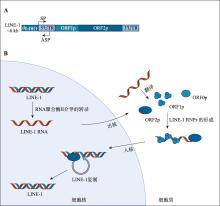
Fig. 1
The structure and transposition process of LINE-1"

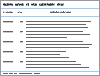
Table 1
LINE-1 abnormal activation in tumors"
| 研究对象 | 肿瘤类型 | 表达水平 | 参考文献 |
|---|---|---|---|
| LINE-1 RNA | 上皮源性肿瘤 | 高表达 | [ |
| 非上皮源性肿瘤 | 无显著变化 | [ | |
| LINE-1 ORF1p | 乳腺癌 | 高表达(细胞核内) | [ |
| 原位导管癌 | 高表达(细胞质内) | [ | |
| 胰腺导管腺癌 | 高表达 | [ | |
| 透明细胞卵巢癌 | 高表达(超过82%病例) | [ | |
| 卵巢癌(早期) | 高表达(伴随c-MET蛋白上调) | [ | |
| 血癌和胶质母细胞瘤 | 低表达 | [ | |
| LINE-1 ORF2p | 癌前的结肠和前列腺组织 | 高表达 | [ |
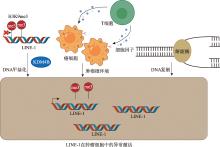
Fig. 2
Mechanisms of LINE-1 activation in tumors"

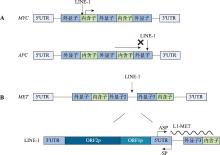
Fig. 3
LINE-1 insertion influences gene expression"
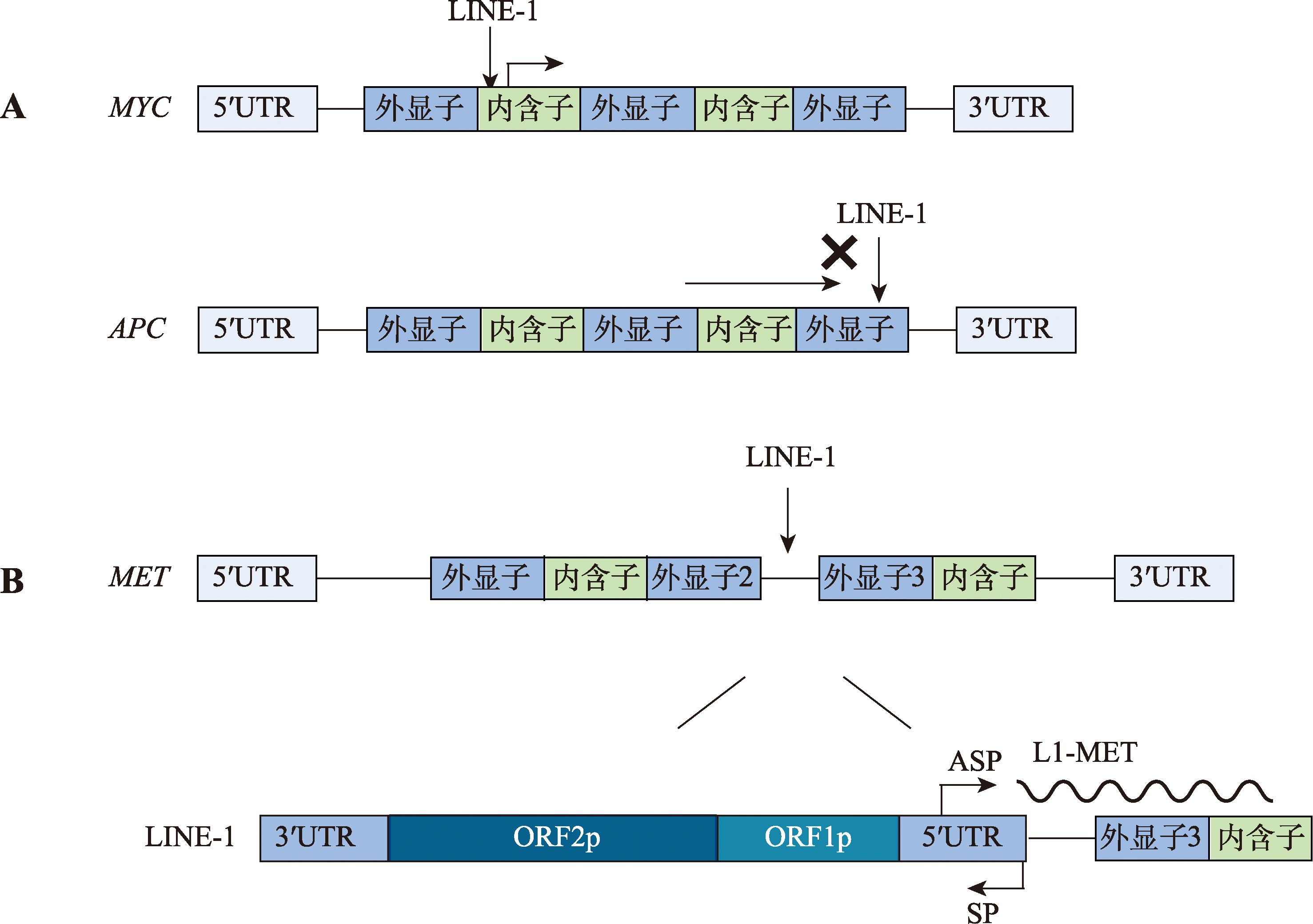
Fig. 4
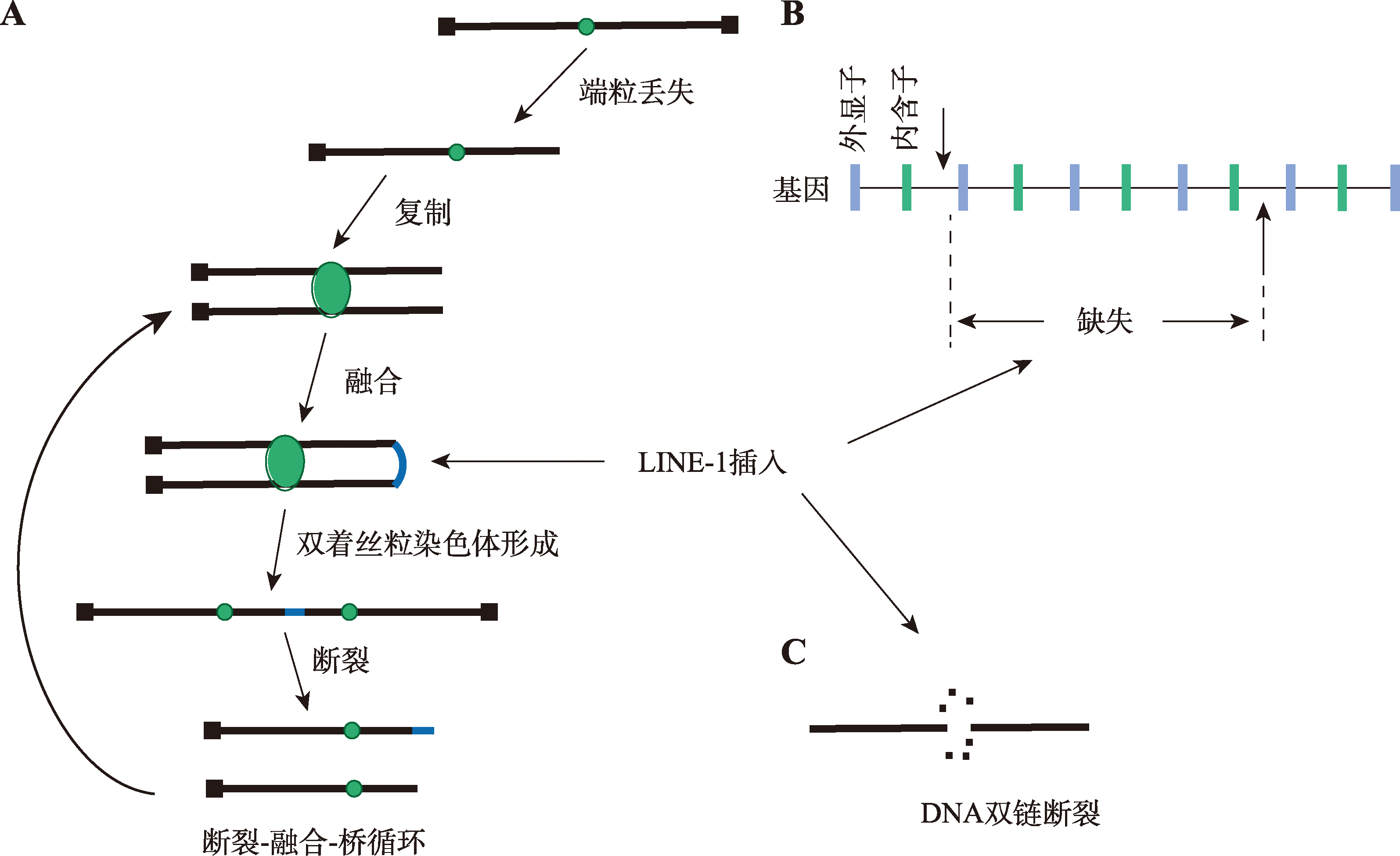
DNA damage induced by LINE-1 insertion"
| [1] |
Lander ES, Linton LM, Birren B, Nusbaum C, Zody MC, Baldwin J, Devon K, Dewar K, Doyle M, FitzHugh W, Funke R, Gage D, Harris K, Heaford A, Howland J, Kann L, Lehoczky J, LeVine R, McEwan P, McKernan K, Meldrim J, Mesirov JP, Miranda C, Morris W, Naylor J, Raymond C, Rosetti M, Santos R, Sheridan A, Sougnez C, Stange-Thomann Y, Stojanovic N, Subramanian A, Wyman D, Rogers J, Sulston J, Ainscough R, Beck S, Bentley D, Burton J, Clee C, Carter N, Coulson A, Deadman R, Deloukas P, Dunham A, Dunham I, Durbin R, French L, Grafham D, Gregory S, Hubbard T, Humphray S, Hunt A, Jones M, Lloyd C, McMurray A, Matthews L, Mercer S, Milne S, Mullikin JC, Mungall A, Plumb R, Ross M, Shownkeen R, Sims S, Waterston RH, Wilson RK, Hillier LW, McPherson JD, Marra MA, Mardis ER, Fulton LA, Chinwalla AT, Pepin KH, Gish WR, Chissoe SL, Wendl MC, Delehaunty KD, Miner TL, Delehaunty A, Kramer JB, Cook LL, Fulton RS, Johnson DL, Minx PJ, Clifton SW, Hawkins T, Branscomb E, Predki P, Richardson P, Wenning S, Slezak T, Doggett N, Cheng JF, Olsen A, Lucas S, Elkin C, Uberbacher E, Frazier M, Gibbs RA, Muzny DM, Scherer SE, Bouck JB, Sodergren EJ, Worley KC, Rives CM, Gorrell JH, Metzker ML, Naylor SL, Kucherlapati RS, Nelson DL, Weinstock GM, Sakaki Y, Fujiyama A, Hattori M, Yada T, Toyoda A, Itoh T, Kawagoe C, Watanabe H, Totoki Y, Taylor T, Weissenbach J, Heilig R, Saurin W, Artiguenave F, Brottier P, Bruls T, Pelletier E, Robert C, Wincker P, Smith DR, Doucette-Stamm L, Rubenfield M, Weinstock K, Lee HM, Dubois J, Rosenthal A, Platzer M, Nyakatura G, Taudien S, Rump A, Yang H, Yu J, Wang J, Huang G, Gu J, Hood L, Rowen L, Madan A, Qin S, Davis RW, Federspiel NA, Abola AP, Proctor MJ, Myers RM, Schmutz J, Dickson M, Grimwood J, Cox DR, Olson MV, Kaul R, Raymond C, Shimizu N, Kawasaki K, Minoshima S, Evans GA, Athanasiou M, Schultz R, Roe BA, Chen F, Pan H, Ramser J, Lehrach H, Reinhardt R, McCombie WR, de la Bastide M, Dedhia N, Blöcker H, Hornischer K, Nordsiek G, Agarwala R, Aravind L, Bailey JA, Bateman A, Batzoglou S, Birney E, Bork P, Brown DG, Burge CB, Cerutti L, Chen HC, Church D, Clamp M, Copley RR, Doerks T, Eddy SR, Eichler EE, Furey TS, Galagan J, Gilbert JG, Harmon C, Hayashizaki Y, Haussler D, Hermjakob H, Hokamp K, Jang W, Johnson LS, Jones TA, Kasif S, Kaspryzk A, Kennedy S, Kent WJ, Kitts P, Koonin EV, Korf I, Kulp D, Lancet D, Lowe TM, McLysaght A, Mikkelsen T, Moran JV, Mulder N, Pollara VJ, Ponting CP, Schuler G, Schultz J, Slater G, Smit AF, Stupka E, Szustakowki J, Thierry-Mieg D, Thierry-Mieg J, Wagner L, Wallis J, Wheeler R, Williams A, Wolf YI, Wolfe KH, Yang SP, Yeh RF, Collins F, Guyer MS, Peterson J, Felsenfeld A, Wetterstrand KA, Patrinos A, Morgan MJ, de Jong P, Catanese JJ, Osoegawa K, Shizuya H, Choi S, Chen YJ, Szustakowki J, International Human Genome Sequencing Consortium. Initial sequencing and analysis of the human genome. Nature, 2001, 409(6822):860-921.
pmid: 11237011 |
| [2] |
Agrawal A, Eastman QM, Schatz DG. Transposition mediated by RAG1 and RAG2 and its implications for the evolution of the immune system. Nature, 1998, 394(6695): 744-751.
pmid: 9723614 |
| [3] |
Cordaux R, Batzer MA. The impact of retrotransposons on human genome evolution. Nat Rev Genet, 2009, 10(10): 691-703.
pmid: 19763152 |
| [4] |
Brouha B, Schustak J, Badge RM, Lutz-Prigge S, Farley AH, Moran JV, Kazazian HH Jr. Hot L1s account for the bulk of retrotransposition in the human population. Proc Natl Acad Sci USA, 2003, 100(9): 5280-5285.
pmid: 12682288 |
| [5] |
Goodier JL, Kazazian HH Jr. Retrotransposons revisited: the restraint and rehabilitation of parasites. Cell, 2008, 135(1): 23-35.
pmid: 18854152 |
| [6] |
Kagawa T, Oka A, Kobayashi Y, Hiasa Y, Kitamura T, Sakugawa H, Adachi Y, Anzai K, Tsuruya K, Arase Y, Hirose S, Shiraishi K, Shiina T, Sato T, Wang T, Tanaka M, Hayashi H, Kawabe N, Robinson PN, Zemojtel T, Mine T. Recessive inheritance of population-specific intronic LINE-1 insertion causes a rotor syndrome phenotype. Hum Mutat, 2015, 36(3): 327-332.
pmid: 25546334 |
| [7] |
Scott EC, Devine SE. The role of somatic L1 retrotransposition in human cancers. Viruses, 2017, 9(6): 131.
pmid: 28561751 |
| [8] |
Zhao K, Du J, Han X, Goodier JL, Li P, Zhou XH, Wei W, Evans SL, Li LZ, Zhang WY, Cheung LE, Wang GJ, Kazazian HH Jr, Yu XF. Modulation of LINE-1 and Alu/SVA retrotransposition by Aicardi-Goutieres syndrome- related SAMHD1. Cell Rep, 2013, 4(6): 1108-1115.
pmid: 24035396 |
| [9] |
Swergold GD. Identification, characterization, and cell specificity of a human LINE-1 promoter. Mol Cell Biol, 1990, 10(12): 6718-6729.
pmid: 1701022 |
| [10] |
Speek M. Antisense promoter of human L1 retrotransposon drives transcription of adjacent cellular genes. Mol Cell Biol, 2001, 21(6): 1973-1985.
pmid: 11238933 |
| [11] |
Kolosha VO, Martin SL. In vitro properties of the first ORF protein from mouse LINE-1 support its role in ribonucleoprotein particle formation during retrotransposition. Proc Natl Acad Sci USA, 1997, 94(19): 10155-10160.
pmid: 9294179 |
| [12] |
Feng Q, Moran JV, Kazazian HH Jr, Boeke JD. Human L1 retrotransposon encodes a conserved endonuclease required for retrotransposition. Cell, 1996, 87(5): 905-916.
pmid: 8945517 |
| [13] |
Mathias SL, Scott AF, Kazazian HH Jr, Boeke JD, Gabriel A. Reverse transcriptase encoded by a human transposable element. Science, 1991, 254(5039): 1808-1810.
pmid: 1722352 |
| [14] |
Denli AM, Narvaiza I, Kerman BE, Pena M, Benner C, Marchetto MCN, Diedrich JK, Aslanian A, Ma J, Moresco JJ, Moore L, Hunter T, Saghatelian A, Gage FH. Primate-specific ORF0 contributes to retrotransposon- mediated diversity. Cell, 2015, 163(3): 583-593.
pmid: 26496605 |
| [15] |
Cost GJ, Feng QH, Jacquier A, Boeke JD. Human L1 element target-primed reverse transcription in vitro. EMBO J, 2002, 21(21): 5899-5910.
pmid: 12411507 |
| [16] |
Luan DD, Korman MH, Jakubczak JL, Eickbush TH. Reverse transcription of R2Bm RNA is primed by a nick at the chromosomal target site: a mechanism for non- LTR retrotransposition. Cell, 1993, 72(4): 595-605.
pmid: 7679954 |
| [17] |
Farkash EA, Kao GD, Horman SR, Prak ETL. Gamma radiation increases endonuclease-dependent L1 retrotransposition in a cultured cell assay. Nucleic Acids Res, 2006, 34(4): 1196-1204.
pmid: 16507671 |
| [18] |
Baldwin ET, van Eeuwen T, Hoyos D, Zalevsky A, Tchesnokov EP, Sánchez R, Miller BD, Di Stefano LH, Ruiz FX, Hancock M, Işik E, Mendez-Dorantes C, Walpole T, Nichols C, Wan P, Riento K, Halls-Kass R, Augustin M, Lammens A, Jestel A, Upla P, Xibinaku K, Congreve S, Hennink M, Rogala KB, Schneider AM, Fairman JE, Christensen SM, Desrosiers B, Bisacchi GS, Saunders OL, Hafeez N, Miao WY, Kapeller R, Zaller DM, Sali A, Weichenrieder O, Burns KH, Götte M, Rout MP, Arnold E, Greenbaum BD, Romero DL, LaCava J, Taylor MS. Structures, functions and adaptations of the human LINE-1 ORF2 protein. Nature, 2024, 626(7997): 194-206.
pmid: 38096902 |
| [19] |
Dewannieux M, Esnault C, Heidmann T. LINE-mediated retrotransposition of marked Alu sequences. Nat Genet, 2003, 35(1): 41-48.
pmid: 12897783 |
| [20] |
Raiz J, Damert A, Chira S, Held U, Klawitter S, Hamdorf M, Löwer J, Strätling WH, Löwer R, Schumann GG. The non-autonomous retrotransposon SVA is trans-mobilized by the human LINE-1 protein machinery. Nucleic Acids Res, 2012, 40(4): 1666-1683.
pmid: 22053090 |
| [21] |
Belancio VP, Hedges DJ, Deininger P. LINE-1 RNA splicing and influences on mammalian gene expression. Nucleic Acids Res, 2006, 34(5): 1512-1521.
pmid: 16554555 |
| [22] |
Meischl C, Boer M, Ahlin A, Roos D. A new exon created by intronic insertion of a rearranged LINE-1 element as the cause of chronic granulomatous disease. Eur J Hum Genet, 2000, 8(9): 697-703.
pmid: 10980575 |
| [23] |
Li XF, Bie LY, Wang Y, Hong YQ, Zhou ZQ, Fan YM, Yan XH, Tao YB, Huang CY, Zhang YY, Sun XY, Li JXH, Zhang J, Chang Z, Xi QR, Meng AM, Shen XH, Xie W, Liu N. Author correction: LINE-1 transcription activates long-range gene expression. Nat Genet, 2024, 56(8): 1762.
pmid: 38982294 |
| [24] |
Ren WD, Fan HT, Grimm SA, Kim JJ, Li LH, Guo YR, Petell CJ, Tan XF, Zhang ZM, Coan JP, Yin JK, Kim DI, Gao LF, Cai L, Khudaverdyan N, Çetin B, Patel DJ, Wang YS, Cui Q, Strahl BD, Gozani O, Miller KM, O'Leary SE, Wade PA, Wang GG, Song JK. DNMT1 reads heterochromatic H4K20me3 to reinforce LINE-1 DNA methylation. Nat Commun, 2021, 12(1): 2490.
pmid: 33941775 |
| [25] |
Kato Y, Kaneda M, Hata K, Kumaki K, Hisano M, Kohara Y, Okano M, Li E, Nozaki M, Sasaki H. Role of the Dnmt3 family in de novo methylation of imprinted and repetitive sequences during male germ cell development in the mouse. Hum Mol Genet, 2007, 16(19): 2272-2280.
pmid: 17616512 |
| [26] |
Giannopoulou AI, Skouras P, Sarantis P, Armoundas A, Palamaris K, Gargalionis AN, Sepsa A, Boviatsis E, Kalamatianos T, Stranjalis G, Korkolopoulou P, Chlamydas S, Papavassiliou AG, Piperi C. LINE-1 hypomethylation in cell-free DNA of high-grade glioma patients correlates with tissue levels and is associated with reduced DNMT1 and H4K20me 3 expression. Neurotherapeutics, 2025, 22(6): e00754.
pmid: 41006121 |
| [27] |
Furlan C, Polesel J, Barzan L, Franchin G, Sulfaro S, Romeo S, Colizzi F, Rizzo A, Baggio V, Giacomarra V, Dei Tos AP, Boscolo-Rizzo P, Vaccher E, Dolcetti R, Sigalotti L, Fratta E. Prognostic significance of LINE-1 hypomethylation in oropharyngeal squamous cell carcinoma. Clin Epigenetics, 2017, 9: 58.
pmid: 28572862 |
| [28] |
Baba Y, Yasuda N, Bundo M, Nakachi Y, Ueda J, Ishimoto T, Iwatsuki M, Miyamoto Y, Yoshida N, Oshiumi H, Iwamoto K, Baba H. LINE-1 hypomethylation, increased retrotransposition and tumor-specific insertion in upper gastrointestinal cancer. Cancer Sci, 2024, 115(1): 247-256.
pmid: 38013627 |
| [29] |
Padeken J, Methot SP, Gasser SM. Establishment of H3K9-methylated heterochromatin and its functions in tissue differentiation and maintenance. Nat Rev Mol Cell Biol, 2022, 23(9): 623-640.
pmid: 35562425 |
| [30] |
Schultz DC, Ayyanathan K, Negorev D, Maul GG, Rauscher FJ 3rd. SETDB1: a novel KAP-1-associated histone H3, lysine 9-specific methyltransferase that contributes to HP1-mediated silencing of euchromatic genes by KRAB zinc-finger proteins. Genes Dev, 2002, 16(8): 919-932.
pmid: 11959841 |
| [31] |
Tchasovnikarova IA, Timms RT, Matheson NJ, Wals K, Antrobus R, Göttgens B, Dougan G, Dawson MA, Lehner PJ. GENE SILENCING. Epigenetic silencing by the HUSH complex mediates position-effect variegation in human cells. Science, 2015, 348(6242): 1481-1485.
pmid: 26022416 |
| [32] |
Seczynska M, Bloor S, Cuesta SM, Lehner PJ. Genome surveillance by HUSH-mediated silencing of intronless mobile elements. Nature, 2022, 601(7893): 440-445.
pmid: 34794168 |
| [33] |
Tunbak H, Enriquez-Gasca R, Tie CHC, Gould PA, Mlcochova P, Gupta RK, Fernandes L, Holt J, van der Veen AG, Giampazolias E, Burns KH, Maillard PV, Rowe HM. The HUSH complex is a gatekeeper of type I interferon through epigenetic regulation of LINE-1s. Nat Commun, 2020, 11(1): 5387.
pmid: 33144593 |
| [34] |
Girard A, Sachidanandam R, Hannon GJ, Carmell MA. A germline-specific class of small RNAs binds mammalian Piwi proteins. Nature, 2006, 442(7099): 199-202.
pmid: 16751776 |
| [35] |
Rozhkov NV, Hammell M, Hannon GJ. Multiple roles for Piwi in silencing Drosophila transposons. Genes Dev, 2013, 27(4): 400-412.
pmid: 23392609 |
| [36] |
Newkirk SJ, Lee S, Grandi FC, Gaysinskaya V, Rosser JM, Vanden Berg N, Hogarth CA, Marchetto MCN, Muotri AR, Griswold MD, Ye P, Bortvin A, Gage FH, Boeke JD, An W. Intact piRNA pathway prevents L1 mobilization in male meiosis. Proc Natl Acad Sci USA, 2017, 114(28): E5635-E5644.
pmid: 28630288 |
| [37] |
Bartel DP. MicroRNAs: genomics, biogenesis, mechanism, and function. Cell, 2004, 116(2): 281-297.
pmid: 14744438 |
| [38] |
Heras SR, Macias S, Plass M, Fernandez N, Cano D, Eyras E, Garcia-Perez JL, Cáceres JF. The Microprocessor controls the activity of mammalian retrotransposons. Nat Struct Mol Biol, 2013, 20(10): 1173-1181.
pmid: 23995758 |
| [39] |
Hamdorf M, Idica A, Zisoulis DG, Gamelin L, Martin C, Sanders KJ, Pedersen IM. MiR-128 represses L1 retrotransposition by binding directly to L1 RNA. Nat Struct Mol Biol, 2015, 22(10): 824-831.
pmid: 26367248 |
| [40] |
Liu Q, Liu YQ, Mao Y, Yi DR, Li QJ, Ding JW, Guo SS, Zhang YX, Wang J, Zhao JY, Ma L, Peng XZ, Cen S, Li XY. Maximal inhibitory effect of MOV10 on LINE-1 retrotransposition requires both the MOV10/LINE-1 association and granule formation. PLoS Genet, 2025, 21(5): e1011709.
pmid: 40408535 |
| [41] |
Liu Q, Yi DR, Ding JW, Mao Y, Wang SJ, Ma L, Li QJ, Wang J, Zhang YX, Zhao JY, Guo SS, Liu ZL, Guo F, Zhao DB, Liang C, Li XY, Peng XZ, Cen S. MOV10 recruits DCP2 to decap human LINE-1 RNA by forming large cytoplasmic granules with phase separation properties. EMBO Rep, 2023, 24(9): e56512.
pmid: 37437058 |
| [42] |
Moldovan JB, Moran JV. The zinc-finger antiviral protein ZAP inhibits LINE and Alu retrotransposition. PLoS Genet, 2015, 11(5): e1005121.
pmid: 25951186 |
| [43] |
Bogerd HP, Wiegand HL, Hulme AE, Garcia-Perez JL, O'Shea KS, Moran JV, Cullen BR. Cellular inhibitors of long interspersed element 1 and Alu retrotransposition. Proc Natl Acad Sci USA, 2006, 103(23): 8780-8785.
pmid: 16728505 |
| [44] |
Chen H, Lilley CE, Yu Q, Lee DV, Chou J, Narvaiza I, Landau NR, Weitzman MD. APOBEC3A is a potent inhibitor of adeno-associated virus and retrotransposons. Curr Biol, 2006, 16(5): 480-485.
pmid: 16527742 |
| [45] |
Chiu YL, Greene WC. The APOBEC3 cytidine deaminases: an innate defensive network opposing exogenous retroviruses and endogenous retroelements. Annu Rev Immunol, 2008, 26: 317-353.
pmid: 18304004 |
| [46] |
Esnault C, Millet J, Schwartz O, Heidmann T. Dual inhibitory effects of APOBEC family proteins on retrotransposition of mammalian endogenous retroviruses. Nucleic Acids Res, 2006, 34(5): 1522-1531.
pmid: 16537839 |
| [47] |
Narvaiza I, Linfesty DC, Greener BN, Hakata Y, Pintel DJ, Logue E, Landau NR, Weitzman MD. Deaminase- independent inhibition of parvoviruses by the APOBEC3A cytidine deaminase. PLoS Pathog, 2009, 5(5): e1000439.
pmid: 19461882 |
| [48] |
Renard M, Henry M, Guétard D, Vartanian JP, Wain-Hobson S. APOBEC1 and APOBEC3 cytidine deaminases as restriction factors for hepadnaviral genomes in non-humans in vivo. J Mol Biol, 2010, 400(3): 323-334.
pmid: 20546753 |
| [49] |
Van Meter M, Kashyap M, Rezazadeh S, Geneva AJ, Morello TD, Seluanov A, Gorbunova V. SIRT6 represses LINE1 retrotransposons by ribosylating KAP1 but this repression fails with stress and age. Nat Commun, 2014, 5: 5011.
pmid: 25247314 |
| [50] |
Zhang ZX, Zhang N, Guo SS, Liu Q, Wang SJ, Zhang A, Yi DR, Zhao JY, Li QJ, Wang J, Zhang YX, Ma L, Ding JW, Cen S, Li XY. The zinc-finger protein ZCCHC3 inhibits LINE-1 retrotransposition. Front Microbiol, 2022, 13: 891852.
pmid: 36274734 |
| [51] |
Volkmann B, Wittmann S, Lagisquet J, Deutschmann J, Eissmann K, Ross JJ, Biesinger B, Gramberg T. Human TRIM5α senses and restricts LINE-1 elements. Proc Natl Acad Sci USA, 2020, 117(30): 17965-17976.
pmid: 32651277 |
| [52] |
Ding JW, Wang SJ, Liu QP, Duan YQ, Cheng TT, Ye ZJ, Cui ZD, Zhang A, Liu QY, Zhang ZX, Zhang N, Liu Q, An N, Zhao JY, Yi DR, Li QJ, Wang J, Zhang YX, Ma L, Guo SS, Wang JH, Liang C, Zhou JM, Cen S, Li XY. Schlafen-5 inhibits LINE-1 retrotransposition. iScience, 2023, 26(10): 107968.
pmid: 37810251 |
| [53] |
Huang Y, Xu FW, Mei S, Liu XM, Zhao F, Wei L, Fan ZL, Hu YM, Wang LM, Ai B, Cen S, Liang C, Guo F. MxB inhibits long interspersed element type 1 retrotransposition. PLoS Genet, 2022, 18(2): e1010034.
pmid: 35171907 |
| [54] |
Frassinelli L, Orecchini E, Al-Wardat S, Tripodi M, Mancone C, Doria M, Galardi S, Ciafrè SA, Michienzi A. The RNA editing enzyme ADAR2 restricts L1 mobility. RNA Biol, 2021, 18(sup1): 75-87.
pmid: 34224323 |
| [55] |
Kildusiene I, Rynkeviciene R, Kaceniene A, Miknaite R, Suziedelis K, Smailyte G. Analysis of LINE-1 DNA methylation in colorectal cancer, precancerous lesions, and adjacent normal mucosa. Medicina (Kaunas), 2025, 61(7): 1243.
pmid: 40731872 |
| [56] |
Lee E, Iskow R, Yang LX, Gokcumen O, Haseley P, Luquette LJ 3rd, Lohr JG, Harris CC, Ding L, Wilson RK, Wheeler DA, Gibbs RA, Kucherlapati R, Lee C, Kharchenko PV, Park PJ, Cancer Genome Atlas Research Network. Landscape of somatic retrotransposition in human cancers. Science, 2012, 337(6097): 967-971.
pmid: 22745252 |
| [57] |
Zhang R, Zhang F, Sun ZG, Liu PP, Zhang X, Ye YN, Cai BQ, Walsh MJ, Ren XB, Hao XS, Zhang WJ, Yu JP. LINE-1 retrotransposition promotes the development and progression of lung squamous cell carcinoma by disrupting the tumor-suppressor gene FGGY. Cancer Res, 2019, 79(17): 4453-4465.
pmid: 31289132 |
| [58] |
Sun ZG, Zhang R, Zhang X, Sun YF, Liu PP, Francoeur N, Han L, Lam WY, Yi ZZ, Sebra R, Walsh M, Yu JP, Zhang WJ. LINE-1 promotes tumorigenicity and exacerbates tumor progression via stimulating metabolism reprogramming in non-small cell lung cancer. Mol Cancer, 2022, 21(1): 147.
pmid: 35842613 |
| [59] |
Harris CR, Normart R, Yang QF, Stevenson E, Haffty BG, Ganesan S, Cordon-Cardo C, Levine AJ, Tang LH. Association of nuclear localization of a long interspersed nuclear element-1 protein in breast tumors with poor prognostic outcomes. Genes Cancer, 2010, 1(2): 115-124.
pmid: 20948976 |
| [60] |
Chen L, Dahlstrom JE, Chandra A, Board P, Rangasamy D. Prognostic value of LINE-1 retrotransposon expression and its subcellular localization in breast cancer. Breast Cancer Res Treat, 2012, 136(1): 129-142.
pmid: 23053642 |
| [61] |
Achanta P, Steranka JP, Tang ZJ, Rodić N, Sharma R, Yang WR, Ma SS, Grivainis M, Huang CRL, Schneider AM, Gallia GL, Riggins GJ, Quinones-Hinojosa A, Fenyö D, Boeke JD, Burns KH. Somatic retrotransposition is infrequent in glioblastomas. Mob DNA, 2016, 7: 22.
pmid: 27843500 |
| [62] |
You E, Patel BK, Rojas AS, Sun SY, Danaher P, Ho NI, Phillips IE, Raabe MJ, Song YH, Xu KH, Kocher JR, Richieri PM, Shin P, Taylor MS, Nieman LT, Greenbaum BD, Ting DT. LINE-1 ORF1p mimics viral innate immune evasion mechanisms in pancreatic ductal adenocarcinoma. Cancer Discov, 2025, 15(5): 1063-1082.
pmid: 39919290 |
| [63] |
de Santiago PR, Sato S, Zhang SJ, Dougher MC, Devins KM, Bilecz AJ, Rayamajhi S, Mingo G, Rendulich HS, Feng Y, Wu C, Taylor MS, Zhuravlev Y, Jung E, Omran DK, Wang TL, Shih IM, Schwartz LE, Kim S, Morgan MA, Tanyi JL, Burns KH, Lengyel E, Parra-Herran C, Godwin AK, Walt DR, Drapkin R. LINE-1 ORF1p expression occurs in clear cell ovarian carcinoma precursors and is a candidate blood biomarker. NPJ Precis Oncol, 2025, 9(1): 62.
pmid: 40050409 |
| [64] |
Ko EJ, Oh YL, Kim HY, Eo WK, Kim H, Ock MS, Kim HS, Kim KH, Cha HJ. Correlation of long interspersed element-1 open reading frame 1 and c-Met proto- oncogene protein expression in ovarian cancer. Genes Genomics, 2019, 41(11): 1293-1299.
pmid: 31388980 |
| [65] |
Sato S, Gillette M, de Santiago PR, Kuhn E, Burgess M, Doucette K, Feng Y, Mendez-Dorantes C, Ippoliti PJ, Hobday S, Mitchell MA, Doberstein K, Gysler SM, Hirsch MS, Schwartz L, Birrer MJ, Skates SJ, Burns KH, Carr SA, Drapkin R. LINE-1 ORF1p as a candidate biomarker in high grade serous ovarian carcinoma. Sci Rep, 2023, 13(1): 1537.
pmid: 36707610 |
| [66] |
Gasior SL, Wakeman TP, Xu B, Deininger PL. The human LINE-1 retrotransposon creates DNA double- strand breaks. J Mol Biol, 2006, 357(5): 1383-1393.
pmid: 16490214 |
| [67] |
Ardeljan D, Wang XY, Oghbaie M, Taylor MS, Husband D, Deshpande V, Steranka JP, Gorbounov M, Yang WR, Sie B, Larman HB, Jiang H, Molloy KR, Altukhov I, Li Z, McKerrow W, Fenyö D, Burns KH, LaCava J. LINE-1 ORF2p expression is nearly imperceptible in human cancers. Mob DNA, 2020, 11: 1.
pmid: 31892958 |
| [68] |
Luqman-Fatah A, Miyoshi T. Human LINE-1 retrotransposons: impacts on the genome and regulation by host factors. Genes Genet Syst, 2023, 98(3): 121-154.
pmid: 36436935 |
| [69] |
De Luca C, Guadagni F, Sinibaldi-Vallebona P, Sentinelli S, Gallucci M, Hoffmann A, Schumann GG, Spadafora C, Sciamanna I. Enhanced expression of LINE-1-encoded ORF2 protein in early stages of colon and prostate transformation. Oncotarget, 2016, 7(4): 4048-4061.
pmid: 26716650 |
| [70] |
Hwang SY, Jung H, Mun S, Lee S, Park K, Baek SC, Moon HC, Kim H, Kim B, Choi Y, Go YH, Tang WXF, Choi J, Choi JK, Cha HJ, Park HY, Liang P, Kim VN, Han K, Ahn K. L1 retrotransposons exploit RNA m6A modification as an evolutionary driving force. Nat Commun, 2021, 12(1): 880.
pmid: 33563981 |
| [71] |
Zhen ZY, Chen Y, Wang HY, Tang HY, Zhang HP, Liu HP, Jiang Y, Mao ZY. Nuclear cGAS restricts L1 retrotransposition by promoting TRIM41-mediated ORF2p ubiquitination and degradation. Nat Commun, 2023, 14(1): 8217.
pmid: 38086852 |
| [72] |
Wilson C, Qiu L, Hong Y, Karnik T, Tadros G, Mau B, Ma T, Mu Y, New J, Louie RJ, Gunewardena S, Godwin AK, Tawfik OW, Chien J, Roby KF, Krieg AJ. The histone demethylase KDM4B regulates peritoneal seeding of ovarian cancer. Oncogene, 2017, 36(18): 2565-2576.
pmid: 27869162 |
| [73] |
Xiang Y, Yan K, Zheng Q, Ke HQ, Cheng J, Xiong WJ, Shi X, Wei L, Zhao M, Yang F, Wang P, Lu X, Fu L, Lu XM, Li F. Histone demethylase KDM4B promotes DNA damage by activating long interspersed nuclear element-1. Cancer Res, 2019, 79(1): 86-98.
pmid: 30459150 |
| [74] |
Wongpaiboonwattana W, Tosukhowong P, Dissayabutra T, Mutirangura A, Boonla C. Oxidative stress induces hypomethylation of LINE-1 and hypermethylation of the RUNX3 promoter in a bladder cancer cell line. Asian Pac J Cancer Prev, 2013, 14(6): 3773-3778.
pmid: 23886181 |
| [75] |
Mout L, Moreno-Rodriguez T, Grillo G, Nand A, Keshavarzian T, Bahl S, Kang K, Bootsma M, Minnee E, Zhou S, Burns KH, Corey E, Nelson P, Dehm SM, Zhao SG, Zwart W, Feng F, Quigley D, Lupien M. Genetic and epigenetic reprogramming of transposable elements drives ecDNA-mediated metastatic prostate cancer. bioRxiv, 2025, doi: 10.1101/2025.08.08.668693.
pmid: 40832168 |
| [76] | Lu SQ, Jia ST, Luo Y. Recent advances in mutant p53 and novel personalized strategies for cancer therapy. Hereditas (Beijing), 2011, 33(6): 539-548. |
| 陆思千, 贾舒婷, 罗瑛. 突变p53功能研究新进展与个性化的肿瘤治疗新策略. 遗传, 2011, 33(6): 539-548. | |
| [77] |
Tiwari B, Jones AE, Caillet CJ, Das S, Royer SK, Abrams JM. P53 directly represses human LINE1 transposons. Genes Dev, 2020, 34(21-22): 1439-1451.
pmid: 33060137 |
| [78] |
McKerrow W, Wang XY, Mendez-Dorantes C, Mita P, Cao S, Grivainis M, Ding L, LaCava J, Burns KH, Boeke JD, Fenyö D. LINE-1 expression in cancer correlates with p53 mutation, copy number alteration, and S phase checkpoint. Proc Natl Acad Sci USA, 2022, 119(8): e2115999119.
pmid: 35169076 |
| [79] |
Jung H, Choi JK, Lee EA. Immune signatures correlate with L1 retrotransposition in gastrointestinal cancers. Genome Res, 2018, 28(8): 1136-1146.
pmid: 29970450 |
| [80] |
Miyoshi T, Makino T, Moran JV. Poly(ADP-ribose) polymerase 2 recruits replication protein A to sites of LINE-1 integration to facilitate retrotransposition. Mol Cell, 2019, 75(6): 1286-1298.e12.
pmid: 31473101 |
| [81] |
Mita P, Wudzinska A, Sun XJ, Andrade J, Nayak S, Kahler DJ, Badri S, LaCava J, Ueberheide B, Yun CY, Fenyö D, Boeke JD. LINE-1 protein localization and functional dynamics during the cell cycle. Elife, 2018, 7: e30058.
pmid: 29309036 |
| [82] |
Jin WX, Yu C, Zhang Y, Cao CC, Xia TF, Song G, Cai ZK, Xue YC, Zhu B, Xu RM. Mechanism of DNA targeting by human LINE-1. Science, 2025, 390(6769): eadu3433.
pmid: 41066570 |
| [83] |
Macia A, Widmann TJ, Heras SR, Ayllon V, Sanchez L, Benkaddour-Boumzaouad M, Muñoz-Lopez M, Rubio A, Amador-Cubero S, Blanco-Jimenez E, Garcia-Castro J, Menendez P, Ng P, Muotri AR, Goodier JL, Garcia-Perez JL. Engineered LINE-1 retrotransposition in nondividing human neurons. Genome Res, 2017, 27(3): 335-348.
pmid: 27965292 |
| [84] |
Ardeljan D, Steranka JP, Liu CH, Li Z, Taylor MS, Payer LM, Gorbounov M, Sarnecki JS, Deshpande V, Hruban RH, Boeke JD, Fenyö D, Wu PH, Smogorzewska A, Holland AJ, Burns KH. Cell fitness screens reveal a conflict between LINE-1 retrotransposition and DNA replication. Nat Struct Mol Biol, 2020, 27(2): 168-178.
pmid: 32042151 |
| [85] |
Rodriguez-Martin B, Alvarez EG, Baez-Ortega A, Zamora J, Supek F, Demeulemeester J, Santamarina M, Ju YS, Temes J, Garcia-Souto D, Detering H, Li YL, Rodriguez-Castro J, Dueso-Barroso A, Bruzos AL, Dentro SC, Blanco MG, Contino G, Ardeljan D, Tojo M, Roberts ND, Zumalave S, Edwards PA, Weischenfeldt J, Puiggròs M, Chong Z, Chen K, Lee EA, Wala JA, Raine KM, Butler A, Waszak SM, Navarro FCP, Schumacher SE, Monlong J, Maura F, Bolli N, Bourque G, Gerstein M, Park PJ, Wedge DC, Beroukhim R, Torrents D, Korbel JO, Martincorena I, Fitzgerald RC, Van Loo P, Kazazian HH, Burns KH, PCAWG Structural Variation Working Group, Campbell PJ, Tubio JMC, PCAWG Consortium. Author correction: pan-cancer analysis of whole genomes identifies driver rearrangements promoted by LINE-1 retrotransposition. Nat Genet, 2023, 55(6): 1080.
pmid: 36944736 |
| [86] |
Morse B, Rotherg PG, South VJ, Spandorfer JM, Astrin SM. Insertional mutagenesis of the myc locus by a LINE-1 sequence in a human breast carcinoma. Nature, 1988, 333(6168): 87-90.
pmid: 2834650 |
| [87] |
Shukla R, Upton KR, Muñoz-Lopez M, Gerhardt DJ, Fisher ME, Nguyen T, Brennan PM, Baillie JK, Collino A, Ghisletti S, Sinha S, Iannelli F, Radaelli E, Dos Santos A, Rapoud D, Guettier C, Samuel D, Natoli G, Carninci P, Ciccarelli FD, Garcia-Perez JL, Faivre J, Faulkner GJ. Endogenous retrotransposition activates oncogenic pathways in hepatocellular carcinoma. Cell, 2013, 153(1): 101-111.
pmid: 23540693 |
| [88] |
Senda T, Shimomura A, Iizuka-Kogo A. Adenomatous polyposis coli (Apc) tumor suppressor gene as a multifunctional gene. Anat Sci Int, 2005, 80(3): 121-131.
pmid: 16158975 |
| [89] |
Miki Y, Nishisho I, Horii A, Miyoshi Y, Utsunomiya J, Kinzler KW, Vogelstein B, Nakamura Y. Disruption of the APC gene by a retrotransposal insertion of L 1 sequence in a colon cancer. Cancer Res, 1992, 52(3): 643-645.
pmid: 1310068 |
| [90] |
Nigumann P, Redik K, Matlik K, Speek M. Many human genes are transcribed from the antisense promoter of L 1 retrotransposon. Genomics, 2002, 79(5): 628-634.
pmid: 11991712 |
| [91] |
Zhu CZ, Utsunomiya T, Ikemoto T, Yamada S, Morine Y, Imura S, Arakawa Y, Takasu C, Ishikawa D, Imoto I, Shimada M. Hypomethylation of long interspersed nuclear element-1 (LINE-1) is associated with poor prognosis via activation of c-MET in hepatocellular carcinoma. Ann Surg Oncol, 2014, 21 Suppl 4: S729- S735.
pmid: 24992910 |
| [92] |
Hanna VS, Hafez EAA. Synopsis of arachidonic acid metabolism: a review. J Adv Res, 2018, 11: 23-32.
pmid: 30034873 |
| [93] |
Rodríguez-Martín C, Cidre F, Fernández-Teijeiro A, Gómez-Mariano G, de la Vega L, Ramos P, Zaballos Á, Monzón S, Alonso J. Familial retinoblastoma due to intronic LINE-1 insertion causes aberrant and noncanonical mRNA splicing of the RB1 gene. J Hum Genet, 2016, 61(5): 463-466.
pmid: 26763876 |
| [94] |
Ardeljan D, Taylor MS, Ting DT, Burns KH. The human long interspersed element-1 retrotransposon: an emerging biomarker of neoplasia. Clin Chem, 2017, 63(4): 816-822.
pmid: 28188229 |
| [95] |
Rogakou EP, Boon C, Redon C, Bonner WM. Megabase chromatin domains involved in DNA double- strand breaks in vivo. J Cell Biol, 1999, 146(5): 905-916.
pmid: 10477747 |
| [96] |
Gisselsson D, Pettersson L, Höglund M, Heidenblad M, Gorunova L, Wiegant J, Mertens F, Dal Cin P, Mitelman F, Mandahl N. Chromosomal breakage-fusion-bridge events cause genetic intratumor heterogeneity. Proc Natl Acad Sci USA, 2000, 97(10): 5357-5362.
pmid: 10805796 |
| [97] |
O'Hagan RC, Chang S, Maser RS, Mohan R, Artandi SE, Chin L, DePinho RA. Telomere dysfunction provokes regional amplification and deletion in cancer genomes. Cancer Cell, 2002, 2(2): 149-155.
pmid: 12204535 |
| [98] |
Gilbert N, Lutz-Prigge S, Moran JV. Genomic deletions created upon LINE-1 retrotransposition. Cell, 2002, 110(3): 315-325.
pmid: 12176319 |
| [99] |
Chan YK, Gack MU. Viral evasion of intracellular DNA and RNA sensing. Nat Rev Microbiol, 2016, 14(6): 360-373.
pmid: 27174148 |
| [100] |
Zhao K, Du J, Peng YF, Li P, Wang SS, Wang Y, Hou JW, Kang J, Zheng WW, Hua SC, Yu XF. LINE1 contributes to autoimmunity through both RIG-I- and MDA5- mediated RNA sensing pathways. J Autoimmun, 2018, 90: 105-115.
pmid: 29525183 |
| [101] |
Teerawattanapong N, Udomsinprasert W, Ngarmukos S, Tanavalee A, Honsawek S. Blood leukocyte LINE-1 hypomethylation and oxidative stress in knee osteoarthritis. Heliyon, 2019, 5(5): e01774.
pmid: 31193532 |
| [102] |
Kosumi K, Baba Y, Okadome K, Yagi T, Kiyozumi Y, Yoshida N, Watanabe M, Baba H. Tumor long- interspersed nucleotide element-1 methylation level and immune response to esophageal cancer. Ann Surg, 2020, 272(6): 1025-1034.
pmid: 30946079 |
| [103] |
Marasca F, Sinha S, Vadalà R, Polimeni B, Ranzani V, Paraboschi EM, Burattin FV, Ghilotti M, Crosti M, Negri ML, Campagnoli S, Notarbartolo S, Sartore-Bianchi A, Siena S, Prati D, Montini G, Viale G, Torre O, Harari S, Grifantini R, Soldà G, Biffo S, Abrignani S, Bodega B. LINE1 are spliced in non-canonical transcript variants to regulate T cell quiescence and exhaustion. Nat Genet, 2022, 54(2): 180-193.
pmid: 35039641 |
| [104] |
Marusyk A, Almendro V, Polyak K. Intra-tumour heterogeneity: a looking glass for cancer? Nat Rev Cancer, 2012, 12(5): 323-334.
pmid: 22513401 |
| [105] |
Ge LP, Jin X, Ma D, Wang ZY, Liu CL, Zhou CZ, Zhao S, Yu TJ, Liu XY, Di GH, Shao ZM, Jiang YZ. ZNF689 deficiency promotes intratumor heterogeneity and immunotherapy resistance in triple-negative breast cancer. Cell Res, 2024, 34(1): 58-75.
pmid: 38168642 |
| [106] |
Zhao Y, Oreskovic E, Zhang QW, Lu Q, Gilman A, Lin YS, He JY, Zheng ZZ, Lu JY, Lee J, Ke Z, Ablaeva J, Sweet MJ, Horvath S, Zhang ZD, Nevo E, Seluanov A, Gorbunova V. Transposon-triggered innate immune response confers cancer resistance to the blind mole rat. Nat Immunol, 2021, 22(10): 1219-1230.
pmid: 34556881 |
| [107] |
Vylegzhanina AV, Bespalov IA, Novototskaya-Vlasova KA, Hall BM, Gleiberman AS, Yu H, Leontieva OV, Leonova KI, Kurnasov OV, Osterman AL, Dy GK, Komissarov AA, Vasilieva E, Gehlhausen J, Iwasaki A, Ambrosone CB, Tsuji T, Matsuzaki J, Odunsi K, Andrianova EL, Gudkov AV. Cancer relevance of circulating antibodies against LINE-1 antigens in humans. Cancer Res Commun, 2023, 3(11): 2256-2267.
pmid: 37870410 |
| [108] |
de Lange T. Protection of mammalian telomeres. Oncogene, 2002, 21(4): 532-540.
pmid: 11850778 |
| [109] |
Counter CM, Avilion AA, LeFeuvre CE, Stewart NG, Greider CW, Harley CB, Bacchetti S. Telomere shortening associated with chromosome instability is arrested in immortal cells which express telomerase activity. EMBO J, 1992, 11(5): 1921-1929.
pmid: 1582420 |
| [110] | Ying SY, Xiong JX, Mai HX, Lin JJ, Jiang LN, Cheng L, Ye QN. Advances on the regulation of telomerase. Hereditas (Beijing), 2016, 38(4): 289-299. |
| 营孙阳, 熊加秀, 麦洪旭, 林佳佳, 姜丽娜, 程龙, 叶棋浓. 端粒酶调控研究进展. 遗传, 2016, 38(4): 289-299. | |
| [111] |
Wong CW, Hou PS, Tseng SF, Chien CL, Wu KJ, Chen HF, Ho HN, Kyo S, Teng SC. Krüppel-like transcription factor 4 contributes to maintenance of telomerase activity in stem cells. Stem Cells, 2010, 28(9): 1510-1517.
pmid: 20629177 |
| [112] |
Aschacher T, Wolf B, Enzmann F, Kienzl P, Messner B, Sampl S, Svoboda M, Mechtcheriakova D, Holzmann K, Bergmann M. LINE-1 induces hTERT and ensures telomere maintenance in tumour cell lines. Oncogene, 2016, 35(1): 94-104.
pmid: 25798839 |
| [113] |
Chang HB, Zou JZ, He C, Zeng R, Li YY, Ma FF, Liu Z, Ye H, Wu JX. Association between long interspersed nuclear element-1 methylation and relative telomere length in Wilms tumor. Chin Med J (Engl), 2015, 128(22): 3055-3061.
pmid: 26608986 |
| [1] | Jianing Zhao, Jinzheng Wu, Shubing Zhang. The p53 R267W mutation intervenes p21-mediated cell cycle arrest and promotes proliferation and migration of lung cancer cells [J]. Hereditas(Beijing), 2026, 48(6): 589-600. |
| [2] | Min Zhao, Huiqi Ying, Yilei Yang, Qinglv Chen, Wen Lin, Zhenzhai Cai, Limiao Lin, Yangyang Teng. Potential of SERINC2 as a biomarker in tumor prognosis and immunology: analysis from pan-cancer studies [J]. Hereditas(Beijing), 2026, 48(3): 287-300. |
| [3] | Jianyao Liu, Yue Li, Huanhuan Hu, Shuyue Xiao, Xinyi Xie, Shanliang Zhong, Zhen Gong, Chenjing Zhu, Hanzi Xu. A prognostic risk model construction for endometrial cancer based on inflammation-related genes [J]. Hereditas(Beijing), 2025, 47(9): 1007-1022. |
| [4] | Mengting An, Guanlin Guo, Jie Wu, Wenjing Sun, Xueyuan Jia. Analysis of regulatory mechanisms of enhancers in gastric cancer with double minute chromosomes based on bioinformatics [J]. Hereditas(Beijing), 2025, 47(5): 558-572. |
| [5] | Hongbo Zhang, Fenggui Sun, Jianwei Sun, Qi Tang, Xu Zhang. The role and mechanism of cancer stem cells in breast carcinogenesis, progression and drug resistance [J]. Hereditas(Beijing), 2025, 47(10): 1099-1117. |
| [6] | Chenying Wang, Huiyin Xiao, Zhipeng Zhu, Suya Zheng, Liang Xu, Ye Chen. Molecular genetics and research progress of uterine leiomyosarcoma [J]. Hereditas(Beijing), 2024, 46(8): 603-626. |
| [7] | Zhaoran Sun, Xudong Wu. The roles and mechanisms of histone variant H2A.Z in transcriptional regulation [J]. Hereditas(Beijing), 2024, 46(4): 279-289. |
| [8] | Ao Zhang, Shan Cen, Xiaoyu Li. N6-adenosine methylation and the regulatory mechanism on LINE-1 [J]. Hereditas(Beijing), 2024, 46(3): 209-218. |
| [9] | Ziyi Zhang, Qilin Wang, Junyou Zhang, Yingying Duan, Jiaxin Liu, Zhaoshuo Liu, Chunyan Li. Machine learning applications in breast cancer survival and therapeutic outcome prediction based on multi-omic analysis [J]. Hereditas(Beijing), 2024, 46(10): 820-832. |
| [10] | Xinkun Wan, Shicheng Yu, Songqing Mei, Wen Zhong. Application of Mendelian randomization analysis in investigating the genetic background of blood biomarkers for colorectal cancer [J]. Hereditas(Beijing), 2024, 46(10): 833-848. |
| [11] | Yuxin Wan, Xinyu Zhu, Yu Zhao, Na Sun, Tiantongfei Jiang, Juan Xu. Computational dissection of the regulatory mechanisms of aberrant metabolism in remodeling the microenvironment of breast cancer [J]. Hereditas(Beijing), 2024, 46(10): 871-885. |
| [12] | Qingyu Sun, Yang Zhou, Lijuan Du, Mengke Zhang, Jiale Wang, Yuanyuan Ren, Fang Liu. Analysis between macrophage-related genes with prognosis and tumor microenvironment in non-small cell lung cancer [J]. Hereditas(Beijing), 2023, 45(8): 684-699. |
| [13] | Weize Kong, Yishi Liu, Xiaodong Gao, Morihisa Fujita. Comprehensive in silico analysis of glycosylphosphatidylinositol- anchored protein (GPI-AP) related genes expression profiles in human normal and cancer tissues [J]. Hereditas(Beijing), 2023, 45(8): 669-683. |
| [14] | Chunhui Ma, Haixu Hu, Lijuan Zhang, Yi Liu, Tianyi Liu. Establishment and verification of a digital PCR assay for the detection of CK19 expression in quantitative analysis of circulating tumor cell [J]. Hereditas(Beijing), 2023, 45(3): 250-260. |
| [15] | Chengxian Wang, Yikang S. Rong, Min Cui. The molecular mechanism of Drosophila restricting telomeric transposons [J]. Hereditas(Beijing), 2023, 45(3): 221-228. |
| Viewed | ||||||
|
Full text |
|
|||||
|
Abstract |
|
|||||

