
遗传 ›› 2025, Vol. 47 ›› Issue (12): 1365-1376.doi: 10.16288/j.yczz.25-109
闫艳霞1,2( ), 张雨涵1,2, 吴珍芳1,2, 李紫聪1,2()
收稿日期:2025-04-17
修回日期:2025-05-27
出版日期:2025-11-24
发布日期:2025-06-26
通讯作者:
李紫聪,博士,教授,研究方向:动物体细胞克隆技术和克隆胚胎发育调控机制。E-mail: lizicong@scau.edu.cn作者简介:闫艳霞,硕士研究生,专业方向:畜牧学。E-mail:2393662931@qq.com
基金资助:
Yanxia Yan1,2(), Yuhan Zhang1,2, Zhenfang Wu1,2, Zicong Li1,2()
Received:2025-04-17
Revised:2025-05-27
Published:2025-11-24
Online:2025-06-26
Supported by:摘要:
为了探索能提高犬体细胞克隆效率的新方法,本研究比较了糖酵解促进剂PS48和表观遗传修饰剂(DNA甲基化酶抑制剂RG108和组蛋白去乙酰化酶抑制剂Scriptaid)的不同处理浓度和时间对犬-猪异种体细胞核移植(interspecies somatic cell nuclear transfer,iSCNT)胚胎发育效率的影响。结果显示:(1) 5 μmol/L PS48处理犬耳成纤维细胞(canine ear fibroblasts,cEFs)和犬脂肪间充质干细胞(canine adipose tissue-derived mesenchymal stem cells,cAd-MSCs) 24 h显著增强了其后续iSCNT胚胎的发育能力,PS48处理cEFs组的iSCNT胚胎的卵裂率、4-细胞期率和8-细胞期率均显著高于对照组(46.90±1.64% vs 13.30±1.61%,32.30±1.55% vs 8.26±0.88%,10.62±1.68% vs 5.50±0.84%;P<0.05),PS48处理cAd-MSCs组的iSCNT胚胎的卵裂率和4-细胞期率显著高于对照组(49.51±3.00% vs 31.25±2.73%,26.21±2.08% vs 15.18±1.58%;P<0.05);(2) 20 μmol/L RG108处理cEFs和cAd-MSCs 48 h对iSCNT胚胎发育效率无显著影响,0 nmol/L、400 nmol/L、500 nmol/L和600 nmol/L Scriptaid分别处理cEFs和cAd-MSCs 24 h对iSCNT胚胎发育效率无显著影响;(3) 20 μmol/L RG108处理两种供体细胞来源iSCNT胚胎对其发育有显著促进作用(P<0.05),500 nmol/L Scriptaid处理cEFs来源的iSCNT胚胎16 h可显著提高其卵裂率和4-细胞期率(23.08±2.94% vs 9.47±1.70%,18.68±3.25% vs 6.32±1.07%;P<0.05)。本研究建立了能显著提高犬-猪iSCNT胚胎发育效率的新方法,有助于促进犬体细胞克隆技术的应用和发展。
闫艳霞, 张雨涵, 吴珍芳, 李紫聪. 改变表观遗传修饰和供体细胞代谢状态可提高犬-猪异种克隆胚胎的发育效率[J]. 遗传, 2025, 47(12): 1365-1376.
Yanxia Yan, Yuhan Zhang, Zhenfang Wu, Zicong Li. Changes of epigenetic modification and donor cell metabolic status can improve the developmental efficiency of canine-porcine interspecies somatic cell nuclear transfer embryos[J]. Hereditas(Beijing), 2025, 47(12): 1365-1376.
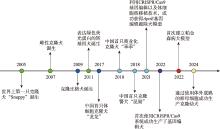
图1
犬细胞核移植的标志性事件"
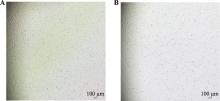
图2
cEFs和cAd-MSCs分离培养 A:第3代cEFs;B:第3代cAd-MSCs。"
图3
cEFs和cAd-MSCs中PS48处理组与对照组线粒体膜电位的比较 A:cEFs和cAd-MSCs(红色)采用TMRE染色,0 μmol/L为阴性对照组;B:TMRE探针的相对荧光强度。TMRE:四甲基罗丹明乙酯;*和**分别表示P<0.05和P<0.01,具有显著性差异。"
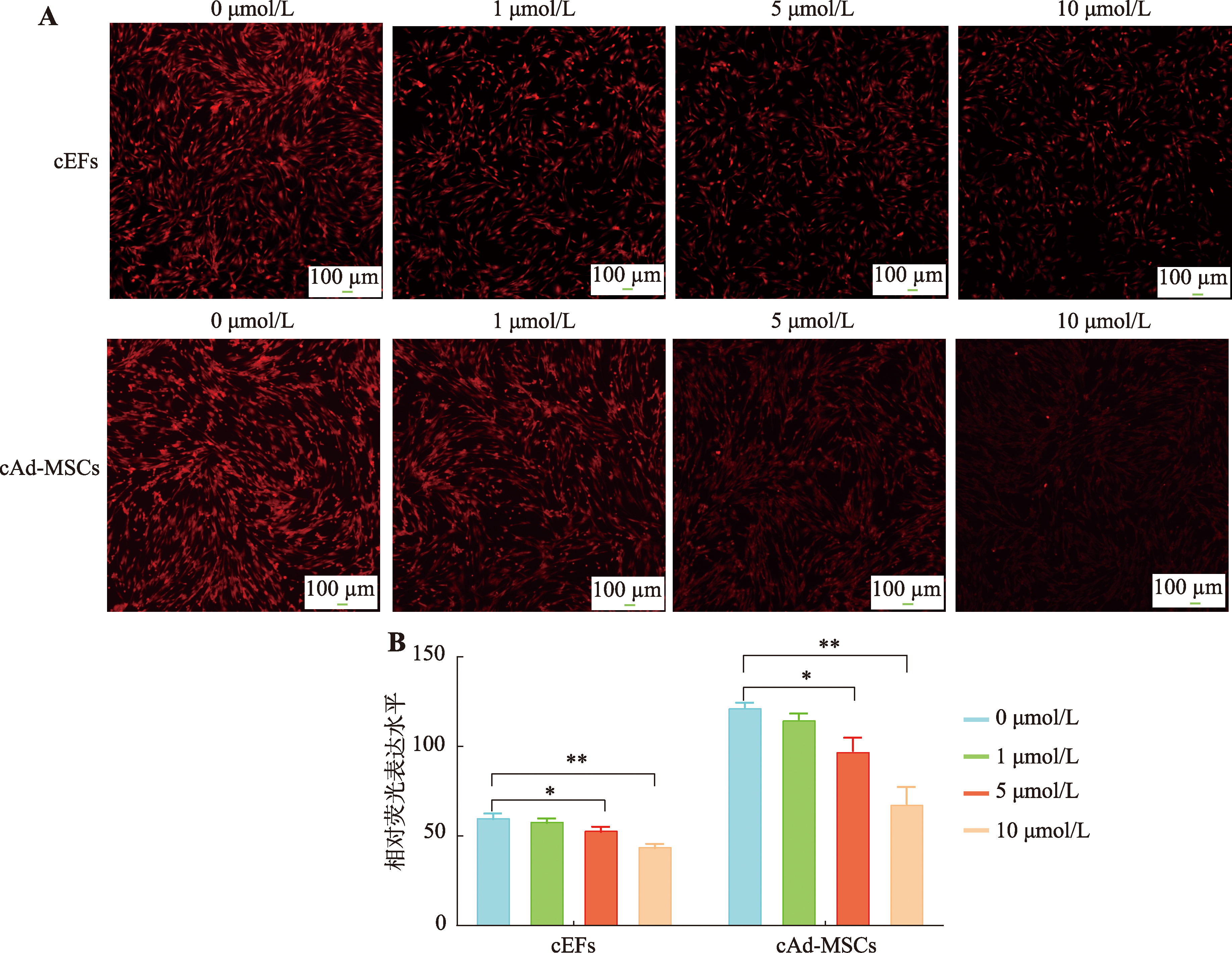
表1
PS48处理cEFs对后续犬-猪iSCNT胚胎发育效率的影响"
| 组别 | 克隆胚胎数(n) | 卵裂率(%) | 4-细胞期率(%) | 8-细胞期率(%) | 16-细胞期率(%) |
|---|---|---|---|---|---|
| 对照组 | 218 | 13.30a±1.61 | 8.26a±0.88 | 5.50a±0.84 | 1.38a±0.93 |
| PS48处理组 | 226 | 46.90b±1.64 | 32.30b±1.55 | 10.62b±1.68 | 3.54a±0.52 |
表2
PS48处理cAd-MSCs对后续犬-猪iSCNT胚胎发育效率的影响"
| 组别 | 克隆胚胎数(n) | 卵裂率(%) | 4-细胞期率(%) | 8-细胞期率(%) | 16-细胞期率(%) |
|---|---|---|---|---|---|
| 对照组 | 112 | 31.25a±2.73 | 15.18a±1.58 | 4.46a±0.52 | 2.68a±0.04 |
| PS48处理组 | 103 | 49.51b±3.00 | 26.21b±2.08 | 4.85a±0.46 | 4.85a±0.46 |
表3
RG108处理cEFs对后续犬-猪iSCNT胚胎发育效率的影响"
| 组别 | 克隆胚胎数(n) | 卵裂率(%) | 4-细胞期率(%) | 8-细胞期率(%) | 16-细胞期率(%) |
|---|---|---|---|---|---|
| 对照组 | 81 | 17.28a±1.70 | 11.11a±0.99 | 6.17a±2.03 | 2.47a±2.38 |
| RG108处理组 | 76 | 7.89a±1.26 | 7.89a±1.36 | 6.58a±2.23 | 5.26a±1.89 |
表4
RG108处理cAd-MSCs对后续犬-猪iSCNT胚胎发育效率的影响"
| 组别 | 克隆胚胎数(n) | 卵裂率(%) | 4-细胞期率(%) | 8-细胞期率(%) | 16-细胞期率(%) |
|---|---|---|---|---|---|
| 对照组 | 150 | 12.00a±1.33 | 8.00a±1.25 | 3.33a±0.42 | 2.67a±0.47 |
| RG108处理组 | 141 | 9.22a±0.28 | 3.55a±0.90 | 2.13a±1.00 | 1.42a±1.42 |
表5
Scriptaid处理cEFs对后续犬-猪iSCNT胚胎发育效率的影响"
| 处理浓度(nmol/L) | 克隆胚胎数(n) | 卵裂率(%) | 4-细胞期率(%) | 8-细胞期率(%) | 16-细胞期率(%) |
|---|---|---|---|---|---|
| 0 | 95 | 23.2a±1.95 | 12.6a±0.81 | 4.2a±1.64 | 0a±0 |
| 400 | 114 | 25.4a±4.22 | 12.3a±1.79 | 3.5a±0.52 | 1.8a±0.72 |
| 500 | 100 | 25.0a±2.82 | 12.0a±2.71 | 6.0a±2.09 | 3.0a±1.93 |
| 600 | 122 | 17.2a±1.03 | 8.2a±1.45 | 4.1a±2.84 | 2.5a±4.08 |
表6
Scriptaid处理cAd-MSCs对后续犬-猪iSCNT胚胎发育效率的影响"
| 处理浓度(nmol/L) | 克隆胚胎数(n) | 卵裂率(%) | 4-细胞期率(%) | 8-细胞期率(%) | 16-细胞期率(%) |
|---|---|---|---|---|---|
| 0 | 117 | 27.4a±0.39 | 17.9a±0.45 | 9.4ab±1.79 | 6.0a±1.37 |
| 400 | 82 | 26.8a±4.80 | 15.9a±3.77 | 2.4b±4.99 | 1.2a±1.51 |
| 500 | 119 | 31.9a±1.96 | 24.4a±1.58 | 8.4ab±1.69 | 5.0a±2.66 |
| 600 | 108 | 35.2a±1.89 | 21.3a±1.45 | 11.1a±1.39 | 6.5a±0.57 |
表7
RG108处理来源于cEFs的犬-猪iSCNT胚胎对其发育效率的影响"
| 组别 | 克隆胚胎数(n) | 卵裂率(%) | 4-细胞期率(%) | 8-细胞期率(%) | 16-细胞期率(%) |
|---|---|---|---|---|---|
| 对照组 | 76 | 14.47a±1.49 | 6.58a±1.70 | 1.32a±1.89 | 0a±0 |
| RG108处理组 | 74 | 31.08b±1.07 | 21.62b±1.01 | 12.16b±1.18 | 6.76b±0.88 |
表8
RG108处理来源于cAd-MSCs的犬-猪iSCNT胚胎对其发育效率的影响"
| 组别 | 克隆胚胎数(n) | 卵裂率(%) | 4-细胞期率(%) | 8-细胞期率(%) | 16-细胞期率(%) |
|---|---|---|---|---|---|
| 对照组 | 121 | 10.74a±1.22 | 6.61a±1.52 | 3.31a±1.07 | 0.83a±1.18 |
| RG108处理组 | 125 | 21.60b±1.45 | 8.00a±1.34 | 3.20a±1.14 | 2.40a±1.18 |
表9
Scriptaid处理来源于cEFs的犬-猪iSCNT胚胎对其发育效率的影响"
| 组别 | 克隆胚胎数(n) | 卵裂率(%) | 4-细胞期率(%) | 8-细胞期率(%) | 16-细胞期率(%) |
|---|---|---|---|---|---|
| 对照组 | 95 | 9.47a±1.70 | 6.32a±1.07 | 5.26a±0.85 | 1.05a±1.41 |
| Scriptaid处理组 | 91 | 23.08b±2.94 | 18.68b±3.25 | 9.89a±1.95 | 3.29a±3.59 |
表10
Scriptaid处理来源于cAd-MSCs的犬-猪iSCNT胚胎对其发育效率的影响"
| 组别 | 克隆胚胎数(n) | 卵裂率(%) | 4-细胞期率(%) | 8-细胞期率(%) | 16-细胞期率(%) |
|---|---|---|---|---|---|
| 对照组 | 120 | 60.8a±3.31 | 32.5a±2.55 | 5.0a±1.44 | 5.0a±1.44 |
| Scriptaid处理组 | 116 | 24.1b±3.75 | 9.5b±2.1 | 4.3a±1.44 | 2.6a±1.27 |
| [1] |
Matoba S, Zhang Y. Somatic cell nuclear transfer reprogramming: mechanisms and applications. Cell Stem Cell, 2018, 23(4): 471-485.
pmid: 30033121 |
| [2] |
Lee BC, Kim MK, Jang G, Oh HJ, Yuda F, Kim HJ, Shamim MH, Kim JJ, Kang SK, Schatten G, Hwang WS. Dogs cloned from adult somatic cells. Nature, 2005, 436(7051): 641.
pmid: 16079832 |
| [3] |
Ji K, Park K, Kim D, Kim E, Kil T, Kim M. Accomplishment of canine cloning through in vitro matured oocytes: a pioneering milestone. J Anim Sci Biotechnol, 2024, 66(3): 577-586.
pmid: 38975582 |
| [4] |
Hossein MS, Jeong YW, Park SW, Kim JJ, Lee E, Ko KH, Hyuk P, Hoon SS, Kim YW, Hyun SH, Shin T, Hwang WS. Birth of beagle dogs by somatic cell nuclear transfer. Anim Reprod Sci, 2009, 114(4): 404-414.
pmid: 19059739 |
| [5] |
Jang G, Kim MK, Oh HJ, Hossein MS, Fibrianto YH, Hong SG, Park JE, Kim JJ, Kim HJ, Kang SK, Kim DY, Lee BC. Birth of viable female dogs produced by somatic cell nuclear transfer. Theriogenology, 2007, 67(5): 941-947.
pmid: 17169419 |
| [6] |
Zhao H, Zhao JP, Wu D, Sun ZL, Hua Y, Zheng M, Liu YM, Yang Q, Huang XH, Li Y, Piao YS, Wang YC, Lam SM, Xu HJ, Shui GH, Wang YJ, Yao HF, Lai LX, Du Z, Mi JD, Liu EQ, Ji XM, Zhang YQ. Dogs lacking apolipoprotein e show advanced atherosclerosis leading to apparent clinical complications. Sci China Life Sci, 2022, 65(7): 1342-1356.
pmid: 34705220 |
| [7] |
Feng C, Wang XM, Shi H, Yan QM, Zheng M, Li J, Zhang QJ, Qin YM, Zhong YG, Mi JD, Lai LX. Generation of ApoE deficient dogs via combination of embryo injection of CRISPR/Cas9 with somatic cell nuclear transfer. J Genet Genomics, 2018, 45(1): 47-50.
pmid: 29396142 |
| [8] |
Kim DE, Lee JH, Ji KB, Park KS, Kil TY, Koo O, Kim MK. Generation of genome-edited dogs by somatic cell nuclear transfer. BMC Biotechnol, 2022, 22(1): 19.
pmid: 35831828 |
| [9] |
Kim MJ, Oh HJ, Park JE, Kim GA, Hong SG, Jang G, Kwon MS, Koo BC, Kim T, Kang SK, Ra JC, Ko C, Lee BC. Generation of transgenic dogs that conditionally express green fluorescent protein. Genesis, 2011, 49(6): 472-478.
pmid: 21630415 |
| [10] |
Walker JC, Hall SB, Walker DB, Kendal-Reed MS, Hood AF, Niu XF. Human odor detectability: new methodology used to determine threshold and variation. Chem Senses, 2003, 28(9): 817-826.
pmid: 14654450 |
| [11] |
Walsh F. Human-animal bonds I: the relational significance of companion animals. Fam Process, 2009, 48(4): 462-480.
pmid: 19930433 |
| [12] | 韦云芳, 汪斌, 李飞翔, 李静. 犬体细胞克隆研究进展与应用. 见:2016全国工作犬技术研讨会(武汉)论文集. 2016, 107-116. |
| [13] |
Ryall JG, Cliff T, Dalton S, Sartorelli V. Metabolic reprogramming of stem cell epigenetics. Cell Stem Cell, 2015, 17(6): 651-662.
pmid: 26637942 |
| [14] |
Chandel NS. Glycolysis. Cold Spring Harbo Perspect Biol, 2021, 13(5): a040535.
pmid: 33941515 |
| [15] |
Perales-Clemente E, Folmes CDL, Terzic A. Metabolic regulation of redox status in stem cells. Antioxid Redox Signal, 2014, 21(11): 1648-1659.
pmid: 24949895 |
| [16] |
Zhu SY, Li WL, Zhou HY, Wei WG, Ambasudhan R, Lin TX, Kim J, Zhang K, Ding S. Reprogramming of human primary somatic cells by OCT4and chemical compounds. Cell Stem Cell, 2010, 7(6): 651-655.
pmid: 21112560 |
| [17] |
Banito A, Rashid ST, Acosta JC, Li SD, Pereira CF, Geti I, Pinho S, Silva JC, Azuara V, Walsh M, Vallier L, Gil J. Senescence impairs successful reprogramming to pluripotent stem cells. Genes Dev, 2009, 23(18): 2134-2139.
pmid: 19696146 |
| [18] |
Sato S, Fujita N, Tsuruo T. Interference with PDK1-Akt survival signaling pathway by UCN-01 (7-hydroxystaurosporine). Oncogene, 2002, 21(11): 1727-1738.
pmid: 11896604 |
| [19] |
Brueckuer B, Garcia BR, Siedlecki P, Musch T, Klism HC, Zielenkiewicz P, Suhai S, Wiessler M, Lyko F. Epigenetic reactivation of tumor suppressor genes by a novel small- molecule inhibitor of human DNA methyltransferases. Cancer Res, 2005, 65(14): 6305-6311.
pmid: 16024632 |
| [20] |
Su GH, Sohn TA, Ryu B, Kern SE. A novel histone deacetylase inhibitor identified by high-throughput transcriptional screening of a compound library. Cancer Res, 2000, 60(12): 3137-3142.
pmid: 10866300 |
| [21] |
No JG, Hur TY, Zhao MH, Lee S, Choi MK, Nam YS, Yeom DH, Im GS, Kim DH. Scriptaid improves the reprogramming of donor cells and enhances canine-porcine interspecies embryo development. Reprod Biol, 2018, 18(1): 18-26.
pmid: 29162325 |
| [22] |
Prigione A, Rohwer N, Hoffmann S, Mlody B, Drews K, Bukowiecki R, Blümlein K, Wanker EE, Ralser M, Cramer T, Adjaye J. HIF1α modulates cell fate reprogramming through early glycolytic shift and upregulation of PDK1-3 and PKM2. Stem Cells, 2014, 32(2): 364-376.
pmid: 24123565 |
| [23] |
Mathieu J, Zhou WY, Xing YL, Sperber H, Ferreccio A, Agoston Z, Kuppusamy KT, Moon RT, Ruohola-Baker H. Hypoxia-inducible factors have distinct and stage-specific roles during reprogramming of human cells to pluripotency. Cell Stem Cell, 2014, 14(5): 592-605.
pmid: 24656769 |
| [24] |
Shiratori R, Furuichi K, Yamaguchi M, Miyazaki N, Aoki H, Chibana H, Ito K, Aoki S. Glycolytic suppression dramatically changes the intracellular metabolic profile of multiple cancer cell lines in a mitochondrial metabolism- dependent manner. Sci Rep, 2019, 9(1): 18615-18699.
pmid: 31822748 |
| [25] |
Nishimura K, Fukuda A, Hisatake K. Mechanisms of the metabolic shift during somatic cell reprogramming. Int J Mol Sci, 2019, 20(9): 2254.
pmid: 31067778 |
| [26] |
Mordhorst BR, Kerns KC, Schauflinger M, Zigo M, Murphy SL, Ross RM, Wells KD, Green JA, Sutovsky P, Prather RS. Pharmacologic treatment with CPI-613 and PS48 decreases mitochondrial membrane potential and increases quantity of autolysosomes in porcine fibroblasts. Sci Rep, 2019, 9(1): 9417.
pmid: 31263141 |
| [27] |
Luo C, Wang ZQ, Wang JL, Yun F, Lu FH, Fu JY, Liu QY, Shi DS. Individual variation in buffalo somatic cell cloning efficiency is related to glycolytic metabolism. Sci China Life Sci, 2022, 65(10): 2076-2092.
pmid: 35366153 |
| [28] |
Son YB, Jeong YI, Hwang KC, Jeong YW, Hwang WS. Mitochondrial metabolism assessment of lycaon-dog fetuses in interspecies somatic cell nuclear transfer. Theriogenology, 2021, 165: 18-27.
pmid: 33611171 |
| [29] | Do L TK, Wittayarat M, Sato Y, Chatdarong K, Tharasanit T, Techakumphu M, Hirata M, Tanihara F, Taniguchi M, Otoi T. Comparison of blastocyst development between cat-cow and cat-pig interspecies somatic cell nuclear transfer embryos treated with trichostatin A. Biol Bull Russ Acad Sci, 2021, 48(2): 107-117. |
| [30] |
Carvalho BP, Cunha ATM, Silva BDM, Sousa RV, Leme LO, Dode MAN, Melo EO. Production of transgenic cattle by somatic cell nuclear transfer (SCNT) with the human granulocyte colony-stimulation factor (hG-CSF). J Anim Sci Biotechnol, 2019, 61(2): 61-68.
pmid: 31333863 |
| [31] |
Gouveia C, Huyser C, Egli D, Pepper MS. Lessons learned from somatic cell nuclear transfer. Int J Mol Sci, 2020, 21(7): 2314.
pmid: 32230814 |
| [32] |
Alsalim H, Jafarpour F, Tanhaei Vash N, Nasr-Esfahani MH, Niasari-Naslaji A. Effect of DNA and histone methyl transferase inhibitors on outcomes of buffalo-bovine interspecies somatic cell nuclear transfer. Cell Reprogram, 2018, 20(4): 256-267.
pmid: 29989428 |
| [33] |
Kim MJ, Oh HJ, Choi YB, Lee S, Setyawan EMN, Lee SH, Lee SH, Hur TY, Lee BC. Suberoylanilide hydroxamic acid during in vitro culture improves development of dog-pig interspecies cloned embryos but not dog cloned embryos. J Reprod Dev, 2018, 64(3): 277-282.
pmid: 29695650 |
| [34] |
Wu CF, Zhang DF, Zhang SS, Sun LW, Liu Y, Dai JJ. Optimizing treatment of DNA methyltransferase inhibitor RG108 on porcine fibroblasts for somatic cell nuclear transfer. Reprod Domest Anim, 2019, 54(12): 1604-1611.
pmid: 31549747 |
| [35] |
Zhai YH, Zhang ZR, Yu H, Su L, Yao G, Ma XL, Li Q, An XL, Zhang S, Li ZY. Dynamic methylation changes of DNA and H3K4 by RG108 improve epigenetic reprogramming of somatic cell nuclear transfer embryos in pigs. Cell Physiol Biochem, 2018, 50(4): 1376-1397.
pmid: 30355946 |
| [36] |
Xu WH, Li ZC, Yu B, He XY, Shi JS, Zhou R, Liu DW, Wu ZF. Effects of DNMT1 and HDAC inhibitors on gene-specific methylation reprogramming during porcine somatic cell nuclear transfer. PLoS One, 2013, 8(5): e64705.
pmid: 23741375 |
| [37] |
Zarei M, Shamaghdari B, Vahabi Z, Dalman A, Eftekhari Yazdi P. Epigenetic reprogramming in cloned mouse embryos following treatment with DNA methyltransferase and histone deacetylase inhibitors. Syst Biol Reprod Med, 2022, 68(3): 227-238.
pmid: 35382652 |
| [38] |
Wang LJ, Zhang H, Wang YS, Xu WB, Xiong XR, Li YY, Su JM, Hua S, Zhang Y. Scriptaid improves in vitro development and nuclear reprogramming of somatic cell nuclear transfer bovine embryos. Cell Reprogram, 2011, 13(5): 431-439.
pmid: 21774687 |
| [39] |
Li WD, Xu HN, Yin YB, Shen W, Sun QY, Zhao MH. In vitro production of canine blastocysts. Theriogenology, 2019, 135: 164-168.
pmid: 31216507 |
| [40] |
Ma H, Marti Gutierrez N, Morey R, Van Dyken C, Kang E, Hayama T, Lee Y, Li Y, Tippner-Hedges R, Wolf DP, Laurent LC, Mitalipov S. Incompatibility between nuclear and mitochondrial genomes contributes to an interspecies reproductive barrier. Cell Metabo, 2016, 24(2): 283-294.
pmid: 27425585 |
| [41] |
Mrowiec P, Bugno-Poniewierska M, Mlodawska W. The perspective of the incompatible of nucleus and mitochondria in interspecies somatic cell nuclear transfer for endangered species. Reprod Domest Anim, 2021, 56(2): 199-207.
pmid: 33190359 |
| [1] | 宋绍征, 何正义, 成勇, 于宝利, 张婷, 李丹. TALENs介导MSTN基因突变山羊的制备及性能分析[J]. 遗传, 2022, 44(6): 531-542. |
| [2] | 曲卉, 柳毅, 陈雅文, 汪晖. 环境因素所致印迹基因改变与子代器官发育[J]. 遗传, 2022, 44(2): 107-116. |
| [3] | 张杨景晖, 常沛瑶, 杨紫淑, 薛宇航, 李雪奇, 张旸. 表观遗传修饰影响花青苷合成研究进展[J]. 遗传, 2022, 44(12): 1117-1127. |
| [4] | 赵清雯, 潘东宁. 表观遗传修饰对脂肪组织产热的调控进展[J]. 遗传, 2022, 44(10): 867-880. |
| [5] | 王雅楠, 徐涛, 王万鹏, 张庆祝, 解莉楠. 表观遗传修饰在作物重要性状形成中的作用[J]. 遗传, 2021, 43(9): 858-879. |
| [6] | 周俊, 赵成成, 吴霄, 石俊松, 周荣, 吴珍芳, 李紫聪. 猪耳成纤维细胞转录组异质性及对核移植胚胎发育的潜在影响[J]. 遗传, 2020, 42(9): 898-915. |
| [7] | 吴杰, 全建平, 叶勇, 吴珍芳, 杨杰, 杨明, 郑恩琴. 染色质转座酶可及性测序研究进展[J]. 遗传, 2020, 42(4): 333-346. |
| [8] | 敖政, 陈祥, 吴珍芳, 李紫聪. 体细胞克隆猪发育异常研究进展[J]. 遗传, 2020, 42(10): 993-1003. |
| [9] | 杨旭琼, 吴珍芳, 李紫聪. 哺乳动物体细胞核移植表观遗传重编程研究进展[J]. 遗传, 2019, 41(12): 1099-1109. |
| [10] | 黎伟, 秦俊, 汪晖, 陈廖斌. 表观遗传生物标志物在人类疾病早期诊治中的研究进展[J]. 遗传, 2018, 40(2): 104-115. |
| [11] | 康岚, 陈嘉瑜, 高绍荣. 中国细胞重编程和多能干细胞研究进展[J]. 遗传, 2018, 40(10): 825-840. |
| [12] | 敖政, 刘德武, 蔡更元, 吴珍芳, 李紫聪. 克隆哺乳动物的胎盘发育缺陷[J]. 遗传, 2016, 38(5): 402-410. |
| [13] | 李书粉,李莎,邓传良,卢龙斗,高武军. 转座子在植物XY性染色体起源与演化过程中的作用[J]. 遗传, 2015, 37(2): 157-164. |
| [14] | 陈利, 丁芳, 刘勇, 吴风瑞, 丁彪, 王荣, 李文雍. 小鼠孤雌胚、体外培养胚与体内胚H3K9乙酰式的比较[J]. 遗传, 2015, 37(1): 77-83. |
| [15] | 葛少钦, 赵峥辉, 张雪倩, 郝媛. 精子表观遗传修饰及其在胚胎发育过程中的潜在作用[J]. 遗传, 2014, 36(5): 439-446. |
| 阅读次数 | ||||||
|
全文 |
|
|||||
|
摘要 |
|
|||||

www.chinagene.cn
备案号:京ICP备09063187号-4
总访问:,今日访问:,当前在线:

