

一例肌阵挛-肌张力障碍综合征致病变异的鉴定及产前遗传学检测
收稿日期: 2025-11-25
修回日期: 2026-01-09
网络出版日期: 2026-02-09
基金资助
湖南省自然科学区域联合基金项目(2023JJ50291)
Identification and prenatal genetic testing of pathogenic variants in a case of myoclonus-dystonia syndrome
Received date: 2025-11-25
Revised date: 2026-01-09
Online published: 2026-02-09
Supported by
Natural Science Regional Joint Fund Project of Hunan Province(2023JJ50291)
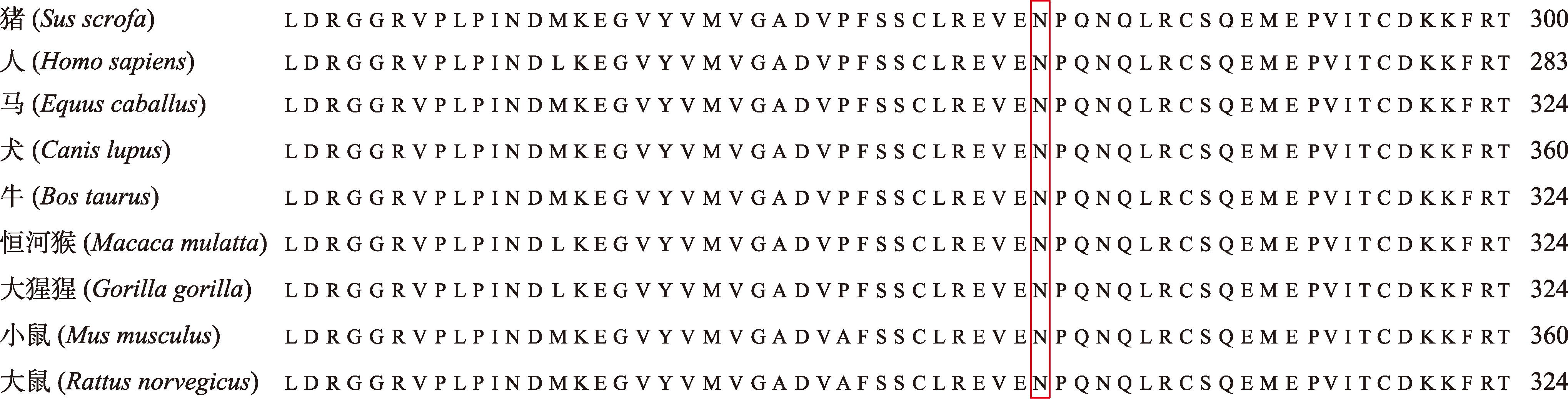
肌阵挛-肌张力障碍综合征(myoclonus-dystonia syndrome,MDS)是一种以肌阵挛为核心特征的运动异常综合征。本研究报道了1例以肌阵挛为显著特征的MDS患者,其同时伴有学习障碍及特殊面容。通过对患者及其家系成员进行拷贝数变异测序(copy number variation sequencing,CNV-seq)、全外显子组测序(whole-exome sequencing,WES)及Sanger测序验证,发现该患者携带有与MDS相关的SGCE基因c.731dup(p.Asn244Lysfs*6) 杂合变异,为国内外首次报道的新变异。该变异来源于其父亲,且产前诊断结果证实其胎儿也存在SGCE基因c.731dup (p.Asn244Lysfs*6) 杂合变异。此外,患者8号染色体p23.1处存在1.40 Mb重复片段,该片段与8p23.1重复综合征部分重叠,推测可能与患者的学习障碍及特殊面容表型相关,且经家系验证该重复片段为新发变异(其父母均未携带该变异)。本研究不仅明确了患者肌阵挛的病因,而且新发现的SGCE基因c.731dup (p.Asn244Lysfs*6)杂合变异位点丰富了SGCE基因的遗传变异数据库,有助于提升临床医生对MDS的诊断意识。
欧含笑, 周霞, 陈丽娅, 蔡薇, 张文茂, 祝群, 穆红香 . 一例肌阵挛-肌张力障碍综合征致病变异的鉴定及产前遗传学检测[J]. 遗传, 2026 , 48(6) : 638 -647 . DOI: 10.16288/j.yczz.25-235
Myoclonus-dystonia syndrome (MDS) is a movement disorder syndrome characterized primarily by myoclonus as the core feature. In this study, we reported a case of MDS with myoclonus as the prominent feature, which was accompanied by learning disability and special face. We then used copy number variation sequencing (CNV-seq), whole exome sequencing (WES) and Sanger sequencing to verify the MDS related genes of the patient and his family members. We found that the patient carried a heterozygous mutation of SGCE gene c.731dup (p.Asn244Lysfs*6) related to MDS, which inherited from his father. It was the first reported new mutation at home and abroad. And we confirmed via prenatal diagnosis that his fetus also had a heterozygous mutation of SGCE gene c.731dup (p.Asn244Lysfs*6). In addition, we also found that there was a 1.40 Mb repeat fragment at p23.1 on chromosome 8 of the patient, which partially overlapped with 8p23.1 repeat syndrome. It is speculated that it may be related to the learning disability and special facial phenotype of the patient, and it was a de novo variant. This study not only clarified the etiology of the patient's myoclonus, but also enriched the genetic variation database of SGCE gene by the newly discovered heterozygous heterozygous site of c.731dup (p.Asn244Lysfs*6) of SGCE gene, which was helpful to improve the clinician’s awareness of diagnosis of MDS and provide guidance for the patient’s fertility.
| [1] | Wang H, Hou C, Tang P, Li R. A family report of myoclonus-dystonia caused by epsilon-sarcoglycan gene mutation. Chinese Journal of Neurology, 2021, 54(8): 788-793. |
| 王红, 侯辰, 唐鹏, 李锐. SGCE基因突变致肌阵挛-肌张力障碍一家系. 中华神经科杂志, 2021, 54(8): 788-793. | |
| [2] | Tian XJ, Ding CH. Clinical and genetic research progress of myoclonic dystonia syndrome. Chinese Journal of Practical Pediatrics, 2021, 36(7): 545-550. |
| 田小娟, 丁昌红. 肌阵挛肌张力障碍综合征临床及遗传学研究进展. 中国实用儿科杂志, 2021, 36(7): 545-550. | |
| [3] | Tarrano C, Worbe Y. Developmental variability in paediatric SGCE-related myoclonus dystonia syndrome. Dev Med Child Neurol, 2025, 67(6): 695-696. |
| [4] | Delgado-Alvarado M, Matilla-Dueñas A, Altadill-Bermejo A, Setién S, Misiego-Peral M, Sánchez-de la Torre JR, Corral-Juan M, Riancho J. A novel SGCE variant is associated with myoclonus-dystonia with phenotypic variability. Neurol Sci, 2020, 41(12): 3779-3781. |
| [5] | Azuma K, Horisawa S, Mashimo H, Fukuda M, Kumada S, Kawamata T, Taira T, Akagawa H. Loss-of-function mutations in SGCE found in Japanese patients with myoclonus-dystonia. Clin Genet, 2023, 103(2): 209-213. |
| [6] | de Leon MAJ, Rosales RL, Klein C, Westenberger A. A mixed-ethnicity myoclonus-dystonia patient with a novel SGCE nonsense mutation: a case report. BMC Neurol, 2022, 22(1): 11. |
| [7] | Roze E, Lang AE, Vidailhet M. Myoclonus-dystonia: classification, phenomenology, pathogenesis, and treatment. Curr Opin Neurol, 2018, 31(4): 484-490. |
| [8] | Grütz K, Seibler P, Weissbach A, Lohmann K, Carlisle FA, Blake DJ, Westenberger A, Klein C, Grünewald A. Faithful SGCE imprinting in iPSC-derived cortical neurons: an endogenous cellular model of myoclonus- dystonia. Sci Rep, 2017, 7: 41156. |
| [9] | Shi DL, Zhang C, Xu F, Tang QC, Yin SM, Wang L. Clinical characteristics and molecular genetic analysis of a myoclonus-dystonia syndrome family. Chinese Journal of Neurology, 2019, 52(1): 19-25. |
| 施丹莉, 张琛, 徐芳, 唐取春, 尹世敏, 王磊. 肌阵挛-肌张力障碍综合征一家系的临床特点及分子遗传学分析. 中华神经科杂志, 2019, 52(1): 19-25. | |
| [10] | Mou CH, Wang JW, Zhou YJ, Wang YY, He YZ, Wang CJ, Yao RE. Clinical features and genetic analysis of SGCE myoclonic-dystonia in 1 case with the age of onset at 1.5 years old. Journal of Clinical Pediatrics, 2020, 38(9): 700-703. |
| 牟常华, 王纪文, 周昀箐, 王英燕, 贺影忠, 王翠锦, 姚如恩. 1岁半起病的SGCE肌阵挛-肌张力障碍1例临床特征和基因分析. 临床儿科杂志, 2020, 38(9): 700-703. | |
| [11] | Mencacci NE, Rubio-Agusti I, Zdebik A, Asmus F, Ludtmann MHR, Ryten M, Plagnol V, Hauser AK, Bandres-Ciga S, Bettencourt C, Forabosco P, Hughes D, Soutar MMP, Peall K, Morris HR, Trabzuni D, Tekman M, Stanescu HC, Kleta R, Carecchio M, Zorzi G, Nardocci N, Garavaglia B, Lohmann E, Weissbach A, Klein C, Hardy J, Pittman AM, Foltynie T, Abramov AY, Gasser T, Bhatia KP, Wood NW. A missense mutation in KCTD17 causes autosomal dominant myoclonus-dystonia. Am J Hum Genet, 2015, 96(6): 938-947. |
| [12] | Groen JL, Andrade A, Ritz K, Jalalzadeh H, Haagmans M, Bradley TEJ, Jongejan A, Verbeek DS, Nürnberg P, Denome S, Hennekam RCM, Lipscombe D, Baas F, Tijssen MAJ. CACNA1B mutation is linked to unique myoclonus-dystonia syndrome. Hum Mol Genet, 2015, 24(4): 987-993. |
| [13] | Wu Q, Jiang YY, Lu JJ, Zhang Y. Clinical features and genetic analysis of SGCE myoclonus-dystonia: a case report. Parkinsonism Relat Disord, 2022, 104: 91-93. |
| [14] | Ettinger AJ, Feng G, Sanes JR. Epsilon-Sarcoglycan, a broadly expressed homologue of the gene mutated in limb-girdle muscular dystrophy 2D. J Biol Chem, 1997, 272(51): 32534-32538. |
| [15] | Li ZZ, Abram L, Cruz-Santos M, Petter O, Peall KJ. Transcriptomic disruption and hypoactivity in DYT-SGCE medial ganglionic eminence-patterned inhibitory neurons. Brain, 2026, 149(1): 209-225. |
| [16] | Hicks MA, Ebrahim S, Gonik B. Prenatal lethal diagnosis of 8p23.1 duplication syndrome associated with omphalocele and encephalocele. Case Rep Genet, 2023, 2023: 5958223. |
| [17] | Barber JCK, Rosenfeld JA, Graham JM, Kramer N, Lachlan KL, Bateman MS, Collinson MN, Stadheim BF, Turner CLS, Gauthier JN, Reimschisel TE, Qureshi AM, Dabir TA, Humphreys MW, Marble M, Huang T, Beal SJ, Massiah J, Taylor EJ, Wynn SL. Inside the 8p23.1 duplication syndrome; eight microduplications of likely or uncertain clinical significance. Am J Med Genet A, 2015, 167A(9): 2052-2064. |
| [18] | Weber A, Köhler A, Hahn A, Müller U. 8p23.1 duplication syndrome: narrowing of critical interval to 1.80 Mbp. Mol Cytogenet, 2014, 7(1): 94. |
| [19] | Klinman E, Gooch C, Perlmutter JS, Davis AA, Maiti B. Novel SGCE mutation in a patient with myoclonus- dystonia: a case report. Neurol Genet, 2024, 10(2): e200128. |
| [20] | Wu Y, Feng X, Gao L, Jiao BW. Imprinted genes: important regulators in development. Hereditas(Beijing), 2016, 38(6): 508-522. |
| 吴瑜, 冯旭, 高岚, 焦保卫. 印记基因:发育中的重要调节因子. 遗传, 2016, 38(6): 508-522. |
/
| 〈 |
|
〉 |

www.chinagene.cn
备案号:京ICP备09063187号-4
总访问:,今日访问:,当前在线:
