Hereditas(Beijing) ›› 2026, Vol. 48 ›› Issue (6): 638-647.doi: 10.16288/j.yczz.25-235
• Genetic Resource • Previous Articles Next Articles
Identification and prenatal genetic testing of pathogenic variants in a case of myoclonus-dystonia syndrome
Hanxiao Ou1,2( ), Xia Zhou1,2, Liya Chen1,2, Wei Cai1,2, Wenmao Zhang1,2, Qun Zhu1,2, Hongxiang Mu1,2()
- 1
Department of Medical Genetics ,Yueyang Maternal and Child Health Hospital of Hunan Province Yueyang 414000, China
2Yueyang Key Laboratory of Birth Defects Prevention and Control of Hunan Province Yueyang 414000, China
-
Received:2025-11-25Revised:2026-01-09Online:2026-06-20Published:2026-02-09 -
Contact:Hongxiang Mu E-mail:hanxiaoyalan@sina.com;1327978014@qq.com -
Supported by:Natural Science Regional Joint Fund Project of Hunan Province(2023JJ50291)

Cite this article
Hanxiao Ou, Xia Zhou, Liya Chen, Wei Cai, Wenmao Zhang, Qun Zhu, Hongxiang Mu. Identification and prenatal genetic testing of pathogenic variants in a case of myoclonus-dystonia syndrome[J]. Hereditas(Beijing), 2026, 48(6): 638-647.
share this article
Add to citation manager EndNote|Reference Manager|ProCite|BibTeX|RefWorks
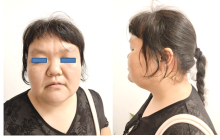
Fig. 1
Frontal and lateral images of the patient"
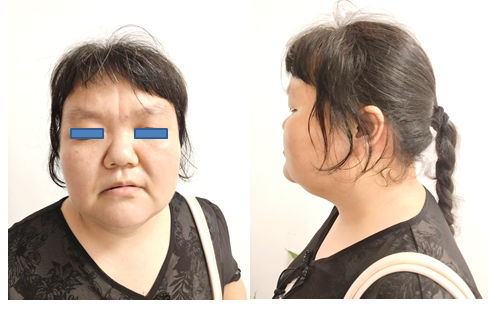
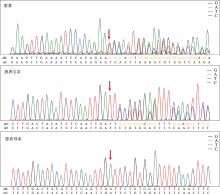
Fig. 2
Genetic testing results of the patient and patient’s parents"
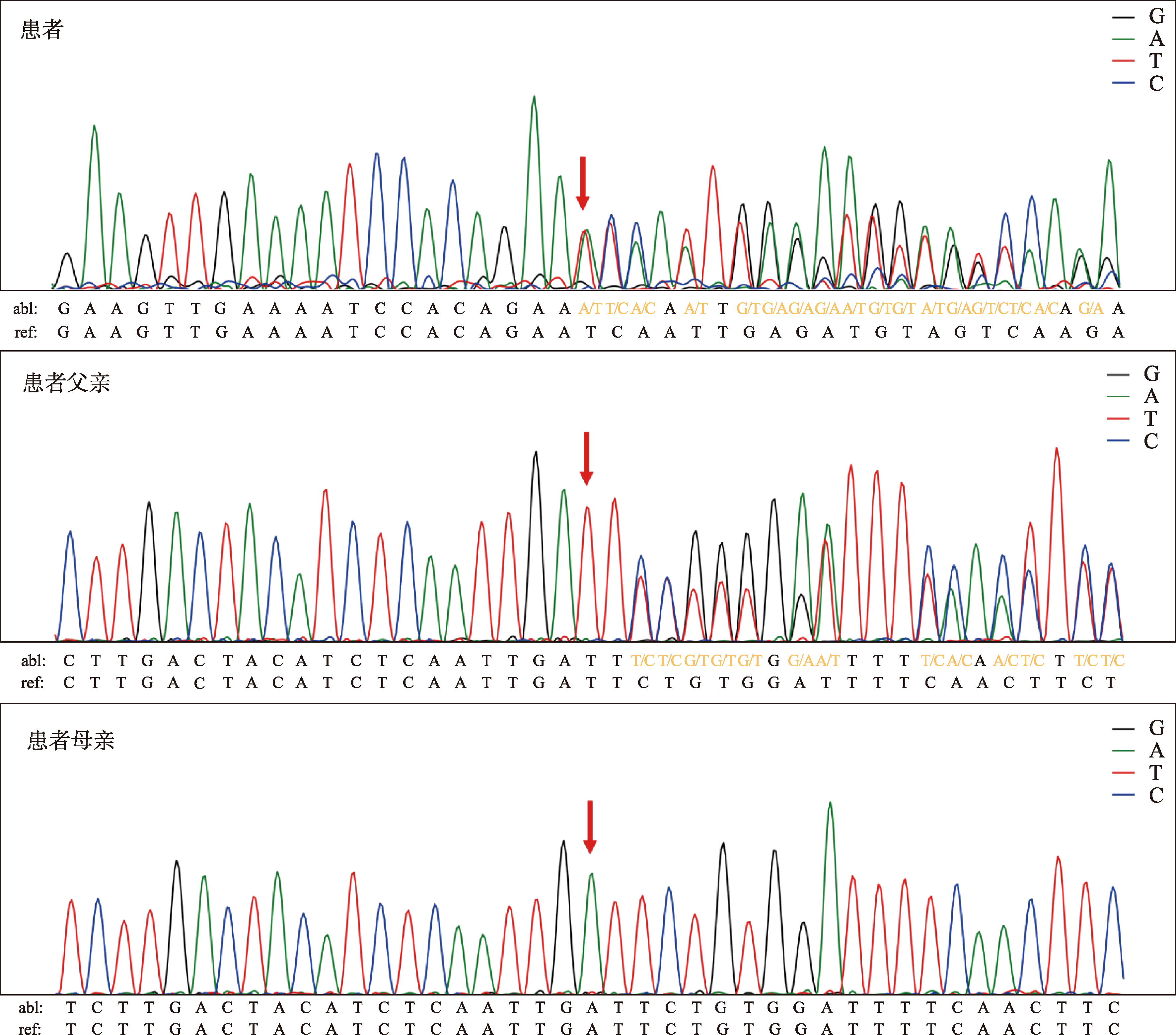
Fig. 3
Analysis results of species conservation"
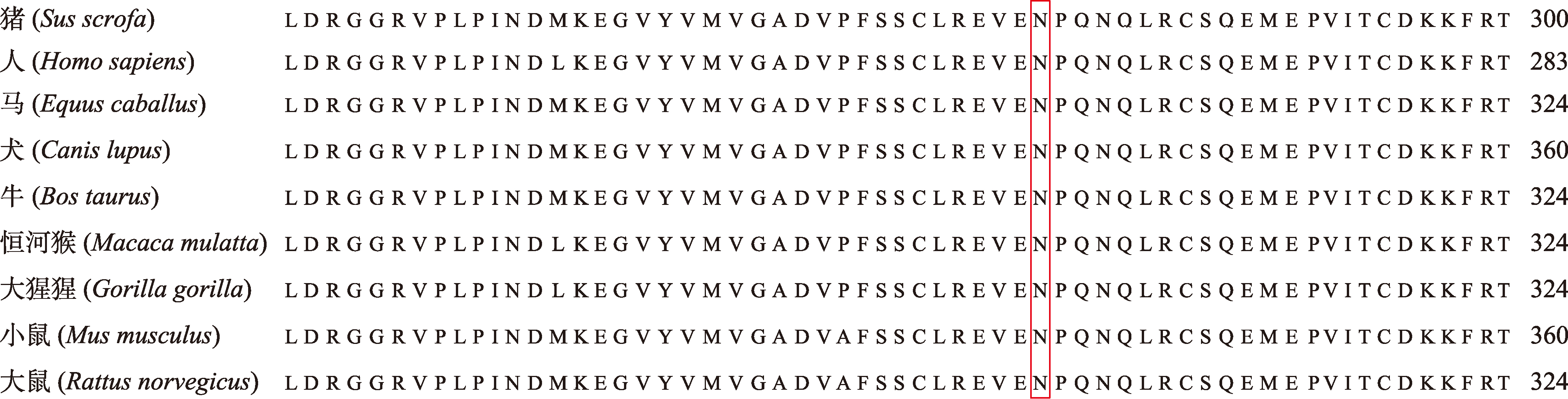
Fig. 4
Structural and functional analysis of the SGCE protein"
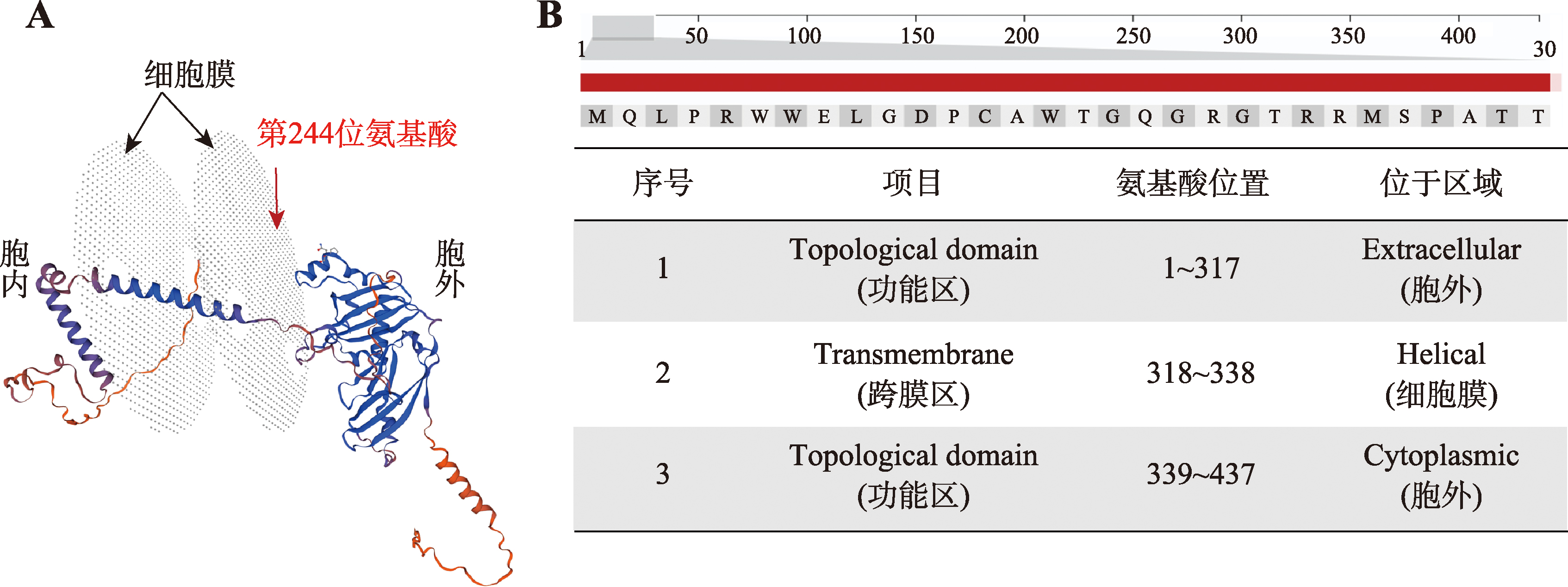
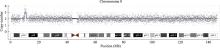
Fig. 5
The CNV-seq sequencing map of the patient on chromosome 8"
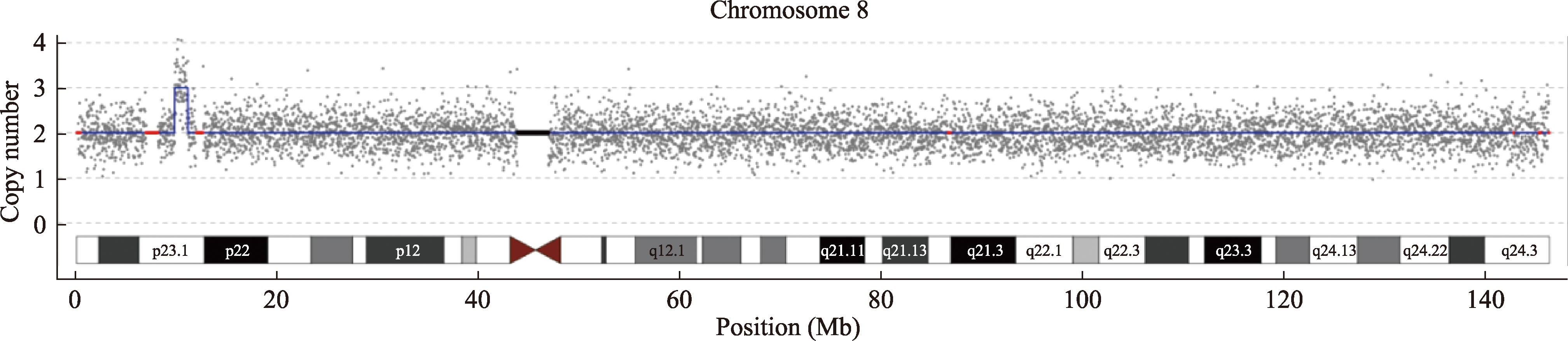
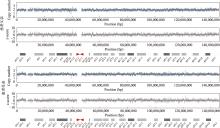
Fig. 6
The CNV-seq sequencing map of the patient's parents on chromosome 8"
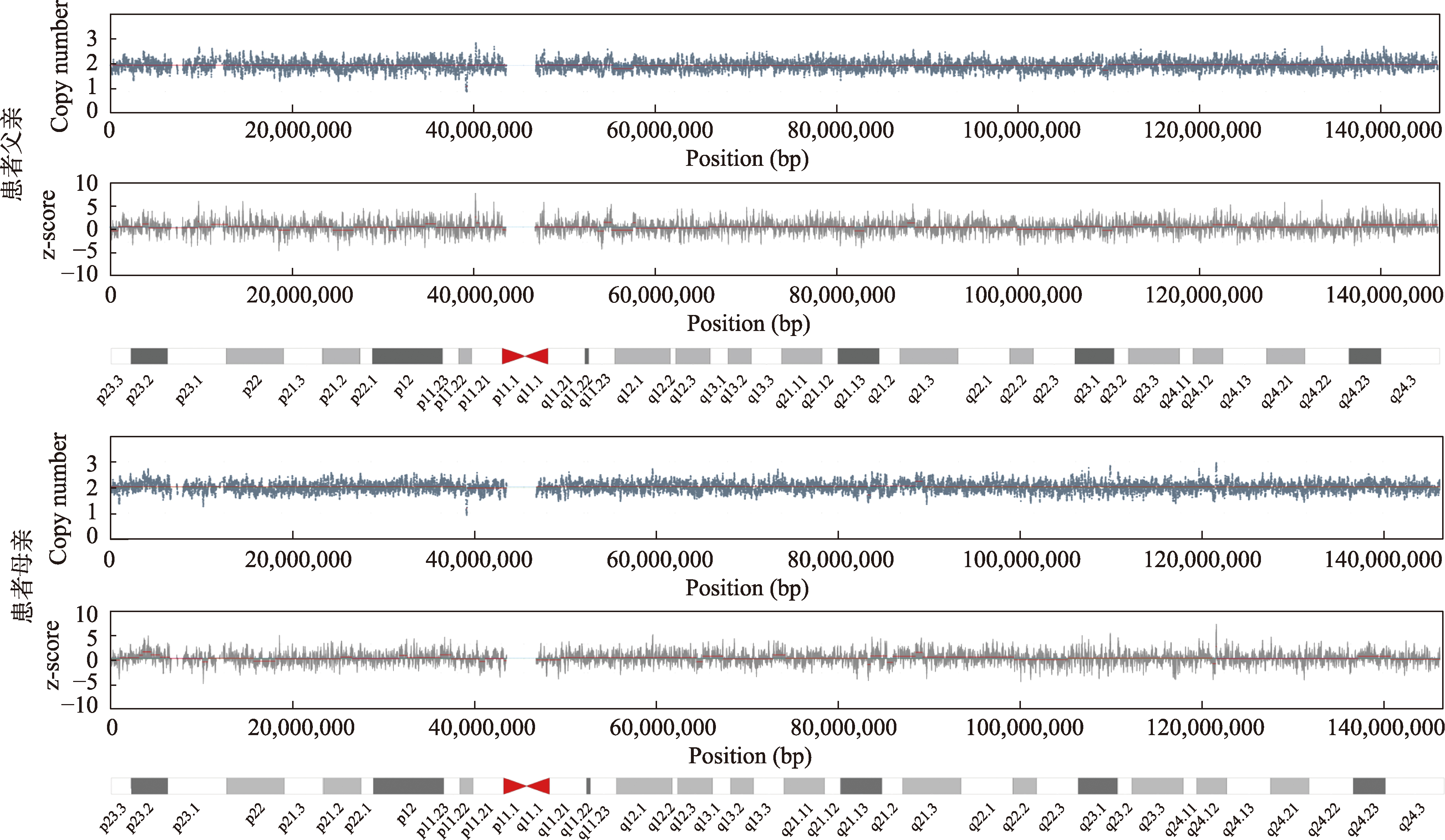
Fig. 7
The karyotype diagram of the fetus"
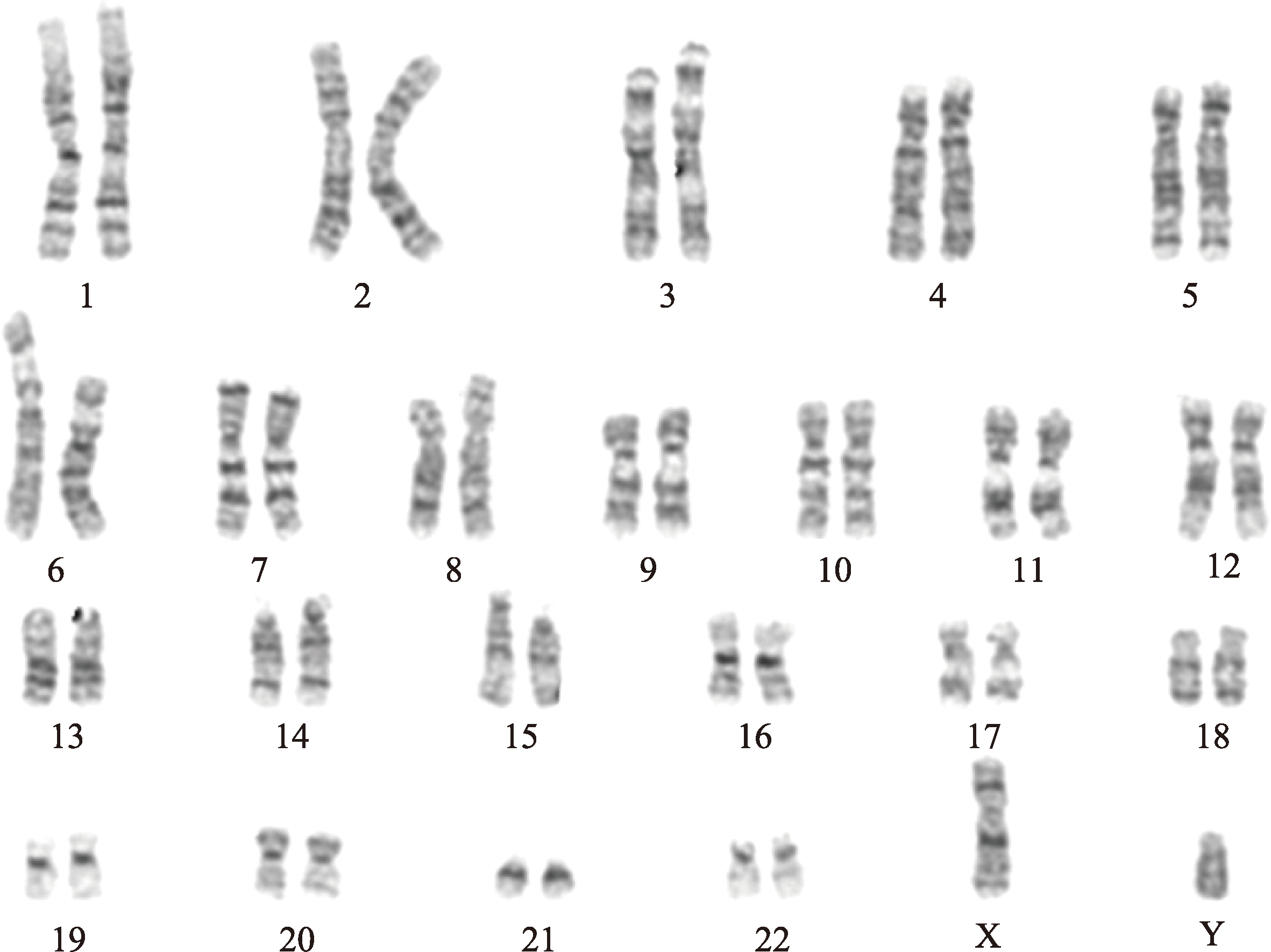
Fig. 8
The SNP-array test results of the fetus"
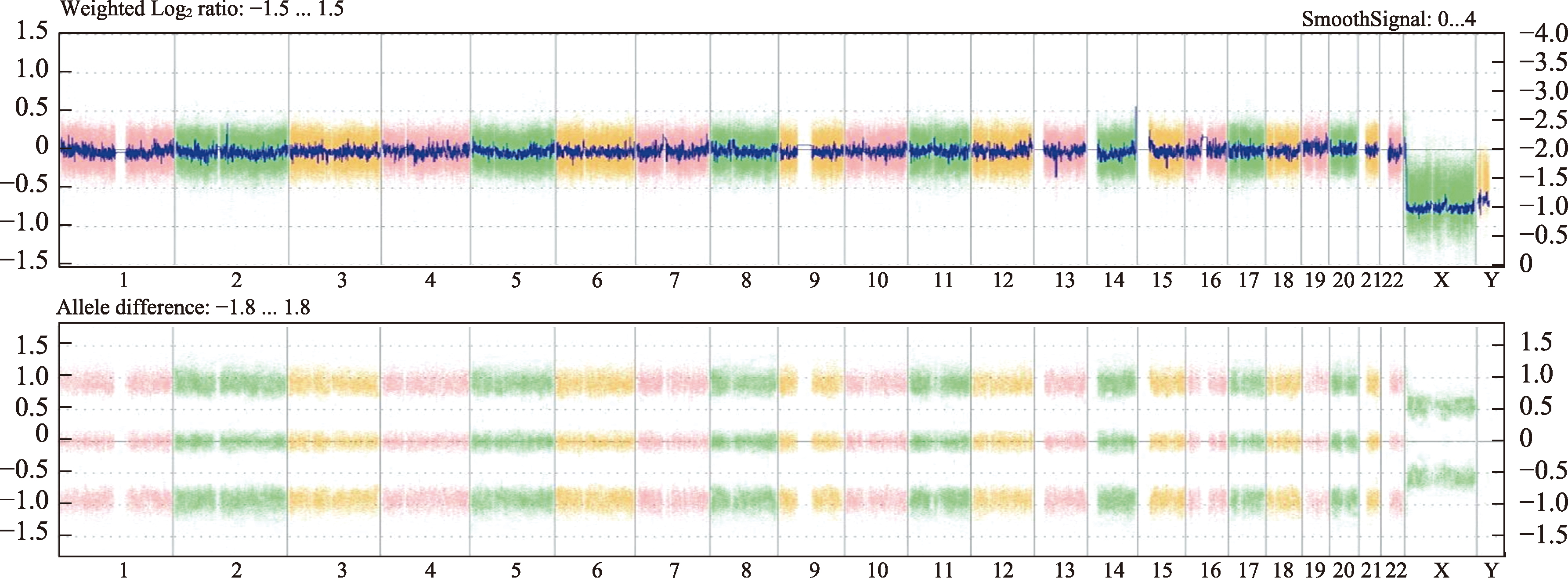
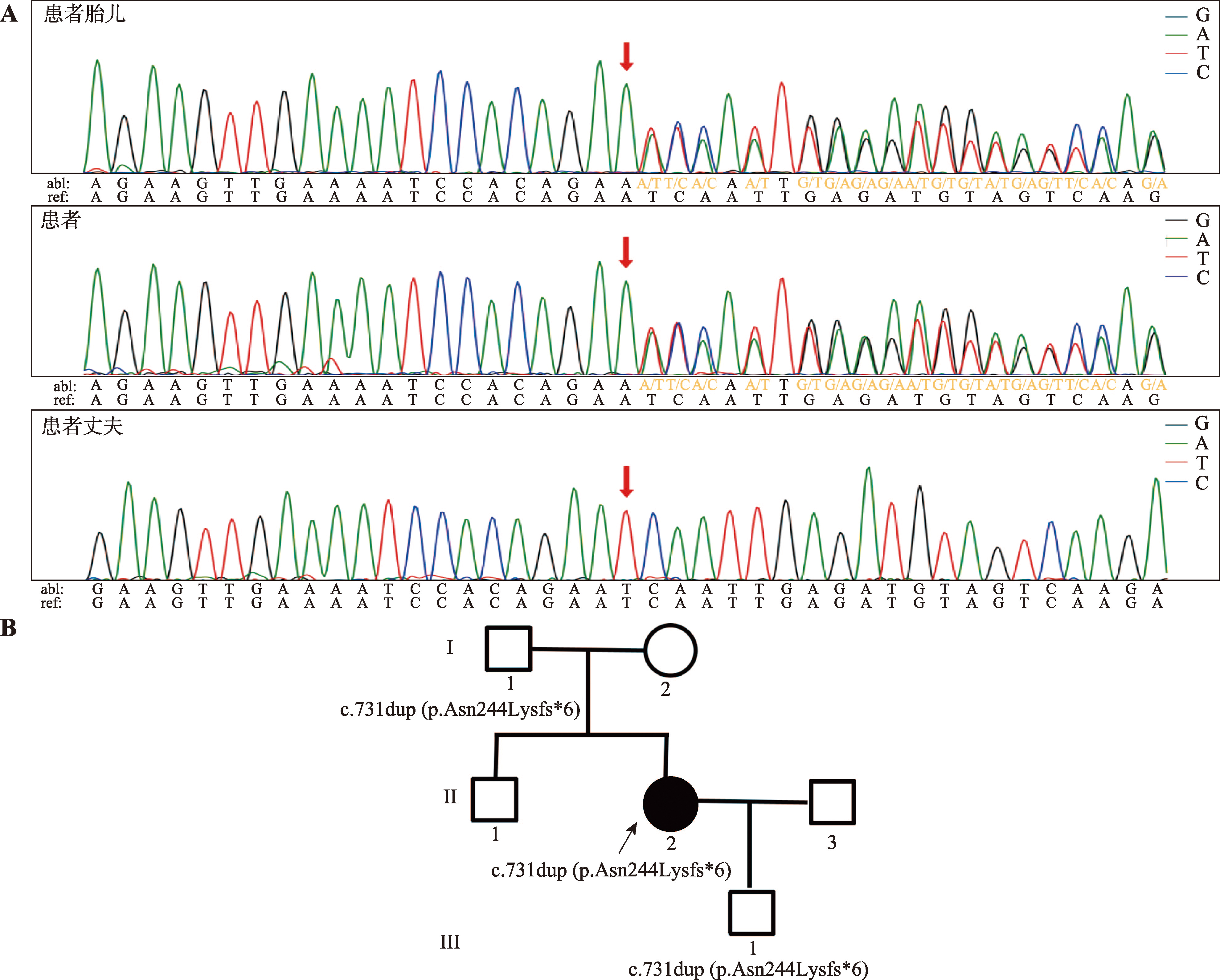
Fig. 9
Validation results of the SGCE gene locus"
| [1] | Wang H, Hou C, Tang P, Li R. A family report of myoclonus-dystonia caused by epsilon-sarcoglycan gene mutation. Chinese Journal of Neurology, 2021, 54(8): 788-793. |
| 王红, 侯辰, 唐鹏, 李锐. SGCE基因突变致肌阵挛-肌张力障碍一家系. 中华神经科杂志, 2021, 54(8): 788-793. | |
| [2] | Tian XJ, Ding CH. Clinical and genetic research progress of myoclonic dystonia syndrome. Chinese Journal of Practical Pediatrics, 2021, 36(7): 545-550. |
| 田小娟, 丁昌红. 肌阵挛肌张力障碍综合征临床及遗传学研究进展. 中国实用儿科杂志, 2021, 36(7): 545-550. | |
| [3] |
Tarrano C, Worbe Y. Developmental variability in paediatric SGCE-related myoclonus dystonia syndrome. Dev Med Child Neurol, 2025, 67(6): 695-696.
pmid: 39826107 |
| [4] |
Delgado-Alvarado M, Matilla-Dueñas A, Altadill-Bermejo A, Setién S, Misiego-Peral M, Sánchez-de la Torre JR, Corral-Juan M, Riancho J. A novel SGCE variant is associated with myoclonus-dystonia with phenotypic variability. Neurol Sci, 2020, 41(12): 3779-3781.
pmid: 32955639 |
| [5] |
Azuma K, Horisawa S, Mashimo H, Fukuda M, Kumada S, Kawamata T, Taira T, Akagawa H. Loss-of-function mutations in SGCE found in Japanese patients with myoclonus-dystonia. Clin Genet, 2023, 103(2): 209-213.
pmid: 36161439 |
| [6] |
de Leon MAJ, Rosales RL, Klein C, Westenberger A. A mixed-ethnicity myoclonus-dystonia patient with a novel SGCE nonsense mutation: a case report. BMC Neurol, 2022, 22(1): 11.
pmid: 34986800 |
| [7] |
Roze E, Lang AE, Vidailhet M. Myoclonus-dystonia: classification, phenomenology, pathogenesis, and treatment. Curr Opin Neurol, 2018, 31(4): 484-490.
pmid: 29952836 |
| [8] |
Grütz K, Seibler P, Weissbach A, Lohmann K, Carlisle FA, Blake DJ, Westenberger A, Klein C, Grünewald A. Faithful SGCE imprinting in iPSC-derived cortical neurons: an endogenous cellular model of myoclonus- dystonia. Sci Rep, 2017, 7: 41156.
pmid: 28155872 |
| [9] | Shi DL, Zhang C, Xu F, Tang QC, Yin SM, Wang L. Clinical characteristics and molecular genetic analysis of a myoclonus-dystonia syndrome family. Chinese Journal of Neurology, 2019, 52(1): 19-25. |
| 施丹莉, 张琛, 徐芳, 唐取春, 尹世敏, 王磊. 肌阵挛-肌张力障碍综合征一家系的临床特点及分子遗传学分析. 中华神经科杂志, 2019, 52(1): 19-25. | |
| [10] | Mou CH, Wang JW, Zhou YJ, Wang YY, He YZ, Wang CJ, Yao RE. Clinical features and genetic analysis of SGCE myoclonic-dystonia in 1 case with the age of onset at 1.5 years old. Journal of Clinical Pediatrics, 2020, 38(9): 700-703. |
| 牟常华, 王纪文, 周昀箐, 王英燕, 贺影忠, 王翠锦, 姚如恩. 1岁半起病的SGCE肌阵挛-肌张力障碍1例临床特征和基因分析. 临床儿科杂志, 2020, 38(9): 700-703. | |
| [11] |
Mencacci NE, Rubio-Agusti I, Zdebik A, Asmus F, Ludtmann MHR, Ryten M, Plagnol V, Hauser AK, Bandres-Ciga S, Bettencourt C, Forabosco P, Hughes D, Soutar MMP, Peall K, Morris HR, Trabzuni D, Tekman M, Stanescu HC, Kleta R, Carecchio M, Zorzi G, Nardocci N, Garavaglia B, Lohmann E, Weissbach A, Klein C, Hardy J, Pittman AM, Foltynie T, Abramov AY, Gasser T, Bhatia KP, Wood NW. A missense mutation in KCTD17 causes autosomal dominant myoclonus-dystonia. Am J Hum Genet, 2015, 96(6): 938-947.
pmid: 25983243 |
| [12] |
Groen JL, Andrade A, Ritz K, Jalalzadeh H, Haagmans M, Bradley TEJ, Jongejan A, Verbeek DS, Nürnberg P, Denome S, Hennekam RCM, Lipscombe D, Baas F, Tijssen MAJ. CACNA1B mutation is linked to unique myoclonus-dystonia syndrome. Hum Mol Genet, 2015, 24(4): 987-993.
pmid: 25296916 |
| [13] |
Wu Q, Jiang YY, Lu JJ, Zhang Y. Clinical features and genetic analysis of SGCE myoclonus-dystonia: a case report. Parkinsonism Relat Disord, 2022, 104: 91-93.
pmid: 36274329 |
| [14] |
Ettinger AJ, Feng G, Sanes JR. Epsilon-Sarcoglycan, a broadly expressed homologue of the gene mutated in limb-girdle muscular dystrophy 2D. J Biol Chem, 1997, 272(51): 32534-32538.
pmid: 9405466 |
| [15] |
Li ZZ, Abram L, Cruz-Santos M, Petter O, Peall KJ. Transcriptomic disruption and hypoactivity in DYT-SGCE medial ganglionic eminence-patterned inhibitory neurons. Brain, 2026, 149(1): 209-225.
pmid: 40711998 |
| [16] |
Hicks MA, Ebrahim S, Gonik B. Prenatal lethal diagnosis of 8p23.1 duplication syndrome associated with omphalocele and encephalocele. Case Rep Genet, 2023, 2023: 5958223.
pmid: 36879850 |
| [17] |
Barber JCK, Rosenfeld JA, Graham JM, Kramer N, Lachlan KL, Bateman MS, Collinson MN, Stadheim BF, Turner CLS, Gauthier JN, Reimschisel TE, Qureshi AM, Dabir TA, Humphreys MW, Marble M, Huang T, Beal SJ, Massiah J, Taylor EJ, Wynn SL. Inside the 8p23.1 duplication syndrome; eight microduplications of likely or uncertain clinical significance. Am J Med Genet A, 2015, 167A(9): 2052-2064.
pmid: 26097203 |
| [18] |
Weber A, Köhler A, Hahn A, Müller U. 8p23.1 duplication syndrome: narrowing of critical interval to 1.80 Mbp. Mol Cytogenet, 2014, 7(1): 94.
pmid: 25520754 |
| [19] |
Klinman E, Gooch C, Perlmutter JS, Davis AA, Maiti B. Novel SGCE mutation in a patient with myoclonus- dystonia: a case report. Neurol Genet, 2024, 10(2): e200128.
pmid: 38486676 |
| [20] | Wu Y, Feng X, Gao L, Jiao BW. Imprinted genes: important regulators in development. Hereditas(Beijing), 2016, 38(6): 508-522. |
| 吴瑜, 冯旭, 高岚, 焦保卫. 印记基因:发育中的重要调节因子. 遗传, 2016, 38(6): 508-522. |
| [1] | Zuming Zhang, Hao Zhou, Xuezhi Huang, Duoyue Zhang, Jiayi Zhang, Yu Lin, Liwei Fang, Xiuchang Zhang, Yujun Cui, Yarong Wu, Yanjun Li. Study on population genomics of Bacillus anthracis based on multiple types of genetic variations [J]. Hereditas(Beijing), 2025, 47(6): 681-693. |
| [2] | Liang Jin, Yujie Chen, Yongjun Chen. Advances in genetic etiology, diagnosis and treatment of developmental and epileptic encephalopathy [J]. Hereditas(Beijing), 2023, 45(7): 553-567. |
| [3] | Ke Mao, Ziqiu Meng, Yongbiao Zhang. Progress on the regulation of neural crest and the genetics in craniofacial development [J]. Hereditas(Beijing), 2022, 44(12): 1089-1102. |
| [4] | Dandan Wu, Rong Li, Xiaonan Li, Qianqi Liu, Lihua Dou. Diagnosis and genetic analysis of a case with mandibuloacral dysplasia type B due to compound heterozygous mutations of the ZMPSTE24 gene [J]. Hereditas(Beijing), 2022, 44(12): 1167-1174. |
| [5] | Yanting Shen, Yan Ling, Zhiqiang Lu, Xiaomu Li, Hua Bian, Hongmei Yan, Mingfeng Xia, Xinxia Chang, Jingjing Jiang, Jing Zhang, Xin Gao. Diagnosis and genetic analysis of a case with Bardet-Biedl syndrome caused by compound heterozygous mutations in the BBS12 gene [J]. Hereditas(Beijing), 2022, 44(10): 975-982. |
| [6] | Hengxing Ba, Pengfei Hu, Chunyi Li. Progress on deer genome research [J]. Hereditas(Beijing), 2021, 43(4): 308-322. |
| [7] | Cuicui Wang,Huijun Yuan. Application and progress of high-throughput sequencing technologies in the research of hereditary hearing loss [J]. Hereditas(Beijing), 2017, 39(3): 208-219. |
| [8] | Fei Chang, Wenchao Zou, Fangluan Gao, Jianguo Shen, Jiasui Zhan. Comparative analysis of population genetic structure of Potato virus Y from different hosts [J]. HEREDITAS(Beijing), 2015, 37(3): 292-301. |
| [9] | Jing Jiang, Qian Qian, Bojun Ma, Zhenyu Gao. Epigenetic variation and its application in crop improvement [J]. HEREDITAS(Beijing), 2014, 36(5): 469-475. |
| [10] | WU Zhi-Jun, JIN Wei, ZHANG Feng-Ru, LIU Yan. Recent advances in natriuretic peptide family genes and cardiovas-cular diseases [J]. HEREDITAS, 2012, 34(2): 127-133. |
| [11] | WANG Yan, XIE Hui, CHEN Li-Ping. Progress in research on plant graft-induced genetic variation [J]. HEREDITAS, 2011, 33(6): 585-590. |
| [12] | LI Yang-Hui, YUAN Cui-Beng, ZHANG Chen, LI Wei, NA Hai-Xiang, CHANG Ru-Tian, QIU Li-Juan. Genetic variation of SNP loci based on candidate gene for resistance to soybean cyst nematode [J]. HEREDITAS, 2009, 31(12): 1259-1264. |
| [13] | XU Ying-Jie, WANG Lv-Ya. Research progress on the association between genetic variations in lipid metabolism and premature coronary artery disease [J]. HEREDITAS, 2008, 30(6): 671-676. |
| [14] | WANG Chang-Zhong, LIANG Hong-Wei, ZOU Gui-Wei, LUO Xiang-Zhong, LI Zhong, TIAN Hua, HU Guang-Fu. Genetic variation analysis of two silver carp populations in the middle and upper Yangtze River by microsatellite [J]. HEREDITAS, 2008, 30(10): 1341-1348. |
| [15] | WU Sheng-Long, BAO Wen-Bin, JU Hui-Ping, ZHU Guo-Qiang, LI Bi-Chun, CHEN Guo-Hong. Analysis of genetic variations at M857 locus of the a1-Fucosy- trans-ferase (FUT1) ORF in pigs [J]. HEREDITAS, 2007, 29(9): 1071-1071―1076. |
| Viewed | ||||||
|
Full text |
|
|||||
|
Abstract |
|
|||||

