Hereditas(Beijing) ›› 2026, Vol. 48 ›› Issue (2): 128-141.doi: 10.16288/j.yczz.25-076
• Review • Previous Articles Next Articles
Advances in site-specific knock-in techniques for gene editing
Zihao Wang( ), Zhaoqing Yang()
- Institute of Medical Biology, Chinese Academy of Medical Sciences & Peking Union Medical College, Kunming 650118, China
-
Received:2025-04-22Revised:2025-06-20Online:2026-07-01Published:2025-07-01 -
Contact:Zhaoqing Yang E-mail:zihaowang_bio@163.com;zyang@imbcams.com.cn -
Supported by:CAMS Innovation Fund for Medical Sciences (CIFMS)(2021-I2M-1-024);Innovative Vaccine Vectors and Innovative Vaccine Development(202405AB350002);Yunnan Provincial Special Project for Cultivation of High-Level Health Technology Talents(L-2018003)

Cite this article
Zihao Wang, Zhaoqing Yang. Advances in site-specific knock-in techniques for gene editing[J]. Hereditas(Beijing), 2026, 48(2): 128-141.
share this article
Add to citation manager EndNote|Reference Manager|ProCite|BibTeX|RefWorks
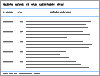
Table 1
Comparison of commonly used gene knock-in tools"
| 类别 | 常用工具 | 机制 | 优点 | 缺点 | 应用场景 | 随机/定点 |
|---|---|---|---|---|---|---|
| 转座酶 | piggyBac、 sleeping beauty | 通过“剪切-粘贴”机制敲入DNA | 1. 可敲入大片段DNA; 2. 可在多种细胞类型中高效整合到基因组 | 1. 敲入位点的随机性可能导致基因突变; 2. 可能导致敲入多个拷贝,增加基因组的不稳定性 | 适合大规模基因敲入 | 随机 |
| 逆转录病毒 | γ-逆转录病毒 | 以RNA为模板,通过逆转录酶合成DNA后整合到宿主基因组 | 1. 高效感染分裂细胞; 2. 携带较大片段DNA; 3. 稳定整合到宿主基因组 | 1. 敲入位点的随机性可能导致基因突变; 2. 安全性问题,具有遗传毒性和免疫原性; 3.倾向于整合附近的转录单位 | 适合分裂细胞的基因传递 | |
| 慢病毒载体 | 基于HIV的病毒载体 | 1. 可感染分裂和非分裂细胞; 2. 携带较大片段DNA; 3. 长期稳定表达 | 适合分裂和非分裂细胞,应用广泛 | |||
| 重组酶 | Cre-lox、Flp-FRT、Bxb1 | 通过识别特定DNA序列并催化DNA断裂和链交换及重接 | 高度特异性,可精确敲入目标位点 | 需要特定的识别序列,要预先敲入识别位点 | 适合精确敲入,但需要预先设计 | 半随机 |
| 核酸酶 | ZFN、TALEN和CRISPR/Cas9 | 通过切割DNA形成DSB,诱导修复机制 | 高特异性切割DNA,可用于精确基因编辑 | 1. 可能产生非特异性DNA断裂,导致细胞死亡或基因组不稳定; 2. 引导RNA需要精确地设计和优化以避免脱靶效应 | 适合精确基因编辑 | 定点 |
| PE | 单链切口修复,不形成DSB | 1. 可实现单碱基替换、小片段敲入和删除; 2. 不依赖DSB,减少基因组不稳定性 | 1. 仅能实现小片段的敲入和缺失,不容易进行多核苷酸的操作; 2. 可能产生脱靶效应 |
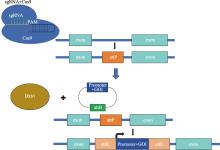
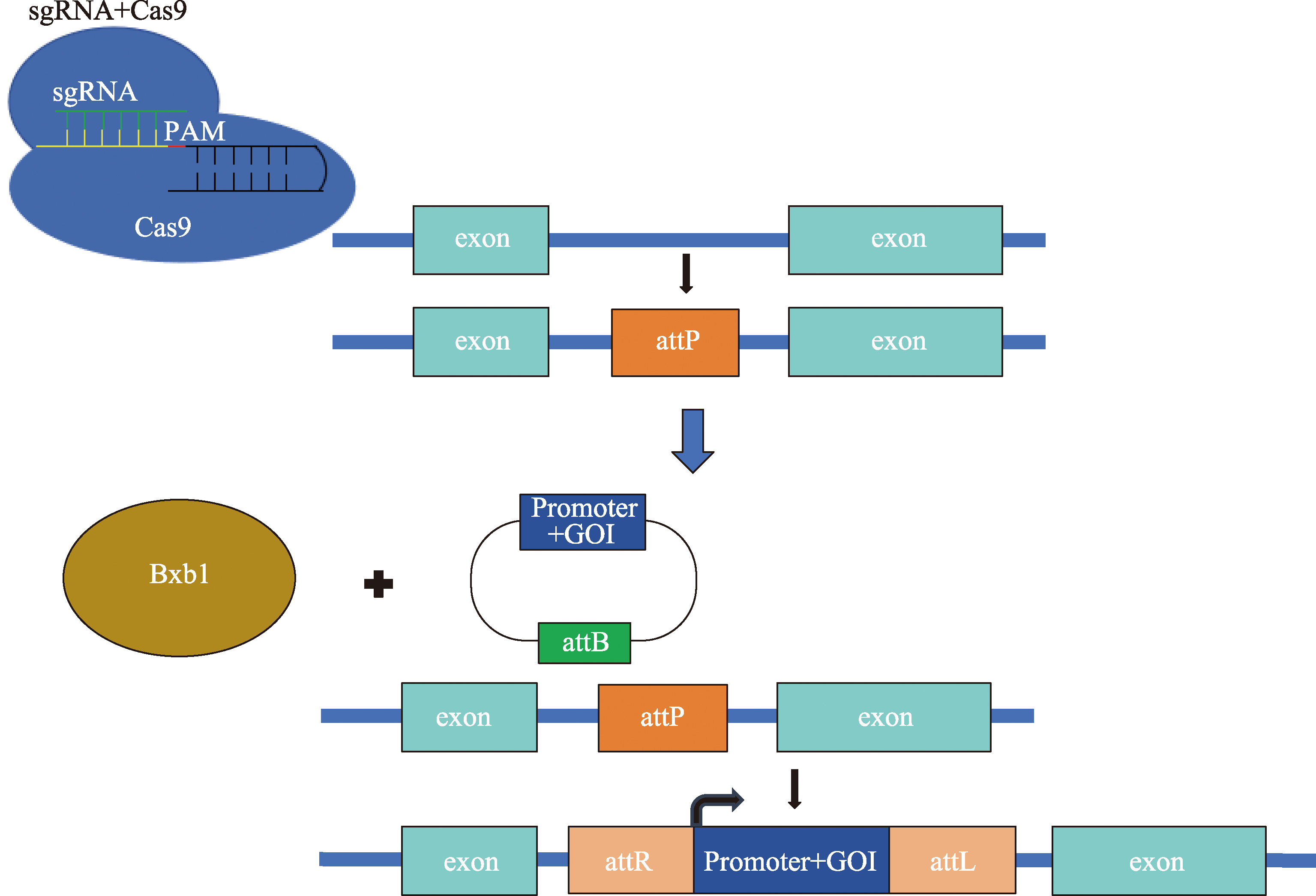
Fig. 1
Schematic diagram of the Cas9-Bxb1 integrase systemworking mechanism"
| [1] |
Montoliu L. Transgenesis and genome engineering: a historical review. Methods Mol Biol, 2023, 2631: 1-32.
pmid: 36995662 |
| [2] |
Laboulaye MA, Duan X, Qiao M, Whitney IE, Sanes JR. Mapping transgene insertion sites reveals complex interactions between mouse transgenes and neighboring endogenous genes. Front Mol Neurosci, 2018, 11: 385.
pmid: 30405348 |
| [3] |
Goodwin LO, Splinter E, Davis TL, Urban R, He H, Braun RE, Chesler EJ, Kumar V, van Min M, Ndukum J, Philip VM, Reinholdt LG, Svenson K, White JK, Sasner M, Lutz C, Murray SA. Large-scale discovery of mouse transgenic integration sites reveals frequent structural variation and insertional mutagenesis. Genome Res, 2019, 29(3): 494-505.
pmid: 30659012 |
| [4] |
Chaudhari N, Rickard AM, Roy S, Dröge P, Makhija H. A non-viral genome editing platform for site-specific insertion of large transgenes. Stem Cell Res Ther, 2020, 11(1): 380.
pmid: 32883366 |
| [5] |
Beschorner N, Künzle P, Voges M, Hauber I, Indenbirken D, Nakel J, Virdi S, Bradtke P, Lory NC, Rothe M, Paszkowski-Rogacz M, Buchholz F, Grundhoff A, Schambach A, Thirion C, Mittrücker HW,Schulze Zur Wiesch J, Hauber J, Chemnitz J. Preclinical toxicity analyses of lentiviral vectors expressing the HIV-1 LTR-specific designer-recombinase Brec1. PLoS One, 2020, 19(3): e0298542.
pmid: 38457474 |
| [6] |
Shirley JL, de Jong YP, Terhorst C, Herzog RW. Immune responses to viral gene therapy vectors. Mol Ther, 2020, 28(3): 709-722.
pmid: 31968213 |
| [7] |
Nefedova L, Kim A. Mechanisms of LTR-retroelement transposition: lessons from drosophila melanogaster. Viruses, 2017, 9(4): 81.
pmid: 28420154 |
| [8] |
Tipanee J, Samara-Kuko E, Gevaert T, Chuah MK, VandenDriessche T. Universal allogeneic CAR T cells engineered with sleeping beauty transposons and CRISPR-CAS9 for cancer immunotherapy. Mol Ther, 2022, 30(10): 3155-3175.
pmid: 35711141 |
| [9] |
Colonna Romano N, Fanti L. Transposable elements: major players in shaping genomic and evolutionary patterns. Cells, 2022, 11(6): 1048.
pmid: 35326499 |
| [10] |
Riehl K, Riccio C, Miska EA, Hemberg M. TransposonUltimate: software for transposon classification, annotation and detection. Nucleic Acids Res, 2022, 50(11): e64.
pmid: 35234904 |
| [11] |
Anzalone AV, Gao XD, Podracky CJ, Nelson AT, Koblan LW, Raguram A, Levy JM, Mercer JAM, Liu DR. Programmable deletion, replacement, integration and inversion of large DNA sequences with twin prime editing. Nat Biotechnol, 2022, 40(5): 731-740.
pmid: 34887556 |
| [12] |
Yarnall MTN, Ioannidi EI, Schmitt-Ulms C, Krajeski RN, Lim J, Villiger L, Zhou WY, Jiang KY, Garushyants SK, Roberts N, Zhang LY, Vakulskas CA, Walker JA, Kadina AP, Zepeda AE, Holden K, Ma H, Xie J, Gao GP, Foquet L, Bial G, Donnelly SK, Miyata Y, Radiloff DR, Henderson JM, Ujita A, Abudayyeh OO, Gootenberg JS. Drag-and- drop genome insertion of large sequences without double-strand DNA cleavage using CRISPR-directed integrases. Nat Biotechnol, 2023, 41(4): 500-512.
pmid: 36424489 |
| [13] |
Amiri S, Adibzadeh S, Ghanbari S, Rahmani B, Kheirandish MH, Farokhi-Fard A, Dastjerdeh MS, Davami F. CRISPR-interceded CHO cell line development approaches. Biotechnol Bioeng, 2023, 120(4): 865-902.
pmid: 36597180 |
| [14] |
Ray DA, Belancio VP. Editorial for the special issue on Mobile DNA 2019: 25 years of discussion and research. Anal Biochem, 2020, 606: 113888.
pmid: 32730813 |
| [15] |
Stark WM. The serine recombinases. Microbiol Spectr, 2014, 2(6). doi: 10.1128/microbiolspec.MDNA3-0046-2014.
pmid: 26104451 |
| [16] |
Jayaram M, Ma CH, Kachroo AH, Rowley PA, Guga P, Fan HF, Voziyanov Y. An overview of tyrosine site- specific recombination: from an flp perspective. Microbiol Spectr, 2015, 3(4). doi: 10.1128/microbiolspec.MDNA3-0021-2014.
pmid: 26350308 |
| [17] |
Durrant MG, Fanton A, Tycko J, Hinks M, Chandrasekaran SS, Perry NT, Schaepe J, Du PP, Lotfy P, Bassik MC, Bintu L, Bhatt AS, Hsu PD. Systematic discovery of recombinases for efficient integration of large DNA sequences into the human genome. Nat Biotechnol, 2023, 41(4): 488-499.
pmid: 36217031 |
| [18] |
Tian XY, Zhou B. Strategies for site-specific recombination with high efficiency and precise spatiotemporal resolution. J Biol Chem, 2021, 296: 100509.
pmid: 33676891 |
| [19] |
Van Duyne GD. Cre recombinase. Microbiol Spectr, 2015, 3(1): MDNA3-0014-2014.
pmid: 26104563 |
| [20] |
Weasner BM, Zhu JJ, Kumar JP. FLPing genes on and off in drosophila. Methods Mol Biol, 2017, 1642: 195-209.
pmid: 28815502 |
| [21] |
Timerbaev V, Mitiouchkina T, Pushin A, Dolgov S. Production of marker-free apple plants expressing the supersweet protein gene driven by plant promoter. Front Plant Sci, 2019, 10: 388.
pmid: 30984230 |
| [22] |
Ansai S, Kitano J. Speciation and adaptation research meets genome editing. Philos Trans R Soc Lond B Biol Sci, 2022, 377(1855): 20200516.
pmid: 35634923 |
| [23] |
Elias A, Kassis H, Elkader SA, Gritsenko N, Nahmad A, Shir H, Younis L, Shannan A, Aihara H, Prag G, Yagil E, Kolot M. HK022 bacteriophage Integrase mediated RMCE as a potential tool for human gene therapy. Nucleic Acids Res, 2020, 48(22): 12804-12816.
pmid: 33270859 |
| [24] |
Elias A, Spector I, Sogolovsky-Bard I, Gritsenko N, Rask L, Mainbakh Y, Zilberstein Y, Yagil E, Kolot M. Cancer-specific binary expression system activated in mice by bacteriophage HK022 integrase. Sci Rep, 2016, 6: 24971.
pmid: 27117628 |
| [25] |
Thomson JG, Chan R, Smith J, Thilmony R, Yau YY, Wang YJ, Ow DW. The Bxb1 recombination system demonstrates heritable transmission of site-specific excision in Arabidopsis. BMC Biotechnol, 2012, 12: 9.
pmid: 22436504 |
| [26] |
Thomson JG, Ow DW. Site-specific recombination systems for the genetic manipulation of eukaryotic genomes. Genesis, 2006, 44(10): 465-476.
pmid: 16981199 |
| [27] |
Askora A, Kawasaki T, Fujie M, Yamada T. In vitro characterization of the site-specific recombination system based on genus Habenivirus φRSM small serine integrase. Mol Genet Genomics, 2021, 296(3): 551-559.
pmid: 33575837 |
| [28] |
Cody JP, Graham ND, Zhao CZ, Swyers NC, Birchler JA. Site-specific recombinase genome engineering toolkit in maize. Plant Direct, 2020, 4(3): e00209.
pmid: 32166212 |
| [29] |
Ghosh P, Wasil LR, Hatfull GF. Control of phage Bxb1 excision by a novel recombination directionality factor. PLoS Biol, 2006, 4(6): e186.
pmid: 16719562 |
| [30] |
Yang FJ, Chen CN, Chang T, Cheng TW, Chang NC, Kao CY, Lee CC, Huang YC, Hsu JC, Li J, Lu MJ, Chan SP, Wang J. phiC31 integrase for recombination-mediated single-copy insertion and genome manipulation in Caenorhabditis elegans. Genetics, 2022, 220(2): iyab206.
pmid: 34791215 |
| [31] |
Inniss MC, Bandara K, Jusiak B, Lu TK, Weiss R, Wroblewska L, Zhang L. A novel Bxb1 integrase RMCE system for high fidelity site-specific integration of mAb expression cassette in CHO cells. Biotechnol Bioeng, 2017, 114(8): 1837-1846.
pmid: 28186334 |
| [32] |
Mediavilla J, Jain S, Kriakov J, Ford ME, Duda RL, Jacobs WR, Hendrix RW, Hatfull GF. Genome organization and characterization of mycobacteriophage Bxb1. Mol Microbiol, 2000, 38(5): 955-970.
pmid: 11123671 |
| [33] |
Roelle SM, Kamath ND, Matreyek KA. Mammalian genomic manipulation with orthogonal Bxb1 DNA recombinase sites for the functional characterization of protein variants. ACS Synth Biol, 2023, 12(11): 3352-3365.
pmid: 37922210 |
| [34] |
Lemire S, Yehl KM, Lu TK. Phage-based applications in synthetic biology. Annu Rev Virol, 2018, 5(1): 453-476.
pmid: 30001182 |
| [35] |
Li YM, Li RY, Han ZG, Wang HT, Zhou SX, Li YQ, Wang YM, Qi JS, Ow DW. Recombinase-mediated gene stacking in cotton. Plant Physiol, 2022, 188(4): 1852-1865.
pmid: 35088863 |
| [36] |
Huhtinen O, Prince S, Lamminmäki U, Salbo R, Kulmala A. Increased stable integration efficiency in CHO cells through enhanced nuclear localization of Bxb1 serine integrase. BMC Biotechnol, 2024, 24(1): 44.
pmid: 38926833 |
| [37] |
Ghanbari S, Bayat E, Azizi M, Fard-Esfahani P, Modarressi MH, Davami F. Targeted integration in CHO cells using CRIS-PITCh/Bxb1 recombinase-mediated cassette exchange hybrid system. Appl Microbiol Biotechnol, 2023, 107(2-3): 769-783.
pmid: 36536089 |
| [38] |
Olorunniji FJ, Rosser SJ, Stark WM. Site-specific recombinases: molecular machines for the Genetic Revolution. Biochem J, 2016, 473(6): 673-684.
pmid: 26965385 |
| [39] |
Chao G, Travis C, Church G. Measurement of large serine integrase enzymatic characteristics in HEK293 cells reveals variability and influence on downstream reporter expression. FEBS J, 2021, 288(22): 6410-6427.
pmid: 34043859 |
| [40] |
Khlidj Y. What did CRISPR-Cas9 accomplish in its first 10 years? Biochem Med (Zagreb), 2023, 33(3): 030601.
pmid: 37545694 |
| [41] |
Tihanyi B, Nyitray L. Recent advances in CHO cell line development for recombinant protein production. Drug Discov Today Technol, 2020, 38: 25-34.
pmid: 34895638 |
| [42] |
Ahmadi M, Mahboudi F, Akbari Eidgahi MR, Nasr R, Nematpour F, Ahmadi S, Ebadat S, Aghaeepoor M, Davami F. Evaluating the efficiency of phiC31 integrase- mediated monoclonal antibody expression in CHO cells. Biotechnol Prog, 2016, 32(6): 1570-1576.
pmid: 27604579 |
| [43] |
Anzalone AV, Koblan LW, Liu DR. Genome editing with CRISPR-Cas nucleases, base editors, transposases and prime editors. Nat Biotechnol, 2020, 38(7): 824-844.
pmid: 32572269 |
| [44] |
Banerjee S, Roy S. An insight into understanding the coupling between homologous recombination mediated DNA repair and chromatin remodeling mechanisms in plant genome: an update. Cell Cycle, 2021, 20(18): 1760-1784.
pmid: 34437813 |
| [45] |
Smirnikhina SA, Anuchina AA, Lavrov AV. Ways of improving precise knock-in by genome-editing technologies. Hum Genet, 2019, 138(1): 1-19.
pmid: 30390160 |
| [46] |
Roth TL, Li PJ, Blaeschke F, Nies JF, Apathy R, Mowery C, Yu R, Nguyen MLT, Lee Y, Truong A, Hiatt J, Wu D, Nguyen DN, Goodman D, Bluestone JA, Ye CJ, Roybal K, Shifrut E, Marson A. Pooled knockin targeting for genome engineering of cellular immunotherapies. Cell, 2020, 181(3): 728-744.e21.
pmid: 32302591 |
| [47] |
Liu YF, Kong JP, Liu GY, Li ZX, Xiao YB. Precise gene knock-in tools with minimized risk of DSBs: a trend for gene manipulation. Adv Sci (Weinh), 2024, 11(28): e2401797.
pmid: 38728624 |
| [48] | Liu SL, Li HT, Wang YL. CRISPR Gene Editing Technology. Beijing: Chemical Industry Press, 2021, 12-24. |
| 刘世利, 李海涛, 王艳丽. CRISPR基因编辑技术. 北京: 化学工业出版社, 2021, 12-24. | |
| [49] |
Gaj T, Gersbach CA, Barbas CF. ZFN, TALEN, and CRISPR/Cas-based methods for genome engineering. Trends Biotechnol, 2013, 31(7): 397-405.
pmid: 23664777 |
| [50] |
Pourtabatabaei S, Ghanbari S, Damavandi N, Bayat E, Raigani M, Zeinali S, Davami F. Targeted integration into pseudo attP sites of CHO cells using CRISPR/Cas9. J Biotechnol, 2021, 337: 1-7.
pmid: 34157351 |
| [51] |
Sergeeva D, Lee GM, Nielsen LK, Grav LM. Multicopy Targeted integration for accelerated development of high-producing chinese hamster ovary cells. ACS Synth Biol, 2020, 9(9): 2546-2561.
pmid: 32835482 |
| [52] |
Huang ZP, Habib A, Zhao GP, Ding XM. CRISPR-Cas9 mediated stable expression of exogenous proteins in the CHO cell line through site-specific integration. Int J Mol Sci, 2023, 24(23): 16767.
pmid: 38069090 |
| [53] |
Javaid D, Ganie SY, Hajam YA, Reshi MS. CRISPR/Cas9 system: a reliable and facile genome editing tool in modern biology. Mol Biol Rep, 2022, 49(12): 12133-12150.
pmid: 36030476 |
| [54] |
Frangoul H, Altshuler D, Cappellini MD, Chen YS, Domm J, Eustace BK, Foell J, de la Fuente J, Grupp S, Handgretinger R, Ho TW, Kattamis A, Kernytsky A, Lekstrom-Himes J, Li AM, Locatelli F, Mapara MY, de Montalembert M, Rondelli D, Sharma A, Sheth S, Soni S, Steinberg MH, Wall D, Yen A, Corbacioglu S. CRISPR-Cas9 gene editing for sickle cell disease and β-thalassemia. N Engl J Med, 2021, 384(3): 252-260.
pmid: 33283989 |
| [55] |
Alkanli SS, Alkanli N, Ay A, Albeniz I. CRISPR/Cas9 mediated therapeutic approach in huntington’s disease. Mol Neurobiol, 2023, 60(3): 1486-1498.
pmid: 36482283 |
| [56] |
Khoshandam M, Soltaninejad H, Hamidieh AA, Hosseinkhani S. CRISPR, CAR-T, and NK: current applications and future perspectives. Genes Dis, 2023, 11(4): 101121.
pmid: 38545126 |
| [57] |
Abe T, Inoue KI, Furuta Y, Kiyonari H. Pronuclear microinjection during S-Phase increases the efficiency of CRISPR-Cas9-assisted knockin of large DNA donors in mouse zygotes. Cell Rep, 2020, 31(7): 107653.
pmid: 32433962 |
| [58] |
Chen XW, Du JJ, Yun SW, Xue CY, Yao Y, Rao SQ. Recent advances in CRISPR-Cas9-based genome insertion technologies. Mol Ther Nucleic Acids, 2024, 35(1): 102138.
pmid: 38379727 |
| [59] |
Leibowitz ML, Papathanasiou S, Doerfler PA, Blaine LJ, Sun LL, Yao Y, Zhang CZ, Weiss MJ, Pellman D. Chromothripsis as an on-target consequence of CRISPR-Cas9 genome editing. Nat Genet, 2021, 53(6): 895-905.
pmid: 33846636 |
| [60] |
Alanis-Lobato G, Zohren J, McCarthy A, Fogarty NME, Kubikova N, Hardman E, Greco M, Wells D, Turner JMA, Niakan KK. Frequent loss of heterozygosity in CRISPR- Cas9-edited early human embryos. Proc Natl Acad Sci USA, 2021, 118(22): e2004832117.
pmid: 34050011 |
| [61] |
Song YN, Liu ZQ, Zhang YX, Chen M, Sui TT, Lai LX, Li ZJ. Large-fragment deletions induced by Cas9 cleavage while not in the BEs system. Mol Ther Nucleic Acids, 2020, 21: 523-526.
pmid: 32711379 |
| [62] |
Nahmad AD, Reuveni E, Goldschmidt E, Tenne T, Liberman M, Horovitz-Fried M, Khosravi R, Kobo H, Reinstein E, Madi A, Ben-David U, Barzel A. Frequent aneuploidy in primary human T cells after CRISPR- Cas9 cleavage. Nat Biotechnol, 2022, 40(12): 1807-1813.
pmid: 35773341 |
| [63] |
Enache OM, Rendo V, Abdusamad M, Lam D, Davison D, Pal S, Currimjee N, Hess J, Pantel S, Nag A, Thorner AR, Doench JG, Vazquez F, Beroukhim R, Golub TR, Ben-David U. Cas9 activates the p53 pathway and selects for p53-inactivating mutations. Nat Genet, 2020, 52(7): 662-668.
pmid: 32424350 |
| [64] |
Matsoukas IG. Commentary: programmable base editing of A·T to G·C in genomic DNA without DNA cleavage. Front Genet, 2018, 9: 21.
pmid: 29469899 |
| [65] |
Komor AC, Kim YB, Packer MS, Zuris JA, Liu DR. Programmable editing of a target base in genomic DNA without double-stranded DNA cleavage. Nature, 2016, 533(7603): 420-424.
pmid: 27096365 |
| [66] |
Anzalone AV, Randolph PB, Davis JR, Sousa AA, Koblan LW, Levy JM, Chen PJ, Wilson C, Newby GA, Raguram A, Liu DR. Search-and-replace genome editing without double-strand breaks or donor DNA. Nature, 2019, 576(7785): 149-157.
pmid: 31634902 |
| [67] |
Richardson C, Kelsh RN, Richardson RJ. New advances in CRISPR/Cas-mediated precise gene-editing techniques. Dis Model Mech, 2023, 16(2): dmm049874.
pmid: 36847161 |
| [68] |
Li C, Georgakopoulou A, Newby GA, Chen PJ, Everette KA, Paschoudi K, Vlachaki E, Gil S, Anderson AK, Koob T, Huang LS, Wang HJ, Kiem HP, Liu DR, Yannaki E, Lieber A. In vivo HSC prime editing rescues sickle cell disease in a mouse model. Blood, 2023, 141(17): 2085-2099.
pmid: 36800642 |
| [69] |
Happi Mbakam C, Lamothe G, Tremblay G, Tremblay JP. CRISPR-Cas9 gene therapy for duchenne muscular dystrophy. Neurotherapeutics, 2022, 19(3): 931-941.
pmid: 35165856 |
| [70] |
Bulcaen M, Kortleven P, Liu RB, Maule G, Dreano E, Kelly M, Ensinck MM, Thierie S, Smits M, Ciciani M, Hatton A, Chevalier B, Ramalho AS, Casadevall I Solvas X, Debyser Z, Vermeulen F, Gijsbers R, Sermet-Gaudelus I, Cereseto A, Carlon MS. Prime editing functionnally corrects cystic fibrosis-causing CFTR mutations in human organoids and airway epithelial cells. Cell Rep Med, 2024, 5(5): 101544.
pmid: 38697102 |
| [71] |
Sen D, Sarkar S, Mukhopadhyay P. Prime editing: an emerging tool in cancer treatment. Mol Biotechnol, 2023, 65(4): 509-520.
pmid: 36251123 |
| [72] |
Shrestha D, Bag A, Wu RQ, Zhang YT, Tang X, Qi Q, Xing JC, Cheng Y. Genomics and epigenetics guided identification of tissue-specific genomic safe harbors. Genome Biol, 2022, 23(1): 199.
pmid: 36131352 |
| [73] |
Papapetrou EP, Schambach A. Gene insertion into genomic safe harbors for human gene therapy. Mol Ther. 2016, 24(4): 678-684.
pmid: 26867951 |
| [74] |
Brady JR, Tan MC, Whittaker CA, Colant NA, Dalvie NC, Love KR, Love JC. Identifying improved sites for heterologous gene integration using ATAC-seq. ACS Synth Biol, 2020, 9(9): 2515-2524.
pmid: 32786350 |
| [75] |
Shin S, Kim SH, Shin SW, Grav LM, Pedersen LE, Lee JS, Lee GM. Comprehensive analysis of genomic safe harbors as target sites for stable expression of the heterologous gene in HEK293 cells. ACS Synth Biol, 2020, 9(6): 1263-1269.
pmid: 32470292 |
| [76] |
Hilliard W, Lee KH. Systematic identification of safe harbor regions in the CHO genome through a comprehensive epigenome analysis. Biotechnol Bioeng, 2021, 118(2): 659-675.
pmid: 33049068 |
| [77] |
Gu B, Posfai E, Rossant J. Efficient generation of targeted large insertions by microinjection into two-cell-stage mouse embryos. Nat Biotechnol, 2018, 36(7): 632-637.
pmid: 29889212 |
| [78] |
Lee JS, Kildegaard HF, Lewis NE, Lee GM. Mitigating clonal variation in recombinant mammalian cell lines. Trends Biotechnol, 2019, 37(9): 931-942.
pmid: 30898338 |
| [79] |
Gurumurthy CB, Lloyd KCK. Generating mouse models for biomedical research: technological advances. Dis Model Mech, 2019, 12(1): dmm029462.
pmid: 30626588 |
| [80] |
Miyata Y, Tokumoto S, Arai T, Shaikhutdinov N, Deviatiiarov R, Fuse H, Gogoleva N, Garushyants S, Cherkasov A, Ryabova A, Gazizova G, Cornette R, Shagimardanova E, Gusev O, Kikawada T. Identification of genomic safe harbors in the anhydrobiotic cell line, Pv11. Genes (Basel), 2022, 13(3): 406.
pmid: 35327960 |
| [81] |
Pavani G, Amendola M. Targeted gene delivery: where to land. Front Genome Ed, 2021, 2: 609650.
pmid: 34713234 |
| [82] |
Fellmann C, Gowen BG, Lin PC, Doudna JA, Corn JE. Cornerstones of CRISPR-Cas in drug discovery and therapy. Nat Rev Drug Discov, 2017, 16(2): 89-100.
pmid: 28008168 |
| [83] |
Aznauryan E, Yermanos A, Kinzina E, Devaux A, Kapetanovic E, Milanova D, Church GM, Reddy ST. Discovery and validation of human genomic safe harbor sites for gene and cell therapies. Cell Rep Methods, 2022, 2(1): 100154.
pmid: 35474867 |
| [84] |
Brosh R, Laurent JM, Ordoñez R, Huang E, Hogan MS, Hitchcock AM, Mitchell LA, Pinglay S, Cadley JA, Luther RD, Truong DM, Boeke JD, Maurano MT. A versatile platform for locus-scale genome rewriting and verification. Proc Natl Acad Sci USA, 2021, 118(10): e2023952118.
pmid: 33649239 |
| [85] |
Park JU, Tsai AWL, Chen TH, Peters JE, Kellogg EH. Mechanistic details of CRISPR-associated transposon recruitment and integration revealed by cryo-EM. Proc Natl Acad Sci USA, 2022, 119(32): e2202590119.
pmid: 35914146 |
| [86] |
Strecker J, Ladha A, Gardner Z, Schmid-Burgk JL, Makarova KS, Koonin EV, Zhang F. RNA-guided DNA insertion with CRISPR-associated transposases. Science, 2019, 365(6448): 48-53.
pmid: 31171706 |
| [87] |
Vo PLH, Ronda C, Klompe SE, Chen EE, Acree C, Wang HH, Sternberg SH. CRISPR RNA-guided integrases for high-efficiency, multiplexed bacterial genome engineering. Nat Biotechnol, 2021, 39(4): 480-489.
pmid: 33230293 |
| [88] |
Blanch-Asensio A, Grandela C, Brandão KO, de Korte T, Mei HL, Ariyurek Y, Yiangou L, Mol MPH, van Meer BJ, Kloet SL, Mummery CL, Davis RP. STRAIGHT-IN enables high-throughput targeting of large DNA payloads in human pluripotent stem cells. Cell Rep Methods, 2022, 2(10): 100300.
pmid: 36313798 |
| [89] |
Low BE, Hosur V, Lesbirel S, Wiles MV. Efficient targeted transgenesis of large donor DNA into multiple mouse genetic backgrounds using bacteriophage Bxb1 integrase. Sci Rep, 2022, 12(1): 5424.
pmid: 35361849 |
| [90] |
Merrick CA, Zhao J, Rosser SJ. Serine integrases: advancing synthetic biology. ACS Synth Biol, 2018, 7(2): 299-310.
pmid: 29316791 |
| [91] |
Pandey S, Gao XD, Krasnow NA, McElroy A, Tao YA, Duby JE, Steinbeck BJ, McCreary J, Pierce SE, Tolar J, Meissner TB, Chaikof EL, Osborn MJ, Liu DR. Efficient site-specific integration of large genes in mammalian cells via continuously evolved recombinases and prime editing. Nat Biomed Eng, 2025, 9(1): 22-39.
pmid: 38858586 |
| [92] |
Paine PT, Nguyen A, Ocampo A. Partial cellular reprogramming: A deep dive into an emerging rejuvenation technology. Aging Cell, 2024, 23(2): e14039.
pmid: 38040663 |
| [93] |
Witte IP, Lampe GD, Eitzinger S, Miller SM, Berríos KN, McElroy AN, King RT, Stringham OG, Gelsinger DR, Vo PLH, Chen AT, Tolar J, Osborn MJ, Sternberg SH, Liu DR. Programmable gene insertion in human cells with a laboratory-evolved CRISPR-associated transposase. Science, 2025, 388(6748): eadt5199.
pmid: 40373119 |
| [1] | Shaohui Zheng, Yang Liu, Xinxin Xia, Yanmei Liu. Advances in base editing technology and the construction of precise zebrafish disease models [J]. Hereditas(Beijing), 2026, 48(1): 46-60. |
| [2] | Ma Baoxia, Yang Sen, Lyu Ming, Wang Yuren, Chang Liye, Han Yifan, Wang Jiangang, Guo Yang, Xu Kun. Comparison and optimization of different CRISPR/Cas9 donor-adapting systems for gene editing [J]. Hereditas(Beijing), 2024, 46(6): 466-477. |
| [3] | Yanchun Bao, Lingli Dai, Zaixia Liu, Fengying Ma, Yu Wang, Yongbin Liu, Mingjuan Gu, Risu Na, Wenguang Zhang. Progress on CRISPR/Cas9 system in the genetic improvement of livestock and poultry [J]. Hereditas(Beijing), 2024, 46(3): 219-231. |
| [4] | Bingzheng Wang, Chao Zhang, Jiali Zhang, Jin Sun. Conditional editing of the Drosophila melanogaster genome using single transcripts expressing Cas9 and sgRNA [J]. Hereditas(Beijing), 2023, 45(7): 593-601. |
| [5] | Meizhen Liu, Liren Wang, Yongmei Li, Xueyun Ma, Honghui Han, Dali Li. Generation of genetically modified rat models via the CRISPR/Cas9 technology [J]. Hereditas(Beijing), 2023, 45(1): 78-87. |
| [6] | Xiaojun Zhang, Kun Xu, Juncen Shen, Lu Mu, Hongrun Qian, Jieyu Cui, Baoxia Ma, Zhilong Chen, Zhiying Zhang, Zehui Wei. A CRISPR/Cas9-Gal4BD donor adapting system for enhancing homology-directed repair [J]. Hereditas(Beijing), 2022, 44(8): 708-719. |
| [7] | Chong Zhang, Zixuan Wei, Min Wang, Yaosheng Chen, Zuyong He. Editing MC1R in human melanoma cells by CRISPR/Cas9 and functional analysis [J]. Hereditas(Beijing), 2022, 44(7): 581-590. |
| [8] | Yao Liu, Xianhui Zhou, Shuhong Huang, Xiaolong Wang. Prime editing: a search and replace tool with versatile base changes [J]. Hereditas(Beijing), 2022, 44(11): 993-1008. |
| [9] | Yuting Han, Bowen Xu, Yutong Li, Xinyi Lu, Xizhi Dong, Yuhao Qiu, Qinyun Che, Ruibao Zhu, Li Zheng, Xiaochen Li, Xu Si, Jianquan Ni. The cutting edge of gene regulation approaches in model organism Drosophila [J]. Hereditas(Beijing), 2022, 44(1): 3-14. |
| [10] | Guangwu Yang, Yuan Tian. The F-box gene Ppa promotes lipid storage in Drosophila [J]. Hereditas(Beijing), 2021, 43(6): 615-622. |
| [11] | Dingwei Peng, Ruiqiang Li, Wu Zeng, Min Wang, Xuan Shi, Jianhua Zeng, Xiaohong Liu, Yaoshen Chen, Zuyong He. Editing the cystine knot motif of MSTN enhances muscle development of Liang Guang Small Spotted pigs [J]. Hereditas(Beijing), 2021, 43(3): 261-270. |
| [12] | Na Wang, Zhilian Jia, Qiang Wu. RFX5 regulates gene expression of the Pcdhα cluster [J]. Hereditas(Beijing), 2020, 42(8): 760-774. |
| [13] | Guoling Li, Shanxin Yang, Zhenfang Wu, Xianwei Zhang. Recent developments in enhancing the efficiency of CRISPR/Cas9- mediated knock-in in animals [J]. Hereditas(Beijing), 2020, 42(7): 641-656. |
| [14] | Yingnan Chen, Jing Lu. Application of CRISPR/Cas9 mediated gene editing in trees [J]. Hereditas(Beijing), 2020, 42(7): 657-668. |
| [15] | Ruiying Qin, Pengcheng Wei. Prime editing creates a novel dimension of plant precise genome editing [J]. Hereditas(Beijing), 2020, 42(6): 519-523. |
| Viewed | ||||||
|
Full text |
|
|||||
|
Abstract |
|
|||||

