
遗传 ›› 2024, Vol. 46 ›› Issue (9): 701-715.doi: 10.16288/j.yczz.24-151
鲍艳春1,2( ), 石彩霞1, 张传强3,4, 谷明娟1, 朱琳1, 刘在霞1,2, 周乐1,2, 马凤英1,2, 娜日苏1(), 张文广5()
收稿日期:2024-05-27
修回日期:2024-08-09
出版日期:2024-09-20
发布日期:2024-08-16
通讯作者:
娜日苏,博士,副教授,研究方向:牛羊遗传育种与繁殖。E-mail: narisu@swu.edu.cn;作者简介:鲍艳春,博士研究生,专业方向:动物遗传育种与繁殖。E-mail: byc107054@163.com
基金资助:
Yanchun Bao1,2(), Caixia Shi1, Chuanqiang Zhang3,4, Mingjuan Gu1, Lin Zhu1, Zaixia Liu1,2, Le Zhou1,2, Fengying Ma1,2, Risu Na1(), Wenguang Zhang5()
Received:2024-05-27
Revised:2024-08-09
Published:2024-09-20
Online:2024-08-16
Supported by:摘要:
随着高通量测序技术的迅猛发展,基因组学领域迎来了数据量的爆炸性增长,这对传统生物信息学处理复杂数据模式的能力构成了严峻挑战。在此技术革新的关键时刻,深度学习作为人工智能领域的前沿技术,以其强大的数据解析与模式识别能力,为基因组学研究注入了新的活力。本文聚焦于4种核心深度学习模型——卷积神经网络(convolution neural network,CNN)、循环神经网络(recurrent neural network,RNN)、长短期记忆网络(long short term memory,LSTM)及生成对抗网络(generative adversarial network,GAN),系统阐述了它们的基础原理,重点回顾了这些模型近5年在DNA、RNA和蛋白质研究领域的广泛应用。此外,文章进一步探讨了深度学习在畜禽基因组学中的应用案例,揭示了其在遗传特征解析、疾病预防以及遗传改良等领域的潜在应用价值与面临的挑战。通过深入分析,本文旨在阐述深度学习技术在增强基因组数据分析的准确性和处理能力方面的作用,并构建一个概念性框架,以指导畜禽基因组学研究策略的发展及其在具体场景下的应用,进而推动精准农业和遗传改良技术的发展。
鲍艳春, 石彩霞, 张传强, 谷明娟, 朱琳, 刘在霞, 周乐, 马凤英, 娜日苏, 张文广. 深度学习在基因组学中的研究进展[J]. 遗传, 2024, 46(9): 701-715.
Yanchun Bao, Caixia Shi, Chuanqiang Zhang, Mingjuan Gu, Lin Zhu, Zaixia Liu, Le Zhou, Fengying Ma, Risu Na, Wenguang Zhang. Progress on deep learning in genomics[J]. Hereditas(Beijing), 2024, 46(9): 701-715.
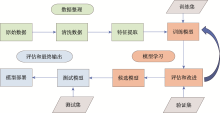
图1
深度学习的工作流程"
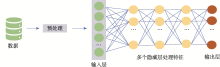
图2
深度学习神经网络"
表1
深度学习在基因组中应用情况"
| 领域 | 应用 | 发表年份 | 名称 | 模型 | 参考文献 |
|---|---|---|---|---|---|
| DNA | 增强子 | 2019 | Enhancer-CRNN | CNN+RNN | [ |
| 2021 | BERT-Enhancer | BERT+CNN | [ | ||
| 2022 | Enhancer-LSTMAtt | LSTM | [ | ||
| 启动子 | 2019 | DeePromoter | CNN+LSTM | [ | |
| 2021 | CNN | [ | |||
| 2022 | iPro-GAN | GAN | [ | ||
| 表观修饰 | 2019 | DeepMod | LSTM+RNN | [ | |
| 2020 | MR-GAN | GAN | [ | ||
| 2022 | EDRNN | EDRNN | [ | ||
| 2023 | RcWGBS | CNN | [ | ||
| 相互作用 | 2019 | EnContact | RNN | [ | |
| 2022 | EPIHC | CNN | [ | ||
| RNA | 选择性剪接 | 2020 | RNN | [ | |
| 2021 | LSTM | [ | |||
| 非编码RNA | 2021 | miTAR | CNN+RNN | [ | |
| 2022 | RLF-LPI | LSTM | [ | ||
| 2023 | CRBSP | LSTM | [ | ||
| 2023 | LSTM | [ | |||
| 2023 | NCYPred | LSTM | [ | ||
| 2023 | LDAF_GAN | GAN | [ | ||
| 2023 | GAMCNMDF | GAN | [ | ||
| 2023 | GAN | [ | |||
| 表达 | 2022 | Multi-LSTM | LSTM | [ | |
| 2022 | T-GEM | CNN | [ | ||
| 2024 | IP3G | GAN | [ | ||
| 蛋白质 | 转录因子 | 2021 | DeepD2V | Bi-LSTM+CNN | [ |
| 2023 | GAN | [ | |||
| 结构 | 2019 | DeepDom | LSTM | [ | |
| 2022 | EMBER2 | CNN | [ | ||
| 2022 | CRNN | RNN | [ | ||
| 功能 | 2021 | Deep_CNN_LSTM_GO | CNN | [ | |
| 2021 | PFP-WGAN | CNN+LSTM | [ | ||
| 2021 | DeepGOPlus | GAN | [ | ||
| DNA结合蛋白 | 2019 | DeepSite | CNN+LSTM | [ | |
| 2022 | DeepA-RBPBS | CNN+BiGRU | [ | ||
| RNA结合蛋白 | 2023 | WVDL | CNN+LSTM+ResNet | [ | |
| 序列 | 2024 | ECPN-HFGF | ResNet | [ |
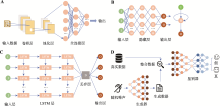
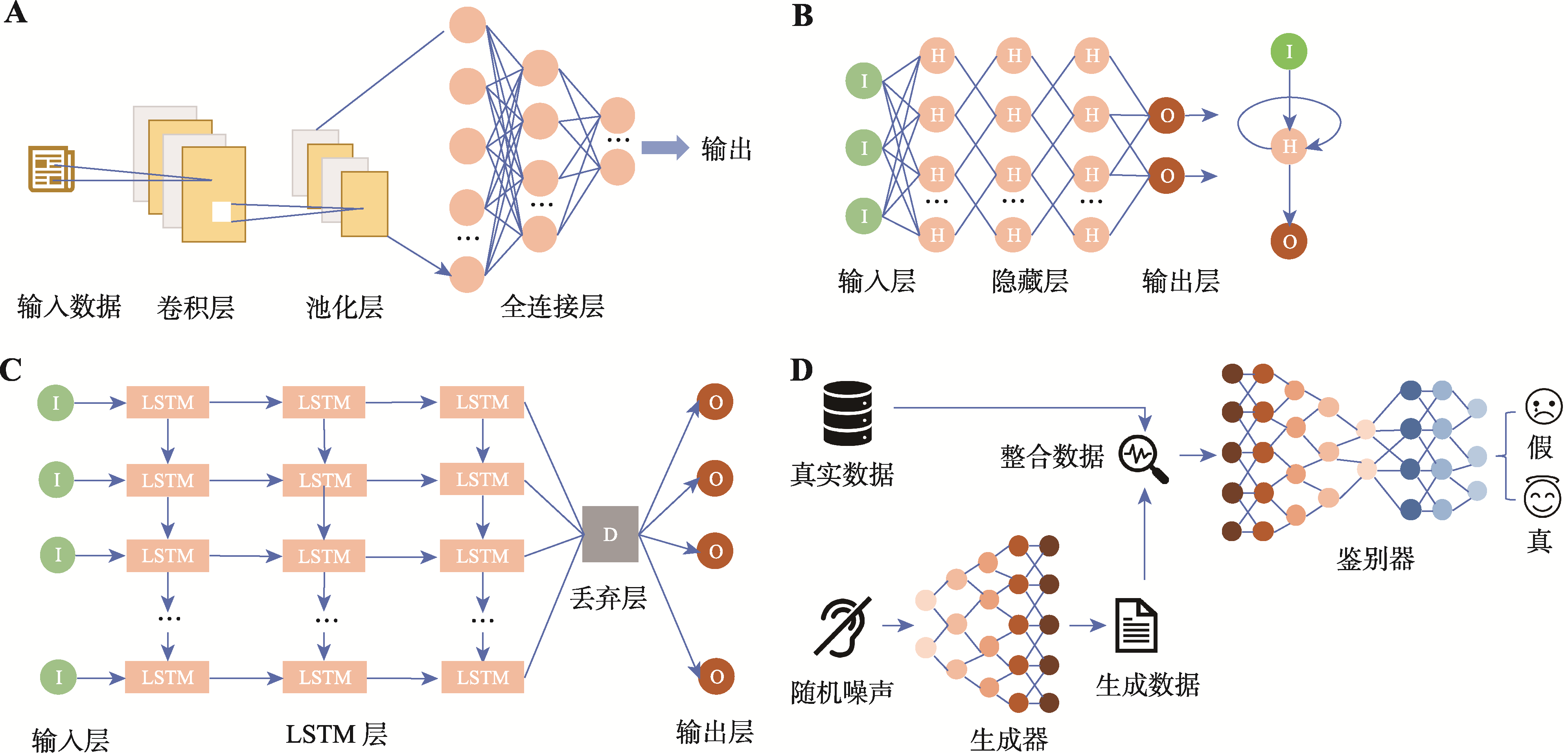
图3
常用的深度学习模型结构 A:CNN模型结构;B:RNN模型结构;C:LSTM模型结构;D:GAN模型结构。"
| [1] |
Noguera-Solano R, Ruiz-Gutierrez R, Rodriguez-Caso JM. Genome: twisting stories with DNA. Endeavour, 2013, 37(4): 213-219.
doi: 10.1016/j.endeavour.2013.05.003 pmid: 24189390 |
| [2] | McKusick VA, Rude FH. A new discipline, a new name, a new journal. Genomics, 1987, 1: 1-2. |
| [3] |
Bazer FW, Spencer TE. Reproductive biology in the era of genomics biology. Theriogenology, 2005, 64(3): 442-456.
pmid: 15946735 |
| [4] |
Hieter P, Boguski M. Functional genomics: it's all how you read it. Science, 1997, 278(5338): 601-602.
pmid: 9381168 |
| [5] |
Oudelaar AM, Higgs DR. The relationship between genome structure and function. Nat Rev Genet, 2021, 22(3): 154-168.
doi: 10.1038/s41576-020-00303-x pmid: 33235358 |
| [6] |
Ozaki K, Ohnishi Y, Iida A, Sekine A, Yamada R, Tsunoda T, Sato H, Sato H, Hori M, Nakamura Y, Tanaka T. Functional SNPs in the lymphotoxin-alpha gene that are associated with susceptibility to myocardial infarction. Nat Genet, 2002, 32(4): 650-654.
doi: 10.1038/ng1047 pmid: 12426569 |
| [7] | Caudai C, Galizia A, Geraci F, Le Pera L, Morea V, Salerno E, Via A, Colombo T. AI applications in functional genomics. Comput Struct Biotechnol J, 2021, 19: 5762-5790. |
| [8] |
Andersson L, Georges M. Domestic-animal genomics: deciphering the genetics of complex traits. Nat Rev Genet, 2004, 5(3): 202-212.
pmid: 14970822 |
| [9] |
Hamernik DL, Lewin HA, Schook LB. Allerton III. beyond livestock genomics. Anim Biotechnol, 2003, 14(1): 77-82.
pmid: 12887181 |
| [10] | Mccarthy J, Minsky ML, Rochester N, Shannon CE. A proposal for the dartmouth summer research project on artificial intelligence. AI Magazine, 2006, 27(4): 12-14. |
| [11] | Lo YC, Ren G, Honda H, Davis KL. Artificial Intelligence-based Drug Design and Discovery. Intech Open, 2019. |
| [12] | Zampieri G, Vijayakumar S, Yaneske E, Angione C. Machine and deep learning meet genome-scale metabolic modeling. PLoS Comput Biol, 2019, 15(7): e1007084. |
| [13] |
Zhang ZQ, Zhao Y, Liao XK, Shi WQ, Li KL, Zou Q, Peng SL. Deep learning in omics: a survey and guideline. Brief Funct Genomics, 2019, 18(1): 41-57.
doi: 10.1093/bfgp/ely030 pmid: 30265280 |
| [14] |
Libbrecht MW, Noble WS. Machine learning applications in genetics and genomics. Nat Rev Genet, 2015, 16(6): 321-332.
doi: 10.1038/nrg3920 pmid: 25948244 |
| [15] | Kang MG, Ko E, Mersha TB. A roadmap for multi-omics data integration using deep learning. Brief Bioinform, 2022, 23(1): bbab454. |
| [16] | Wen B, Zeng WF, Liao YX, Shi ZA, Savage SR, Jiang W, Zhang B. Deep learning in proteomics. Proteomics, 2020, 20(21-22): e1900335. |
| [17] | Yuan HY, Wang ZW, Wang Z, Zhang FY, Guan DW, Zhao R. Trends in forensic microbiology: from classical methods to deep learning. Front Microbiol, 2023, 14: 1163741. |
| [18] | Talukder A, Barham C, Li XM, Hu HY. Interpretation of deep learning in genomics and epigenomics. Brief Bioinform, 2021, 22(3): bbaa177. |
| [19] |
de Ridder D, de Ridder J, Reinders MJ. Pattern recognition in bioinformatics. Brief Bioinform, 2013, 14(5): 633-647.
doi: 10.1093/bib/bbt020 pmid: 23559637 |
| [20] | Gawehn E, Hiss JA, Brown JB, Schneider G. Advancing drug discovery via GPU-based deep learning. Expert Opin Drug Discov, 2018, 13(7): 579-582 |
| [21] | Deng J, Dong W, Socher R, Li LJ, Li K, Li FF. ImageNet: a large-scale hierarchical image database. In: 2009 IEEE Conference on Computer Vision and Pattern Recognition. 2009, 248-255. |
| [22] | Albaradei S, Thafar M, Alsaedi A, Van Neste C, Gojobori T, Essack M, Gao X. Machine learning and deep learning methods that use omics data for metastasis prediction. Comput Struct Biotechnol J, 2021, 19: 5008-5018. |
| [23] | Dac HH, Gonzalez Viejo C, Lipovetzky N, Tongson E, Dunshea FR, Fuentes S. Livestock identification using deep learning for traceability. Sensors (Basel), 2022, 22(21): 8256. |
| [24] | Jung DH, Kim NY, Moon SH, Jhin C, Kim HJ, Yang JS, Kim HS, Lee TS, Lee JY, Park SH. Deep learning-based cattle vocal classification model and real-time livestock monitoring system with noise filtering. Animals (Basel), 2021, 11(2): 357. |
| [25] | Arıkan İ, Ayav T, Seçkin AÇ, Soygazi F. Estrus detection and dairy cow identification with cascade deep learning for augmented reality-ready livestock farming. Sensors (Basel), 2023, 23(24): 9795. |
| [26] | Kim TK, Kim JS, Cho HC. Deep-learning-based gestational sac detection in ultrasound images using modified YOLOv7-E6E model. J Anim Sci Technol, 2023, 65(3): 627-637. |
| [27] | Keshavamurthy R, Dixon S, Pazdernik KT, Charles LE. Predicting infectious disease for biopreparedness and response: a systematic review of machine learning and deep learning approaches. One Health, 2022, 15: 100439. |
| [28] | Nasirahmadi A, Sturm B, Edwards S, Jeppsson KH, Olsson AC, Müller S, Hensel O. Deep learning and machine vision approaches for posture detection of individual pigs. Sensors (Basel), 2019, 19(17): 3738. |
| [29] | Franzo G, Legnardi M, Faustini G, Tucciarone CM, Cecchinato M. When everything becomes bigger: big data for big poultry production. Animals (Basel), 2023, 13(11): 1804. |
| [30] | LeCun Y, Bottou L, Bengio Y, Haffner P. Gradient-based learning applied to document recognition. Proceedings of the IEEE, 1998, 86(11): 2278-2324. |
| [31] | LeCun Y, Bengio Y, Hinton G. Deep learning. Nature, 2015, 521(7553): 436-444. |
| [32] | LeCun Y, Boser B, Denker JS. Backpropagation applied to handwritten zip code recognition. Neural Comput, 1989, 1(4): 541-551. |
| [33] | Le NQK, Ho QT, Nguyen TT, Ou YY. A transformer architecture based on BERT and 2D convolutional neural network to identify DNA enhancers from sequence information. Brief Bioinform, 2021, 22(5): bbab005. |
| [34] | Bhandari N, Khare S, Walambe R, Kotecha K. Comparison of machine learning and deep learning techniques in promoter prediction across diverse species. Peer J Comput Sci, 2021, 7: e365. |
| [35] | Luo XM, Wang YS, Zou Q, Xu L. Recall DNA methylation levels at low coverage sites using a CNN model in WGBS. PLoS Comput Biol, 2023, 19(6): e1011205. |
| [36] | Liu S, Xu XR, Yang ZH, Zhao XH, Liu SC, Zhang W. EPIHC: improving enhancer-promoter interaction prediction by using hybrid features and communicative learning. IEEE/ACM Trans Comput Biol Bioinform, 2022, 19(6): 3435-3443. |
| [37] | Zhang TH, Hasib MM, Chiu YC, Han ZF, Jin YF, Flores M, Chen YD, Huang YF. Transformer for gene expression modeling (T-GEM): an interpretable deep learning model for gene expression-based phenotype predictions. Cancers (Basel), 2022, 14(19): 4763. |
| [38] | Weissenow K, Heinzinger M, Rost B. Protein language-model embeddings for fast, accurate, and alignment-free protein structure prediction. Structure, 2022, 30(8): 1169-1177.e4. |
| [39] |
Kulmanov M, Hoehndorf R. DeepGOPlus: improved protein function prediction from sequence. Bioinformatics, 2021, 37(8): 1187.
doi: 10.1093/bioinformatics/btaa763 pmid: 34009304 |
| [40] | Du ZH, Xiao XD, Uversky VN. DeepA-RBPBS: a hybrid convolution and recurrent neural network combined with attention mechanism for predicting RBP binding site. J Biomol Struct Dyn, 2022, 40(9): 4250-4258. |
| [41] |
Hochreiter S, Schmidhuber J. Long short-term memory. Neural Comput, 1997, 9(8): 1735-1780.
doi: 10.1162/neco.1997.9.8.1735 pmid: 9377276 |
| [42] |
Eraslan G, Avsec Ž, Gagneur J, Theis FJ. Deep learning: new computational modelling techniques for genomics. Nat Rev Genet, 2019, 20(7): 389-403.
doi: 10.1038/s41576-019-0122-6 pmid: 30971806 |
| [43] | Williams RJ, Zipser D. A learning algorithm for continually running fully recurrent neural networks. Neural Comput, 1989, 1(2): 270-280. |
| [44] | Goodfellow I, Bengio Y, Courville A. Deep Learning. MIT Press, 2016. |
| [45] |
Lim A, Lim S, Kim S. Enhancer prediction with histone modification marks using a hybrid neural network model. Methods, 2019, 166: 48-56.
doi: S1046-2023(18)30333-5 pmid: 30905748 |
| [46] | Mahendran N, P M DRV. A deep learning framework with an embedded-based feature selection approach for the early detection of the Alzheimer's disease. Comput Biol Med, 2022, 141: 105056. |
| [47] | Gan MX, Li WR, Jiang R. EnContact: predicting enhancer-enhancer contacts using sequence-based deep learning model. Peer J, 2019, 7: e7657. |
| [48] | Lee D, Zhang J, Liu JS, Gerstein M. Epigenome-based splicing prediction using a recurrent neural network. PLoS Comput Biol, 2020, 16(6): e1008006. |
| [49] |
Gu T, Zhao XW, Barbazuk WB, Lee JH. miTAR: a hybrid deep learning-based approach for predicting miRNA targets. BMC Bioinformatics, 2021, 22(1): 96.
doi: 10.1186/s12859-021-04026-6 pmid: 33639834 |
| [50] | Zhong W, Gu F. Predicting local protein 3D structures using clustering deep recurrent neural network. IEEE/ACM Trans Comput Biol Bioinform, 2022, 19(1): 593-604. |
| [51] | Hou ZL, Yang YN, Li H, Wong KC, Li XT. iDeepSubMito: identification of protein submitochondrial localization with deep learning. Brief Bioinform, 2021, 22(6): bbab288. |
| [52] | Tavakoli N. Modeling genome data using bidirectional LSTM. 2019 IEEE 43rd Annual Computer Software and Applications Conference (COMPSAC), 2019, 2: 183-188. |
| [53] | Huang GH, Luo W, Zhang GY, Zheng PJ, Yao YH, Lyu JY, Liu YW, Wei DQ. Enhancer-LSTMAtt: a Bi-LSTM and attention-based deep learning method for enhancer recognition. Biomolecules, 2022, 12(7): 995. |
| [54] |
Oubounyt M, Louadi Z, Tayara H, Chong KT. DeePromoter: robust promoter predictor using deep learning. Front Genet, 2019, 10: 286.
doi: 10.3389/fgene.2019.00286 pmid: 31024615 |
| [55] |
Liu Q, Fang L, Yu GL, Wang DP, Xiao CL, Wang K. Detection of DNA base modifications by deep recurrent neural network on Oxford Nanopore sequencing data. Nat Commun, 2019, 10(1): 2449.
doi: 10.1038/s41467-019-10168-2 pmid: 31164644 |
| [56] |
Regan K, Saghafi A, Li ZJ. Splice junction identification using long short-term memory neural networks. Curr Genomics, 2021, 22(5): 384-390.
doi: 10.2174/1389202922666211011143008 pmid: 35283668 |
| [57] | Luo MQ, Li SF, Pang YX, Yao LT, Ma RF, Huang HY, Huang HD, Lee TY. Extraction of microRNA-target interaction sentences from biomedical literature by deep learning approach. Brief Bioinform, 2023, 24(1): bbac497. |
| [58] | Lima DS, Amichi LJA, Fernandez MA, Constantino AA, Seixas FAV. NCYPred: a bidirectional LSTM network with attention for Y RNA and short non-coding RNA classification. IEEE/ACM Trans Comput Biol Bioinform, 2023, 20(1): 557-565. |
| [59] | Liu NN, Zhang ZQ, Wu YN, Wang YL, Liang Y. CRBSP: prediction of circRNA-RBP binding sites based on multimodal intermediate fusion. IEEE/ACM Trans Comput Biol Bioinform, 2023, 20(5): 2898-2906. |
| [60] |
Song JM, Tian SW, Yu L, Yang QM, Dai QG, Wang YX, Wu WD, Duan XD. RLF-LPI: an ensemble learning framework using sequence information for predicting lncRNA-protein interaction based on AE-ResLSTM and fuzzy decision. Math Biosci Eng, 2022, 19(5): 4749- 4764.
doi: 10.3934/mbe.2022222 pmid: 35430839 |
| [61] | Zhou Y, Jia E, Shi HJ, Liu ZY, Sheng YQ, Pan M, Tu J, Ge QY, Lu ZH. Prediction of time-series transcriptomic gene expression based on long short-term memory with empirical mode decomposition. Int J Mol Sci, 2022, 23(14): 7532. |
| [62] | Deng L, Wu H, Liu XJ, Liu H. DeepD2V: a novel deep learning-based framework for predicting transcription factor binding sites from combined DNA sequence. Int J Mol Sci, 2021, 22(11): 5521. |
| [63] | Elhaj-Abdou MEM, El-Dib H, El-Helw A, El-Habrouk M. Deep_CNN_LSTM_GO: protein function prediction from amino-acid sequences. Comput Biol Chem, 2021, 95: 107584. |
| [64] |
Jiang YX, Wang DL, Xu D. DeepDom: predicting protein domain boundary from sequence alone using stacked bidirectional LSTM. Pac Symp Biocomput, 2019, 24: 66-75.
pmid: 30864311 |
| [65] | Zhang YQ, Qiao SJ, Ji SJ, Li YZ. DeepSite: bidirectional LSTM and CNN models for predicting DNA-protein binding. Int J Mach Learn Cyb, 2019, 11: 841-851. |
| [66] | Pan ZS, Zhou SS, Liu T, Liu CJ, Zang MJ, Wang QJ. WVDL: weighted voting deep learning model for predicting RNA-protein binding sites. IEEE/ACM Trans Comput Biol Bioinform, 2023, 20(5): 3322-3328. |
| [67] | Yang F, Han QL, Zhao WD, Zhao Y. EC number prediction of protein sequences based on combination of hierarchical and global features. Hereditas(Beijing), 2024, 46(8): 661-670. |
| 杨帆, 韩巧玲, 赵文迪, 赵玥. 基于层级和全局特征结合的蛋白质序列EC编号预测. 遗传, 2024, 46(8): 661-670. | |
| [68] | Li H. Statistical Learning Method (2nd edition). Beijing: Tsinghua University Press, 2019. |
| [69] | Goodfellow I, Pouget-Abadie J, Mirza M, Xu B, Warde-Farley D, Ozair S, Courville A, Bengio Y. Generative adversarial nets. MIT Press, 2014, 2672-2680. |
| [70] |
Lan L, You L, Zhang ZY, Fan ZW, Zhao WL, Zeng NY, Chen YD, Zhou XB. Generative adversarial networks and its applications in biomedical informatics. Front Public Health, 2020, 8: 164.
doi: 10.3389/fpubh.2020.00164 pmid: 32478029 |
| [71] | Qiao HJ, Zhang SL, Xue T, Wang JY, Wang BW. iPro-GAN: a novel model based on generative adversarial learning for identifying promoters and their strength. Comput Methods Programs Biomed, 2022, 215: 106625. |
| [72] | Salekin S, Mostavi M, Chiu YC, Chen YD, Zhang JM, Huang YF. Predicting sites of epitranscriptome modifications using unsupervised representation learning based on generative adversarial networks. Front Phys, 2020, 8: 196. |
| [73] |
Zhong H, Luo J, Tang L, Liao SC, Lu ZH, Lin GL, Murphy RW, Liu L. Association filtering and generative adversarial networks for predicting lncRNA-associated disease. BMC Bioinformatics, 2023, 24(1): 234.
doi: 10.1186/s12859-023-05368-z pmid: 37277721 |
| [74] | Wang SD, Li YY, Zhang YY, Pang SC, Qiao SB, Zhang Y, Wang FY. Generative adversarial matrix completion network based on multi-source data fusion for miRNA-disease associations prediction. Brief Bioinform, 2023, 24(5): bbad270. |
| [75] | González RD, Simões S, Ferreira L, Carvalho ATP. Designing cell delivery peptides and SARS-CoV- 2-targeting small interfering RNAs: a comprehensive bioinformatics study with generative adversarial network-based peptide design and in vitro assays. Mol Pharm, 2023, 20(12): 6079-6089. |
| [76] | Ravaee H, Manshaei MH, Safayani M, Sartakhti JS. Intelligent phenotype-detection and gene expression profile generation with generative adversarial networks. J Theor Biol, 2024, 577: 111636. |
| [77] | Ding NN, Zhang GK, Zhang LP, Shen ZY, Yin LH, Zhou SH, Deng Y. Engineering an AI-based forward-reverse platform for the design of cross-ribosome binding sites of a transcription factor biosensor. Comput Struct Biotechnol J, 2023, 21: 2929-2939. |
| [78] | Seyyedsalehi SF, Soleymani M, Rabiee HR, Mofrad MRK. PFP-WGAN: protein function prediction by discovering Gene Ontology term correlations with generative adversarial networks. PLoS One, 2021, 16(2): e0244430. |
| [79] | Kotlarz K, Mielczarek M, Suchocki T, Czech B, Guldbrandtsen B, Szyda J. The application of deep learning for the classification of correct and incorrect SNP genotypes from whole-genome DNA sequencing pipelines. J Appl Genet, 2020, 61(4): 607-616. |
| [80] | Bouwman AC, Hulsegge I, Hawken RJ, Henshall JM, Veerkamp RF, Schokker D, Kamphuis C. Classifying aneuploidy in genotype intensity data using deep learning. J Anim Breed Genet, 2023, 140(3): 304-315. |
| [81] | Ma WL, Fu Y, Bao YZ, Wang Z, Lei BW, Zheng WG, Wang C, Liu YW. DeepSATA: a deep learning-based sequence analyzer incorporating the transcription factor binding affinity to dissect the effects of non-coding genetic variants. Int J Mol Sci, 2023, 24(15): 12023. |
| [82] | Zhao LW, Hao R, Chai ZY, Fu WW, Yang W, Li C, Liu QZ, Jiang Y. DeepOCR: a multi-species deep-learning framework for accurate identification of open chromatin regions in livestock. Comput Biol Chem, 2024, 110: 108077. |
| [83] | Han J, Gondro C, Reid K, Steibel JP. Heuristic hyperparameter optimization of deep learning models for genomic prediction. G3 (Bethesda), 2021, 11(7): jkab032. |
| [84] |
Abdollahi-Arpanahi R, Gianola D, Peñagaricano F. Deep learning versus parametric and ensemble methods for genomic prediction of complex phenotypes. Genet Sel Evol, 2020, 52(1): 12.
doi: 10.1186/s12711-020-00531-z pmid: 32093611 |
| [85] |
Waldmann P, Pfeiffer C, Mészáros G. Sparse convolutional neural networks for genome-wide prediction. Front Genet, 2020, 11: 25.
doi: 10.3389/fgene.2020.00025 pmid: 32117441 |
| [86] | MacPhillamy C, Alinejad-Rokny H, Pitchford WS, Low WY. Cross-species enhancer prediction using machine learning. Genomics, 2022, 114(5): 110454. |
| [87] |
Liu QZ, Fang HL, Wang X, Wang M, Li SQ, Coin LJM, Li FY, Song JN. DeepGenGrep: a general deep learning-based predictor for multiple genomic signals and regions. Bioinformatics, 2022, 38(17): 4053-4061.
doi: 10.1093/bioinformatics/btac454 pmid: 35799358 |
| [88] | Pedrosa VB, Chen SY, Gloria LS, Doucette JS, Boerman JP, Rosa GJM, Brito LF. Machine learning methods for genomic prediction of cow behavioral traits measured by automatic milking systems in North American Holstein cattle. J Dairy Sci, 2024, 107(24): 4758-4771. |
| [89] | Yang YD. Development of BeefGene, a beef cattle management platform based on multidimensional information[Dissertation]. Inner Mongolia Agricultural University, 2023. |
| 杨彦达. 基于多维度信息下的肉牛辅助管理平台的开发—BeefGene[学位论文]. 内蒙古农业大学, 2023. | |
| [90] |
Chen D, Wang SJ, Zhao ZJ, Ji X, Shen Q, Yu Y, Cui SD, Wang JG, Chen ZY, Wang JY, Guo ZY, Wu PX, Tang GQ. Genomic prediction of pig growth traits based on machine learning. Hereditas(Beijing), 2023, 45(10): 922-932.
doi: 10.16288/j.yczz.23-120 pmid: 37872114 |
| 陈栋, 王书杰, 赵真坚, 姬祥, 申琦, 余杨, 崔晟頔, 王俊戈, 陈子旸, 王金勇, 郭宗义, 吴平先, 唐国庆. 基于机器学习的猪生长性状基因组预测. 遗传, 2023, 45(10): 922-932. |
| [1] | 谢盈盈, 王克剑, 饶玉春, 黄勇. 发育调节因子助力作物遗传转化效率提升[J]. 遗传, 2025, 47(9): 992-1006. |
| [2] | 李慧, 郭莉娟, 周贺霞, 李春阳, 代佳琳, 谌立祝, 张锐, 孙丰慧. 链霉菌较小基因组构建的研究进展[J]. 遗传, 2025, 47(7): 756-767. |
| [3] | 张祖铭, 周豪, 黄学治, 张多悦, 张佳怡, 林昱, 方立崴, 张秀昌, 崔玉军, 武雅蓉, 李艳君. 基于多类型变异的炭疽芽孢杆菌群体基因组学研究[J]. 遗传, 2025, 47(6): 681-693. |
| [4] | 权静, 肖艳群, 卢大儒, 鲍芸. 基因组光学图谱技术在疾病诊断中的应用与研究[J]. 遗传, 2025, 47(4): 428-436. |
| [5] | 陈敏, 韩娜, 缪玉, 强裕俊, 张雯, 刘蓬勃, 刘起勇, 栗冬梅. 物种分化因素影响下的巴尔通体差异转录组分析[J]. 遗传, 2025, 47(3): 366-381. |
| [6] | 高炳熙, 吴华煊, 杜志强. 应用图像转换与深度学习提升单细胞分类精度[J]. 遗传, 2025, 47(3): 382-392. |
| [7] | 卢宇蓝, 李国壮, 王雅琼, 徐可欣, 董欣然, 蔡继昊, 吴冰冰, 王慧君, 方萍, 王剑, 王华, 孙路明, 叶勇裕, 李晴, 刘雅萍, 刘丽, 刘宁, 刘嘉琦, 宋昉, 杨琳, 邱正庆, 陈泽夫, 罗华夏, 郭丹, 郝婵娟, 赵森, 黄尚志, 彭镜, 蔡小强, 睢瑞芳, 李林康, 吴南, 周文浩, 张抒扬. 临床基因组测序解读与报告专家共识[J]. 遗传, 2025, 47(3): 314-328. |
| [8] | 沈洁宇, 苏天晗, 余大奇, 谭生军, 张勇. 基因重复驱动的演化:基因组学时代的回顾与展望[J]. 遗传, 2025, 47(2): 147-171. |
| [9] | 杨琪, 康克莱, 赵博, 冯凯, 冯耀森, 叶健, 邓晔, 王乐. 基于宏基因组鸟枪测序的中国典型城市灰尘地域推断研究[J]. 遗传, 2025, 47(10): 1156-1168. |
| [10] | 吴宏, 章誉兴, 于黎. 动物物种形成研究进展[J]. 遗传, 2025, 47(1): 58-70. |
| [11] | 王则夫, 刘建全. 基因组时代的物种形成研究[J]. 遗传, 2025, 47(1): 71-100. |
| [12] | 张达轩, 戴沈汝, 崔银秋. 古基因组视角下的亚洲北部人群迁徙和演化机制[J]. 遗传, 2025, 47(1): 34-45. |
| [13] | 平婉菁, 薛家旸, 付巧妹. 古DNA解析东亚南北方人群的迁徙与演化历史[J]. 遗传, 2025, 47(1): 18-33. |
| [14] | 杨帆, 韩巧玲, 赵文迪, 赵玥. 基于层级和全局特征结合的蛋白质序列EC编号预测[J]. 遗传, 2024, 46(8): 661-669. |
| [15] | 胡玉龙, 杨芳, 陈彦潼, 谌烁楷, 闫煜博, 张跃博, 吴晓林, 汪加明, 何俊, 高宁. 整合mRNA转录本与基因组信息的基因组选择方法研究[J]. 遗传, 2024, 46(7): 560-569. |
| 阅读次数 | ||||||
|
全文 |
|
|||||
|
摘要 |
|
|||||

www.chinagene.cn
备案号:京ICP备09063187号-4
总访问:,今日访问:,当前在线:

