
遗传 ›› 2026, Vol. 48 ›› Issue (5): 451-470.doi: 10.16288/j.yczz.25-319
尹心怡1,2,3( ), 王守志1,2,3()
收稿日期:2025-12-04
修回日期:2026-01-18
出版日期:2026-03-04
发布日期:2026-03-04
通讯作者:
王守志,博士,教授,博士生导师,研究方向: 动物遗传育种与繁殖。E-mail: shouzhiwang@neau.edu.cn作者简介:尹心怡,硕士研究生,专业方向:动物遗传育种与繁殖。E-mail: 18637783198@163.com
基金资助:
Xinyi Yin1,2,3(), Shouzhi Wang1,2,3()
Received:2025-12-04
Revised:2026-01-18
Published:2026-03-04
Online:2026-03-04
Supported by:摘要:
全基因组关联分析(genome-wide association study,GWAS)已鉴定出大量与人类疾病和动植物经济性状显著关联的遗传变异。然而,由于多数变异位于基因组的非编码区域,使得从众多变异位点中准确识别具有生物学功能的变异仍面临巨大挑战。进入后GWAS时代,以高通量报告基因分析、CRISPR/Cas9基因编辑技术及表观遗传学分析为代表的高通量解析方法,已成为系统揭示基因组中功能变异的有力工具。这些方法不仅能够有效识别功能性变异,还可以揭示其调控基因表达的机制,从而阐明影响性状或疾病形成的分子基础。本文系统综述了当前用于基因组功能性变异的高通量鉴定方法,总结了其在主要农业动物中的应用进展,并对其未来研究前景进行展望,以期为后续相关领域研究提供参考。
尹心怡, 王守志. 后GWAS时代基因组功能变异的高通量鉴定方法及其在农业动物中的应用[J]. 遗传, 2026, 48(5): 451-470.
Xinyi Yin, Shouzhi Wang. High-throughput identification methods of genomic functional variation in post-GWAS era and their application in agricultural animals[J]. Hereditas(Beijing), 2026, 48(5): 451-470.
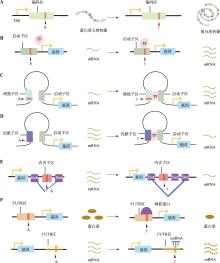
图1
不同基因组区域SNP对基因功能影响的示意图 A:编码区的功能变异。编码区SNP可以通过多种机制影响蛋白质的功能,包括蛋白质折叠。B~F:非编码区的功能变异。其中,B为启动子区的功能变异,启动子区SNP通过与转录因子结合,调控基因表达;C为增强子区的功能变异,增强子区SNP通过转录因子远程与靶启动子产生相互作用,影响基因表达;D为沉默子区的功能变异,沉默子区SNP通常招募抑制性转录因子,降低沉默子与靶启动子染色质相互作用,远程抑制基因表达;E为内含子区的功能变异,内含子区SNP通过破坏GT-AT剪切位点,导致外显子跳跃;F为5′UTR和3′UTR区的功能变异,5′UTR区SNP通过与调控蛋白结合,影响mRNA翻译过程,导致蛋白质表达下调;3′UTR区SNP可以与miRNA结合,影响mRNA的稳定性,导致mRNA发生降解。"
表1
鉴定功能性SNP的高通量方法及其衍生技术"
| 类别 | 方法 | 作用 | 技术名称 | 核心原理 | 应用 | 优点 | 不足 | 参考文献 |
|---|---|---|---|---|---|---|---|---|
| 核酸 | 高通量报告基因分析 | 筛选和鉴定顺式调控元件 | 经典MPRA* | 将携带独特条形码的目标序列插入MPRA载体,从而驱动报告基因及其条形码的转录表达 | 全基因组筛选非编码区功能元件,分析功能变异对表型的作用 | 高通量检测大量序列,精准量化调控活性 | 与体内生理状态存在差异 | [ |
| SysMPRA | 通过腺病毒载体将MPRA文库递送到各种组织中进行检测增强子活性 | 体内顺式调控元件活性分析 | 接近体内真实生理状况 | 数据分析难度大 | [ | |||
| 经典STARR-seq | 将目标序列插入到STARR-seq载体,直接驱动自身转录 | 全基因组鉴定增强子与沉默子活性 | 检测内源性转录活性 | 存在假阳性结果 | [ | |||
| ChIP-STARR-seq | 结合ChIP富集特定染色质状态的DNA片段,将其克隆到STARR-seq载体从而驱动转录 | 靶向富集转录因子结合的调控元件 | 提升筛选效率 | 依赖特异性抗体 | [ | |||
| Ss-STARR-seq | 基于STARR-seq载体将目标序列置于强启动子下游驱动自身转录 | 在全基因组范围内系统性鉴定沉默子 | 直接定量沉默子抑制活性 | 存在假阳性或假阴性结果 | [ | |||
| HDI-STARR-seq | 通过高压注射(HDI)体内递送 STARR-seq质粒进行检测增强子活性 | 复杂环境检测调控元件活性 | 区分活性差异细微的增强子 | 实验门槛高 | [ | |||
| UMI-STARR-seq | 基于STARR-seq载体引入UMI标签以消除PCR偏倚并量化转录本 | 用于精确定量增强子活性 | 减少PCR扩增偏差 | 实验成本高,难度大 | [ | |||
| CRISPR/ Cas9基因编辑技术 | 解析基因表达调控机制 | CRISPRi | dCas9融合阻遏结构域并靶向基因启动子区域,从而抑制基因的表达 | 阻断转录起始实现基因沉默 | 无切割,可逆性调控 | 对基因结构有依赖性 | [ | |
| CRISPRi-FlowFISH | CRISPRi靶向抑制并结合FlowFISH在单细胞分辨率下检测靶基因表达 | 研究增强子-启动子调控 | 增强子-基因关联准确性高 | 实验成本高,实验复杂 | [ | |||
| CRISPRa | dCas9融合激活结构域并靶向基因调控区,从而激活基因表达 | 激活转录因子,增强基因转录活性 | 特异性激活目标基因 | 激活效率有限 | [ | |||
| enCRISPRa | 利用MS2-gRNA与多个激活因子复合物融合,协同增强靶基因的转录 | 实现增强子区域的精准靶向 | 激活效果更显著 | 载体构建复杂 | [ | |||
| Perturb-seq | 结合特异性gRNA条形码标记,通过scRNA-seq分析基因的转录组变化 | 解析基因功能、遗传互作及调控网络 | 高分辨率的单细胞基因组分析 | 成本高且范围有限 | [ | |||
| 核酸与蛋白质互作 | 核酸-蛋白互作方法 | 研究DNA和蛋白质相互作用 | REEL-seq | 基于EMSA电泳分离回收蛋白结合的DNA片段并测序 | 体外检测蛋白质-DNA互作 | 高分辨率,高灵敏度 | 无法反映体内真实环境 | [ |
| ChIP-seq | 通过甲醛交联固定染色质结构,利用特异性抗体富集结合片段并测序 | 精确检测蛋白质结合区域 | 反映体内真实互作,应用广泛 | 依赖抗体,实验流程长 | [ | |||
| scChIP-seq | 基于ChIP-seq通过液滴微流控与分子条形码技术进行建库测序 | 单细胞水平检测蛋白质-DNA互作 | 解析单个细胞染色质特征 | 技术复杂,信噪比差 | [ | |||
| 核酸与蛋白质互作 | 核酸-蛋白互作方法 | 研究DNA和蛋白质相互作用 | CUT&Run | 通过抗体引导MNase酶原位切割DNA片段并测序 | 获取蛋白质因子的高分辨率结合图谱 | 原位切割,细胞需求低 | 导致DNA损失 | [ |
| CUT&Tag | 通过抗体引导Tn5转座酶原位切割并同时连接测序接头进行测序 | 精准定位转录因子结合位点 | 信噪比高,效率高 | Tn5转座酶存在序列偏好性 | [ | |||
| scCUT&Tag | 基于CUT&Tag通过液滴微流控条形码标记技术,实现目标蛋白与DNA结合位点的测序 | 单细胞分辨率绘制组蛋白修饰 | 解析单细胞异质性 | 技术复杂度高 | [ | |||
| Spatial-CUT&Tag | 通过在组织切片上进行原位Tn5转座酶切割,利用特异条形码磁珠捕获DNA片段进行测序 | 特定细胞类型在组织中的空间定位 | 整合空间分辨率与表观遗传信息 | 技术难度大 | [ | |||
| DAP-seq | 将纯化蛋白与基因组DNA体外孵育富集并测序 | 检测体外蛋白质-DNA互作 | 无需抗体参与,高通量 | 蛋白质数量不足 | [ | |||
| 染色质构象 | 染色质可及性分析 | 鉴定开放染色质区域 | FAIRE-seq | 利用酚-氯仿抽提去除核小体富集裸露DNA片段进行测序 | 鉴定染色质开放区域 | 无需酶切 | 低丰度开放区域灵敏度低 | [ |
| DNase-seq | 通过DNase I酶切开放区域的DNA并测序 | 定位活性调控元件 | 分辨率、灵敏度高 | 依赖酶切条件 | [ | |||
| MNase-seq | 利用MNase酶切核小体间DNA并测序 | 分析核小体定位 | 分辨率高 | 酶切有偏好 | [ | |||
| ATAC-seq | 通过Tn5转座酶切割并标记开放染色质DNA进行建库测序 | 鉴定全基因组可及性区域 | 细胞用量少且高通量 | 易受线粒体DNA污染 | [ | |||
| scATAC-seq | 基于ATAC-seq并结合细胞特异性条形码的磁珠捕获进行建库测序 | 单细胞水平检测染色质可及性 | 解析细胞类型异质性 | 信噪比低 | [ | |||
| 三维染色质构象捕获技术 | 解析染色质三维空间构象及调控互作 | Hi-C | 通过邻近连接非连续DNA片段并利用生物素磁珠富集连接产物并测序 | 全基因组检测染色质远距离互作 | 覆盖范围广 | 分辨率较低 | [ | |
| PCHi-C | 基于Hi-C利用启动子特异性探针捕获启动子区域进行富集测序 | 启动子相互作用的频率 | 分辨率高 | 覆盖范围有限 | [ | |||
| HiChIP | 基于Hi-C结合ChIP特异性富集DNA片段进行Tn5建库测序 | 不同细胞类型中启动子-增强子互作 | 特异性高 | 依赖抗体 | [ | |||
| ChIA-PET | 利用ChIP富集DNA片段在两端加上特殊的连接子并测序连接产物 | 检测特定蛋白质介导的染色质互作 | 靶向性强,分辨率高 | 细胞需求量大 | [ | |||
| PLAC-seq | 基于Hi-C结合ChIP特异性富集目标蛋白结合的DNA片段进行测序 | 捕获长程染色质相互作用 | 细胞需求量低 | 覆盖不足 | [ | |||
| scHi-C | 基于Hi-C结合单细胞分离与特异性条形码标记进行测序 | 捕获单细胞水平的染色质三维结构 | 揭示细胞间三维基因组差异 | 测序深度要求高 | [ |
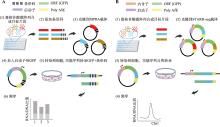
图2
MPRA和STARR-seq基本流程图 A:MPRA实验流程图。在寡核苷酸微阵列中合成目标DNA片段,接着添加专属条形码序列,将二者连接后克隆至 MPRA载体中,并在目标DNA片段与条形码之间插入启动子和报告基因开放阅读框(如荧光素酶或绿色荧光蛋白),形成最终的DNA文库,将其转染至细胞后,驱动报告基因及其条形码的转录表达,通过计算转染前后条形码在RNA与DNA中测序读数的比值(RNA/DNA)定量评估候选DNA序列的转录调控活性。B:STARR-seq实验流程图。在寡核苷酸微阵列中合成目标DNA片段,将其克隆至STARR-seq载体的报告基因开放阅读框(如荧光素酶或绿色荧光蛋白)和Poly A尾之间,随后将STARR-seq载体转染至细胞,具有调控活性的DNA片段可直接驱动自身转录,通过比较转染前后报告基因转录本的测序丰度(RNA/DNA)来反映片段自身的转录活性。"
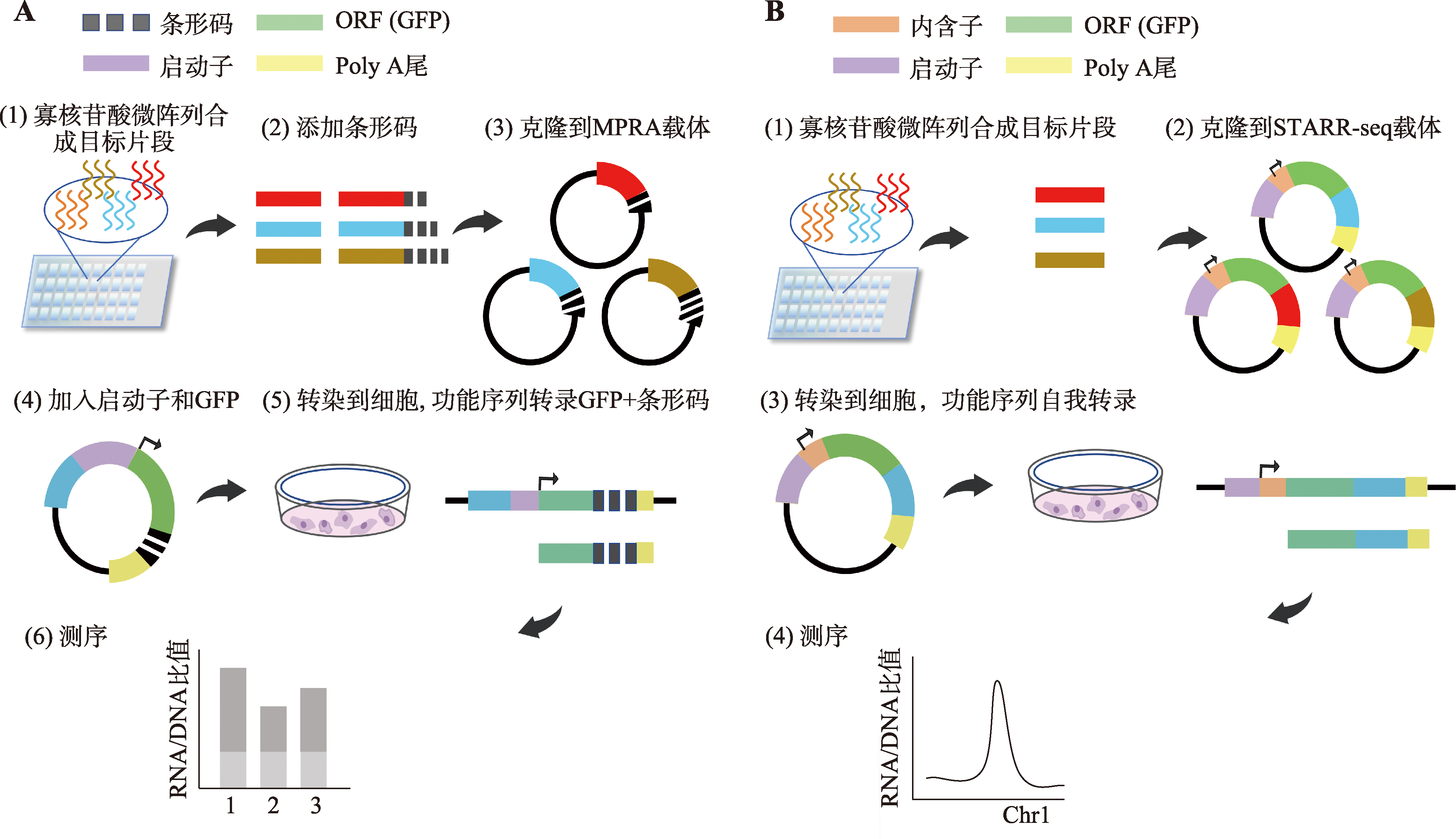
图3
CRISPRi和CRISPRa实验原理图 A:CRISPRi实验原理图。CRISPRi系统通过将dCas9与阻遏结构域(如KRAB)融合,在靶向sgRNA引导下结合基因调控区域,进而抑制基因表达。B:CRISPRa实验原理图。CRISPRa系统通过将dCas9与一个或多个激活结构域(包括VP64、p65、RTA)融合,在靶向sgRNA引导下激活基因表达。"
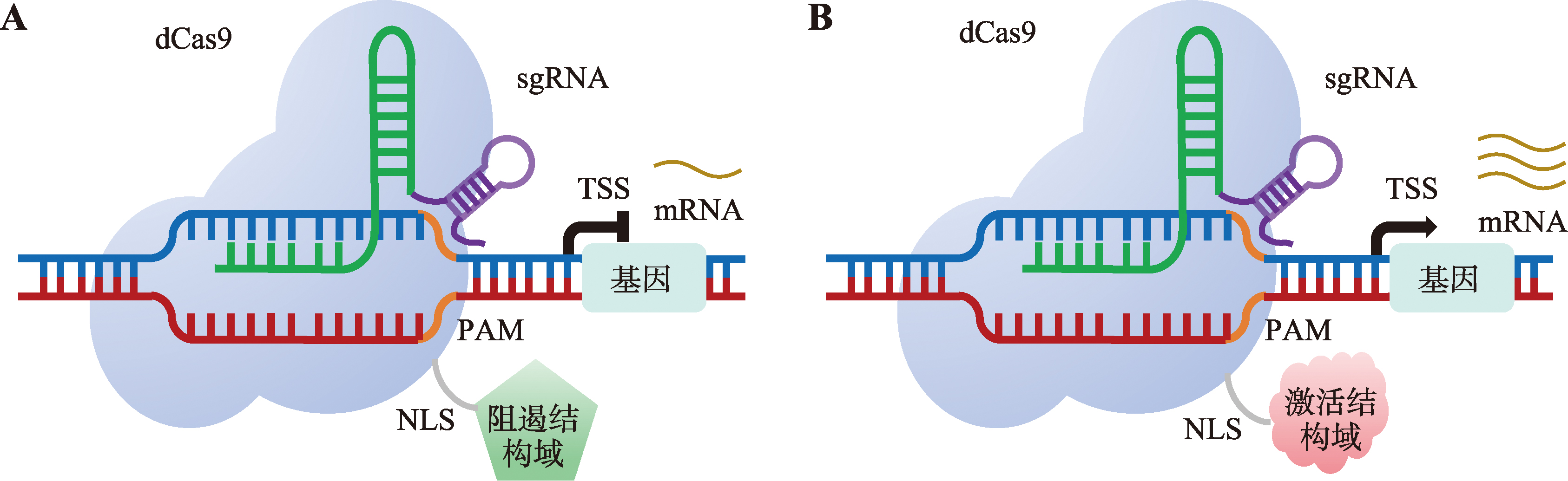
表2
高通量方法在农业动物功能性变异鉴定中的研究进展"
| 物种 | 高通量方法 | 应用 | 参考文献 |
|---|---|---|---|
| 猪 | STARR-seq | 鉴定猪肺泡巨噬细胞中的增强子,解析猪疫病抗性机制 | [ |
| STARR-seq | 鉴定猪肾上皮细胞系和睾丸细胞系的活性增强子及其在生长发育中的作用 | [ | |
| CRISPR/Cas9 | 引入PVD 20 H和GP 19del两种突变后会促进肌肉质量增长 | [ | |
| CRISPRi | 鉴定到rs694899689作为调控猪NUDT3表达和背膘厚度的eQTL,敲低NUDT3会调节肌肉中的核苷酸代谢和脂肪沉积 | [ | |
| CUT&Tag | 鉴定猪产前和产后阶段骨骼肌中增强子相关的组蛋白修饰标记,探究对骨骼发育的影响 | [ | |
| CUT&Tag | 鉴定猪脑和脂肪组织中抗寒性状相关顺式调控元件,研究耐寒适应机制 | [ | |
| Hi-C | 构建猪白色与米色脂肪细胞的三维基因组图谱,鉴定出促进脂肪细胞分化的活性增强子 | [ | |
| 家禽 | CRISPRa | 激活IRF7和PPARG相关的增强子区域,表现出内源基因表达下调 | [ |
| CRISPRa | 激活鸡胸肌中与核苷酸相关非编码GWAS SNPs所在基因组区域,调节肌肉基因表达并影响肉质。 | [ | |
| ATAC-seq | 鉴定到鸭CLN8基因启动子区的SNP通过改变与C/EBPα结合,调节禽类的脂肪生成 | [ | |
| CUT&Tag | 鉴定到超级增强子的组蛋白修饰标记,并评估其在鸡脂肪组织中的潜在作用 | [ | |
| CUT&Run | 鉴定到鸡颗粒细胞中DHCR7启动子雌激素响应区域的组蛋白修饰标记,促进其转录激活和卵泡成熟 | [ | |
| Hi-C | 构建全面的染色质三维调控网络图,系统识别并解析了影响鸡腹部脂肪沉积性状的遗传调控机制 | [ | |
| 牛 | CRISPR/Cas9 | 牛胚胎成纤维细胞中IGF2基因中ZBED6结合位点突变后,促进肌肉细胞的增殖能力 | [ |
| ATAC-seq | 鉴定牛肌肉组织基因组的功能元件,揭示肌肉发育的调控机制 | [ | |
| 羊 | CRISPR/Cas9 | 阿勒泰羊PDGFD基因中与尾脂性状相关的SNP位点进行编辑后,其体外胚胎的囊胚率出现显著降低 | [ |
| CUT&Tag | 检测奶山羊乳腺细胞的H3K27ac组蛋白修饰,鉴定到超级增强子与转录因子STAT5结合调控泌乳基因表达 | [ | |
| CHIP-seq | 鉴定到苏湖肉羊SNP分子标记影响生长发育相关基因的表达 | [ |
| [1] |
Stange M, Barrett RDH, Hendry AP. The importance of genomic variation for biodiversity, ecosystems and people. Nat Rev Genet, 2021, 22(2): 89-105.
pmid: 33067582 |
| [2] |
Visscher PM, Wray NR, Zhang Q, Sklar P, McCarthy MI, Brown MA, Yang J. 10 Years of GWAS discovery: biology, function, and translation. Am J Hum Genet, 2017, 101(1): 5-22.
pmid: 28686856 |
| [3] |
Manolio TA, Collins FS, Cox NJ, Goldstein DB, Hindorff LA, Hunter DJ, McCarthy MI, Ramos EM, Cardon LR, Chakravarti A, Cho JH, Guttmacher AE, Kong A, Kruglyak L, Mardis E, Rotimi CN, Slatkin M, Valle D, Whittemore AS, Boehnke M, Clark AG, Eichler EE, Gibson G, Haines JL, Mackay TFC, McCarroll SA, Visscher PM. Finding the missing heritability of complex diseases. Nature, 2009, 461(7265): 747-753.
pmid: 19812666 |
| [4] |
Zhu YZ, Tazearslan C, Suh Y. Challenges and progress in interpretation of non-coding genetic variants associated with human disease. Exp Biol Med (Maywood), 2017, 242(13): 1325-1334.
pmid: 28581336 |
| [5] |
Moore JH, Asselbergs FW, Williams SM. Bioinformatics challenges for genome-wide association studies. Bioinformatics, 2010, 26(4): 445-455.
pmid: 20053841 |
| [6] |
Tam V, Patel N, Turcotte M, Bossé Y, Paré G, Meyre D. Benefits and limitations of genome-wide association studies. Nat Rev Genet, 2019, 20(8): 467-484.
pmid: 31068683 |
| [7] |
Wani N, Raza K. Integrative approaches to reconstruct regulatory networks from multi-omics data: a review of state-of-the-art methods. Comput Biol Chem, 2019, 83: 107120.
pmid: 31499298 |
| [8] |
Yang WM, Zhang T, Song XM, Dong GC, Xu L, Jiang F. SNP-target genes interaction perturbing the cancer risk in the post-GWAS. Cancers (Basel), 2022, 14(22): 5636.
pmid: 36428729 |
| [9] |
Bhattacharya S, Ray S. In silico screening and exploration into phenotypic alterations of deleterious oncogenic single nucleotide polymorphisms in HSPB1 gene. Genomics, 2021, 113(4): 2812-2825.
pmid: 34129932 |
| [10] |
Walsh IM, Bowman MA, Soto Santarriaga IF, Rodriguez A, Clark PL. Synonymous codon substitutions perturb cotranslational protein folding in vivo and impair cell fitness. Proc Natl Acad Sci USA, 2020, 117(7): 3528-3534.
pmid: 32015130 |
| [11] |
Shastry BS. SNPs: impact on gene function and phenotype. Methods Mol Biol, 2009, 578: 3-22.
pmid: 19768584 |
| [12] |
Haberle V, Stark A. Eukaryotic core promoters and the functional basis of transcription initiation. Nat Rev Mol Cell Biol, 2018, 19(10): 621-637.
pmid: 29946135 |
| [13] |
Wang YN, Gan T, Qu S, Xu LL, Hu Y, Liu LJ, Shi SF, Lv JC, Tsoi LC, Patrick MT, He K, Berthier CC, Xu HJ, Zhou XJ, Zhang H. MTMR3 risk alleles enhance Toll like receptor 9-induced IgA immunity in IgA nephropathy. Kidney Int, 2023, 104(3): 562-576.
pmid: 37414396 |
| [14] |
Jores T, Tonnies J, Dorrity MW, Cuperus JT, Fields S, Queitsch C. Identification of plant enhancers and their constituent elements by STARR-seq in tobacco leaves. Plant Cell, 2020, 32(7): 2120-2131.
pmid: 32409318 |
| [15] |
Yanchus C, Drucker KL, Kollmeyer TM, Tsai R, Winick-Ng W, Liang MG, Malik A, Pawling J, De Lorenzo SB, Ali A, Decker PA, Kosel ML, Panda A, Al-Zahrani KN, Jiang LY, Browning JWL, Lowden C, Geuenich M, Hernandez JJ, Gosio JT, Ahmed M, Loganathan SK, Berman J, Trcka D, Michealraj KA, Fortin J, Carson B, Hollingsworth EW, Jacinto S, Mazrooei P, Zhou LL, Elia A, Lupien M, He HH, Murphy DJ, Wang LG, Abyzov A, Dennis JW, Maass PG, Campbell K, Wilson MD, Lachance DH, Wrensch M, Wiencke J, Mak T, Pennacchio LA, Dickel DE, Visel A, Wrana J, Taylor MD, Zadeh G, Dirks P, Eckel-Passow JE, Attisano L, Pombo A, Ida CM, Kvon EZ, Jenkins RB, Schramek D. A noncoding single-nucleotide polymerphism at 8q24 drives IDH1-mutant glioma formation. Science, 2022, 78(6615): 68-78.
pmid: 36201590 |
| [16] | Wang K. Characteristic analysis and functional research of silencer CAE in the promoter of mouse cholesterol 7α1-hydroxylase gene[Dissertation]. Henan Agricultural University, 2025. |
| 王轲. 小鼠胆固醇7α1-羟化酶启动子中沉默子CAE的特性分析及功能研究[学位论文]. 河南农业大学, 2025. | |
| [17] |
Cui KR, Chen ZJ, Cao YQ, Liu S, Ren G, Hu GQ, Fang DF, Wei DP, Liu CY, Zhu JF, Wu C, Zhao KJ. Restraint of IFN-γ expression through a distal silencer CNS-28 for tissue homeostasis. Immunity, 2023, 56(5): 944-958.e6.
pmid: 37040761 |
| [18] | Li YL. Functional and mechanistic studies of noncoding variant rs6048205 in pancreatic differentiation and diabetes susceptibility[Dissertation]. Wuhan University, 2024. |
| 李迎雷. 非编码变异rs6048205影响胰腺分化及糖尿病易感性的机制研究[学位论文]. 武汉大学, 2024. | |
| [19] |
Zhang C, Yan YS, Zhou BB, Gao HM, Jin XH, Hui L, Hao SJ, Cao ZF, Ma X. Phenotypic study of humanized mice carrying the PAH deep intronic variant c.1199+502A>T. Orphanet J Rare Dis, 2025, 20(1): 254.
pmid: 40420248 |
| [20] |
Leppek K, Das R, Barna M. Functional 5' UTR mRNA structures in eukaryotic translation regulation and how to find them. Nat Rev Mol Cell Biol, 2018, 19(3): 158-174.
pmid: 29165424 |
| [21] |
Mayr C. What are 3' UTRs doing? Cold Spring Harb Perspect Biol, 2019, 11(10): a034728.
pmid: 32409318 |
| [22] |
French JD, Edwards SL. The role of noncoding variants in heritable disease. Trends Genet, 2020, 36(11): 880-891.
pmid: 32741549 |
| [23] |
Pan XY, Zhao JR, Zhou ZY, Chen JJ, Yang ZX, Wu YX, Bai MZ, Jiao Y, Yang Y, Hu XY, Cheng TL, Lu QY, Wang B, Li CL, Lu YJ, Diao L, Zhong YQ, Pan J, Zhu JM, Xiao HS, Qiu ZL, Li JS, Wang ZF, Hui JY, Bao L, Zhang X. 5'-UTR SNP of FGF13 causes translational defect and intellectual disability. eLife, 2021, 10: e63021.
pmid: 34184986 |
| [24] |
Melnikov A, Murugan A, Zhang XL, Tesileanu T, Wang L, Rogov P, Feizi S, Gnirke A, Callan CG, Kinney JB, Kellis M, Lander ES, Mikkelsen TS. Systematic dissection and optimization of inducible enhancers in human cells using a massively parallel reporter assay. Nat Biotechnol, 2012, 30(3): 271-277.
pmid: 22371084 |
| [25] |
Guo MG, Reynolds DL, Ang CE, Liu YF, Zhao Y, Donohue LKH, Siprashvili Z, Yang X, Yoo Y, Mondal S, Hong A, Kain J, Meservey L, Fabo T, Elfaki I, Kellman LN, Abell NS, Pershad Y, Bayat V, Etminani P, Holodniy M, Geschwind DH, Montgomery SB, Duncan LE, Urban AE, Altman RB, Wernig M, Khavari PA. Integrative analyses highlight functional regulatory variants associated with neuropsychiatric diseases. Nat Genet, 2023, 55(11): 1876-1891.
pmid: 37857935 |
| [26] |
McAfee JC, Lee S, Lee J, Bell JL, Krupa O, Davis J, Insigne K, Bond ML, Zhao NX, Boyle AP, Phanstiel DH, Love MI, Stein JL, Ruzicka WB, Davila-Velderrain J, Kosuri S, Won H. Systematic investigation of allelic regulatory activity of schizophrenia-associated common variants. Cell Genom, 2023, 3(10): 100404.
pmid: 37868037 |
| [27] |
Inoue F, Kircher M, Martin B, Cooper GM, Witten DM, McManus MT, Ahituv N, Shendure J. A systematic comparison reveals substantial differences in chromosomal versus episomal encoding of enhancer activity. Genome Res, 2017, 27(1): 38-52.
pmid: 27831498 |
| [28] |
Xiao F, Zhang XR, Morton SU, Kim SW, Fan YF, Gorham JM, Zhang H, Berkson PJ, Mazumdar N, Cao YP, Chen J, Hagen J, Liu XJ, Zhou PZ, Richter F, Shen YF, Ward T, Gelb BD, Seidman JG, Seidman CE, Pu WT. Functional dissection of human cardiac enhancers and noncoding de novo variants in congenital heart disease. Nat Genet, 2024, 56(3): 420-430.
pmid: 38378865 |
| [29] |
Wang KY, Meng M, Leng MH, Wang YQ, Ni J, Yuan HY, Zhang XR, Cao YP. Protocol for assessing regulatory elements in murine heart using an AAV9-based massively parallel reporter assay. STAR Protoc, 2025, 6(2): 103782.
pmid: 40252222 |
| [30] |
Shen SQ, Myers CA, Hughes AEO, Byrne LC, Flannery JG, Corbo JC. Massively parallel cis-regulatory analysis in the mammalian central nervous system. Genome Res, 2016, 26(2): 238-255.
pmid: 26576614 |
| [31] |
Zhao SQ, Hong CKY, Myers CA, Granas DM, White MA, Corbo JC, Cohen BA. A single-cell massively parallel reporter assay detects cell-type-specific gene regulation. Nat Genet, 2023, 55(2): 346-354.
pmid: 36635387 |
| [32] |
Brown AR, Fox GA, Kaplow IM, Lawler AJ, Phan BN, Gadey L, Wirthlin ME, Ramamurthy E, May GE, Chen ZH, Su Q, McManus CJ, van de Weerd R, Pfenning AR. An in vivo systemic massively parallel platform for deciphering animal tissue-specific regulatory function. Front Genet, 2025, 16: 1533900.
pmid: 40270544 |
| [33] |
Arnold CD, Gerlach D, Stelzer C, Boryń ŁM, Rath M, Stark A. Genome-wide quantitative enhancer activity maps identified by STARR-seq. Science, 2013, 339(6123): 1074-1077.
pmid: 23328393 |
| [34] |
Bruner WS, Grant SFA. Translation of genome-wide association study: from genomic signals to biological insights. Front Genet, 2024, 15: 1375481.
pmid: 39421299 |
| [35] |
Fabo T, Khavari P. Functional characterization of human genomic variation linked to polygenic diseases. Trends Genet, 2023, 39(6): 462-490.
pmid: 36997428 |
| [36] | Yuan M, Li H, Wang SH. Massively parallel reporter assay: a novel technique for analyzing the regulation of gene expression. Hereditas(Beijing), 2023, 45(10): 859-873. |
| 袁萌, 李辉, 王守志. 大规模平行报告基因测定:一种分析基因表达调控的新技术. 遗传, 2023, 45(10): 859-873. | |
| [37] | Wang JL, Li Q, Zhan TZ. Principle and application of self-transcribing active regulatory region sequencing in enhancer discovery research. Hereditas(Beijing), 2024, 46(8): 589-602. |
| 王纪龙, 李青, 战廷正. 自转录活性调节区测序技术在增强子发现研究中的应用. 遗传, 2024, 46(8): 589-602. | |
| [38] |
Petersen RM, Vockley CM, Lea AJ. Uncovering methylation-dependent genetic effects on regulatory element function in diverse genomes. Genome Res, 2025, 35(8): 1781-1793.
pmid: 40659498 |
| [39] |
Vanhille L, Griffon A, Maqbool MA, Zacarias-Cabeza J, Dao LTM, Fernandez N, Ballester B, Andrau JC, Spicuglia S. High-throughput and quantitative assessment of enhancer activity in mammals by CapStarr-seq. Nat Commun, 2015, 6: 6905.
pmid: 25872643 |
| [40] |
Penner-Goeke S, Bothe M, Rek N, Kreitmaier P, Pöhlchen D, Kühnel A, Glaser LV, Kaya E, Krontira AC, Röh S, Czamara D, Ködel M, Monteserin-Garcia J, Diener L, Wölfel B, Sauer S, Rummel C, Riesenberg S, Arloth- Knauer J, Ziller M, Labeur M, Meijsing S, Binder EB. High-throughput screening of glucocorticoid- induced enhancer activity reveals mechanisms of stress-related psychiatric disorders. Proc Natl Acad Sci USA, 2023, 120(49): e2305773120.
pmid: 38011552 |
| [41] |
Hansen TJ, Hodges E. ATAC-STARR-seq reveals transcription factor-bound activators and silencers within chromatin-accessible regions of the human genome. Genome Res, 2022, 32(8): 1529-1541.
pmid: 35858748 |
| [42] |
Sheng TT, Ho SWT, Ooi WF, Xu C, Xing MJ, Padmanabhan N, Huang KK, Ma LJ, Ray M, Guo YA, Sim NL, Anene-Nzelu CG, Chang MM, Razavi-Mohseni M, Beer MA, Foo RSY, Sundar R, Chan YH, Tan ALK, Ong X, Skanderup AJ, White KP, Jha S, Tan P. Integrative epigenomic and high-throughput functional enhancer profiling reveals determinants of enhancer heterogeneity in gastric cancer. Genome Med, 2021, 13(1): 158.
pmid: 34635154 |
| [43] |
Barakat TS, Halbritter F, Zhang M, Rendeiro AF, Perenthaler E, Bock C, Chambers I. Functional dissection of the enhancer repertoire in human embryonic stem cells. Cell Stem Cell, 2018, 23(2): 276-288.e8.
pmid: 30033119 |
| [44] |
Wang M, Yang XX, Wu QX. High-resolution dissection of human cell type-specific enhancers in cis and trans activities. Genomics, 2025, 117(1): 110985.
pmid: 39755338 |
| [45] |
Lea AJ, Vockley CM, Johnston RA, Del Carpio CA, Barreiro LB, Reddy TE, Tung J. Genome-wide quantification of the effects of DNA methylation on human gene regulation. eLife, 2018, 7: e37513.
pmid: 30575519 |
| [46] |
Davidson BSA, Arcila-Galvis JE, Trevisan-Herraz M, Mikulasova A, Brackley CA, Russell LJ, Rico D. Evolutionarily conserved enhancer-associated features within the MYEOV locus suggest a regulatory role for this non-coding DNA region in cancer. Front Cell Dev Biol, 2024, 12: 1294510.
pmid: 39139450 |
| [47] |
Zhu XS, Huang L, Wang C, Li GL, Deng B, Kong DS, Wang XX, Chang RR, Gu Y, Wen QH, Kong SY, Liu YW, Zhang YB. Uncovering the whole genome silencers of human cells via Ss-STARR-seq. Nat Commun, 2025, 16(1): 723.
pmid: 39820458 |
| [48] |
Zhu XS, Huang L, Li GL, Deng B, Wang XX, Yang H, Zhang YY, Wen QH, Wang C, Zhang JS, Zhao YX, Li K, Liu YW. Genome-wide silencer screening reveals key silencer modulating reprogramming efficiency in mouse induced pluripotent stem cells. Adv Sci (Weinh), 2025, 12(18): e2408839.
pmid: 40112175 |
| [49] |
Chang TY, Waxman DJ. HDI-STARR-seq: condition- specific enhancer discovery in mouse liver in vivo. BMC Genomics, 2024, 25(1): 1240.
pmid: 39716078 |
| [50] |
Neumayr C, Pagani M, Stark A, Arnold CD. STARR-seq and UMI-STARR-seq: assessing enhancer activities for genome-wide-, high-, and low-complexity candidate libraries. Curr Protoc Mol Biol, 2019, 128(1): e105.
pmid: 31503413 |
| [51] |
Kalita CA, Brown CD, Freiman A, Isherwood J, Wen XQ, Pique-Regi R, Luca F. High-throughput characterization of genetic effects on DNA-protein binding and gene transcription. Genome Res, 2018, 28(11): 1701-1708.
pmid: 30254052 |
| [52] |
Jones IR, Ren XJ, Shen Y. High-throughput CRISPRi and CRISPRa technologies in 3D genome regulation for neuropsychiatric diseases. Hum Mol Genet, 2022, 31(R1): R47-R53.
pmid: 35972825 |
| [53] |
Bendixen L, Jensen TI, Bak RO. CRISPR-Cas-mediated transcriptional modulation: the therapeutic promises of CRISPRa and CRISPRi. Mol Ther, 2023, 31(7): 1920-1937.
pmid: 36964659 |
| [54] |
Bi JF, Mo WP, Liu M, Song YJ, Xiao Q, Fan SB, Wang WB, Shi TF, Zheng YQ, Lian J, Liu R, Chen BH, Huang XF, Li P, Zhao ZF, Shi JD, Zhang L, Su GS, Zhang N, Lu WG. Systematic decoding of functional enhancer connectomes and risk variants in human glioma. Nat Cell Biol, 2025, 27(10): 1838-1847.
pmid: 40830415 |
| [55] |
Fulco CP, Nasser J, Jones TR, Munson G, Bergman DT, Subramanian V, Grossman SR, Anyoha R, Doughty BR, Patwardhan TA, Nguyen TH, Kane M, Perez EM, Durand NC, Lareau CA, Stamenova EK, Aiden EL, Lander ES, Engreitz JM. Activity-by-contact model of enhancer-promoter regulation from thousands of CRISPR perturbbations. Nat Genet, 2019, 51(12): 1664-1669.
pmid: 31784727 |
| [56] |
Laurent M, Geoffroy M, Pavani G, Guiraud S. CRISPR- based gene therapies: from preclinical to clinical treatments. Cells, 2024, 13(10): 800.
pmid: 38786024 |
| [57] |
Moeckel C, Mouratidis I, Chantzi N, Uzun Y, Georgakopoulos-Soares I. Advances in computational and experimental approaches for deciphering transcriptional regulatory networks: understanding the roles of cis-regulatory elements is essential, and recent research utilizing MPRAs, STARR-seq, CRISPR-Cas9, and machine learning has yielded valuable insights. Bioessays, 2024, 46(7): e2300210.
pmid: 38715516 |
| [58] |
Schoger E, Carroll KJ, Iyer LM, McAnally JR, Tan W, Liu N, Noack C, Shomroni O, Salinas G, Groß J, Herzog N, Doroudgar S, Bassel-Duby R, Zimmermann WH, Zelarayán LC. CRISPR-mediated activation of endogenous gene expression in the postnatal heart. Circ Res, 2020, 126(1): 6-24.
pmid: 31730408 |
| [59] |
Li KL, Liu YX, Cao H, Zhang Y, Gu ZM, Liu X, Yu A, Kaphle P, Dickerson KE, Ni M, Xu J. Interrogation of enhancer function by enhancer-targeting CRISPR epigenetic editing. Nat Commun, 2020, 11(1): 485.
pmid: 31980609 |
| [60] |
Dixit A, Parnas O, Li BY, Chen J, Fulco CP, Jerby-Arnon L, Marjanovic ND, Dionne D, Burks T, Raychowdhury R, Adamson B, Norman TM, Lander ES, Weissman JS, Friedman N, Regev A. Perturb-seq: dissecting molecular circuits with scalable single-cell RNA profiling of pooled genetic screens. Cell, 2016, 167(7): 1853-1866.e17.
pmid: 27984732 |
| [61] |
Zheng XH, Thompson PC, White CM, Jin X. Massively parallel in vivo Perturb-seq screening. Nat Protoc, 2025, 20(7): 1733-1767.
pmid: 39939709 |
| [62] |
Shi T, Jin X. Probing neuropsychiatric disorders through in vivo CRISPR screening. Curr Opin Genet Dev, 2025, 96: 102424.
pmid: 41468840 |
| [63] |
Fair T, Pavlovic BJ, Swope D, Castillo OE, Schaefer NK, Pollen AA. Mapping cis- and trans-regulatory target genes of human-specific deletions. Nat Commun, 2025, 16(1): 11380.
pmid: 41422267 |
| [64] |
Zhao YH, Wu D, Jiang DL, Zhang XY, Wu T, Cui J, Qian M, Zhao J, Oesterreich S, Sun W, Finkel T, Li G. A sequential methodology for the rapid identification and characterization of breast cancer-associated functional SNPs. Nat Commun, 2020, 11(1): 3340.
pmid: 32620845 |
| [65] |
Wu T, Li G. An improved EMSA-based method to prioritize candidate cis-REs for further functional validation. Bio Protoc, 2022, 12(8): e4397.
pmid: 35800102 |
| [66] |
Liu Z, Zhao YH, Song HL, Miao HX, Wang YY, Tu CT, Fu TY, Qin JL, Du B, Qian M, Ren H. Identification and characterization of colorectal-cancer-associated SNPs on the SMAD 7 locus. J Cancer Res Clin Oncol, 2023, 149(18): 16659-16668.
pmid: 37721570 |
| [67] |
Park PJ. ChIP-seq: advantages and challenges of a maturing technology. Nat Rev Genet, 2009, 10(10): 669-680.
pmid: 19736561 |
| [68] |
Yamakawa A, Hojo H, Ohba S. ChIP-seq assays from mammalian cartilage and chondrocytes. Methods Mol Biol, 2021, 2245: 167-178.
pmid: 33315202 |
| [69] |
Ng NHJ, Ghosh S, Bok CM, Ching C, Low BSJ, Chen JT, Lim E, Miserendino MC, Tan YS, Hoon S, Teo AKK. HNF4A and HNF1A exhibit tissue specific target gene regulation in pancreatic beta cells and hepatocytes. Nat Commun, 2024, 15(1): 4288.
pmid: 38909044 |
| [70] |
Mundade R, Ozer HG, Wei H, Prabhu L, Lu T. Role of ChIP-seq in the discovery of transcription factor binding sites, differential gene regulation mechanism, epigenetic marks and beyond. Cell Cycle, 2014, 13(18): 2847-2852.
pmid: 25486472 |
| [71] |
Marsolier J, Moutaux E, Grosselin K, Griffiths A, Vallot C. Single-cell epigenomic profiling with high-throughput droplet scChIP-seq. Methods Mol Biol, 2025, 2919: 213-239.
pmid: 40257565 |
| [72] |
Grosselin K, Durand A, Marsolier J, Poitou A, Marangoni E, Nemati F, Dahmani A, Lameiras S, Reyal F, Frenoy O, Pousse Y, Reichen M, Woolfe A, Brenan C, Griffiths AD, Vallot C, Gérard A. High-throughput single-cell ChIP-seq identifies heterogeneity of chromatin states in breast cancer. Nat Genet, 2019, 51(6): 1060-1066.
pmid: 31152164 |
| [73] |
Emerson FJ, Lee SS. CUT&RUN for chromatin profiling in Caenorhabditis elegans. Curr Protoc, 2022, 2(6): e445.
pmid: 35714350 |
| [74] |
Kaya-Okur HS, Wu SJ, Codomo CA, Pledger ES, Bryson TD, Henikoff JG, Ahmad K, Henikoff S. CUT&Tag for efficient epigenomic profiling of small samples and single cells. Nat Commun, 2019, 10(1): 1930.
pmid: 31036827 |
| [75] |
Yang X, Wang QY, Li TY, Zhou Y, Gao JM, Ma WT, Zhao N, Liu XY, Ai ZH, Cheng SY, Gu YY, Zhao BJ, Yue S, Hu ZB. A splicing variant in EFCAB7 hinders ciliary transport and disrupts cardiac development. J Biol Chem, 2025, 301(3): 108249.
pmid: 39894222 |
| [76] |
Fu ZJ, Jiang SJ, Sun YW, Zheng SQ, Zong L, Li PP. Cut&tag: a powerful epigenetic tool for chromatin profiling. Epigenetics, 2024, 19(1): 2293411.
pmid: 38105608 |
| [77] |
Wu SJ, Furlan SN, Mihalas AB, Kaya-Okur HS, Feroze AH, Emerson SN, Zheng Y, Carson K, Cimino PJ, Keene CD, Sarthy JF, Gottardo R, Ahmad K, Henikoff S, Patel AP. Single-cell CUT&Tag analysis of chromatin modifications in differentiation and tumor progression. Nat Biotechnol, 2021, 39(7): 819-824.
pmid: 33846646 |
| [78] |
Bartosovic M, Kabbe M, Castelo-Branco G. Single-cell CUT&Tag profiles histone modifications and transcription factors in complex tissues. Nat Biotechnol, 2021, 39(7): 825-835.
pmid: 33846645 |
| [79] |
Deng YX, Bartosovic M, Kukanja P, Zhang D, Liu Y, Su G, Enninful A, Bai ZL, Castelo-Branco G, Fan R. Spatial-CUT&Tag: spatially resolved chromatin modification profiling at the cellular level. Science, 2022, 375(6581): 681-686.
pmid: 35143307 |
| [80] |
Bobadilla LK, Tranel PJ. Predicting the unpredictable: the regulatory nature and promiscuity of herbicide cross resistance. Pest Manag Sci, 2024, 80(2): 235-244.
pmid: 37595061 |
| [81] |
Zhang Y, Wang Y, Zhang YH, Jia XC, Li CX, Zhou ZT, Hu SS, Li ZL. Genome-wide analysis reveals that PhoP regulates pathogenicity in Riemerella anatipestifer. Microbiol Spectr, 2022, 10(5): e0188322.
pmid: 36197298 |
| [82] |
Qi YC, Xie WF, Zhang RX, Wang FQ, Wen Q, Hu YR, Liu Q, Shen JW. Transcription factor Pofst3 regulates Pleurotus ostreatus development by targeting multiple biological pathways. Fungal Biol, 2024, 128(8 Pt A): 2295-2304.
pmid: 39643396 |
| [83] |
Bartlett A, O'Malley RC, Huang SSC, Galli M, Nery JR, Gallavotti A, Ecker JR. Mapping genome-wide transcription- factor binding sites using DAP-seq. Nat Protoc, 2017, 12(8): 1659-1672.
pmid: 28726847 |
| [84] |
Giresi PG, Lieb JD. Isolation of active regulatory elements from eukaryotic chromatin using FAIRE (Formaldehyde Assisted Isolation of Regulatory Elements). Methods, 2009, 48(3): 233-239.
pmid: 19303047 |
| [85] |
He HH, Meyer CA, Hu SS, Chen MW, Zang CZ, Liu Y, Rao PK, Fei T, Xu H, Long H, Liu XS, Brown M. Refined DNase-seq protocol and data analysis reveals intrinsic bias in transcription factor footprint identification. Nat Methods, 2014, 11(1): 73-78.
pmid: 24317252 |
| [86] |
Chereji RV, Bryson TD, Henikoff S. Quantitative MNase-seq accurately maps nucleosome occupancy levels. Genome Biol, 2019, 20(1): 198.
pmid: 31519205 |
| [87] |
Grandi FC, Modi H, Kampman L, Corces MR. Chromatin accessibility profiling by ATAC-seq. Nat Protoc, 2022, 17(6): 1518-1552.
pmid: 35478247 |
| [88] |
Nassar AH, Abou Alaiwi S, Baca SC, Adib E, Corona RI, Seo JH, Fonseca MAS, Spisak S, El Zarif T, Tisza V, Braun DA, Du H, He M, Flaifel A, Alchoueiry M, Denize T, Matar SG, Acosta A, Shukla S, Hou Y, Steinharter J, Bouchard G, Berchuck JE, O'Connor E, Bell C, Nuzzo PV, Mary Lee GS, Signoretti S, Hirsch MS, Pomerantz M, Henske E, Gusev A, Lawrenson K, Choueiri TK, Kwiatkowski DJ, Freedman ML. Epigenomic charting and functional annotation of risk loci in renal cell carcinoma. Nat Commun, 2023, 14(1): 346.
pmid: 36681680 |
| [89] |
Mezger A, Klemm S, Mann I, Brower K, Mir A, Bostick M, Farmer A, Fordyce P, Linnarsson S, Greenleaf W. High-throughput chromatin accessibility profiling at single-cell resolution. Nat Commun, 2018, 9(1): 3647.
pmid: 30194434 |
| [90] |
Chen X, Miragaia RJ, Natarajan KN, Teichmann SA. A rapid and robust method for single cell chromatin accessibility profiling. Nat Commun, 2018, 9(1): 5345.
pmid: 30559361 |
| [91] |
Xu K, Zhang WW, Wang C, Hu LF, Wang RT, Wang CZ, Tang L, Zhou GH, Zou BJ, Xie H, Tang JH, Guan XX. Integrative analyses of scRNA-seq and scATAC-seq reveal CXCL 14 as a key regulator of lymph node metastasis in breast cancer. Hum Mol Genet, 2021, 30(5): 370-380.
pmid: 33564857 |
| [92] |
Friman ET, Flyamer IM, Marenduzzo D, Boyle S, Bickmore WA. Ultra-long-range interactions between active regulatory elements. Genome Res, 2023, 33(8): 1269-1283.
pmid: 37451823 |
| [93] |
Selvarajan I, Toropainen A, Garske KM, López Rodríguez M, Ko A, Miao Z, Kaminska D, Õunap K, Örd T, Ravindran A, Liu OH, Moreau PR, Jawahar Deen A, Männistö V, Pan C, Levonen AL, Lusis AJ, Heikkinen S, Romanoski CE, Pihlajamäki J, Pajukanta P, Kaikkonen MU. Integrative analysis of liver-specific non-coding regulatory SNPs associated with the risk of coronary artery disease. Am J Hum Genet, 2021, 108(3): 411-430.
pmid: 33626337 |
| [94] |
Saw AK, Madhok A, Bhattacharya A, Nandi S, Galande S. Integrated promoter-capture Hi-C and Hi-C analysis reveals fine-tuned regulation of the 3D chromatin architecture in colorectal cancer. Front Genet, 2025, 16: 1553469.
pmid: 40225268 |
| [95] |
Shi CF, Rattray M, Orozco G. HiChIP-Peaks: a HiChIP peak calling algorithm. Bioinformatics, 2020, 36(12): 3625-3631.
pmid: 32207529 |
| [96] |
Liu T, Wang Z. DeepChIA-PET: accurately predicting ChIA-PET from Hi-C and ChIP-seq with deep dilated networks. PLoS Comput Biol, 2023, 19(7): e1011307.
pmid: 37440599 |
| [97] |
Yu M, Juric I, Abnousi A, Hu M, Ren B. Proximity Ligation-Assisted ChIP-Seq (PLAC-Seq). Methods Mol Biol, 2021, 2351: 181-199.
pmid: 34382190 |
| [98] |
Plummer D, Lang XY, Zhang SS, Li Y, Li J, Jin FL. A comprehensive benchmark of single-cell Hi-C embedding tools. Nat Commun, 2025, 16(1): 9119.
pmid: 41087414 |
| [99] |
Tan LZ, Xing D, Chang CH, Li H, Xie XS. Three-dimensional genome structures of single diploid human cells. Science, 2018, 361(6405): 924-928.
pmid: 30166492 |
| [100] |
Lee DS, Luo CY, Zhou JT, Chandran S, Rivkin A, Bartlett A, Nery JR, Fitzpatrick C, O'Connor C, Dixon JR, Ecker JR. Simultaneous profiling of 3D genome structure and DNA methylation in single human cells. Nat Methods, 2019, 16(10): 999-1006.
pmid: 31501549 |
| [101] |
Khateb M, Perovanovic J, Ko KD, Jiang K, Feng XS, Acevedo-Luna N, Chal J, Ciuffoli V, Genzor P, Simone J, Haase AD, Pourquié O, Dell'Orso S, Sartorelli V. Transcriptomics, regulatory syntax, and enhancer identification in mesoderm-induced ESCs at single-cell resolution. Cell Rep, 2022, 40(7): 111219.
pmid: 35977485 |
| [102] | Tian XH. Identification of porcine alveolar macrophages enhancer and its mechanism[Dissertation]. Huazhong Agricultural University, 2021. |
| 田小欢. 猪肺泡巨噬细胞增强子的鉴定及其机制研究[学位论文]. 华中农业大学, 2021. | |
| [103] |
Wu YQ, Zhang YD, Liu H, Gao Y, Liu YY, Chen L, Liu L, Irwin DM, Hou CH, Zhou ZY, Zhang YP. Genome- wide identification of functional enhancers and their potential roles in pig breeding. J Anim Sci Biotechnol, 2022, 13(1): 75.
pmid: 35781353 |
| [104] |
Li RQ, Zeng W, Ma M, Wei ZX, Liu HB, Liu XF, Wang M, Shi X, Zeng JH, Yang LF, Mo DL, Liu XH, Chen YS, He ZY. Precise editing of myostatin signal peptide by CRISPR/Cas 9 increases the muscle mass of liang guang small spotted pigs. Transgenic Res, 2020, 29(1): 149-163.
pmid: 31927726 |
| [105] |
An YL, Han PY, Zhang C, Yue YQ, Wen CL, Meng YY, Li HR, Li X. The role of NUDT3 in lipid accumulation and its functional variants related to backfat thickness in pigs. Int J Biol Macromol, 2025, 307(Pt 3): 141901.
pmid: 40096926 |
| [106] |
Zhang S, Wang C, Qin SH, Chen CL, Bao YZ, Zhang YY, Xu LN, Liu QY, Zhao YX, Li K, Tang ZL, Liu YW. Analyzing super-enhancer temporal dynamics reveals potential critical enhancers and their gene regulatory networks underlying skeletal muscle development. Genome Res, 2024, 34(12): 2190-2202.
pmid: 39433439 |
| [107] | Han ZY. Integrated multiomics strategy to mine key genes and regulatory elements for cold resistance in min pigs and enshi black pigs[Dissertation]. Huazhong Agricultural University, 2024. |
| 韩哲宇. 整合多组学策略挖掘民猪和恩施黑猪抗寒关键基因与调控元件[学位论文]. 华中农业大学, 2024. | |
| [108] | Jiang YF, Li HX, Lin Y, Zhang ZH, Wang YF. Three- dimensional genome architecture of porcine white and beige adipocytes. Acta Vet Zootech Sin, 2025, 56(11): 5433-5448. |
| 蒋一帆, 李昊星, 林育, 张治华, 王彦芳. 猪白色与米色脂肪细胞的三维基因组结构解析. 畜牧兽医学报, 2025, 56(11): 5433-5448. [DOI] | |
| [109] |
Han JH, Lee HJ, Kim TH. Characterization of transcriptional enhancers in the chicken genome using CRISPR- mediated activation. Front Genome Ed, 2023, 5: 1269115.
pmid: 37953873 |
| [110] |
Kim J, Han JH, Kim M, Schmidt G, Cho E, Lee JH, Kim TH. From GWAS signal to function: targeted CRISPR activation enables functional characterization of non-coding SNPs in chickens. Front Genome Ed, 2025, 7: 1662152.
pmid: 41122295 |
| [111] |
Li XQ, Zhang F, Sun YX, Sun DD, Yang FX, Liu YT, Hou ZC. A novel candidate gene CLN8 regulates fat deposition in avian. J Anim Sci Biotechnol, 2023, 14(1): 70.
pmid: 37121996 |
| [112] |
Mu F, Jing Y, He JR, Hou JJ, Huang JX, Zhang JY, Gao F, Lou M, Yan XH, Wang N. Establishing the super- enhancer landscape in chicken adipose tissue. Poult Sci, 2025, 104(11): 105746.
pmid: 40896951 |
| [113] |
Li DD, Wei QQ, Kang L, Sun Y, Jiang YL. DHCR7 expression, function and estrogen-induced promoter histone modification changes in chicken granulosa cells of pre-hierarchical follicles. Poult Sci, 2025, 104(11): 105837.
pmid: 40957294 |
| [114] |
Shen LY, Bai X, Zhao LR, Zhou JM, Chang C, Li XQ, Cao ZP, Li YM, Luan P, Li H, Zhang H. Integrative 3D genomics with multi-omics analysis and functional validation of genetic regulatory mechanisms of abdominal fat deposition in chickens. Nat Commun, 2024, 15(1): 9274.
pmid: 39468045 |
| [115] |
Zou HY, Yu DW, Yao S, Ding FR, Li JL, Li L, Li X, Zhao SJ, Pang YW, Hao HS, Du WH, Zhao XM, Dai YP, Zhu HB. Efficient editing of the ZBED6-binding site in intron 3 of IGF 2 in a bovine model using the CRISPR/Cas9 System. Genes (Basel), 2022, 13(7): 1132.
pmid: 35885915 |
| [116] | Ma XL, Zhang XR, Chen Y, Liang HY, Abdureyimu G, Wang LQ, LIN JP, Li WJ, Wang XG, Wu YS. PDGFD gene editing in Altay sheep embryos. Acta Vet Zootech Sin, 2025, 56(4): 1700-1711. |
| 马秀玲, 张欣如, 陈莹, 梁红艳, 古丽米热·阿布都热依木, 汪立芹, 林嘉鹏, 李伟健, 王旭光, 吴阳升. 阿勒泰羊胚胎PDGFD基因编辑研究. 畜牧兽医学报, 2025, 56(4): 1700-1711. | |
| [117] |
Cao XK, Cheng J, Huang YZ, Lan XY, Lei CZ, Chen H. Comparative enhancer map of cattle muscle genome annotated by ATAC-Seq. Front Vet Sci, 2021, 8: 782409.
pmid: 34977215 |
| [118] | Mi XY. Differential analysis of mammary cell taxa during different lactation periods in goats and functional mining of lactation super enhancers[Dissertation]. Gansu Agricultural University, 2025. |
| 米晓钰. 奶山羊不同泌乳时期乳腺细胞类群的差异分析及泌乳超级增强子的功能挖掘[学位论文]. 甘肃农业大学, 2025. | |
| [119] | Ge L. Functional study of candidate genes in the 37-38 Mb region of chromosome 6 and association analysis of SNPs in the promotor region with growth and development traits in Suhu sheep breeding population[Dissertation]. Yangzhou University, 2023. |
| 葛玲. 6号染色体37-38 Mb区域候选基因功能研究及其启动子区SNPs与苏湖肉羊选育群生长发育性状关联分析[学位论文]. 扬州大学, 2023. | |
| [120] |
D'Elia B, Fuxman Bass J. Applications of high- throughput reporter assays to gene regulation studies. Curr Opin Struct Biol, 2025, 94: 103105.
pmid: 40580800 |
| [121] |
Javaid D, Ganie SY, Hajam YA, Reshi MS. CRISPR/ Cas9 system: a reliable and facile genome editing tool in modern biology. Mol Biol Rep, 2022, 49(12): 12133-12150.
pmid: 36030476 |
| [1] | 王舜泽, 江丰, 朱东丽, 杨铁林, 郭燕. Hi-C技术在三维基因组学和疾病致病机理研究中的应用[J]. 遗传, 2023, 45(4): 279-294. |
| [2] | 袁萌, 李辉, 王守志. 大规模平行报告基因测定:一种分析基因表达调控的新技术[J]. 遗传, 2023, 45(10): 859-873. |
| [3] | 周聪, 周强伟, 成盛, 李国亮. CTCF在介导三维基因组形成及调控基因表达中的研究进展[J]. 遗传, 2021, 43(9): 816-821. |
| [4] | 徐海冬, 宁博林, 牟芳, 李辉, 王宁. 选择性多聚腺苷酸化的生物学效应及其调控机制研究进展[J]. 遗传, 2021, 43(1): 4-15. |
| [5] | 田菁, 王宇哲, 闫世雄, 孙帅, 贾俊静, 胡晓湘. 代谢组学技术发展及其在农业动植物研究中的应用[J]. 遗传, 2020, 42(5): 452-465. |
| [6] | 宁椿游,何梦楠,唐茜子,朱庆,李明洲,李地艳. 基于Hi-C技术哺乳动物三维基因组研究进展[J]. 遗传, 2019, 41(3): 215-233. |
| [7] | 施剑,李艳明,方向东. 长链非编码RNA通过细胞核高级结构调控真核基因表达及其临床意义[J]. 遗传, 2017, 39(3): 189-199. |
| [8] | 路畅, 黄银花. 动物长链非编码RNA研究进展[J]. 遗传, 2017, 39(11): 1054-1065. |
| [9] | 翟亚男, 许泉, 郭亚, 吴强. 原钙粘蛋白基因簇调控区域中成簇的CTCF结合位点分析[J]. 遗传, 2016, 38(4): 323-336. |
| [10] | 幸宇云, 杨强, 任军. CRISPR/Cas9基因组编辑技术在农业动物中的应用[J]. 遗传, 2016, 38(3): 217-226. |
| [11] | 黄小庆,李丹丹,吴娟. 植物长链非编码RNA研究进展[J]. 遗传, 2015, 37(4): 344-359. |
| [12] | 施子晗, 李泽琴, 张根发. 植物组蛋白赖氨酸化修饰参与基因表达调控的机理[J]. 遗传, 2014, 36(3): 208-219. |
| [13] | 张韬 杨足君. 植物基因组DNase I超敏感位点的研究进展[J]. 遗传, 2013, 35(7): 867-874. |
| [14] | 夏天,肖丙秀,郭俊明. 长链非编码RNA的作用机制及其研究方法[J]. 遗传, 2013, 35(3): 269-280. |
| [15] | 秦丹 徐存拴. 非编码DNA序列的功能及其鉴定[J]. 遗传, 2013, 35(11): 1253-1264. |
| 阅读次数 | ||||||
|
全文 |
|
|||||
|
摘要 |
|
|||||

www.chinagene.cn
备案号:京ICP备09063187号-4
总访问:,今日访问:,当前在线:

