
遗传 ›› 2026, Vol. 48 ›› Issue (8): 764-780.doi: 10.16288/j.yczz.25-343
张渭莹1( ), 宁欣2, 罗博煜3, 魏凯1, 滕越3(), 商微1()
收稿日期:2025-12-25
修回日期:2026-03-02
出版日期:2026-08-20
发布日期:2026-04-29
通讯作者:
商微,硕士,主任医师,研究方向:生殖医学、线粒体遗传病。E-mail: shang.wei@163.com;作者简介:张渭莹,博士,助理研究员,研究方向:发育生物学。E-mail: zhangwyjessie@163.com
基金资助:
Weiying Zhang1(), Xin Ning2, Boyu Luo3, Kai Wei1, Yue Teng3(), Wei Shang1()
Received:2025-12-25
Revised:2026-03-02
Published:2026-08-20
Online:2026-04-29
Supported by:摘要:
机械力是胚胎发育与生殖过程中持续存在且高度动态的物理输入,可通过机械力敏感离子通道(mechanosensitive ion channels, MSC)被细胞感知,并转化为以Ca2+为核心的胞内信号,从而参与调控细胞迁移、谱系分化与形态发生等关键发育事件。与此同时,线粒体作为能量代谢与信号整合枢纽,其代谢模式、氧化还原稳态及动力学重塑对胚胎早期发育潜能具有重要影响。近年来的研究提示,MSC介导的Ca2+通量变化不仅激活经典信号通路,还可进一步耦联线粒体功能,形成连接力学输入与代谢响应的重要调控轴。基于上述研究背景,本文围绕“MSC-线粒体功能-胚胎发育命运”这一主线,系统梳理MSC的分子特征与激活机制,概述其在胚胎发育及生殖相关过程中的功能;进一步归纳MSC通过Ca2+信号调控线粒体代谢重编程、ROS稳态及融合/分裂动态的潜在机制;并结合囊胚腔形成与谱系建立、器官发生等典型发育事件,讨论该耦联轴在关键发育过程中的可能作用。同时,对当前研究面临的关键局限与技术瓶颈进行分析,并提出该领域未来的研究方向与潜在应用前景。在发育生物学背景下整合机械转导与线粒体代谢调控机制,有助于深化对“力学-代谢”信号协同塑造胚胎命运与形态建成过程的理解,并为相关发育异常与生殖障碍的发病机制解析及干预策略探索提供理论依据。
张渭莹, 宁欣, 罗博煜, 魏凯, 滕越, 商微. 机械力敏感离子通道在胚胎发育中调控线粒体功能的研究进展[J]. 遗传, 2026, 48(8): 764-780.
Weiying Zhang, Xin Ning, Boyu Luo, Kai Wei, Yue Teng, Wei Shang. Mechanosensitive ion channels in embryonic development: advances in the regulation of mitochondrial function[J]. Hereditas(Beijing), 2026, 48(8): 764-780.
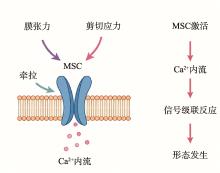
图1
机械力敏感离子通道钙离子信号传导示意图"
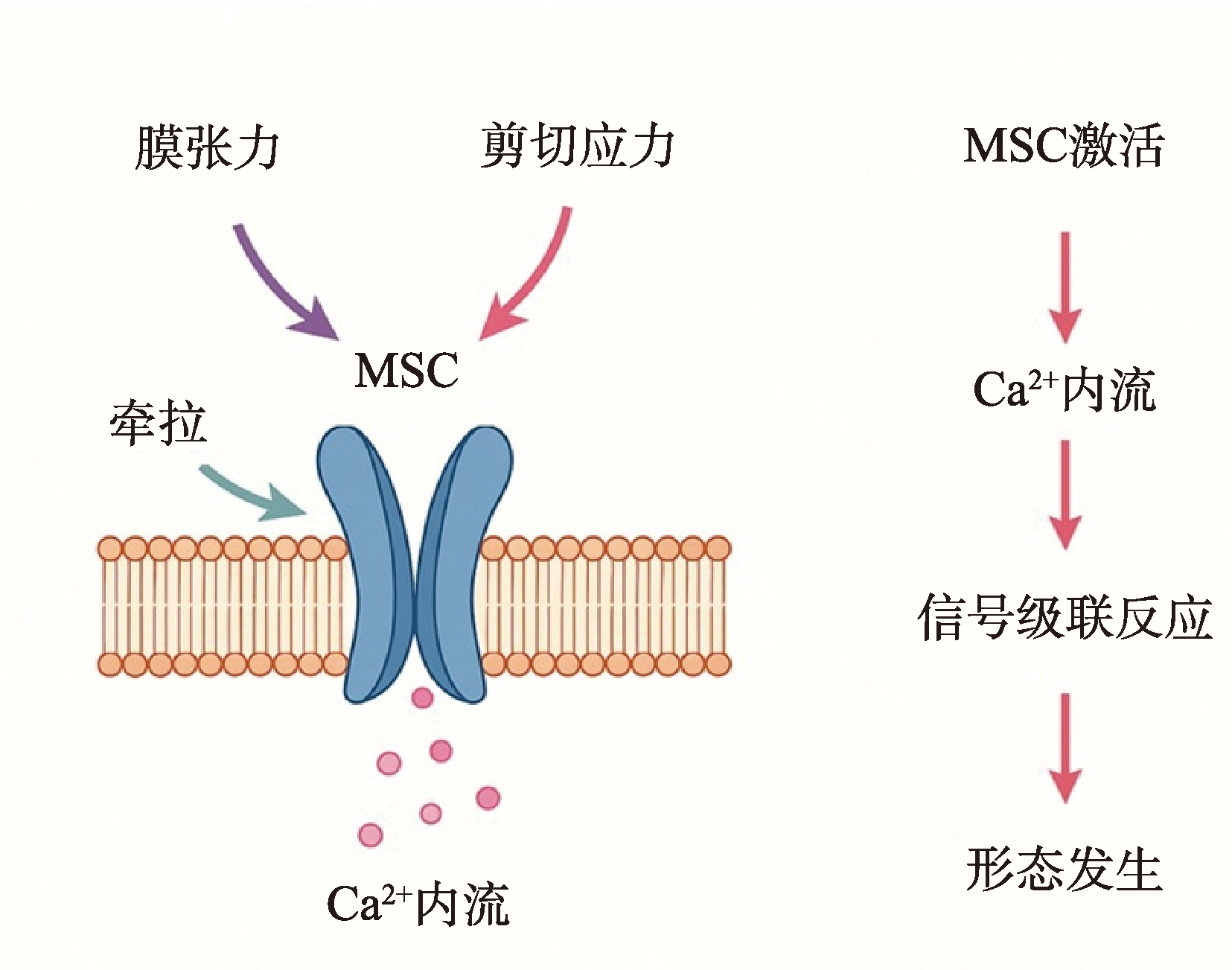
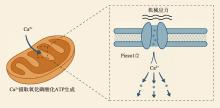
图2
机械力敏感离子通道对线粒体功能的潜在调控"

| [1] |
Hamill OP, Martinac B. Molecular basis of mechanotransduction in living cells. Physiol Rev, 2001, 81(2): 685-740.
pmid: 11274342 |
| [2] |
Coste B, Mathur J, Schmidt M, Earley TJ, Ranade S, Petrus MJ, Dubin AE, Patapoutian A. Piezo1 and Piezo2 are essential components of distinct mechanically activated cation channels. Science, 2010, 330(6000): 55-60.
pmid: 20813920 |
| [3] |
Ranade SS, Qiu ZZ, Woo SH, Hur SS, Murthy SE, Cahalan SM, Xu J, Mathur J, Bandell M, Coste B, Li YSJ, Chien S, Patapoutian A. Piezo1, a mechanically activated ion channel, is required for vascular development in mice. Proc Natl Acad Sci USA, 2014, 111(28): 10347-10352.
pmid: 24958852 |
| [4] |
Sugimoto A, Miyazaki A, Kawarabayashi K, Shono M, Akazawa Y, Hasegawa T, Ueda-Yamaguchi K, Kitamura T, Yoshizaki K, Fukumoto S, Iwamoto T. Piezo type mechanosensitive ion channel component 1 functions as a regulator of the cell fate determination of mesenchymal stem cells. Sci Rep, 2017, 7(1): 17696.
pmid: 29255201 |
| [5] |
Savadipour A, Palmer D, Ely EV, Collins KH, Garcia-Castorena JM, Harissa Z, Kim YS, Oestrich A, Qu FN, Rashidi N, Guilak F. The role of PIEZO ion channels in the musculoskeletal system. Am J Physiol Cell Physiol, 2023, 324(3): C728-C740.
pmid: 36717101 |
| [6] |
Van den Eynde C, De Clercq K, Vriens J. Transient receptor potential channels in the epithelial-to- mesenchymal transition. Int J Mol Sci, 2021, 22(15): 8188.
pmid: 34360952 |
| [7] |
Zhang M, Ma YM, Ye XL, Zhang N, Pan L, Wang B. TRP (transient receptor potential) ion channel family: structures, biological functions and therapeutic interventions for diseases. Signal Transduct Target Ther, 2023, 8(1): 261.
pmid: 37402746 |
| [8] |
Solano AS, Lavanderos B, Metwally E, Earley S. Transient receptor potential channels in vascular mechanotransduction. Am J Hypertens, 2025, 38(3): 151-160.
pmid: 39579078 |
| [9] |
Yu JX, Huang Y, Qin YJ, Zhu JF, Zhao T, Wu H, Ye X, Qin X, Li S, Chen YC, Liu YY, Li TT. Deciphering mitochondria: unveiling their roles in mechanosensing and mechanotransduction. Research (Wash D C), 2025, 8: 0816.
pmid: 40785969 |
| [10] |
Jiang M, Zhang YX, Bu WJ, Li P, Chen JH, Cao M, Dong YC, Sun ZJ, Dong DL. Piezo1 channel activation stimulates ATP production through enhancing mitochondrial respiration and glycolysis in vascular endothelial cells. Br J Pharmacol, 2023, 180(14): 1862-1877.
pmid: 36740831 |
| [11] |
Ke WC, Wang BJ, Liao ZW, Song Y, Li GC, Ma L, Wang K, Li S, Hua WB, Yang C. Matrix stiffness induces Drp1-mediated mitochondrial fission through Piezo1 mechanotransduction in human intervertebral disc degeneration. J Transl Med, 2023, 21(1): 711.
pmid: 37817199 |
| [12] |
Li XH, Kordsmeier J, Nookaew I, Kim HN, Xiong JH. Piezo1 stimulates mitochondrial function via cAMP signaling. FASEB J, 2022, 36(10): e22519.
pmid: 36052712 |
| [13] |
Acharya TK, Pal S, Ghosh A, Kumar S, Kumar S, Chattopadhyay N, Goswami C. TRPV4 regulates osteoblast differentiation and mitochondrial function that are relevant for channelopathy. Front Cell Dev Biol, 2023, 11: 1066788.
pmid: 37377733 |
| [14] |
Li QX, Li CY, Liu XY, Guo ZX, Li XX, Zhang X. The key role of Piezo1 channels in ferroptosis after spinal cord injury and the therapeutic potential of Piezo1 inhibitors. Prog Biophys Mol Biol, 2025, 196: 132-140.
pmid: 40339662 |
| [15] |
Xue H, Zhang XY, Chou CX, Jia YL, Hao CG, Duan XG. Advances in research on propofol-induced postoperative cognitive dysfunction via Piezo channels. Front Mol Neurosci, 2025, 18: 1668523.
pmid: 41058969 |
| [16] |
Wang FS, Wu RW, Chen YS, Ko JY, Jahr H, Lian WS. Biophysical modulation of the mitochondrial metabolism and redox in bone homeostasis and osteoporosis: how biophysics converts into bioenergetics. Antioxidants (Basel), 2021, 10(9): 1394.
pmid: 34573026 |
| [17] |
Liu SJ, Yang XZ, Chen XD, Zhang XC, Jiang JH, Yuan JY, Liu WH, Wang L, Zhou H, Wu K, Tian BX, Li XM, Xiao BL. An intermediate open structure reveals the gating transition of the mechanically activated PIEZO 1 channel. Neuron, 2025, 113(4): 590-604.
pmid: 39719701 |
| [18] |
Gullingsrud J, Schulten K. Gating of MscL studied by steered molecular dynamics. Biophys J, 2003, 85(4): 2087-2099.
pmid: 14507677 |
| [19] |
Nonomura K, Lukacs V, Sweet DT, Goddard LM, Kanie A, Whitwam T, Ranade SS, Fujimori T, Kahn ML, Patapoutian A. Mechanically activated ion channel PIEZO1 is required for lymphatic valve formation. Proc Natl Acad Sci USA, 2018, 115(50): 12817-12822.
pmid: 30482854 |
| [20] |
Ong W, Marinval N, Lin JQ, Nai MH, Chong YS, Pinese C, Sajikumar S, Lim CT, Ffrench-Constant C, Bechler ME, Chew SY. Biomimicking fiber platform with tunable stiffness to study mechanotransduction reveals stiffness enhances oligodendrocyte differentiation but impedes myelination through YAP-dependent regulation. Small, 2020, 16(37): e2003656.
pmid: 32790058 |
| [21] |
Vriens J, Watanabe H, Janssens A, Droogmans G, Voets T, Nilius B. Cell swelling, heat, and chemical agonists use distinct pathways for the activation of the cation channel TRPV4. Proc Natl Acad Sci USA, 2004, 101(1): 396-401.
pmid: 14691263 |
| [22] |
Stewart L, Turner NA. Channelling the force to reprogram the matrix: mechanosensitive ion channels in cardiac fibroblasts. Cells, 2021, 10(5): 990.
pmid: 33922466 |
| [23] |
Chen YD, Mu JX, Zhu M, Mukherjee A, Zhang H. Transient receptor potential channels and inflammatory bowel disease. Front Immunol, 2020, 11: 180.
pmid: 32153564 |
| [24] |
Meyer NP, Singh T, Kutys ML, Nystul TG, Barber DL. Arp2/3 complex activity enables nuclear YAP for naïve pluripotency of human embryonic stem cells. eLife, 2024, 13: e89725.
pmid: 39319536 |
| [25] | Tomilin V, Stavniichuk A, Pyrshev K, Kordysh M, Zaika O, Pochynyuk O. Piezo1 and TRPV4 complementary contribute to [Ca2+]i homeostasis in collecting duct cells. Physiology (Bethesda), 2023, 38(S1): 3. |
| [26] |
Tang HR, Zeng RQ, He ED, Zhang I, Ding CY, Zhang A. Piezo-type mechanosensitive ion channel component 1 (Piezo1): a promising therapeutic target and its modulators. J Med Chem, 2022, 65(9): 6441-6453.
pmid: 35466678 |
| [27] |
Kim JH, Kim T. The mechanism of dynamic steady states in lamellipodia. PLoS Comput Biol, 2025, 21(10): e1013572.
pmid: 41056351 |
| [28] |
Gao ZD, Naruse K, Morimatsu M. Osmotic pressure- induced calcium response states. FEBS Open Bio, 2025, 15(10): 1714-1722.
pmid: 40883966 |
| [29] |
Li K, Jan YN. Experimental tools and emerging principles of organellar mechanotransduction. Trends Cell Biol, 2025, 35(11): 944-954.
pmid: 39828483 |
| [30] |
Li YH, Chen JS, Jiang WL, Ye J, Zhang X, Wang C. Structural insights into calcium-dependent CIB2-TMC1 interaction in hair cell mechanotransduction. Commun Biol, 2025, 8(1): 306.
pmid: 40000792 |
| [31] |
Corns LF, Johnson SL, Kros CJ, Marcotti W. Calcium entry into stereocilia drives adaptation of the mechanoelectrical transducer current of mammalian cochlear hair cells. Proc Natl Acad Sci USA, 2014, 111(41): 14918-14923.
pmid: 25228765 |
| [32] |
Cheng CQ, Cong Q, Liu YC, Hu YZ, Liang GY, Dioneda KMM, Yang YZ. Yap controls notochord formation and neural tube patterning by integrating mechanotransduction with FoxA2 and Shh expression. Sci Adv, 2023, 9(24): eadf6927.
pmid: 37315133 |
| [33] |
Agarwal P, Zaidel-Bar R. Mechanosensing in embryogenesis. Curr Opin Cell Biol, 2021, 68: 1-9.
pmid: 32898827 |
| [34] |
Wuchu FL, Ma XY, Que YT, Chen JJ, Ruan YC. Biphasic regulation of CFTR expression by ENaC in epithelial cells: The involvement of Ca2+-modulated cAMP production. Front Cell Dev Biol, 2022, 10: 781762.
pmid: 36111343 |
| [35] |
Carvacho I, Ardestani G, Lee HC, McGarvey K, Fissore RA, Lykke-Hartmann K. TRPM7-like channels are functionally expressed in oocytes and modulate post- fertilization embryo development in mouse. Sci Rep, 2016, 6: 34236.
pmid: 27681336 |
| [36] |
Hyman AJ, Tumova S, Beech DJ. Piezo1 channels in vascular development and the sensing of shear stress. Curr Top Membr, 2017, 79: 37-57.
pmid: 28728823 |
| [37] |
Pathak MM, Nourse JL, Tran T, Hwe J, Arulmoli J, Le DTT, Bernardis E, Flanagan LA, Tombola F. Stretch-activated ion channel Piezo1 directs lineage choice in human neural stem cells. Proc Natl Acad Sci USA, 2014, 111(45): 16148-16153.
pmid: 25349416 |
| [38] |
Zhong GH, Su SW, Li JC, Zhao HL, Hu DT, Chen J, Li SC, Lin YW, Wen LM, Lin XJ, Xian GP, Xu DL, Zeng QC. Activation of Piezo1 promotes osteogenic differentiation of aortic valve interstitial cell through YAP- dependent glutaminolysis. Sci Adv, 2023, 9(22): eadg0478.
pmid: 37267365 |
| [39] |
Zhang Y, Shan KZ, Liang PF, Lowry AJ, Feng LP, Yang HH. PIEZO1 drives trophoblast fusion and placental development. Nat Commun, 2025, 16(1): 6895.
pmid: 40715146 |
| [40] |
Jiang F, Yin KL, Wu K, Zhang MM, Wang SQ, Cheng HP, Zhou Z, Xiao BL. The mechanosensitive Piezo1 channel mediates heart mechano-chemo transduction. Nat Commun, 2021, 12(1): 869.
pmid: 33558521 |
| [41] |
Duchemin AL, Vignes H, Vermot J. Mechanically activated piezo channels modulate outflow tract valve development through the Yap1 and Klf2-Notch signaling axis. eLife, 2019, 8: e44706.
pmid: 31524599 |
| [42] |
Heckel E, Boselli F, Roth S, Krudewig A, Belting HG, Charvin G, Vermot J. Oscillatory flow modulates mechanosensitive klf2a expression through trpv4 and trpp2 during heart valve development. Curr Biol, 2015, 25(10): 1354-1361.
pmid: 25959969 |
| [43] |
Zhou TF, Gao B, Fan Y, Liu YC, Feng SH, Cong Q, Zhang XL, Zhou YX, Yadav PS, Lin JC, Wu N, Zhao L, Huang DS, Zhou SH, Su PQ, Yang YZ. Piezo1/2 mediate mechanotransduction essential for bone formation through concerted activation of NFAT-YAP1-ß-catenin. eLife, 2020, 9: e52779.
pmid: 32186512 |
| [44] |
Anand R, Sarode SC, Sarode GS, Rajpurohit LS, Patil S. Yes-associated protein (YAP) molecule expression in odontogenic epithelium of ameloblastoma. Clin Oral Investig, 2019, 23(5): 2389-2394.
pmid: 30302608 |
| [45] |
McMillin MJ, Beck AE, Chong JX, Shively KM, Buckingham KJ, Gildersleeve HIS, Aracena MI, Aylsworth AS, Bitoun P, Carey JC, Clericuzio CL, Crow YJ, Curry CJ, Devriendt K, Everman DB, Fryer A, Gibson K, Giovannucci Uzielli ML, Graham JM Jr, Hall JG, Hecht JT, Heidenreich RA, Hurst JA, Irani S, Krapels IP, Leroy JG, Mowat D, Plant GT, Robertson SP, Schorry EK, Scott RH, Seaver LH, Sherr E, Splitt M, Stewart H, Stumpel C, Temel SG, Weaver DD, Whiteford M, Williams MS, Tabor HK, Smith JD, Shendure J, Nickerson DA, University of Washington Center for Mendelian Genomics, Bamshad MJ. Mutations in PIEZO2 cause Gordon syndrome, Marden-Walker syndrome, and distal arthrogryposis type 5. Am J Hum Genet, 2014, 94(5): 734-744.
pmid: 24726473 |
| [46] |
Behunova J, Gerykova Bujalkova M, Gras G, Taylor T, Ihm U, Kircher S, Rehder H, Laccone F. Distal arthrogryposis with impaired proprioception and touch: description of an early phenotype in a boy with compound heterozygosity of PIEZO2 mutations and review of the literature. Mol Syndromol, 2019, 9(6): 287-294.
pmid: 30800044 |
| [47] |
Seneor DD, Mendes PM, Garcia FAPB, da Silva EMW, Farias IB, Barile JP, Cavalheiro RBR, Serrano PL, Pinto WBVR, Oliveira ASB, de Souza PVS. Arthrogryposis as a neuromuscular phenotype: lessons from PIEZO2 loss-of-function. Pract Neurol, 2026, pn-2025-004946.
pmid: 41494870 |
| [48] |
O'Conor CJ, Leddy HA, Benefield HC, Liedtke WB, Guilak F. TRPV4-mediated mechanotransduction regulates the metabolic response of chondrocytes to dynamic loading. Proc Natl Acad Sci USA, 2014, 111(4): 1316-1321.
pmid: 24474754 |
| [49] |
Ferreira RR, Pakula G, Klaeyle L, Fukui H, Vilfan A, Supatto W, Vermot J. Chiral cilia orientation in the left-right organizer. Cell Rep, 2018, 25(8): 2008-2016.
pmid: 30462999 |
| [50] |
Katoh TA, Omori T, Mizuno K, Sai XR, Minegishi K, Ikawa Y, Nishimura H, Itabashi T, Kajikawa E, Hiver S, Iwane AH, Ishikawa T, Okada Y, Nishizaka T, Hamada H. Immotile cilia mechanically sense the direction of fluid flow for left-right determination. Science, 2023, 379(6627): 66-71.
pmid: 36603091 |
| [51] |
Djenoune L, Mahamdeh M, Truong TV, Nguyen CT, Fraser SE, Brueckner M, Howard J, Yuan S. Cilia function as calcium-mediated mechanosensors that instruct left-right asymmetry. Science, 2023, 379(6627): 71-78.
pmid: 36603098 |
| [52] |
Mim MS, Kumar N, Levis M, Unger MF, Miranda G, Gazzo D, Robinett T, Zartman JJ. Piezo regulates epithelial topology and promotes precision in organ size control. Cell Rep, 2024, 43(7): 114398.
pmid: 38935502 |
| [53] |
Wang YH, Tian TT, Yi CX, Wang X, Mou YB, Wang P, Wang WH, Deng YX, Sun X, Huang Y, Huang X. Transient receptor potential channels in chondrocyte homeostasis and pathophysiology: from molecular mechanisms to translational therapeutics. Int J Biol Macromol, 2025, 334(Pt 1): 149035.
pmid: 41242440 |
| [54] |
Mehregan A, Ardestani G, Akizawa H, Carvacho I, Fissore R. Deletion of TRPV3 and CaV3.2 T-type channels in mice undermines fertility and Ca2+ homeostasis in oocytes and eggs. J Cell Sci, 2021, 134(13): jcs257956.
pmid: 34313315 |
| [55] |
Lee HC, Yoon SY, Lykke-Hartmann K, Fissore RA, Carvacho I. TRPV3 channels mediate Ca2+ influx induced by 2-APB in mouse eggs. Cell Calcium, 2016, 59(1): 21-31.
pmid: 26725171 |
| [56] |
Lu Y, Reddy R, Ferrer Buitrago M, Vander Jeught M, Neupane J, De Vos WH, Van den Abbeel E, Lierman S, De Sutter P, Heindryckx B. Strontium fails to induce Ca2+ release and activation in human oocytes despite the presence of functional TRPV3 channels. Hum Reprod Open, 2018, 2018(3): hoy005.
pmid: 30895246 |
| [57] |
Babcock DF, Bosma MM, Battaglia DE, Darszon A. Early persistent activation of sperm K+ channels by the egg peptide speract. Proc Natl Acad Sci USA, 1992, 89(13): 6001-6005.
pmid: 1631086 |
| [58] |
Bysack A, Jash C, Raghuraman H. Anionic lipids modulate the membrane localization and conformational dynamics of KirBac1.1 slide helix during lipid-dependent activation. Biochem J, 2025, 482(19): 1393-1413.
pmid: 40966386 |
| [59] |
Shan YY, Zhang MM, Chen MY, Guo XY, Li Y, Zhang MF, Pei DQ. Activation mechanisms of dimeric mechanosensitive OSCA/TMEM63 channels. Nat Commun, 2024, 15(1): 7504.
pmid: 39209849 |
| [60] |
Zhang Y, Liang PF, Yang LH, Shan KZ, Feng LP, Chen Y, Liedtke W, Coyne CB, Yang HH. Functional coupling between TRPV4 channel and TMEM16F modulates human trophoblast fusion. eLife, 2022, 11: e78840.
pmid: 35670667 |
| [61] |
De Clercq K, Vriens J. Establishing life is a calcium- dependent TRiP: transient receptor potential channels in reproduction. Biochim Biophys Acta Mol Cell Res, 2018, 1865(11 Pt B): 1815-1829.
pmid: 30798946 |
| [62] |
Andrade YN, Fernandes J, Vázquez E, Fernández- Fernández JM, Arniges M, Sánchez TM, Villalón M, Valverde MA. TRPV4 channel is involved in the coupling of fluid viscosity changes to epithelial ciliary activity. J Cell Biol, 2005, 168(6): 869-874.
pmid: 15753126 |
| [63] |
Hennes A, Held K, Boretto M, De Clercq K, Van den Eynde C, Vanhie A, Van Ranst N, Benoit M, Luyten C, Peeraer K, Tomassetti C, Meuleman C, Voets T, Vankelecom H, Vriens J. Functional expression of the mechanosensitive PIEZO1 channel in primary endometrial epithelial cells and endometrial organoids. Sci Rep, 2019, 9(1): 1779.
pmid: 30741991 |
| [64] |
Daigneault BW, Miller DJ. Transient receptor potential polycystin-2 (TRPP2) regulates motility and intracellular calcium of porcine sperm. Andrologia, 2021, 53(8): e14124.
pmid: 34042198 |
| [65] |
Ramal-Sanchez M, Bernabò N, Valbonetti L, Cimini C, Taraschi A, Capacchietti G, Machado-Simoes J, Barboni B. Role and modulation of TRPV1 in mammalian spermatozoa: an updated review. Int J Mol Sci, 2021, 22(9): 4306.
pmid: 33919147 |
| [66] |
Yue Y, Ren LK, Zhang C, Miao K, Tan K, Yang QY, Hu YP, Xi GY, Luo G, Yang MY, Zhang JY, Hou ZC, An L, Tian JH. Mitochondrial genome undergoes de novo DNA methylation that protects mtDNA against oxidative damage during the peri-implantation window. Proc Natl Acad Sci USA, 2022, 119(30): e2201168119.
pmid: 35858425 |
| [67] |
Mao J, Whitworth KM, Spate LD, Walters EM, Zhao J, Prather RS. Regulation of oocyte mitochondrial DNA copy number by follicular fluid, EGF, and neuregulin 1 during in vitro maturation affects embryo development in pigs. Theriogenology, 2012, 78(4): 887-897.
pmid: 22626782 |
| [68] |
Xu YY, Xie W, Zhang J. Metabolic regulation of key developmental events during mammalian embryogenesis. Nat Cell Biol, 2025, 27(8): 1219-1229.
pmid: 40696105 |
| [69] |
Li W, Long Q, Wu H, Zhou YS, Duan LF, Yuan H, Ding YZ, Huang YL, Wu Y, Huang JY, Liu DL, Chen BD, Zhang J, Qi JT, Du SW, Li LP, Liu Y, Ruan ZF, Liu ZH, Liu ZC, Zhao YF, Lu JH, Wang JW, Chan WY, Liu XG. Nuclear localization of mitochondrial TCA cycle enzymes modulates pluripotency via histone acetylation. Nat Commun, 2022, 13(1): 7414.
pmid: 36460681 |
| [70] |
May-Panloup P, Brochard V, Hamel JF, Desquiret-Dumas V, Chupin S, Reynier P, Duranthon V. Maternal ageing impairs mitochondrial DNA kinetics during early embryogenesis in mice. Hum Reprod, 2019, 34(7): 1313-1324.
pmid: 31174209 |
| [71] |
Kim A, Kim AR, Jeon YE, Yoo YJ, Yang YM, Bak EJ. TRPC expression in human periodontal ligament cells and the periodontal tissue of periodontitis mice: a preliminary study. Lab Anim Res, 2023, 39(1): 19.
pmid: 37653550 |
| [72] |
Giorgi C, Marchi S, Pinton P. The machineries, regulation and cellular functions of mitochondrial calcium. Nat Rev Mol Cell Biol, 2018, 19(11): 713-730.
pmid: 30143745 |
| [73] |
Zhang SQ, Li CF, Feng YF, Lei W, Sun XQ. Emerging roles of Piezo1 channels in bone: cells and diseases. Chin Med J (Engl), 2025, 138(5): 625-627.
pmid: 39920897 |
| [74] |
Liu YS, Liu YA, Huang CJ, Yen MH, Tseng CT, Chien S, Lee OK. Mechanosensitive TRPM7 mediates shear stress and modulates osteogenic differentiation of mesenchymal stromal cells through Osterix pathway. Sci Rep, 2015, 5: 16522.
pmid: 26558702 |
| [75] |
Lin ZD, Xu GY, Lu X, Wang HL, Lu FZ, Xia XL, Song J, Jiang JY, Ma XS, Zou F. Piezo1 exacerbates inflammation- induced cartilaginous endplate degeneration by activating mitochondrial fission via the Ca2+/CaMKII/Drp1 axis. Aging Cell, 2025, 24(4): e14440.
pmid: 39610146 |
| [76] |
Kanta Acharya T, Kumar A, Kumar Majhi R, Kumar S, Chakraborty R, Tiwari A, Smalla KH, Liu X, Chang YT, Gundelfinger ED, Goswami C. TRPV4 acts as a mitochondrial Ca2+-importer and regulates mitochondrial temperature and metabolism. Mitochondrion, 2022, 67: 38-58.
pmid: 36261119 |
| [77] |
Woolums BM, McCray BA, Sung H, Tabuchi M, Sullivan JM, Ruppell KT, Yang YP, Mamah C, Aisenberg WH, Saavedra-Rivera PC, Larin BS, Lau AR, Robinson DN, Xiang Y, Wu MN, Sumner CJ, Lloyd TE. TRPV4 disrupts mitochondrial transport and causes axonal degeneration via a CaMKII-dependent elevation of intracellular Ca2+. Nat Commun, 2020, 11(1): 2679.
pmid: 32471994 |
| [78] |
Liu XY, Xu LY, Song YT, Zhao ZH, Li XY, Wong CY, Chen R, Feng JX, Gou YT, Qi YJ, Chow HM, Yao SH, Wang Y, Gao S, Liu XG, Duan LT. Force-induced tail-autotomy mitochondrial fission and biogenesis of matrix-excluded mitochondrial-derived vesicles for quality control. Proc Natl Acad Sci USA, 2024, 121(14): e2217019121.
pmid: 38547062 |
| [79] |
Frum T, Watts JL, Ralston A. TEAD4, YAP1 and WWTR1 prevent the premature onset of pluripotency prior to the 16-cell stage. Development, 2019, 146(17): dev179861.
pmid: 31444221 |
| [80] |
Alasaadi DN, Alvizi L, Hartmann J, Stillman N, Moghe P, Hiiragi T, Mayor R. Competence for neural crest induction is controlled by hydrostatic pressure through Yap. Nat Cell Biol, 2024, 26(4): 530-541.
pmid: 38499770 |
| [81] |
Gupta N, Soriano-Úbeda C, Stein P, Savy V, Papas BN, Ardestani G, Carvacho I, Alfandari D, Williams CJ, Fissore RA. Essential role of Mg2+ in mouse preimplantation embryo development revealed by TRPM7 chanzyme- deficient gametes. Cell Rep, 2023, 42(10): 113232.
pmid: 37824328 |
| [82] |
Liu KS, Yan ZH, Bai DD, Jiang R, Bi Y, Ma XJ, Xiang JN, Sheng YF, Dong BX, Ning ZY, Yi SR, Liu YD, Lei XY, Jia YP, Zhang Y, Zhang YL, Li YH, Wu T, Xi CX, Liu SY, Liu SY, Chen JY, Yin JQ, Kou XC, Zhao YH, Wang H, Wang YX, Wei K, Gao SR, Liu WQ. Modeling post-gastrula development via bidirectional pluripotent stem cells. Cell Res, 2025, 35(12): 954-969.
pmid: 40883608 |
| [83] |
O'Leary K. Three-donor IVF prevents mitochondrial disease. Nat Med, 2025, doi: 10.1038/d41591-025-00047-3.
pmid: 40739441 |
| [84] |
Kim MJ, Hwang JW, Yun CK, Lee Y, Choi YS. Delivery of exogenous mitochondria via centrifugation enhances cellular metabolic function. Sci Rep, 2018, 8(1): 3330.
pmid: 29463809 |
| [85] |
Na J, Zhou LL, Bai SY, Ma Y, Zheng LS. Microgroove and cyclic stretch-based stem cell gym enhance maturation of human iPSC-derived cardiomyocytes. Ann Biomed Eng, 2026, doi: 10.1007/s10439-026-03985-2.
pmid: 41545619 |
| [86] |
Malan D, Gallo MP, Geddo F, Levi R, Querio G. Metabolic maturation in hiPSC-derived cardiomyocytes: emerging strategies for inducing the adult cardiac phenotype. Pharmaceuticals (Basel), 2025, 18(8): 1133.
pmid: 40872524 |
| [87] |
Wang N, Lu YF, Rothrauff BB, Zheng AJ, Lamb A, Yan YZ, Lipa KE, Lei GH, Lin H. Mechanotransduction pathways in articular chondrocytes and the emerging role of estrogen receptor-α. Bone Res, 2023, 11(1): 13.
pmid: 36869045 |
| [88] |
Zheng L, Liu SJ, Cheng XJ, Qin ZN, Lu ZH, Zhang K, Zhao JM. Intensified stiffness and photodynamic provocation in a collagen-based composite hydrogel drive chondrogenesis. Adv Sci (Weinh), 2019, 6(16): 1900099.
pmid: 31453055 |
| [89] |
Khairullina ZM, Vasileva VY, Chubinskiy-Nadezhdin VI. Piezo1 ion channels regulate the formation and spreading of human endometrial mesenchymal stem cell spheroids. Int J Mol Sci, 2025, 26(6): 2474.
pmid: 40141118 |
| [1] | 祝新月, 胡坤隆, 徐雯睆, 轩梦庆, 甘信琪, 杨智元, 王文卓, 刘郑秋, 张梦雅, 周贝贝, 俞文杰, 张运海, 曹祖兵. N4-乙酰胞苷修饰在动物生殖发育中的研究进展[J]. 遗传, 2026, 48(3): 272-286. |
| [2] | 师愉倩, 马剑峰, 陈思宇, 周立新, 薛佳, 沈林園, 朱砺, 甘麦邻. 小非编码RNA在雄性生殖发育和代际遗传中研究进展[J]. 遗传, 2025, 47(8): 861-875. |
| [3] | 姬亚捷, 熊杰, 邱先进, 王克剑. 植物孤雌生殖研究进展:助力无融合生殖走向应用[J]. 遗传, 2025, 47(4): 448-455. |
| [4] | 唐成, 徐顺清, 李汉增. 线粒体DNA遗传疾病及基因治疗研究现状[J]. 遗传, 2025, 47(12): 1300-1325. |
| [5] | 吴宏, 章誉兴, 于黎. 动物物种形成研究进展[J]. 遗传, 2025, 47(1): 58-70. |
| [6] | 朱奕, 陈雪沁, 冷丽智, 林戈. 早期胚胎极性建立及对谱系分化的影响[J]. 遗传, 2024, 46(3): 199-208. |
| [7] | 周冰倩, 李尚朴, 王旭, 孟祥宇, 邓竞荣, 邢金良, 王建刚, 徐坤. 双定位信号增强工程化蛋白线粒体靶向性呈递[J]. 遗传, 2024, 46(11): 937-946. |
| [8] | 阙亦宸, 刘清泉, 徐一驰. 人类发育细胞蓝图的现状和挑战[J]. 遗传, 2024, 46(10): 760-778. |
| [9] | 宋睿嘉, 韩露, 孙海峰, 沈彬. 线粒体DNA碱基编辑技术研究进展[J]. 遗传, 2023, 45(8): 632-642. |
| [10] | 何山, 赵健, 宋晓峰. N6-甲基腺苷修饰对女性生殖系统功能的影响[J]. 遗传, 2023, 45(6): 472-487. |
| [11] | 王文龙, 张春霞. 哺乳动物卵子与早期胚胎中全转录组poly(A)尾研究进展[J]. 遗传, 2023, 45(4): 273-278. |
| [12] | 张茜, 王子豪, 田烨. 跨组织线粒体应激信号交流调控机体衰老研究进展[J]. 遗传, 2023, 45(3): 187-197. |
| [13] | 张爽, 郭珊珊, 王汝雯, 马仁燕, 吴显敏, 陈佩杰, 王茹. PARK基因家族在骨骼肌肌病中的研究进展[J]. 遗传, 2022, 44(7): 545-555. |
| [14] | 王梓川, 张嘉祺, 李磊. 哺乳动物早期胚胎发育的体外研究[J]. 遗传, 2022, 44(4): 269-274. |
| [15] | 袁洁, 蔡时青. 衰老过程中行为和认知功能退化的调控机制研究[J]. 遗传, 2021, 43(6): 545-570. |
| 阅读次数 | ||||||
|
全文 |
|
|||||
|
摘要 |
|
|||||

www.chinagene.cn
备案号:京ICP备09063187号-4
总访问:,今日访问:,当前在线:

