
遗传 ›› 2026, Vol. 48 ›› Issue (6): 570-588.doi: 10.16288/j.yczz.25-287
戴律1,2( ), 汤子琛3, 贾镇1,2, 江丽2, 赵传桐1,2, 赵志远1,2, 赵雯婷2(), 李彩霞1,2()
收稿日期:2025-12-08
修回日期:2026-02-05
出版日期:2026-06-20
发布日期:2026-02-12
通讯作者:
赵雯婷,博士,副主任法医师,研究方向:法医遗传学。E-mail: wtzhao@sibs.ac.cn;作者简介:戴律,硕士研究生,专业方向:刑事科学技术。E-mail: 1130039162@qq.com
基金资助:
Lv Dai1,2(), Zichen Tang3, Zhen Jia1,2, Li Jiang2, Chuantong Zhao1,2, Zhiyuan Zhao1,2, Wenting Zhao2(), Caixia Li1,2()
Received:2025-12-08
Revised:2026-02-05
Published:2026-06-20
Online:2026-02-12
Supported by:摘要:
近年来,法医遗传领域报道了多个包含不同数量单核苷酸多态性(single nucleotide polymorphism,SNP)组合(panel)用于亲缘关系推断,但SNP位点数量对推断效能的影响及机器学习算法的应用缺乏系统探索。为此,本研究评估了SNP位点数量对亲缘关系推断效能的影响及机器学习方法对状态一致性(identity-by-state,IBS)算法的优化效果。首先,构建位点数量在15,476~20,838范围内的多个SNP panel,基于模拟家系评估似然比法和IBS算法在不同位点数量下的亲缘关系推断效能。在筛选出最优SNP panel后,利用真实家系进行验证,并进一步将IBS算法与机器学习方法结合以提升推断效能。结果显示,似然比法在六级和七级亲缘关系推断中的灵敏度与位点数量呈显著正相关。IBS算法四至七级亲缘关系推断的灵敏度虽然与位点数量呈显著正相关,但实际提升幅度有限(仅提升0.5%~2.2%)。基于上述结果,本研究确定了包含20,838个SNP位点的最优panel(21K panel)。21K panel基于似然比法可准确推断六级以内亲缘关系(六级亲缘关系推断灵敏度为93.65%);基于IBS算法可准确推断三级以内亲缘关系(三级亲缘关系推断灵敏度为86.79%)。IBS算法结合机器学习后,四级亲缘关系推断灵敏度从69.10%提升至87.66%,五级和六级亲缘关系推断灵敏度分别从38.03%和21.41%提升至48.75%和37.80%。
戴律, 汤子琛, 贾镇, 江丽, 赵传桐, 赵志远, 赵雯婷, 李彩霞. SNP密度对亲缘关系推断效能的影响及IBS算法的机器学习优化[J]. 遗传, 2026, 48(6): 570-588.
Lv Dai, Zichen Tang, Zhen Jia, Li Jiang, Chuantong Zhao, Zhiyuan Zhao, Wenting Zhao, Caixia Li. SNP density impact on kinship inference and IBS-machine learning optimization[J]. Hereditas(Beijing), 2026, 48(6): 570-588.
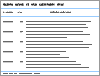
表1
IBS算法亲缘推断标准"
| 亲缘关系 | 亲缘关系系数 | 推断标准 | 零IBD共享统计量 | 推断标准 |
|---|---|---|---|---|
| MZ | > | 0 | <0.1 | |
| PO | ( | 0 | <0.1 | |
| FS | ( | (0.1, 0.365) | ||
| 2nd | ( | (0.365, 1 | ||
| 3rd | ( | (1 | ||
| 4th | ( | (1 | ||
| 5th | ( | (1 | ||
| 6th | ( | (1 | ||
| 7th | ( | (1 | ||
| UN | 0 | ≤0 | 1 | 1 |
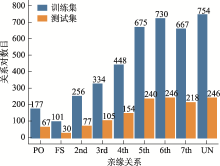
图1
机器学习训练集与测试集样本分布"
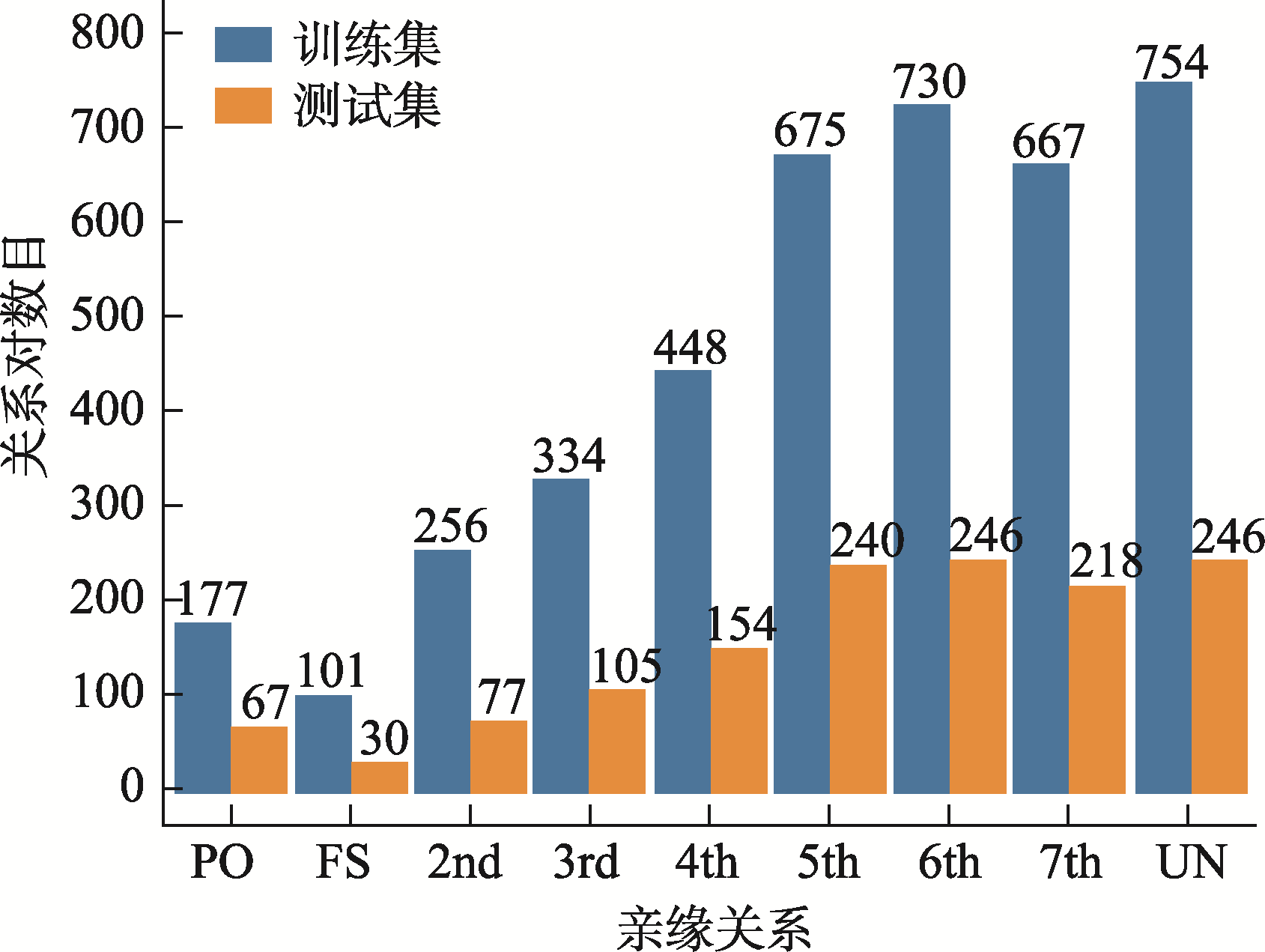
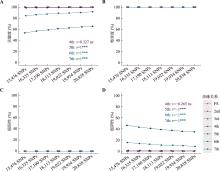
图2
似然比法亲缘推断效能与SNP位点数目相关性分析 A:灵敏度;B:特异度;C:假阳性;D:假阴性。***:P<0.001;ns:无显著差异(P≥0.05);τ:Kendall’s τ相关系数。"
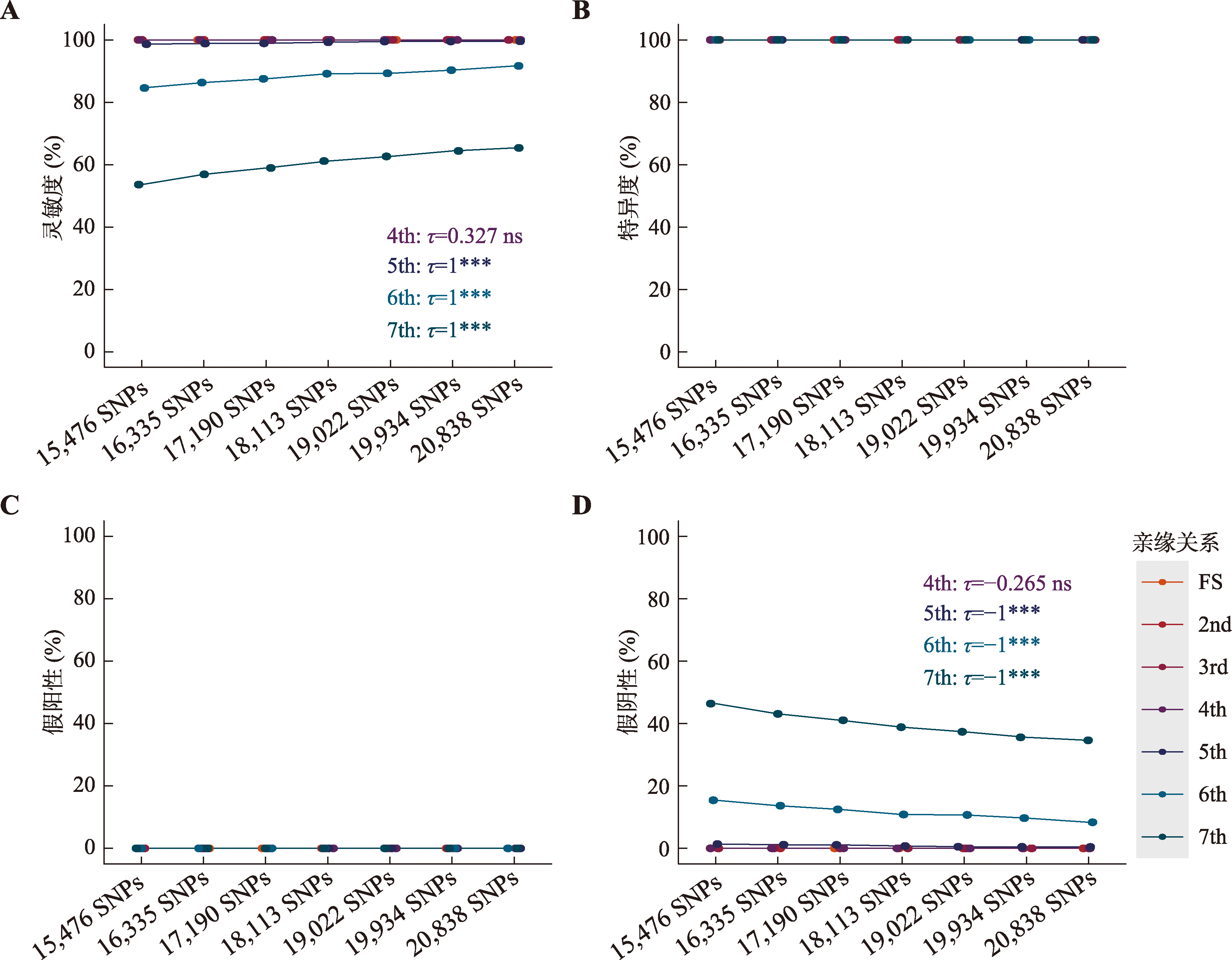
图3
模拟家系不同亲缘关系等级的log10LR值分布"
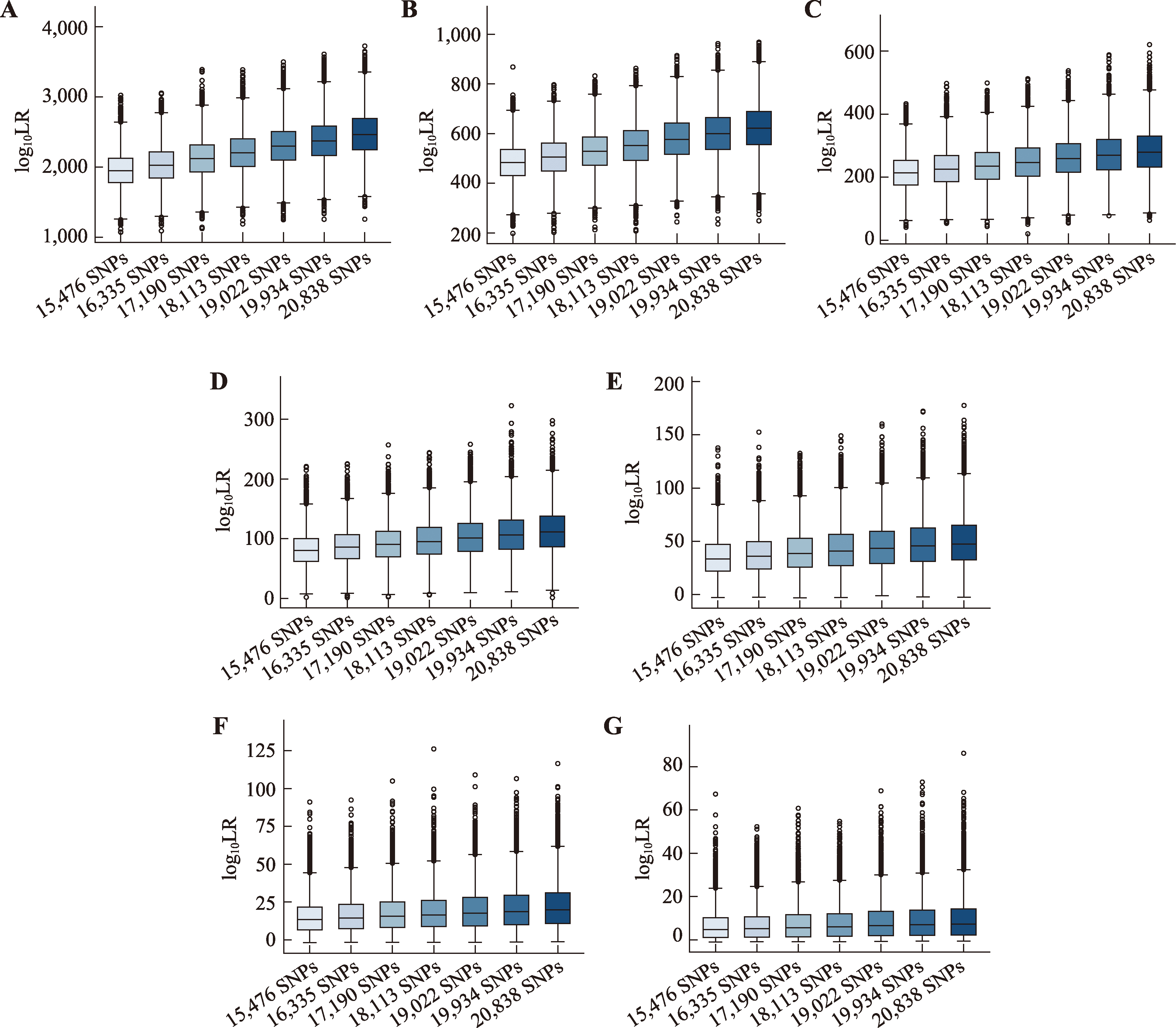
表2
模拟家系不同亲缘关系等级log10LR值分布的统计学参数"
| SNP panel | 亲缘关系 | 最小值 | 最大值 | 中位数 | 四分位差 |
|---|---|---|---|---|---|
| 15,476 SNPs | FS | 1,072.95 | 3,024.46 | 1,947.54 | 345.67 |
| 2nd | 198.14 | 868.27 | 483.15 | 105.27 | |
| 3rd | 41.03 | 432.76 | 214.26 | 77.44 | |
| 4th | 2.14 | 221.04 | 80.55 | 38.53 | |
| 5th | -2.73 | 137.78 | 33.42 | 25.07 | |
| 6th | -1.89 | 91.12 | 13.44 | 15.10 | |
| 7th | -1.01 | 67.31 | 4.65 | 9.13 | |
| 16,335 SNPs | FS | 1,092.61 | 3,055.49 | 2,029.01 | 372.75 |
| 2nd | 202.07 | 796.77 | 505.16 | 112.90 | |
| 3rd | 53.98 | 497.24 | 225.83 | 82.32 | |
| 4th | 1.54 | 225.36 | 85.95 | 40.29 | |
| 5th | -2.53 | 152.54 | 36.09 | 25.72 | |
| 6th | -1.71 | 92.45 | 14.37 | 16.23 | |
| 7th | -0.96 | 52.27 | 5.10 | 9.34 | |
| 17,190 SNPs | FS | 1,124.99 | 3,391.81 | 2,123.87 | 382.52 |
| 2nd | 212.60 | 832.31 | 528.93 | 114.69 | |
| 3rd | 43.67 | 498.70 | 235.10 | 84.76 | |
| 4th | 2.72 | 257.00 | 90.38 | 42.63 | |
| 5th | -3.13 | 132.66 | 38.51 | 27.04 | |
| 6th | -1.65 | 104.99 | 15.60 | 17.00 | |
| 7th | -0.97 | 60.74 | 5.58 | 10.12 | |
| 18,113 SNPs | FS | 1,190.91 | 3,388.22 | 2,203.48 | 393.76 |
| 2nd | 208.09 | 862.78 | 551.54 | 120.46 | |
| 3rd | 20.75 | 512.22 | 246.60 | 88.67 | |
| 4th | 5.86 | 244.06 | 95.36 | 44.32 | |
| 5th | -2.74 | 149.03 | 41.03 | 29.33 | |
| 6th | -1.52 | 126.21 | 16.50 | 17.35 | |
| 7th | -0.86 | 54.70 | 6.02 | 10.36 | |
| 19,022 SNPs | FS | 1,251.28 | 3,499.48 | 2,302.01 | 407.16 |
| 2nd | 244.14 | 914.15 | 577.05 | 125.82 | |
| 3rd | 55.03 | 537.41 | 259.37 | 91.19 | |
| 4th | 9.56 | 258.09 | 101.22 | 46.68 | |
| 5th | -0.97 | 160.18 | 43.36 | 30.33 | |
| 6th | -1.57 | 109.03 | 17.75 | 18.81 | |
| 7th | -0.77 | 68.84 | 6.60 | 11.27 | |
| 19,934 SNPs | FS | 1,257.21 | 3,610.17 | 2,371.70 | 421.40 |
| 2nd | 235.84 | 962.51 | 600.05 | 127.67 | |
| 3rd | 78.03 | 587.94 | 269.73 | 95.92 | |
| 4th | 11.21 | 322.68 | 106.23 | 48.72 | |
| 5th | -2.28 | 172.12 | 45.85 | 31.39 | |
| 6th | -1.46 | 106.58 | 18.58 | 19.38 | |
| 7th | -0.66 | 72.88 | 6.90 | 11.54 | |
| 20,838 SNPs | FS | 1,259.09 | 3,726.38 | 2,466.37 | 445.04 |
| 2nd | 248.86 | 967.85 | 622.00 | 133.54 | |
| 3rd | 63.64 | 620.12 | 279.62 | 97.89 | |
| 4th | 1.51 | 297.68 | 111.32 | 51.26 | |
| 5th | -2.49 | 177.54 | 47.33 | 32.46 | |
| 6th | -1.26 | 116.53 | 19.80 | 20.38 | |
| 7th | -0.62 | 86.17 | 7.24 | 12.06 |
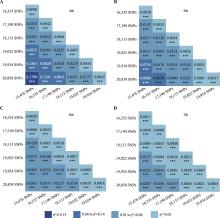
图4
模拟家系中不同SNP panel在各亲缘等级推断中的效应量(η2)分析 A:4th;B:5th;C:6th;D:7th。***:P<0.001;*:P<0.05;η2:效应量数值。"
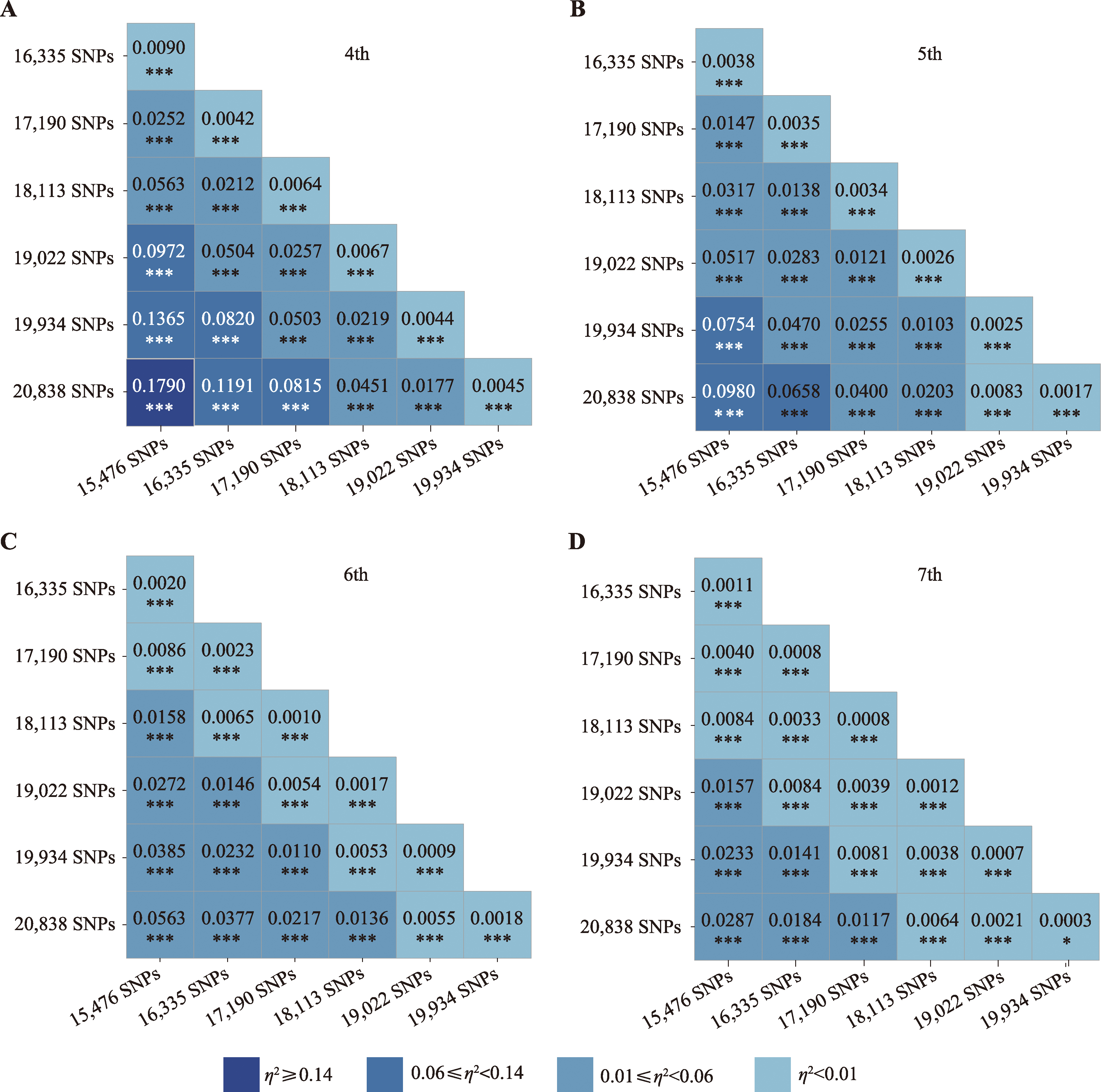
图5
IBS算法推断效能与SNP位点的相关性分析 A:灵敏度;B:假阴性;C:特异度与假阳性。*:P<0.05;ns:无显著差异(P≥0.05);τ:Kendall’s τ相关系数。"
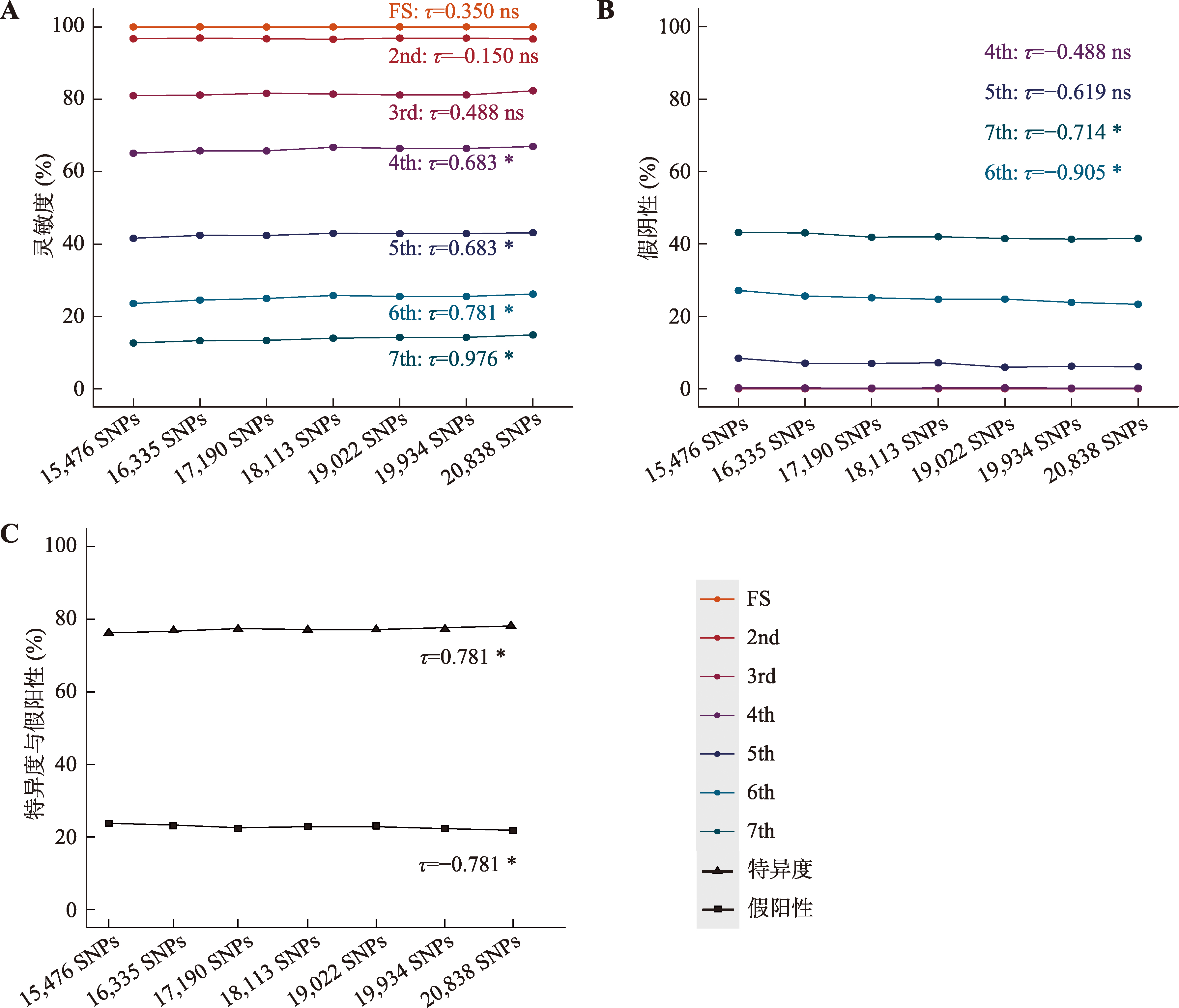
表3
21K panel基于似然比阈值法在真实家系的推断效能"
| 亲缘关系 | t | 灵敏度(%) | 假阴性(%) | 特异度(%) | 假阳性(%) |
|---|---|---|---|---|---|
| FS/unrelated | 4 | 100.00 | 0.00 | 100.00 | 0.00 |
| 2nd/unrelated | 4 | 100.00 | 0.00 | 100.00 | 0.00 |
| 3rd/unrelated | 4 | 100.00 | 0.00 | 99.90 | 0.10 |
| 4th/unrelated | 4 | 100.00 | 0.00 | 99.80 | 0.20 |
| 5th/unrelated | 4 | 99.56 | 0.44 | 99.50 | 0.50 |
| 6th/unrelated | 4 | 93.65 | 6.35 | 99.30 | 0.70 |
| 3 | 95.49 | 4.51 | 99.20 | 0.80 | |
| 2 | 96.72 | 3.28 | 98.30 | 1.70 | |
| 1 | 97.85 | 2.15 | 95.40 | 4.60 | |
| 7th/unrelated | 4 | 68.70 | 31.30 | 99.30 | 0.70 |
| 3 | 74.24 | 25.76 | 98.90 | 1.10 | |
| 2 | 79.32 | 20.68 | 98.10 | 1.90 | |
| 1 | 86.21 | 13.79 | 93.60 | 6.40 |
表4
21K panel基于似然比最大值法在真实家系的推断效能"
| 真实亲缘关系 | 推断亲缘关系 | 灵敏度(%) | 假阴性(%) | 特异度(%) | 假阳性(%) | ||||||||
|---|---|---|---|---|---|---|---|---|---|---|---|---|---|
| PO | FS | 2nd | 3rd | 4th | 5th | 6th | 7th | UN | |||||
| PO | 76 | 3 | 165 | 31.00 | 0.00 | ||||||||
| FS | 131 | 100.00 | 0.00 | ||||||||||
| 2nd | 7 | 316 | 9 | 1 | 94.89 | 0.00 | |||||||
| 3rd | 3 | 300 | 136 | 68.34 | 0.00 | ||||||||
| 4th | 46 | 549 | 7 | 91.20 | 0.00 | ||||||||
| 5th | 3 | 413 | 469 | 28 | 1 | 1 | 51.54 | 0.11 | |||||
| 6th | 16 | 566 | 312 | 58 | 24 | 31.97 | 2.46 | ||||||
| 7th | 5 | 126 | 407 | 226 | 121 | 35.70 | 13.67 | ||||||
| UN | 1 | 22 | 139 | 838 | 83.80 | 16.20 | |||||||
表5
21K panel基于IBS算法在真实家系的预测效能"
| 真实亲缘关系 | 推断亲缘关系 | 灵敏度(%) | 假阴性(%) | 特异度(%) | 假阳性(%) | |||||||||
|---|---|---|---|---|---|---|---|---|---|---|---|---|---|---|
| PO | FS | 2nd | 3rd | 4th | 5th | 6th | 7th | >7th | UN | |||||
| PO | 244 | 100.00 | 0.00 | |||||||||||
| FS | 131 | 100.00 | 0.00 | |||||||||||
| 2nd | 323 | 10 | 97.00 | 0.00 | ||||||||||
| 3rd | 6 | 381 | 51 | 1 | 86.79 | 0.00 | ||||||||
| 4th | 36 | 416 | 123 | 13 | 7 | 2 | 5 | 69.10 | 0.83 | |||||
| 5th | 116 | 348 | 232 | 76 | 59 | 84 | 38.03 | 9.18 | ||||||
| 6th | 13 | 148 | 209 | 142 | 159 | 305 | 21.41 | 31.25 | ||||||
| 7th | 1 | 44 | 95 | 113 | 136 | 496 | 12.77 | 56.05 | ||||||
| UN | 17 | 64 | 97 | 133 | 689 | 68.90 | 31.10 | |||||||
表6
不同机器学习模型在5折交叉验证中亲缘推断效能评估(均值±标准差)"
| IBS-ML | 评估参数 | PO (%) | FS (%) | 2nd (%) | 3rd (%) | 4th (%) | 5th (%) | 6th (%) | 7th (%) | UN (%) |
|---|---|---|---|---|---|---|---|---|---|---|
| IBS-XGBoost | 灵敏度 | 100.0±0.0 | 100.0±0.0 | 97.0±2.7 | 83.2±7.3 | 81.2±5.2 | 47.6±11.7 | 35.7±13.0 | 14.0±9.0 | |
| 假阴性 | 0.0±0.0 | 0.0±0.0 | 0.0±0.0 | 0.0±0.0 | 0.0±0.0 | 5.5±2.7 | 33.9±11.2 | 44.9±9.9 | ||
| 特异度 | 77.3±10.5 | |||||||||
| 假阳性 | 22.7±10.5 | |||||||||
| IBS-LightGBM | 灵敏度 | 100.0±0.0 | 99.8±0.6 | 97.5±2.4 | 85.2±5.0 | 76.3±7.9 | 46.8±8.6 | 25.3±8.7 | 15.1±6.8 | |
| 假阴性 | 0.0±0.0 | 0.0±0.0 | 0.0±0.0 | 0.0±0.0 | 0.0±0.0 | 7.5±5.0 | 32.0±8.1 | 47.7±2.6 | ||
| 特异度 | 74.6±16.2 | |||||||||
| 假阳性 | 25.4±16.2 | |||||||||
| IBS-RF | 灵敏度 | 100.0±0.0 | 100.0±0.0 | 97.5±2.4 | 83.3±4.6 | 80.5±9.9 | 48.8±10.9 | 39.3±10.8 | 9.6±6.7 | |
| 假阴性 | 0.0±0.0 | 0.0±0.0 | 0.0±0.0 | 0.0±0.0 | 0.0±0.0 | 5.4±5.2 | 30.8±8.0 | 46.5±6.6 | ||
| 特异度 | 76.3±11.7 | |||||||||
| 假阳性 | 23.7±11.7 | |||||||||
| IBS-DT | 灵敏度 | 100.0±0.0 | 100.0±0.0 | 93.1±1.2 | 82.1±4.8 | 73.2±9.8 | 55.2±10.4 | 45.0±5.9 | 1.8±1.8 | |
| 假阴性 | 0.0±0.0 | 0.0±0.0 | 0.0±0.0 | 0.0±0.0 | 0.3±0.3 | 7.1±5.4 | 28.5±4.3 | 52.2±2.6 | ||
| 特异度 | 72.3±13.5 | |||||||||
| 假阳性 | 27.7±13.5 | |||||||||
| IBS-KNN | 灵敏度 | 100.0±0.0 | 100.0±0.0 | 97.2±2.6 | 85.2±7.3 | 74.3±8.1 | 44.1±5.5 | 25.0±6.3 | 24.5±3.4 | |
| 假阴性 | 0.0±0.0 | 0.0±0.0 | 0.0±0.0 | 0.0±0.0 | 0.3±0.3 | 9.0±2.3 | 20.7±6.8 | 33.3±13.0 | ||
| 特异度 | 46.5±14.8 | |||||||||
| 假阳性 | 53.5±14.8 | |||||||||
| IBS-SVM | 灵敏度 | 100.0±0.0 | 99.4±1.5 | 97.3±2.5 | 87.6±4.8 | 61.7±7.8 | 49.4±11.0 | 44.3±10.4 | 40.1±22.4 | |
| 假阴性 | 0.0±0.0 | 0.0±0.0 | 0.0±0.0 | 0.0±0.0 | 0.0±0.0 | 2.2±2.0 | 8.7±7.2 | 15.0±12.9 | ||
| 特异度 | 26.5±22.3 | |||||||||
| 假阳性 | 73.5±22.3 |
表7
不同机器学习模型在测试集上的亲缘推断效能评估"
| IBS-ML | 评估参数 | PO (%) | FS (%) | 2nd (%) | 3rd (%) | 4th (%) | 5th (%) | 6th (%) | 7th (%) | UN (%) |
|---|---|---|---|---|---|---|---|---|---|---|
| IBS-XGBoost | 灵敏度 | 100.00 | 100.00 | 96.10 | 90.48 | 77.92 | 48.75 | 21.95 | 11.93 | |
| 假阴性 | 0.00 | 0.00 | 0.00 | 0.00 | 0.65 | 6.67 | 34.15 | 61.93 | ||
| 特异度 | 80.49 | |||||||||
| 假阳性 | 19.51 | |||||||||
| IBS-LightGBM | 灵敏度 | 98.51 | 100.00 | 94.81 | 92.38 | 87.66 | 38.33 | 22.36 | 11.47 | |
| 假阴性 | 0.00 | 0.00 | 0.00 | 0.00 | 0.65 | 6.67 | 35.37 | 62.39 | ||
| 特异度 | 81.30 | |||||||||
| 假阳性 | 18.70 | |||||||||
| IBS-RF | 灵敏度 | 100.00 | 100.00 | 96.10 | 90.48 | 87.10 | 40.66 | 37.80 | 4.59 | |
| 假阴性 | 0.00 | 0.00 | 0.00 | 0.00 | 0.65 | 5.42 | 27.64 | 55.96 | ||
| 特异度 | 75.61 | |||||||||
| 假阳性 | 24.39 | |||||||||
| IBS-DT | 灵敏度 | 100.00 | 100.00 | 96.10 | 91.43 | 83.23 | 44.58 | 49.59 | 0.00 | |
| 假阴性 | 0.00 | 0.00 | 0.00 | 0.00 | 0.65 | 4.17 | 22.36 | 50.00 | ||
| 特异度 | 65.61 | |||||||||
| 假阳性 | 34.39 | |||||||||
| IBS-KNN | 灵敏度 | 100.00 | 100.00 | 96.10 | 91.43 | 81.29 | 44.58 | 28.86 | 25.69 | |
| 假阴性 | 0.00 | 0.00 | 0.00 | 0.00 | 0.65 | 7.50 | 21.54 | 38.07 | ||
| 特异度 | 47.97 | |||||||||
| 假阳性 | 52.03 | |||||||||
| IBS-SVM | 灵敏度 | 100.00 | 100.00 | 93.51 | 36.19 | 29.22 | 31.25 | 13.41 | 79.36 | |
| 假阴性 | 0.00 | 0.00 | 0.00 | 0.00 | 0.00 | 0.83 | 6.50 | 17.43 | ||
| 特异度 | 33.33 | |||||||||
| 假阳性 | 66.67 |
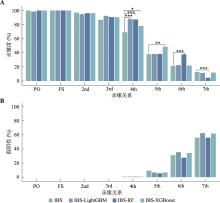
图6
IBS法与机器学习方法的比较分析及统计学显著性检验 A:灵敏度;B:假阳性。***:P<0.001;**:P<0.01;*:P<0.05。"
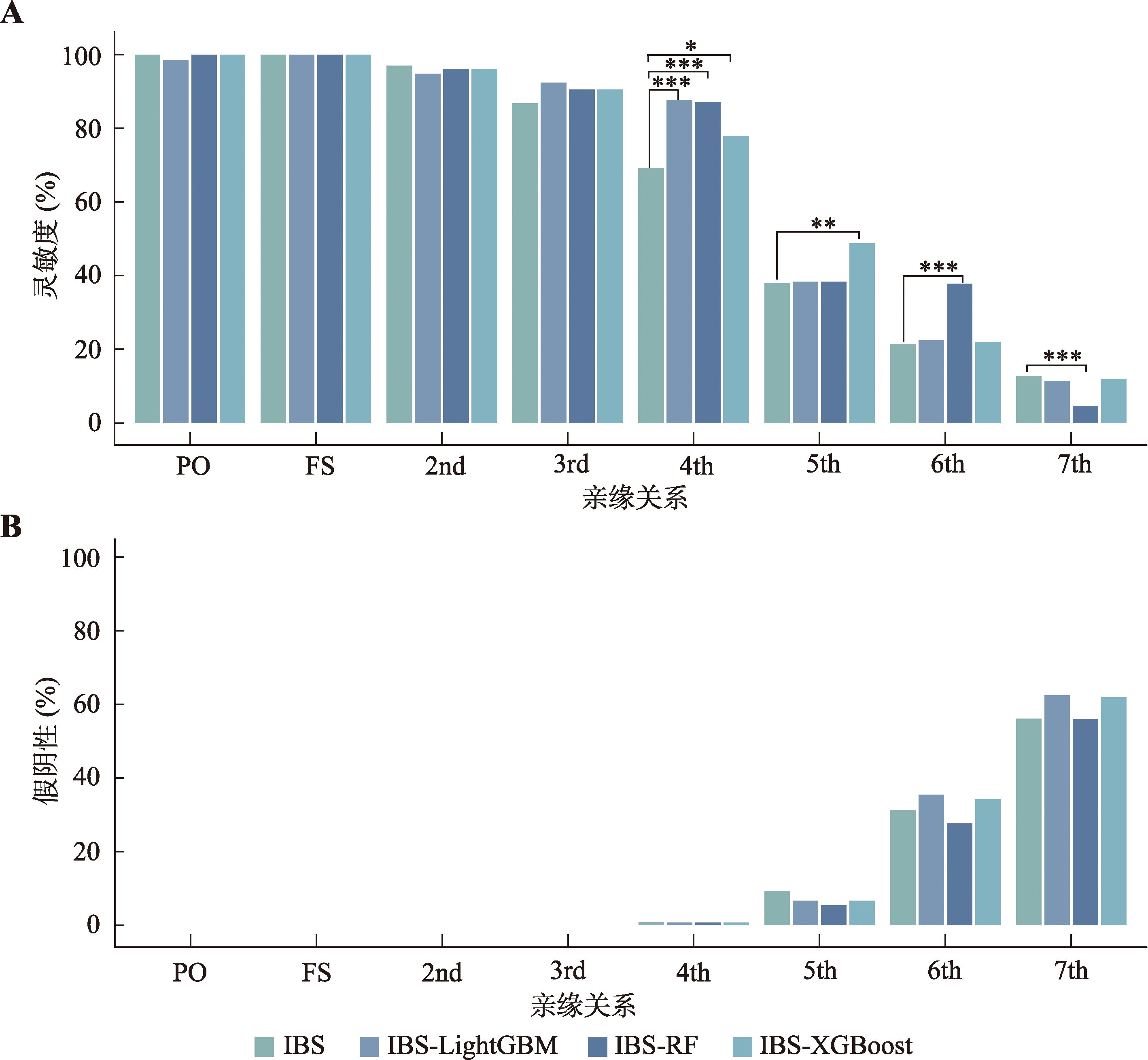
图7
7个SNP panels基于东亚人群的MAF值分布"
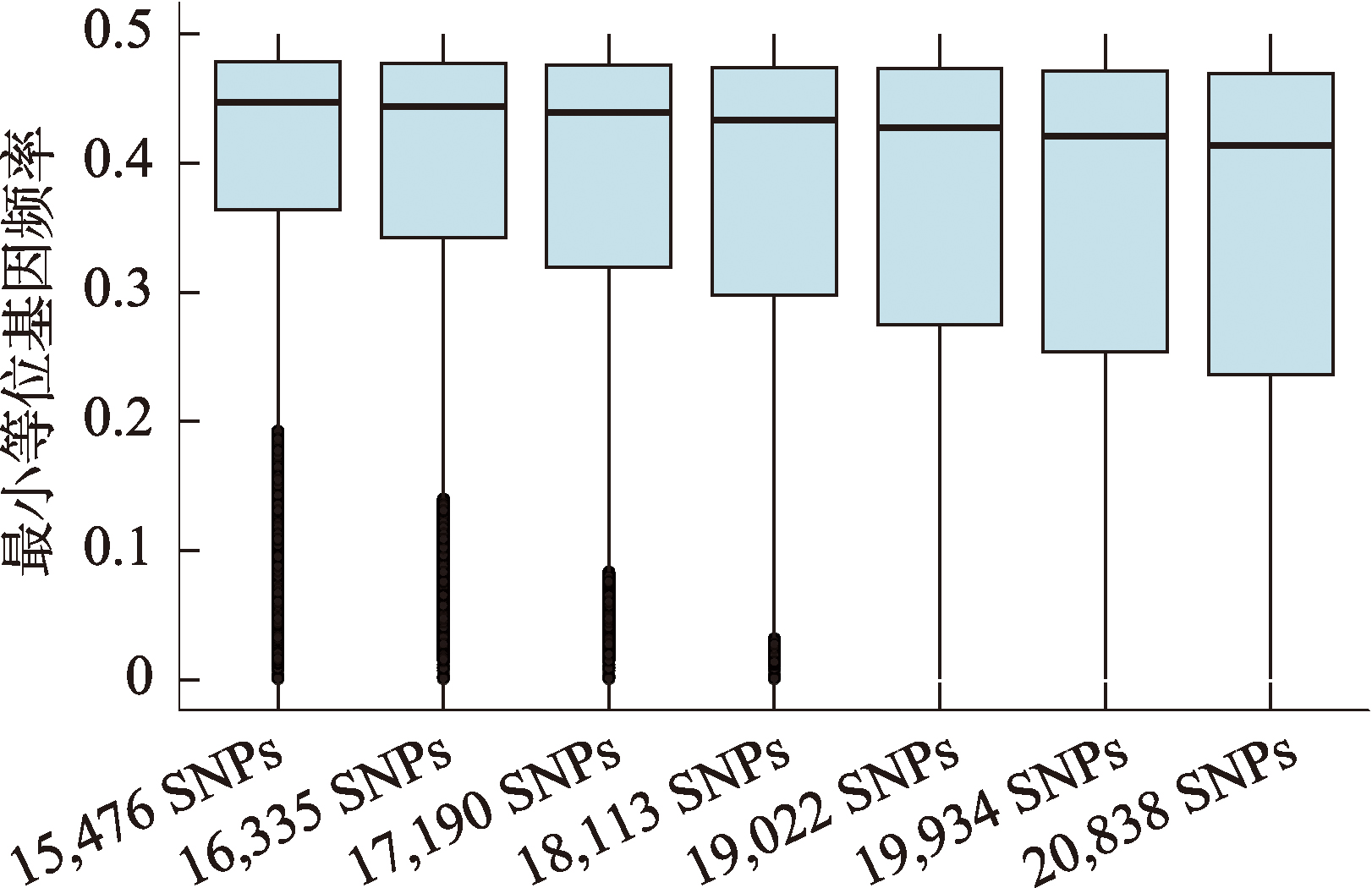
表8
FORCE panel基于似然比阈值法在真实家系的预测效能"
| 亲缘关系 | t | 灵敏度 (%) | 假阴性 (%) | 特异度 (%) | 假阳性 (%) |
|---|---|---|---|---|---|
| FS/unrelated | 4 | 100.00 | 0.00 | 100.00 | 0.00 |
| 2nd/unrelated | 4 | 100.00 | 0.00 | 100.00 | 0.00 |
| 3rd/unrelated | 4 | 99.54 | 0.00 | 100.00 | 0.10 |
| 4th/unrelated | 4 | 94.35 | 0.00 | 100.00 | 0.20 |
| 5th/unrelated | 4 | 40.87 | 0.44 | 100.00 | 0.50 |
| 6th/unrelated | 4 | 6.45 | 93.55 | 100.00 | 0.00 |
| 3 | 13.32 | 86.68 | 100.00 | 0.00 | |
| 2 | 25.51 | 74.49 | 99.60 | 0.40 | |
| 1 | 48.67 | 51.33 | 98.10 | 1.90 | |
| 7th/unrelated | 4 | 0.79 | 99.21 | 100.00 | 0.00 |
| 3 | 2.60 | 97.40 | 100.00 | 0.00 | |
| 2 | 5.99 | 94.01 | 99.90 | 0.10 | |
| 1 | 18.31 | 81.69 | 98.90 | 1.10 |
| [1] |
Phillips C. The golden state killer investigation and the nascent field of forensic genealogy. Forensic Sci Int Genet, 2018, 36: 186-188.
pmid: 30041097 |
| [2] |
Tillmar A, Kling D. Comparative study of statistical approaches and SNP panels to infer distant relationships in forensic genetics. Genes, 2025, 16(2): 114.
pmid: 40004443 |
| [3] |
Jäger AC, Alvarez ML, Davis CP, Guzmán E, Han Y, Way L, Walichiewicz P, Silva D, Pham N, Caves G, Bruand J, Schlesinger F, Pond SJK, Varlaro J, Stephens KM, Holt CL. Developmental validation of the MiSeq FGx forensic genomics system for targeted next generation sequencing in forensic DNA casework and database laboratories. Forensic Sci Int Genet, 2017, 28: 52-70.
pmid: 28171784 |
| [4] |
Gorden EM, Greytak EM, Sturk-Andreaggi K, Cady J, McMahon TP, Armentrout S, Marshall C. Extended kinship analysis of historical remains using SNP capture. Forensic Sci Int Genet, 2022, 57: 102636.
pmid: 34896972 |
| [5] |
De Vries JH, Kling D, Vidaki A, Arp P, Kalamara V, Verbiest MMPJ, Piniewska-Róg D, Parsons TJ, Uitterlinden AG, Kayser M. Impact of SNP microarray analysis of compromised DNA on kinship classification success in the context of investigative genetic genealogy. Forensic Sci Int Genet, 2022, 56: 102625.
pmid: 34753062 |
| [6] |
Tillmar A, Sturk-Andreaggi K, Daniels-Higginbotham J, Thomas JT, Marshall C. The FORCE panel: an all-in-one SNP marker set for confirming investigative genetic genealogy leads and for general forensic applications. Genes (Basel), 2021, 12(12): 1968.
pmid: 34946917 |
| [7] |
Kling D, Tillmar A. Forensic genealogy—a comparison of methods to infer distant relationships based on dense SNP data. Forensic Sci Int Genet, 2019, 42: 113-124.
pmid: 31302460 |
| [8] |
Kling D, Phillips C, Kennett D, Tillmar A. Investigative genetic genealogy: current methods, knowledge and practice. Forensic Sci Int Genet, 2021, 52: 102474.
pmid: 33592389 |
| [9] |
Zhou Y, Browning SR, Browning BL. A fast and simple method for detecting identity-by-descent segments in large-scale data. Am J Hum Genet, 2020, 106(4): 426-437.
pmid: 32169169 |
| [10] |
Seidman DN, Shenoy SA, Kim M, Babu R, Woods IG, Dyer TD, Lehman DM, Curran JE, Duggirala R, Blangero J, Williams AL. Rapid, phase-free detection of long identity- by-descent segments enables effective relationship classification. Am J Hum Genet, 2020, 106(4): 453-466.
pmid: 32197076 |
| [11] |
Dou JZ, Sun BL, Sim XL, Hughes JD, Reilly DF, Tai ES, Liu JJ, Wang CL. Estimation of kinship coefficient in structured and admixed populations using sparse sequencing data. PLoS Genet, 2017, 13(9): e1007021.
pmid: 28961250 |
| [12] |
Morling N, Allen RW, Carracedo A, Geada H, Guidet F, Hallenberg C, Martin W, Mayr WR, Olaisen B, Pascali VL, Schneider PM, Paternity Testing Commission of the International Society of Forensic Genetics. Paternity testing commission of the international society of forensic genetics: recommendations on genetic investigations in paternity cases. Forensic Sci Int, 2002, 129(3): 148-157.
pmid: 12372685 |
| [13] |
Abecasis GR, Wigginton JE. Handling marker-marker linkage disequilibrium: pedigree analysis with clustered markers. Am J Hum Genet, 2005, 77(5): 754-767.
pmid: 16252236 |
| [14] |
Purcell S, Neale B, Todd-Brown K, Thomas L, Ferreira MAR, Bender D, Maller J, Sklar P, De Bakker PIW, Daly MJ, Sham PC. PLINK: a tool set for whole-genome association and population-based linkage analyses. Am J Hum Genet, 2007, 81(3): 559-575.
pmid: 17701901 |
| [15] |
Zeng K, Zhao WT, Fang ZX, Li J, Liu J, Zhao D, Zhu BF, Li CX. Development and validation of a capture sequencing panel containing 9000 SNPs for inferring distant relatives in East Asian populations. Forensic Sci Int Genet, 2026, 81: 103341.
pmid: 40845711 |
| [16] |
Abecasis GR, Cherny SS, Cookson WO, Cardon LR. Merlin—rapid analysis of dense genetic maps using sparse gene flow trees. Nat Genet, 2002, 30(1): 97-101.
pmid: 11731797 |
| [17] |
Wu RG, Chen H, Li R, Zang Y, Shen XF, Hao B, Wang QW, Sun HY. Pairwise kinship testing with microhaplotypes: can advancements be made in kinship inference with these markers? Forensic Sci Int, 2021, 325: 110875.
pmid: 34166816 |
| [18] |
Cui W, Chen M, Yang Y, Cai MM, Lan Q, Xie T, Zhu BF. Applications of 1993 single nucleotide polymorphism loci in forensic pairwise kinship identifications and inferences. Forensic Sci Int Genet, 2023, 65: 102889.
pmid: 37247510 |
| [19] |
Manichaikul A, Mychaleckyj JC, Rich SS, Daly K, Sale M, Chen WM.Robust relationship inference in genome-wide association studies. Bioinformatics, 2010, 26(22): 2867-2873.
pmid: 20926424 |
| [20] |
Liu J, Wei YL, Yang L, Jiang L, Zhao WT, Li CX. Testing of two SNP array-based genealogy algorithms using extended Han Chinese pedigrees and recommendations for improved performances in forensic practice. Electrophoresis, 2023, 44(17-18): 1435-1445.
pmid: 37501329 |
| [21] | Chawla NV, Bowyer KW, Hall LO, Kegelmeyer WP. SMOTE: synthetic minority over-sampling technique. J Artif Intell Res, 2002, 16(1): 321-357. |
| [22] | Van Den Heuvel E, Zhan ZZ. Myths about linear and monotonic associations: Pearson’s r, Spearman’s ρ, and Kendall’s τ. Am Stat, 2022, 76(1): 44-52. |
| [23] | Benjamini Y, Hochberg Y. Controlling the false discovery rate: a practical and powerful approach to multiple testing. J R Stat Soc B, 1995, 57(1): 289-300. |
| [24] | Tomczak M, Tomczak E. The need to report effect size estimates revisited. An overview of some recommended measures of effect size. Trends Sport Sci, 2014, 1(21): 19-25. |
| [25] |
Lakens D. Calculating and reporting effect sizes to facilitate cumulative science: a practical primer for t-tests and ANOVAs. Front Psychol, 2013, 4: 863.
pmid: 24324449 |
| [26] |
Hill WG, Weir BS. Variation in actual relationship as a consequence of Mendelian sampling and linkage. Genet Res, 2011, 93(1): 47-64.
pmid: 21226974 |
| [27] |
Huff CD, Witherspoon DJ, Simonson TS, Xing JC, Watkins WS, Zhang YH, Tuohy TM, Neklason DW, Burt RW, Guthery SL, Woodward SR, Jorde LB. Maximum- likelihood estimation of recent shared ancestry (ERSA). Genome Res, 2011, 21(5): 768-774.
pmid: 21324875 |
| [28] |
Speed D, Balding DJ. Relatedness in the post-genomic era: is it still useful? Nat Rev Genet, 2015, 16(1): 33-44.
pmid: 25404112 |
| [29] |
Wei YF, Zhu Q, Wang HY, Cao YY, Li X, Zhang XK, Wang YF, Zhang J. Pairwise kinship inference and pedigree reconstruction using 91 microhaplotypes. Forensic Sci Int Genet, 2024, 72: 103090.
pmid: 38968912 |
| [30] |
Tabangin ME, Woo JG, Martin LJ. The effect of minor allele frequency on the likelihood of obtaining false positives. BMC Proc, 2009, 3(Suppl 7): S41.
pmid: 20018033 |
| [31] |
Thompson EA. Identity by descent: variation in meiosis, across genomes, and in populations. Genetics, 2013, 194(2): 301-326.
pmid: 23733848 |
| [1] | 李志宏, 陈淼琪, 袁晓珺, 黄华君, 黄琬婷, 周飘雁, 曾晨, 冯许诺, 杨洛瑶, 黄树强, 谭翠钰, 陈彩蓉, 颜秋霞. 基于microRNA与生物信息学筛选非梗阻性无精子症的生物标志物[J]. 遗传, 2026, 48(3): 301-312. |
| [2] | 梁卉, 王雪, 司敬方, 张毅. 利用基因组标记和机器学习算法对中国牛品种的分类准确性研究[J]. 遗传, 2024, 46(7): 530-539. |
| [3] | 章子怡, 王棨临, 张俊有, 段迎迎, 刘家欣, 刘赵硕, 李春燕. 多组学数据驱动的机器学习模型在乳腺癌生存及治疗响应预测中的应用[J]. 遗传, 2024, 46(10): 820-832. |
| [4] | 郑慧怡, 吴华煊, 杜志强. 肠道宏基因组图像增强和深度学习改善代谢性疾病分类预测精度[J]. 遗传, 2024, 46(10): 886-896. |
| [5] | 陈栋, 王书杰, 赵真坚, 姬祥, 申琦, 余杨, 崔晟頔, 王俊戈, 陈子旸, 王金勇, 郭宗义, 吴平先, 唐国庆. 基于机器学习的猪生长性状基因组预测[J]. 遗传, 2023, 45(10): 922-932. |
| [6] | 孔永强, 刘金凯, 顾佳琪, 徐景怡, 郑雨诺, 魏以梁, 伍少远. 南-北方汉族人、韩国人和日本人遗传划分机器学习模型优化方案[J]. 遗传, 2022, 44(11): 1028-1043. |
| [7] | 胡雅丽, 戴睿, 刘永鑫, 张婧赢, 胡斌, 储成才, 袁怀波, 白洋. 水稻典型品种日本晴和IR24根系微生物组的解析[J]. 遗传, 2020, 42(5): 506-518. |
| [8] | 赵学彤, 杨亚东, 渠鸿竹, 方向东. 组学时代下机器学习方法在临床决策支持中的应用[J]. 遗传, 2018, 40(9): 693-703. |
| [9] | 张桂珊, 杨勇, 张灵敏, 戴宪华. 机器学习方法在CRISPR/Cas9系统中的应用[J]. 遗传, 2018, 40(9): 704-723. |
| [10] | 彭哲也,唐紫珺,谢民主. 机器学习方法在基因交互作用探测中的研究进展[J]. 遗传, 2018, 40(3): 218-226. |
| [11] | 侯妍妍,应晓敏,李伍举. microRNA计算发现方法的研究进展[J]. 遗传, 2008, 30(6): 687-696. |
| 阅读次数 | ||||||
|
全文 |
|
|||||
|
摘要 |
|
|||||

www.chinagene.cn
备案号:京ICP备09063187号-4
总访问:,今日访问:,当前在线:

